Dogs significantly change the air in homes Keystone-SDA
Dogs influence the air quality in homes. A study from Lausanne has measured for the first time the gases, particles and microbes that four-legged friends bring indoors.
The researchers see the results as a basis for more realistic models of indoor air, the Swiss Federal Institute of Technology Lausanne (EPFL) said on Monday, 23 February 2026. The influence of humans on the air has been well researched. However, the researchers say that the impact of pets has hardly been considered to date.
According to the study, a large dog at rest emits about the same amount of CO2 as an adult human. The amount of ammonia emitted is also comparable. This gas is produced when proteins are broken down and is released via the skin and the air we breathe.
According to the data, however, dogs had the greatest influence on particles in the air. By shaking, scratching or stroking, they stir up large quantities of dust, pollen, plant residues and microbes. Large dogs release two to four times more microorganisms than a human in the same room.
The animals act as mobile “carriers”, transporting biological material from the outside to the inside and distributing it throughout the room through their activities. However, this increased variety of particles in the interior is not necessarily negative, according to the researchers. Some studies suggest that contact with various microbes can promote the development of the immune system, especially in children.
Chemical reactions with ozone
Another aspect concerns chemical reactions indoors. Ozone that enters homes from outside reacts with skin lipids and forms new substances such as aldehydes or ketones. In humans, squalene, a component of skin sebum, plays a role here.
Dogs do not produce squalene themselves. However, humans transfer skin residues to the animals’ fur when stroking them. These residues then also react with ozone. On average, however, dogs produced around 40% less ozone reaction products than humans.
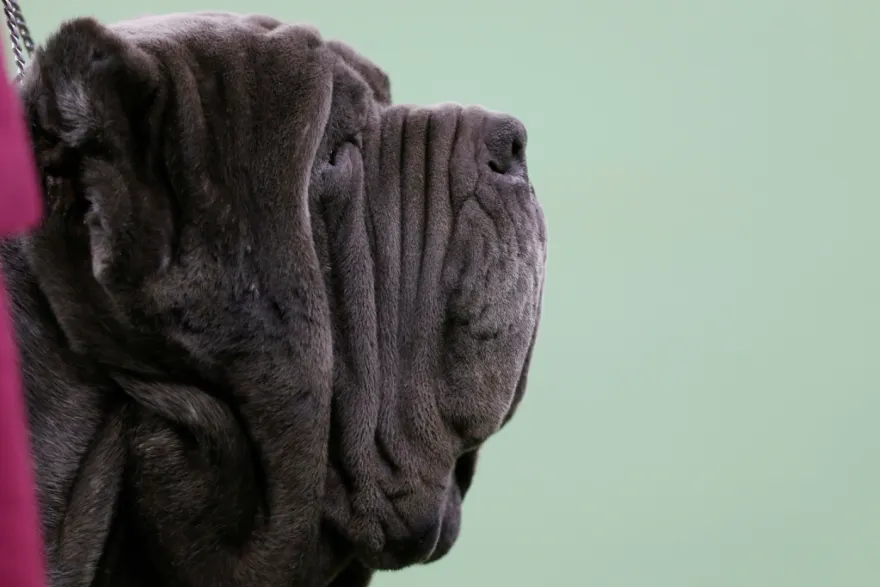
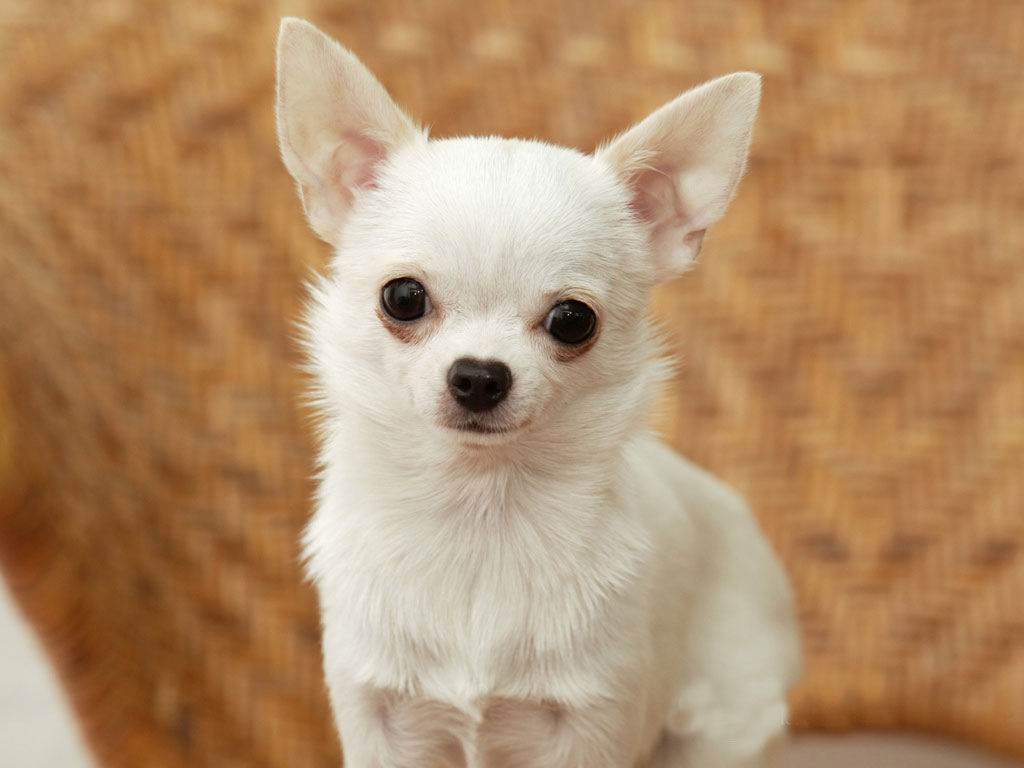
The team used a controlled environmental chamber at the EPFL in Fribourg for the measurements. Two groups of dogs were analysed: one with three large dogs (a Mastiff, a Tibetan Mastiff and a Newfoundland) and one with four small dogs (Chihuahuas). The study was published in the journal Environmental Science & Technology.
Breed standards continue to reinforce certain ear shapes, narrowing what dogs inherit and carrying those choices across generations. Researchers have now traced floppy ear length to specific inherited changes, revealing how human preference leaves lasting marks on canine biology and health.
Tracing inherited ear length
A recent genetic analysis across many dog breeds connected differences in drop-ear length to a small, shared stretch of DNA. At the University of Georgia (UGA), researchers refined that signal by comparing breeds with similar ear posture but different ear lengths.The work was led by Dr. Leigh Anne Clark, who studies canine genetics and inherited disease risk in many breeds. The findings give breeders and researchers a clearer target to watch as they compare traits across breeds.
Dogs, wolves, and coyotes
The researchers compared genomes from more than 3,000 dogs, wolves, and coyotes. They focused on dogs with floppy ears so that ear carriage – how ears sit on the head – stayed constant while ear length varied.“We only used drop-eared dogs in our study,” said Clark. This approach allowed the team to pinpoint DNA differences that affected ear length, even when all dogs shared the same ear type.
When DNA variants recombine
Differences in ear shape traced back to a small number of inherited DNA variants shared across breeds. Recombination brought together two DNA variants linked to ear posture on a single inherited block, and only that combination produced drop ears.“What we learned is that there’s a combination of alleles, or different DNA sequences, at this locus that dictates whether a dog has prick ears like a husky versus drop ears like a cocker spaniel,” said Clark. That extra allele sat on the recombinant block, and it pushed ear tissue to keep growing longer.
How nearby DNA shapes ears
The strongest genetic signal appeared near a gene already linked to growth and maintenance of connective tissue in developing ears. The associated DNA did not change the gene directly, but sat nearby, where it could subtly affect how much the gene is used during development.Similar changes have been linked to larger ears in other animals, suggesting this region can influence how ear tissue expands over time.Because the signal lies outside the gene itself, the result points to regulation rather than structure as the likely driver.
Ear length and body size
The same stretch of DNA also sits close to a gene previously tied to overall body size in dogs. When traits sit near each other in the genome, selection for one feature can unintentionally carry another along with it. That overlap makes it harder to tell whether ear length reflects its own genetic cause or a side effect of selection for size. Sorting that out matters, especially when researchers try to separate harmless traits from ones linked to disease risk.
Breeds and hidden tradeoffs
Human breeding pushed certain ear shapes into breed standards, which raised the odds that specific DNA combinations became common. The three-allele package appeared most often in breeds selected for very long drop ears, where ear length defines the look. Breeds that kept the older, ancestral package usually carried smaller, upright ears, even when the head shape changed. Because breeders fix traits within a breed, those genetic packages can spread fast, leaving little diversity for future change.
How ears manage heat
Long ears do more than change appearance, as they help animals manage heat by exposing more skin. Classic rabbit research showed blood vessels in ears tighten in cool air and widen in warmth. When vessels widen, warm blood reaches the ear surface and sheds heat, while tightening keeps warmth inside the body. That biology helps explain why some animals evolve smaller ears in colder places, even before humans start selecting traits.
Breed genetics and health signals
Beyond looks, ear genetics matters to veterinarians because breed-linked DNA patterns can hide or mimic disease risks. In Clark’s UGA projects, strong selection can distort breed genetics, so the ear results add useful context. “It’s important for us to understand what genes and genomic regions are being selected for in breeds, especially when we’re thinking about genetic disorders,” said Clark. Genetic tests could help avoid risky variants, but they work best when breeders balance health goals against narrow appearance rules.
A clearer view of dogs
The study relied on broad genetic comparisons across many dogs to narrow the search to promising regions. That approach highlights patterns of inheritance, but it cannot by itself prove which DNA change directly causes longer ears. Confirming the mechanism will require experiments that test how these nearby genetic changes affect ear development. Until then, the results serve as strong signals rather than final answers, shaped by both genetics and breeding history. Taken together, the results show how a small set of variants can shape ear posture and length across many dog breeds. Future genome-wide studies and lab work will test whether nearby DNA regions also influence hearing or other ear-related traits.
Dogs have been part of human societies across Eurasia for at least 20,000 years, accompanying us through many social and cultural upheavals. A new study by an international team, published in the journal Science, and led by Laurent Frantz, paleogeneticist at the Ludwig Maximilian University of Munich (LMU) and Queen Mary University of London (QMUL) shows that the spread of new cultures across Eurasia, with different lifeways, was often associated with the spread of specific dog populations.
Scientists from LMU, QMUL, the Kunming Institute of Zoology and Lanzhou University in China, and the University of Oxford, sequenced and analyzed the genomes of 17 ancient dogs from Siberia, East Asia, and the Central Asian Steppe – including, for the first time, specimens from China. Important cultural changes occurred in these regions over the past 10,000 years, driven by the dispersal of hunter-gatherers, farmers, and pastoralists. The specimens came from archaeological sites between 9,700 and 870 years old. In addition, the researchers included publicly available genomes from 57 ancient and 160 modern dogs in their analyses.
Dogs followed metalworkers across the Eurasian Steppe over 4,000 years ago
A comparison of ancient dog and human genomes reveals a striking concordance between genetic shifts in both species across time and space, most notably during periods of population turnover. This link is especially evident during China’s transformative Early Bronze Age (~4,000 years ago), which saw the introduction of metalworking. The research shows that the expansion of people from the Eurasian Steppe, who first introduced this transformative technology to Western China, also brought their dogs with them.
This pattern of human-dog co-movement extends back far beyond the Bronze Age. The research traces signals of co-disperal back at least 11,000 years, when hunter-gatherers in northern Eurasia were exchanging dogs closely related to today’s Siberian Huskies.
“Traces of these major cultural shifts can be teased out of the genomes of ancient dogs,” says Dr. Lachie Scarsbrook (LMU/Oxford), one of the lead authors of the study. “Our results highlight the deeply rooted cultural importance of dogs. Instead of just adopting local populations, people have maintained a distinct sense of ownership towards their own dogs for at least the past 11,000 years.”
“This tight link between human and dog genetics shows that dogs were an integral part of society, whether you were a hunter-gatherer in the Arctic Circle 10,000 years ago or a metalworker in an early Chinese city,” says Prof. Laurent Frantz. “It’s an amazing, enduring partnership and shows the sheer flexibility of the role dogs can play in our societies, far more than with any other domestic species.”
“What cannot be denied or evaded is that this science has a moral dimension. How we study animals and what we assert about their minds and behavior greatly affects how they are treated, as well as our own version of ourselves.”
– Dale Jamieson, Professor of Environmental Studies and Philosophy at New York University, a scholar of environmental ethics and animal rights
It’s a win for Darwin’s Dogs and open access data! A new study published in the journal Science Advances has identified genomic links to the behaviours of herding breeds. The study used data entirely sourced from open-access databases.
Researchers at Korea’s Gyeongsang National University and the U.S. National Institutes of Health analyzed data exclusively from publicly available repositories, including genomic and behavioral data from the community science initiative, Darwin’s Dogs. Their findings are powerful examples of how open science—making research data freely and publicly available—can accelerate discovery by helping scientists leverage existing data in innovative ways.
Herding breeds carry genes linked to cognitive function
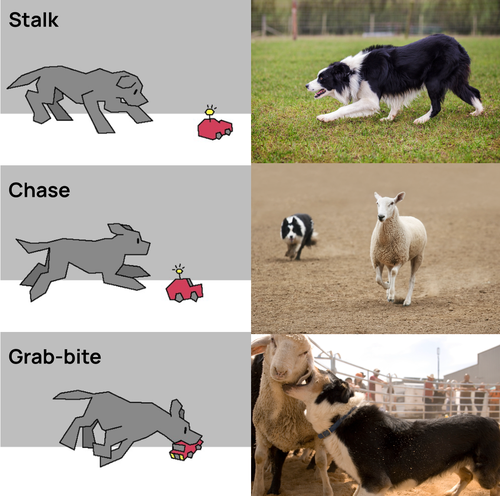
Herding breeds like the Australian cattle dog, Belgian Malinois, and border collie have a long history of helping humans move and manage livestock. These dogs are renowned for their precise motor control, sharp intellect, and unwavering drive. In fact, motor patterns required for effective herding—like eyeing, stalking, and chasing animals without killing them—have been so deeply ingrained in herding dogs through generations of selective breeding that even non-working lines often display these traits. But while herding behaviors have been recognized and refined for centuries, their genetic roots have remained largely unknown.
To explore the genetic foundations of herding behaviors, researchers conducted a large-scale genomic comparison across dogs from 12 herding breeds and 91 nonherding breeds. They identified hundreds of genes that have been naturally selected in herding breeds, several of which, through additional analysis, they found linked to cognitive function.
Narrowing their focus to the border collie, a breed celebrated for its intelligence, the research team identified more than eight genes strongly associated with cognition. One of the standouts was EPHB1, a gene involved in spatial memory. Several variants of EPHB1 appeared across herding breed genomes, suggesting that this gene may support the array of complex motor patterns and decision-making skills essential for herding.
Darwin’s Dogs’ database connects genomic discoveries with behavioral insights
Identifying genes associated with breeds is one thing, but understanding their function is another. This is where Darwin’s Dogs’ open-access behavioral and genomic datasets became critical to expanding the impacts of the study’s findings.
Darwin’s Dogs invites dog owners to participate in scientific research by taking behavioral surveys about their dogs and contributing DNA samples for whole genome sequencing. As part of Darwin’s Ark’s open science commitment, this data is de-identified and made available to researchers around the world, creating a unique open-access resource that allows scientists to explore connections between canine DNA and behavioral traits.
The researchers analyzed data from 2,155 dogs in the Darwin’s Dogs database to see whether dogs with the EPHB1 gene behaved differently than dogs without the gene. They found a strong link between EPHB1 and behavior: dogs with this gene were significantly more likely to show toy-oriented behaviors such as stalking, chasing, and grab-biting toys. These actions closely resemble motor patterns seen in herding behaviors.
This link held true even among dogs with mixed breed ancestry, and within border collies from working versus non-working lines, reinforcing the strong connection between EPHB1 and herding-related behaviors.
Open science opens doors to discovery
This study’s discoveries were made possible through open science. Data from open science initiatives like Darwin’s Dogs—and the thousands of community scientists who shared behavioral insights about their dogs—helped researchers connect genomic markers to observable behaviors. The scale and scope of the Darwin’s Dogs database helped the research team analyze behavioral associations to the EPHB1 gene across dogs with varied breed ancestry.
This research serves as a model for how professional researchers and community scientists can come together to accelerate scientific progress. When community scientists contribute to open repositories like Darwin’s Dogs, the possibilities for discovery are endless.
Resources
Read the paper published in Science Advances: Hankyeol Jeong et al. , Genomic evidence for behavioral adaptation of herding dogs. Sci. Adv.11,eadp4591(2025).DOI:10.1126/sciadv.adp4591
The question, ‘Where do domestic dogs come from?’, has vexed scholars for a very long time. Some argue that humans first domesticated wolves in Europe, while others claim this happened in Central Asia or China. A new paper, published in Science, suggests that all these claims may be right. Supported by funding from the European Research Council and the Natural Environment Research Council, a large international team of scientists compared genetic data with existing archaeological evidence and show that man’s best friend may have emerged independently from two separate (possibly now extinct) wolf populations that lived on opposite sides of the Eurasian continent.
This means that dogs may have been domesticated not once, as widely believed, but twice.
A major international research project on dog domestication, led by the University of Oxford, has reconstructed the evolutionary history of dogs by first sequencing the genome (at Trinity College Dublin) of a 4,800-year old medium-sized dog from bone excavated at the Neolithic Passage Tomb of Newgrange, Ireland. The team (including French researchers based in Lyon and at the National Museum of Natural History in Paris) also obtained mitochondrial DNA from 59 ancient dogs living between 14,000 to 3,000 years ago and then compared them with the genetic signatures of more than 2,500 previously studied modern dogs.
The results of their analyses demonstrate a genetic separation between modern dog populations currently living in East Asia and Europe. Curiously, this population split seems to have taken place after the earliest archaeological evidence for dogs in Europe. The new genetic evidence also shows a population turnover in Europe that appears to have mostly replaced the earliest domestic dog population there, which supports the evidence that there was a later arrival of dogs from elsewhere. Lastly, a review of the archaeological record shows that early dogs appear in both the East and West more than 12,000 years ago, but in Central Asia no earlier than 8,000 years ago.
Combined, these new findings suggest that dogs were first domesticated from geographically separated wolf populations on opposite sides of the Eurasian continent. At some point after their domestication, the eastern dogs dispersed with migrating humans into Europe where they mixed with and mostly replaced the earliest European dogs. Most dogs today are a mixture of both Eastern and Western dogs — one reason why previous genetic studies have been difficult to interpret.
The international project (which is combining ancient and modern genetic data with detailed morphological and archaeological research) is currently analysing thousands of ancient dogs and wolves to test this new perspective, and to establish the timing and location of the origins of our oldest pet.
Senior author and Director of Palaeo-BARN (the Wellcome Trust Palaeogenomics & Bio-Archaeology Research Network) at Oxford University, Professor Greger Larson, said: ‘Animal domestication is a rare thing and a lot of evidence is required to overturn the assumption that it happened just once in any species. Our ancient DNA evidence, combined with the archaeological record of early dogs, suggests that we need to reconsider the number of times dogs were domesticated independently. Maybe the reason there hasn’t yet been a consensus about where dogs were domesticated is because everyone has been a little bit right.’
Lead author Dr Laurent Frantz, from the Palaeo-BARN, commented: ‘Reconstructing the past from modern DNA is a bit like looking into the history books: you never know whether crucial parts have been erased. Ancient DNA, on the other hand, is like a time machine, and allows us to observe the past directly.’
Senior author Professor Dan Bradley, from Trinity College Dublin, commented: ‘The Newgrange dog bone had the best preserved ancient DNA we have ever encountered, giving us prehistoric genome of rare high quality. It is not just a postcard from the past, rather a full package special delivery.’
Professor Keith Dobney, co-author and co-director of the dog domestication project from Liverpool University’s Department of Archaeology, Classics and Egyptology, is heartened by these first significant results. ‘With the generous collaboration of many colleagues from across the world-sharing ideas, key specimens and their own data — the genetic and archaeological evidence are now beginning to tell a new coherent story. With so much new and exciting data to come, we will finally be able to uncover the true history of man’s best friend.’
Wolves likely were domesticated by European hunter–gatherers more than 18,000 years ago and gradually evolved into dogs that became household pets, say a research team based at the University of California Los Angeles.
“We found that instead of recent wolves being closest to domestic dogs, ancient European wolves were directly related to them,” said Robert Wayne, a professor of ecology and evolutionary biology in UCLA’s College of Letters and Science and senior author of the research. “Europe is where the oldest dogs are found.”
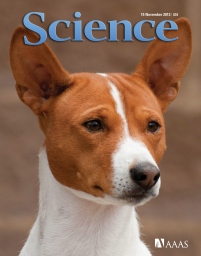
The team’s genetic analysis is published 15 November issue of the journal Science.
The researchers studied 10 ancient “wolf-like” animals and eight “dog-like” animals, mostly from Europe. These animals were all more than 1,000 years old, most were thousands of years old, and two were more than 30,000 years old.
The biologists studied the mitochondrial DNA of the animals, which is abundant in ancient remains. By comparing this ancient mitochondrial DNA with the modern mitochondrial genomes of 77 domestic dogs, 49 wolves and four coyotes, the researchers determined that the domestic dogs were genetically grouped with ancient wolves or dogs from Europe — not with wolves found anywhere else in the world or even with modern European wolves. Dogs, they concluded, derived from ancient wolves that inhabited Europe and are now extinct.
Wayne said that that the domestication of predatory wolves likely occurred among ancient hunter–gatherer groups rather than as part of humans’ development of sedentary, agricultural-based communities.
“The wolf is the first domesticated species and the only large carnivore humans ever domesticated,” Wayne said. “This always seemed odd to me. Other wild species were domesticated in association with the development of agriculture and then needed to exist in close proximity to humans. This would be a difficult position for a large, aggressive predator. But if domestication occurred in association with hunter–gatherers, one can imagine wolves first taking advantage of the carcasses that humans left behind — a natural role for any large carnivore — and then over time moving more closely into the human niche through a co-evolutionary process.”
There is a scientific debate over when dogs were domesticated and whether it was linked with the development of agriculture fewer than 10,000 years ago, or whether it occurred much earlier. In the new Science research, Wayne and his colleagues estimate that dogs were domesticated between 18,000 and 32,000 years ago.
The research was federally funded by the National Science Foundation.
A very different type of research article has been published in the journal Animal Cognition. This study found that dogs react sociably to robots that behave socially towards them, even if the devices look nothing like a human.
What? Yes – that’s right. A research team led by Gabriella Lakatos of the Hungarian Academy of Science and Eötvös Loránd University tested the reactions of 41 dogs with a PeopleBot robot. The robot had two arms and four-fingered hands, resembling a piece of gym equipment with a white gloved hand attached to it.
One set of dogs in the ‘asocial group’ first observed an interaction between two humans (the owner and the human experimenter) and then observed an ‘asocial’ interaction between the owner and the robot. Another set of dogs watched an interaction between the owner and the human experimenter followed by observing a ‘social’ interaction between the owner and the robot.
A dog and the PeopleBot robot
These interactions were followed by sessions in which either the human experimenter or the robot pointed out the location of hidden food.
The dogs spent more time near the robot or gazing at its head when the PeopleBot behaved socially.
“Roboticists who design interactive robots should look into the sociality and behavior of their designs, even if they do not embody human-like characteristics,” Lakatos advises.
A genetic study by Peter Savolainen, a researcher in evolutionary genetics at KTH Royal Institute of Technology in Stockholm, has found that dog breeds from North and South America have Asian ancestry.
The Chihuahua definitely has Mexican heritage
The native breeds have 30 percent or less modern replacement by European dogs. It had been thought, prior to this study, that when Europeans settled in the American continent their dog breeds successively replaced the genetics of the native breeds.
Savolainen’s research group, in cooperation with colleagues in Portugal, compared mitochondrial DNA from Asian and European dogs, ancient American archaeological samples, and American dog breeds, including Chihuahuas, Peruvian hairless dogs and Arctic sled dogs.
They traced the American dogs’ ancestry back to East Asian and Siberian dogs, and also found direct relations between ancient American dogs and modern breeds.
The research confirmed conclusively that the modern day Chihuahua has Mexican roots. The breed shares a DNA type uniquely with Mexican pre-Columbian samples.
The team also analysed stray dogs, confirming them generally to be runaway European dogs; but in Mexico and Bolivia they identified populations with high proportions of indigenous ancestry.
Dog hair is used to diagnose hyperadrenocorticism (Photo: Ouschan/Vetmeduni Vienna)
Many dogs suffer from hyperadrenocorticism, more commonly known as Cushing’s Disease. The disease is characterised by excessive amounts of hormones known as glucocorticoids that are produced by the adrenal glands. The disease is more common in older dogs. Most cases result from a tumour in the pituitary gland but some are caused by tumours in the adrenal glands.
The symptoms of a dog with Cushing’s Disease often ‘creep up’ on the owner and vet. Common symptoms include excessive drinking (and urination) and overeating, leading to a pot-bellied appearance, as well as with loss of hair. Since all of these symptoms can stem from a number of disorders, it is difficult to be certain. The methods traditionally used to diagnose the disease are complicated and costly and usually give information about the hormone concentrations at the time a sample is taken. Since most dogs are stressed by veterinary examinations, their hormone levels will peak because of the stress – making it difficult to rely on the analytical results.
Researcher Claudia Ouschan and colleagues at the University of Veterinary Medicine, Vienna decided to look for a way to monitor the long-term levels of glucocorticoids in dog hair that would also offer a diagnostic option that was less stressful to the dogs. She compared the levels of cortisol, corticosterone and cortisone in the hair of twelve dogs with hyperadrenocorticism and ten healthy dogs. The results were striking: all three hormones were found at far higher levels in the hair of dogs with Cushing’s Disease than in the control group, with the increase in cortisol particularly pronounced.
She concludes, ‘we think it (our findings) have real promise for use as a rapid and non-invasive method to diagnose hyperadrenocorticism.’
Her research has been published in the journal Veterinary Dermatology.












 DoggyMom.com