Author Archives: DoggyMom.com

Robot dogs likened to Facebook

The Sony Aibo

The Sony Aibo

Sharing your live with a beloved dog is going to become unsustainable, says an Australian researcher, leading to a shift to companion robotic dogs.

Ugh.

Dr. Jean-Loup Rault, an animal welfare researcher at the University of Melbourne, Australia says that this prediction is similar to describing the power of Facebook to someone 20 years ago.  “If you’d described Facebook to someone 20 years ago, they’d think you were crazy. But we are already seeing people form strong emotional bonds with robot dogs in Japan.”

Dr Rault says that when a robot dog dies in Japan because it is not repairable, many owners hold a funeral  for it.

Dr Rault says the consequences of a shift towards robotic pets will be good for people who suffer from allergies, but may also cause a shift in ethics – with people more detached from the suffering of mortal beings.

I don’t want to live in a world that goes backwards in terms of animal welfare.  And I can’t cuddle up in bed at night with a robot, nor see the blissful look on its face when I massage it.

I hope Dr Rault is wrong.

Kathleen Crisley, specialist in dog massage, rehabilitation and nutrition/food therapy, Canine Catering Ltd, Christchurch, New Zealand

You can read Dr Rault’s article in the journal Frontiers of Veterinary Science by clicking here.

Source:  Market Business News
Innovative advertising to increase adoption rates

I am not, generally, an early adopter of technology.  That doesn’t mean that I am not grateful for all that technology can do for us, it’s just that I have to take time to learn things at my own pace and I’m frugal.  Let’s face it, I didn’t get a smartphone until last year.   I don’t think I would be without it now.

Now I hear that the Battersea Dogs and Cats Home has teamed with an ad agency to use specially chipped flyers to advertise and promote animal adoption.  Visitors to the Westfield Stratford Mall in East London were given the flyers.

As they walked around the mall, the chip would activate special billboards, allowing the dogs to follow their prospective adoptive family around the mall.

What a great way to combine advertising and technology for the good of animals in need of a home.  I wish my local mall would incorporate these types of ads – our local animal welfare groups could certainly use the help.  Not only would I do more of my shopping there, but I would also look forward to it!

Kathleen Crisley, specialist in dog massage, rehabilitation and nutrition/food therapy, Canine Catering Ltd, Christchurch, New Zealand


Want a compassionate child? Get a dog!

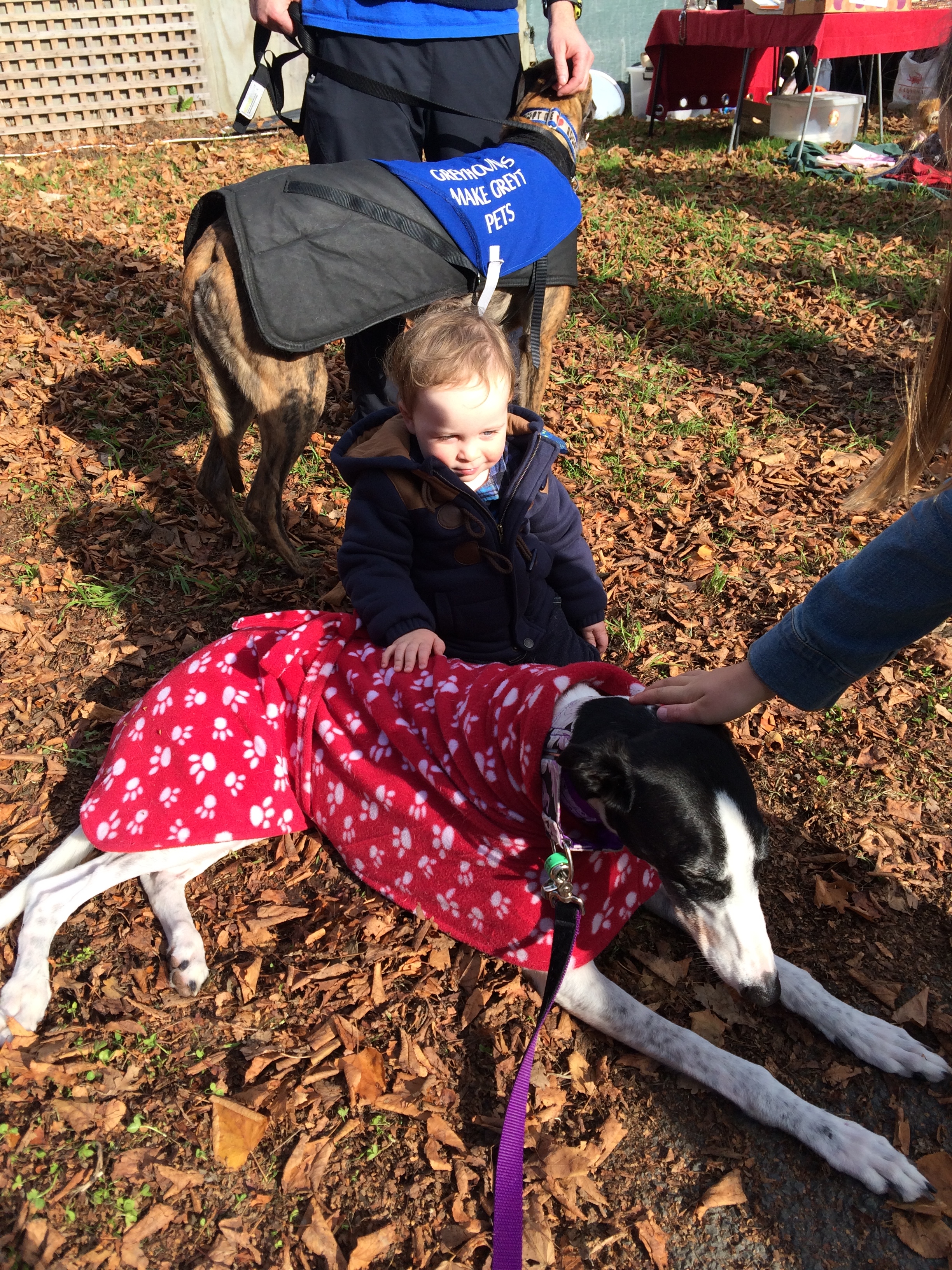
My dog Izzy meets a little boy at a promotion for Greyhounds as Pets

My dog Izzy meets a little boy at a promotion for Greyhounds as Pets

Children who grow up with dogs and cats develop a greater level of emotional intelligence, research shows.

Children living with a pet develop:

a) Compassion – by learning to care for someone other than themselves, and understanding that a dog has feelings

b)  Self-esteem – by being assigned tasks to help care for the family dog

c) Cognitive development – by playing, talking and even reading to the family dog

d) Understanding of life – because our dogs don’t live as long as we do, sometimes it is the loss of a family dog that is the child’s first real loss, teaching them to understand and manage grief.  If your dog has puppies, they also understand that other animals become parents and have little offspring to care for.

And, as in adults, dog ownership is linked to managing stress.  In today’s very modern world, children have more pressures on them at an earlier stage of life.  Having a dog is an outlet for managing stress; such as when a child plays with or walks the dog – exercise helps reduce stress.

Source:  Mother Nature Network


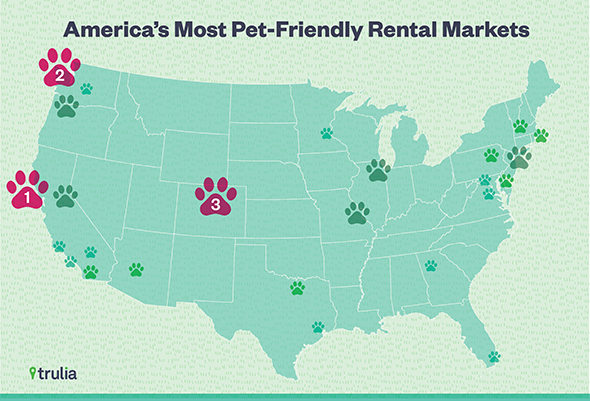
America’s pet friendly rental markets

Finding rental housing when you own a dog (or two, or more) is a big issue here in Christchurch.  Our housing market has done some very weird things since the earthquakes of 2010 and 2011 with sky-rocketing property prices and escalated rental costs (people getting their homes repaired move to temporary accommodation – paid by their homeowners insurance, adding to the competition for rental properties).

Those people who did not own their homes pre-quakes and were dog owners have been some of the most severely affected by the increases.

And so this article from Forbes Magazine caught my eye.  It’s about renting housing in the USA when you are a dog owner; the largest 25 property rental markets are compared.

Pet friendly rental markets

Three factors were used to rank the rental markets:

a) the percentage of landlords willing to allow pets (counted by reading the ads for rental properties)

b) the least expensive pet fees.  That’s a fee that you pay on top of any deposit because you own a pet.  Most fees are refunded when you leave the property in good condition.  Others are simply higher rents for pet owners that are non-refundable.  In Christchurch, pet fees, particularly in terms of higher deposits, suddenly appeared on many properties where there were none before.

c) and my favorite criteria:  a high concentration of pet stores and services.

The western cities of San Francisco, Seattle, Denver, Oakland and Portland topped the list.

Sadly for dog lovers, the survey revealed that landlords are much more tolerant of cats than they are of dogs.  And the larger the dog, the harder time you have when renting.  Only 4% of landlords were prepared to allow large breed dogs like a St Bernard.

What this information reinforces is that dog ownership costs money.  If you are considering adding a dog to your pack, spend some time considering your income and life situation before making the commitment.

Source:  The Forbes article cited used data from this Trulia Trends report

Kathleen Crisley, specialist in dog massage, rehabilitation and nutrition/food therapy, The Balanced Dog Ltd, Christchurch, New Zealand

Pet Cancer Awareness Month

Did you know that 1 out of every 4 dogs develops cancer?

Cancer is a devastating  diagnosis which many owners will face (and I speak from personal experience; I’ve loved and lost 2 dogs to cancer plus provided palliative care support to other dogs diagnosed with the disease).

The month of May is Pet Cancer Awareness Month.

Like humans, dogs are subject to a higher cancer risk because of genetic and lifestyle factors.  Good nutrition, exercise and maintaining a healthy body weight are as good for our dogs as they are for us!

In this video, Dr Gerald Post of the Veterinary Oncology Center in Connecticut talks about prevention, early indicators of cancer, and diagnostic tests.

There is a growing body of research into canine cancers and new treatments are being developed and tested.  This means that treatments such as chemotherapy exist for dogs when previously nothing could be done.

If you type the word ‘cancer’ into the search box on this blog, you will see a number of articles about dogs and cancer.  I regularly read new articles about cancer and treatments because I’m interested in the subject and I want to offer my customers the best possible advice and support when working with their veterinarian and others in their dog’s healthcare team.

Please feel free to share your canine cancer story by posting to this blog – so that others can learn from your experience.

Kathleen Crisley, specialist in dog massage, rehabilitation and nutrition/food therapy, Canine Catering Ltd, Christchurch, New Zealand


New Directions in Canine Behaviour

New directions in canine behavior

The January 2015 special edition of the journal Behavioural Processes is fully online (until January 2016).  This means you can download .pdf copies of fifteen  interesting research articles about dogs and behavior.

In the opening editorial of this journal, Monique A.R. Udell says that research into social development and cognitive evolution of dogs is just beginning to scratch the surface despite the long history of the human-canine relationship.

I am particularly interested in these fields of research (as my many blog postings under the category of ‘research’ show!) because of the work I do with dogs.  Understanding dogs is critical to working with them in a holistic approach to health.

My only criticism of journal articles generally (not just this journal) is the odd and often long names that researchers choose for the title of their articles.  It is just one indication that researchers work in a different world from generalist audiences; they are often judged in peer reviews for language this is technical.  In my experience as a research manager, I have also found that most academic researchers write in a style using long sentences and paragraphs.

Some of these articles are easier to read than others because of this.

The articles in this issue are:

  • Revisiting the concept of behavior patterns in animal behavior with an example from food-caching sequences in Wolves (Canis lupus), Coyotes (Canis latrans), and Red Foxes (Vulpes vulpes)
  • Assessment of attachment behaviour to human caregivers in wolf pups (Canis lupus lupus)
  • Self-regulatory depletion in dogs:  insulin release is not necessary for the replenishment of persistence
  • Dogs and their human companions:  The effect of familiarity on dog-human interactions
  • Scent of the familiar:  An fMRI study of canine brain responses to familiar and unfamiliar human and dog odors
  • Shut up and pet me!  Domestic dogs (Canis lupus familiaris) prefer petting to vocal praise in concurrent and single-alternative choice procedures
  • A comparison of pet and purpose-bred research dog (Canis familiaris) performance on human-guided object-choice tasks
  • Gazing toward humans:  A study on water rescue dogs using the impossible task paradigm
  • Is that fear?  Domestic dogs’ use of social referencing signals from an unfamiliar person
  • Why do adult dogs ‘play’?
  • Down but not out:  Supine postures as facilitators of play in domestic dogs
  • The advent of canine performance science:  Offering a sustainable future for working dogs
  • Do you see what I see?  Can non-experts with minimal training reproduce expert ratings in behavioral assessments of working dogs?
  • Which personality dimensions do puppy tests measure?  A systematic procedure for categorizing behavioral assays
  • Citizen science:  A new direction in canine behavior research

Kathleen Crisley, specialist in dog massage, rehabilitation and nutrition/food therapy, Canine Catering Ltd, Christchurch, New Zealand


Doggy quote of the month for May

‘People teach their dogs to sit; it’s a trick.  I’ve been sitting my whole life, and a dog has never looked at me as though he thought I was tricky.’

– Mitch Hedberg, comedian (1968-2005)

Get Healthy, Get a Dog

The Harvard Medical School has published a special health report entitled Get Healthy, Get a Dog:  The health benefits of canine companionship. 

The report details the many ways that dogs can improve the lives of humans.

Get Healthy, Get a DogIn promoting the report, the School says:

There are many reason why dogs are called humans’ best friends: not only do they offer unparalleled companionship, but a growing body of research shows they also boost human health. Owning a dog can prompt you to be more physically active — have leash, will walk. It can also:

  • help you be calmer, more mindful, and more present in your life
  • make kids more active, secure, and responsible
  • improve the lives of older individuals
  • make you more social and less isolated

Just petting a dog can reduce the petter’s blood pressure and heart rate (while having a positive effect on the dog as well).

The report can be purchased in print (US$20), in .pdf electronic version (US$18) or both (US$29) from this webpage.

I’m pleased to see this type of publication coming from such a reputable institution.  Dogs and humans both benefit when  humans take responsibility for a committed and healthy relationship.  I particularly like that the report also covers grief, since we all will face grieving the loss of beloved pet (given the odds – since we live a lot longer than our dogs do).

The chapters in the report include:

  • Our dogs, ourselves
    • Benefits of dog ownership
    • Service dogs
  • How dogs make us healthier
    • Physical activity
    • Cardiovascular benefits
    • Reduced asthma and allergies in kids
    • Psychological benefits
    • How human contact benefits dogs
  • SPECIAL SECTION
    • Nutrition guidelines for dogs
  • Exercise for you and your dog
    • Exercise whys and wherefores
    • The exercise prescription for people
    • Exercise guidelines for dogs
    • Help your dog avoid injuries
    • Walking with your dog
    • Hiking
    • Running
    • Biking
    • Swimming
    • Playing fetch, Frisbee, or flying disc
    • Agility training
    • Skijoring
    • Playing inside the house
  • Adopting a dog
    • Deciding on the qualities you want
    • Breed considerations
    • Finding your dog
  • How to be a responsible dog owner
    • Basic equipment
    • Veterinary care
    • Dogs in cars
    • Providing for your dog while you’re at work
  • Raising a well-behaved dog
    • Obedience training
    • Housetraining
    • Keeping dogs off furniture … or not
    • Soothing the anxious hound
  • Grieving a loss
  • Resources
  • Glossary

Kathleen Crisley, specialist in dog massage, rehabilitation and nutrition/food therapy, Canine Catering Ltd, Christchurch, New Zealand

Dry Dog, Wet Dog

Serenah Hodson is an Australian pet photographer.  She’s just done a series entitled Dry Dog Wet Dog.  She says,

‘Dry Dog Wet dog came about with washing my own dogs. Their personalities change when they know it’s bath time. So I decided to create a series of the different looks and not only personalities but the difference in look from groomed to wet. We get such great texture on the dog when the hair is wet. Some dogs look completely different when wet and this was the joy I wanted to capture.’

Here’s a few of Serenah’s photos and  you can follow her on Facebook to see more of her work.

Garfunkel-Dry-Dog-Wet-Dog Casper-Dry-Dog-Wet-Dog Bones-Dry-Dog-Wet-Dog Henri-Dry-Dog-Wet-Dog

Kathleen Crisley, specialist in dog massage, rehabilitation and nutrition/food therapy, Canine Catering Ltd, Christchurch, New Zealand

The basics of animal behavior

Nikolaas Tinbergen, who lived from 1907-1988, was a scientist who developed four basic questions that would explain animal behavior; he ultimately won the Nobel Prize for his work.

If you get involved in animal advocacy or rescue work, it helps to have some understanding of animal behavior.   The ‘4 Questions’ help us to understand why an animal is exhibiting a behavior.  Some published resources call these Questions ‘the Four Whys…’ (although the questions aren’t always phrased as a why)

1.  What is the function of the trait, or why does it exist?

2.  What is the phylogeny, or evolutionary history, of the trait?

3.  What is the cause of the trait?  Regardless of history or function, there is likely to be a physical basis for the behavior.

4.  How did the trait develop?  This is where you consider how the animal interacted with its environment and surroundings over time.

Barking dog

So, as a simple example – let’s consider barking.  Barking exists as a form of communication that augments physical body language.  So that’s the function question answered.

As far as evolution is concerned, it is probable that early dogs had different vocal sounds which developed into the barking we know today in the wide range of dog breeds.

The cause of barking is the passing of air through vocal chords – much like in humans.

And how the trait developed…well this is connected to domestication and how dogs could communicate with the canine and human members of their pack.  Animal trainers learn to distinguish the different types of barking and help to pass this knowledge onto their clients.

Most dog owners can also understand the differences in their dog’s barking.

Kathleen Crisley, specialist in dog massage, rehabilitation and nutrition/food therapy, Canine Catering Ltd, Christchurch, New Zealand