Author Archives: DoggyMom.com

Harness fit in guide dogs

A research team at the University of Veterinary Medicine in Vienna (Vetmeduni Vienna) have studied the forces that guide dogs are exposed to during their work to ascertain what types of harness are most suitable.

Guide dogs walk under constant tension. A well-fitting harness is extremely important for the animals (Photo: Michael Bernkopf/Vetmeduni Vienna)

Guide dogs walk under constant tension. A well-fitting harness is extremely important for the animals (Photo: Michael Bernkopf/Vetmeduni Vienna)

A proper harness that enables good communication between the blind person and the dog is an important factor to support the dog’s well-being, while a poorly fitting harness may result in health problems and impaired communication between dog and owner.

The team members, movement analysts and physiotherapists, examined the distribution of pressure in working guide dogs by placing pressure sensors beneath their harnesses. Eight guide dogs were filmed with a trainer while climbing steps, avoiding obstacles, turning left and right and walking straight ahead. To visualize the movements, the animals, the trainers and the harnesses were equipped with reflective markers. The positions of the markers were recorded by a total of ten cameras.

The results showed that the bottom right of the animals’ chests is particularly stressed. As Barbara Bockstahler explains, “Guide dogs walk under constant tension. They are usually on their owners’ right and in front of them.” The scientists found that the pressure on the right side of a dog’s chest may equate to up to 10 per cent of the animal’s weight. In contrast, the dog’s back experiences far less pressure. “It is important for guide dogs to exercise regularly without a harness to compensate for the lopsided pressure they experience in their work”, says Bockstahler.

Very rigid harnesses enable quick and finely tuned communication between dogs and owners but cause stress to the animals. The more stiffly the harness is anchored to the handle, the more pressure the animal experiences. The most comfortable harness relies on a hook-and-loop connection, which provides the least pressure on the dog, although for long-haired dogs a plastic clip version is favourable.

The researchers want to study guide dogs for a longer period of time to find out whether any of the harnesses are associated with long-term problems in the animals.   They require partners and sponsors for this work.

The results of this study have been published in the Veterinary Journal.

Source:  Vetmeduni Vienna press release
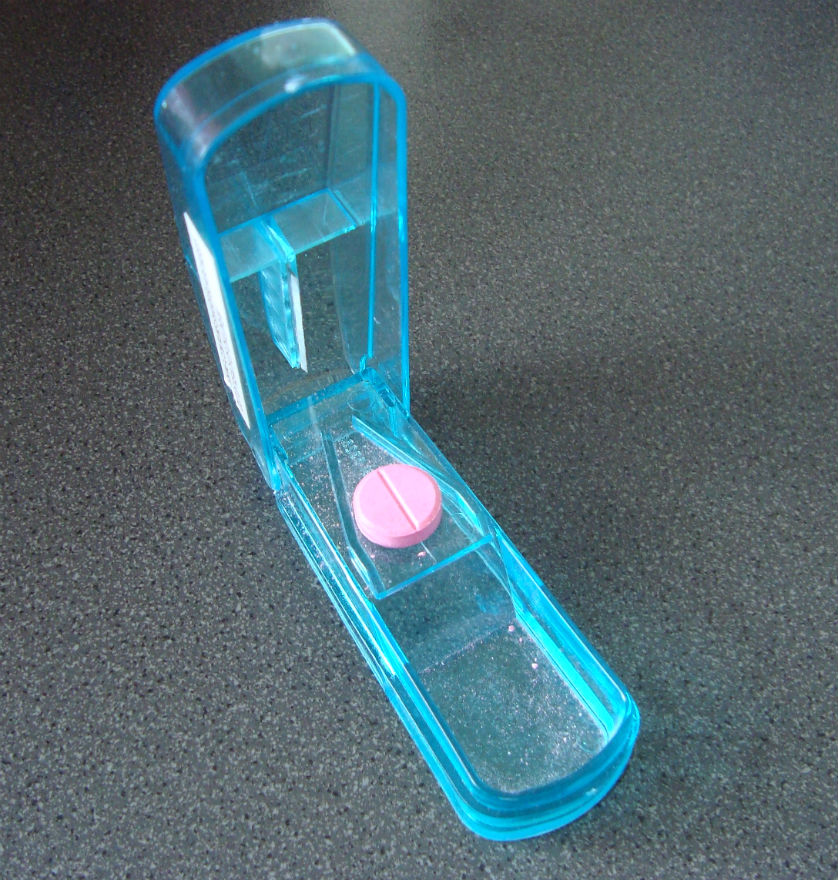
The little gadget that every dog parent should have

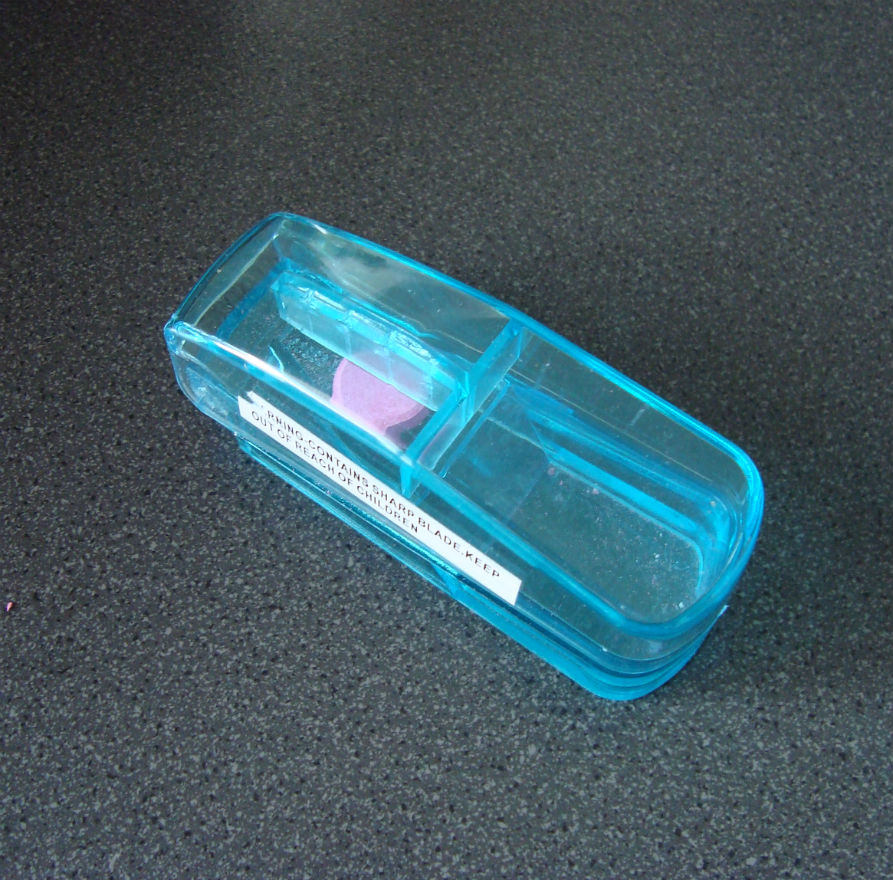
The little gadget that I recommend is a pill splitter. It isn’t high tech and, at most, it will cost you about $2.

But, if your dog needs medication or supplements and the dosage requires a half tablet, then you’ll be glad you bought one!

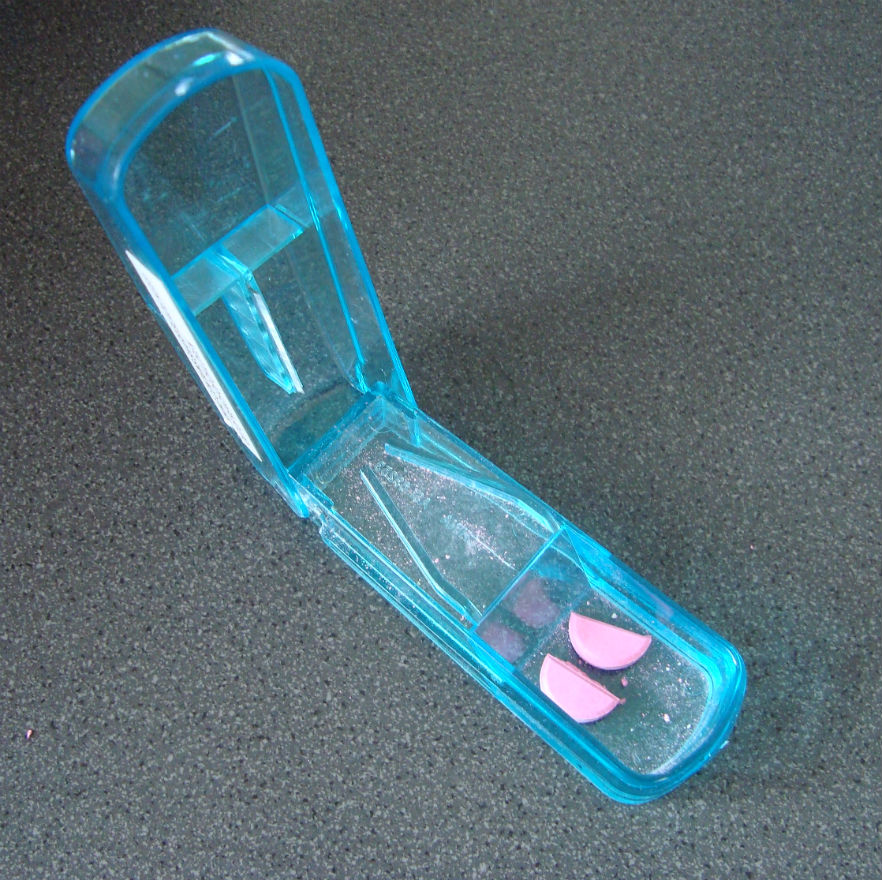
It’s really quite simple:    The lid contains a razor blade (note label warnings on the side about keeping it away from fingers and children)

Place the bill in the base of the splitter

Place the pill in the base of the splitter

Close the lid

Close the lid and push gently

Voila!  The pill is evenly cut in half for a proper dosage

Voila! The pill is evenly cut in half for a proper dosage

Do you have a story about giving your dog medication? If so, get in touch!

Kathleen Crisley, Specialist in dog massage, rehabilitation and nutrition, Canine Catering Ltd, Christchurch, New Zealand

Image

Wordless Wednesday, part 16

OLYMPUS DIGITAL CAMERA

BP_Wordless_wed_Hop_Logo_2014

The Florida sniffing dogs

The state of Florida is employing the use of some special Labradors in their fight for biosecurity.

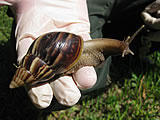
Bear, Sierra and RJ are trained to follow the scent trails laid down by the invasive Giant African Land Snail.

Photo courtesy of Tampa Bay Times

Photo courtesy of Tampa Bay Times

The snail is a pest in the Miami area, where officials believe they have contained the spread of the pest.

The snails can grow as big as rats and they eat plants as well as stucco and plaster because they need lots of calcium to grow their shells. In large numbers, the snails have been known to cause extensive structural damage to buildings.  (And there’s lots of stucco in Florida!)

Photo by Andrew Derksen, Florida Cooperative Agriculture Pest Survey Program

Photo by Andrew Derksen, Florida Cooperative Agriculture Pest Survey Program

The snails can carry a parasite which is a human health risk because it can cause a form of meningitis but no cases have occurred so far in the United States.

The snails were introduced by a Santeria group which is a religion with a Caribbean and West African background.  The group would use the snails in religious ceremonies.

If you’re lost…let’s hope your dog is with you

As readers of the blog know, I love to profile new research into topics such as dog health and behaviour.  This story, however, is truly astounding – not only because of the results but because someone chose to research the topic!

It seems that our dogs are sensitive to the Earth’s magnetic field and so they will align themselves in a north/south direction when urinating or defecating – particularly when they are off-leash and allowed freedom.

Photo by Brock Daves

Photo by Brock Daves

A research team of Czech and German scientists studied 70 dogs during 1,893 defecations and 5,582 urinations over the course of two years.  When the Earth’s magnetic field was stable, the dog would align themselves to it when answering the call of nature.  If there was an unstable magnetic field, such as during a solar flare, the dogs seemed to become confused.

So the next time you are lost in the woods (bush for those in the Southern Hemisphere), pray that your dog needs to take a toilet break and watch carefully!  (Or, you could simply help to validate the researchers’ findings by paying more attention to the direction your dog faces when needing to pee or poo – remember your compass!)

The results of this research have been published in the journal Frontiers in Zoology.

Gotta Golden in the Lower 48?

golden-retrievers-fighting-cancer The Morris Animal Foundation is recruiting dogs for its Golden Retriever Lifetime Study.  3,000 Goldens will be followed for life to gather insights that could help prevent and treat cancer in Goldens and all other dog breeds.  In the USA, the Foundation estimates that more than 60 percent of Golden Retrievers die from cancer.

Participants will receive periodic questionnaires about their dog to complete and also be reimbursed $75 towards annual exam costs (owners must agree to bear the remaining costs of participation).  Dogs must be purebreds, with verifiable three-generation pedigree.  Any Golden under the age of two is eligible.

More information can be found in this brochure.

If your Golden resides in the lower 48 states, this may be his/her chance to contribute to the science behind canine health and longevity.

A thought for the new year

Be the Dog

Happy New Year (2014)!

All around me familiar faces…

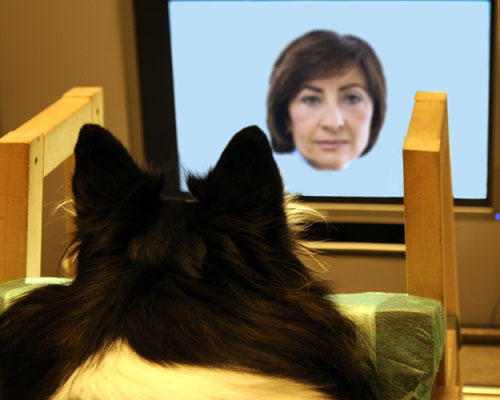
Researchers at the University of Helsinki have been testing dogs to see if they can recognise faces in images and, more specifically, whether the dogs have a different response to the images of strangers vs those people who are familiar to them.

Copyright Sanni Somppi

Copyright Sanni Somppi

The eye movements of the dogs were measured while they watched facial images of familiar humans and dogs (e.g. the dog’s owner and another dog from the same household) being displayed on the computer screen. As a comparison, the dogs were shown facial images from dogs and humans that the dogs had never met.

Dogs preferred the faces of those familiar to them.

The results indicate that dogs were able to perceive faces in the images. Dogs looked at images of dogs longer than images of humans, regardless of the familiarity of the faces presented in the images.  Dogs scanned the images of familiar faces more thoroughly, too.

The research team concludes that dogs are able to see faces in the images and they differentiate familiar and strange faces from each other. These results indicate that dogs might have facial recognition skills which are similar to humans.

Source:  University of Helsinki media release

Virgin Australia’s pet program

It’s fairly common in the USA to have frequent flyer programs for pets.  But did you know that earlier this year Virgin Australia launched that country’s first pet frequent flyer program?

Photo courtesy of Virgin Australi

Photo courtesy of Virgin Australia

Virgin Australia’s pet program adds bonus points to the air miles that passengers receive when they are members of the Velocity Frequent Flyer program.

Red members (the entry level) earn an extra 300 points each time they fly with one pet carrier. Silver, Gold and Platinum members earn more points per flight.  Platinum members earn 600 points per flight per pet carrier, for example.

Well done to Virgin Australia for recognising travelers who need to travel with their dog!

Colored treats – would you feed these?

Coloured lambs earsHere’s a photo of lambs ears that have been dyed using ‘human grade’ food coloring for Christmas.  I have deep concerns about using coloring agents in dog (and human) foods.

For example, some dogs may be allergic or sensitive to the coloring agents.  We know that the use of these additives can cause excitability since coloring agents have also been linked to hyperactivity in children.

Food colors are chemicals – they are just chemicals that have been tested by the FDA to ensure they are ‘safe’ for human consumption.  Colors are added to make food more appealing and marketable.

Since our dogs have limited color vision and lack photoreceptors in their eyes to ascertain shades of red and green, the color added to dog treats is to appeal to the dog owner and not the dog.  Dogs will decide if something tastes good!

How about some natural alternatives?  Here’s a photo of my Chicken & Cranberry Holiday Crunch (a special for the holiday season).  The red color is totally natural and comes from the whole cranberries that are part of the recipe.

Chicken and Cranberry Holiday Crunch

Chicken and Cranberry Holiday Crunch

I recommend that you feed natural products whenever possible and avoid highly colored dog treats.

And remember that no more than 10% of your dog’s daily caloric intake should come from treats!

Kind regards,

Kathleen Crisley, dog masseuse and nutrition adviser, Canine Catering Ltd