I love it when dogs are used in advertising. Some ads are better than others. My current favorite is from appliance manufacturer Fisher & Paykel.
I love the use of black & white and the dog theme. What do you think?

I love it when dogs are used in advertising. Some ads are better than others. My current favorite is from appliance manufacturer Fisher & Paykel.
I love the use of black & white and the dog theme. What do you think?
Posted in dogs in advertising
Tagged advertising, appliance manufacturer, black and white, Fisher & Paykel, patience
A very different type of research article has been published in the journal Animal Cognition. This study found that dogs react sociably to robots that behave socially towards them, even if the devices look nothing like a human.
What? Yes – that’s right. A research team led by Gabriella Lakatos of the Hungarian Academy of Science and Eötvös Loránd University tested the reactions of 41 dogs with a PeopleBot robot. The robot had two arms and four-fingered hands, resembling a piece of gym equipment with a white gloved hand attached to it.
One set of dogs in the ‘asocial group’ first observed an interaction between two humans (the owner and the human experimenter) and then observed an ‘asocial’ interaction between the owner and the robot. Another set of dogs watched an interaction between the owner and the human experimenter followed by observing a ‘social’ interaction between the owner and the robot.

A dog and the PeopleBot robot
These interactions were followed by sessions in which either the human experimenter or the robot pointed out the location of hidden food.
The dogs spent more time near the robot or gazing at its head when the PeopleBot behaved socially.
“Roboticists who design interactive robots should look into the sociality and behavior of their designs, even if they do not embody human-like characteristics,” Lakatos advises.
Source: Springer media release
Posted in research
Tagged Animal Cognition, cognition, design, human interaction, PeopleBot, robot, science
New Zealand’s Animal Welfare Amendment Bill is now before a Parliamentary select committee. Submissions from the public are being accepted from now until 4 October.
Here’s why I’m making a submission:

The Bill doesn’t ban testing of party bills on animals, nor does it ban the use of animal testing in the cosmetic industry. As far as animal welfare issues go, these are ‘no brainers.’
I’d also like to see an independent Commissioner for Animals because I don’t think the Ministry of Primary Industries, with its focus on economy and production, can make good choices.
Click here to read the Animal Welfare Amendment Bill
Making a submission online is easy – just click here and follow the instructions for uploading your submission.
Today, in conversation, I used the term ‘dog and pony show’ as in ‘David and Larry are going to do a dog and pony show on xxx.’ And then I got a question I didn’t expect – ‘what does that mean?’
The term dates back to the United States in the late 19th and early 20th centuries, when there were many traveling circuses to entertain. It was often the dog and pony show that was promoted as a headline act.
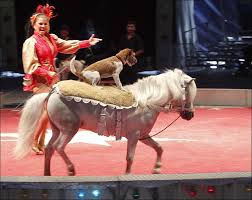
Quite literally, this was when dogs and ponies/horses would perform together – often wearing costumes and decorations.
As time has gone on, ‘to do a dog and pony show’ means to publicize a presentation that is designed to impress or sell a product. It’s debatable about whether the saying is one of scorn – some dog and pony shows could be well-researched and professional as well as glitzy, others not.
Posted in dog quotes, Dogs
Tagged animals, Dog, dog and pony show, pony, traveling circuses

A mailman meets a boy and a huge dog. ‘Does your dog bite?’ asks the mailman. ‘No,’ replies the boy. And the dog bites the mailman’s leg. ‘You said he doesn’t bite!’ yells the mailman. ‘That’s not my dog,’ replies the boy.
Letter carriers and other delivery personnel regularly face a hazard when delivering to properties with untrained or unrestrained dogs. Although there are many cartoons and jokes about dogs and postal workers, the issue is no laughing matter.
In the United States last year, nearly 5,900 letter carriers were bitten by dogs. Letter carriers are encouraged to report homes with dogs that appear menacing and they may choose not to deliver to a property or even a neighbourhood if dogs are running loose.
Ken Snavely, Acting Postmaster of Los Angeles, says, ‘Working with animal behavior experts, the Postal Service has developed tips to avoid dog attacks, and for dog owners, tips for practicing responsible pet ownership.’
These tips include:
How to be a Responsible Dog Owner
The US Postal Service also keeps statistics on dog bites, with the City of Los Angeles topping the list of incidents.
Fiscal Year 2012 U.S. Postal Service Dog Attack City Ranking
|
In my work as a canine massage therapist, I see a lot of older dogs who have trouble navigating stairs.
But, here’s a twist – a short video to show you how one puppy decides to go down stairs. Have a great week!
It’s been just over two weeks since 367 lives were saved in a multi-state raid in the United States, the second-largest dog fighting raid in U.S. history.

Photo by the ASPCA
The Humane Society of the United States and the ASPCA® (The American Society for the Prevention of Cruelty to Animals®), called in by the United States Attorney’s Office and the Federal Bureau of Investigation (FBI), assisted in seizing 367 dogs in Alabama, Mississippi, and Georgia.
‘The lowest places in hell would be reserved for those who commit cruelty to our animals’ George Beck, U S Attorney, Middle District of Columbia
Dogs were found in appalling living conditions, with little shelter from the area’s sweltering summer temperatures.
Federal and local officials also seized firearms and drugs, as well as more than $500,000 in cash from dogfighting gambling activities that took place over the course of the investigation. Remains of dead animals were also discovered on some properties where dogs were housed and allegedly fought. If convicted, defendants could face up to five years in prison, as well as fines and restitution.
The dogs, which ranged in age from days-old puppies to 12-13 years, are now receiving medical care and are being assessed for adoptive homes.
These videos show the condition of some of the dogs that were seized during the raid as well as the living conditions they were found in:
The rescue was the result of many agencies working together. Agencies assisting the ASPCA and the HSUS with the operation included the Florida State Animal Response Coalition and Sumter Disaster Animal Response Team (Bushnell, Fla.), University of Florida (Gainesville), Humane Society of South Mississippi (Gulfport), International Fund for Animal Welfare (Yarmouth Port, Mass.), Asheville Humane Society (Asheville, N.C.), Charleston Animal Society (Charleston, S.C.), Louisiana SPCA (New Orleans), American Humane Association (Washington, D.C.), Greater Birmingham Humane Society (Birmingham, Ala.), Atlanta Humane Society (Atlanta, Ga.), PetSmart Charities (Phoenix, Ariz.), Code 3 Associates (Longmont, Colo.), Montgomery Humane Society (Montgomery, Ala.), and Dr. Melinda Merck.
Tim Rickey, Vice President of the ASPCA’s Field Investigations & Response Team, participated in the raids and has commented on the realities of dogfighting:
When I first walked on the property, I stared across the yard and saw more than 100 dogs, most of them tied to heavy log chains, anchored to dilapidated dog houses. The dogs ranged from old to young, living on a worn dirt ring that likely had seen generations of dogs come and go to a sad fate.
Most were chained nose-to-nose to their neighbors to ensure continuous arousal.
This cycle begins with being chained at such an early age with little to no positive human or animal interaction. The burden continues with heavy chains, often with additional weights, to drag around their entire lives. The constant noise, arousal and anxiousness push them towards aggression to or from their yard mates. If they don’t respond, their life may end quickly, but if they do, they have sealed their fate of a long, torturous life.
Their only reprieve from the chain is death or brief release to be tested against another dog, eventually going back to the chain with little attention to their wounds. What follows is weeks of intense training and significant human interaction with the person who will commit the ultimate betrayal and force them into a barbaric battle for entertainment and profit. If they survive, they go back again to the chain: A vicious cycle that could go on for years until these dogs finally have no value or fight left in them and are discarded.
Donations to support the care and rehabilitation of these dogs, to any of the organisations involved, will be gratefully accepted.
Sources:
Here’s a romance story to start your weekend.
Claire Johnson and Mark Gaffey from Stoke-on-Trent are an engaged couple with a twist. They met because of their dogs – their guide dogs.

Claire Johnson and Mark Gaffey with their guide dogs, Venice and Rodd. copyright Dave Evitts
Claire was matched in 2011 with Venice and Mark at the same time with Rodd. They met at guide dog training, when both Venice and Rodd found they liked one another and would bring their new handlers together for a chat whilst they explored and snuggled together.
When both owners and dogs returned to Stoke-on-Trent (they discovered they lived near one another, although they had never met before), they stayed in touch, meeting for coffee, lunches and other dates.
On Valentine’s Day 2013, Mark popped the question. The couple will be married in March 2014 with their dogs as ring bearers.
Claire and Rodd tell the story of how they met in this YouTube video:
Posted in Dogs
Tagged Claire Johnson, guide dog, guide dogs, Mark Gaffey, Rodd, romance, Stoke-on-Trent, Venice









 DoggyMom.com