An at-home study is tracking how nutrition may influence canine health and the owner-pet relationship over 10 months.
Source: RebeccasPictures | Pixabay.com
Iowa State University and Freshpet are conducting an at-home research study examining how diet type may affect both dog health and the human–animal bond.
The study, led by Logan Kilburn, assistant professor in animal science at Iowa State, recruited 39 dogs of varying ages and breeds from central Iowa.
“This collaboration allows us to evaluate canine health and the human–animal bond in a setting that is natural and familiar to both dogs and their owners,” Kilburn said. “At-home studies provide valuable insight into how nutrition fits into everyday life and how it may shape the relationship people have with their pets.”
According to the university, participating dog owners will follow assigned feeding protocols over a 10-month period, collecting non-invasive health-related samples and completing surveys designed to assess aspects of the human-animal bond. The study will integrate owner-reported outcomes with objective measures of canine health, providing a comprehensive look at how diet may affect both physical well-being and the owner-pet relationship.
“At Freshpet, we believe nutrition plays a meaningful role in pets’ lives and the relationships they share with their families,” said Gerardo Perez-Camargo, veterinarian and senior vice president of research and development at Freshpet. “Partnering with Iowa State University will allow us to contribute to research that advances the understanding of canine health and the human–animal bond.”
…because the habit of narrating your inner life to a creature who can’t judge you turns out to be surprisingly good practice for the kind of honesty that actual relationships require
Talking to your pets like people isn’t just cute, it’s quietly training you to be more honest and emotionally available in your human relationships too
I’ll admit something that might sound ridiculous. Yesterday morning, while making my oat milk latte, I caught myself explaining to my neighbor’s cat why I was running late. Not in that quick, throwaway “hey buddy” kind of way. I mean a full, detailed account of how my alarm didn’t go off, how I’d stayed up too late reading about cognitive biases, and how the whole morning had spiraled from there.
The cat blinked at me. Slowly. Twice.
And somehow, that felt like enough.
If you’ve ever narrated your grocery list to a dog or debriefed your workday to a parrot, you already know what I’m talking about. There’s something about talking to an animal that feels different from talking to a person. Safer, maybe. Less performative. And as it turns out, that feeling isn’t just in your head. Research suggests that people who regularly talk to their pets like they’re human tend to develop communication habits that actually make them better at connecting with other humans too.
Here’s why that matters more than you think.
The real reason you talk to your cat like a roommate
Psychologists have a word for what we do when we chat with our pets as though they understand every syllable. It’s called anthropomorphism, and it’s the tendency to attribute human characteristics, emotions, and mental states to non-human entities. Your dog isn’t actually judging your outfit. Your cat doesn’t really have opinions about your ex. But your brain treats them as if they do.
Nicholas Epley, a behavioral scientist at the University of Chicago and one of the leading researchers on anthropomorphism, has argued that this tendency isn’t a sign of immaturity or delusion. It’s actually a byproduct of the same cognitive machinery that makes us good at reading other people. The same mental tools we use to infer what a friend is thinking or what a colleague really meant by that email are the tools we activate when we imagine our dog is sulking because we left for work.
In other words, talking to your pet isn’t a weird quirk. It’s your social brain doing reps.
A rehearsal space with no stakes
Here’s what I find most interesting about this whole thing, and I’ve mentioned this before but it keeps proving true: the environments where we practice being honest matter just as much as the honesty itself.
Think about the last time you wanted to say something vulnerable to someone you care about. Maybe you needed to admit you were struggling, or that something they did hurt you, or that you didn’t have it all figured out. Chances are, you rehearsed it. In the shower. In the car. In your head while pretending to listen to a podcast.
Talking to a pet is a version of that rehearsal, except it happens out loud. And out loud matters.
When you tell your dog about your terrible day, you’re not just venting into the void. You’re practicing the act of putting internal experience into words. You’re narrating feelings that might otherwise stay tangled up in your chest. And you’re doing it in front of a living creature who won’t interrupt, won’t argue, and won’t make you feel stupid for saying it.
According to Psychology Today, people who anthropomorphize tend to show stronger social bonds and richer empathy. The habit of imagining an inner world for another being, even an animal, exercises the same perspective-taking muscles we rely on in human relationships.
What your pet can’t do is exactly the point
Your cat can’t validate you. Your dog can’t offer advice. Your goldfish isn’t going to text you back with a thoughtful response at 2 a.m.
And that’s precisely what makes these conversations so useful.
When I lived through my aggressive vegan phase years ago, I learned something painful about communication. I spent three years armed with statistics and moral arguments, convinced that if I just said the right thing in the right way, people would change. My friend Sarah’s birthday dinner became a lecture. Family gatherings turned into debates. I was so focused on being right that I forgot how to actually connect with anyone.
What finally broke the pattern wasn’t a better argument. It was learning to talk without needing a specific response. Learning to say things honestly, without controlling the outcome.
That’s what talking to a pet teaches you. You learn to express yourself for the sake of expression, not for the sake of winning. There’s no scoreboard. No defense mechanism on the other end. Just you, saying what’s true, and a creature who receives it without judgment.
Research on self-disclosure consistently shows that the act of sharing personal information, even when the listener can’t fully understand it, builds our capacity for vulnerability. It trains us to tolerate the discomfort of being seen. And that tolerance is one of the most important ingredients in any meaningful relationship.
The biology backing all of this up
It’s not just a psychological phenomenon either. There’s a biological layer to this that I find genuinely fascinating.
A comprehensive review published in Frontiers in Psychology examined dozens of studies on human-animal interaction and found that positive contact with pets is linked to the release of oxytocin, the same hormone involved in bonding between parents and children, and between romantic partners. The review also found evidence that these interactions can reduce cortisol levels, lower blood pressure, and even increase trust toward other people.
So when you’re sitting on the couch telling your dog about your annoying coworker, your body is doing more than just relaxing. It’s chemically priming you for better human connection. The oxytocin system doesn’t distinguish between species when it comes to bonding. A warm, safe interaction is a warm, safe interaction, whether it’s with your partner or your Labrador.
This is something I think about a lot during my photography walks around Venice Beach. You’ll see dozens of people on any given morning having full-blown conversations with their dogs. Asking them questions. Narrating the scenery. Explaining why they chose to walk left instead of right. From the outside, it looks eccentric. From the inside, it’s probably the most emotionally honest those people will be all day.
From pet talk to pillow talk
The real payoff of this habit isn’t in the conversations you have with your pet. It’s in how those conversations change the ones you have with people.
I’ve been with my partner for five years now. We have very different lifestyles in a lot of ways, including what we eat and how we think about food. Early on, I could have easily fallen into old patterns of trying to convince and convert. Instead, I’d learned (the hard way, through years of burned bridges) that real communication isn’t about persuasion. It’s about honesty without agenda.
And honestly? I think some of that skill got sharpened in the smallest, most ridiculous moments. Explaining my feelings to a stray cat on my balcony. Talking through a tough decision while a friend’s dog stared at me from across the room. Those moments taught me to hear my own voice saying difficult things without flinching.
As Psych Central notes, anthropomorphism may help people better understand others and connect with the world around them. The same mental habit that lets you imagine your pet has feelings also sharpens your ability to consider what the humans in your life might be going through.
If you’ve ever had a partner tell you that you’re a good listener, or a friend say they feel safe talking to you, part of that might trace back to the hundreds of tiny, unwitnessed conversations you’ve had with animals who couldn’t talk back. You were building a muscle you didn’t even know you were training.
Why this isn’t just a quirky personality trait
It’s tempting to file “talks to pets” under the same category as “collects too many houseplants” or “names their car.” Harmless. Cute. A little weird.
But the research suggests it’s more than that.
People who regularly engage in anthropomorphic behavior tend to score higher in empathy. They’re more likely to consider perspectives beyond their own. They show patterns of emotional regulation, using a calm, gentle tone with their pet, that carry over into stressful human interactions. They practice repair quickly, softening after a raised voice, returning to warmth without being asked.
My grandmother, who raised four kids on a teacher’s salary and still volunteers at the food bank every Saturday, has always talked to animals like they’re old friends. I used to think it was just her personality. Now I think it might be part of why she’s one of the most emotionally intelligent people I know. She never needed a psychology textbook to understand that practicing kindness in small, invisible moments makes you better at kindness in the moments that count.
The bottom line
If you talk to your pets like they’re people, you’re not being silly. You’re rehearsing honesty in a space where it costs you nothing, and building emotional skills that pay off everywhere else.
The habit of narrating your inner life, out loud, to a creature who can’t judge you, turns out to be surprisingly good training for the kind of vulnerability that actual relationships require. It lowers your defenses. It teaches you to express without performing. And it keeps your empathy muscles in shape for when the stakes are real.
So the next time someone catches you explaining your day to a cat, don’t apologize.
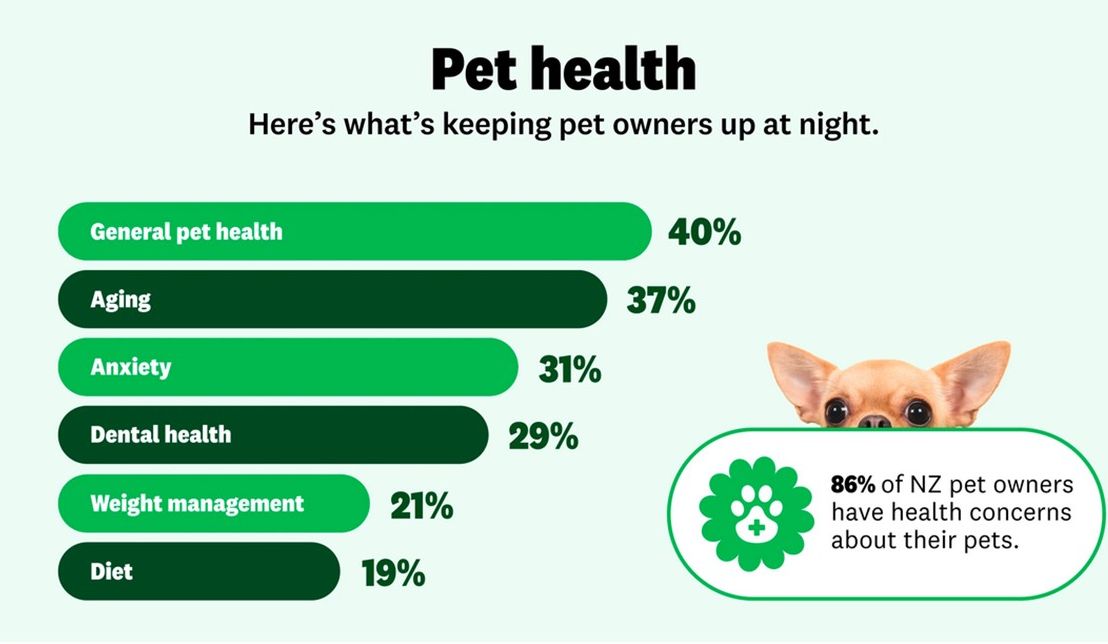
NZ-owned pet company Pet Direct released its pet survey recently and this infographic was the one I found most interesting and relevant.
The results align well with what my clients tell me. They seek out my services for support in their dog’s care – so of course general health features.
Arthritis is a major concern (no one likes to see there dog growing old) and there is a lot of confusion about what management options are available and that arthritis is actually a disease of the young dog. I still see too many pet parents who think a supplement is going to be their 100% solution which is the farthest from the truth. A multi-modal management strategy is needed.
And then comes anxiety. Thanks to my Fear Free certification, a lot of the clients I see have dogs with multiple issues and one of those is anxiety. Imagine living your life in a constant state of stress, unable to communicate in people language what is wrong! I really feel for these dogs. Massage, acupressure and lifestyle changes are all part of the picture for these dogs.
A friend of mine said she noticed that many of the posts on my Facebook page mention weight loss. Weight adds stress to the joints – so no surprises that weight management and diet are on my assessment list, too.
It’s certainly worth looking at the Pet Direct survey and thinking of what you can do for your dog and how you fit within the ‘norms’ of pet ownership in NZ. My full assessments include a review of your dog’s veterinary history, an in-home visit with gait analysis, massage and exercise game plan recommendations. Easy, convenient and cost effective.
Kathleen Crisley is Fear-Free certified dog massage therapist and canine fitness trainer. She has a particular passion for working with dogs and their families to ensure injury prevention and quality of life. She specialises in working with anxious and emotionally damaged dogs. Her mobile practice, The Balanced Dog, is based in Christchurch, New Zealand
Dogs significantly change the air in homes Keystone-SDA
Dogs influence the air quality in homes. A study from Lausanne has measured for the first time the gases, particles and microbes that four-legged friends bring indoors.
The researchers see the results as a basis for more realistic models of indoor air, the Swiss Federal Institute of Technology Lausanne (EPFL) said on Monday, 23 February 2026. The influence of humans on the air has been well researched. However, the researchers say that the impact of pets has hardly been considered to date.
According to the study, a large dog at rest emits about the same amount of CO2 as an adult human. The amount of ammonia emitted is also comparable. This gas is produced when proteins are broken down and is released via the skin and the air we breathe.
According to the data, however, dogs had the greatest influence on particles in the air. By shaking, scratching or stroking, they stir up large quantities of dust, pollen, plant residues and microbes. Large dogs release two to four times more microorganisms than a human in the same room.
The animals act as mobile “carriers”, transporting biological material from the outside to the inside and distributing it throughout the room through their activities. However, this increased variety of particles in the interior is not necessarily negative, according to the researchers. Some studies suggest that contact with various microbes can promote the development of the immune system, especially in children.
Chemical reactions with ozone
Another aspect concerns chemical reactions indoors. Ozone that enters homes from outside reacts with skin lipids and forms new substances such as aldehydes or ketones. In humans, squalene, a component of skin sebum, plays a role here.
Dogs do not produce squalene themselves. However, humans transfer skin residues to the animals’ fur when stroking them. These residues then also react with ozone. On average, however, dogs produced around 40% less ozone reaction products than humans.
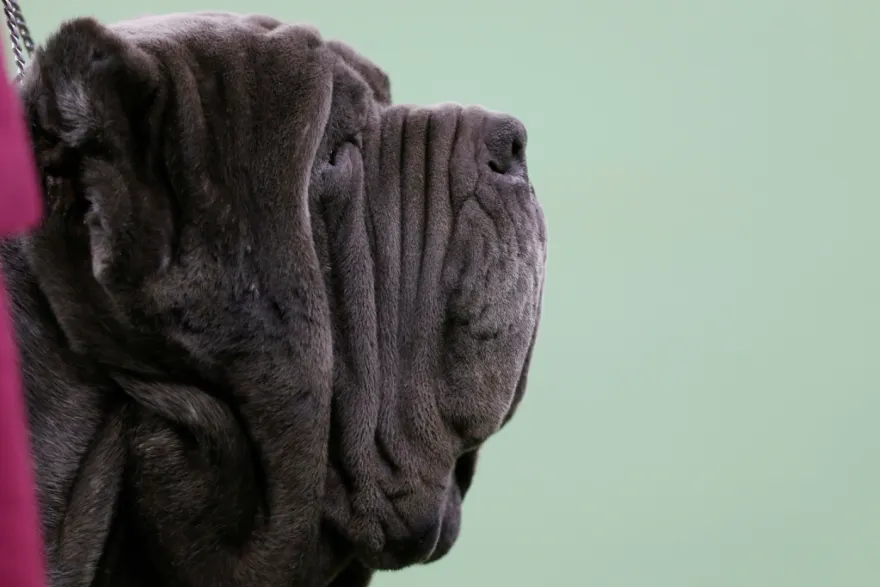
The team used a controlled environmental chamber at the EPFL in Fribourg for the measurements. Two groups of dogs were analysed: one with three large dogs (a Mastiff, a Tibetan Mastiff and a Newfoundland) and one with four small dogs (Chihuahuas). The study was published in the journal Environmental Science & Technology.
Four years ago, there were heartbreaking photos of Ukrainians fleeing their country, some with their dogs on leash, in prams, and in backpacks. Many dogs were not so lucky.
Now, there is new research to show how the dog population has changed in just those four short years. A kind of natural selection, expedited by the impacts of living in a war zone. Small dogs survive because they are less likely to trigger land mines, there’s less body mass to be impacted by shrapnel and they are more able to hide in confined spaces. Troops and researchers alike report the impacts of ongoing fear, anxiety and stress in the dogs – the trauma of living in a war zone when once they were a loved pet.
Below I share this New York Times piece in its entirety to spread the word that wars are environmental disasters which are entirely man made…
The human cost of the war in Ukraine has been well documented. But Russia’s invasion is also affecting the country’s pets in surprising ways.
In a study published in December 2025, in the journal Evolutionary Applications, a group of researchers found that exposure to the conflict in Ukraine had, in a short period, transformed dogs that were formerly pets into the kind of dogs found in more wild environments.
Scientists gathered a variety of data from 763 dogs across nine regions of Ukraine. The team worked with animal shelters, while veterinarians and volunteers gathered data from stray dogs in potentially safe areas and, sometimes, areas designated as dangerous territories.
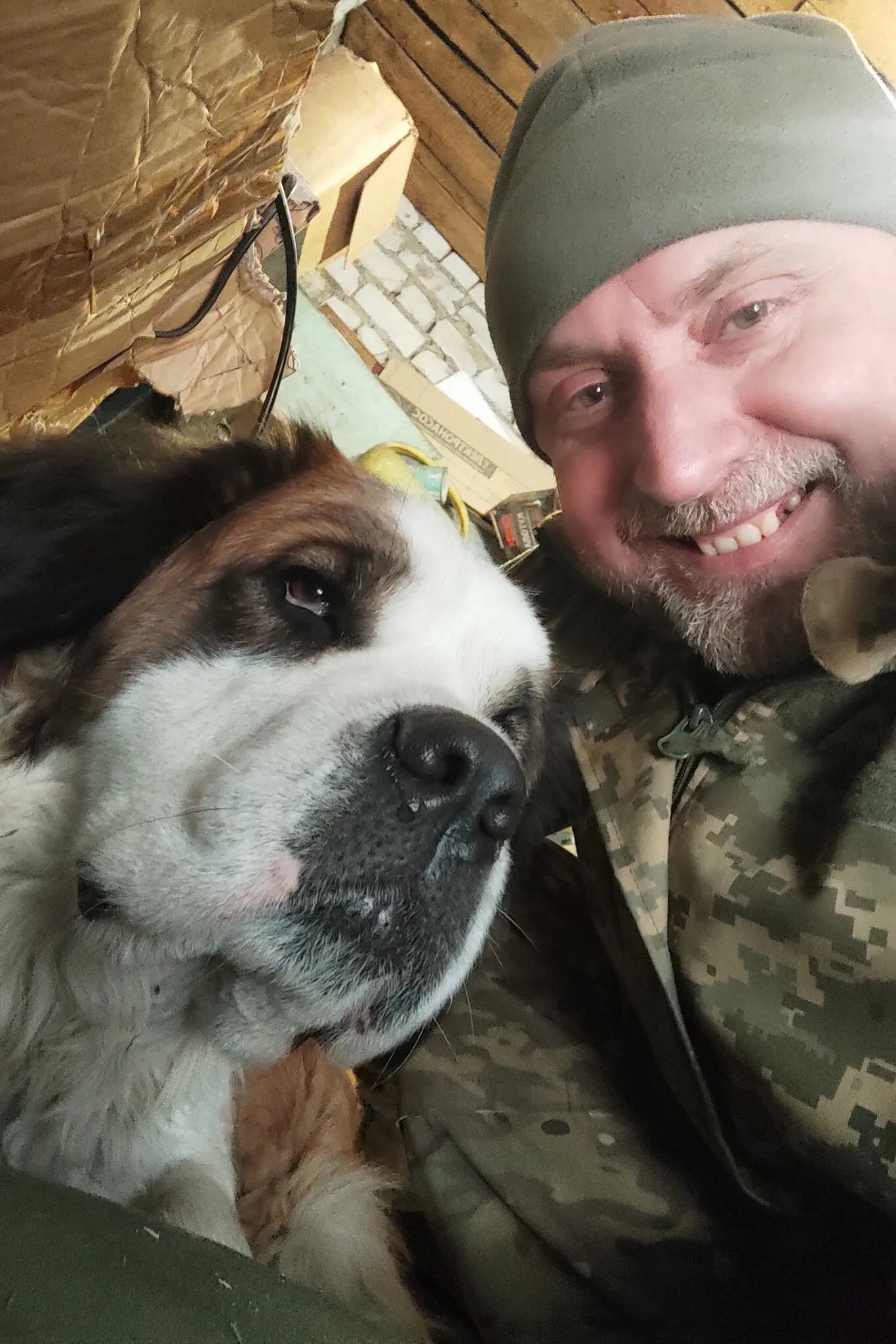
But gathering data on the front line was more difficult. That work was led by Ihor Dykyy, a zoologist at the Ivan Franko National University of Lviv. Dr. Dykyy served on the front line — near the city of Lyman in the Donetsk region, and later close to Kharkhiv near the border with Russia — for two years starting in 2022 as a volunteer with the Ukrainian Armed Forces.
“Many stray dogs lived with us in the village of Zarichne,” Dr. Dykyy remembered. “They were terrified by the hostilities; some suffered from shell shock. One small dog had a broken leg that hadn’t healed properly, leaving it with a permanent limp. Another was blind in one eye, having lost it in an explosion.”
Dr. Dykyy and his fellow soldiers “fed all of them, gave them shelter and provided medical care whenever possible,” he said.
Although the research focused on domestic dogs, many were no longer under the care of their owners, and were living as strays.
“From the beginning of the war, we saw a very sad situation with pets in Ukraine,” said Mariia Martsiv, who was the paper’s lead author and is a zoologist at the University of Lviv. “Some people took their pets with them, but some were simply left at train stations or left behind in the occupied territories.”
Ihor Dykyy, a zoologist at the Ivan Franko National University of Lviv, with Linda, a Saint Bernard who perished from a vehicle strike. Photo credit: Ihor Dykyy
Most of the team’s findings suggested that dogs on the front line, in a remarkably short period of time, had become more like wild dog species, such as wolves, coyotes or dingoes.
Examples of the transformation abounded in the data: The frontline dogs rarely had snouts that were either short like a French bulldog’s or elongated like a dachshund’s. Many also had reduced body mass. Even their ears took on a different shape, with pointed ears more frequent than floppy ears.
“On the front lines, dogs with signs of a ‘wild’ phenotype do indeed survive more often: straight ears, straight tail, less white,” Dr. Martsiv wrote in an email.
“War acts as a powerful filter, favoring traits that improve survival under extreme conditions,” said Małgorzata Witek, an author of the study and a doctoral student at the University of Gdansk in Poland.
Other characteristics more commonly associated with wild dog species were found in Ukraine’s conflict zones: There were fewer old, ill and injured dogs, and dogs on the front line were more likely to be found living in groups.
“What surprised us most was how quickly these changes appeared,” Ms. Witek said. “The war had been ongoing for a relatively short time, yet the differences between frontline dogs and other populations were already very pronounced.”
But the scientists did not want their findings interpreted as war-fueled accelerated evolution.
“The changes we observe in dogs are happening too quickly to be explained by molecular evolution,” Ms. Witek said.
What’s really happening is that the conditions of war favor animals that have certain characteristics. For example, a dog with less body mass is less likely to trigger land mines and more able to hide in confined spaces, and presents a smaller target for shrapnel.
Despite evidence of apparently wild personality traits and physical characteristics, most of the dogs remained dependent on humans for food, only supplementing their diet with plants and occasional hunting. At times, dogs survived by scavenging the bodies of fallen soldiers. Some were adopted by Ukrainian troops.
But the scientists did observe some dogs on the front line that no longer depended on people for their survival.
“This can be considered as feralization, a return to living independent of humans,” said Małgorzata Pilot, leader of the project and a biologist at the University of Gdansk.
While the study was restricted to dogs, it raises questions about the broader implications of environmental damage caused by war.
“Evidence that dogs are being strongly negatively affected by the horrors of war should serve as an alarm for other species that are far less mobile and more restricted in their diets and habitat requirements,” said Euan Ritchie, a wildlife ecologist at Deakin University in Australia who was not involved in the project.
Or as Dr. Pilot put it, “Wars are not only humanitarian crises. They are also environmental disasters.”
Lost in the noise of the 2025 holiday season was a story that should have attracted more attention. A New York woman, Amanda Reynolds, is taking the Internal Revenue Service (USA) to court stating that her Golden Retriever, Finnegan, is a dependent for all intents and purposes and should be a tax deduction like any human child would be.
This case goes to the heart of how households and family life are changing. The nuclear family is long gone and more adults are opting to care for pets as opposed to human children. Dogs are sentient and entirely dependent upon us – so why aren’t they considered a dependent for taxes? They require feeding and medical care – much the same as any human child.
In New Zealand, for example, under 13 year old children receive free medical care. Not so for the under 13 canines..
There will be issues of traceability if this case – facing huge hurdles – succeeds. A child is given a Social Security Number and can be tracked through school records, for example. It’s harder to track the legitimate existence of a dog and one who is properly cared for.
I look forward to seeing how this case develops…
______________
Americans love their pets. Dogs sleep at the foot of the bed, cats rule entire households, and pet photos and videos draw millions of likes on social media. It’s no surprise, then, that nearly all U.S. pet owners (97%) say their pets are part of their family.
While millions of U.S. households (about 94 million families) own one or more pets, pets are not considered part of the family for tax purposes. A recently filed case in district court aims to change that. Amanda Reynolds, an attorney licensed in New York and Utah who focuses largely on civil litigation insurance defense, recently filed a complaint in the Eastern District of New York, together with Finnegan Mary Reynolds. The catch? Finnegan is Amanda’s dog.
Amanda Reynolds says that her dog, Finnegan, is more like a daughter—and wants the courts to agree. Amanda Reynolds
Background and Facts
Reynolds says that Finnegan, her eight-year-old golden retriever, is entirely dependent on her for food, shelter, medical care, training, transportation, and daily living. Finnegan has no independent income, resides exclusively with her, and has annual expenses exceeding $5,000. That means, Reynolds argues, that Finnegan satisfies every meaningful element of dependency recognized under section 152 of the Internal Revenue Code—except for being human. As a result, Reynolds has asked the court to determine whether pets can be recognized as non-human dependents under federal tax law.
According to the complaint, while dogs are legally classified as property, that does not fully reflect their role within families and households. Reynolds says that Finnegan’s care responsibilities mirror, and sometimes surpass, those of human dependents. Reynolds writes that “For all intents and purposes, Finnegan is like a daughter, and is definitely a ‘dependent’.”
Despite this, Reynolds notes, the tax code doesn’t allow relief for taxpayers who shoulder the financial burden of companion animals, even though it provides various credits and deductions—such as the Child Tax Credit, Dependent Care Credit, and Earned Income Tax Credit—for human dependents.
Reynolds claims this results in an arbitrary and unfair tax burden since taxpayers who provide financial support for human dependents get the benefit of tax breaks, while dog owners who provide similar levels of care receive none. This unequal treatment, she says, lacks a rational basis, especially considering the IRS’s own recognition that some animals—specifically, service dogs—may qualify for tax advantages. Reynolds argues that, from a financial standpoint, there is no real difference between service animals and companion animals.
The lawsuit alleges that the current tax law violates both the Equal Protection Clause and the Takings Clause. The Equal Protection Clause is part of the 14th Amendment of the Constitution and says that a government must apply its laws fairly and cannot treat people differently without a valid reason. The Takings Clause is part of the 5th Amendment and requires just compensation for private property.
Treating similarly situated taxpayers differently solely based on whether their dependents are human, Reynolds says, is discrimination. And, she claims that denying a tax break for the support of pets constitutes a wrongful taking because the lack of an available deduction results in a higher tax bill. Taking all of that into consideration, Reynolds says, justifies recognizing dogs as “quasi-citizens entitled to limited civil recognition, including dependency status for tax purposes.”
It may sound far-fetched, but Reynolds argues “this case is not frivolous or meritless” and warrants serious consideration by the court.
Procedural Issues
The court does not appear inclined to take up the matter. Magistrate Judge James M. Wicks granted a motion to stay discovery pending the IRS’s anticipated motion to dismiss. (Magistrate judges are appointed by the district judges of the court. In most districts, they handle pretrial motions and hearings in civil and criminal cases. While most civil cases are tried by district judges, magistrate judges may also preside over civil trials if all parties agree.)
A motion to stay discovery is a formal request to pause the discovery process in a lawsuit. Discovery happens early on in a lawsuit. As part of discovery, the parties exchange information and evidence, including document requests and depositions. It can be time-consuming and expensive, which is why a defendant may ask the court to stay discovery when a motion to dismiss is pending or anticipated (as here) and there are threshold legal issues that could end the case entirely (also as here).
The goal of a stay of discovery is to avoid unnecessary costs and effort while the court determines whether a case can or should move forward. It does not decide the case’s merits but simply pauses information gathering until the fundamental legal questions are resolved.
The Ruling So Far
Under the Federal Rule of Civil Procedure, discovery can be stayed for “good cause,” but simply filing—or planning to file—a motion to dismiss does not automatically qualify. Courts usually consider at least three factors: whether the defendant has shown that the claims are likely without merit, whether discovery would be extensive or burdensome, and whether a stay would unfairly prejudice the non-moving party.
Applying those principles here, Wicks concluded that a stay is warranted. Specifically, Wicks found that the IRS made a substantial showing that the original complaint is unlikely to survive a motion to dismiss. In a detailed pre-motion conference letter, the feds outlined several defects in the complaint, including lack of standing, improper service, and failure to state a claim as a matter of law. (Reynolds did not oppose or respond to that letter, according to court documents.)
Lack Of Standing
Standing is a legal term that refers to your right to bring a lawsuit or have a court hear your case—to be heard, you typically have to show that another party has harmed you and that the only fix for that harm can be found in court. The idea is to ensure that matters that end up in court aren’t frivolous and are raised by the right parties.
In her lawsuit, Reynolds does not allege that she actually attempted to claim her dog as a dependent or suffered an actual injury. That raises a standing problem. There are other issues with the complaint, Wick found, that impact standing, including that the Anti-Injunction Act and the Declaratory Judgment Act generally bar challenges to tax assessments and collections. Notably, the Anti-Injunction Act prevents courts from hearing suits brought “for the purpose of restraining the assessment or collection of any tax,” while the Declaratory Judgment Act bars federal courts from issuing any declaratory relief “with respect to federal taxes.”
Improper Service
The IRS also claims improper service. In a lawsuit, service (or service of process) refers to the formal delivery of legal documents, like the summons and complaint, to the defendant. The goal of proper service is to give the defendant notice that they are being sued and to allow them an opportunity to defend themselves. Lawsuits against federal agencies, like the IRS, require strict compliance with federal rules when it comes to service, which the IRS argues did not occur here.
No Constitutional Claims
Finally, complaints aren’t allowed to proceed when “the allegations in a complaint, however true, could not raise a claim of entitlement to relief.” While Wicks didn’t officially rule on the merits of the case, he did note that the Fourteenth Amendment does not apply to federal agencies and that the Fifth Amendment takings claim is unlikely to succeed (the mere payment of taxes does not constitute a compensable taking). And, he notes that the laws and tax court precedent make clear that animals cannot qualify as dependents under section 152 of the tax code.
What Are Dependents?
Under the federal tax code, dependents are persons that you can claim on your tax return. There are two kinds of dependents: a qualifying child and a qualifying relative.
A qualifying child must be related to you (typically, your child, stepchild, foster child, sibling, or descendant), live with you for more than half the year, meet age requirements (generally under 19, under 24 if a full-time student, or permanently and totally disabled at any age), and not provide more than half of their own financial support. The child also cannot file a joint tax return with someone else (except under very limited circumstances).
A qualifying relative, despite the name, need not be related by blood—they must be a person who is related to you or lives as a member of your household for the entire year. They must receive more than half of their support from you and have gross income below an annually adjusted threshold. There is no age limit, so your elderly parent could qualify. However, your spouse is never your dependent.
The statute specifically uses the term “individual” which courts and the IRS have consistently interpreted to mean human beings. As a result, pets—no matter how much they might feel like a member of your family—don’t meet the criteria.
As for those tax benefits? Reynolds is right that claiming a dependent can result in tax-favored credits and deductions. These include the Child Tax Credit (and Additional Child Tax Credit), the Credit for Other Dependents, and the Earned Income Tax Credit. Dependents may also qualify for a favorable head-of-household filing status, which offers lower tax rates and a higher standard deduction. But there isn’t any language in case law or statutes that would allow pet owners to claim those tax breaks.
(It’s worth noting that the definition of a dependent can narrow, especially as it relates to age, depending on the specific deduction or credit you’re claiming.)
The Care Of Animals Can Be Deducted In Limited Instances
While pets can’t be claimed as dependents, the tax code permits some limited deductions for animals. For instance, expenses for service animals may qualify as medical deductions, animals used in a trade or business may generate deductible expenses (such as guard dogs), and the care of foster animals may lead to a charitable deduction.
Outside of these narrow categories, however, pet-related costs for food, veterinary care, grooming, and housing are considered personal expenses, and therefore, not deductible.
Next Steps
The case has not yet been dismissed, although it appears from the recent ruling that it will be. (The Department of Justice declined to comment on the matter.)
Reynolds, however, remains optimistic. In a statement provided to Forbes, she noted, in part, “I commenced this case out of a labor-of-love as a dog owner and pup-mom to a golden retriever whom I esteem as my own daughter, having raised her by myself while my friends got married and had children. She has been in daycare while I am at work, I have paid for her medical visits, hospital visits, food, shelter and all other facets attendant to dog ownership.”
She added that she expects the litigation to be largely paper-oriented. She’s expecting the motion to dismiss shortly and says she “will address their arguments in opposition at that time.”
For now, however, don’t expect to see dogs like Finnegan listed on Form 1040.
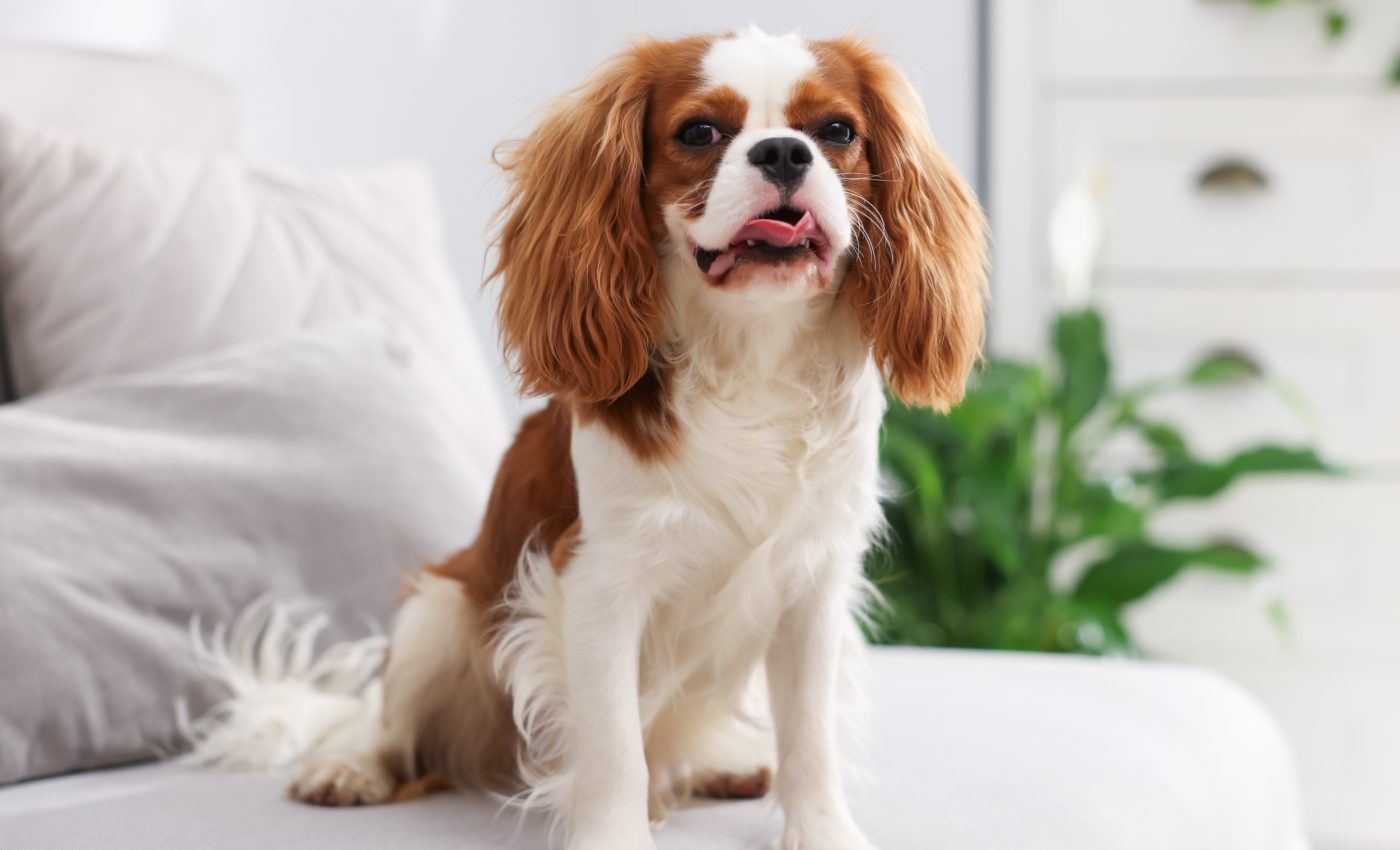
Breed standards continue to reinforce certain ear shapes, narrowing what dogs inherit and carrying those choices across generations. Researchers have now traced floppy ear length to specific inherited changes, revealing how human preference leaves lasting marks on canine biology and health.
Tracing inherited ear length
A recent genetic analysis across many dog breeds connected differences in drop-ear length to a small, shared stretch of DNA. At the University of Georgia (UGA), researchers refined that signal by comparing breeds with similar ear posture but different ear lengths.The work was led by Dr. Leigh Anne Clark, who studies canine genetics and inherited disease risk in many breeds. The findings give breeders and researchers a clearer target to watch as they compare traits across breeds.
Dogs, wolves, and coyotes
The researchers compared genomes from more than 3,000 dogs, wolves, and coyotes. They focused on dogs with floppy ears so that ear carriage – how ears sit on the head – stayed constant while ear length varied.“We only used drop-eared dogs in our study,” said Clark. This approach allowed the team to pinpoint DNA differences that affected ear length, even when all dogs shared the same ear type.
When DNA variants recombine
Differences in ear shape traced back to a small number of inherited DNA variants shared across breeds. Recombination brought together two DNA variants linked to ear posture on a single inherited block, and only that combination produced drop ears.“What we learned is that there’s a combination of alleles, or different DNA sequences, at this locus that dictates whether a dog has prick ears like a husky versus drop ears like a cocker spaniel,” said Clark. That extra allele sat on the recombinant block, and it pushed ear tissue to keep growing longer.
How nearby DNA shapes ears
The strongest genetic signal appeared near a gene already linked to growth and maintenance of connective tissue in developing ears. The associated DNA did not change the gene directly, but sat nearby, where it could subtly affect how much the gene is used during development.Similar changes have been linked to larger ears in other animals, suggesting this region can influence how ear tissue expands over time.Because the signal lies outside the gene itself, the result points to regulation rather than structure as the likely driver.
Ear length and body size
The same stretch of DNA also sits close to a gene previously tied to overall body size in dogs. When traits sit near each other in the genome, selection for one feature can unintentionally carry another along with it. That overlap makes it harder to tell whether ear length reflects its own genetic cause or a side effect of selection for size. Sorting that out matters, especially when researchers try to separate harmless traits from ones linked to disease risk.
Breeds and hidden tradeoffs
Human breeding pushed certain ear shapes into breed standards, which raised the odds that specific DNA combinations became common. The three-allele package appeared most often in breeds selected for very long drop ears, where ear length defines the look. Breeds that kept the older, ancestral package usually carried smaller, upright ears, even when the head shape changed. Because breeders fix traits within a breed, those genetic packages can spread fast, leaving little diversity for future change.
How ears manage heat
Long ears do more than change appearance, as they help animals manage heat by exposing more skin. Classic rabbit research showed blood vessels in ears tighten in cool air and widen in warmth. When vessels widen, warm blood reaches the ear surface and sheds heat, while tightening keeps warmth inside the body. That biology helps explain why some animals evolve smaller ears in colder places, even before humans start selecting traits.
Breed genetics and health signals
Beyond looks, ear genetics matters to veterinarians because breed-linked DNA patterns can hide or mimic disease risks. In Clark’s UGA projects, strong selection can distort breed genetics, so the ear results add useful context. “It’s important for us to understand what genes and genomic regions are being selected for in breeds, especially when we’re thinking about genetic disorders,” said Clark. Genetic tests could help avoid risky variants, but they work best when breeders balance health goals against narrow appearance rules.
A clearer view of dogs
The study relied on broad genetic comparisons across many dogs to narrow the search to promising regions. That approach highlights patterns of inheritance, but it cannot by itself prove which DNA change directly causes longer ears. Confirming the mechanism will require experiments that test how these nearby genetic changes affect ear development. Until then, the results serve as strong signals rather than final answers, shaped by both genetics and breeding history. Taken together, the results show how a small set of variants can shape ear posture and length across many dog breeds. Future genome-wide studies and lab work will test whether nearby DNA regions also influence hearing or other ear-related traits.









 DoggyMom.com