Category Archives: animal welfare

Increased protections for animals

Earlier this month, I reviewed Run, Spot, Run by Jessica Pierce.  In that book, Pierce provides a list of incremental changes each of which would offer increased protections to animals.

I quote them here for sharing purposes because they are the most comprehensive list I have found thus far in terms of explaining the shortcomings we still have in animal care,  welfare, and protection.

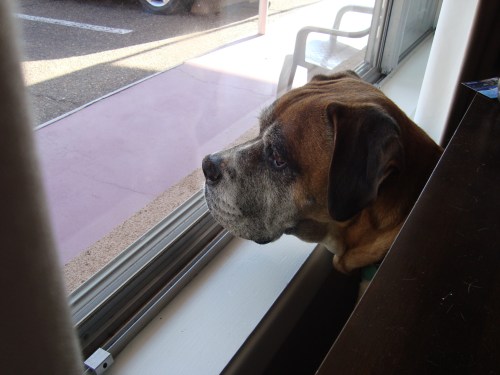
Chester looking out window

  • licensing requirements for all pet owners
  • laws limiting or prohibiting the sale of live animals
  • laws regulating international and interstate shipping of live animals
  • a federal prohibition on the sale of crush films, in particular, and animal pornography in general
  • state laws making sexual assault of an animal punishable (not limited to sexual assaults that are fatal or cause severe injury)
  • better and more frequent inspections of breeding facilities
  • better and more frequent inspections of animal wholesale facilities
  • greater transparency in the pet industry, such as, perhaps, in identifying the sourcing of animals for sale
  • greater transparency in the shelter industry
  • state laws requiring at least eight hours of training for anyone performing euthanasia
  • free speech protections for those who expose corporate animal abuses
  • reporting requirements for veterinarians (e.g. abuse, sexual assault)
  • combined/coordinated reporting of animal abuse and domestic partner, child or elder abuse
  • a publicly accessible national registry of those convicted of animal cruelty or sexual assault
  • increased (and responsible) media reporting of crimes against animals
  • more community resources (e.g. tax money) dedicated to shelters, animal control facilities, and cruelty investigators
  • state-appointed lawyers to represent animals in court
  • required humane education in schools
  • laws making failure to provide timely veterinary care a legally enforceable welfare violation
  • laws allowing pet owners to collect damages for emotional pain and suffering resulting from the loss of a pet at the hands of another human
  • laws making “convenience euthanasia”an animal cruelty violation
  • greater regulation of the pet food industry, including more rigorous inspection of ingredients, greater transparency about sourcing and ingredients, and a well-coordinated method of alerting customers about recalls

Source:  Run, Spot, Run by Jessica Pierce, pages 211-212

Kathleen Crisley, specialist in dog massage, rehabilitation and nutrition/food therapy, The Balanced Dog, Christchurch, New Zealand

2018 American Rescue Dog Show

Move over Westminster because rescue dogs have just been put into the spotlight with their very own show.

Premiering on the Hallmark Channel on Monday, 19th February 2018 – the American Rescue Dog Show!

I’m not sure we will ever get this in New Zealand (possibly through Netflix but it isn’t there yet)…but it is great to see Rescue Dogs being promoted to the public.

***For the record, rescue dogs may be mixed or pure breeds – a dog finds itself in need of rescue mostly because of human actions or inaction and not breeding***

Kathleen Crisley, specialist in dog massage, rehabilitation and nutrition/food therapy, The Balanced Dog, Christchurch, New Zealand

Scotland set to move on the use of shock and bark collars

The Scottish Government is currently consulting on the wording of guidance about the use of electronic shock and bark collars; and the move is being applauded by animal welfare advocates including members of The Pet Professional Guild.

I’m horrified that these devices are so readily available in New Zealand; the use of aversives in dog training is a dangerous practice because not only do these devices cause pain, but they suppress behaviours instead of dealing with the underlying causes of them.  This is a recipe for disaster and totally unnecessary if you use positive training techniques on a consistent basis.


The guidance is motivated by concerns of the misuse of electronic training collars (e-collars) and will be issued in accordance with Section 38 of the Animal Health and Welfare (Scotland) Act 2006.

The Government page on the consultation states, “We will issue guidance, under that Act, to make it clear that training which includes unpleasant stimuli or physical punishment can cause pain, suffering and distress and that any such pain, suffering and distress caused by an inappropriate training method, including electronic collars, may constitute the offence of causing unnecessary suffering under that Act.

This guidance, once finalised, may be considered relevant in a future prosecution. Although the guidance is advisory, a court may take into account compliance or non-compliance with the guidance in establishing liability in a prosecution.

In due course this guidance may be incorporated into a revised Code of Practice or wider Guidance for the welfare of dogs, along with additional guidance on other topics of dog welfare not currently covered in detail in the Code of Practice for the Welfare of Dogs.”

The proposed draft wording is:

“Training which includes unpleasant stimuli or physical punishment can cause pain, suffering and distress.

These techniques can compromise dog welfare, lead to aggressive responses and worsen the problems that they aim to address. Particular methods to avoid include: physical punishment, including the use of electronic collars to administer an electric shock; anti-bark collars, which may mask or aggravate underlying behavioural or health issues; and any device that squirts noxious oils or other chemicals that interfere with your dog’s acute sense of smell.

Causing unnecessary suffering is an offence under the Animal Health and Welfare (Scotland) Act 2006. This includes suffering caused by inappropriate training methods.”

We would welcome comments on this proposed guidance, particularly from those responsible for enforcing the Animal Health and Welfare (Scotland) Act 2006 who may be asked to consider whether or not such methods have been used in a manner that contravenes the Act and compromises animal welfare.

Source:  Scottish Government Policy on Electronic Training Collars

Kathleen Crisley, specialist in dog massage, rehabilitation and nutrition/food therapy, The Balanced Dog, Christchurch, New Zealand

The Most Pet-Friendly States in the USA

Safewise.com has published its rankings of the most pet-friendly states in the USA.

Using data from diverse sources such as the Bureau of Labor, the Animal Legal Defense Fund and online resources for pet-friendly accommodation such as BringFido.com, the company assessed states for pet-friendliness.

Pet friendly states

How does your state rank? Pet-friendly states as ranked by Safewise.com

The Top 10:

  1. Maine
  2. Virginia
  3. Arizona
  4. Oklahoma
  5. Colorado
  6. Oregon
  7. Massachusetts
  8. Kansas
  9. Rhode Island
  10. Washington

Studies like these can help pet owners make informed decisions about relocation and quality of life for them and their pets.  Well done to Safewise for sponsoring this study.

Source:  Safewise.com

Kathleen Crisley, specialist in dog massage, rehabilitation and nutrition/food therapy, The Balanced Dog, Christchurch, New Zealand

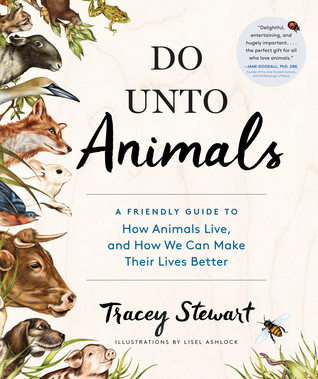
Do Unto Animals – book review

When Tracey Stewart’s book was launched in 2015, it was to great fanfare and lots of reviews.  It has taken me a while to get this book to the top of my reading pile.

Do Unto AnimalsThe theme of the book is ‘how to give back’ to animals of all types.  The first 70 or so pages are about domestic dogs and cats and the remaining 110+ pages are about other creatures including wildlife and farm animals.

To be honest, I think Stewart could have cut the chapters about dogs and cats and focused solely on the ‘other’ creatures.  The advice given for dogs and cats is pretty basic and not particularly well thought out because the information is so brief.  For example, she has included two pages about dog massage with 6 ‘moves’ and the usual warnings about ‘not to be substituted for veterinary care.’

The book comes into its own, however, when the other animals become the focus of the text.  For American audiences, the chapters about backyard wildlife and the roles of each of the ‘pests’ is enlightening. In the farm animals section, she covers pigs, cows, goats, sheep, horses, chickens, turkeys, ducks and geese.  And for each type of animal, she includes a hard hitting ‘what makes a pig (cow, goat, sheep, horse, chicken, turkey, duck or goose) unhappy.’

These pages constitute a simple ‘list of shame’ when it comes to factory farming and the realities of individual consumer choices for meat, dairy, and even feather down garments.

The best part of the book, in my opinion, are the illustrations by Lisel Ashlock.  In full color, these adorn every page of the book and are a reason why this book should be owned and shared in print version (not electronic).

My overall grade:  A-

Tracey Stewart has a veterinary technician qualification although her first career was in design.  She is the wife of comedian and talk show host Jon Stewart.  Both are committed to animal welfare, with a large animal family of their own on their New Jersey farm property; part of the proceeds of each book sold go to support Farm Sanctuary.

Kathleen Crisley, specialist in dog massage, rehabilitation and nutrition/food therapy, The Balanced Dog, Christchurch, New Zealand

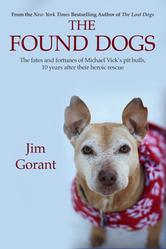
The Found Dogs – book review

For anyone interested in animal welfare, the story of the dogs rescued from Michael Vick’s Bad Newz Kennels is both sobering and encouraging.  Their rescue and the legal cases that followed were thoroughly documented in the New York Times bestseller, The Lost Dogs, by Jim Gorant.

The Found Dogs by Jim Gorant

In 2017, to mark the 10th anniversary of the bust which rescued the dogs, Gorant came back with this slim volume to update us on the stories of the dogs and people involved in the case.

Told simply and straightforwardly, the book opens on the property at 1915 Moonlight Road which is now the Good News Rehab Center for Chained and Penned Dogs.  In 2016, a ceremony at the property reunited many of the people involved in the case and the adopters with the dogs who had been saved.  51 dogwood trees were planted along with 51 plaques depicting the names of each of the dogs found at the property.  In some cases, the adopters were planting the trees for their dogs in memory, because by then many had already passed away.

Part II of the book is the longest part of the book; it’s an alphabetical list of each of the dogs by name and their story since being rescued.  Some are heartbreakingly short.   Other parts of the book update us on the key people involved in the bust and the legal case, and a discussion about what has changed in the last 10 years.

Much like the documentary film The Champions, the book couldn’t have been published too soon.  Many of the Vick dogs have passed, including cover girl Little Red whose story opened and closed The Champions.

Definitely worth reading and, if you are like me, adding to your ‘real’ dog book collection.  (I’m talking physical books, not Kindle files!)

And the last words go to Jim Gorant:  “As the dogs showed us – and continue to prove – accepting the state of things as they actually are and forging on in the face of those realities is the only way to make progress and create a new, better reality.”

Kathleen Crisley, specialist in dog massage, rehabilitation and nutrition/food therapy, The Balanced Dog, Christchurch, New Zealand

Puppies are not presents

The RSPCA has issued a new advert for 2017 to illustrate the message that puppies are not Christmas presents – they are a lifetime commitment that a family should knowingly make.

Follow the story of Woody, the pup given as a Christmas gift who ends up neglected, abandoned and in the care of the RSPCA.

Kindness goes a long way and animal welfare agencies work 24/7 – throughout the holiday season – taking care of unwanted animals.

If you are considering adding a pet to your home, do your homework and be prepared for the unconditional love that an animal brings to your home – but with responsibilities.

Adopt, don’t shop.

Kathleen Crisley, specialist in dog massage, rehabilitation and nutrition/food therapy, The Balanced Dog, Christchurch, New Zealand

The Great Global Greyhound Walk

The Great Global Greyhound Walk has become an annual event since 2014 to raise the profile of adoptable greyhounds.  (The event was started in 2010 as the Great British Greyhound Walk but interest soon went global.)

Groups from around the globe organize walks with their hounds to show them off to the public and to raise funds for greyhound adoption.

This year, the date is this Sunday – 11th June.  gggw-logo  If you follow the Walk’s website, there’s a searchable database to find the walk closest to you.

Check out the map while you are there – this event is truly global.

As Izzy is a greyhound and we volunteer for Greyhounds as Pets, you can guarantee that we will participate in our local walk in central Christchurch.

Interested in knowing more about bringing a greyhound into your life?  Why not come out on Sunday and meet lots of hounds and their owners.  Owners love to talk about their dogs and their enthusiasm is infectious.  Bring your spare change and make a donation, too, so more hounds can find a forever home.

Kathleen Crisley, specialist in dog massage, rehabilitation and nutrition/food therapy, The Balanced Dog, Christchurch, New Zealand
When a rescue champion retires…

I have just finished writing a column for NZ Dog World magazine about the issue of demographic change in the veterinary medicine sector.

And then in my Linkedin newsfeed pops up this article about a rescue group in Utah that is winding up.  It’s founder and stalwart is retiring after 13 years…

Linda-Elwell-retiring-970x546

Santa Clara City Councilwoman Mary Jo Hafen presents Linda Elwell with a bouquet of flowers in appreciation of her work with Friends of Ivins Animal Shelter, Santa Clara, Utah, May 31, 2017 | Photo by Julie Applegate, St. George News

…and the rescue group is ceasing its operations as a result.

Something that ‘experts’ warned for quite a few years is upon us – demographic change.  In the next 10 years, many Baby Boomers will be retiring.  They’ve done their bit and it’s time to slow down and enjoy life.

The problem is – the Gen X and Millennials that are living their lives have different pressures and priorities.  Gen X are dealing with aging parents, educating their children, and retaining full-time employment to pay for their own retirement.  Millennials have different priorities too.  They may have aspirations to buy a home in a rising housing market; they are integrally connected to technologies of all types, and they don’t ‘volunteer’ the way previous generations did.

Rescue groups and those involved in re-homing need to take heed.

Succession planning is important if your rescue group is to survive.  This means an honest look at business processes and how they relate to the current generations with disposal income and the ability to support your efforts.

Digital presence is a must; as is content curation – the provision of new and regular content.

It’s a real shame to see groups winding up; but there will probably be more who don’t survive the rapid change in their memberships.

Need help?  I’m an experienced not-for-profit and public sector manager as well as a canine massage therapist and entrepreneur.  I’d be happy to work with your group to facilitate the development of action plans for your future.

Kathleen Crisley, specialist in dog massage, rehabilitation and nutrition/food therapy, The Balanced Dog, Christchurch, New Zealand

Fundraising

I haven’t been posting as frequently as I would like.  Forgive me.

Over the last two months, I have been pulling together the prizes and other arrangements for my third annual fundraising event.  While I always walk away feeling good that I’ve invested my time in giving back to the community, these events take time and effort.

I haven’t had much time to do my usual research and writing – but we are in countdown mode with less than 2 days to go.  And then it will be over for another year.

Tonight, I am wrapping prizes.  This photo shows my progress – but thankfully there is still a long way to go thanks to many generous donors/sponsors.

Prizes

Back soon with doggy news.

Kathleen Crisley, specialist in dog massage, rehabilitation and nutrition/food therapy, The Balanced Dog, Christchurch, New Zealand