Category Archives: dog care

Pets are a priority when moving

Is it a case of the tail wagging the dog, or every dog having his day? However you define it, the cat is out of the bag when it comes to pet owners and moving into a new home.

A new survey from US company Mayflower reveals pet priorities are often equal to or more important than human-focused amenities when American dog and cat owners decide on new homes and communities.
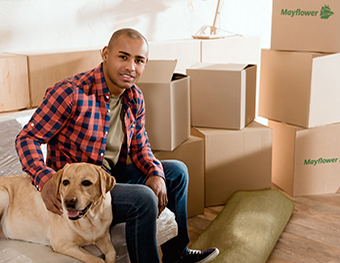
african american man with labrador dog in new apartment with cardboard boxes

Overall, pet owners say one-third of their overall decision to move was related to their pet, and survey respondents cited willingness to pay significantly more and even forgo perks like shorter commutes and updated kitchens in favor of pet-friendly features.

The 2019 Mayflower Mover Insights Survey explored the process of moving or preparing to move with a pet, including just how much pets factor into choices about home and community features. According to the survey, cat and dog owners who have moved recently say their pet influenced which new home they chose by 39 percent and which new community they chose by 26 percent. Additionally:

  • Pet owners who plan to move say their pet will influence their choice of home by 48 percent and their choice of community by 33 percent.
  • Pet owners who are likely to move in the next five years are willing to pay an average of 32 percent more each month to get the pet-friendly features they want, such as a fenced-in yard and plenty of indoor space, as compared to their current monthly housing costs.
  • Kitchen vs. Canine: Half of future movers (50 percent) want an updated kitchen, and the other half (50 percent) prioritize a pet-friendly feature.
  • Pet vs. Place of Business: While nearly half (49 percent) of future movers want to live close to work, the other half (51 percent) prioritizes pet-friendly features in their new home.

Mayflower’s survey also found more than three-fourths of past movers and future movers with pets didn’t stay close or don’t plan to stay close to their current neighborhood or part of town when choosing their next home. Yet, more than two-thirds of past movers tried to stay close to their pet’s favorite human and furry friends, their favorite park and their vet. The pet-related decisions meant more than staying near their old neighborhood.

“In the last few years, we’ve heard more and more from our customers about the impact moving has on pets. With every move, we strive to ensure the process is smooth for both our customers and their animals by providing expertise, information and constant support,” said Eily Cummings, director of corporate communications, Mayflower.

Settling in: Stressful or smooth for Fido and Fluffy  

Pets may get the priority for perks when their humans relocate, but moving is still a stressful activity for dogs and cats. Mayflower’s survey also shed light on pets’ experiences during moves.

  • Half of pet owners (50 percent) reported their pets struggled to adjust to their new home – especially the feline friends. Nearly two-thirds of all cat owners say their cat had difficulty adjusting.
  • Prior to a move, almost half of pet owners (47 percent) sought information about moving with a pet, including researching online, talking with others who have moved with a pet or speaking with a vet.
  • To smooth the transition, eight in 10 pet owners gave their pet extra attention and showed them where things were in the new home.
  • Nearly half of all future owners (48 percent) will introduce their pet to the new home prior to moving in to minimize their dog and/or cat’s stress.
  • More than half of all survey respondents (53 percent) said their spouse/partner added or will add more stress to the move than their pet did.

However, there’s still good news for pet owners: more than nine in 10 owners say their pets adjusted to their new setting in less than a month. And, more than 90 percent of pet owners agree that wherever they and their pets are together is instantly home.

Survey Background and Methodology

TRUE Global Intelligence, the in-house research practice of FleishmanHillard, fielded an online survey of 2,904 American cat and/or dog owners who have moved with their pet(s) within the past five years or are likely to move with their pet(s) within the next five years. The survey was fielded between January 11 to January 20, 2019. Sampling was conducted to balance age, gender, and, for the nationwide sample, geographic region. Some questions were asked with a “Not Applicable” option. Those questions have been reported based on the total number for whom the question/item was applicable. To clarify the different experiences of cat and dog owners, statistics referencing cat and dog owners specifically include only those respondents with a dog(s) or a cat(s) and exclude respondents who own both.

Editor’s note: Additional survey data is available by request. If interested, please contact Bonnie Stack at 314-982-1730 or bonnie.stack@fleishman.com.

About Mayflower

Mayflower is America’s most recognized and trusted moving company. With headquarters in suburban St. Louis, Mayflower maintains a network of 300 affiliated agencies.

Source:  Mayflower Mover press release
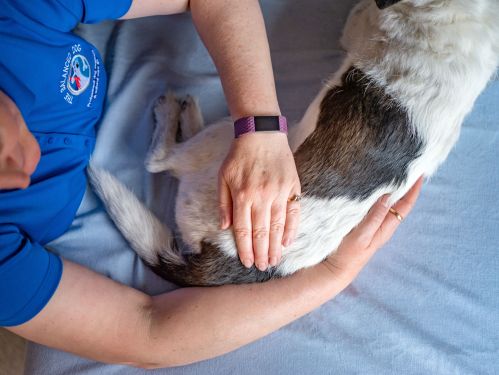
Top reasons for using dog massage

I’m often asked why people should employ a professional dog massage therapist.

balanced_dog-0002

In the 10 years I’ve been in professional practice, these are always the top reasons:

Care for an older dog

The dog whose been the love of your life is slowing down, possibly with a diagnosis of arthritis and medication from the vet.  This is often when I get the call…

A change in behaviour

The dog is doing something it hasn’t before; the family doesn’t know why.  And possibly they’ve been to the vet about it or possibly they haven’t.  We always need to rule out a physical reason for the behaviour and once I’ve seen the dog for myself, I often give the owners a list of questions to ask the vet.

General health & wellbeing

I love these enquiries!  They are from owners who tell me that “there’s nothing wrong with their dog” and they want to keep it that way.  Can I come and have a look and work on a fitness programme for them?  My answer is always yes!

Recovery from injuries and/or surgery

A dog on crate rest or restricted exercise gets all jammed up.  And many will need an exercise and rehab program.  My rehab programs always include ideas for mental stimulation and enrichment – key concepts behind my Fear Free practice.

Kathleen Crisley, Fear-Free certified professional and specialist in dog massage, rehabilitation and nutrition/food therapy, The Balanced Dog, Christchurch, New Zealand

The essentials of sleep for dogs

What a great infographic about sleep and dogs.

Remember that our dogs need to sleep more than we do to get adequate rest because they enter REM sleep (deep sleep) less often.  Rest is important for the immune system and for recovery and inadequate rest can result in behavioral problems as well as other health problems.

Kathleen Crisley, Fear-Free certified professional and specialist in dog massage, rehabilitation and nutrition/food therapy, The Balanced Dog, Christchurch, New Zealand

DogSleepInfographic


Responsible dog ownership

In the USA, it’s National Responsible Pet Ownership month (it’s also Pet Dental Health Month).  How can we explain what it means to be a responsible dog owner/guardian/parent?  There are 4 key areas to consider.

IMG_3297[1]

Choose the right dog at the right time

Making the decision to add a dog to your family is an important life choice.  If the dog needs tons of exercise like a Siberian Husky, and you live in a small apartment and work long hours, then probably not the best choice.  If you are about to start a new job, or are in a new relationship, as examples, then probably not the best timing because you can’t focus your time on integrating your dog into your household.   In New Zealand, there seems to be a lot of people who decide to move overseas; if this is a possibility for you then maybe bringing a dog into your life isn’t the right choice unless you are prepared to take the dog with you (which is an expensive exercise requiring a lot of planning and preparation).

A dog is a lifetime commitment.  Ask yourself – do you have what it takes for the next 10-15 years?

Invest in wellbeing – prevention is better than cure

Be prepared to spend money on things like regular vet checks and vaccinations.  Flea control is another cost that is often overlooked until there’s a problem and by then, the fleas are established in your carpets and causing problems.  Choose a high quality diet (“you are what you eat”) and feed only healthy treats.  Keep your dog fit and trim.

Also important is investing is your dog’s mental health.  Avoid behavior problems by working on training, having enriching activities and toys available in rotation, and regular exercise.  Dogs need sleep, too.  So think carefully about the need for commercial daycare.  For most dogs, these facilities tend to overstimulate dogs and can create other behavioral problems if the dogs is left in these situations every day of the week.

As a professional canine massage therapist, I highly recommend massage as a technique for wellbeing and not just rehabilitation after injuries because it helps relax the dog and keeps their bodies moving efficiently.  It can also identify suspect lumps/bumps early so they can be checked by the vet.  Spend the money for a regular professional massage or take a class to learn basic massage which you can do yourself.

Compliance – obey the law

Licensing costs and leash laws are commonplace.  Cleaning up your dog’s poos is expected. We can all do our part by complying with local regulations.

Carry ID

In New Zealand, microchipping is mandatory.  It’s also advisable to have an identification tag on your dog’s collar with your phone number.  In 2011, when we experienced our large earthquake in Christchurch, many dogs went missing.  Those that had microchips registered on the national database and/or had identification tags found their way back to their families much faster.  Some never made it home.

Kathleen Crisley, Fear-Free certified professional and specialist in dog massage, rehabilitation and nutrition/food therapy, The Balanced Dog, Christchurch, New Zealand


Positive ageing (no one I know is getting any younger and that includes your dog)

I have wanted to write this blog post for a while.

The motivation behind this post rests squarely with the contents I have been reading on some Facebook groups I belong to.  There are consistently posts which say:

  • My dog is slowing down, is this arthritis?
  • She pulled up lame today.  What should I do?
  • I can’t take him out with us on walks anymore; he’s too slow.
  • I’m gonna take her to the vet, but I thought I’d ask for advice here…

So let’s get this straight – what my mother always said holds true for our dogs as well as us – no one I know is getting any younger.

Stan positive ageing

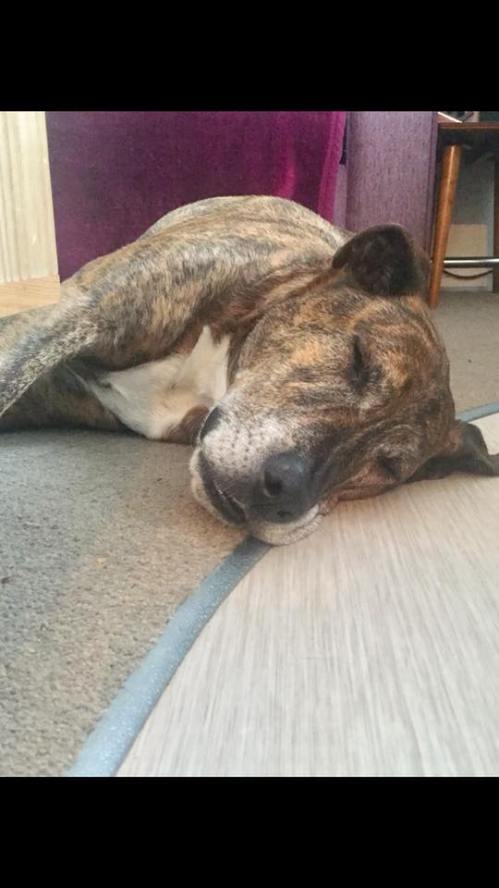
Stan having a snooze. Rest is important for recovery and older dogs will sleep more.

The basic principles of well being are the same for us and our dogs.  It’s called positive ageing – and to look out for ourselves we need:

  • good nutrition
  • exercise that is appropriate for our physical condition
  • rest
  • social interaction and stimulation
  • safety and security
  • medical care

We can’t be rehabilitated out of old age and neither can our dogs.  We can, however, facilitate a long and happy life by managing all of the basic principles.  We’re responsible for taking care of ourselves and, if you’ve chosen to have a dog in your life, you’ve made a commitment to care for them for their lifetime as well and so you need to look out for age-related changes and adjust your dog’s lifestyle and routines.

Case study – Stan

The picture above is Stan, who is now aged 10+.  I first met him when his Mum joined one of my massage workshops for dog owners almost 3 years ago.  She then brought me in to work with him directly because he was stiff and would occasionally limp.

We’ve worked as a team on things like weight loss, making good food choices and adding fresh ingredients, supplementation, and things to ask the vet during consults.

Unfortunately, Stan ruptured a cruciate ligament in 2017 when playing on wet grass and then (as the textbooks suggest), he also ruptured the ligament on the other leg earlier this year.  But his Mum has managed through it all and has kept up with exercises for rehab and committed to his diet and supplement regime.

Stan benefits from having a family member care for him when Mum is at work – so no noisy day cares for Stan which also helps him rest.

His Mum told me today that she looks back on the last couple of years and it has been a challenge (in many ways – including financial) to manage ‘one surgery after another’ but because Stan is happy, she knows she’s done the right thing for him.

Positive Ageing.  Are you ready to give your dog what he/she needs?

Kathleen Crisley, Fear-Free certified professional and specialist in dog massage, rehabilitation and nutrition/food therapy, The Balanced Dog, Christchurch, New Zealand

Enrichment – food toys

Izzy is my greyhound and, periodically, I fill her food toy which has been made from plastic drink bottles with some of her dinner.  When she’s hungry enough, it’s game on!

With experience, Izzy has become an expert at figuring out this toy.  Each of the bottles has a different degree of tightness and spin – and so some are more difficult than others to get food from.

That’s called enrichment – something meaningful and rewarding.

Kathleen Crisley, Fear-Free certified professional and specialist in dog massage, rehabilitation and nutrition/food therapy, The Balanced Dog, Christchurch, New Zealand

Love me? Massage me!

In one week, I’ll be drawing the winners for my Love Me, Massage Me competition.  I’m on a mission to raise awareness of the benefits of dog massage for dogs of all ages and conditions.

Customers have been given a bandana for their dog and encouraged to submit photos of their dogs going about their stuff – regular activities and fun activities.

Here are a range of the photos that have been taken since the competition began in October.  As you can see, dogs of all ages, sizes and breeds – proving that all dogs can benefit from massage.

Listen to what your dog is telling you…”Love me?  Massage Me!”

Kathleen Crisley, Fear-Free certified professional and specialist in dog massage, rehabilitation and nutrition/food therapy, The Balanced Dog, Christchurch, New Zealand

Quiet, please, I’m Fear Free!

Last weekend, my business took a stall at the Dogs Day Out – a dog-friendly event at a local heritage park which included an organised walk.  I love supporting dog-friendly events because we have so few of them (something, over time, I hope to change).

These events become a good way for local dog-related businesses to showcase their products and services in a way that is focused on the community and not profit-making (unlike some of the commercial pet expos).  These events are also a way for me to highlight my Fear Free certificaton as well as my approach to natural dog care.

Fear Free certified canine massage therapist

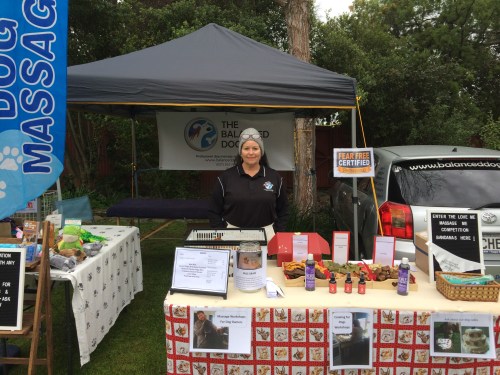
The Balanced Dog’s stall complete with Fear Free certified signage and helper, Leonie

At these events, exhibitors often have time to chat once we are all set up and before the public arrives in droves.  I enjoy seeing the range of products and services that are on show.

Unfortunately, this event also taught me how far we have to go in terms of veterinary professionals understanding fear free handling and interaction.  Fear Free is about managing fear, anxiety and stress in our animals by focusing entirely on their needs and responses.  You need to understand emotional health as well as physical health.

So imagine that the stall next to us was a veterinary practice which opted to use balloons as part of its decorations.  Towards the end of the event, as I was still massaging dogs and talking with members of the public – the stall next door was dismantling itself in preparations to leave.  Someone decided the best way to discard their balloons was to pop them one after the other in rapid succession – like a car backfiring.

Can you guess how many dogs responded negatively to these noises (including the one on my massage table)?

Fear Free is so much more than spraying Adaptil in your clinic and playing soft music.  It’s about being prepared to take it slow and work with the dogs at their pace.  So many dogs are stressed by loud noises like fireworks, it should be common sense that popping balloons is not acceptable.

As my mother has said many times, common sense isn’t common.

Ask me about Fear Free handling! I’d love to tell you more.

Kathleen Crisley, Fear-Free certified professional and specialist in dog massage, rehabilitation and nutrition/food therapy, The Balanced Dog, Christchurch, New Zealand

Food tales

Yesterday, I led another Cooking for Dogs workshop which is a workshop I designed about four years ago to encourage owners to add fresh ingredients into their dog’s diet.  We also discuss the latest research into dog diets (such as the July 2018 announcement by the US FDA about a possible link between grain-free foods and heart disease) and what makes a ‘good’ ingredient for a recipe – things like choosing meat ingredients and the use of spices such as ginger and turmeric.

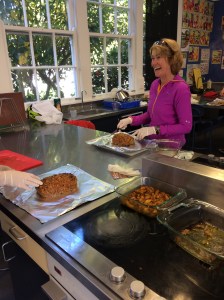
Cooking for Dogs - happy dog owners make recipes like doggy meatloaf and chewy chicken strips

Cooking for Dogs – happy dog owners make recipes like doggy meatloaf and chewy chicken strips

I’m a supporter of the hybrid diet – where dogs are fed commercial food, raw food and also homemade food for variety and nutritional support and to mitigate the risks of long-term nutritional deficits.

It’s been a month or so now of food-themed interactions with clients and colleagues.  For example, during my visit to Kindness Ranch, I was given a tour.  They make their own ‘sow chow’ of fresh ingredients for their pigs because they found that commercial pig food is designed to fatten up the pigs for slaughter.  (Whereas the pigs at the Ranch have been rescued and will live out their lives naturally.)

Look at the colors in the bowl – fresh foods like watermelon!  What pig wouldn’t want to chow down on food that that was this fresh?

And I’ve had a few interactions with clients this week which were also food related.  For example, the well-meaning owner of a Labrador puppy.  I had to tell her that I felt her dog was overweight and that she needed to reduce the amount of food being fed daily (adjusted also for treats used in training).

She was worried because the bag of her commercial puppy food recommended that she feed even more.  I explained that we should feed our dogs according to body condition and that many commercial foods often overstate the feeding rates for their foods.  After all, if owners feed more food, then they have to buy more food.  (I’m sure there are some dogs that may need the recommended feeding volumes – but these would be the exception and not the rule from my experience.)

And then there was the dog that had been losing weight and urinating in the house.  I strongly advised that the dog be taken to the vet for a health check and the results were in – a pancreatic problem brought on by feeding raw.  In this case, I suspect that the raw food mix being fed to this dog was way too high in fat and also contained consistently too much liver instead of a mixture of other organ meats such as heart and kidney.  Regardless, the dog was not thriving on its diet and, worse, was being hurt by it.  A change in diet to a commercial kibble has seen a return to health and no more urinating in the house which is a positive for both dog and owner.

Every dog is different when it comes to diet.  There is no one right or wrong answer, but there are tools and techniques we can use to match them to a diet that works.

Kathleen Crisley, Fear-Free certified professional and specialist in dog massage, rehabilitation and nutrition/food therapy, The Balanced Dog, Christchurch, New Zealand

Love me, massage me

I have started a new campaign that will run through to the end of the year to help me promote the benefits of canine massage.  The Love Me, Massage Me campaign is fairly straightforward:  each of my customers will receive a  printed bandana like this one:

IMG_2834[1]

Tamzin the Pug models her Love Me Massage Me bandana

And then they can post photos of their dogs onto my Facebook page and their own with the hashtag #lovememassageme.  There are no limits to the number of entries per dog.

The winner will receive a massage every 3 months during 2019; there’s also a second and third prize.

Since I teach owners to massage their dogs using a relaxation massage sequence incorporating acupressure points, I’m happy if the dogs are being massaged by their owners and not just me.

I think every dog should be massaged regularly to support health and wellness.

Wish me luck!  #lovememassageme

Kathleen Crisley, Fear-Free certified professional and specialist in dog massage, rehabilitation and nutrition/food therapy, The Balanced Dog, Christchurch, New Zealand