Category Archives: dog care

Before and after

Our friend Ben, a greyhound, had an accident on Saturday, 15th September 2018.

From what we can tell, he was chasing a cat who must have taken a hard right turn.  When Ben tried to follow (he was under cover of a line of bushes and trees at the time of the incident), his momentum carried him sideways into a tree.  He emitted a huge cry of pain but was luckily able to walk home slowly before being taken to the vet within 15 minutes of the crash.

His bruising wasn’t immediately apparent because bruising takes time to come up; the vet suggested that he might also have cracked a rib during the impact.

Ben's bruising after photo

Ben the greyhound shortly after the incident

But within a few hours, here’s what he looked like:

Ben's bruising before photo

Ben the greyhound on 15 September 2018

I visited with him on Saturday afternoon and again on Monday (17th September) to laser him thoroughly with specific acupressure and trigger points addressed.  To some extent, the laser helped to bring out the bruising and speed healing.  His mum was also giving him regular rubdowns with Sore No More lotion (which I use and sell in my practice) and also dosing him Traumeel drops which I also recommend to my clients as a ‘must have’ for their First Aid kits.

And today (Wednesday, 19th September 2018), I got these lovely photos of Ben who is happily out running again in the sunshine:


It is very rewarding to be able to help dogs using my scope of practice of massage, acupressure, and laser therapies.  It’s even more rewarding when the dog is also a close friend.

Kathleen Crisley, Fear-Free certified professional and specialist in dog massage, rehabilitation and nutrition/food therapy, The Balanced Dog, Christchurch, New Zealand

At Kindness Ranch

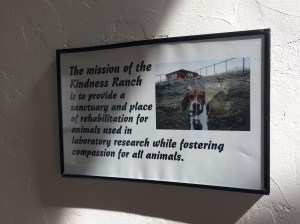
Kindness Ranch Animal Sanctuary is a unique place, the only sanctuary in the United States that cares for animals used in research and laboratory facilities.  At this property, you’ll find horses, cows, sheep, pigs, cats and dogs.

The small team at Kindness, which is a fairly new sanctuary at only 12 years old (founded in 2006), work hard to care for the animals and maintain their large Wyoming property to the highest of standards.  Animals that can be rehabilitated are put up for adoption; the others will simply remain at the property with a secure and safe home for life.
IMG_2624

I have just finished a week of work with the dog care team at Kindness, discussing things like behavioral adjustment programs, enrichment, gait analysis, physical rehabilitation and senior dog care.    I also introduced them to the range of flower essences I use to support emotional health whilst working on training and rehab.

I chose to travel to Kindness Ranch because, for anyone who follows my blog, I often include items about research.  I’m a self-confessed science geek.  But I am not naive.  I know that much of the research which is published involves dogs as study subjects.  The life of a lab animal, in most cases, isn’t pretty.

The ranch is in remote Wyoming – Hartville to be exact with a permanent population of 69 people.  For this reason, if you’d like to visit Kindness (there are 4 guest yurts on the property which can be hired for your stay – and these are well-appointed and very comfortable), you need to book ahead.  The ranch is also a good place for a digital detox, too,  because the guest yurts do not have television and cell phone reception is patchy at best.  WiFi is available but is slower than most are used to and not suitable for streaming.

Dogs coming from a laboratory situation often have unique needs.  Most have never experienced grass under the feet, the sights and sounds of the home environment, and some will have healthcare issues that require attention before adoption is possible.  Many have never been house trained.  Their ages vary depending on how long they were used for study.

And while Beagles are the dogs most often associated with laboratory research, expect to see other breeds of dogs, too.  Larger breed dogs are often used by veterinary schools, for example, so students can learn blood draws, how to vaccinate, etc.  These dogs become living pin cushions and are not surprisingly fearful whenever a needle is presented.

I deliberately chose Kindness as a destination because of the special niche it holds in the animal rescue world.  It takes special people to liaise with laboratories and encourage them to release their animals rather than choosing to simply euthanize them (described as the ‘cost effective’ option).  Kindness walks a tightrope of sorts to ensure that the animals are given safe passage out of the lab and onto the sanctuary whilst maintaining the confidentiality of the labs.

And it also takes special people to live remotely and care for these  animals.

I hope you enjoy these photos of my time at Kindness and, if you believe in their mission, please consider making a donation.  Every bit helps.

Kathleen Crisley, Fear-Free certified professional and specialist in dog massage, rehabilitation and nutrition/food therapy, The Balanced Dog, Christchurch, New Zealand
 

Hank

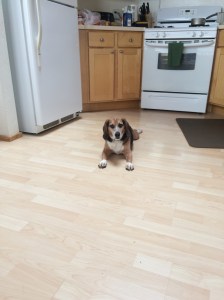
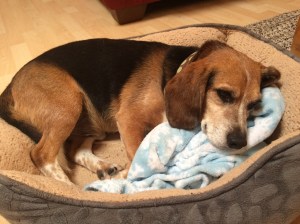
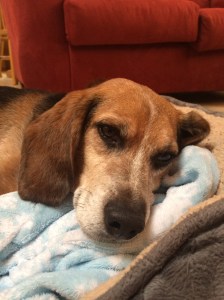
Hank was the first dog to stay with me overnight in my yurt. Hank is an older boy who spent the first 7 or 8 years of his life in a laboratory. He’s a bit stiff, and has trouble with stairs (as many of the Beagles do).
IMG_2626IMG_2627

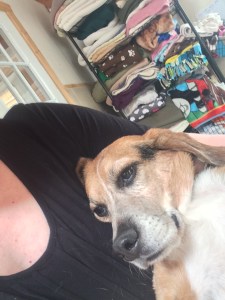
Hank in for a cuddle

One of Hank’s favourite pastimes is being held like a baby on your lap. He makes himself totally relaxed and floppy and will stay for as long as you like. It’s amazing how trusting these dogs can be given their treatment at the hands of others.
 

Rocky

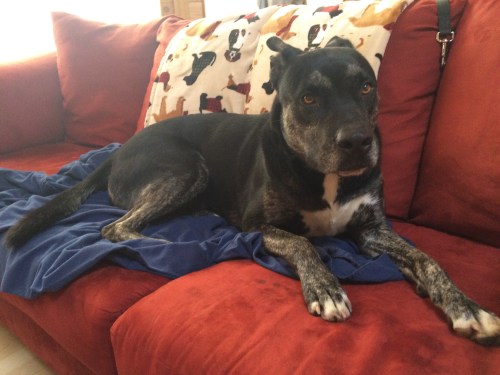
Rocky is a big boy who doesn’t know his own strength (he needs more training about walking nicely on leash) and he’s afraid of men.  We suspect his life as a veterinary school practice animal meant that he didn’t have a positive relationship with a male lab assistant and/or vet students.  So we worked on setting up a system where the men on the ranch will visit and quietly enter and feed him high value treats. Handlers will praise Rocky when he is quiet and doesn’t bark and will start using a ‘click for quiet’ approach to clicker training.
Frieda

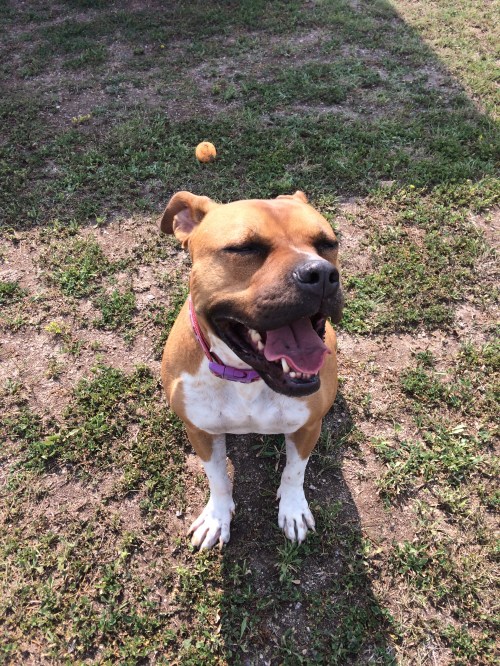
Frieda is a pit bull who loves to go to the dog park on the ranch, appropriately called the K9 Corral. She has good recall and knows most of her basic cues including sit and down. She’s very intelligent!
Gus

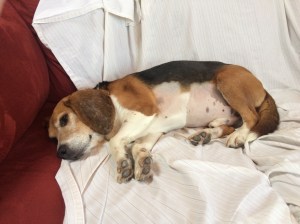
Gus is another senior Beagle used in pharmacokinetic studies for at least 7 years. (These studies introduce drugs and watch their effects on other organs in the body.) He’s a bit achy in the joints, too. Gabapentin and muscle relaxants prescribed by the vet have helped him a lot and his caregiver says that he is a different dog with the support of his meds.


Dogs to benefit from test to spot liver disease

Vets have developed a blood test that quickly spots early signs of liver disease in dogs, a study suggests.

Experts say that the test – based on insights gained from human patients – could help vets identify damage and start treatment early, saving the lives of many dogs.

The test – which is to be launched worldwide – means that fewer dogs will have to undergo invasive liver biopsies, findings by the University of Edinburgh suggest.

Diagnosis challenge

Diagnosing canine liver disease is challenging and catching early signs of damage is key to its treatment, vets say.

Current diagnosis is based on biopsies, which are expensive and can lead to complications.

Joining forces

Vets based at the University’s Royal (Dick) School of Veterinary Studies teamed up with medical doctors to look at blood levels of a molecule known as miR-122 in dogs. This molecule is found in high levels in people living with liver disease.

They worked with pets and their owners to test miR-122 levels in 250 dogs, including cocker-spaniels, labradoodles and Old English sheepdogs.

Testing kits

Dogs with liver disease were found to have significantly higher levels of a miR-122 compared with healthy dogs and dogs who had a different disease that did not affect the liver.

The team now plan to launch a testing kit to help vets worldwide quickly assess if their patient pooches have liver damage.

The study is published in the Journal of Veterinary Internal Medicine.

Lead vet researcher, Professor Richard Mellanby, Head of Companion Animal Sciences at The Hospital for Small Animals at the University of Edinburgh, said: “We have found a specific, sensitive and non-invasive way to detect liver damage in dogs. We hope that our test will greatly improve outcomes by allowing vets to make rapid and accurate diagnosis.”

Dr James Dear, Reader at the University of Edinburgh’s Centre for Cardiovascular Science and NHS doctor, who co-led the study, said: “‘I am delighted that the blood test we developed to improve the diagnosis of liver disease in humans can be used to help dogs too.”

Source:  University of Edinburgh

Flower essences – are they the same as Bach flowers?

Because I’m using an emotional nutrition range in my practice, which are mixtures of flower essences and homeopathics, I have been getting asked questions about them – which is great!

People refer to them as Bach flowers, and this isn’t entirely correct.

Dr Edward Bach worked in England in the years 1930 to 1935 on his flower remedies and when he died in 1936, his system of 38 remedies in total were fully documented.  These are the true Bach flower remedies.  The most notable combination is Rescue Remedy which is widely used today in both humans and animals.

He began collecting plants and flowers – the most highly-developed part of a plant – in the hope of replacing nosodes with a series of gentler remedies.  In his research, he matched a flower essence to a particular emotional state.  Here are a few examples:

  • Gentian – for discouragement after a setback
  • Mimulus – fear of known things
  • Vine – dominance and inflexibility

The Bach flower remedies should feature the Bach signature label  (made in England) which looks like this:

Bach flower logo

The remedies are made by infusing the flowers in spring water, either by the sun-steeped method or by boiling. The remedies contain a grape-based brandy as a preservative and there are alcohol free versions which are preserved in glycerin made from sunflowers

Following on from Dr Bach’s work on flower essences, there are other flower essences that have been developed from flowers growing in other parts of the world.  For example, there’s a whole range of essences extracted from Australian bush flowers.

So when people ask me about using flower essences, I remind them that there’s a difference between essential oils and flower essences and I also explain that not all flower essences are Bach flowers.

Kathleen Crisley, Fear-Free certified professional and specialist in dog massage, rehabilitation and nutrition/food therapy, The Balanced DogChristchurch, New Zealand

Muscle loss and wasting

I encounter dogs in my practice who are experiencing muscle loss and wasting fairly often.

Since owners must submit veterinary records to me for review as part of my intake process as well as update me on any subsequent vet visits, if there’s a diagnosis of chronic illness – such as kidney disease or cancer – then this muscle loss  is understandable and classified as cachexia.

In the absence of a diagnosis of disease, and working with an aging dog, then the muscle loss is classified as sarcopenia.

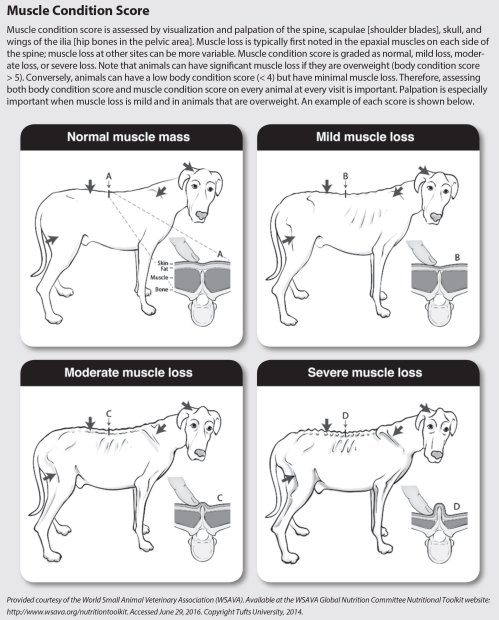
Muscle loss results in a change of appearance, which owners often notice first around the shoulder blades, top of the head, and around the pelvis.  Muscle wastage can be graded as noted below:

Muscle condition score

Exercise and good nutrition can be interventions with muscle loss.  Chronically ill dogs need a high quality diet that is appropriate for their disease, for example.  And aging dogs do need exercise that is targeted to their needs and abilities.

Owners should always be on the watch for signs of muscle loss – so early interventions that are medical and non-medical can be considered.

Kathleen Crisley, Fear-Free certified professional and specialist in dog massage, rehabilitation and nutrition/food therapy, The Balanced Dog, Christchurch, New Zealand

You get out what you put in

In 2007, I was unlucky enough to rupture an Achilles tendon; the rupture also took the rather unusual form of detaching from the bone in the heel of my foot.  In most cases, these ruptures occur higher up the leg, with the tendon snapping in half.  I clearly remember my surgeon at the time warning me of the risk of re-rupture, which was entirely linked to the quality and commitment to rehabilitation.  Many people don’t commit to the time and consistency that rehab actually takes and they pay the price of exercising too strenuously too early, or not following the instructions for self-care.

Every rehab program can have setbacks and mine was no different.  It took a year but I fully recovered.  I went to physio for all the obligatory ultrasounds, etc.  But more importantly, I did my exercises at home.  All the toe raises, stretches, massaging and walking.   I kept a journal of everything.

This personal experience has helped me greatly in my dog massage and rehab practice; it’s given me great insight into the frustrations and joys of rehab.  And the main lesson I learned was that the substantive part of my rehab program was my responsibility.

The same is true of a dog’s rehab program – well, sort of.  The dog doesn’t know what it has to do, it’s the owner’s responsibility.

And that’s one reason why I practice on an in-home basis.  I see many dogs in need of strengthening, stretching and/or toning exercises.  I always aim to make these exercises simple, and using items that are easily found around the home or sourced for a reasonable price.  (I also have a hire pool of equipment, to also ease the burden of rehab care.)

Adjustments are often needed to match the dog’s abilities.  And that comes with practice and feedback from the owner.  And we work together through any setbacks.

I tell my clients:  “To a large extent, you get out what you put in.”

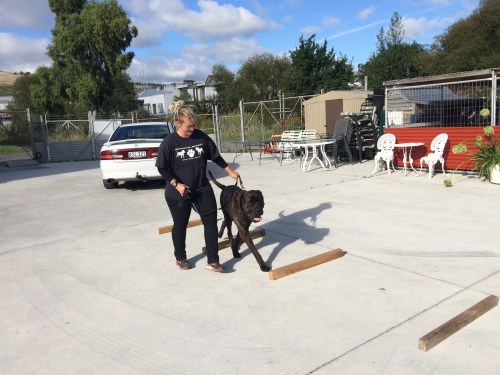
Rail walking at CBBR

Cavaletti rail practice at Christchurch Bull Breed Rescue (Charlene with Caesar)

Many clients have goals – it could be that the family is going on vacation and wants the dog in better shape (or fully recovered) when the dog goes to kennel or to another family member.  It could be that the dog is in the care of a re-homing agency and the dog needs to be better before adoption.  Or, the goal may simply to have the dog better before summer so that the family can enjoy the beach or the park again, together.

Like personal training, goals are great.

To achieve them, we get out what we put in.  I enjoy being part of the owner’s team to achieve those goals.

Kathleen Crisley, specialist in dog massage, rehabilitation and nutrition/food therapy, The Balanced Dog, Christchurch, New Zealand

Moving day(s)

One of the reasons that things have been quieter on the blog over the last few weeks has been because we have needed to relocate.  Our home is undergoing repairs from damage received in Christchurch’s 2010 and 2011 earthquakes and so everything (including us) had to go.

As most of you know, moving house is rarely fun and often stressful and our animals have to be managed carefully during these events.  As I’ve said many times, having a solid routine is extremely important for dogs – they get comfort and a sense of security from routine.

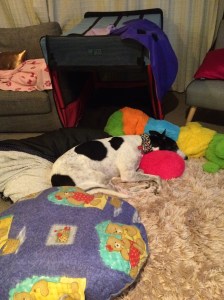
So in our case, Izzy was catered for as the #1 priority.  All of her beds, her caterpillar and her crate were packed and driven to our temporary house.  Meanwhile, she went to a friend’s house for a play date with his greyhound.  I picked her up in the evening and brought her to the new place, where she was fed dinner and was put to bed.

Although unsettled for the first few days, I kept her to her routine which included morning walks, feedings, and sleep time followed by afternoon walks and evening meals.  Temporary House

I’m proud to say that Izzy has settled in well; me – well I’m making due with the typical soft mattress and cheap furniture that is found in most holiday rental homes.    After all, I wasn’t able to travel with my bed!


Kathleen Crisley, specialist in dog massage, rehabilitation and nutrition/food therapy, The Balanced Dog, Christchurch, New Zealand

Marketing Fear Free

Fear Free certification is something that is still new to the veterinary and complementary professions.  I saw an ad recently on Facebook for a Fear Free certified veterinary practice looking to hire and I’ve amended it to explain a bit more about what I stand for.

Where do you want to take your dog?

If you want your dog treated where…

  • dogs are allowed to rest on a comfortable, padded massage table – or the floor if they are more comfortable
  • appointments are booked hourly so there is no need to rush
  • you see me – a  fully qualified therapist with a commitment to ongoing professional development
  • I adjust my pace for each dog, so anxious dogs may take longer (but it is worth it)
  • and yummy dog treats and food diversions are used on a liberal basis

…then please book your dog into The Balanced Dog.  I look forward to working with you in the Fear Free way.

Bailey and Neisha May 2018

Kathleen Crisley, specialist in dog massage, rehabilitation and nutrition/food therapy, The Balanced Dog, Christchurch, New Zealand

FF Certified Professional Logo jpg

The differences between flower essences and essential oils

I have found that there is often confusion between essential oils and flower essences.  This isn’t surprising – both evoke connotations of fresh smells and flowers.  However, it’s important to understand the difference and the use of these products when caring for your dog.

Essential oils are a fundamental part of aromatherapy.  They are often diffused in a burner of some sort, such as the traditional one with a tea candle below the area where the oil is placed, or in the newer modern version – ultrasonic diffusers.

When used for massages, the essential oils (which are very strong) are diluted in carrier oil such as sweet almond oil or in a waxier, balm-like base.  Most of my human massage therapist colleagues use essential oils in their practices in this way – lavender is very common, for example, for relaxing human clients!

Essential oils are very much for use outside the body (not to be ingested).

Now here’s the thing:  I am generally not a fan of using essential oils in dog care. 

These oils are quite powerful.  And for the same reason that I don’t like chemical sprays for air fresheners and fly control (See:  Before you install these devices, consider your dog), I don’t think they are useful with dogs.  If dogs have a sense of smell that is 100,000 times more powerful than ours, how can we be sure that we aren’t driving them crazy with the odour of these oils?  I don’t believe we can.

Flower essences are a whole other ball game.  The most famous of the flower essences is Bach’s Rescue Remedy, which is a blend of flower essences designed to help with stress and anxiety.   Dogs can be given Rescue Remedy in times of need  – such as fireworks season.

Because of the popularity of Rescue Remedy, many dog owners don’t realise that there are a wide range of flower essences (some of which technically come from trees) which can be used for emotional and other imbalances.  Dr Edward Bach, an English doctor and homeopath, originally studied and documented flower essences in the 1930s.  For this reason, they are often referred to as Bach Flower Remedies.  However, there are other essences such as those that come from Australian wild flowers which cannot be attributed to Dr Bach.

Flower essences are made by infusing the plant material using a heat source (often sunshine) and air into water.  The infusion is then preserved with something like brandy and stored – ready for use.  Flower essences contain the natural energy of the plant material (not the plant material itself) and we can use these, internally – unlike essential oils –  to help with imbalances.

The principle behind flower essences is that they are based on energy and so if your dog doesn’t need that particular energy, nothing will happen.  But by matching the right essence to their condition, flower essences can help.

The only thing that ‘smells’ about a flower essence is the alcohol preservative in the mixture.  This is a major difference between the essences and essential oils and is key to why I am happy to use them in my practice.

Kathleen Crisley, specialist in dog massage, rehabilitation and nutrition/food therapy, The Balanced Dog, Christchurch, New Zealand

Increased protections for animals

Earlier this month, I reviewed Run, Spot, Run by Jessica Pierce.  In that book, Pierce provides a list of incremental changes each of which would offer increased protections to animals.

I quote them here for sharing purposes because they are the most comprehensive list I have found thus far in terms of explaining the shortcomings we still have in animal care,  welfare, and protection.

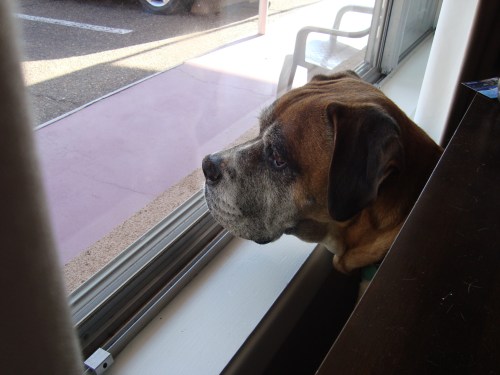
Chester looking out window

  • licensing requirements for all pet owners
  • laws limiting or prohibiting the sale of live animals
  • laws regulating international and interstate shipping of live animals
  • a federal prohibition on the sale of crush films, in particular, and animal pornography in general
  • state laws making sexual assault of an animal punishable (not limited to sexual assaults that are fatal or cause severe injury)
  • better and more frequent inspections of breeding facilities
  • better and more frequent inspections of animal wholesale facilities
  • greater transparency in the pet industry, such as, perhaps, in identifying the sourcing of animals for sale
  • greater transparency in the shelter industry
  • state laws requiring at least eight hours of training for anyone performing euthanasia
  • free speech protections for those who expose corporate animal abuses
  • reporting requirements for veterinarians (e.g. abuse, sexual assault)
  • combined/coordinated reporting of animal abuse and domestic partner, child or elder abuse
  • a publicly accessible national registry of those convicted of animal cruelty or sexual assault
  • increased (and responsible) media reporting of crimes against animals
  • more community resources (e.g. tax money) dedicated to shelters, animal control facilities, and cruelty investigators
  • state-appointed lawyers to represent animals in court
  • required humane education in schools
  • laws making failure to provide timely veterinary care a legally enforceable welfare violation
  • laws allowing pet owners to collect damages for emotional pain and suffering resulting from the loss of a pet at the hands of another human
  • laws making “convenience euthanasia”an animal cruelty violation
  • greater regulation of the pet food industry, including more rigorous inspection of ingredients, greater transparency about sourcing and ingredients, and a well-coordinated method of alerting customers about recalls

Source:  Run, Spot, Run by Jessica Pierce, pages 211-212

Kathleen Crisley, specialist in dog massage, rehabilitation and nutrition/food therapy, The Balanced Dog, Christchurch, New Zealand