Category Archives: dog care

Pain in dogs with noise sensitivity

Dogs which show fear or anxiety when faced with loud or sudden noises should be routinely assessed for pain by veterinarians, a new study has found.

Animal behavioural scientists from the UK and Brazil examined cases of dogs which had developed a sensitivity to either loudness, different pitches, or sudden noises, and found that those which also had associated musculoskeletal pain formed a greater sensitivity to noise.

The study suggested that that fear or anxiety about noise could be association between a fear of noises and underlying pain.

dogs and noise

Credit: CC0 Public Domain

The researchers believe that pain, which could be undiagnosed, could be exacerbated when a noise makes the dogs tense up or ‘start’, putting extra stress on muscles or joints which are already enflamed, causing further pain. That pain is then associated with a loud or startling noise, leading to a sensitivity to noise and avoidance of situations where they had previously had a bad experience—for example a local park, or a louder room in the house.

Researchers say that veterinarians should ensure that all dogs with behaviour problems associated with noise receive a thorough physical examination to see if pain could be a factor in their fear or anxiety, so that undiagnosed pain could be treated, and the behavioural issue tackled. All the dogs that had pain which were treated showed an improvement of their behaviour. This is the first study to explore this phenomenon.

Professor Daniel Mills from the University of Lincoln’s School of Life Sciences, said: “Although the average ages of the dogs were similar, the average age of onset of the problem was nearly four years later in the ‘clinical cases’. This strong theme of an older age of onset suggests that the pain may develop later in life and that owners seek treatment more readily, perhaps because the appearance of the problem is out of character in the subject.

“These results are consistent with the suggestion that whenever there is a late age onset to a behaviour problem, medical issues including those related to pain, should be carefully evaluated. It is worth owners being aware that once pain is successfully managed, the previously learned associations with noise may persist and require their own targeted behaviour modification programme.”

Researchers assessed two groups of dogs which presented with noise sensitivity: those which had already been diagnosed with underlying musculoskeletal pain and those which hadn’t.

In both cases, the presenting signs of the dogs’ behavioural issue included shaking, trembling and hiding, but those with a diagnosed pain issue also showed a higher level of avoidance when it came to places they had a bad experience with noise – for example attempting to avoid a certain area at a park altogether compared with those without pain.

The dogs with the musculoskeletal pain also started to show signs of fear of noises much later in life than the control cases, and were on average four years older than their pain-free counterparts. Noise triggers ranged from fireworks, thunderstorms and aeroplanes, to gunshots, cars and motorbikes.

Veterinary Medicine student Ana Luisa Lopes Fagundes, from Centro Universitário de Belo Horizonte in Brazil, led the research at Lincoln as part of Brazil’s Science without Borders scheme.

She said: “The aim of the study was to explore the presenting signs of dogs with generalised noise sensitivity with and without pain in their muscles or joints. We think that dogs with this sort of chronic pain may experience the noise quite differently, because if the noise makes them startle it may cause them to tense their muscles and as consequence they feel pain associated with the noise.

“We found that these dogs which had pain do indeed show different signs, in particular they seem to form much wider associations with the noise, for example they would often tend to avoid not just the place where they had the bad experience but much larger areas too. These dogs also tended to avoid other dogs as well. The findings of this study are really important because they contribute to the dog’s welfare and improved behaviour as pain could be identified and subsequently treated.”

The price to pay! (re-blogged)

This is a post without photos but it speaks volumes nonetheless.

Here’s another blogger who feels as I do – you must expect to spend money on your pet just as you would your children.

Budgeting is a basic life skill and it will soon seem clear whether or not you have the funds to make a lifetime commitment to your dog.

Please read: The price to pay!

Kathleen Crisley, specialist in dog massage, rehabilitation and nutrition/food therapy, The Balanced Dog, Christchurch, New Zealand

Your dog’s poo

They say that the eyes are the window to the soul; in many ways your dog’s poo is a window on their health.

(I never thought I’d see the day when I wrote about poop – but there’s a first time for everything.)

Have you noticed that the color of your dog’s poo changes with what they are fed?  For example, if you are feeding raw venison, chances are the poo is quite dark.

If, however, the stool has a noticeably black color such as in this photo, this can indicate digested blood and you should be off the vet for a check (don’t be shy, take a sample with you!).

A yellow or slightly green tone indicates a rapid transit time in the bowel, typical if your dog has had diarrhea, as in below.  But consistently soft stools can also be an indicator of bowel disease such as IBD.

Diarrhea or loose stool

A white or chalky color to the stool indicates a very high content of calcium, often found in dogs that are being fed raw with a high bone content.  If your dog is passing stools of this color, they are at risk of constipation from the bone material they are ingesting because of the dryness and risk of impaction.  In my practice, I am seeing  instances of poor mixing of raw foods and it usually from the same supplier – which is why I recommend only certain sources of food to my customers.

White chalky stools, an indicator of high bone content

If you see bright red blood in the stool, it’s also time to talk to your vet and of course, if you see visible worms than a vet visit is also recommended.

And finally, if your dog passes poos that are a neon green in color, they’ve been exposed to rat or mice poison and urgent attention is needed.

Kathleen Crisley, specialist in dog massage, rehabilitation and nutrition/food therapy, The Balanced Dog, Christchurch, New Zealand


National Pet Health Survey (USA)

A large citizen science project is underway and owners of dogs and cats in the USA have a chance to contribute via a 6 minute survey.

dog_and_cat_D558CAE2202DD

Over 55% of U.S. households own a pet dog or cat. These companion animals can have direct benefits to their owners’ health and well-being. Because pets often share their owners’ living spaces and have accelerated life spans, they can also be important indicators of human exposure to chemicals and potential health risks. Pets can be sentinels for diseases and exposures in a shared environment.

The One Health Commission (OHC) and the US Environmental Protection Agency (EPA) are working together on the National Pet Health Survey, a research project using voluntary input from dog and cat owners to help identify pet health trends and disease hotspots across the United States.

The OHC is administering the survey with promotional help from CDC’s One Health Office and other organizations. EPA is collaborating with the OHC on this effort and will be analyzing the collected survey data.

The intent for the survey data collection is to provide scientists, concerned pet owners, and the general public with one of the largest health and disease databases for pet dogs and cats across the U.S. Where possible the data will be summarized into data layers and integrated into EPA’s EnviroAtlas website. Through EnviroAtlas, the public will be able to display pet health information by specified areas, such as zip codes or states, in order to learn about emerging pet health issues.

The survey is open to the public and accepting responses (as of October 2017). Data collection will take place until January 20, 2020, or until the maximum number of respondents (300,000) has filled out the survey, whichever comes first.

With the huge number of pets in the United States, I’d suggest getting your form in quickly!

As for New Zealand and other countries, the One Health Commission suggests:  If you live outside the U.S., consider leading a pet health survey in your region.

Kathleen Crisley, specialist in dog massage, rehabilitation and nutrition/food therapy, The Balanced Dog, Christchurch, New Zealand

New – but is it safe and effective?

Look what I found when cleaning out yesterday – in a file of old vet records for Daisy (who passed away in July 2014) – a brochure for Periovac.  With February being Pet Dental Health Month – I thought this blog post was entirely appropriate.

Periovac brochure

Perio-what?

Periovac, marketed by Pfizer with some fanfare in 2006, the vaccine was touted as the latest and greatest thing that dog owners could do to support dental health in their dogs.  On a routine visit to a vet for a lump on Daisy’s side, he handed me this brochure when he noted that she had some tartar buildup recommending both a dental cleaning and vaccination with this product.

“It’s quite new,” he said.

I remember that this statement raised some alarm bells for me because animal medications have a much lower threshold for testing and approvals before they hit the market.  In fact, most pet owners are unaware that the newest medications on the market are often being sold with fairly limited research behind them, often under limited or conditional licenses.

At that time, I was also of the view that dental health in people is managed through dental care such as regular brushing of the teeth and professional cleanings.  I thought that the same would apply to dogs (and still do!).  I couldn’t imagine a vaccine for my dental health – so why one for my dog?

I remember emailing Angell Memorial Animal Hospital’s advice line about use of the product.  The response is one I vividly remember, “Has she tried everything else?”

That answer spoke volumes for me.  I didn’t vaccinate Daisy.

Pfizer withdrew the product from the market in 2011.  They said after a 4-year study, use of the vaccine could not be linked to a long-term reduction in periodontal disease.  The company stood by the product’s safety, however.  I wonder how many dog owners had paid to use the vaccine in good faith – possibly stopping other care methods like brushing of the teeth – I bet they weren’t told that the vaccine turned out to be ineffective!

So my advice for Pet Dental Health Month remains – brush your dog’s teeth.  Everyday.

And my other advice – for dog health in its entirety – is be careful about being an early adopter of new medications.  Make sure you understand how the medication works and what research has been done into both its efficacy and its safety.

Kathleen Crisley, specialist in dog massage, rehabilitation and nutrition/food therapy, The Balanced Dog, Christchurch, New Zealand

2018 American Rescue Dog Show

Move over Westminster because rescue dogs have just been put into the spotlight with their very own show.

Premiering on the Hallmark Channel on Monday, 19th February 2018 – the American Rescue Dog Show!

I’m not sure we will ever get this in New Zealand (possibly through Netflix but it isn’t there yet)…but it is great to see Rescue Dogs being promoted to the public.

***For the record, rescue dogs may be mixed or pure breeds – a dog finds itself in need of rescue mostly because of human actions or inaction and not breeding***

Kathleen Crisley, specialist in dog massage, rehabilitation and nutrition/food therapy, The Balanced Dog, Christchurch, New Zealand

Brain training for old dogs (touchscreens for dogs!)

Spoiling old dogs in their twilight years by retiring them to the sofa and forgiving them their stubbornness or disobedience, doesn’t do our four-legged friends any good. Regular brain training and lifelong learning create positive emotions and can slow down mental deterioration in old age. Physical limitations, however, often do not allow the same sort of training as used in young dogs.

In a new study, a team of researchers led by cognitive biologists from Vetmeduni Vienna propose computer interaction as a practical alternative. In the training lab, old dogs responded positively to cognitive training using educational touchscreen games. The aim now is to get the interactive “dog sudoku” ready for home use.

Touchscreen for dogs

Playing computer games might be the perfect “brain Training” for old dogs Credit: Messerli Research Institute/Vetmeduni Vienna

Lifelong learning is not just good for people, it is also good for dogs. Dogs are capable of learning even in old age, and constant brain training and mental problem-solving create positive emotions and slow the natural pace of mental deterioration. Unlike puppies or young dogs, however, old dogs are almost never trained or challenged mentally. Senior dogs are usually perfectly integrated into our lives and we often forgive them any disobedience or stubbornness. In addition, due to their increasing physical limitations, we usually spare old dogs the sort of training we might expect from young animals.

Cognitive biologists from the Messerli Research Institute at Vetmeduni Vienna propose computer games as an efficient alternative. Simple mental tasks on the computer, combined with a reward system, can replace physically demanding training and still keep the animals mentally fit even in old age. First, however, the method must be taken out of the laboratory and transferred to the living room.

Tablet games like “sudoku” for old dogs

At obedience school or in private, puppies and young dogs are socialised and challenged using a variety of training methods to help them integrate smoothly into our daily lives. As the dogs get older, however, we increasingly – and unconsciously – reduce the level of regular training and challenges. “Yet this restricts the opportunities to create positive mental experiences for the animals, which remain capable of learning even in old age,” explains first author Lisa Wallis. “As is the case with people, dopamine production in dogs also falls in old age, leading to a decline in memory and motivational drive. But this natural mental deterioration can be countered with the specific training of cognitive skills.”

Under laboratory conditions, the training works using computer-based brain-teasers. It does take some preparation to get the dogs used to the touchscreen, but once the animals have got the trick they turn into avid computer gamers. “Touchscreen interaction is usually analysed in young dogs. But we could show that old dogs also respond positively to this cognitive training method,” says senior author Ludwig Huber. “Above all, the prospect of a reward is an important factor to motivate the animals to do something new or challenging.”

Mentally fit four-legged “gamers” – laboratory solution to be made available to the general public

Using simple tasks that can be solved through touchscreen interaction, followed by a reward, even old dogs remain willing to learn. “The positive feeling created by solving a mental challenge is comparable to the feeling that older people have when they learn something new, doing something they enjoy. Regular brain training shakes not only us, but also dogs out of their apathy in old age, increasing motivation and engagement and thus maximising learning opportunities”, says Huber.

It is still not clear whether dogs slowly forget the things they once learned because of reduced powers of recollection or due to a lack of training in old age. The fact is, however, that lifelong learning with the touchscreen can help counteract this development. The research team hopes that this study will not only motivate technicians and software developers, but also interested dog owners, to consider future cooperation. “Our scientific approach could result in an exciting citizen science project to increase the understanding of the importance of lifelong learning in animals,” says Wallis.

Source:  University of Veterinary Medicine, Vienna

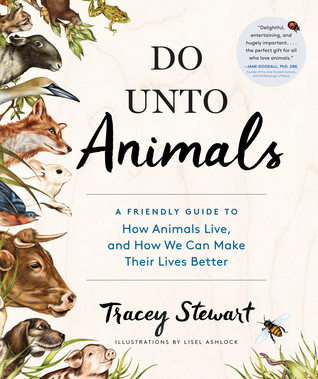
Do Unto Animals – book review

When Tracey Stewart’s book was launched in 2015, it was to great fanfare and lots of reviews.  It has taken me a while to get this book to the top of my reading pile.

Do Unto AnimalsThe theme of the book is ‘how to give back’ to animals of all types.  The first 70 or so pages are about domestic dogs and cats and the remaining 110+ pages are about other creatures including wildlife and farm animals.

To be honest, I think Stewart could have cut the chapters about dogs and cats and focused solely on the ‘other’ creatures.  The advice given for dogs and cats is pretty basic and not particularly well thought out because the information is so brief.  For example, she has included two pages about dog massage with 6 ‘moves’ and the usual warnings about ‘not to be substituted for veterinary care.’

The book comes into its own, however, when the other animals become the focus of the text.  For American audiences, the chapters about backyard wildlife and the roles of each of the ‘pests’ is enlightening. In the farm animals section, she covers pigs, cows, goats, sheep, horses, chickens, turkeys, ducks and geese.  And for each type of animal, she includes a hard hitting ‘what makes a pig (cow, goat, sheep, horse, chicken, turkey, duck or goose) unhappy.’

These pages constitute a simple ‘list of shame’ when it comes to factory farming and the realities of individual consumer choices for meat, dairy, and even feather down garments.

The best part of the book, in my opinion, are the illustrations by Lisel Ashlock.  In full color, these adorn every page of the book and are a reason why this book should be owned and shared in print version (not electronic).

My overall grade:  A-

Tracey Stewart has a veterinary technician qualification although her first career was in design.  She is the wife of comedian and talk show host Jon Stewart.  Both are committed to animal welfare, with a large animal family of their own on their New Jersey farm property; part of the proceeds of each book sold go to support Farm Sanctuary.

Kathleen Crisley, specialist in dog massage, rehabilitation and nutrition/food therapy, The Balanced Dog, Christchurch, New Zealand

Finances and financial sacrifices

When you make a commitment to a dog, you make it for life – or at least you should (although from many of the listings I see in Facebook groups and on Trade Me, it is clear that others don’t believe in the lifetime commitment).  With that lifetime commitment comes a fairly significant financial commitment.

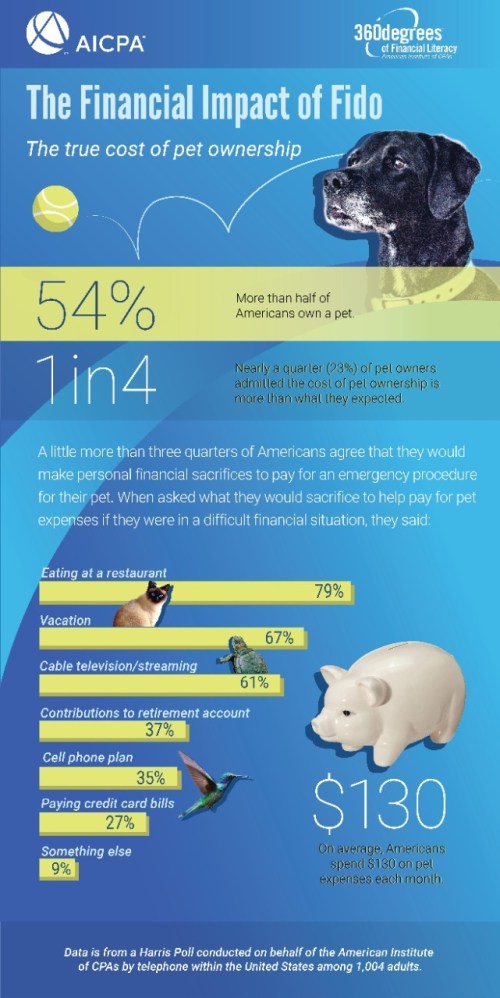
That’s why I applaud the recent survey undertaken by the American Institute of Certified Professional Accountants (AICPA) concerning the cost of pet ownership.  Although this survey was done in the USA, I would expect the findings to be broadly transferable to New Zealand – certainly the recommendations are!

The overall findings were:

  • On average, American pet owners spend $1,560 per year on their pets
  • One-in-four say their pets cost more than they expected
  • More than 3-in-4 Americans would make financial sacrifices for their pets

And the survey even asked how these pet owners would make financial sacrifices, if they had to, to fund emergency pet care expenses which is illustrated in the graphic below:

The Financial Impact of Fido by the American Institute of CPAs

To help Americans fully understand the financial commitment that comes with bringing a pet into their home, the AICPA’s National CPA Financial Literacy Commission has the following tips:

  • Be honest with yourself financially – If you are struggling to pay off your student loans and have credit debt piling up, does it really make financial sense to get a pet?  Pets are great but they are meant to help relieve stress, not add to it due to financial difficulties.
  • Do your research – Though the cost of routine care may be predictable, it varies widely from animal to animal, and even from breed to breed, across the full spectrum of family pets. Know ahead of time the probable cost of care that will come with your companion.
  • Make a budget: “pre-pet” & “post-pet” — Include all related expenses, i.e. food, treats, leash, crates – including tank for fish, lizards, etc.—toys, vet visits, grooming and other services such as boarding and day care. If your pet will require a habitat powered by electricity, be sure to factor in the impact it will have on your utilities bill.
  • Be prepared – If you’re worried about unforeseen costs, use an emergency savings calculator to help you regularly set aside funds, or consider getting pet insurance.
  • Buy in Bulk – Items such as food, treats and preventive medicine can be purchased in bulk, reducing the overall cost per unit.

Kathleen Crisley, specialist in dog massage, rehabilitation and nutrition/food therapy, The Balanced Dog, Christchurch, New Zealand

Two french bulldogs and a pug

Today, I gave Aki, Haru, and Yuki their Christmas presents – relaxation massages paid for by their Dad.  I was booked up last week when he rang and couldn’t fit in 3 hours of massage before the holiday – luckily everyone was happy to wait.

All I knew was that I was going to meet “two french bulldogs and a pug.”  I was not disappointed; all three were charming.  Yuki is the oldest, and will be 8 years old in March; Aki is 5; Haru will be 2 in February.

Pug

Yuki the Pug

French Bulldog

Haru the French Bulldog

French Bulldog

Aki the French Bulldog

Massages for your dog make a wonderful gift; relaxation massage distributes the oils of the coat to support skin health, allows your dog to chill out and be the center of attention, and I report back on any lumps and bumps I find to ensure you have discussed these with your vet.

Kathleen Crisley, specialist in dog massage, rehabilitation and nutrition/food therapy, The Balanced Dog, Christchurch, New Zealand