Category Archives: dog care

Unlikely Best Friends

I’m always a little surprised when, after I explain that one of my services is to help owners measure and fit dogs for mobility carts, that I get answers like “I’d never do that to a dog.”

Stories like this one, an ad sponsored by the Kleenex brand, show you why some dogs can do very well in a cart – and experience quality of life while also sharing unconditional love.

Kathleen Crisley, specialist in dog massage, rehabilitation and nutrition/food therapy, Canine Catering Ltd, Christchurch, New Zealand

Dog bite prevention – we may be on the wrong track

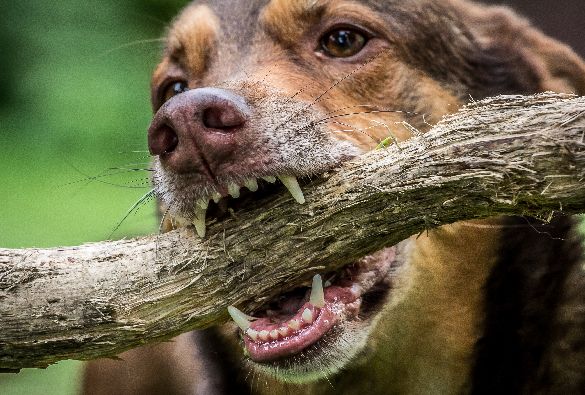
Scientists at the University of Liverpool have shown that educating pet owners about canine body language may not be sufficient to preventing dog bites.  They’ve published their research in the Journal of Veterinary Behaviour.

Dog bite photo

At a time when data suggests dog bite incidents are increasing, the team at Liverpool interviewed victims of dog attacks to gain further understanding into their perceptions of the experience.

They found that in some cases there was no interaction with the dog before the bite occurred and therefore no opportunity to assess behaviour.  There was a common tendency for victims to blame themselves for the attack, rather than the animal, or in cases where the dog was not known to them, they blamed the dog’s owner.

Warning signs

Even those who felt knowledgeable about dogs, perceived that a bite “would not happen to them”, and so despite the warning signs would continue acting in the same manner, suggesting that education on body language was ineffective as a preventative measure.

My comment:  This particular part of the research resonates with me.  I’ve seen dog trainers, working with client’s dogs, be super-confident despite the feedback that both the owners and myself would be giving them.  And then, they’d do things with the dog – such as reaching for their collar – which would instigate a snap. 

Working with dogs is a privilege, but we should also be humble enough to treat each dog as an individual…

“Preventing the situation from arising at all may not always be feasible. Reducing the damage caused when a dog does bite, through careful pet dog selection and training, is something we should aim for.”  says Dr Carri Westgarth, a dog behaviour expert at the University’s Institute of Infection and Global Health.

Raising awareness

The researchers highlight that there is not enough knowledge of how dog bites occur to know how to prevent them entirely. Raising awareness that ‘it could happen to you’ as often used in other campaigns such as drink-driving, will be required for successful dog bite prevention.

More work is also needed with dog breeders to supply dogs that are less likely to bite and that have inhibited bites that do less damage, moving away from a victim or owner ‘blame’ model to explain dog bite injury.

Source:  University of Liverpool media release

Dog buns

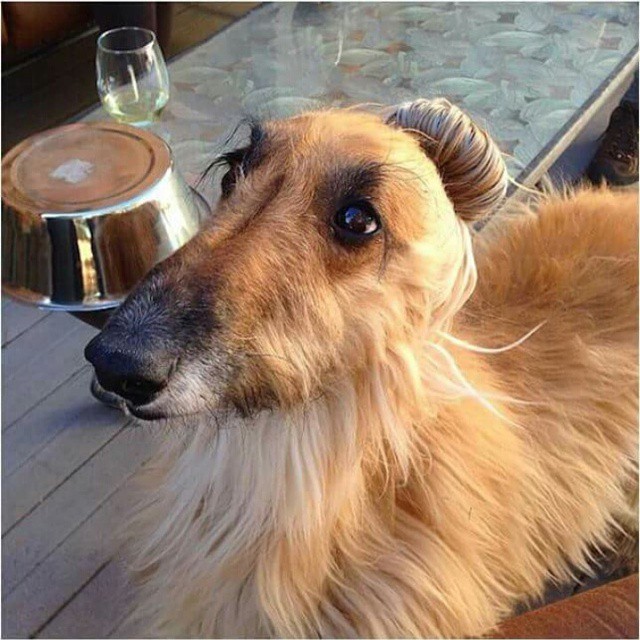
It seems that there’s a new trend in grooming and photographing dogs – it’s called dog buns, as seen from these photos downloaded from Instagram and Pinterest:

Dog bundog bun 3While I understand that some people think these photos are cute or funny, I don’t agree in tying up the ears of a dog.  The ears of a dog are sensitive tissues, with many acupressure points.

Tying up of the ears can interfere with blood circulation and, if left in for any period of time, the area is a breeding ground for bacteria – particularly in wet conditions.

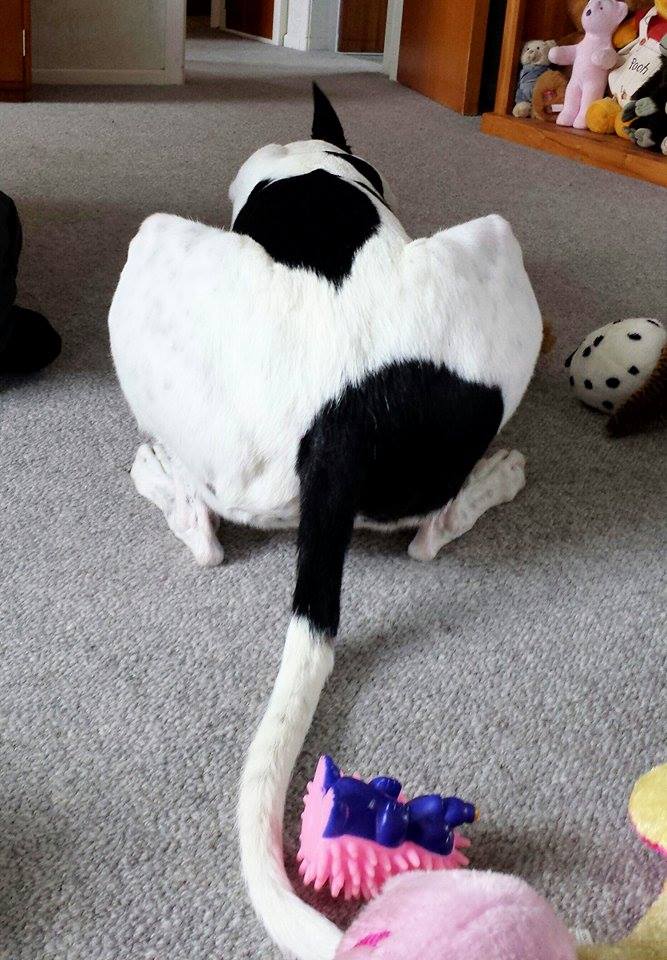
Leave your dog’s ears alone!  The only dog buns I like to see are these ones:

Izzy, Greyhound, adopted in October 2014 (Photo by Dany Wu)

Izzy, Greyhound, adopted in October 2014 (Photo by Dany Wu)

Kathleen Crisley, specialist in dog massage, rehabilitation and nutrition/food therapy, Canine Catering Ltd, Christchurch, New Zealand

A dog’s perspective of your trip to the vet

This is a great video made for veterinary practices – reminding them about the layout and setting they should provide for their dog clients.

I particularly like the reference to stress and the effect it has on recovery time.  That is one reason why I recommend massage, done by a professional, when a dog is recovering.

Massage will help to reduce the anxiety and aid blood flow and recovery.  I also use acupressure to help clear the anesthetic medications from the dog’s body.

Kathleen Crisley, specialist in dog massage, rehabilitation and nutrition/food therapy, Canine Catering Ltd, Christchurch, New Zealand

Old dog face

What a lovely perspective on having an older dog…it does creep up on us yet they are a joy to have in your household – making you value time even more.

Mel's avatarNo Dog About It Blog

What is it that changes in a dog’s face that suddenly makes her look old? Is it the lightening around her muzzle? Or, the increasing milkiness of her eyes? Or, is it the way she smiles, flashing that toothy grin at us?

What is it that we first notice? Is it a moment or an accumulation of moments? It seems like one day we are looking at our dog and seeing a young and energetic face, and the next day we see an old one in its place. It always seems like a surprise to me when I finally see it.

A couple of months ago, I took a candid shot of Cupcake standing out on the patio. What I saw on my camera’s viewing screen made me stop and stare.  “Wait. What happened?” I thought, “That doesn’t look like Cupcake. That looks like an old dog.” And it was. It was my Cupcake, in all…

View original post 315 more words

Drug trials in pet dogs with cancer

Physiological similarities between dogs and humans, and conserved genetics between some dog and human cancers, can allow pet dogs to serve as useful models for studying new cancer drugs, says Dr Timothy Fan of the University of Illinois.

Timothy Fan, professor of veterinary clinical medicine. With his personal dog, Ember

Timothy Fan, professor of veterinary clinical medicine. With his personal dog, Ember  photo by L. Brian Stauffer

In a meeting sponsored by the National Cancer Policy Forum of the National Academies’ Institute of Medicine in Washington, D.C., Fan and 15 other experts in the field described the benefits of using pet dogs with naturally occurring (rather than laboratory-induced) tumors in early cancer drug trials.

“We have a lot of dogs in the United States, approximately 70 million of them, and it’s believed that about 25 percent of pet dogs will develop some form of cancer in their lifetime,” he said. “We’re using dogs to help guide drug development for people, but at the same time we’re offering new, innovative therapies that would otherwise never be available to dogs, to help them as well.”

Several attributes make pet dogs attractive subjects for such studies, Fan said.

“Dogs tend to develop cancer as a geriatric population, just like people,” he said. “Because the tumors develop spontaneously, there is heterogeneity in that tumor population, as a human being would have. The size of the tumors and the speed of growth of those tumors are comparable in dogs and human beings. So there are many attributes of a dog that develops cancer spontaneously that recapitulate the biology that we see in people.”

Some studies have already begun using dogs to test new cancer therapies. Starting in 2007, for example, Fan began testing an anti-cancer drug called PAC-1  in pet dogs with naturally occurring lymphomas and osteosarcomas. The results in dogs allowed the scientists to advance PAC-1 as a potential therapy against human cancers. The drug is now in phase I human clinic trials.

“Another example in which dogs have been important in demonstrating drug activity was an anti-cancer compound produced by the pharmaceutical company Gilead Sciences,” he said. “The company produced a pro-drug, which must be activated by a naturally occurring enzyme in human leukocytes before it can become effective. Mice and rats lack this enzyme, but dogs have it, so the compound was tested in dogs.”

There also are limitations to the use of pet dogs in cancer drug trials.

“There are some tumors that will not be that relevant,” Fan said. “Colon cancer, for example, is heavily driven by diet, and we don’t see much colon cancer in dogs. So pet dogs might not be a suitable model for colon cancer in humans.”

“There is heterogeneity in the human population and in dogs. So I would argue that if your drug agent produces positive results in dogs, that would give me greater confidence that those findings would be translatable to people.”

Source:  University of Illinois media release

How much will a pet really cost you?

Izzy adoption announcementIn case you haven’t guessed, I love dogs.

But any way you look at it, dogs are a responsibility and they require commitment in time and money to support and to care for them throughout their lives.

That’s why this article, How much will a pet really cost you? A cat vs dog breakdown, caught my attention.  Published in the Christian Science Monitor and using costs in US$, it shows the cost of owning either a cat or a dog and the money you need to expect to pay on a monthly and yearly basis.

I would add that if a dog develops a special health condition, or when it ages, your costs are likely to increase.  Here in New Zealand, I am finding too many owners who are in a financial pinch because of the care of an elderly or special needs dog.  In some cases, and in my opinion, the dogs are not receiving everything that that could to make them happy and comfortable (possibly extending their lives by months or years) – because the owners don’t have the finances.

Think before you adopt (or buy).

A dog is a lifetime commitment and one that costs money.  The benefits of ownership are a great investment.

Kathleen Crisley, specialist in dog massage, rehabilitation and nutrition/food therapy, Canine Catering Ltd, Christchurch, New Zealand

Wet wipe management in dog care

Hitting the news this week has been an announcement from a number of local authorities in New Zealand warning about the disposal of wet wipes.  I and many other dog owners use these wipes; I’ve particularly found them useful for senior dog care when little accidents and dribbles happen on a regular basis.

I admit that I have dutifully bought wipes labelled ‘flushable’ like these thinking they were safe to flush.

wet wipes

And now I find out that wet wipes are clogging the public sewer system, increasing the costs to maintain the system and potentially raising the costs which will ultimately come back to us as ratepayers.

The problem is that, once flushed, these wipes aggregate together and clog around pumping systems and piping.

Clogged sewer pipes - thanks to wet wipes

Clogged sewer pipes – thanks to wet wipes (photo by Marlborough District Council)

Wet wipes clogging the pumping system (photo by Marlborough District Council)

Wet wipes clogging the pumping system (photo by Marlborough District Council)


So I’m putting up this blog post as part of the educational process.  All wet wipes -for babies, dogs and cleaning – shouldn’t be flushed no matter what the label says!

If you are buying ‘flushable’ wipes, maybe you can write to the company and ask that they stop marketing their wipes as ‘flushable’ since this description is misleading.

Kathleen Crisley, specialist in dog massage, rehabilitation and nutrition/food therapy, Canine Catering Ltd, Christchurch, New Zealand

Moving house with a dog

Shifting homes is rated amongst the top 10 stressful life events.  And it is well documented that dogs are also affected by this stress.

Tips to help your dog settle in include:

  • Remove them from the house on moving day to a familiar place (at a friend’s or relative’s)
  • Keep to routine as much as possible (morning/afternoon walks, meal times)
  • Bring your dog’s toys, blankets and crate with you and set them up early in the new residence
  • Reinforce fences and gates to ensure your dog isn’t tempted to return home

…but I have another suggestion, based on our recent house move with Izzy…

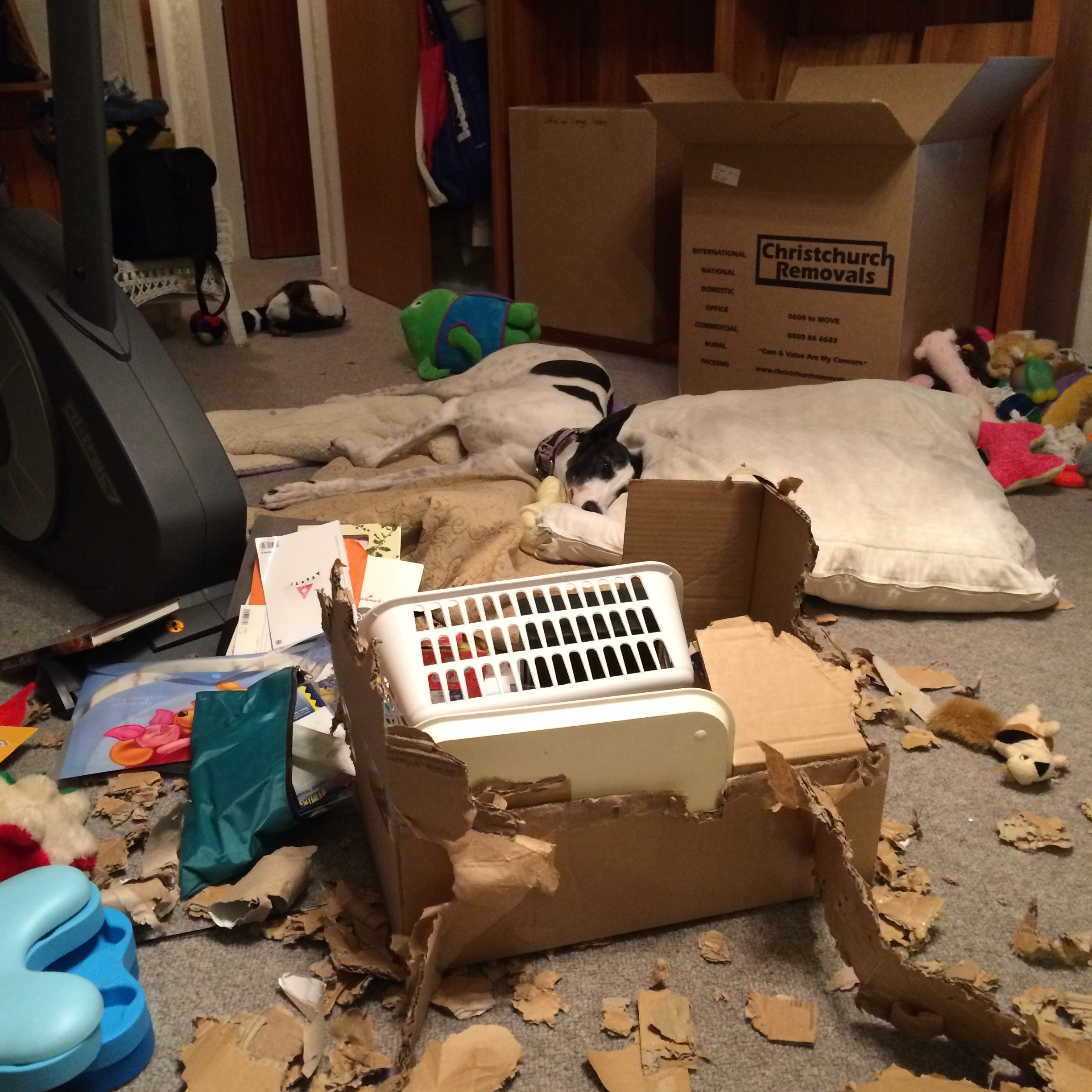
Let your dog unpack boxes!

Izzy's unpacking job 29 June 2015


Kathleen Crisley, specialist in dog massage, rehabilitation and nutrition/food therapy, Canine Catering Ltd, Christchurch, New Zealand

Kess’ story – Part 2

When dealing with dogs with special needs, one of the key principles is ‘management.’  Management can take a range of forms, but it always involves adapting and changing lifestyle to suit the dog.

In Kess’ case, Ian and Jan accepted that her on-lead behaviour was going to be almost impossible to eradicate.  They adapted their walking routines to suit.

Kess would have a short daytime walk in a quiet area and then a longer evening walk either in a park or very often through the central city of Christchurch. This worked well as there were plenty of people about her but very few other animals.  Ian and Jan felt that they were making some progress with the reactivity and could happily take her into quite busy areas.

Unfortunately, the Canterbury earthquakes which started in September 2010 with another large jolt in February 2011 halted that progress.  Since the earthquakes, Kess’ anxiety levels have remained at very high levels.  She has become much more anxious of strangers which has meant adapting the walking routine.   For the first 18 months, the family continued to walk through the central city at night, following the Avon River around the outside of the Red Zone cordons (for those that don’t know, the central city area was heavily damaged and evacuated).  Jan and Ian quickly learned that hi-vis wear and army cordons were a cause of stress for Kess so avoided them.  Despite these concerns, Jan and Ian found these walks peaceful and reflective.

Post-quakes, Kess’ health issues have also been more of a problem for her.  In my opinion, Kess was already a very sensitive dog and the earthquakes simply added to her load – further weakening her stressed immune system.

She contracted toxoplasmosis, a parasitic disease, probably from drinking from a puddle or other contaminated water source in 2012 (cats are regular carriers of toxoplasmosis). She suffered seizures and general ill health for several months.  “We almost lost her.” Treatment was a mixture of veterinary care and natural animal health care and remedies.

Then, in 2013 when the couple were staying in temporary accommodation while their earthquake-damaged house was repaired, Kess had a major episode with pain in her spine which left her immobilised and howling in pain. An emergency trip to the vet and medication followed. In a bid to reduce the medication she had several acupuncture sessions but became resistant to this.  “She has an amazing ability to turn into a solid, resistant brick when she doesn’t want to do something,” says Jan.

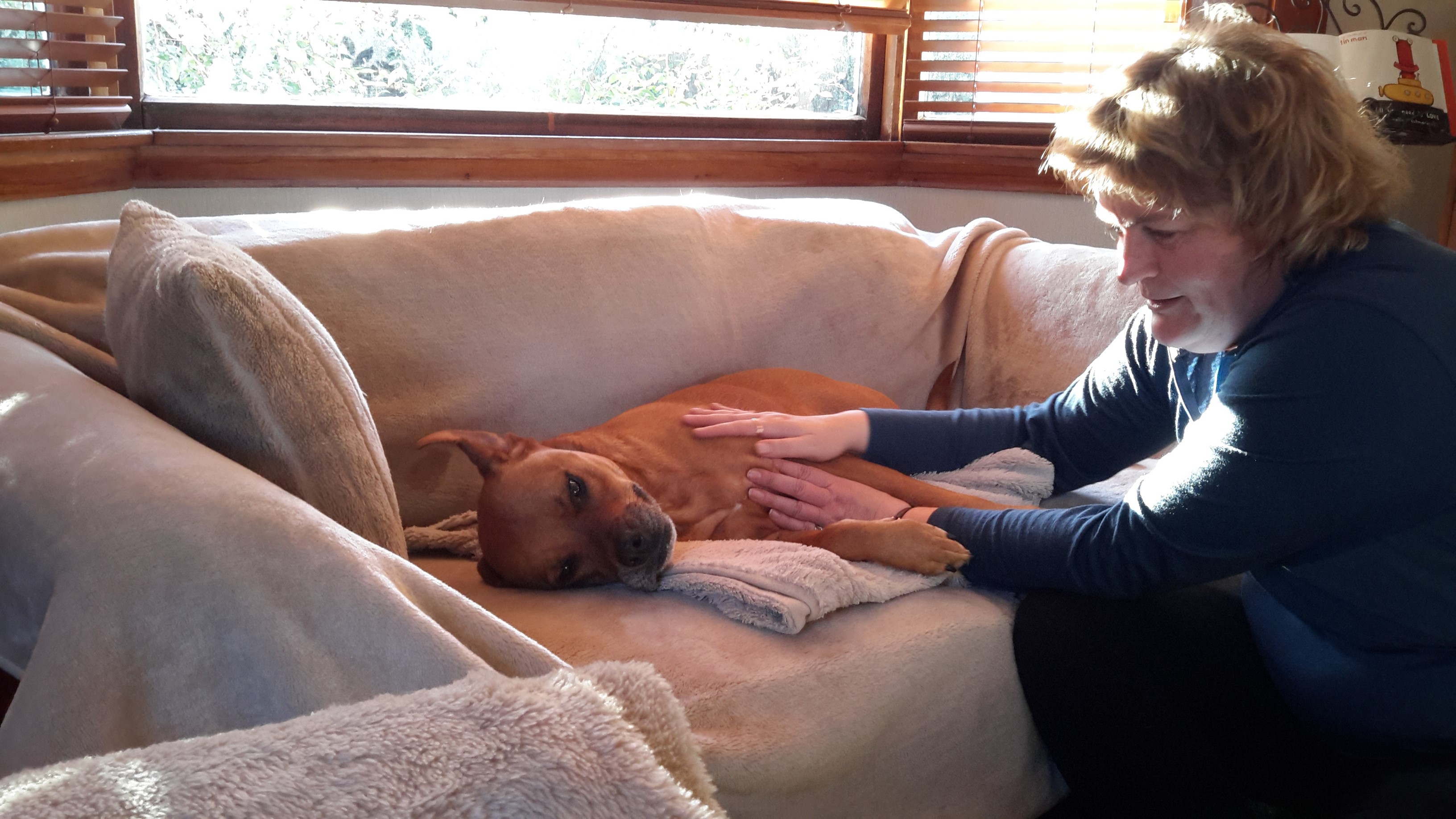
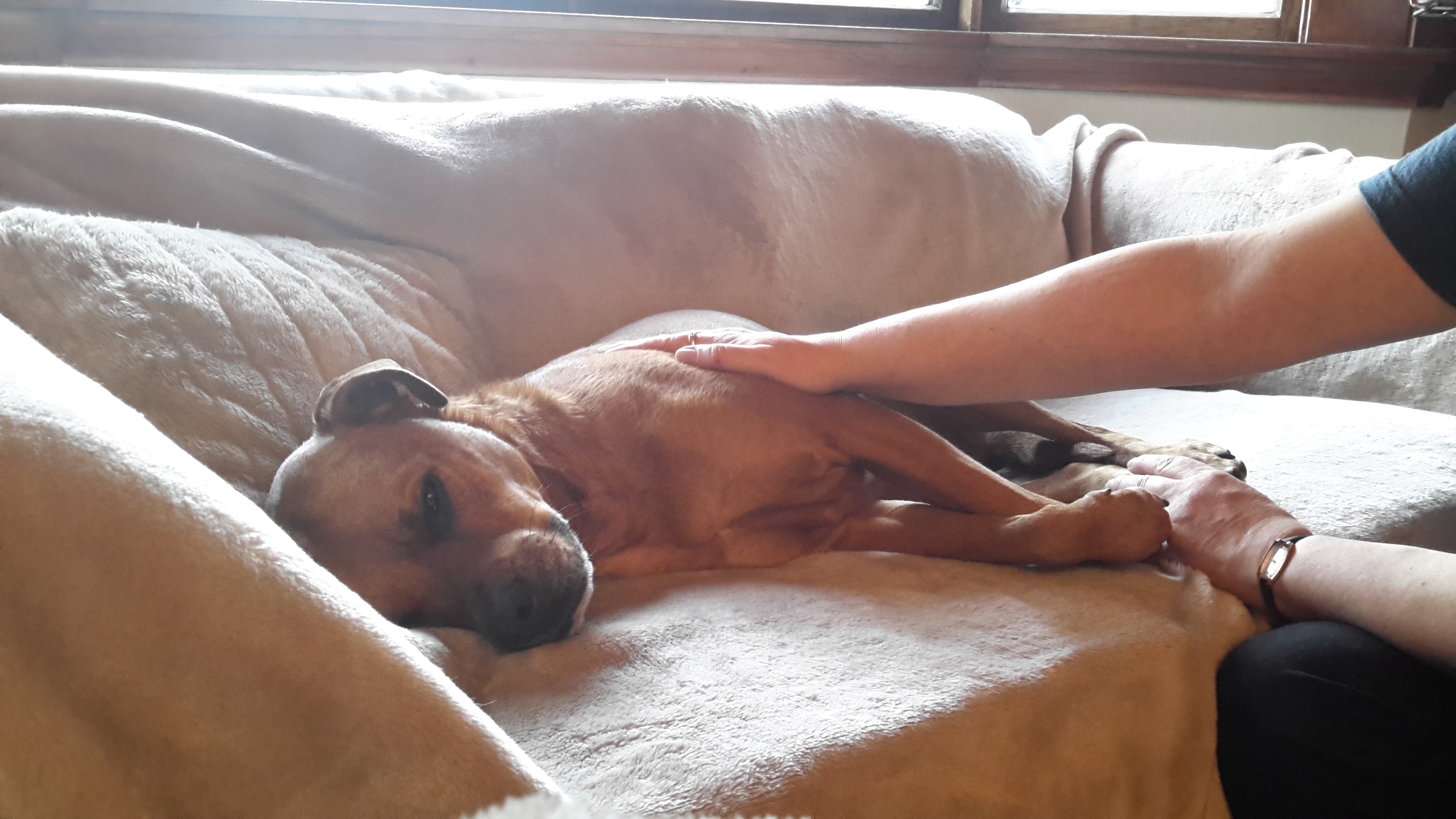
This led the couple to look to yet more alternatives. This is when Jan contacted me and we entered a whole new realm of support for Kess’ health.   I used massage, manual acupressure and laser therapies with Kess and she started swimming at the Dog Swim Spa.   Kess was unable to benefit from swimming because she developed a stress reaction to the shower which was a necessity after each swim  in a chlorinated pool.  So , we agreed that swimming be dropped from Kess’ therapy.  But an osteopath was added in 2014 to help release Kess’ back tension.

Osteopathy and massage therapy work very well in conjunction with one another and so the current plan is to keep up with both.
20150528_15241520150610_162539

More recently, Ian and Jan have noticed that Kess’ anxiety levels have been on the rise and she has been out of sorts which included frequently shaking her head and looking distressed.   She also developed an aversion to the laser and its ‘beeping’ noise and so we’ve dropped that from her regime. After ruling out any ear or tooth problems a specialist vet has recommended Kess undergo an MRI examination to rule out any possible deeper issues with her brain, inner ears or throat area.

Because Kess has been anxious, Jan has also been anxious about their daytime walks.  We discussed cutting back on walks in favor of playing in the family’s yard.  And what we talked about was the fact that Kess was never truly ‘free’ because her anxiety condition prevented Jan and Ian from taking her to a dog park or similar off-leash area.  We needed to re-group about Kess’ mental health.

Luckily, the owner at Top Notch Kennels agreed to allow Kess a weekly visit to their large exercise yard.  At last, Kess is able to blow off some steam and be a ‘real’ dog.  At first tentative and keeping close to Jan, within a few visits Kess found her feet and is now running free without harness or lead. Her smile says it all. Jan has noticed an improvement in her personality. “This has been fantastic for Kess – what a joy to see her joy at being free to just be herself and she still runs in mad, crazy circles but so far no more forward-rolls. I do though have to keep an eye on the sheep over the back hedge – I’m not convinced she couldn’t jump the fence with enough speed on!”
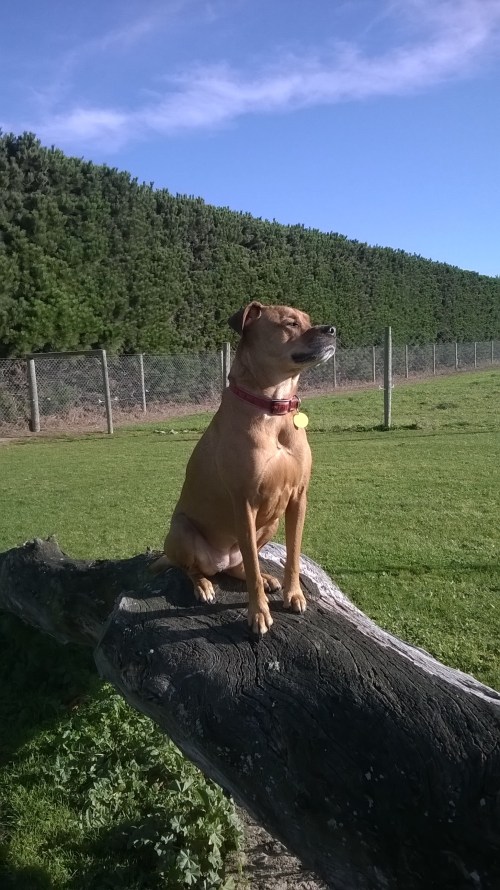
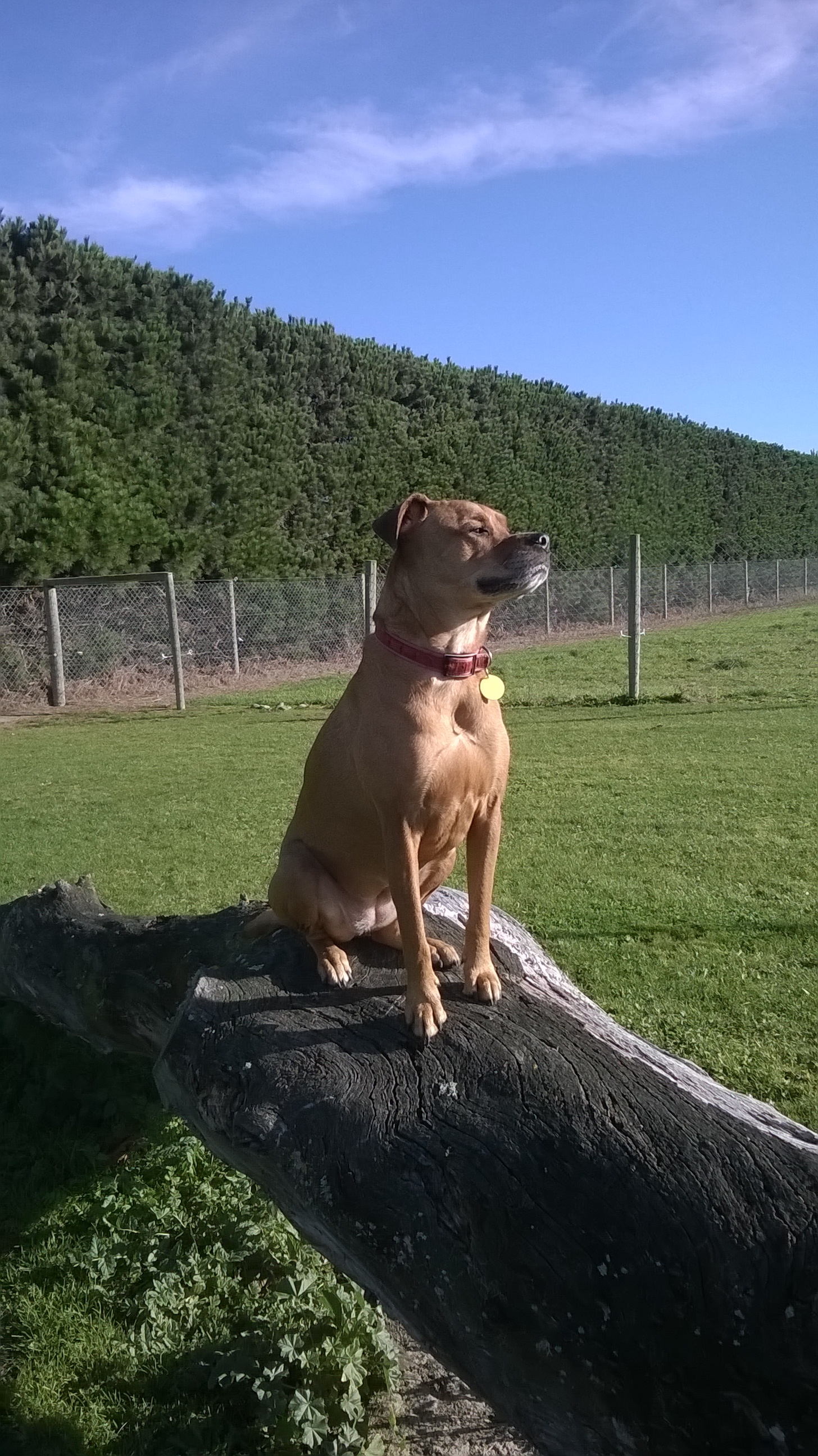
Kess looking free and regal, clearly enjoying her off-lead time

Kess looking free and regal, clearly enjoying her off-lead time

Ian and Jan love Kess and are devoted to her, acknowledging that she has been hard work and a significant investment of their time.

“Although our experiences with Kess have been very challenging on many levels she has also taught us many things and caused us to go places and experience things we most definitely would not have without her. We have discovered interesting places and explored corners of the city we had never known. The most special times were our walks through the dark and silent city following the February 2011 quake. We would never have had that unique experience without our very special girl.”

“Most of the time, 99 per cent, she is the most obedient, quiet and well behaved dog we have ever shared our home with. She is just as happy to spend the whole day snoozing on her couch in the sun as she is excited to be going out somewhere in the car. She is very smart, loves to play find and seek with her toys and has a very effective way of communicating to us just what she needs. Someone commented recently that we should have had her put to sleep as there are plenty of ‘good’ dogs out there who need homes but in our opinion every dog deserves a chance to live a good, happy life. When we see love and trust returned in her eyes it makes everything worth it.”

I think what Kess’ story proves is that ‘difficult’ dogs can still be loveable pets (one trainer suggested she be euthanized when their attempts at training Kess ‘by the book’ failed).  These dogs just need more time and effort invested in them; we need more people willing to stick with the tough times – a loving companion and lifelong relationship awaits.
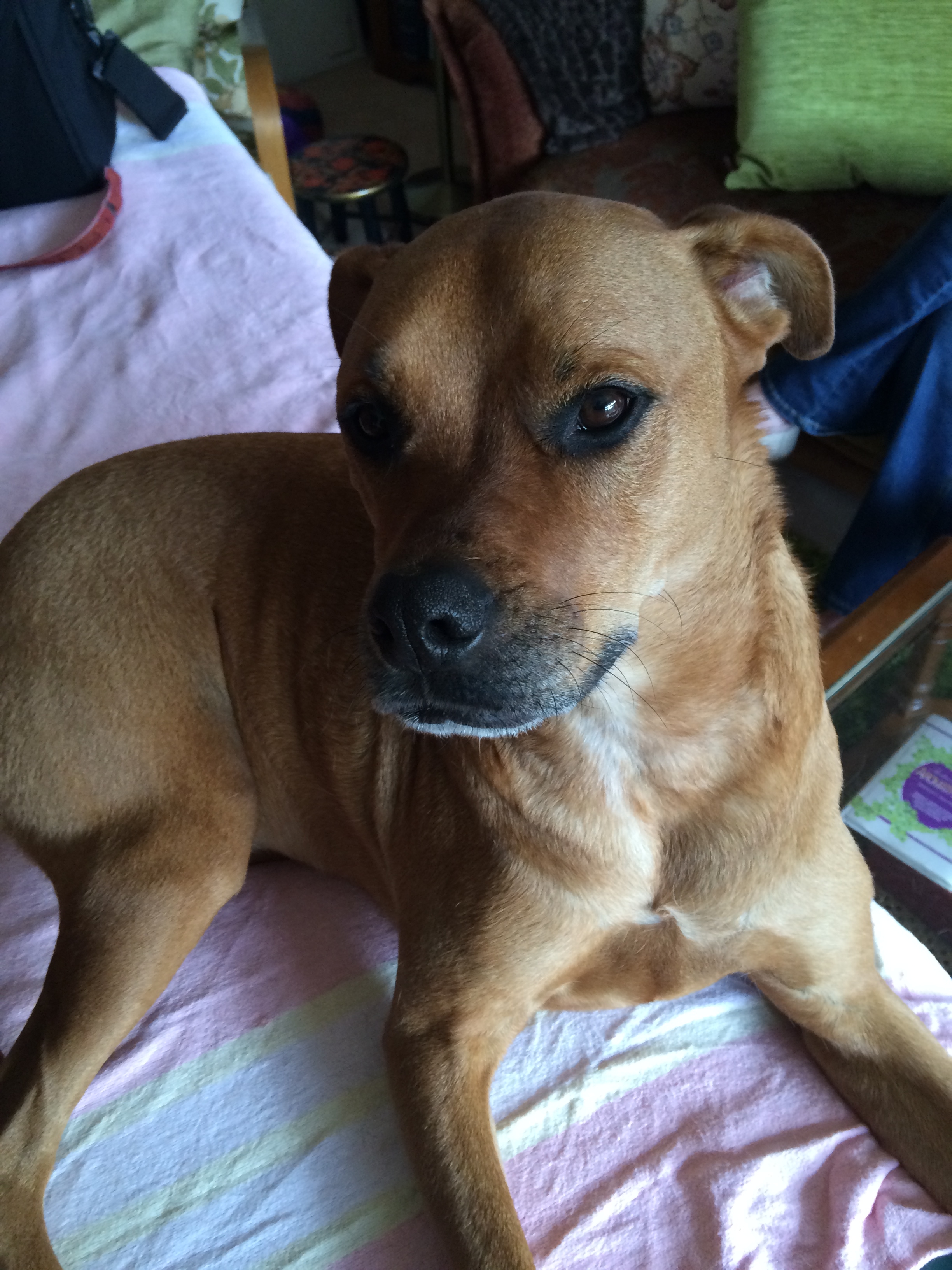
20150531_084116

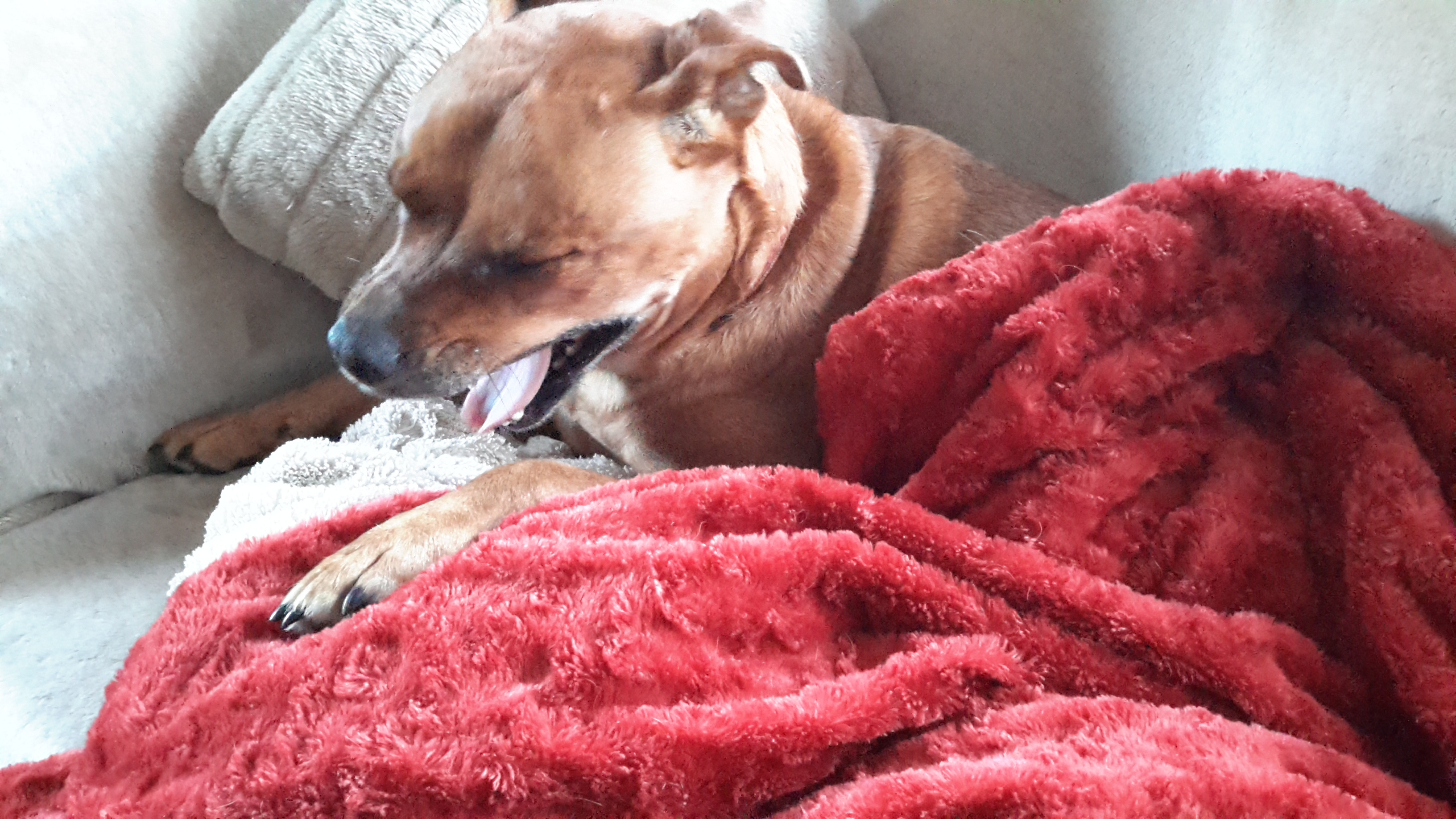
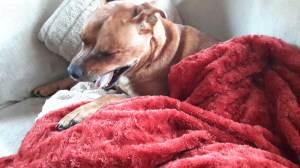
A sleepy Kess after a recent massage session

Kathleen Crisley, specialist in dog massage, rehabilitation and nutrition/food therapy, The Balanced Dog Ltd, Christchurch, New Zealand