Category Archives: dog care

Image

Wordless Wednesday, part 15

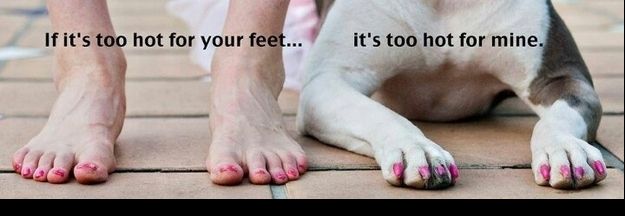
If it's too hot for your feet...

7 Steps to a Happier Pet

This holiday season, the Humane Society of the United States would like to share its 7 steps to a happier pet:

  1. Make sure your pet wears an identification tag
  2. Make sure you enroll your new puppy in behavioural training classes to prevent problems
  3. Animal behavioural problems can be health-related.  Make sure your pet has a complete medical exam by a veterinarian at least once a year
  4. Prepare for disasters and make sure you have a plan for your pet in the event of a hurricane, tornado, fire, flood or earthquake
  5. Plan for your pet’s future in case something happens to you
  6. Learn how to prevent dog bites and how to prevent your dog from biting; visit the Humane Society’s website.
  7. Have a heart, be smart, and make sure your pet is spayed or neutered.

Is Your Veterinarian Being Honest With You? | Video – ABC News

One of the things I try to do through this blog and my column in NZ Dog World magazine is to educate dog owners.  This item, from ABC News in the United States, gives you some food for thought.

The key messages are:

1) Be an educated dog owner about health care

2) Ask knowledgeable questions about recommended procedures (including vaccinations)

3) Understand that some practices market procedures (up-selling) to increase sales

And the subtle one for me is really to develop a working relationship with your vet.  I believe that most vets are ethical and are willing to have an intelligent conversation with you.  But, it’s up to you to be the steward of your dog’s care.  You are the one who says ‘yes’ or ‘no’ to all treatments given to your dog.

Is Your Veterinarian Being Honest With You? | Video – ABC News.

Those ‘Bambi’ falls…

I had a lovely email this evening from a new massage client.  She says ‘Ash was very happy after her treatment and has not had any bad falls (i.e. the ‘Bambi’ ones which are really bad for her hips.)’

You know what she means, right?  If not, here are a few examples:

Copyright Disney Studios

Copyright Disney Studios

Copyright Disney Studios

Copyright Disney Studios

Copyright Disney Studios

Copyright Disney Studios

Does your dog fall like Bambi?  Landing like Bambi when you are an older or mobility-challenged dog can really hurt.  Please take care!

Emerging strains of canine parvovirus

Canine parvovirus is a highly contagious worldwide disease that involves both domestic and wild canines. It can be fatal in immuno-compromised dogs or puppies that have not been vaccinated.

Photo courtesy of Kansas State University

Photo courtesy of Kansas State University

The molecular diagnostics team led by Richard Oberst, Professor of diagnostic medicine, at the Veterinary Diagnostic Laboratory at Kansas State University has developed a newer, more effective test that can detect an emerging 2c strain of the virus while also detecting the existing 2a and 2b strains.

“Canine parvovirus is a very severe disease,” Oberst said. “Usually dogs who have canine parvovirus are already immune suppressed, not only because of their young age and having immature immune systems, but also because of having intestinal parasites.”

Canine parvovirus causes hemorrhagic enteritis resulting in bloody diarrhea several days after exposure to the virus. It spreads from dog to dog through contact with feces. The virus infects lymphocytes and causes immune suppression and it also can cause dogs to bleed to death through their intestines.

Often, survival rates depend on how quickly and accurately the virus is detected. Commercial tests for veterinarians are not as effective at detecting newer strains of the 2c virus, Oberst said, and have resulted in some false negative results.

The team has developed a real-time polymerase chain reaction, or PCR, test to detect the 2c virus strain and the 2a and 2b strains. “With this test we can now test all strains simultaneously and differentiate which strains of the virus might actually be causing the infection,” Oberst said. “That’s a unique aspect to this test.”

To send samples for testing at the diagnostic laboratory, dog owners are encouraged to work with their veterinarians, who can send samples to the Veterinary Diagnostic Laboratory at Kansas State University.

Source:  Kansas State University media release

How hot does it get in a parked car?

Okay, New Zealanders and other Antipodeans – summer is just around the corner and we are already experiencing clear, warm and sunny days.

And every year, sadly, dogs die from heat stress because their owners decided to leave them in a parked car ‘just for a few minutes.’

This video by Dr Ernie Ward illustrates just how quickly the temperature in a car increases in hot weather.   Imagine what is  is like for a dog that can’t open the door and escape the heat!

It is best to leave your dog at home during summer if you have to make any stops and ensure that you use your car’s air conditioner to keep your dog comfortable when driving.

Pay attention to the thermometer that Dr Ward uses.  You can clearly see the temperatures in Celsius on it, although he talks in degrees Fahrenheit

Acute or chronic?

I find that many of my clients don’t understand the terms ‘acute’ and ‘chronic’ when working with their veterinarian.  To manage a range of health conditions, it’s really important to differentiate between the two words.

If a problem is acute, its symptoms appear, change or worsen rapidly.

If a problem is chronic, the condition worsens or changes over a period of time.

Acute vs chronic – look out for these terms when working with your dog’s healthcare team!

The PupLight – helping an older dog see at night

As a dog gets older, it is common that they will experience a loss of eyesight or visual acuity.  I have found that many owners assume that their dog has cataracts but a more common problem is nuclear sclerosis.

Nuclear sclerosis, which is also called lenticular sclerosis, is a condition that causes the pupils of the eyes to look cloudy and often blue-gray in colour.  Nuclear sclerosis isn’t painful and it comes upon the dog gradually.  At some point you will notice that your dog isn’t seeing well at night and their peripheral vision may also be limited.

Such is the case with my Daisy.  We have stairs that go from our house to the outside garden and I noticed that she would stop dead at the top of the stairs because she couldn’t see the steps in the dark. It made sense that, although I could turn a light on in the house, the lighting in the garden wasn’t as easy.

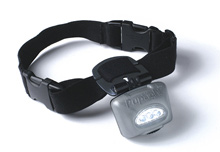
Then I found the PupLight, the lighted dog collar.  Although marketed most strongly for people who walk their dogs at night and need to be visible to traffic, I decided to give it a try…

The PupLight

The PupLight

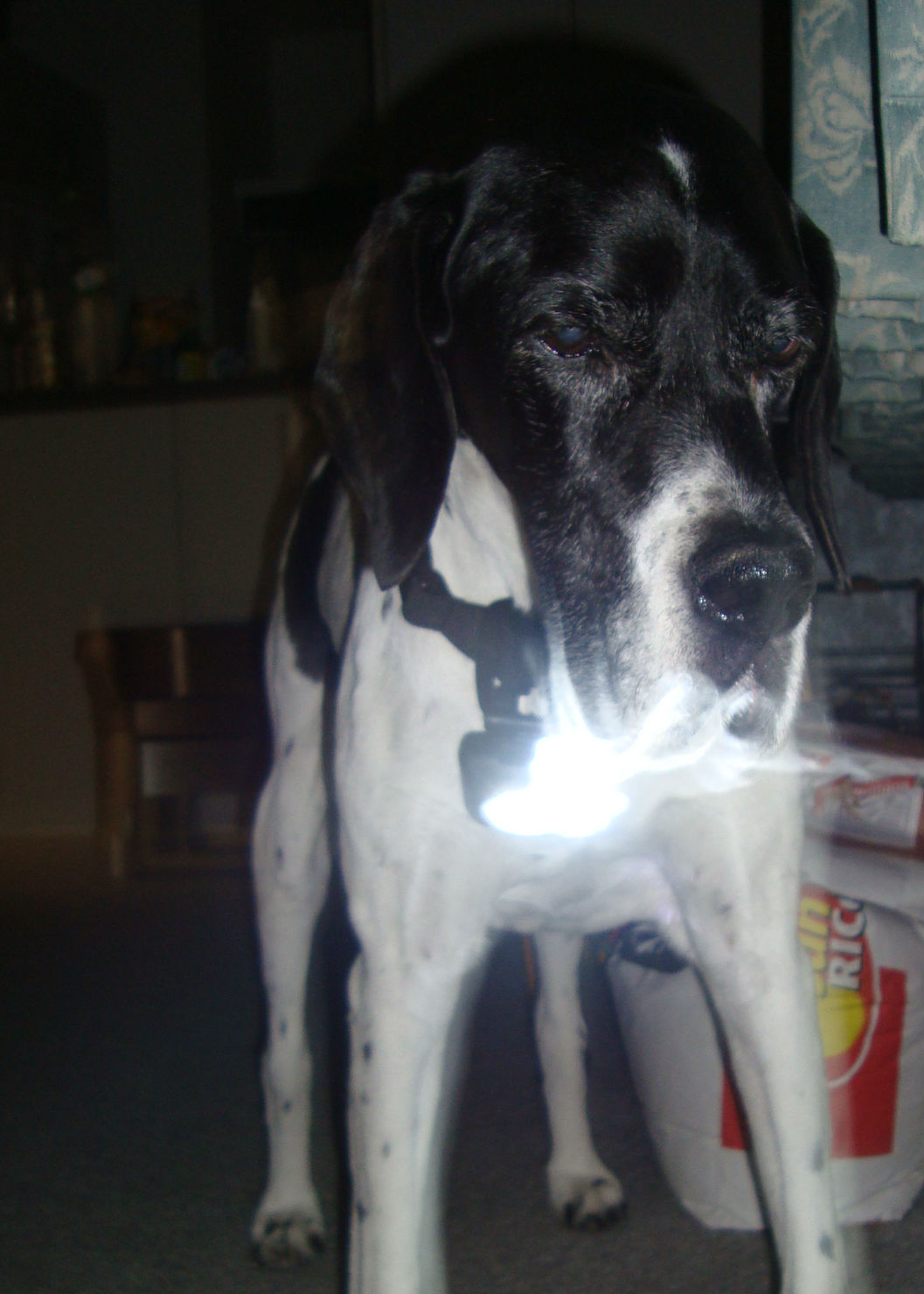
It’s been great!  Just what we needed.  I can clip the collar on before letting Daisy out at night and she can see the steps, and all the irregularities in the garden.  And she adjusted to its use very well.

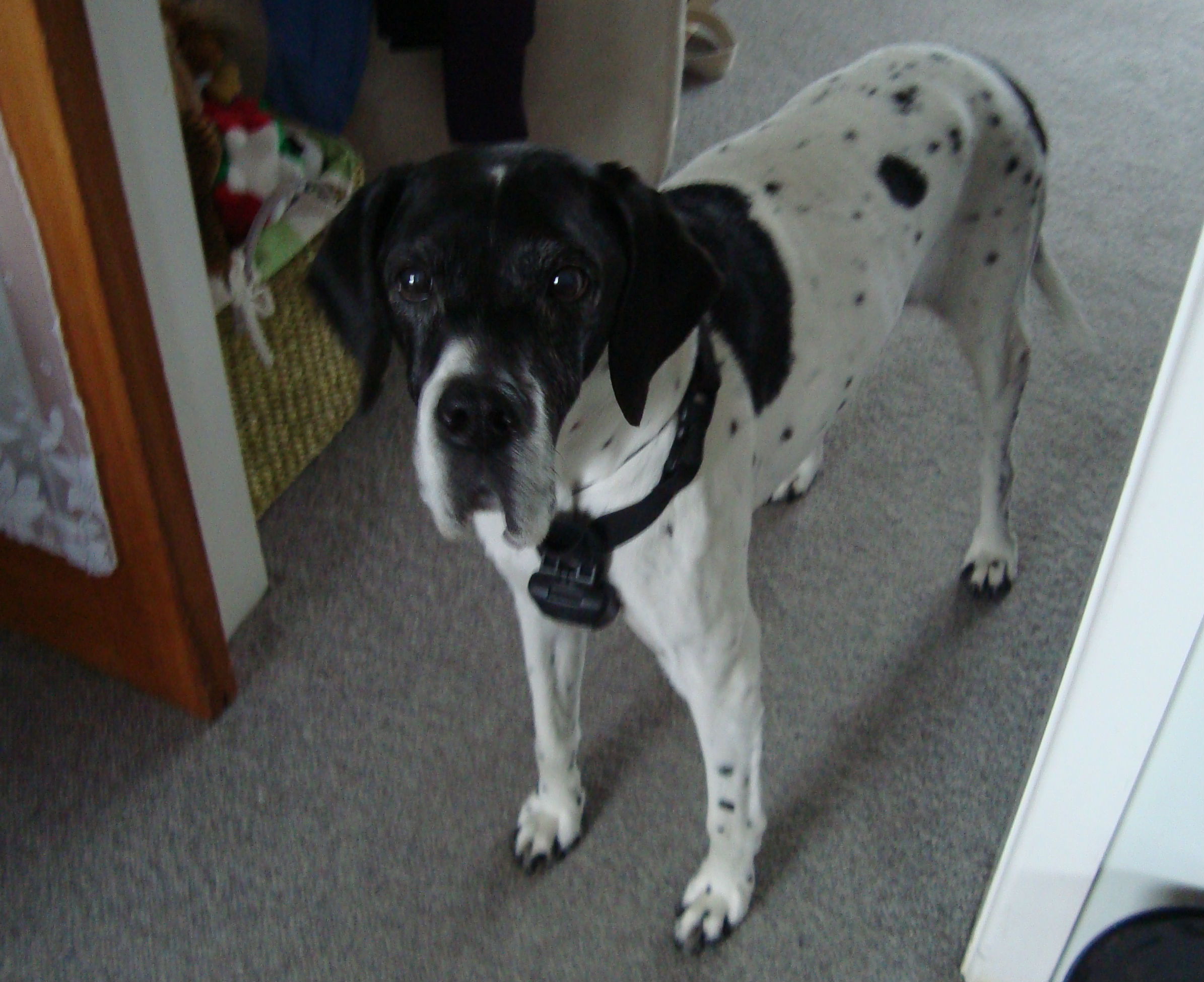
Daisy shows off her PupLight dog collar

Daisy shows off her PupLight dog collar

The PupLight's bright light makes it much easier for Daisy to see at night

The PupLight’s bright light makes it much easier for Daisy to see at night

Bottom line:  Highly recommended product, particularly for senior dogs

Note:  This product endorsement is entirely my own and was not paid for by the PupLight company or its retailers.

Pain management in dogs with bone cancer

A single injection eased severe, chronic pain caused by late-stage bone cancer in dogs, according to a study in the November issue of Anesthesiology. Dogs with bone cancer that received a neurotoxin injection had significantly more pain relief than those that got standard care without the injection.

“Dogs are part of the family and we do everything we can to relieve them of pain and discomfort when they are sick,” said Dorothy Cimino Brown, D.V.M., School of Veterinary Medicine, University of Pennsylvania, Philadelphia. “In addition to sharing emotional attachments with our dogs, humans share many of the same ailments our pets suffer when fighting cancer. By studying the positive pain relief this treatment afforded dogs, we are hopeful it may also be effective for humans.”
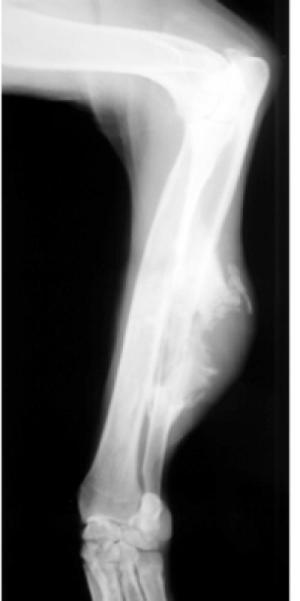
A radiograph of a dog's leg with a cancerous lesion. (Credit: Image courtesy of American Society of Anesthesiologists (ASA))

A radiograph of a dog’s leg with a cancerous lesion. (Credit: Image courtesy of American Society of Anesthesiologists (ASA))

The owners of 70 dogs enrolled their pets in this study. Half the dogs received an injection of a neurotoxin, called substance P-saporin (SP-sap), as well as standard care. The other half (i.e., the control group) received standard care without the neurotoxin injection. The average age of the dogs was between 8 and 9 years and their average weight was 90 pounds.  Multiple breeds participated in the study, including: Rottweilers, Labrador Retrievers, Golden Retrievers and mixed breeds.

The evolution of bone cancer pain in dogs parallels what occurs in humans, with the frequency and intensity of pain increasing over weeks and months. As the cancer advances, both canine and human patients experience life-altering pain, which greatly affects their daily activities and quality of life. The standard treatment for dogs with late-stage bone cancer can include opioids, steroids, and palliative radiation. All of these treatments can have negative side effects.

Within six weeks of beginning the study, 74 percent (26) of the dogs in the control group needed to be “unblinded” (i.e., their status in the study revealed) and their pain relief regimen adjusted compared to 24 percent of the dogs (eight) in the group that received the injection. This was a statistically significant difference.

Other study results included a 6 percent increase in pain severity scores for dogs in the control group, while the dogs in the SP-sap group had no change in pain severity score.  In addition, the dogs in the control group had an 8 percent increase in how pain interferes with their typical activities, while the SP-sap dogs had a 5 percent improvement in this pain impact score. Finally, one dog in the control group responded with improved lameness, while 6 dogs in the SP-sap group became less lame. While these secondary study results were not statistically significant because they were only assessed two weeks after injection, they are promising.

Source:  American Society of Anesthesiologists media release

Behaviour in dogs depends on the paw preference

I’ve previously written about how to test if your dog is right-pawed or left pawed.  Researchers at the University of Adelaide led by Dr Luke Schneider tested a group of 73 dogs using 50 manipulations of an object to determine their paw preference.  They then interviewed the dog owners about their dog’s behavior to see if there was a pattern.

“We found that dogs with a preference for left paws were reported by their owners to show high levels of aggression towards strangers. The left pawed dogs scored almost twice as high as ambilateral (ones with no preference) and also higher than dogs with right paws.

“There is research in the human world as well that positive and negative emotions can be located in the left and right hemispheres and it seems to go the same way in humans and other animal species, that the negative emotions are located in the right hemisphere. There are many, many overlaps between human and animal brains.”

Blake the Beagle shows his preference for the right paw

Blake the Beagle shows his preference for the right paw

When testing dogs for paw preference, the research team found a roughly even split between those dogs that had a right paw preference vs those with a left paw preference.

None of the dogs in the study were noted as particularly aggressive, and so the research team wants to do more work with dogs who are noted for aggression-type responses.  A larger testing group would also help to validate results.  The research team’s study has been published in the Journal of Veterinary Behavior.