Category Archives: dog care

The search for quality (a tale of recalls and safety concerns)

Well, it’s happened again.  Another range of pet treats is the subject of a recall.  This time it’s Dogswell treats by Arthur Dogswell LLC.

Chicken Breast and Duck Breast jerky under the Breathies, Happy Heart, Happy Hips, Mellow Mut, Shape Up, Veggie Life, Vitality and Vitakitty brands with a best before date of Jan 28, 2015 are affected

Chicken Breast and Duck Breast jerky under the Breathies, Happy Heart, Happy Hips, Mellow Mut, Shape Up, Veggie Life, Vitality and Vitakitty brands with a best before date of Jan 28, 2015 are affected

These treats are being recalled because product testing by the New York State Department of Agriculture and Markets found traces of an antibiotic that is not approved for use in the United States.

The company says that since January of this year, they have new testing procedures in-house to ensure that their chicken and duck ingredients don’t contain antibiotics – so clearly there was a risk identified which motivated them to make a business decision to invest in the new testing!

Because animal feed products are going to ‘just animals’ there’s a real tendency of the markets and businesses involved to buy sub-standard and cheap ingredients.  (Don’t forget the melamine scandal of 2007 and how many brands were involved.)

Supply chain management is so important.  That’s about businesses knowing the source of each and every ingredient in their product – with contractual obligations on those suppliers to meet quality standards.  My advice is if you are considering a food product for your dog, you should enquire with the manufacturer about the source of their ingredients before buying.  If the information isn’t on the label, you need to contact the manufacturer through their website.

If the manufacturer doesn’t have a website or another avenue for customer enquiries – AVOID, AVOID, AVOID their product.  Always get the information on the ingredients of their product in writing (usually via email).

One of the reasons I started Canine Catering was to have greater control over the ingredients in dog treats.  These products tend to remain on shelves for much longer than other foods and their countries of origin often have dubious reputations for supply chain management.  The amount of preservatives is often staggering.

I like to use human grade ingredients in the first instance, as a major step for quality control.   I still read labels even on human grade food.

Accidents happen.  But haven’t we had enough accidents in the pet food industry?  Consumer choice drives change.  Make sure you exercise your power as a consumer by buying quality products for your dog.

The State of Pet Health in 2013 – The Banfield Report

As most of my regular readers know, I’m passionate about holistic health for our dogs. It helps, though, when we have statistics like the Banfield State of Pet Health Report 2013 to show us the ailments that are more common. In this report, we see that obesity and dental health are 2 major problems.

So ask yourself honestly – is my dog a bit heavier than he/she should be? Is the dog’s bad breath a sign of something more sinister? Through my practice, I can help dogs with both conditions (plus others, like arthritis).

Get in touch!

Mel's avatarNo Dog About It Blog

Chihuahua Wearing EyeglassesLast year, I shared a summary of Banfield Pet Hospital’s 2012 report on the state of pet health in America. The report was full of interesting information on the common ailments and diseases they see in the cats and dogs who visit their hospitals. It also called out a disturbing trend being seen in both types of pets – an increase in pet obesity.

In their 2013 State of Pet Health Report, Banfield shares even more interesting information on the average lifespan of pets and some frequently occurring themes (also seen in the 2012 report). This year’s report provides pet owners and veterinarians with even greater insight into the health of all our pets and where we should be focusing our attention.

Here is a summary of some of the more interesting findings:

  • Toy or smaller breed dogs live 41% longer than large breed dogs.
  • Large breeds reach their senior…

View original post 223 more words

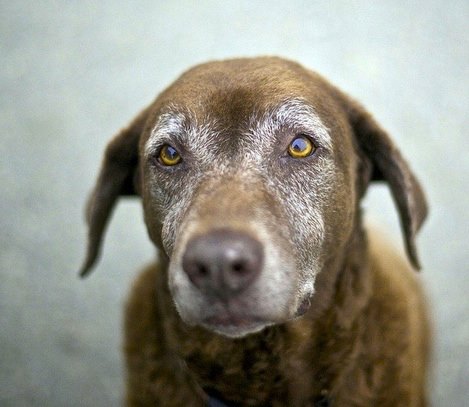
Old dogs and quality of life

Old Dog
As our dogs age, we have to face the fact that they are likely to have special needs and health concerns that need following up on.  In my massage and rehab practice, I see a lot of older dogs and most still enjoy life.  Some need some help getting around, which may be having some ramps installed around the house or perhaps they need a wheelchair for getting outside.

The important thing about older dogs is creating a life for them that accommodates any limitations they have.

For owners, it is important to work with your healthcare team on what constitutes ‘quality of life.’  Some questions to consider in a quality of life assessment are:

  1. Is your dog eating and drinking normally?
  2. Is your dog ambulatory?
  3. Does your dog have normal elimination habits and are they continent?
  4. Does your dog interact with other people or animals in the household?
  5. Has your dog secluded itself in an area of the house on a regular basis?
  6. On balance, does your dog have more good days than bad?

Dogs often surprise us with their acceptance of physical limitations, but it is up to us to monitor their quality of life.

Cleaning your dog’s ears

Bath time in our house is combined with a check of Daisy’s ears and teeth.  It makes sense when she’s already in the tub (and usually, looking pretty miserable)…

Bath time

When I adopted Daisy, she came down with an ear infection with days of arriving (her immune system was depressed – she’d just finished weaning her sole surviving puppy, and she was recovering from a cesarean section).  At that time, I purchased a commercial ear cleaner from the vet.

Since then, however, I’ve refilled the bottle with my own mixture of cider vinegar and water.  It’s easy:  50% vinegar to 50% water.

I never (and I mean never) introduce the liquid into Daisy’s ears.  I apply the solution with a soft wash cloth that is wrapped around my finger to clean around the ear.

This video produced by VetVid is a good explanation of how to clean your dog’s ears.

Do you check your dog’s ears regularly? What ear cleaning solution do you use?

Using dog hair for diagnosis

Dog hair is used to diagnose hyperadrenocorticism (Photo: Ouschan/Vetmeduni Vienna)

Dog hair is used to diagnose hyperadrenocorticism (Photo: Ouschan/Vetmeduni Vienna)

Many dogs suffer from hyperadrenocorticism, more commonly known as Cushing’s Disease.   The disease is characterised by excessive amounts of hormones known as glucocorticoids that are produced by the adrenal glands.  The disease is more common in older dogs.  Most cases result from a tumour in the pituitary gland but some are caused by tumours in the adrenal glands.

The symptoms of a dog with Cushing’s Disease often ‘creep up’ on the owner and vet.  Common symptoms include excessive drinking (and urination) and overeating, leading to a pot-bellied appearance, as well as with loss of hair.  Since all of these symptoms can stem from a number of disorders, it is difficult to be certain.  The methods traditionally used to diagnose the disease are complicated and costly and usually give information about the hormone concentrations at the time a sample is taken.  Since most dogs are stressed by veterinary examinations, their hormone levels will peak  because of the stress – making it difficult to rely on the analytical results.

Researcher Claudia Ouschan and colleagues at the University of Veterinary Medicine, Vienna decided to look for a way to monitor the long-term levels of glucocorticoids in dog hair that would also offer a diagnostic option that was less stressful to the dogs.   She compared the levels of cortisol, corticosterone and cortisone in the hair of twelve dogs with hyperadrenocorticism and ten healthy dogs.  The results were striking:  all three hormones were found at far higher levels in the hair of dogs with Cushing’s Disease than in the control group, with the increase in cortisol particularly pronounced.

She concludes, ‘we think it (our findings) have real promise for use as a rapid and non-invasive method to diagnose hyperadrenocorticism.’

Her research has been published in the journal Veterinary Dermatology.

Source:  University of Veterinary Medicine, Vienna media statement

Joint supplements

I get a lot of questions about supplements from dog owners whose dogs are aging and entering ‘the senior years.’

Three of the main supplements for joint support are glucosamine, chondroitin and hyaluronic acid.

Hyaluronic acid, or hyaluronan, is a major component in synovial fluid and has been found to increase the viscosity of the fluid.  In older dogs, the synovial fluid becomes thinner and less able to support the joints.  Originally given in injectable form, increasingly hyaluronic acid is found in oral supplements.

Glucosamine is naturally produced in the body and is a constituent of synovial fluid and cartilage, both of which help to support and stabilise the joints. Glucosamine is made of a sugar and an amino acid and is involved with the body’s production of joint lubricants and shock absorption necessary to maintain healthy cartilage and joint function.

Glucosamine sulfate is also one of the building blocks of articular cartilage and it aids in the rebuilding of damaged cartilage.  Glucosamine sulfate is also involved in the formation of nails, skin, eyes, tendons, bone and ligaments.

Glucosamine supplementation enhances the body’s ability to manufacture collagen and proteoglycans, which are essential for rebuilding joints and supporting synovial fluid.  Glucosamine in the sulfate form seems to be absorbed best by the body.

Chondroitin, or more appropriately chondroitin sulphate, is usually found in supplements containing glucosamine.  Chondroitin sulfate may actually help the body to repair damaged cartilage and help restore joint integrity. It may also protect existing cartilage from premature breakdown as well as keep cartilage tissue hydrated and assist in cushioning impact stress.

If considering giving your dog a joint supplement, it pays to discuss dosage with your veterinarian or complementary health professional.  Some dog food brands are adding glucosamine and chondroitin to foods and so supplementation dosage has to be considered in light of this.

Kathleen Crisley, specialist in dog massage, rehabilitation and nutrition/food therapy, The Balanced Dog, Christchurch, New Zealand

Help! Needham needs a dog park

Needham, Massachusetts doesn’t have a dedicated facility where dogs can run and exercise off-leash.  For a town that is home to approximately 3,000 registered dogs, it’s a real shame.

Dog park image

Thankfully, a group of dedicated owners led by Mike Verdun and Bill Paulson are hoping to change that.  They and a group of about 10 other passionate dog owners have located a suitable site, the Nike Site, next to Ridge Hill Reservation. The group is now fundraising to establish the park.

Needham Dog Park map

$25,000 is needed to establish the facility; the bulk of the money is needed for the fencing, combined with signage and a wood chip base.  Double gates will ensure that dogs are kept safe as they enter and exit the park.

‘We’ve talked to other communities in Massachusetts that already have dog park facilities,’ says Bill.  ‘We’re confident in our design.’

So far, the group has raised $3,500 – so there’s still a long way to go.  If you and your dog benefit from off-leash exercise in your community, maybe you can consider making a small donation to help the dogs of Needham be rewarded with their own dog park.

The Needham Dog Park donation form has all of the instructions you need.  And you can follow progress via the Needham Dog Lovers Facebook page.

San Diego’s Dog Loo

In 2008, the US Government passed legislation requiring service animals that are flying to have indoor and outdoor relief facilities.  For most airports, this law has been interpreted as a requirement to have a relief area somewhere on site but not necessarily in major traffic areas.

San Diego’s Airport (Terminal 2 to be exact) has gone a step further to cater for the flying canine.  They have installed a really posh doggy toilet past the security checkpoints.

OLYMPUS DIGITAL CAMERA

The toilet features a fire hydrant, artificial grass and a hand washing basin for the owners.

Just a sign of the times – progress is made every day to ensure that dogs and their owners have appropriate facilities.  (Pet relief areas have become a true godsend to air travelers who are traveling with their dog.)  Appropriate facilities reduce the risk of conflicts between dog owners and those who are not doggy people.

Well done San Diego Airport!

Interested in this subject?  Read my earlier blogs on:

Daisy’s birthday breakfast

Please, Mum.  Can I have these for breakfast?

Please, Mum. Can I have these for breakfast?

Daisy had a tin of sardines (packed in spring water) for breakfast along with some fresh apple chunks.  A nice combination (if you are a dog) that is high in fibre, protein and Omega III.

We won’t make a steady diet of this for breakfast (although there are always sardines in the pantry for a special treat at our house), but it is not every day that a girl turns 13.

4th of July anxiety

My heart goes out to all of the dogs in the USA who have to suffer through 4th of July celebrations and their associated fireworks.

For many dogs, fireworks are no fun…

4th of July anxietyIf your dog is anxious (or worse) because of fireworks, here are some of the things you can do to help them through:

  • Thundershirts and anxiety wraps.  These shirts work on the basics of acupressure and  they help to stimulate acupressure points that induce a calming effect.
  • DAP  = Dog Appeasing Pheromone A pheromone is a natural chemical that animals, especially mammals, secrete.  D.A.P. is the pheromone that bitches secrete when they have puppies and are lactating.  Within 3-5 days of giving birth, the bitch secretes this pheromone and it has a calming effect on her puppies.  Scientists have isolated the chemical structure of the pheromone and re-created it. I recommend spraying it in your house and around the dog’s bedding in the later afternoon – before sunset.
  • Sedatives – for a dog that is truly overwhelmed by fireworks, prescribed sedatives from your vet are a short-term solution
  • Diversion and management – this consists of things like isolating your dog in your basement or garage (inside the car, with the radio on) to divert their attention.  By removing them to an environment where they can hear the fireworks less readily, you are removing them from the stressor – and hence, the stress response that follows.
  • Remove your dog to a quieter location, perhaps a holiday home in the country or a friend’s place out of town.  If they can’t hear the fireworks, they can’t get stressed.
  • Massage – get your massage therapist to recommend massage strokes and acupressure points that you can stimulate to encourage your dog to relax.

Long term solution:  Please lobby your local communities to ban the use of private fireworks and to limit fireworks to licensed public displays.  That way, people can enjoy fireworks but also limit our dogs’ exposure to this stressful event.