Category Archives: dog ownership

The survey says…

A new UK survey conducted on behalf of Purina has revealed what previous studies have shown, that the human-animal bond is important and that society benefits from our supportive relationship with animals.

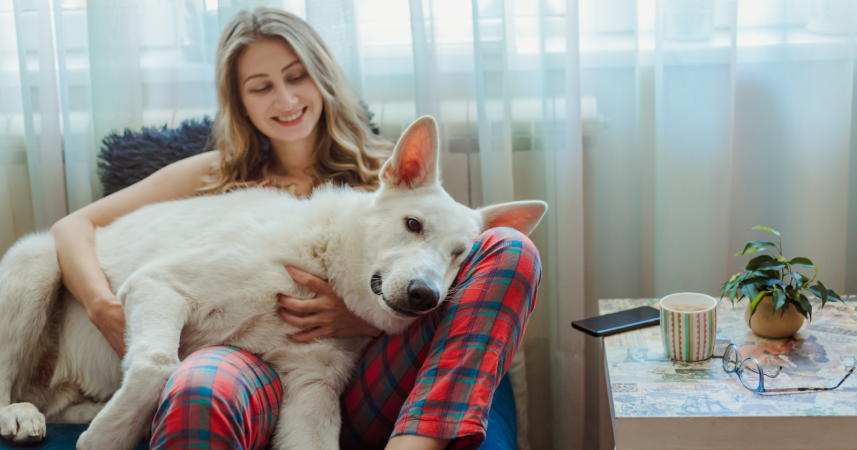
Over two-thirds of pet owners feel a stronger bond with their pets than their family and friends.

Top ten ways the human-pet bond helps people feel better

10. Coping with Break-Ups 
For 32% of pet owners, the bond with their pets has been instrumental in helping them navigate the emotional turmoil of a break-up.

9. Support Through Health Conditions 
Approximately 42% of pet owners have found emotional support through their pets while dealing with health challenges.

8. Navigating Interpersonal Conflicts 
Pets serve as a source of comfort during interpersonal conflicts, helping 44% of owners cope with emotional stress.

7. Snuggling for Comfort 
46% find comfort in snuggling with their pets, providing emotional warmth and support.

6. Bringing Smiles 
49% reported that their pets bring joy into their lives and make them smile.

5. Alleviating Loneliness 
For 52% of pet owners, the presence of their pets significantly reduces feelings of loneliness, providing companionship and love.

4. Joyful Greetings 
A warm greeting at the door from a pet can bring joy, as experienced by 52% of pet owners.

3. Distraction from Worries 
Pets help their owners take their minds off things, with 54% of pet owners benefiting from this comforting distraction.

2. Uplifting Spirits When Feeling Low 
The companionship of pets provides comfort for 59% of owners when they are feeling low, helping to brighten their mood.

1. Support During Sadness and Life Changes 
61% of pet owners asked find solace in their pets during moments of sadness or significant life changes, including after a tough day at work.

Source: Nestle UK

Senior dog walkers demonstrate better balance and fewer falls

A new study from Trinity College Dublin suggests that older adults who regularly walk their dogs show improved balance and fewer falls compared to their peers.

The research, published in the Journals of Gerontology, examined data from over 4,000 community-dwelling adults aged 60 and older, finding that 15% were regular dog walkers, defined as walking their dogs four or more times per week.

“Regular dog walking was associated with better mobility, with a 1.4 second faster Timed-Up-and-Go test on average,” the study noted. “Regular dog walkers also had a 40% lower likelihood of unexplained falls over the last 2 years and a 20% lower likelihood of current fear of falling in fully-adjusted regression models.”

The research also found that simply owning a dog without regularly walking it did not provide the same benefits. Dog owners who didn’t regularly walk their pets showed no reduction in mobility problems or falls, suggesting the physical activity of dog walking, rather than pet ownership alone, drives the improvements.

Regular dog walkers in the study tended to be younger, used fewer medications, and had lower rates of heart disease. They were also more likely to have never smoked, suggesting an overall healthier lifestyle profile.

The study observed that almost 13% of participants owned dogs but didn’t walk them regularly. This group showed higher rates of mobility concerns and fear of falling compared to regular dog walkers, further emphasizing the importance of consistent dog walking activity.

The findings add to growing evidence that dog walking can serve as a consistent form of physical activity that helps maintain mobility and reduce fall risk among older adults.

Source: McKnights Long-Term Care News

The 3 Teddies

Sox has three special teddies. They are (from left to right):

  1. Cuddle Teddy
  2. Play Teddy
  3. Chewing Teddy

Cuddle Teddy is special. I found him in a giveaway box at a local op shop shortly after adopting Sox. Sox had plenty of toys, but all were hand-me-downs from previous dogs. I felt he needed his own teddy. Since then, Sox will gently mouth Cuddle Teddy and sleeps with him on the couch. He has never shown any inclination to tear or rip Cuddle Teddy and, when Cuddle Teddy gets grey from all the saliva and mouthing, I will give him a wash. This upsets Sox very much and he will throw Cuddle Teddy around in the hope of getting him to smell better.

Chewing Teddy, as the name suggests, is the teddy that is the target of Sox’s hunting skills. Chewing Teddy has been re-stuffed and gutted many times. Always a favourite, although he looks worse for wear.

Which brings me to Play Teddy. As Chewing Teddy was getting very worn, I decided it might be time to head to the op shop for a new toy. Play Teddy’s nose was ripped off immediately but, unlike Chewing Teddy, Play Teddy is largely staying in one piece. He gets played with most nights after dinner.

What makes Sox choose one toy over another? Why is Cuddle Teddy so precious? I have pondered these questions for some time.

Remembering that dogs have the sentience of a two-year old child, I think Cuddle Teddy came at a particularly important time in Sox’s life as a pet. A toy that did not smell of previous dogs and which he could make his own.

I read once that ‘familiarity brings security.’ When a nervous child starts school, for example, they may take a favoured toy with them for security. My working theory is that Cuddle Teddy is Sox’s version of a security blanket. (Although I will keep washing teddy when he is ‘ripe’ as he looks much better on the sofa without his fur sticking together and with a dingy grey colour.)

What’s the future for Chewing Teddy and Play Teddy? Who knows? That is for Sox to decide. The degree of control that we give our dogs is something called agency – and sentient creatures deserve the opportunity to have choice.

Sox continues to mature as a pet since being adopted in March 2022; but judging by the last 2+ years, Cuddle Teddy seems almost certain to go the distance.

Kathleen Crisley, Fear-Free certified professional and specialist in dog massage, rehabilitation and canine fitness,  The Balanced Dog, Christchurch, New Zealand.

An Unexpected Way to Lower Your Dementia Risk: Pet Ownership

What if reducing your dementia risk could be as simple as owning a dog? Several observational studies published last year suggest pet ownership could meaningfully reduce your risk among proving other emotional and physical benefits. Sixty-six percent of households in the United States own a pet, with dogs being the most popular companion. Pets can bring us joy, help alleviate stress, offer companionship, and even help us lead a more active lifestyle.

Researchers have now found an added benefit of being a pet owner — pets could stave off brain aging in humans. People who own pets are less lonely — a major risk factor for dementia. Now, scientists are interested in seeing whether people who owned cats or dogs had a lower risk of cognitive decline or dementia.

Owning a dog or cat could meaningfully reduce your risk of developing dementia, several observational studies published last year found, especially if you’re over the age of 50.

What does the science say about dementia, dogs and cats?

In 2023, Japanese researchers published a study that looked at 11,194 older adults to see whether owning dogs or cats provided a protective effect against dementia. 

Compared to those without pets, dog owners were 40 percent less likely to develop dementia over a four year period. Additionally, dog owners who were social or exercised regularly experienced an extra 20 percent decrease in dementia risk. The study didn’t find evidence that owning cats had a similar effect.

Chinese researchers published a similar study last year, also looking at the link between pet ownership and cognitive decline. The study’s participants received psychological tests to assess their memory, verbal fluency, and thinking eight years apart. The cohort was composed of 7,495 adults over the age of 50 living in the UK. 

Among individuals who were living alone, owning a cat or dog was associated with a slower rate of cognitive decline. However, older adults living with other people saw no significant benefit, which suggests that companionship from dogs or cats could offset some of the negative effects of living alone.

This field of research is still very new, and for people who have already developed Alzheimer’s or dementia, there isn’t a lot of research yet on how interactions with pets or trained therapy animals affect further cognitive decline. 

Despite the lack of concrete research on cognitive decline, many long-term care facilities have also started implementing animal-assisted therapy for their residents facilitated by certified handlers and trained dogs. Dogs can still improve their quality of life and have been shown to offer stress-reducing benefits. Spending time with a furry friend could ease agitation, aggression, depression, and even help residents cope with sundowning, emotional and behavioral issues that worsen as daytime fades.

While more research is needed to determine whether adopting pets can have a protective effect on the brains of isolated older adults, pet ownership can offer many benefits to your emotional and physical health.

Source: Being Patient – Alzheimer’s news, advice, stories & support

Why dog breed bans are misguided and harmful

It’s not often the dog but the person holding the leash who creates the conditions, often by neglect or abuse, for a dog to attack.

***This is a wonderful opinion piece by Marcela Garcia of The Boston Globe. The words are hers, but I agree entirely***

Supporters of the XL bully dog breed held placards during a protest against the UK government’s plans for the breed, in central London on Oct. 7.HENRY NICHOLLS/AFP via Getty Images

“They’re not dangerous if you raise them right. Neither are the dogs.”

Those lines are from a sign carried by one of the hundreds of demonstrators who recently took to the streets in London to protest Prime Minister Rishi Sunak’s proposed ban on the American XL bully.

Sunak’s measure came after a string of biting incidents, at least two of them fatal, involving canines believed to be American bully XL dogs, a relatively new breed. In one short but horrific incident caught on camera in Birmingham, England, an 11-year-old girl is attacked and bit by a dog.

But such a policy ignores the real cause behind aggressive and dangerous dogs. It’s not often the dog but the person holding the leash who creates the conditions, often by neglect or abuse, for a dog to attack. While it’s true that the American bully XL has a history of being used in dogfighting, the boxer, the shar-pei, the Boston terrier, and the English bull terrier also all have histories of fighting.

Kara Holmquist, director of advocacy at the Massachusetts Society for the Prevention of Cruelty to Animals, said in an interview that there are many factors that can come into play and compel a dog to bite — “how the dog is socialized, how the dog is managed, and whether it’s spayed or neutered plays a role. So when places enact policies that just look at breed, not only is it not fair, but it’s just not effective.” It’s making a blanket judgment on what a dog breed is perceived to be, she said. Nowadays it has become very difficult “to look at a dog and know or make a guess as to what type of breed it is.”

That’s why the MSPCA, Holmquist said, helped push for a law, passed in 2012, that prevents cities and towns from enacting dog breed bans. It was around the time that there was hysteria around pit bulls and Dobermans. But discrimination against certain dog breeds still occurs in some spaces, and the MSPCA is working to remove dog breed bans in housing policies.

“Responsible Massachusetts dog owners are often not welcome in certain housing markets, particularly if they own medium or large dogs, or certain dog breeds (or a dog that looks like one of these breeds),” read testimony presented jointly by animal rights advocates, including the MSPCA, during a hearing last month on a bill that would prevent some housing providers, such as condo associations and public housing, “from arbitrarily refusing responsible dog owners as tenants.” The organizations also noted that this “discrimination occurs in some publicly-funded housing, making this a particularly pernicious practice.” It makes it a housing equity issue, as well.

Massachusetts’ cities and towns do have the power to police specific dogs through the dangerous dog law, the purview of the animal control officer. “If there is a dog that is of concern that’s demonstrated some behavior that’s outlined in the law, there’s a process for addressing that through a dangerous dog hearing,” Holmquist said.

Meanwhile, it’s looking like there will be no such dog hearings for the American bully XL in England. Prime Minister Sunak has pledged to ban the dogs but, thankfully, existing ones will receive amnesty. The dogs, which can weigh over 130 pounds, have risen in popularity since the COVID-19 lockdowns, which saw dog ownership rise. Under Sunak’s plan, owners of those existing dogs will have to register them, as well as muzzle them in public places. They will also be required to neuter them in an attempt to eradicate the dog type within a decade.

What’s baffling is that the UK has evidence that banning breeds does not make the public safer. The country has in place a Dangerous Dogs Act, which was enacted more than three decades ago. It bans four breeds: the pit bull terrier, Japanese Tosa, Dogo Argentino, and Fila Brasileiro. Despite that, the number of dog bite incidents has gone up in the UK.

The English dog-owning community is not taking the proposal lying down, but it seems clear the British government has the authority to deem a breed dangerous and ban it. In the case of the American bully XL, it still isn’t officially recognized as a breed by the UK’s Kennel Club. So the breed needs to be declared a breed before it can be banned.

I’m still waiting for a ban on bad dog owners, because when you follow the trail leading to a terrible dog incident, often the owner’s treatment of the dog is to blame. The American bully XL may become extinct in Britain, but you can bet the country’s bad dog owners eventually will find another breed to mistreat. And sadly it, too, will be banned.

Source: The Boston Globe

Dogs can age healthier by socializing with humans and pets, study says

Social interaction is good for human health, and a new study suggests it might be good for your dog, too.

“Where we live and who we interact with has a really strong effect on our health and well-being,” said Noah Snyder-Mackler, who is lead author of the study and an associate professor at Arizona State University’s school of life sciences and its center for evolution and medicine. “This link between our social environments and our health extends to many social animals. Animals with stronger social relationships live longer, healthier lives.”

Social companionship helps with healthy aging for dogs, a study says. (Katherine Frey/The Washington Post)

The research, published in Evolution, Medicine & Public Health, surveyed the human parents of more than 21,000 dogs and found that social companionship — with both people and other animals — had the largest influence on healthier aging among dogs. The effect was five times greater than anything else they looked at, such as family finances, household children or the pet parent’s age.

Improving dog and human health

The study is part of the Dog Aging Project, a large community-science research effort started in 2018 and funded by the National Institute on Aging and private donations. It’s led by the University of Washington and Texas A&M schools of medicine and includes more than a dozen institutions, including Arizona State University.

Its goal is to learn how genes, lifestyle and the environment influence aging and disease among dogs. Researchers also hope the insights can help human health.

“Dogs are often considered our closest animal companions and share many aspects of our daily lives,” said Brianah McCoy, an ASU doctoral student and a co-author of the paper. “By studying how the social environment affects dog health, we can gain insights that may also be relevant to human health.”

More than 45,000 dogs overall are enrolled in the aging project. A subset, about 1,000 dogs, are part of a more focused cohort from whom Snyder-Mackler and his collaborators are collecting blood and other biological samples over many years to uncover additional clues.

Having furry friends is linked to better health

The researchers used statistical tools to analyze factors in the dogs’ social environments obtained from surveys completed by dog parents. The questionnaires asked about, among other things, physical activity, environment, dog behavior, diet, medications and preventive medications, health status and owner demographics.

The scientists narrowed their analysis to five key factors — neighborhood stability, total household income, social time with children, social time with animals and owner age — that together might explain how the social environment could affect a dog’s well-being.

They found poorer health among dogs who lived in households with financial difficulties and other stressors, and better health among dogs who experienced more social companionship, such as living with other dogs.

The researchers, however, did not quantify life span, although they plan to do so in the future. “While we can’t say ‘having another dog in the house adds X years to your dog’s life,’ we were able to compare the strengths of the effect of different environmental factors on health,” Snyder-Mackler said.

The researchers cautioned that the results don’t mean that pet parents need to add more dogs to the family or rush their pets to dog parks or doggy day-care.

“We don’t know if the environmental factors we measured caused the health outcomes, so we don’t want to make any strong statements about what owners should or shouldn’t do,” Snyder-Mackler said. “The study just looked at whether you had other animal companions in the house. But it does suggest that having more furry friends is linked to better health outcomes.”

Some dogs may not benefit from social interactions

Scientists not involved in the study pointed out that not all dogs respond similarly.

“Some dogs may find social interactions stressful,” said Clara Wilson, a postdoctoral researcher in the Penn Vet Working Dog Center at the University of Pennsylvania School of Veterinary Medicine, “and it may not be in the dog’s best interests to force these interactions.”

Courtney Sexton, postdoctoral researcher at Virginia-Maryland College of Vet Med — and who contributes other research to the Dog Aging Project — said her dog would rather play with a ball than with other dogs, and it’s the pet parents’ “job to pay attention to the signals dogs give us.”

Surprising findings

Several findings were surprising, the study authors said.

  • Having children in the household had a negative impact on a dog’s health.
  • Dogs in wealthier households were diagnosed with more diseases than those in less affluent homes.
  • Dogs seemed to be healthier when they lived with older humans, and this effect was stronger in younger dogs.

Children may be detrimental to the health of dogs because of resource allocation, the researchers suggested. “It’s not that kids hurt the dogs or directly affect their health,” said Layla Brassington, a doctoral student at Vanderbilt University, who worked on the study as a master’s student at Arizona State University. “The more children or time that owners dedicate to their children likely leads to less time and effort they can dedicate to their furry children.”

The authors theorize that wealthier households have better access to medical care, and pet parents might seek veterinary services more frequently, which leads to identifying more diseases.

The ages of the dogs also affected the findings, with younger dogs seeming to be “more tuned into the age of their owner and how it impacts their well-being,” McCoy said.

Could dogs benefit from a cat companion?

The researchers did not specifically look at the effect of breeds — they did not have enough detail on individual breeds — or exercise, Snyder-Mackler said. (The Dog Aging Project recently released a study that found physical activity is associated with a better cognitive outcome in dogs.) “What we did see was that the strength of the relationship between the environment and health was similar when we looked separately at mixed-breed versus purebred dogs,” he said.

They also acknowledged one study limitation — the sample consisted of mostly high-income dog parents. A more diverse set could help “unravel the true magnitude of certain variables’ influence on canine well-being,” McCoy said. “It is possible that the effects we found in this study would be even stronger if we had a more varied and inclusive population.”

Most of the pets in the multi-animal households were dogs, and the scientists said there was insufficient data to distinguish between the effects of having additional dogs vs. other species.

“It could be that having other pets — even cats — provides health benefits through companionship,” Snyder-Mackler said.

Source: Washington Post

We’re multitasking while walking our dogs. Animal experts say this is a problem

We’ve all seen it. Many of us have done it.

We treat dog walks as a chance to accomplish two (or three) things at once, leading our pooches around the neighborhood while gazing at our phones, chatting with a friend, listening to a podcast or pushing a stroller.

A dog walker checks his phone while guiding dogs on February 21, 2023, at Washington Park in Denver. Photo by: David Zalubowski/AP

The more ambitious among us even incorporate dogs into our exercise regimens, jogging or biking while our pets trot alongside.

It’s understandable. In today’s overscheduled world, this kind of multitasking can feel extra productive. And walking a dog twice a day around the same streets can get boring.

But animal behaviorists say that at best, dog walkers who aren’t paying full attention can confuse or frustrate dogs by giving them conflicting signals. And at worst, they can endanger the dog’s safety — and their own as well.

“It’s kind of like the dog-walking equivalent of distracted driving,” says Leslie Sinn, a board-certified veterinary behaviorist in Ashburn, Virginia. “You’re not paying attention to the signs that your dog is uncomfortable … and if you’re missing all those clues because your head is elsewhere, that’s a problem.”

Dogs can gobble something harmful when you’re not looking

Matt Semrad is an avid reader and devours audiobooks from the library — about one a week. He also spends several hours each day walking his two black doodles, Sirius and Sonny.

So to maximize his reading time, the suburban Atlanta resident listens to books on his dog walks.

“I would be bored just walking the dogs,” he says.

Semrad says he doesn’t worry much about his dogs’ well-being on walks because they’re well-behaved and he watches them closely when they pass other dogs on the street.

Other dog walkers may not be as vigilant. CNN spoke to a handful of animal behaviorists who say they routinely see people walking dogs in their neighborhoods who are on their phones or pushing strollers and appear to be largely ignoring their pets.

This can pose a safety problem for several reasons, dog experts say. Research has shown that only a small percentage of people can multitask effectively. Distracted dog walkers may not notice potential threats: bicyclists, joggers, cars or unleashed dogs, experts say. By the time a person looks up from their phone, their pet could be in an altercation with another dog — or worse.

“You need to be alert at all times,” says Jacob Hollier, founder of Crate Escape, a dog-walking and pet-sitting service based in Atlanta. “If there’s a car out of control or a scooter coming on the sidewalk … at any given moment, it could be dangerous and possibly be fatal.”

Hollier says he requires his employees to stay off their phones while walking dogs — except to snap photos of the dogs to send to their owners.

“I work with an 180-pound Great Dane, and I have to be watching him at all times,” he says. “He’s bigger than me.”

It’s not just the dogs that are at risk. Experts say they have seen distracted dog walkers injure themselves tripping over sidewalks or even their own dogs. One study found that humans’ injuries while dog walking increased more than fourfold from 2001 to 2020.

Also, dogs are notorious for eating stuff that’s bad for them, experts say.

“If you aren’t paying attention, dogs can pick up and eat things QUICKLY — chicken bones, cigarette butts, dead/poisoned rats, etc.,” says Amy L. Pike, a board-certified veterinary behaviorist in Fairfax, Virginia.

“If you didn’t see it, you won’t know to take them into the vet. Or if you do take them in because they are sick, you won’t know what they ingested, which helps your vet treat them.”

Distracted dog walkers can affect pets’ mental health, too

Physical safety is the most urgent concern, but distracted dog walking also can be detrimental to a dog’s behavioral training and even mental health, experts say.

A multitasking dog owner may be missing an opportunity to reinforce basic training — sit, come, stay and other commands — in a practical setting, says animal behaviorist Mary R. Burch, director of the American Kennel Club’s Family Dog program.

Someone buried in their phone also may not notice when their dog becomes agitated or shows signs of fatigue or an injury.

“Your dog ‘speaks’ primarily with their non-verbal body language,” Pike says. “If you aren’t paying enough attention to what they are ‘saying,’ you won’t know how your dog feels.”

Walks are about more than physical exercise for dogs — they offer mental benefits as well, says Valli Parthasarathy, a board-certified veterinary behaviorist at Synergy Veterinary Behavior in Portland, Oregon. Parthasarathy says dogs like structure and consistency on their walks.

If their owner is just marching forward or not paying full attention, the dog could become confused by conflicting signals — for example, being allowed to sniff one bush but jerked away from sniffing another.

Dogs experience much of the world through their nose, and can become frustrated if they’re not allowed some latitude to explore, Parthasarathy says.

“My ideal walk for a dog is one where they have a lot of time to sniff and take in their environment,” she says. “They have their own doggy priorities. Using the nose is their enrichment … it’s like they’re reading the news.”

Parthasarathy says she’s even seen oblivious dog owners yank on the leash while their dog was in the middle of peeing.

A distracted walker also may be missing an opportunity to bond with their dog, says Burch of the American Kennel Club. “Interacting and having fun together forms a bond that can last a lifetime,” she says.

Some dog owners try to multitask during walks without sacrificing their animal’s wellbeing. Teddy Thomas of suburban Atlanta likes to listen to music or audiobooks on his walks with Stella, a tan-colored rescue mix.

“I don’t feel like I look at my phone all that much while I’m walking her,” he says. “I’d say she has most of my attention — maybe not 100% of it, but enough to keep us both safe.”

Parthasarathy says she understands why some people multitask while walking their dogs. Some overworked parents can’t leave their kids behind during dog walks, so they bring the kids along. Other parents don’t have time for separate outings each day.

“Everyone’s trying the best that they can,” she says. “But going for a walk with your dog should be about building that relationship and focusing on what your dog needs. That may be the only time he gets out of the house that day.”

Source: CNN


My two cents

If you have reached the bottom of this article – congratulations and thank you. I had to share it because the reporter has done a good job of seeking commentary from a number of experts and in a range of contexts.

In my practice, I employ a standard intake questionnaire which includes behavioural questions and observations by owners. The more you observe, the better information we have to adjust your dog’s programme and to understand what is going on with your dog in the first place. I often ask owners to record their observations which helps us discern trends.

The dog trainers I work alongside often ask for recorded observations, too.

If you use a dog walker, you can ask them to observe your dog but remember that most walkers undertake group walks and have many dogs to look after. Please take the time to walk with your dog (without multitasking) to enhance your bond and to watch them!

Kathleen Crisley, Fear-Free certified professional and specialist in dog massage, rehabilitation and nutrition/food therapy, The Balanced Dog, Christchurch, New Zealand

Pet ownership saves $22.7 billion on health care costs in the USA

Millions of people view pets as family and count on their unconditional love. While it’s hard to put a value on the human-animal bond and what it means for so many of us, the Human Animal Bond Research Institute (HABRI) commissioned a new economic impact report which gives us a partial answer – pet ownership saves the U.S. health care system $22.7 billion every year.

The Health Care Cost Savings Report was made possible by a grant from Banfield Pet Hospital.

Access the full Health Care Cost Savings of Pet Ownership Report here.

Key Findings

The report not only reflects better overall health for pet owners in the form of fewer doctor visits per year, but also tracks specific savings for reduced obesity, reduced infections, and better mental health for children, seniors, and our nation’s veterans. For each of these populations, there exists solid evidence supporting the benefits of pet ownership.

$15 billion

Looking at a key measure of general health, pet owners are estimated to visit the doctor less than non-pet owners on an annual basis producing a costs savings of $15 billion.

$4.5 billion

Dog owners who regularly walk their dogs have lower levels of obesity, leading to a $4.5 billion reduction in health care spending.

$90.5 million

Pet ownership correlates to a 14% reduction of C. difficile reinfection cases for hospitalized individuals with a treatment cost savings of $90.47 million.

$672 million

Children (ages 8-10) in households with a dog have a 9% lower probability of having a clinical diagnosis of anxiety. Dog ownership can therefore be linked to $672 million in annual mental health care cost savings.

$1.8 billion

Older Americans with pets are less likely to suffer from health maladies connected to loneliness and social isolation, lowering annual Medicare spending by an estimated $1.8 billion.

$688 million

Overall spending on treatment for PTSD is projected to be $688 million lower for veterans with service animals and emotional support animals.

$22.7 billion

In total, pet ownership saves the U.S. health care system $22.7 billion every year.

For more details on these key findings please see the Health Care Cost Savings of Pet Ownership infographic.

Report Methodology

The report was co-authored by Terry L. Clower, PhD and Tonya E. Thornton, PhD, MPPA, both of whom have extensive expertise in economic and public policy research. Their analysis not only reflects savings from better overall health for pet owners in the form of fewer doctor visits per year, but also tracks specific savings for key public health issues affecting millions of Americans, including reduced obesity, reduced infections, and better mental health for children, seniors, and our nation’s veterans.

Using the methodology employed in the 2015 analysis and adapted for more recent health care services consumption and cost information, pet ownership rates, and population increase, the researchers examined the scientifically-documented health benefits of pet ownership; identified the populations receiving these benefits; and quantified the avoided health care costs for those populations. To do this, the authors first conducted a review of relevant, peer-reviewed academic and professional literature regarding the health benefits of pet ownership. The most recent cost estimates for health services and treatments related to the health conditions identified in the literature review were identified based on an examination of publicly available health care cost data. Pet ownership data was also identified from publicly available sources. The estimated savings to the U.S. healthcare system associated with pet ownership were calculated using these inputs. An additional discussion of identified health benefits associated with pet ownership for which cost savings calculations could not be made was also included in the report.

Downloads

  • Download the full Health Care Cost Savings of Pet Ownership Report here

Source: HABRI

Legislators ponder bill that would let many Maine renters keep pets

Lawmakers are weighing whether to enact a law that would require public housing agencies in Maine to allow tenants to have one or more common household pets.

“We feel this bill will help to ease a significant burden many pet owners are currently facing,” said Katie Lisnik, executive director the Greater Androscoggin Humane Society in Lewiston.

“By increasing the number of rental units that are truly pet-welcoming, we can keep pets in the families where they are loved and cherished, as well as increasing the pool of families able to consider adopting a homeless animal in need,” Lisnik said.

A public hearing on the proposal this week delivered a wide range of opinions for the Legislature’s Labor and Housing Committee to consider. The proposal would impact many rental units that receive public funds.

Bruce Merrill of Auburn told the panel the bill “takes away even more rights from property owners” who are “responsible for keeping up with their properties and making sure the tenants live in harmony.”

“There are many reasons certain buildings should not have certain pets,” Merrill said. “Also many reasons certain tenants should not have pets.”

Merrill warned the measure “is a disaster in the making” and would contribute to the collapse of low-income housing availability.

But Robert Fisk Jr., founder and president of Maine Friends of Animals, said the law “should do all we can” to keep people and their pets together.

“Housing, moving and landlord issues are amongst the most commonly cited reasons for pet surrenders,” he said. “This bill helps mitigate it in low-income public housing where tenants love their pets like everyone else does.”

Lisnik said housing restrictions were directly behind about one in five of the animals surrendered to her shelter in the past year and are likely an underlying issue in other cases.

“For example, an animal may be surrendered because of ‘too many pets’ when an owner had to move and couldn’t find housing that would allow their large dog, or three cats,” she said.

“Mainers are a pet-loving people and firmly believe that pets are part of the family,” she said, pointing out that about half of Maine households have at least one cat. Nationally, she said, 75% of renters own pets.

“We feel this bill will help to ease a significant burden many pet owners are currently facing,” she said. “By increasing the number of rental units that are truly pet-welcoming, we can keep pets in the families where they are loved.”

Among those who see problems with the proposed law is Amanda Gilliam, director of property management with Avesta Housing, the largest nonprofit affordable housing provider in northern New England.

Gilliam said the measure would “create additional safety hazards for residents” and “increase operating costs for landlords at a time when there is an extreme shortage of safe, quality, affordable housing across the state of Maine.”

“Increasing costs makes viability a challenge for new and existing affordable housing projects,” she said. “There is a critical need for more affordable housing, and increasing operating costs is not the way to obtain it.”

Jon Ogletree of Belfast, who said he’s managed affordable housing complexes for more than a decade, told legislators that if the bill becomes law “I will go into another line of work.”

He said growing regulation is making it so difficult to manage affordable housing complexes that the entire system will implode if it keeps up.

Cullen Ryan, executive director of Community Housing of Maine, said he appreciates the bill allows landlords to impose pet deposit fees and reasonable rules for pets, but warned lawmakers that approving it will cause a broad array of problems and “have dire, unintended consequences.”

Robin Wells, a real estate attorney in Portland, told the panel it ought to approve the bill.

Wells said it “will further strengthen Maine’s commitment to affordable housing and companion animals, ensuring that all Mainers, including those who have made pets a part of their families, will be able to find appropriate housing for their entire family.”

Source: Sun Journal

How the presence of pets builds trust among people

Companion animals are a core part of family life in the United States, with 90 million American households having at least one pet. Many of us view pets as beloved family members who provide nonjudgmental emotional support and companionship during times of stress.

That’s not all. Research shows our pets can also strengthen our relationships and trust with other people. In addition, pets contribute positively to trust in our broader social communities.

Companion animals as social facilitators

As many of us know, animals provide an avenue for approaching another person socially, serving as a conversational starting point for connection. Pet ownership alone could be a source of shared interest and knowledge, even among people who may not have similar interests otherwise.

Simply walking down the street with a dog can lead to significantly more social interactions than walking without a dog. Assistance dogs can also facilitate these interactions. One study found that individuals using a wheelchair were more likely to be approached when their assistance animal was present.

The presence of an animal can also enhance perceptions of trustworthiness and responsibility, which in turn fosters positive social interactions. Researchers found that people were more likely to help a stranger with a dog than one without a dog, suggesting that the presence of an animal conferred perceptions of trust.

For children, interacting with a pet can also provide an additional opportunity to practice positive social interactions and develop empathy and compassion. Recent research indicates that living with dogs is associated with better social and emotional skills for children. In our own research at the Tufts Pets and Well-Being Lab, we also found that teenagers with high levels of attachment to their pets were likely to have higher levels of social skills and empathy toward others than those without such attachments.

Pets and social capital

Research shows that simply walking down the street with a dog can lead to significantly more social interactions than walking without a dog. Photo: Shutterstock

Pets have also been shown to foster social capital in communities. Social capital is a concept that encompasses the broader community and neighborhood networks of social relationships, and the degree to which the community has a culture of helping others. The trust inherent in these connections can lead to better health and well-being.

Interestingly, pet owners have consistently reported higher levels of social capital in their communities than people without pets, both in the United States and internationally.

In addition to social facilitation, pets can contribute to social capital by strengthening social trust within communities. Neighbors may rely on one another to assist with animal care, which builds reciprocal trust. Pet owners’ use of shared spaces, such as dog parks or green spaces, can lead to better social relationships.

In spite of it, during the COVID-19 pandemic dog owners were more likely than those without dogs to go for regular walks outdoors, providing an opportunity for community engagement during a period of extreme social isolation. The presence of an animal has even been found to increase positive social interactions in the workplace.

While evidence continues to support the idea that pets foster positive interactions between people, animals are not a universal solution for creating trust. There is still a lot we need to learn about the interrelated relationships between pets and people.

Source: The Conversation