Category Archives: Dogs

Never give up on your dog: Barney’s story

Barney with his "Most Improved Dog" trophy (photo by Vic Barlow)

Barney with his “Most Improved Dog” trophy (photo by Vic Barlow)

I’ve just updated my Facebook page today with thoughts about why it is important to adopt – and when one dog leaves your life, you may not want to wait too long because another dog awaits…

And then this good-news story popped up.  Barney was a challenging dog with difficult behavior – but his owners hung in there with him.  And he won Most Improved Dog at his dog training class.

Read Barney’s tale here

And if you like Barney’s story, you may have missed my story about Kess:

Kess’ Story – Part 1

Kess’ Story – Part 2

The dental therapy dog

Just when you think I’ve run out of ways to report on new ways dogs are working as assistance/therapy dogs…I introduce you to Flossie.

Appropriately named, Flossie is a dental therapy dog.

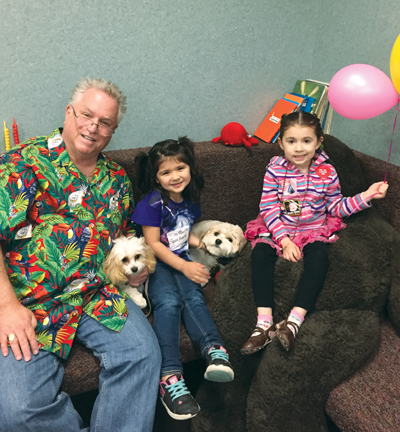
Lexa and Flossie: (From left) Dr. Alan Golden, Elysia Yriarte and Natalia Caraballo smile for the camera while petting Flossie, a dental therapy dog, and her half-sister Lexa, a dental therapy dog-in-training.  (photo courtesy of American Dental Association)

Lexa and Flossie: (From left) Dr. Alan Golden, Elysia Yriarte and Natalia Caraballo smile for the camera while petting Flossie, a dental therapy dog, and her half-sister Lexa, a dental therapy dog-in-training. (photo courtesy of American Dental Association)

At the 10,000-square-foot Virginia facility, Golden Pediatric Dentistry & Orthodontics, Flossie is free to run around with one job: to make people comfortable wherever they are. Flossie has been coming to the office since she was 8 weeks old in 2012.

“I would say, ‘Back to work,’ and she goes out and finds a lap to sit on, or sometimes she cuddles with the kids,” Dr. Golden said. “She’s good at it.”

With the success of Flossie, Dr. Golden said he’s been considering creating a resource for dentists who are interested in using therapy dogs in their practice.

Flossie, a Cavachon (Bichon Frise/Cavalier King Charles Spaniel cross), received her therapy dog certification from the Alliance of Therapy Dogs.  New patients are informed that Flossie works at the practice so they are ready for her presence in the office when they arrive.

For patients that are particularly frightened of dogs, or who have severe allergies, Flossie is sent to her official resting area, which is fenced off and has a dog bed.

Dr Golden’s partner in practice is so impressed by what Flossie brings to the practice that he has his own dental therapy dog in training, Lexa.

Source:  American Dental Association

Adjusting stress levels for mellow vs hyper dogs

People aren’t the only ones who perform better on tests or athletic events when they are just a little bit nervous — dogs do too. But in dogs as in people, the right amount of stress depends on disposition.

A new study by researchers at Duke University finds that a little extra stress and stimulation makes hyper dogs crack under pressure but gives mellow dogs an edge.  (These findings will be relevant to any owner who is competing in agility or obedience with their dog.)

The findings appear online in the journal Animal Cognition.

According to an idea in psychology called the Yerkes-Dodson law, a little stress can be a good thing, but only up to a point.

A task that isn’t demanding or challenging enough can make it hard to stay engaged and perform at one’s peak. But when the pressure becomes too much to handle, performance is likely to suffer again.

The idea is the relationship between stress and performance follows a Goldilocks model:  Both people and animals function best when the level of stress is not too much, nor too little, but just right.

When you’re taking a test, for example, it helps to be a little bit anxious so you don’t just blow it off,” said study co-author Emily Bray, who was an undergraduate at Duke at the time of the study. “But if you’re too nervous, even if you study and you really know the material, you aren’t going to perform at your best.”

Researchers first observed this pattern more than a hundred years ago in lab rats, but it has since been demonstrated in chickens, cats and humans. In a new study, a Duke team consisting of Bray and evolutionary anthropologists Evan MacLean and Brian Hare of Duke’s Canine Cognition Center wanted to find out if the conditions that enable certain animals to do their best also depend on the animal’s underlying temperament.

In a series of experiments, the researchers challenged dogs to retrieve a meat jerky treat from a person standing behind a clear plastic barrier that was six feet wide and three feet tall. To get it right, the dogs had to resist the impulse to try to take the shortest path to reach the treat — which would only cause them to whack into the barrier and bump their heads against the plastic — and instead walk around the barrier to one of the open sides.

In one set of trials, an experimenter stood behind the barrier holding a treat and called the dog’s name in a calm, flat voice. In another set of trials, the experimenter enthusiastically waved the treat in the air and used an urgent, excited voice. (See YouTube video at https://youtu.be/j6bfo5IlCEY – the video has been protected and so I’m unable to link it directly to this blog post).

The researchers tested 30 pet dogs, ranging in age from an eight-month-old Jack Russell terrier named Enzo to an 11-year-old Vizsla named Sienna. They also tested 76 assistance dogs at Canine Companions for Independence in Santa Rosa, California, a non-profit organization that breeds and trains assistance dogs for people with disabilities.

The researchers studied video recordings of each dog and estimated their baseline temperament in terms of tail wags per minute. “The service dogs were generally more cool in the face of stress or distraction, whereas the pet dogs tended to be more excitable and high-strung,” Bray said.

Both groups of dogs were able to solve the puzzle. But the optimal amount of stress and stimulation depended on each dog’s disposition.

For the dogs that were naturally calm and laid-back — measured by how quickly they tended to wag their tails — increasing the level of excitement and urgency boosted their ability to stay on task and get the treat.

But for excitable dogs the pattern was reversed. Increasing the level of stimulation only made them take longer.

In one high-arousal trial, a two-year-old spaniel named Charlie Brown lost it and shut down, barking and zipping around crazily until she almost ran out of time.

“In the first five trials she did fine and solved the puzzle quickly with no problems,” Bray said. “Then when the high-arousal trials started she choked. She just couldn’t figure it out.”

“Adding more excitement pushed the pet dogs over the edge and impaired their ability to perform at their peak,” Bray said.

The results will help researchers develop better tests to determine which dogs are likely to graduate from service dog training programs, for example.

Source:  Duke University media release

Zoomies

It’s been feeling a little warmer over the last couple of days; the clear days with sun make me think that spring isn’t far off.

Izzy is feeling it, too.  On Sunday, she got so warm after chasing her tennis balls at the dog park that she sat down in mud puddle to cool off (she wasn’t so keen on the bath that followed).

Yesterday, she did ‘zoomies’ in the back yard; something she hasn’t done for over a month since it has been so cold…

Kathleen Crisley, specialist in dog massage, rehabilitation and nutrition/food therapy, Canine Catering Ltd, Christchurch, New Zealand

The Ark at JFK

Under construction at New York’s JFK International Airport is the world’s first all-animal airport terminal.

The facility, which will measure 178,000 square feet and cost $48 million, will be called The Ark at JFK.  Its developer, ARK Development, says the facility “has been conceived as the world’s only privately owned animal terminal and USDA-approved, full-service, 24-hour,  airport quarantine facility for import and export of horses, pets, birds and livestock.”

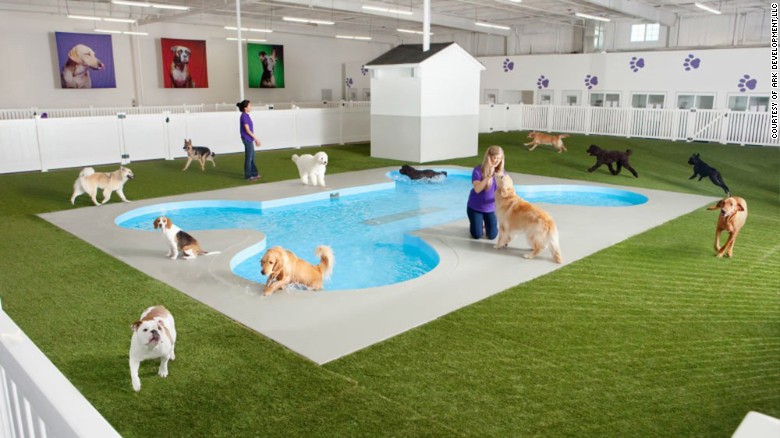
The terminal will be home to a 24-hour Paradise 4 Paws pet resort featuring a bone-shaped dog pool, pet suites with a flat-screen TV option, massage therapy and a jungle gym for cats.

What the bone-shaped swimming pool will look like at The Ark (courtesy of CNN)

What the bone-shaped swimming pool will look like at The Ark (courtesy of CNN)

For dogs and other pets on long-haul journeys, this facility promises to offer the highest standard in care.  Can’t wait to see it – it should be open in 2016.

Source:  CNN

Using a dog to promote organ donation

The Fundación Argentina de Trasplante Hepático (FATH) has produced a very touching ad to support organ donation in Argentina.  This video, portraying an elderly man and his dog, doesn’t use a single spoken word.  Yet, it speaks volumes…

Kathleen Crisley, specialist in dog massage, rehabilitation and nutrition/food therapy, Canine Catering Ltd, Christchurch, New Zealand

Drug trials in pet dogs with cancer

Physiological similarities between dogs and humans, and conserved genetics between some dog and human cancers, can allow pet dogs to serve as useful models for studying new cancer drugs, says Dr Timothy Fan of the University of Illinois.

Timothy Fan, professor of veterinary clinical medicine. With his personal dog, Ember

Timothy Fan, professor of veterinary clinical medicine. With his personal dog, Ember  photo by L. Brian Stauffer

In a meeting sponsored by the National Cancer Policy Forum of the National Academies’ Institute of Medicine in Washington, D.C., Fan and 15 other experts in the field described the benefits of using pet dogs with naturally occurring (rather than laboratory-induced) tumors in early cancer drug trials.

“We have a lot of dogs in the United States, approximately 70 million of them, and it’s believed that about 25 percent of pet dogs will develop some form of cancer in their lifetime,” he said. “We’re using dogs to help guide drug development for people, but at the same time we’re offering new, innovative therapies that would otherwise never be available to dogs, to help them as well.”

Several attributes make pet dogs attractive subjects for such studies, Fan said.

“Dogs tend to develop cancer as a geriatric population, just like people,” he said. “Because the tumors develop spontaneously, there is heterogeneity in that tumor population, as a human being would have. The size of the tumors and the speed of growth of those tumors are comparable in dogs and human beings. So there are many attributes of a dog that develops cancer spontaneously that recapitulate the biology that we see in people.”

Some studies have already begun using dogs to test new cancer therapies. Starting in 2007, for example, Fan began testing an anti-cancer drug called PAC-1  in pet dogs with naturally occurring lymphomas and osteosarcomas. The results in dogs allowed the scientists to advance PAC-1 as a potential therapy against human cancers. The drug is now in phase I human clinic trials.

“Another example in which dogs have been important in demonstrating drug activity was an anti-cancer compound produced by the pharmaceutical company Gilead Sciences,” he said. “The company produced a pro-drug, which must be activated by a naturally occurring enzyme in human leukocytes before it can become effective. Mice and rats lack this enzyme, but dogs have it, so the compound was tested in dogs.”

There also are limitations to the use of pet dogs in cancer drug trials.

“There are some tumors that will not be that relevant,” Fan said. “Colon cancer, for example, is heavily driven by diet, and we don’t see much colon cancer in dogs. So pet dogs might not be a suitable model for colon cancer in humans.”

“There is heterogeneity in the human population and in dogs. So I would argue that if your drug agent produces positive results in dogs, that would give me greater confidence that those findings would be translatable to people.”

Source:  University of Illinois media release

One in four dogs at Crufts is overweight

One in four dogs competing in the world’s largest canine show (Crufts) is overweight, despite the perception that entrants are supposed to represent ideal specimens of their breed, reveals research published online in Veterinary Record.

The widespread dissemination of show dog images online may be ‘normalising’ obesity in dogs, now recognised to be a common canine disorder, say the researchers.

As in people, obesity in dogs has been linked to orthopaedic problems, diabetes, respiratory disease, and certain types of cancer. It also affects both the quality and length of a dog’s life.

The researchers base their findings on 1120 online images of dogs from 28 breeds—half of which are prone to obesity–that had appeared at Crufts. This is the UK’s national dog show, and the largest of its kind in the world.

Only adult dogs that had been placed between first and fifth in their class between 2001 and 2013 were included in the study.

The images were coded and anonymised, and 960 were suitable for assessment. A second person then graded the body condition of each dog in one sitting, using a previously validated method.

Three out of four (708; 74%) of the show dogs were in ideal condition, and none was overweight. But one in four (252; 26%) was overweight.

Pugs, basset hounds, and Labrador retrievers were the breeds most likely to be assessed as being overweight. Dogs were overweight in 80% of the pug images, and in around two thirds of the basset hound (68%) and Labrador (63%) images.

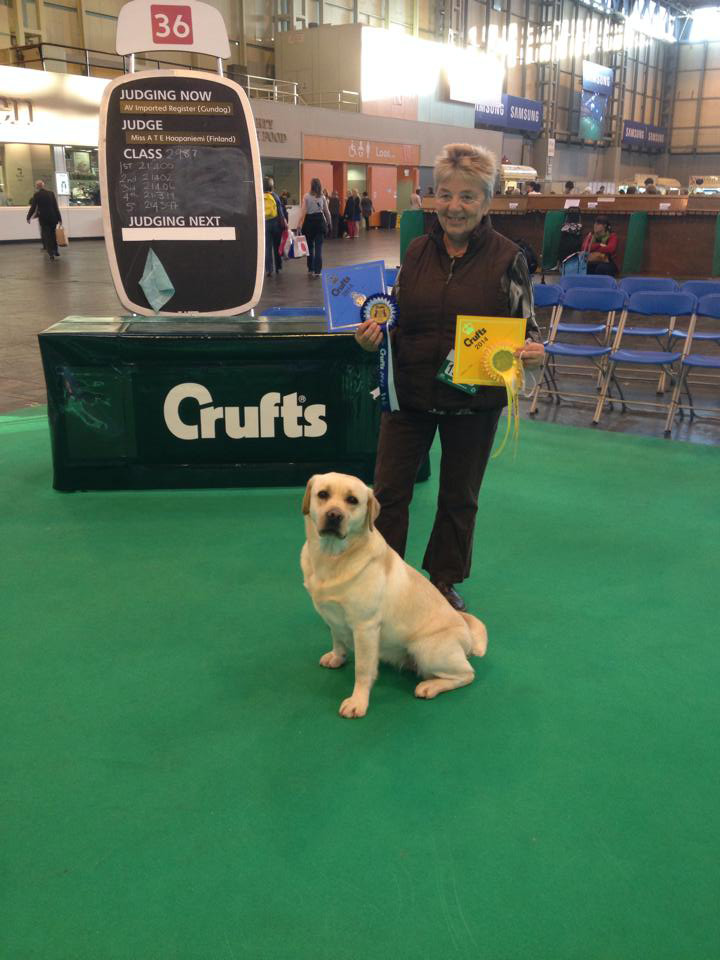
The researchers say Labradors were one breed that was more likely to be assessed as overweight.   (Photo by pedigreelabrador.co.uk)

The researchers say Labradors were one breed that was more likely to be assessed as overweight. (Photo by http://www.pedigreelabrador.co.uk)

The three breeds with the highest prevalence of overweight among the online images are prone to excess weight. But, given that pugs were originally bred to be a companion dog, while hounds and Labradors were bred, respectively, for hunting and fieldwork, being overweight would not be advantageous, say the researchers.

Standard poodles, border terriers, Rhodesian ridgebacks, Hungarian vizlas and Dobermanns were the least likely breeds to be overweight.

The researchers point out that the prevalence of overweight among the show dogs was less than that reported generally for pet dogs in the UK. But the fact that “a quarter were above ideal weight is still a cause for concern,” they write.

“These dogs showcase the ideal characteristics of the pedigree breed, and there is a danger that widespread media exposure might adversely influence owner perception of optimal body shape,” they say.

The Kennel Club has recently introduced changes in policy for judging criteria, to emphasise characteristics that promote good health in dogs, say the researchers.

But breed standards of optimal condition should be reinforced for competition, to ensure consistency, they say, concluding: “Further effort is now required to educate owners, breeders and show judges so that they can all better recognise overweight condition, thus helping to prevent the development of obesity.”

Source:  EurekAlert! media release

The old head in the Cheetos bag trick…

Nikitaland's avatarNikitaland

Nothing is better than licking the inside of a Cheetos bag…

BELLA AND CHEETOS

…and grinning about it afterwards!

BELLA LOVES CHEETOS

View original post

How much will a pet really cost you?

Izzy adoption announcementIn case you haven’t guessed, I love dogs.

But any way you look at it, dogs are a responsibility and they require commitment in time and money to support and to care for them throughout their lives.

That’s why this article, How much will a pet really cost you? A cat vs dog breakdown, caught my attention.  Published in the Christian Science Monitor and using costs in US$, it shows the cost of owning either a cat or a dog and the money you need to expect to pay on a monthly and yearly basis.

I would add that if a dog develops a special health condition, or when it ages, your costs are likely to increase.  Here in New Zealand, I am finding too many owners who are in a financial pinch because of the care of an elderly or special needs dog.  In some cases, and in my opinion, the dogs are not receiving everything that that could to make them happy and comfortable (possibly extending their lives by months or years) – because the owners don’t have the finances.

Think before you adopt (or buy).

A dog is a lifetime commitment and one that costs money.  The benefits of ownership are a great investment.

Kathleen Crisley, specialist in dog massage, rehabilitation and nutrition/food therapy, Canine Catering Ltd, Christchurch, New Zealand