Category Archives: Dogs

Hapless huskies, dumped dalmatians: let’s stop treating pets as disposable

I like this opinion piece which discusses puppy mills, exotic pets and even the link between popular culture (movies, etc.) and the demand for certain breeds of dog.

Mr Barkham (no pun intended) talks about the need to strengthen requirements to underpin a culture that expects responsible pet ownership.  My favourite quote “Buying a big pet should be like obtaining a mortgage – an agonising process with loads of ludicrous red tape that ensures we really want the burden of an animal in our lives for a decade or more.

Click on the link to read more:

Hapless huskies, dumped dalmatians: let’s stop treating pets as disposable | Patrick Barkham | Comment is free | theguardian.com.

'The Blue Cross has seen a 700% increase in husky-type dogs being given up or abandoned over the past five years, with 78 taken in last year.' Photograph: Andrew Milligan/PA

‘The Blue Cross has seen a 700% increase in husky-type dogs being given up or abandoned over the past five years, with 78 taken in last year.’ Photograph: Andrew Milligan/PA


Lucy and Remi: 2 great dog stories in 2 days

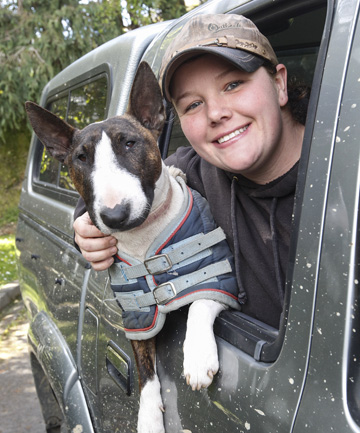
From the New Zealand papers this week…Lucy the dog helps save her owner when she falls down a cliff and Remi, a naughty Bull Terrier, alerts his owner to help save a trapped motorist.

Read the links – great stories!

Nikita McMurtrie and her dog, Lucy (Photo by Mytchall Bransgrove)

Nikita McMurtrie and her dog, Lucy (Photo by Mytchall Bransgrove)

Loyal Lucy alerts mum – national | Stuff.co.nz

Angel Marsh with Remi; credited with saving a man trapped in a wrecked car (Photo by Fairfax NZ)

Angel Marsh with Remi; credited with saving a man trapped in a wrecked car (Photo by Fairfax NZ)

Dog helps owner to find crash victim – national | Stuff.co.nz

Wordless Wednesday, part 50

Photo by Jill Gordon

Photo by Jill Gordon

Blog Hop

E-cigarettes are a hazard to dogs

With smoking becoming banned in most public places, smokers are turning to e-cigarettes to help them get their nicotine fix.

Nicotine is poisonous to dogs and so owners need to take special care when using e-cigarettes.    There has been a reported worldwide increase in the cases of nicotine poisoning attributed to these devices.

ecigaretteFor example, the Veterinary Poisons Information Service, which offers vets specialist advice about poisoned pets in the UK, and has seen a 300 per cent increase in dogs swallowing e-cigarettes this year.

Electronic cigarettes are battery-operated devices that deliver nicotine to the user through a vapour that looks like cigarette smoke. An atomiser in the device heats liquid containing nicotine to release the vapour, which is then inhaled.

Symptoms of nicotine poisoning may include heavy panting, drooling, vomiting, diarrhoea, agitation and nervousness often combined with an increase in heart and respiration rates.  The symptoms can escalate to tremors, seizures, comas, cardiac arrest and even death.

In the UK this year, a dog died after eating the nicotine capsule from an e-cigarette when it was dropped on the floor.

The ASPCA (USA) has also published warnings about e-cigarettes and pets.  They say:

These are factors that make e-cigs and the liquid nicotine within them different than that found in cigarettes, patches or chewing gum:

  • Potentially a high nicotine concentration of 1 to 10 percent
  • The product may often be poorly labeled
  • Liquid formation that means absorption more quickly for faster onset of signs, leaving less time for decontamination efforts
  • While carriers in the e-cig liquid may be propylene glycol and glycerin, there have been reports of them containing diethylene glycol, which can cause acidosis and kidney injury
  • Products may be flavored, such as milkshake or chocolate, making them more attractive to pets

Hopefully, the above facts make you want to throw away any e-cigarettes you may have in your house.   And today is a great day to start your stop smoking plan (since cigarette smoke, cigarettes, nicotine patches and gum all are hazards too).

Kathleen Crisley, specialist in dog massage, rehabilitation and nutrition/food therapy, Canine Catering Ltd, Christchurch, New Zealand


In India, a dog tops the menu for the leopard population

A new study led by the Wildlife Conservation Society reveals that in India’s human dominated agricultural landscapes, where leopards prowl at night, it’s not livestock that’s primarily on the menu – it is man’s best friend.

Photo courtesy of Wildlife Conservation Society

Photo courtesy of Wildlife Conservation Society, India

The study, which looked at scat samples for leopards in India’s Ahmednagar’s district in Maharashtra, found that 87 percent of their diet was made up of domestic animals. Domestic dog dominated as the most common prey item at 39 percent and domestic cats were second at 15 percent.

The authors of the study say that the selection of domestic dogs as prey means that the economic impact of predation by leopards on valuable livestock is lower than expected. Thus, human-leopard “conflict” is more likely to be related to people’s fears of leopards foraging in the proximity of their houses and the sentimental value of dogs as pets.

Study co-author Ullas Karanth, WCS Director for Science-Asia, said: “During the past two-to-three decades, legal regulation of leopard hunting, increased conservation awareness, and the rising numbers of feral dogs as prey have all led to an increase in leopard numbers outside of nature reserves in agricultural landscapes. While this is good news for conservation and a tribute to the social tolerance of Indian people, it also poses major challenges of managing conflict that occasionally breaks out. Only sound science can help us face this challenge.”

Source:  Wildlife Conservation Society media statement


The ultimate in pet-friendly homes

  • Building a new house?
  • Does your family include at least one pet?

Well then, Standard Pacific Homes in Irvine, California has the answer for you.  For an additional $35,000, your new home can include a pet suite.

Pet suites are all about convenience and include dual purpose cabinets for owner/dog and dedicated laundry facilities so the dog hair stays with your dog’s bedding and coats.  There’s even a camera to keep an eye on your dog when you are not at home.

More in this news item:

If I were building in Christchurch right now, I’d be seriously thinking of adding a pet suite to my new home.  It would be another way of including dogs in the rebuild!

Kathleen Crisley, specialist in dog massage, rehabilitation and nutrition/food therapy, Canine Catering Ltd, Christchurch, New Zealand
Is your dog an optimist or a pessimist?

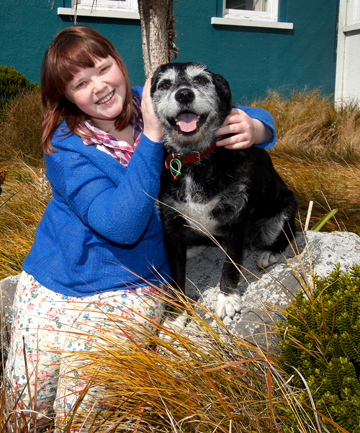
Dogs can have either an optimistic or a pessimistic view of the world, new research shows.  The approach used in the research will have uses in assessing animal welfare generally, but also in assessing suitability of dogs for various working roles.

“This research is exciting because it measures positive and negative emotional states in dogs objectively and non-invasively (important for those concerned about animal welfare in research),” said Dr Melissa Starling, from the University of Sydney’s Faculty of Veterinary Science.

Dr Starling has been working with Assistance Dogs Australia to investigate whether measuring optimism would assist in selecting dogs for training.

Dogs were taught to associate two different sounds (two octaves apart) with whether they would get the preferred reward of milk or instead get the same amount of water. Once the dogs learned the discrimination task, they were presented with ‘ambiguous’ tones.

If dogs responded after ambiguous tones, it showed that they expect good things will happen to them, and they are called ‘optimistic.’ They can show how optimistic they are by which tones they respond to. A very optimistic dog may even respond to tones that sound more like those played before water was offered.

“Of the dogs we tested we found more were optimistic than pessimistic but it is too early to say if that is true of the general dog population,” said Dr Starling.

“This research could help working dog trainers select dogs best suited to working roles. If we knew how optimistic or pessimistic the best candidates for a working role are, we could test dogs’ optimism early and identify good candidates for training for that role. A pessimistic dog that avoids risks would be better as a guide dog while an optimistic, persistent dog would be more suited to detecting drugs or explosives.”

Dr Starling talks more about her research in this video:

Source:  University of Sydney media release

Pet products and the environment – a survey for US and Canadian owners

Scientists have long been aware of the potential environment impacts that stem from the use and disposal of the array of products people use to keep themselves healthy, clean and smelling nice. Now a new concern is emerging – improper disposal of pet care products and pills.

Dog shampoos, heartworm medicine, flea and tick sprays, and prescription and over-the-counter medicines increasingly are finding their way into landfills and waterways, posing a water quality and environmental health risk. Researchers at Oregon State University say that, with an estimated 68 percent of American households owning at least one pet, the scope of the potential problem is large.

Sam Chan, a watershed health expert with the Oregon Sea Grant program at Oregon State University, has launched a survey of veterinary professionals and pet owners to to get a better idea of the scope of the issue. If you live in the United States or Canada, you can contribute to his survey here.

The purpose of the survey is to determine how aware people are about the disposal of “pharmaceutical and personal care products” (PPCPs) for both themselves and their pets plus their general awareness of the environmental issues.

“You can count on one hand the number of studies that have been done on what people actively do with the disposal of these products,” Chan said. “PPCPs are used by almost everyone and most wastewater treatment plants are not able to completely deactivate many of the compounds they include.”

Increasingly, Chan said, a suite of PPCPs used by pets and people are being detected at low levels in surface water and groundwater. Examples include anti-inflammatory medicines such as ibuprofen, antidepressants, antibiotics, estrogens, the insect repellent DEET, and ultraviolet (UV) sunblock compounds.

For example, coal tar which is used in pet medicines and shampoos for skin treatment is an endocrine disruptor.

When medicines are no longer needed, the research team encourages owners to take the drugs and medications back to their pharmacy or veterinarian for proper disposal in a drug collection program. Placing unwanted medications in the rubbish means that they are an uncontrolled source in landfills, where leaching and runoff are mechanisms to enter the environment.

Source: Phys.org

Diagnosing lymphoma in dogs

Nearly one out of four dogs will develop cancer in their lifetime and 20 per cent of those will be lymphoma cases.

A team of researchers from the University of Leicester has helped Avacta Animal Health Ltd to develop a new user-friendly electronic system for diagnosing lymphoma in dogs in the early stages, and for remission monitoring.

Marketed as cLBT (canine lymphoma blood test), this is the first test of its kind to track the remission monitoring status of a dog after undergoing chemotherapy.

Photo by Avacta Animal Health Ltd

Photo by Avacta Animal Health Ltd

Led by Professor Alexander Gorban from the University’s Department of Mathematics, the University team together with experts from Avacta elaborated technology for differential diagnosis of canine lymphoma and for remission monitoring.

This technology is based on the cLBT, which detects the levels of two biomarkers, the acute phase proteins C-Reactive Protein and Haptoglobin.

The paper ‘Computational diagnosis and risk evaluation for canine Lymphoma’ by E.M. Mirkes, I. Alexandrakis, K. Slater, R. Tuli and A.N. Gorban has been published in the academic journal Computers for Biology and Medicine and is available at the following location: http://dx.doi.org/10.1016/j.compbiomed.2014.08.006

Source:  University of Leicester media release

Doggy quote of the month for October

“Like many other much-loved humans, they believed that they owned their dogs, instead of realizing their dogs owned them.”

– Dodie Smith, English novelist and author of The Hundred and One Dalmatians

101 Dalmatians