Category Archives: Dogs

Immunotherapy hope

There is a form of cancer treatment called immunotherapy, where antibodies inhibit tumor growth.  Until now, such therapy wasn’t available for dogs.  A research team at Messerli Research Institute of the Vetmeduni Vienna, the Medical University of Vienna and the University of Vienna have now developed antibodies to treat cancer in dogs.

The newly developed antibody brings hope for dogs. (Photo by:  Michael Bernkopf / Vetmeduni Vienna)

The newly developed antibody brings hope for dogs. (Photo by: Michael Bernkopf / Vetmeduni Vienna)

Since cancer cells bear very specific antigens on the surface, the corresponding antibodies bind to these molecules and inhibit tumor growth.  A destructive signal sent by the antibody to the inside of the cancer cell initiates its death. In a second mechanism, the immune system of the patient also destroys the “marked” tumor in a more efficient way.

Josef Singer and Judith Fazekas, both lead authors of the study, discovered that a receptor frequently found on human tumor cells (epidermal growth factor receptor or EGFR) is nearly 100 percent identical with the EGF receptor in dogs. In human medicine EGFR is frequently used as the target of cancer immunotherapy because many cancer cells bear this receptor on their surface. The so-called anti-EGFR antibody binds to cancer cells and thus triggers the destruction of the cells. “Due to the high similarity of the receptor in humans and dogs, this type of therapy should work well in dogs too,” the scientists say. The binding site of the antibody to EGFR in man and dogs differs only in respect of four amino acids.

The head of the study, Professor Erika Jensen-Jarolim, explains as follows: “We expect dogs to tolerate these anti-cancer antibodies well. This will be investigated in clinical studies in the future and is expected to greatly improve the treatment as well as the diagnosis of cancer in dogs.”

The newly developed antibody provides an additional benefit for dogs. As in human medicine, antibodies can be coupled with signal molecules. When the antibody binds to a cancer cell in the organism, the coupled antibody – in this case a radioactive isotope – can be rendered visible and is thus able to show where tumors and even metastases are located. When the selected isotope also contributes to the decay of cancer cells, the approach is known as “theranostics” (therapy and diagnostics).

In veterinary medicine, immunotherapy will be employed for the treatment of mammary ridge cancer (milk line cancer) in dogs. It may also be used as part of a combination therapy.

The team have published their study results in the journal Molecular Cancer Therapeutics.

Source: Vetmeduni Vienna media release

Wordless Wednesday, part 41

Photo courtesy of Linda Chu, customer of Canine Catering

Photo courtesy of Linda Chu, customer of Canine Catering

Blog Hop


Fairy dog mother?

I have found that most ‘dog people’ I meet support various charities that show their love of dogs. I am no exception. Today, however, I stumbled across a special charity that would allow me to become a Fairy Dog Mother.

They are Fairy DogParents, a non-profit in the state of Massachusetts.  The founder’s dog, Ladybug, was the inspiration behind the initiative.  Ladybug was already a senior dog when she was adopted from a shelter and her adoptive family considered themselves lucky that they could afford Ladybug’s medications for kidney disease, dementia and other ailments.  When Ladybug had to be put to sleep, her owner asked that the vet’s office re-distribute Ladybug’s un-used medication to someone who could use it.

Ladybug, in whose memory Fairy DogParents was founded

Ladybug, in whose memory Fairy DogParents was founded

And from there, the idea grew.  There are many dogs who are surrendered to shelters because of economics.  Their families simply can’t afford their care, particularly as they age or develop special health conditions.

Fairy DogParents has a simple application process for owners in need.  They serve Massachusetts residents only but hope to expand.  As with most non-profits, they are always in need of donations of goods, money and time.  Want to be a Fairy Dog Mother?  Follow the link below:

Fairy Dog Parent

Kennels may not be something to dread

New research suggests that dogs who spend a short time in boarding kennels may not find it unduly stressful and – quite the opposite – could find the change of scenery exciting.

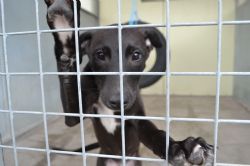
Photo courtesy of Jerry Green Dog Rescue

Photo courtesy of Jerry Green Dog Rescue

The research team, which included academics from the University of Lincoln, UK, University of Birmingham, Queen’s University Belfast and The Royal Veterinary College, measured a range of stress parameters in 29 privately-owned dogs – both at home and in one of three private boarding kennel establishments in Northern Ireland.

This study aimed to test the validity of a range of physiological, physical and behavioural welfare indicators and to establish baseline values reflecting good dog welfare.

Physical measurements included skin dryness, nose temperature, core body temperature and amount of food eaten. Behavioural measurements included spontaneous behaviours such as lip licking, paw lifting, yawning, shaking and restlessness. Physiological measures included stress hormones (corticosteroids) and epinephrine (adrenaline).

The study revealed that dogs have higher levels of arousal, colder noses and were generally more active in kennels than when they were at home.

Based on existing research it was assumed that dogs would show higher levels of stress in the kennel compared to the home environment.

The most widely used physiological indicator of canine welfare is urinary cortisol (hormone secreted following activation of one of the major stress response systems) and creatinine (chemical waste product created by the liver) ratios (C/Cr), which is considered a valid measure of acute and chronic stress in dogs. However, the reliability of this has been questioned.

The study revealed that C/Cr was significantly higher in the kennel compared to the home environment but cortisol levels have also been found to increase after exercise and excitement, and appear to provide an indication of arousal without specifying the emotional reason of that arousal.

Dr Lisa Collins, from the School of Life Sciences, University of Lincoln, UK, said: “Many owners find leaving their dog at a boarding kennels a stressful experience.  However, this study suggests that although dogs appeared to have a higher level of overall arousal or excitement in kennels compared with their state at home, this arousal is not necessarily due to dogs experiencing kennels as negatively stressful. The emotional reasons for the behavioural and physiological responses of the dogs were ambiguous and no definitive evidence was found to suggest that dogs were negatively stressed by kennelling.”

“Our findings did strongly suggest that C/Cr, epinephrine and nose temperature are robust measures of psychological arousal in dogs. Nonetheless, these measures can be easily misinterpreted and do not provide unequivocal indicators of psychological stress. Findings appear to suggest that the dogs in this study did not perceive admission to boarding kennels as an aversive stressor and perhaps, instead, perceived kennelling as an exciting change of scene, at least in the short-term.”

The team recommends further investigation to determine the validity of measurements tested as indicators of acute and chronic stress in domestic dogs.

Their study has been published in the journal Physiology & Behavior.

Source:  University of Lincoln media release

Cute and cuddly…to start your weekend

I know I cover a lot of serious topics on this blog…but every now and again it’s time to simply celebrate dogs in all their shapes and sizes.

I have just found this site – Animals with Stuffed Animals – a compilation of photos showing pets with their own soft toys.   Too cute!

Here are a few examples…go to the site to see more.  And have a great weekend!


Source:  imgur

Source: imgur

Source:  bassets

Source: bassets

SOF dogs and their memorial

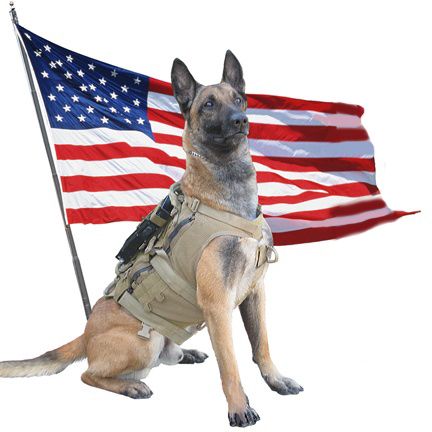
Photo courtesy of SOF K9 Memorial Foundation

Photo courtesy of SOF K9 Memorial Foundation

Special Operations Forces (SOF) dogs are very special indeed.  These dogs serve on tours of duty in places like Iraq and Afghanistan and help to detect explosives and intervene when their handler or other soldiers are in danger.  Many SOF dogs never make it to retirement because they are killed in action.

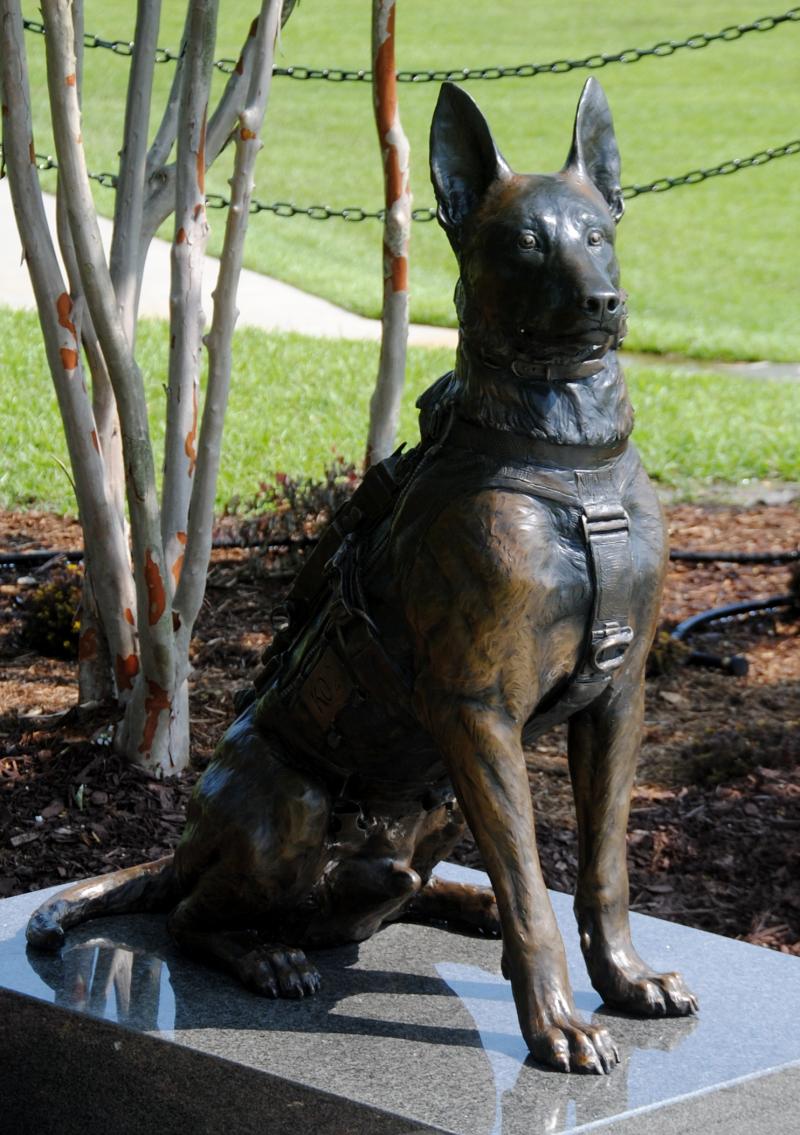
A very special statute to honour these dogs has been placed at the Airborne and Special Operations Museum in Fayetteville, North Carolina.  Fort Bragg, which has a SOF kennel, is not far away.

SOF dog statue

When unveiled in July 2013, dog handlers from the various wars including Vietnam and WWII were in attendance.  These men have enjoyed a very special bond with their animals and often the handler adopts their dog once it has been retired from active duty.

Handlers who have lost their dog can apply to have a memorial stone placed in the surround of the statue.  There is also funding available for handlers to have memorials erected at their home base.

The SOF K9 Memorial Foundation welcomes donations to their cause from military personnel and others who want to honour the service of these remarkable dogs.


Image

Wordless Wednesday, part 40

Leroy

Dog ACL Injuries – Know Your Options

ACL injuries – know your options – this is a great message for anyone whose dog has been diagnosed with a cruciate ligament injury.

In my canine massage and rehab practice, I work with dogs from the acute injury stage through to rehabilitation.  Many owners would prefer not to have surgery, for a variety of reasons including concerns about the costs and post-surgery care responsibilities.  Low level laser therapy, massage, acupressure, nutrition and weight control, plus other techniques like targeted exercise programs and braces can effectively be used to support dogs with cruciate injuries.  In some cases, surgery is definitely required and rehab is important.

Kathleen Crisley, specialist in dog massage, rehabilitation and nutrition/food therapy, Canine Catering Ltd, Christchurch, New Zealand

Marcela's avatarAllMyCanineCompanions

IMG_6434

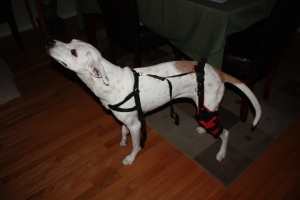
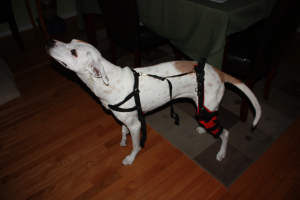
Lately, perhaps because the weather is warm, I’ve encountered a lot of people during our walks asking me about Alex’s brace, and I am more than happy to stop for a couple of minutes and chat with them.  Do you know what I found surprising?  Every single pet parent that asked me about Alex’s brace told me the same thing, “I thought that the only option for an ACL injury was surgery,” to what I responded, “No, that is not the only option”.  By the way, I do not get any monetary compensation from WoundWear Inc., what I like to do is talk about the products I buy for Alex and Bella and give you my poin of view, a consumer’s point of view. 

IMG_6434

Here are some of the questions I’ve been asked:

What is your dog wearing?  Is it a brace?  Is she injured?  Alex is wearing a brace…

View original post 292 more words

Daisy’s 14th birthday cake

Yesterday, Daisy reached the geriatric age of 14 – an achievement for any larger sized dog.  We of course celebrated with a doggy birthday cake, which was a wheat-free apple and banana cake with a low fat cream cheese frosting.

I decorated the cake with a vintage Disney carousel ornament – the heat from the candles makes the carousel turn.

(Excuse the singing – it was the best I could do with a cold and sore throat)

Kathleen Crisley, specialist in dog massage, rehabilitation and nutrition/food therapy, Canine Catering Ltd, Christchurch, New Zealand

Treating enlarged prostate (BPH) in dogs

Benign prostatic hyperplasia, or BPH, is the medical term for an enlarged prostate.   The condition affects older, entire dogs and humans.

The most common clinical sign of BPH in dogs is bloody fluid dripping from the penis not associated with urination. In severe cases it can obstruct the colon and result in constipation.

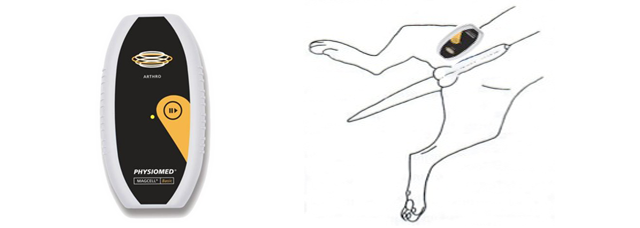
A new method to treat dogs with BPH is pulsed electromagnetic field therapy (PEMF).  PEMF is a noninvasive method that generates both an electrical and magnetic field and is used in orthopedics, neurology, and urology.  Because PEMF has been reported to have an anti-inflammatory effect with increased healing and blood circulation, a research team decided to apply the technology to improve blood flow to the prostate and reduce the size of the gland.

The study used a Magcell® Vetri device from Physiomed Elektromedizin AG, Germany.

The study used a Magcell® Vetri device from Physiomed Elektromedizin AG, Germany

The research study involved 20 dogs with BPH. They received treatment with PEMF for 5 minutes, twice a day for three weeks. The device was simply held over the skin where the prostate is located.

The results were pretty amazing.   After 3 weeks, the average reduction of the prostate was 57%.   There was no interference with semen quality, testosterone levels or libido.   There was also a progressive reduction in resistance of blood flow in the dorsal branch of the prostatic artery, as seen with Doppler scanning.

Source:  Raffaella Leoci, Giulio Aiudi, Fabio Silvestre, Elaine Lissner, Giovanni Michele Lacalandra (2014). “Effect of pulsed electromagnetic field therapy on prostate volume and vascularity in the treatment of benign prostatic hyperplasia: A pilot study in a canine model.” The Prostate. June 9, 2014. (Available online)