Category Archives: Dogs

Goodbye, Miss Beazley

Photo courtesy of the Presidential Pet Museum

Photo courtesy of the Presidential Pet Museum

My favourite Bush, Miss Beazley, passed away on Saturday after a battle with cancer.

Miss Beazley, a Scottish Terrier, was a birthday gift from George W to his wife, Laura, in 2005.   (She was born on October 28, 2004.) After leaving the White House, she lived with the Bushes in Dallas, Texas.

My condolences to the Bush family.  The passing of Miss Beazley means that Bo and Sunny Obama are the only living presidential pets.

Photo courtesy of the Presidential Pet Museum

Photo courtesy of the Presidential Pet Museum

Source:  Presidential Pet Museum media release


Albino Dobermans

Michigan State University researchers have identified a genetic mutation in Doberman pinschers that causes albinism in the breed, a discovery that has eluded veterinarians and breeders worldwide up until now.

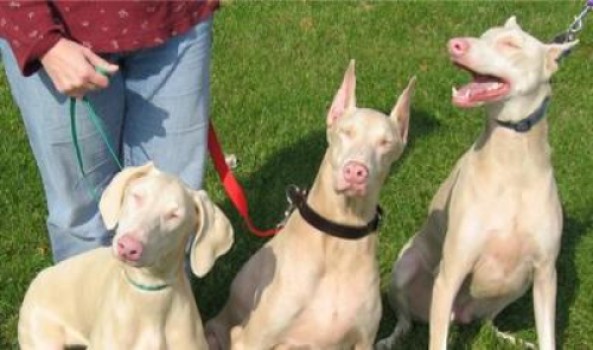
Michigan State University photo

Michigan State University photo

Paige Winkler, a doctoral student at the College of Veterinary Medicine, says that the researchers found a gene mutation that results in a missing protein responsible for the pigmentation of cells.

Albino Dobermans possess a pink nose, white or very light colored coats, and pale irises in the eyes.  These characteristics are similar to human albinos who have light skin, eye discoloration and often experience visual problems.

Like human albinos, the albino Dobermans are sensitive to light and have an increased risk of skin tumors.

Winkler says that this discovery will help Doberman breeders in the future where breeding lines carrying the defective gene can be identified.

Source:  Michigan State University media statement

Wordless Wednesday, part 33

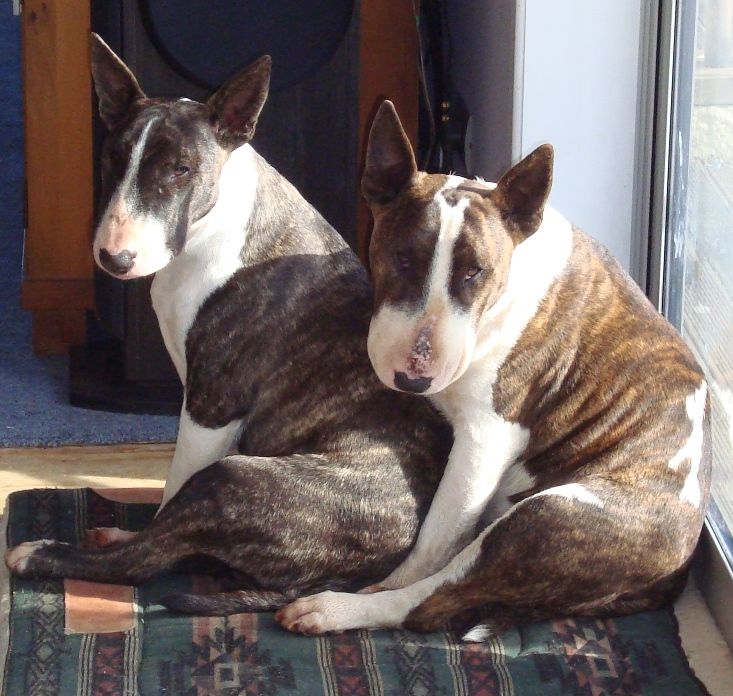
"Who loves who the most" Photo by Robert Balloch

“Who loves who the most” Photo by Robert Balloch

BP_Wordless_wed_Hop_Logo_2014

Because I’m happy…

This YouTube video was compiled by Robert, an Australian dog trainer (trading as CATMANTOO and Malibu Dog Training).

He says “After a dog graduates my off leash program, I’ll offer a “doggy outing service”. I pick up the dogs (usually between 8-12 dogs), take them to dog beaches or other dog friendly places, let them play together, while continuing to practice the training they’ve learned. I’ll rinse off any sand, trim their nails (if needed), then take them home.”

What a unique service!

Tie a yellow ribbon…

It’s Dog Bite Prevention Week in the USA.  What a better time to consider the role of The Yellow Dog Project?

The Yellow Dog Project is a global movement for owners of dogs that need personal space. It aims to educate the public and dog owners so they can identify dogs needing their space and so they understand how to appropriately interact or approach these dogs.

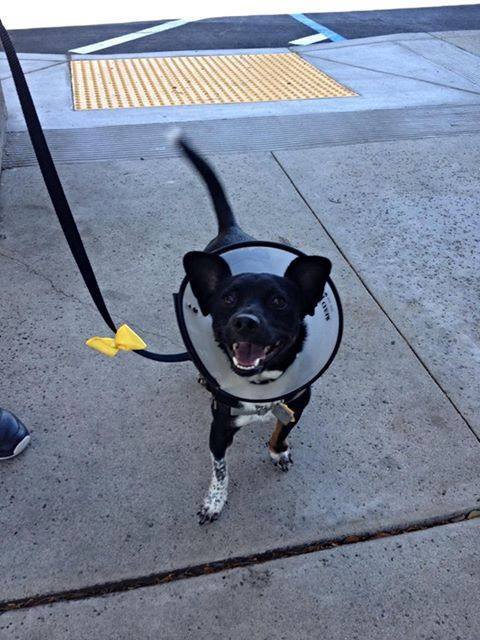
The Project promotes the use of a yellow ribbon, tied to the dog’s leash or collar, to show others that the dog is special and needs space.  Variations of the yellow ribbon include yellow bandanas or yellow leashes.
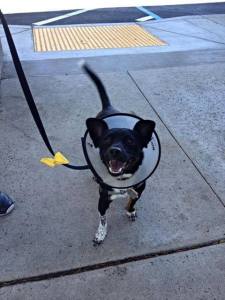
Photo courtesy of The Yellow Dog Project via Facebook

Photo courtesy of The Yellow Dog Project via Facebook

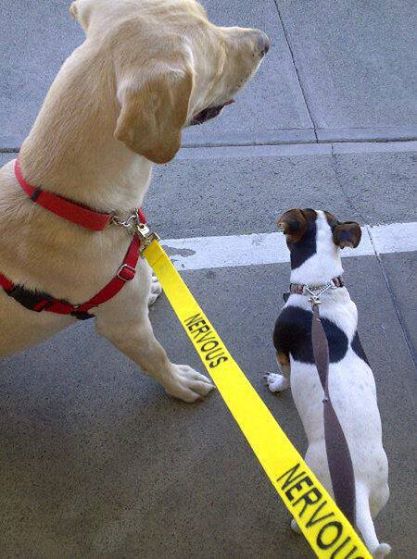
I personally like the use of leashes which not only are yellow, but have words to indicate the dog’s status:
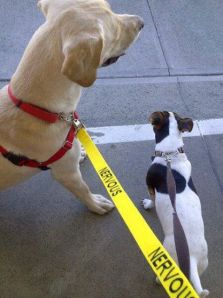
Photo courtesy of The Yellow Dog Project via Facebook

Photo courtesy of The Yellow Dog Project via Facebook

Dogs wearing a yellow ribbon are not necessarily aggressive.  Many have fear issues which could be caused by pain from injuries, advancing arthritis, or surgery.  Others may be a rescue dog who has behavioral problems associated with a traumatic history.  Some dogs will be undergoing training for their behaviors, but haven’t passed their tests yet.

In my practice, I am working with some dogs who are reactive in public and would benefit from space.  I’m very happy to recommend to their owners that they tie a yellow ribbon to their dog’s leash to help indicate that their dog is special.

The Yellow Dog Project website contains links to country-specific websites that provide resources such as contact details for trainers who use positive reinforcement techniques.  The Yellow Dog Project is also on Facebook.

Kathleen Crisley, specialist in dog massage, rehabilitation and nutrition/food therapy, Canine Catering Ltd, Christchurch, New Zealand


Trends in US travel for dog owners

DogVacay, the online site the connects dog parents who need home dog boarding, pet sitting and day care with qualified caregivers, has released its second annual State of U.S. Pet Travel survey.

dogs and travelIt shows that dog parents still face obstacles when needing or wanting to travel.

For example:

  • 60% of dog owners say arranging accommodation for their dog adds complexity to travel planning
  • 34% of owners say they often struggle to find a pet sitter when they need to travel at short notice
  • 22% of owners have delayed or skipped a planned vacation because of challenges in arranging care for their dog(s)
  • 50% say finding a good kennel or pet sitter has affected planning for their vacation
  • Another three in ten (27%) say financial challenges such as kennel fees or paying a pet deposit at a hotel have impacted their vacation plans

Also, 46% of dog owners agree that worrying about their dog(s) while they’re away makes it harder to enjoy their trip (I admit that I worry about Daisy when I have to travel for work or vacation, even when I have made arrangements for her care with reputable caregivers).

What’s your travel story?


Celebrating all of the mothers

Sunday is Mother’s Day.  The Best Friends Animal Society have put out this lovely video to celebrate all mothers – four-legged ones too!

Daisy is a mother; I’m Daisy’s Mum.  We have yet to decide how we will mark the occasion but we will pause (paws) to celebrate.

Happy Mother’s Day!

The Hongi (dog style)

Most of my readers know that I am based in New Zealand, where the Māori people are the indigenous culture.  The hongi is a traditional greeting which is done by pressing your nose and forehead to the other person.

Well, I have a client who has used the hongi as a training cue for her dog, Dixie.  This is uniquely New Zealand cue!

And just so I am not accused of being culturally insensitive, here’s what a human hongi looks like:

A hongi performed at a welcoming ceremony (U.S. Air Force photo/Tech. Sgt. Shane A. Cuomo)

A hongi performed at a welcoming ceremony (U.S. Air Force photo/Tech. Sgt. Shane A. Cuomo)

And here’s an instructional video on how to participate in a hongi correctly so as to not offend your host:

What unique dog training cues does your country have?


Wordless Wednesday, part 32

Photo by Justyne Moore

Photo by Justyne Moore

BP_Wordless_wed_Hop_Logo_2014

Behavioural problems in pet store dogs

Dogs purchased from pet stores are more likely to have a range of behavior problems than those purchased from small, non-commercial breeders, says a study by researchers at the Best Friends Animal Society and the University of Pennsylvania School of Veterinary Medicine.

The study was published in the Journal of the American Veterinary Medical Association.

The study involved 413 dogs purchased from pet stores.  Psychological and behavioral characteristics of these dogs were compared to the same characteristics in 5,657 dogs obtained from small-scale, private breeders.  (Most puppies sold in pet stores in the USA are sourced from large-scale, puppy mill type commercial breeders).

Results show that dogs obtained as puppies from pet stores showed significantly more aggression toward human family members, unfamiliar people and other dogs. Dogs purchased from pet stores were almost twice as likely to exhibit aggression directed toward unfamiliar dogs than dogs purchased from small non-commercial breeders.

The pet store dogs also a displayed greater fear of other dogs and typical events in pet dogs’ lives, had more behavior problems when left alone at home, and experienced more problems with house-soiling.  These behaviors in young adult dogs are reasons typically cited by people who surrender their pets to animal shelters.

“The results were so one-sided that in the wide range of behavior problems we included in our analysis, pet store dogs failed in every single case to even obtain one more favorable score than the comparison group of dogs” says Dr Frank McMillan of Best Friends Animal Society.

The research team acknowledges that the exact causes of the behavioral problems observed are not known; until these causes are understood, they recommend avoiding purchasing puppies from pet stores.

Source:  BusinessWire media release

See my related post about the ASPCA’s No Pet Store Puppies initiative