Category Archives: Dogs

More fat and less protein for sniffing dogs

Sniffing dog checking luggage. (Credit: © Monika Wisniewska / Fotolia)

A detector dog checking luggage. (Credit: © Monika Wisniewska / Fotolia)

A study  funded with a $1 million grant from the U.S. Department of Justice, has found that detection dogs are more reliable detectors than previously thought.  The study has been conducted by Cornell’s College of Veterinary Medicine.

The study is the first to be conducted in the world’s only detection dog research facility designed in conjunction with a military dog trainer. The Alabama facility, which provides expert detection dogs to police and military forces, flushes out fumes between tests, ensuring a fresh field each time.

Researchers have found that the key to improving a dogs’ smelling skills through diet is achieved by limiting proteins and increasing fats.  Such a diet, the research team says, appears to help dogs return to lower body temperatures after exercise, which reduces panting and, thereby, improves sniffing.

‘Dogs tested in the new facility signaled with 90 percent and above accuracy. We also found we can push detection performance even further with the right kind of food.’ said Joseph Wakshlag, associate professor of clinical studies and chief of nutrition at Cornell’s College of Veterinary Medicine.

During an 18-month period, the research team rotated 17 trained dogs through three diets: a high-end performance diet, regular adult dog food, and regular adult dog food diluted with corn oil. Measuring how different diets affected each dog, they found that dogs eating the normal diet enhanced with corn oil returned to normal body temperatures most quickly after exercise and were better able to detect smokeless powder, ammonia nitrate and TNT.

‘Corn oil has lots of polyunsaturated fats, similar to what you’d find in a lot of nuts and common grocery store seed oils,’ said Wakshlag. ‘Past data from elsewhere suggest that these polyunsaturated fats might enhance the sense of smell, and it looks like that may be true for detection dogs. It could be that fat somehow improves nose-signaling structures or reduces body temperature or both. But lowering protein also played a part in improving olfaction.’

‘If you’re a dog, digesting protein raises body temperature, so the longer your body temperature is up, the longer you keep panting, and the harder it is to smell well,’ said Wakshlag.

Source:  Cornell University media release
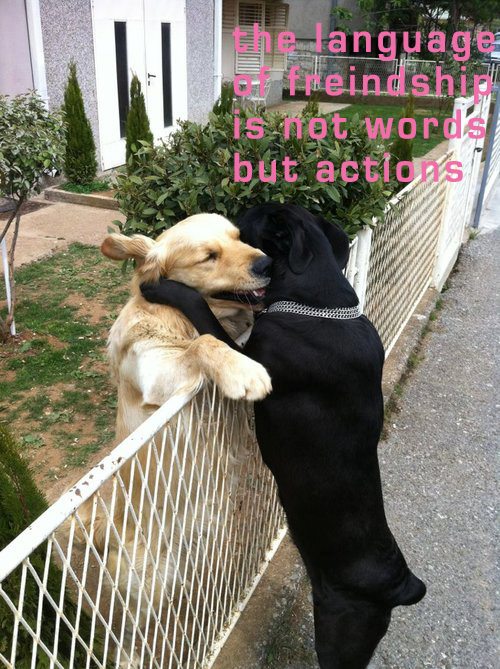
The language of friendship

My thought for the day…(just ignore the spelling mistake!)

The language of friendship

The Full Tummy Project

I love true stories about how dogs bring people together.  This one comes from Florida, where people at The Doglando Foundation have created the Full Tummy Project.

The Full Tummy Project sets up every Thursday evening at the Global Outreach Center in Bithlo, Florida (east of Orlando, home to DisneyWorld) to provide food and other essential supplies to homeless pet owners.

photo courtesy of Pets of the Homeless

photo courtesy of Pets of the Homeless

The Center has traditionally provided meals for the poor and homeless (like most soup kitchens and homeless shelters), but the folks at the Doglando Foundation recognized that many homeless also own animals and the animals suffer from their poor living conditions and inability to pay for veterinary care.

“Between 5 to 10 percent of homeless people have dogs or cats, and in some [rural] areas of the country, it’s as high as 24 percent,” says Renee Lowry, executive director of Pets of the Homeless, a national organization that helps provide food, medical care and assistance to homeless people who need help caring for their animals.

People are homeless for many reasons; for example some have mental illness but others have lost their jobs in the enduring recession and have had mortgages foreclosed.  The family, including the family pet, ends up on the streets.

So the Full Tummy Project is a soup kitchen for animals and there are currently over 150 families registered with the project.

Orlando Weekly cover

The Orlando Weekly covered the stories of the people involved in the Full Tummy Project, so read the full story by clicking on the Orlando Weekly cover page above.

Do not cry, I am with you

I stood by your bed last night, I came to have a peep.
I could see that you were crying, You found it hard to sleep.
I whined to you softly as you brushed away a tear,
“It’s me, I haven’t left you, I’m well, I’m fine, I’m here.”

Do not cry, I am with you

I was close to you at breakfast, I watched you pour the tea,
You were thinking of the many times, your hands reached down to me.
I was with you at the shops today, Your arms were getting sore.
I longed to take your parcels, I wish I could do more.

I was with you at my grave today, You tend it with such care.
I want to re-assure you, that I’m not lying there.
I walked with you towards the house, as you fumbled for your key.
I gently put my paw on you, I smiled and said ” it’s me.”

You looked so very tired, and sank into a chair.
I tried so hard to let you know, that I was standing there.
It’s possible for me, to be so near you everyday.
To say to you with certainty, “I never went away.”
You sat there very quietly, then smiled, I think you knew…
In the stillness of that evening, I was very close to you.

The day is over… I smile and watch you yawning
and say “good-night, God bless, I’ll see you in the morning.”
And when the time is right for you to cross the brief divide,
I’ll rush across to greet you and we’ll stand, side by side.
I have so many things to show you, there is so much for you to see.

Be patient, live your journey out…then come home to be with me…

Source:  Unknown (I found this in my old email files and it is so appropriate to all of us who have loved and lost a dog)

St Pawtrick’s Day

Does your dog celebrate St Patrick’s Day (a.k.a. St Pawtrick’s Day)?

St Patrick's dog

Most dogs don’t really enjoy being dressed in costume.  However, there are breeds that have Irish roots.  Let’s honor these breeds on St Patrick’s Day and simply include our dogs in the celebrations rather than dressing them up!

Grab a Guinness and let’s toast:

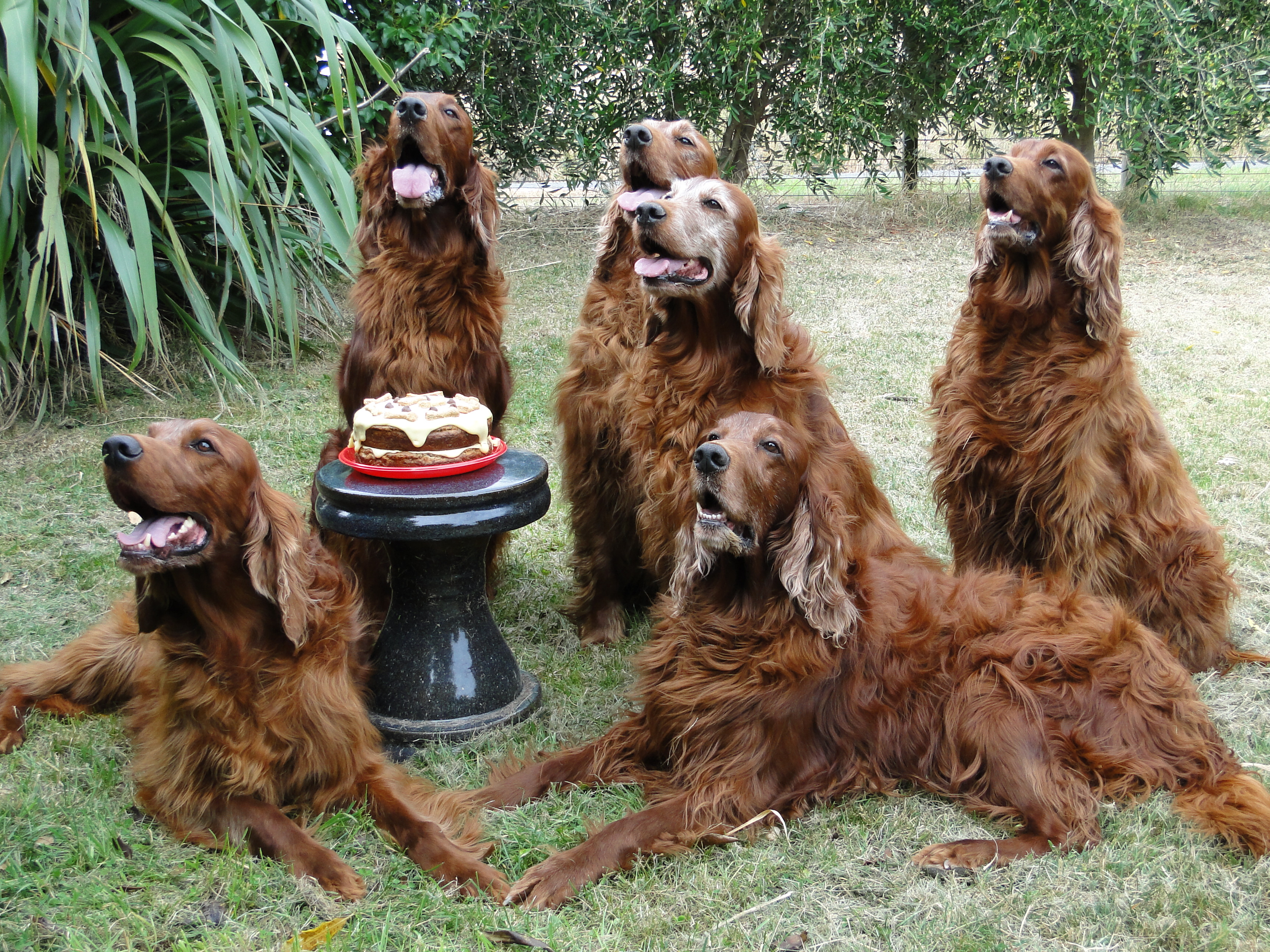
The Irish Setter, pictured here are Daisy Sheridan and family at her birthday in 2010

The Irish Setter, pictured here are Daisy Sheridan and family at her birthday in 2010

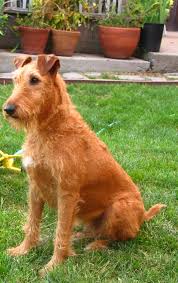
Irish Terrier

The Irish Terrier

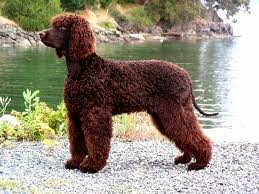
The Irish Water Spaniel

The Irish Water Spaniel

The Irish Wolfhound

The Irish Wolfhound

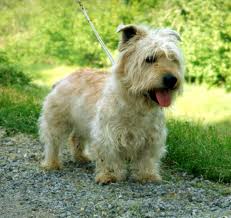
The Glen of Imaal Terrier

The Glen of Imaal Terrier

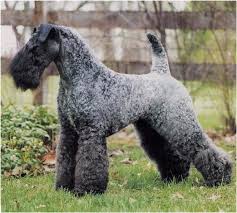
The Kerry Blue Terrier

The Kerry Blue Terrier

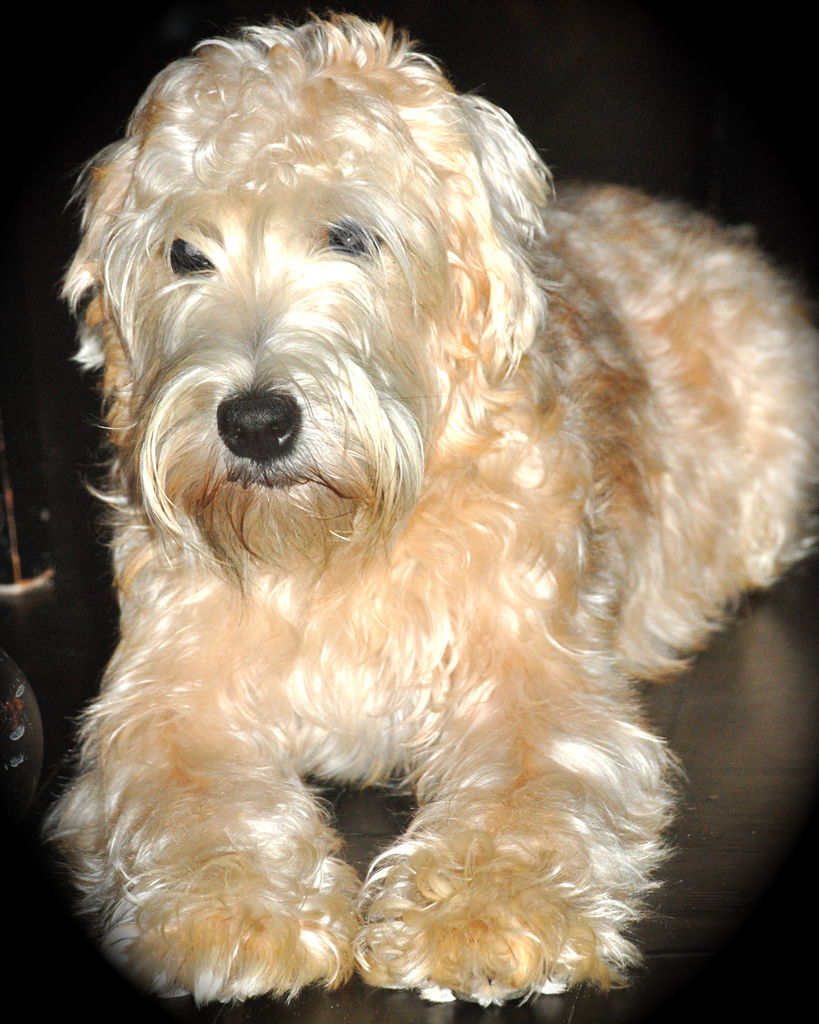
The Soft-coated Wheaten Terrier

The Soft-coated Wheaten Terrier

Kathleen Crisley, specialist in dog massage, rehabilitation and nutrition/food therapy, The Balanced Dog, Christchurch, New Zealand

The case of the missing dog statue

Have you seen this statue?

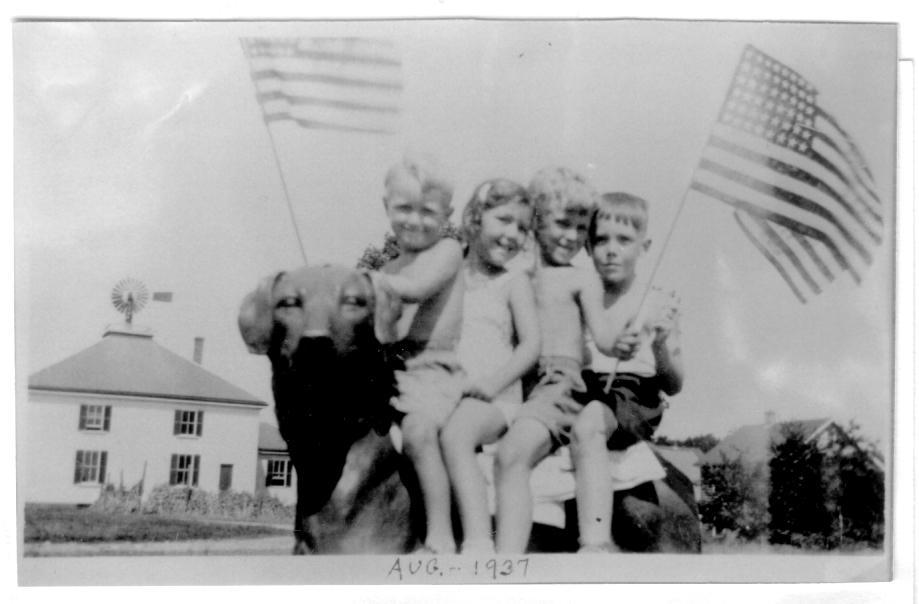
The statue in 1937.  Photo by Oakes Plimpton in the book ”Robbins Farm Park, Arlington, Massachusetts: A Local History"

The statue in 1937. Photo by Oakes Plimpton in the book ”Robbins Farm Park, Arlington, Massachusetts: A Local History”

Robbins Farm Park in Arlington, Massachusetts is interested in having its dog statue returned.  It was last seen in about 1950, when the old family farmhouse on the land was demolished.

The group Friends of Robbins Park is putting out an APB (all points bulletin) on the statue, which may have been adopted by someone who was part of the demolition crew.  It could be lingering in a junk yard, buried under years of debris.  No one  is sure.

The statue was formerly installed on a hill at Robbins Farm Park, which offers a great view of the Boston skyline. Children were often photographed on the statue, such as this photo from 1937.

If you can help solve the case of the missing statue, contact the Friends of Robbins Farm Park at 781-646-7786.

Source:  The Boston Globe

Understanding your dog’s fear of noise

Researchers from the University of Bristol School of Veterinary Sciences have investigated the occurrence of anxiety from exposure to noise and the risk factors for these behaviours.

Almost half of the owners who were interviewed reported that their dog showed at least one behavioural sign typical of fear when exposed to noises such as fireworks, thunder and gunshots, even though only a quarter had reported their dog as ‘fearful’ of noises.

scared dog of fire works

This suggests that while owners are aware of their pet’s behavioural response when exposed to a loud noise, they do not necessarily recognise this as being indicative of fear or anxiety.

And when owners don’t recognise anxiety, they don’t seek help for it.  Less than one-third of dog owners sought help for their dog’s anxiety.

The most commonly reported behavioural signs were vocalising, trembling/shaking, hiding, and seeking the comfort of people.  Since trembling and shaking are human responses to fear and anxiety, it seems like these behaviours were recognised more easily.

Other behavioural signs, such as decreased activity or salivation, did not appear to be recognised as often (possibly resulting in under-reporting). Also, signs of urination, salivation and destruction may make owners disappointed or angry, and this may over-ride the association with anxiety.

Risk of anxiety induced by noise increased with age and origin.  If dogs lived with the owner who bred them, they had a reduced risk compared to dogs purchased from the breeder by a second owner.  The researchers suggest a dog’s early life experience is an important factor in the development of fear response.

The researchers recommend there is a need for veterinarians to increase awareness among the general dog owning public about anxiety induced by loud noises and to direct them towards appropriate sources of help.  (By the way, I’ve worked with dogs using a programme of de-sensitization and relaxation techniques to help treat anxiety).

Source:  University of Bristol media statement

My dog, man magnet

Today I realised that Daisy is a man magnet.

Daisy close up January 2013

I have always known that she loves the company of men.  She prefers to have her hydrotherapy overseen by Chris (the owner of the Dog Swim Spa) rather than his female helpers.  And she definitely has a ‘thing’ for our friend Guy.  She won’t leave his side, even when she hasn’t seen him for months.

But today she proved she’s a man magnet.

This morning, we were walking down the main road and an older gentlemen who was getting back into his car in front of the ATM stopped me.  He handed me a dog biscuit saying ‘This is for your Boo Boo’  (Daisy was happy to eat it for breakfast).

Then, this afternoon, we were at the Styx Mill Dog Park with lots of families and dogs around.  Daisy took a liking to one couple and the husband in particular, a man in his late 50s.   Before I know it, he’s down on one knee in front of Daisy giving her this great big hug and then kissing her on the head!  The look on her face was pure bliss (wish I had my camera with me).

Needless to say, Daisy has had a lovely Sunday and will spend tomorrow no doubt dreaming of her male admirers.

A soapbox moment

I hate seeing ads like this one, which appeared on the intranet site of a local (major) employer:

My 11 month old Bull Mastiff / Husky Cross needs a new home.  You would have to be a special owner to take him on – last night on our walk he killed a sheep and I cannot trust him now around my children and others.If you have the time and inclination (and love) to rehouse him, I would be very happy as my only other option is to put him down (as recommended by the Council).He is a lovely looking dog, tan coloured and handsome as and generally playful and kind and reasonably obedient – he is a puppy after all and still learning.

To me, it reads:

“I’ve taken responsibility for a puppy but last night he made a mistake and I don’t want to deal with it.  Therefore, I’m looking for a kind-hearted person to take pity on the dog because if you don’t, I’m going to kill it.”

(P.S.  I’ll probably get another dog after this one is gone and if it isn’t perfect, the same thing will happen to him.)

This is NOT responsible dog ownership.  A puppy is a life commitment and dedication and training are needed.

One of the first domestic dogs revealed

DNA technology is being used to refine our understanding of when the domestic dog became a separate genetic line from wolves.

Wolf

In latest research, published in the open access journal PLoS ONE, DNA analysis on a 33,000-year old dog is reported.  DNA was extracted from a tooth.

The analyses show that the dog, from the Altai region which is east of Kazakhstan and north of China and Mongolia, is more closely related to modern dogs than contemporary wolves.  The research team, led by Anna Druzhkova from the Institute of Molecular and Cellular Biology in the Russian Federation, report that genetic analyses of ancient canids may help to reveal a more exact date and centre of domestication for the dog.

While it is widely accepted that the dog domestication predates the beginning of agriculture (about 10,000 years ago), no one can be sure when the genetics of wolves and domestic dogs began to diverge.

Source:  PLoS ONE