Category Archives: Dogs

What we share with our dogs

We all know that we share love with our dogs.  But microbes?
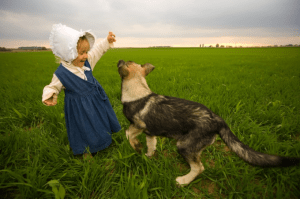
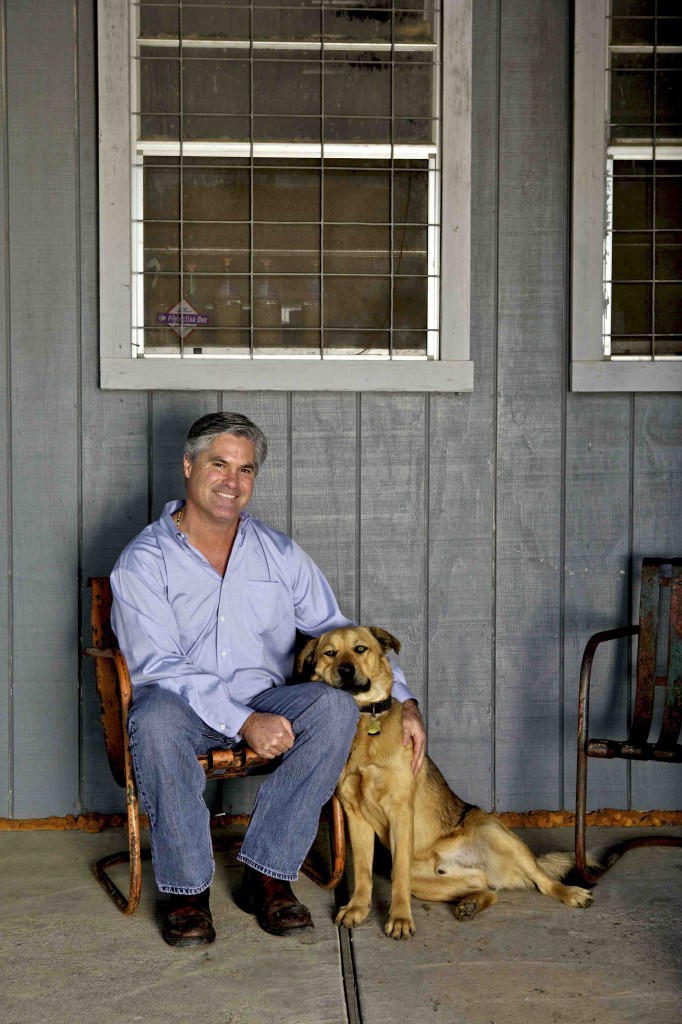
A new CU study indicates parents are more likely to share bacteria with their dogs than their kids,  a finding with biomedical implications. Photo courtesy Natural Resources Conservation Services

A new study indicates parents are more likely to share bacteria with their dogs than their kids. Photo courtesy Natural Resources Conservation Services

Researchers at the University of Colorado Boulder have looked at the types and transfer modes of microbes from the guts, tongues, foreheads and palms (or paws) of members of 60 American families, including dogs.  They found that humans shared more microbes with their dog than their own children.

The team swabbed various parts of the body to obtain microbial samples on  couples, children and dogs.  For humans, the team looked at the tongue, forehead, right and left palm and fecal samples to detect individual microbial communities. Dogs were sampled similarly, except that fur was sampled instead of skin on the forehead and all four paws were swabbed for bacteria in the absence of canine palms.

“One of the biggest surprises was that we could detect such a strong connection between their owners and pets,” said Associate Professor Rob Knight, the study’s leader.

The micro-organisms humans carry around have been linked to a broad spectrum of diseases ranging from malnutrition and obesity to diabetes, asthma and depression.  “There is mounting evidence that exposure to a variety of environmental sources of microbes can affect long-term health, findings known as the ‘hygiene hypothesis,’ ” said doctoral student Se Jin Song.

Proposed by British epidemiologist Richard Strachen in 1989, the hypothesis is that children who have had a lack of exposure to bacteria and micro-organisms might be more prone to getting sick because many microbes have co-evolved with people to be beneficial.

Dogs were a key part of this research, said Knight.  “Since so many people consider their pets truly a part of the family, it seemed appropriate to include them in a study involving family structure.”

The results of the study have been published in the journal eLIFE.

Source:  University of Colorado at Boulder media statement

NutriScan

Veterinarian Dr Jean Dodds is the inventor of patented NutriScan, a saliva test for food intolerance and sensitivities.

Many people confuse food allergy with intolerance.  Intolerances are the third most common disorder found in dogs and symptoms can include itchy skin or irritable bowel problems.   When people seek out my advice on nutrition, it is often because they know their dog is having a reaction to their food.   Sometimes, picking the culprit is easy (it depends on what the core diet is in the first place), but in others, there appears to be multiple ingredients that are the offenders.

Enter NutriScan, which tests for intolerances to 22 different food ingredients.

Food allergy is an immediate reaction mediated by production of IgE and IgG antibodies. Food sensitivity and intolerance, by contrast, measures a more delayed body response to offending foods by measuring production of IgA and IgM antibodies primarily in mucosal secretions from the bowel.

NutriScan is split into two test panels, so you can order one or both:

Panel 1:                         Panel 2:
Beef                               Chicken Eggs
Corn                               Barley
Wheat                            Millet
Soy                                 Oatmeal
Cow’s Milk                    Salmon
Lamb                             Rabbit
Venison/Deer               Rice
Chicken                         Quinoa
Turkey                            Potato
White Fish                     Peanut/Peanut Butter
Pork                                Sweet Potato

Dr. Dodds recommends that dogs are tested annually because canine food tolerances and intolerances change over time.

I’m pleased to be able to offer this testing to my clients, with NutriScan test kits on hand and ready to be sent to the United States once we take the saliva sample.  Within a week of ordering my test kit supply, my first canine saliva sample is on its way.

Sometimes, kisses are not allowed

When this happens at our house, I say ‘There will be no kisses for the rest of the day!’

Poop cicles

Travelling through LAX? Meet the PUPS!

Los Angeles International Airport (LAX) is known for its frantic pace and passenger volumes.  While it can be an exciting place, it can also be stressful.

Dogs are about to make this airport a whole lot better!

PUPS, Pups Unstressing Passengers, was launched last week.  This new programme involves trained dogs and their volunteer handlers who will wander throughout the gate and departure areas to visit with passengers.  They’ll provide comfort as well as be knowledgeable about the airport.

Each volunteer had a 4-hour classroom session to enable them to be familiar with the airport, the layout of airlines, and operational procedures.

This YouTube video provides an overview of the programme, including the collectible trading cards that will be available portraying each dog’s photo!

Can’t wait to travel through LAX on my next trip!  (And maybe, for those of us traveling from New Zealand, San Francisco’s airport will start a similar initiative.)

Do sterilized dogs live longer?

New research from the University of Georgia suggests that neutering procedures could add to the length of a dog’s life and alter the risk of specific causes of death.

Looking at a sample of 40,139 death records from the Veterinary Medical Database from 1984-2004, researchers determined the average age at death for intact dogs—dogs that had not been spayed or neutered—was 7.9 years versus 9.4 years for sterilized dogs.

These figures may seem low considering how many pets live much longer, but the researchers noted that the life spans would be lower than those seen more widely because their sample was taken from dogs seen at teaching hospitals (so other things would have been going on and the study population would have had more sick animals).

The researchers stand behind their results – that the difference between neutered and intact is real.

Dr. Kate Creevy, an assistant professor of internal medicine at the College of Veterinary Medicine. “The question that raises is why would you die younger if you have offspring?”

For the first time, researchers have been able to measure costs of reproduction in terms of the actual causes of death, finding that the causes of death differed between sterilized and intact dogs. Dogs who had undergone a gonadectomy (a spay or castration) were more likely to die from cancer or autoimmune diseases. Those in the sample who still had functional reproduction systems at death were more likely to die from infectious disease and trauma.

“Intact dogs are still dying from cancer; it is just a more common cause of death for those that are sterilized,” said Jessica Hoffman, a UGA doctoral candidate in the Franklin College of Arts of Sciences who co-authored the study.

Some of the reproductive hormones, particularly progesterone and testosterone, she said, could suppress the immune system, explaining why there is an increased risk of infection among dogs that have been sterilized.

The full journal article, published in PLoS One, can be viewed here.

Source:  University of Georgia media statement

The ‘miracle’ of weight loss

I caught up with an acquaintance this week who had asked me a while ago for a recommendation of a vet who could give her a second opinion on her dog’s heart condition.  Her Chihuahua was on many different medications for heart problems and she was not happy with her health or progress.

So I asked her how things were going…and she told me that she had managed to get her dog off all medications.

The miracle cure?  ‘We’ve taken one kilo (2.2 pounds) off of her’

Wow.  A Chihuahua is a very small dog and so a kilo of extra weight is definitely classed as obesity.  Here’s what an obese Chihuahua looks like:

An obese Chihuahua

An obese Chihuahua

It is in your dog’s best interest to manage their weight and keep it in the healthy range.  This is usually achieved with a combination of exercise and a proper diet.

Obesity shortens lives!

Luther and Ruthie go to Boston

Luther and Ruthie are two comfort dogs provided by Lutheran Church Charities

Luther and Ruthie are two comfort dogs provided by Lutheran Church Charities

Golden Retrievers trained as comfort dogs have arrived in Boston to help with the traumatised survivors of the Boston Marathon bombings.

Just as they did in Newtown, Connecticut last year, the dogs and their handlers will visit with survivors and their families to engage them in conversation, to give them a hug and a cuddle and to provide comfort.

Luther and Ruthie visit with a survivor before surgery for a leg injury (courtesy Lutheran Church Charities)

Luther and Ruthie visit with a survivor before surgery for a leg injury (courtesy Lutheran Church Charities)

The comfort dogs show us (again) the special skills that dogs have to provide solace and they also prove that dogs can be socialised and trained to enter public places without causing problems.  The volunteers from Lutheran Church Charities give of their time freely.

Thank you!

Comfort dogs in Boston

To Boston, with love

For all our friends and family in Boston, this Boston Terrier is for you – we are thinking of you and join you  in your grief.

boston-terrier-dogs

Anatomy 101: brachycephalic dogs

I was at a lunch last week and I was talking about brachycephalic dogs.  One fellow asked, ‘brachy what?’

Brachycephalic dogs are dogs with a short muzzle and generally flat face.   “Brachy” means “shortened” and “cephalic” means “head.”

These features make them very cute. But, this head structure doesn’t leave a lot of room for the nasal passages and palate, which are parts of the anatomy that help breathing.

Most of us who either own a brachycephalic dog or who have seen one at the dog park or elsewhere can identify the ‘brachy snort’ – the sound of a dog that is struggling to breathe.

We all know that dogs help to control their temperature on hot days through panting.  Unfortunately, brachycephalic dogs are inefficient panters and so these dogs are more susceptible to heat stroke.  They are generally not good outdoor dogs during summer because of this.

Some dogs also suffer from brachycephalic airway syndrome.  This syndrome is actually a group of upper airway abnormalities.  Brachycephalic syndrome is also known as congenital obstructive upper airway disease and in extreme cases, a veterinary surgeon may do surgery to help correct the abnormalities.

The abnormalities associated with the syndrome include:

  • stenotic nares, which are nostrils that are narrowed
  • elongated soft palate, which is a soft palate that is too long for the mouth and so the length partially blocks the entrance to the back of the throat
  • a hypoplastic trachea, an abnormally narrow windpipe
  • nasopharyngeal abnormalities,  the bone in the dog’s nasal cavity grows incorrectly and this can stop air flow.  This bone helps direct airflow and also helps with heating and humidifying inhaled air.

Because of their breathing difficulties, a brachycephalic breed must be fit and trim no matter what their life stage.  Obesity is a real threat to these dogs.

Since breathing difficulties become worse with strenuous exercise, it’s critically important to balance the dog’s caloric intake with their exercise and look for small opportunities to exercise the dog without causing stress.

Common brachycephalic dog breeds include:

·         English Bulldog

·         Pug

·         Shih Tzu

·         Pekingese

·         Boston Terrier

·         Cavalier King Charles Spaniel

·         Shar Pei

·         Lhasa Apso

Good golly, Miss Molly

Andrew Neil, co-host of the BBC’s This Week, has started bringing his Golden Retriever, Miss Molly, to the set.  She’s sat on the sofa next to guests on the late-night political commentary programme.  She even had a snooze in the lap of guest David Starkey.

Miss Molly naps in David Starkey's lap (photo courtesy of the BBC)

Miss Molly naps in David Starkey’s lap (photo courtesy of the BBC)

Taking Miss Molly to the set opens up a whole new category of dog-friendly workplaces and it’s great to see the dog welcomed onto a televised show.  In my opinion, it helps to create awareness of dog-friendly workplaces.

Photo courtesy of the BBC

Photo courtesy of the BBC

Neil has suggested that Miss Molly might become a bit of a fixture on the show, although not a permanent one. “We probably broke every health and safety rule in the book but she is very well-behaved.”

Miss Molly roams around the set as guests are interviewed (photo courtesy of the BBC)

Miss Molly roams around the set as guests are interviewed (photo courtesy of the BBC)

Source:  The Independent