Category Archives: research

Rare human disease found in dogs

Lung disease

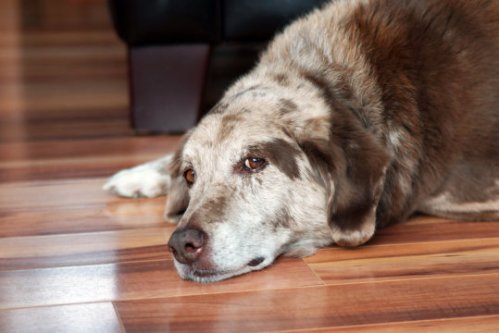
A rare, severe form of pulmonary hypertension, which up until now, has only been classified as a human lung disease, has also been discovered in dogs according to a Michigan State University study. (Stock image) Credit: © Sylvie Bouchard / Fotolia

A rare, severe form of pulmonary hypertension, which up until now, has only been classified as a human lung disease, has also been discovered in dogs according to a Michigan State University study.

“Our research is the first to document the existence of pulmonary veno-occlusive disease, or PVOD, in dogs,” said Kurt Williams, the lead author of the study and an expert in respiratory pathology in MSU’s College of Veterinary Medicine. “PVOD is considered one of the most severe forms of pulmonary hypertension.”

The study is published in the journal Veterinary Pathology.

The number of pulmonary hypertension, or PH, cases reported in the United States is low, affecting 15 to 50 people per million each year. PVOD is diagnosed in only about 10 percent of PH cases where no other cause of the disease has been determined. Unfortunately, there are very few effective treatment options for PVOD and a lung transplant often becomes the best choice.

“PVOD might be more common in dogs than in people, but this has yet to be determined and needs to be looked at further,” Williams said.

Pulmonary hypertension develops because of abnormal blood vessels in the lungs, which makes it harder for the heart to push blood through and provide oxygen to the rest of the body. In cases of PVOD, the small veins in the lungs become blocked, increasing pressure in these blood vessels, and ultimately causing heart failure.

“The same process happens in canines,” Williams said. “These dogs also come in with similar symptoms as humans, yet because subtle changes in health may not be recognized as quickly in dogs, death can occur quickly once the animal is seen by a veterinarian.”

Symptoms include cough, increased rate of breathing, respiratory distress, loss of appetite and chronic fatigue. Fatal progression of the disease in humans can last up to two years.

“PVOD is a poorly understood disease not just because it’s so rare, but also because there’ve been no other animals known to have the disease,” Williams said. “Our finding changes things.”

Williams said that the discovery could be important for human medicine because the canine disease may serve as a model for human PVOD.

“It’s cases like this that help to remind us how important veterinary medicine is to medicine in general,” he said. “Our colleagues in the human medical community are becoming much more aware of the many diseases shared by our respective patients and how together we can learn from each other.”

Source:  Michigan State University media release

Will computers replace dog trainers?

North Carolina State University researchers have developed and used a customized suite of technologies that allows a computer to train a dog autonomously (without human involvement), with the computer effectively responding to the dog based on the dog’s body language.

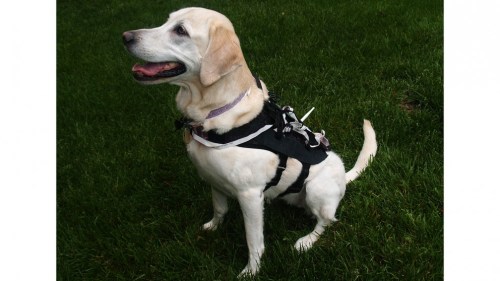
“Our approach can be used to train dogs efficiently and effectively,” says David Roberts, an assistant professor of computer science at NC State and co-author of a paper on the work. “We use sensors in custom dog harnesses to monitor a dog’s posture, and the computer reinforces the correct behavior quickly and with near-perfect consistency.”

Dog training with computers

“Because the technology integrates fundamental principles of animal learning into a computational system, we are confident it can be applied to a wide range of canine behaviors,” says Alper Bozkurt, an assistant professor of electrical and computer engineering and co-author of the paper. “For example, it could be used to more quickly train service dogs. Ultimately, we think the technology will be used in conjunction with human-directed training.”

The dog harness fits comfortably onto the dog and is equipped with a variety of technologies that can monitor the dog’s posture and body language. Each harness also incorporates a computer the size of a deck of cards that transmits the sensor data wirelessly.

For the current study, the researchers wrote an algorithm that triggered a beeping sound and the release of dog treats from a nearby dispenser whenever the dog’s harness sensors detected that the dog went from standing to sitting.

The researchers had to ensure that the reinforcement was given shortly after the desired posture was exhibited, and also ensure that rewards were only given for the correct posture. This required a trade-off. If the algorithm ran long enough to ensure the correct posture with 100 percent certainty, the reinforcement was given too late to be effective for training purposes. But if the reinforcement was given immediately, there was a high rate of rewarding the wrong posture.

To address this, the researchers worked with 16 volunteers and their dogs to optimize the algorithm, finding the best possible combination of speed and accuracy. The researchers then compared the algorithm’s timing and accuracy to that of an expert human trainer.

The algorithm was highly accurate, rewarding the appropriate behavior 96 percent of the time. But the human trainer was better – with a 100 percent accuracy rate.

However, while the average response time was about the same for both algorithm and trainer, there was a lot of variation in the time of response from the trainer. The algorithm was incredibly consistent.

“That variation matters, because consistency is fundamentally important for all animal training,” Roberts says.

“This study was a proof of concept, and demonstrates that this approach works,” Bozkurt says. “Next steps include teaching dogs to perform specific behaviors on cue, and integrating computer-assisted training and human-directed training for use in various service dog applications.”

“In the long term, we’re interested in using this approach to animal-computer interaction to allow dogs to ‘use’ computers,” Roberts says. “For example, allowing an explosive detection dog to safely and clearly mark when it detects components of a bomb, or allowing diabetic alert dogs to use their physical posture and behaviors to call for help.”

Source:  North Caroline State University media release

Senior adults see benefits from dog ownership

The Centers for Disease Control and Prevention (USA) recommends that adults of all ages should engage in 150 or more minutes of moderate physical activity per week. Among adults 60 years of age or more, walking is the most common form of leisure-time physical activity because it is self-paced, low impact and does not require equipment.

Johnson and Dog - senior dogs

Rebecca Johnson and her team determined that older adults who also are pet owners benefit from the bonds they form with their canine companions. Photo by University of Missouri

Researchers at the University of Missouri have determined that older adults who also are pet owners benefit from the bonds they form with their canine companions. Dog walking is associated with lower body mass index, fewer doctor visits, more frequent exercise and an increase in social benefits for seniors.

“Our study explored the associations between dog ownership and pet bonding with walking behavior and health outcomes in older adults,” said Rebecca Johnson, a professor at the MU College of Veterinary Medicine, and the Millsap Professor of Gerontological Nursing in the Sinclair School of Nursing. “This study provides evidence for the association between dog walking and physical health using a large, nationally representative sample.”

The study analyzed 2012 data from the Health and Retirement study sponsored by the National Institute on Aging and the Social Security Administration. The study included data about human-animal interactions, physical activity, frequency of doctor visits and health outcomes of the participants.

“Our results showed that dog ownership and walking were related to increases in physical health among older adults,” said Johnson, who also serves as director of the Research Center for Human-Animal Interaction at MU. “These results can provide the basis for medical professionals to recommend pet ownership for older adults and can be translated into reduced health care expenditures for the aging population.”

Results from the study also indicated that people with higher degrees of pet bonding were more likely to walk their dogs and to spend more time walking their dogs each time than those who reported weaker bonds. Additionally, the study showed that pet walking offers a means to socialize with pet owners and others.

Retirement communities also could be encouraged to incorporate more pet-friendly policies such as including dog walking trails and dog exercise areas so that their residents could have access to the health benefits, Johnson said.

Source:  University of Missouri media release

Eyesight in the older dog

The eyesight in our dogs changes with age.

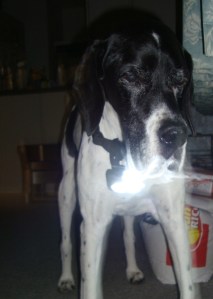
English Pointer with Puplight

Researchers based at the Nestlé Purina Research Center in Missouri have discovered that our dogs become more near-sighted as they age.  Their results were published in the journal PLoS One.

This investigation used an instrument called an autorefractor to measure the dogs’ eyesight in indirect and direct lighting conditions. The study involved nine Beagles ranging in age from 1 to 14 years.   Before entering the study, the dogs were examined to confirm that none of them had cataracts.

Measurements were taken on three different days of the week for a period of six weeks.

The researchers found a remarkable difference between the younger and older dogs.  The older dogs had a much-reduced ability to see at longer distances (far-sightedness) compared to the younger dogs.  Younger dogs were also able to make larger accommodation changes from indirect light to direct light conditions, indicating a more flexible lens.

Humans are the opposite in terms of length of sight.  As we age it can become more difficult to read and see things at shorter distances whereas our ability to see at distances is often not affected (although some older people do have difficulties adjusting to night and low-light conditions, just as the dogs in this study did).

So if your dog is getting older and you notice that they can’t pick up on your body language and signals, there’s a physical reason for it.

Through my own experience working with older dogs, I recommend using a light that helps your senior dog adjust to low-lighting conditions.  See my post on the PupLight, for example.

Kathleen Crisley, specialist in dog massage, rehabilitation and nutrition/food therapy, The Balanced Dog, Christchurch, New Zealand


Words we say to our dogs and other things

Yet more research on the human-animal bond.  This time the research was based at Barnard College’s Dog Cognition Lab.

Researchers Alexandra Horowitz and Julie Hecht asked members of the public to send them videos of playtime with their dogs.

Dog with frisbee

They received 187 videos from dog owners in 19 different countries and watched them all, looking for patterns in human behaviour and the dog’s responses.

For example, they created a list of the top 35 words owners used with their dogs:

List of words dog owners use

The research team also noticed gender differences.  Female owners touch their dogs more when at play; half of male owners didn’t touch their dogs at all.

There is a practical application for this research (although I do agree that it sounds like a fun job).  There is a growing interest in helping to train dogs as assistance dogs and understanding how humans and dog interact may help to refine training techniques.

The research has been published in the journal Animal Cognition.

Source:  Discover magazine

Cross-breeding to eradicate Chiari syndrome

In a new study published in the journal PLOS ONE, scientists from the University of Surrey, working with an experienced breeder in the Netherlands, examined how the skull and brain of toy dogs change when a Brussels Griffon with Chiari-like malformation is crossed with an Australian Terrier.  The succeeding hybrid puppy is then back crossed to a Brussels Griffon to give some of the features of the Brussels Griffon, but keeping the longer skull of the Australian Terrier.

Griffon and cross breed

Second-generation backcross and purebred Brussel Griffon Sire Photo credit: Henny van der Berg

The results from the study showed it is possible to breed a dog which had the external features of a short-nosed Brussels Griffon and reduce the risk of Chiari malformation, a debilitating condition found in toy dogs and affecting 1 in 1,280 humans.  The disease is characterised by premature fusion of skull bones forcing parts of the brain to push through the opening in the back of the skull causing fluid filled cavities to develop in the spinal cord. Chiari malformation causes headaches, problems with walking or even paralysis and has become prevalent in some toy breed dogs as a result of selective breeding.

The breeder, Henny van der Berg proposed the project idea after an accidental mating between two of her dogs.  The four-year study analysed five traits on magnetic resonance images (MRI) scans and how they changed generation by generation in the family of 29 dogs.  Using a careful selection of head shape and MRI scans over two generations, the findings revealed it was possible to breed a dog which had the external features of a Brussels Griffon, but is less susceptible to Chiari malformation.

“This is a true collaboration with breeders and researchers working together and using their expertise to improve the health of dogs,” said Dr Clare Rusbridge from the University of Surrey.

“Our study investigated how the characteristics of this disease is inherited in the family.  Such knowledge could help in tackling this debilitating disease in toy dog breeds.  We hope our research will help develop more sophisticated ways of screening and improve breeding guidelines by creating robust breeding values.”

The team at the University of Surrey is now collaborating with geneticists at the University of Montreal, and correlating the skull and brain traits visualised on magnetic resonance images with the dog genome. This information will then be translated to humans.

Source:  University of Surrey media release

My other posts about Chiari malformation include:

Homeless youth with pets

Homeless youth can benefit from owning pets but not without a few challenges, according to a new study from the University of Guelph.

Led by researchers from the Ontario Veterinary College (OVC), the team found that homeless youth with pets are less likely to engage in potentially harmful behaviour, more likely to open up to veterinarians about their personal challenges and generally less depressed.

Homeless youth

(Photo courtesy Community Veterinary Outreach)

However, the team found that pets can make it difficult for their owners to obtain social services.

The study was published today in the journal Anthrozoӧs. 

Its findings mirror what researchers had been hearing anecdotally, said Prof. Jason Coe, Population Medicine.

“Those homeless youth with pets don’t want to risk incarceration or anything that would prevent them from being with their pets, so they are less likely to abuse alcohol or use hard drugs,” said Coe. He studies the human-animal bond and communication in veterinary care.

“We also found those without pets are three times more likely to be depressed, though we have not yet determined if this is directly relatable to having a pet.”

Among major challenges, he said, “Many shelters do not allow pets, so these youth may be limited in where they can sleep.”

Many youth are very open to discussing their struggles and issues with veterinarians, said lead author Michelle Lem, an OVC graduate.

She is the founder and director of Community Veterinary Outreach (CVO), a volunteer group providing mobile veterinary services to homeless people in Toronto, Hamilton, Kitchener-Waterloo, Guelph and Ottawa.

“We’re able to collaborate with public health and social workers as they attempt to reach these marginalized people, essentially using the human-animal bond and veterinary care as a gateway to provide accessible social support and healthcare,” Lem said.

“So many of these youth have lost trust in people, and the animal gives them unconditional love. They will do anything for their pets, which means they are less likely to commit potentially harmful acts, but also face more challenges with accessing housing, healthcare or addiction treatment services.”

Prof. Bill O’Grady, Sociology and Anthropology, studies youth homelessness and helped design the study.

Calling for pet-friendly shelters, he said “many homeless youth are prohibited from using services offered by the shelter system because they have pets, particularly dogs. There is an opportunity here to use this information when we’re developing services and plans for young people.”

Source:  University of Guelph media release

Odorology – the science behind training scent dogs

Dog training for scent tracking

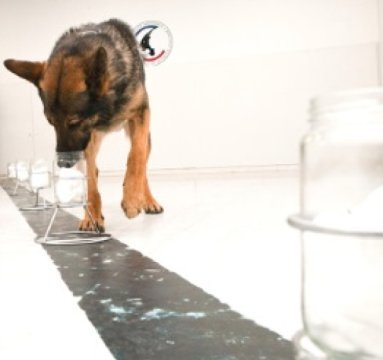
Cisko, one of the police dogs, during a scent detection test. The dog sniffs the reference scent and then smells a series of five jars containing human scents, one of which corresponds to the reference. If the dog recognizes the reference scent it lies down in front of the relevant jar; if the dog does not find a match, then it does not stop or lie down. Credit: © DGPN – SICOP

Odorology is a technique that uses specially-trained dogs to identify human scent. It is used in police investigations to establish that an individual has been at the scene of a crime. However, there is no international norm on how these dogs are trained. At the Centre de recherche en neurosciences de Lyon (CNRS/Université Claude Bernard Lyon 1/Inserm), researchers specializing in scents and their memorization have analyzed data, provided since 2003 by the Division of the Technical and Scientific Police (DTSP, Ecully) on dog performances in scent identification tasks.

Their results show that, at the end of a 24-month training program, the dogs are able to recognize the smell of an individual in 80-90% of cases and never mistake it for that of another. These findings validate the procedures that are currently in use and should convince the international community of the reliability of this method.

Odorology, or the science of smells, is a method of identifying human scents. It has been used in France since 2003 in police investigations to establish that an individual has been present at a crime scene. The method is based on the fact that each person has their own scent and relies on the powerful canine sense of smell (which can be 200 to 10,000 times more sensitive than that of a human being1). It involves a long period of dog training.

This technique consists in using a specially-trained dog to compare a human scent collected from an object found at a crime scene with scents from several people, including that of a suspect or victim. As the results of these tests are of critical importance for investigators, they need to be obtained through viable and reproducible methods. However, there are no internationally recognized norms for the training of these dogs or for their inclusion in investigations—hence the occasional reluctance to treat their evidence as proof. By analyzing results collected since 2003 at the Division of the Technical and Scientific Police (DTSP, Ecully), researchers from the Centre de recherche en neurosciences de Lyon have succeeded in demonstrating the viability of the technique used.

During basic training, the German and Belgian shepherd police dogs must learn to make the link between two scents from the same individual through the completion of increasingly complex tasks. By the end of this training, the dogs are able to carry out identification exercises during which they sniff a reference human scent and then compare it with five different human odors, one of which is the reference scent. When a dog matches the scent in the jar to the reference one (which it shows by lying down in front of the correct jar) it is rewarded with a treat or a game. The human odors may consist of traces collected from an object that someone has touched or of a scent collected directly from a person.

The analysis of the data obtained with the 13 DTSP dogs since 2003 shows that after they have learned the task’s principles, 24 months of regular training is necessary for stable and optimal performances. At the end of the first twelve months, the dogs no longer made any recognition errors, i.e., they did not confuse the scent of one person with that of another. Furthermore, their olfactory sensitivity increased significantly over the training period: on average, after two years, the dogs managed to recognize two scents from the same person in 85% of cases. The remaining 15% of cases in which no match was obtained, were mostly the result of poor scent sampling rather than poor recognition.

The researchers also found that German shepherds were better than Belgian shepherds.

At the end of their basic training, the dogs are able to participate in criminal cases and receive continuing training throughout their lives. In practice, each identification test is carried out by at least two dogs. Additionally, each dog performs at least two tests with the same panel of scents: the collected scent is presented either as a sample to be sniffed at the start of the task, or in one of the jars that the dog sniffs successively. Between 2003 and 2016, odorology was used in 522 cases at the SDPTS and helped to resolve 162 cases.

In these criminal cases, the sampled scents were only a few hours or days old. The researchers now want to study how the dogs perform on older scents. Scent samples can in fact be stored in scent libraries over several years.

Canine compulsive disorder genetics

Research led by investigators in veterinary and human medicine has identified genetic pathways that exacerbate severity of canine compulsive disorder in Doberman Pinschers, a discovery that could lead to better therapies for obsessive compulsive disorder (OCD) in people.  The discovery appears in the International Journal of Applied Research in Veterinary Medicine.

OLYMPUS DIGITAL CAMERA

A Doberman pinscher flank sucking, an example of canine compulsive behavior

“Dogs naturally suffer complex diseases, including mental disorders that are similar to those in humans. Among those is canine compulsive disorder (CCD), the counterpart to human obsessive compulsive disorder (OCD),” says the study’s first and corresponding author Nicholas Dodman, BVMS, DACVA, DACVB, professor in clinical sciences and section head and program director of animal behavior at Cummings School of Veterinary Medicine at Tufts University.

OCD is one of the world’s most common neuropsychiatric disorders, affecting an estimated 1 to 3 percent of people and listed by the World Health Organization as among the 20 most disabling diseases. OCD is often characterized by distressing thoughts and time-consuming, repetitive behaviors, while canine compulsions may include repetitive tail chasing, excessive grooming and flank and blanket sucking. Current OCD therapies are not as effective as they could be; medicinal treatment benefits only about half of all human patients.

No previously recorded study in humans or dogs has addressed the factors that drive severity in OCD and CCD.

“Genomic research on human neuropsychiatric disorders can be challenging due to the genetic heterogeneity of disease in humans,” says neurologist Edward Ginns, MD, PhD, professor of psychiatry, neurology, pediatrics and clinical pathology, and director, program in medical genetics at the University of Massachusetts Medical School and a co-author on the new study. “Canine compulsive disorder shares behavioral hallmarks, pharmacological responsiveness, and brain structural homology with human OCD, and thus is expected to be an important animal model.”

The research team compared whole genome sequencing of 70 Doberman pinschers to search for inherited factors that exacerbate CCD. Researchers identified two loci on chromosomes that were strongly correlated with severe CCD, as well as a third locus that showed evidence of association.

The locus most strongly associated with severe CCD was found on chromosome 34 – a region containing three serotonin receptor genes.

“This is particularly significant because drugs that work on the serotonin system are the mainstay treatment for OCD in humans, which demonstrates further correlation between the human and animal models,” says Dodman.

The second locus significantly correlated with severe CCD was on chromosome 11, the same chromosome that contains a gene thought to increase the risk of schizophrenia in humans. This discovery, along with suggestive evidence found on chromosome 16 linking CCD to stress tolerance, may also be relevant to the pathophysiology of OCD, according to the study authors. “Comparative genomics is a particularly attractive approach to reveal the molecular underpinnings of disease in inbred animals with the hope of gaining new insights into these diseases in dogs and humans,” says Ginns.

“If the canine construct is fully accepted by other OCD researchers, this spontaneously-occurring model of the condition in humans, right down to the biological pathways involved, could help point the way to novel and more effective treatments for such a debilitating condition,” Dodman says.

Source:  Tufts Now media release

How dogs sense the Earth’s magnetic field

The perception of the Earth’s magnetic field is used by many animal species for orientation and navigation. A magnetic sense is found in some insects, fish, reptiles, birds and mammals, whereas humans do not appear to be able to perceive the Earth’s magnetic field.

The magnetic sense in migratory birds has been studied in considerable detail: unlike a boy scout’s compass, which shows the compass direction, a bird’s compass recognizes the inclination of the magnetic field lines relative to the Earth’s surface. Surprisingly, this inclination compass in birds is linked to the visual system as the magnetic field activates the light-sensitive molecule cryptochrome 1a in the retina of the bird’s eye. Cryptochrome 1a is located in the blue- to UV-sensitive cone photoreceptors and only reacts to the magnetic field if it is simultaneously excited by light.

dogs and magnetic field

Dogs and some primates can sense the earth magnetic field with the help of molecules in their eyes. © L. Peichl

Cryptochrome-distribution among mammals

Together with colleagues from the Ludwig-Maximilians-University Munich, the Goethe University Frankfurt, and the Universities of Duisburg-Essen and Göttingen, Christine Nießner and Leo Peichl from the Max Planck Institute for Brain Research in Frankfurt investigated the presence of cryptochrome 1 in the retinas of 90 species of mammal. Mammalian cryptochrome 1 is the equivalent of bird cryptochrome 1a. With the help of antibodies against the light-activated form of the molecule, the scientists found cryptochrome 1 only in a few species from the carnivore and primate groups.

As is the case in birds, it is found in the blue-sensitive cones in these animals. The molecule is present in dog-like carnivores such as dogs, wolves, bears, foxes and badgers, but is not found in cat-like carnivores such as cats, lions and tigers.

The active cryptochrome 1 is found in the light-sensitive outer segments of the cone cells. It is therefore unlikely that it controls the animals’ circadian rhythms from there, as this control occurs in the cell nucleus which is located a considerable distance away. It is also unlikely that cryptochrome 1 acts as an additional visual pigment for colour perception. The researchers thus suspect that some mammals may use the cryptochrome 1 to perceive the Earth’s magnetic field. In evolutionary terms, the blue cones in mammals correspond to the blue- to UV-sensitive cones in birds. It is therefore entirely possible that the cryptochrome 1 in mammals has a comparable function.

Observations of foxes, dogs and even humans actually indicate that they can perceive the Earth’s magnetic field. For example, foxes are more successful at catching mice when they pounce on them in a north-east direction. “Nevertheless, we were very surprised to find active cryptochrome 1 in the cone cells of only two mammalian groups, as species whose cones do not contain active cryptochrome 1, for example some rodents and bats, also react to the magnetic field,” says Christine Nießner.

Many fundamental questions remain open in the research on the magnetic sense. Future studies will have to reveal whether the cryptochrome 1 in the blue cones is also part of a magnetic sense in mammals or whether it fulfils other tasks in the retina.

Source:  Max-Planck Institute for Brain Research media release