Category Archives: research

The ancestral roots of your dog

A genetic study by Peter Savolainen, a researcher in evolutionary genetics at KTH Royal Institute of Technology in Stockholm, has found that dog breeds from North and South America have Asian ancestry.

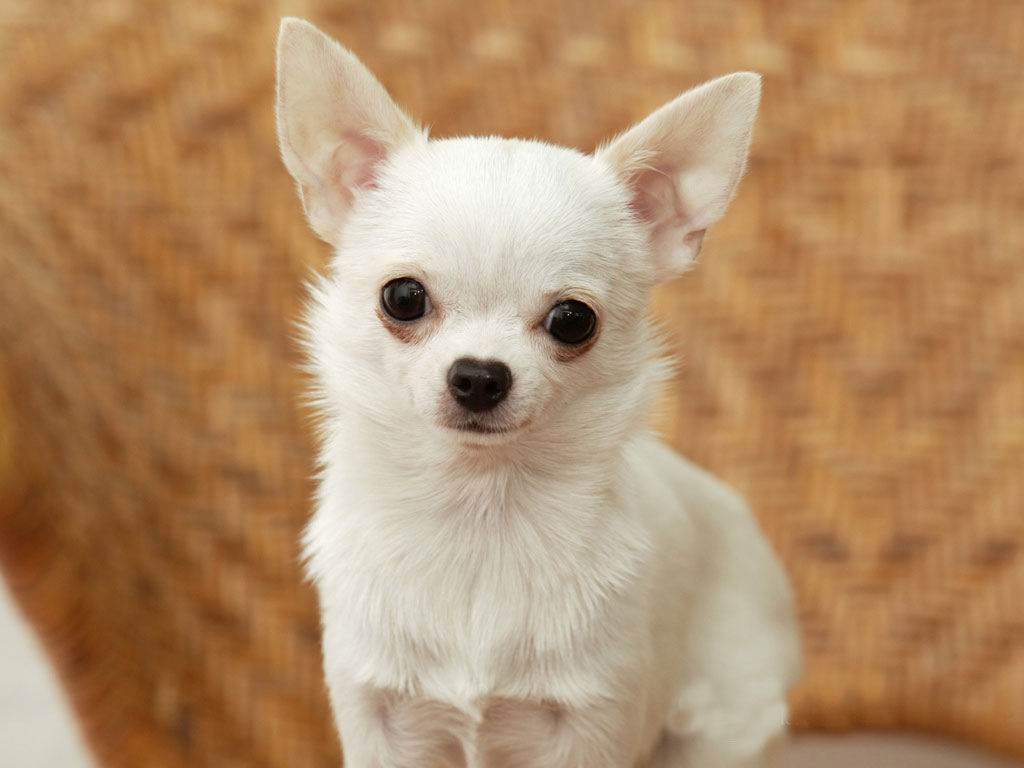
The Chihuahua definitely has Mexican heritage

The Chihuahua definitely has Mexican heritage

The native breeds have 30 percent or less modern replacement by European dogs.  It had been thought, prior to this study, that when Europeans settled in the American continent their dog breeds successively replaced the genetics of the native breeds.

Savolainen’s research group, in cooperation with colleagues in Portugal, compared mitochondrial DNA from Asian and European dogs, ancient American archaeological samples, and American dog breeds, including Chihuahuas, Peruvian hairless dogs and Arctic sled dogs.

They traced the American dogs’ ancestry back to East Asian and Siberian dogs, and also found direct relations between ancient American dogs and modern breeds.

The research confirmed conclusively that the modern day Chihuahua has Mexican roots.  The breed shares a DNA type uniquely with Mexican pre-Columbian samples.

The team also analysed stray dogs, confirming them generally to be runaway European dogs; but in Mexico and Bolivia they identified populations with high proportions of indigenous ancestry.

Source:  AlphaGalileo Foundation news release

Your dog understands ‘Just Do It’

New research helps to confirm the cognitive abilities of our dogs.

Claudia Fugazza and Adám Miklósi, from Eötvös Loránd University in Hungary have shown that dogs can learn, retain and replay actions taught by humans after a short delay.   Because the dogs were able to undertake the actions after a delay (during which they were purposely distracted), the research proves that dogs have an ability to ‘encode’ and ‘recall.’

photo courtesy of Springer Select

photo courtesy of Springer Select

The study involved eight adult pet dogs who were trained by their owners with the ‘Do as I do’ method and then made to wait for short intervals (5-30 seconds) before they were allowed to copy the observed human action, for example walk around a bucket or ring a bell.

The researchers observed whether the dogs were able to imitate human actions after delays ranging from 40 seconds to 10 minutes, during which time the dogs were distracted by being encouraged to take part in other activities. The researchers were looking for evidence of the dogs’ ability to encode and recall the demonstrated action after an interval.

The tests show that dogs are able to reproduce familiar actions and novel actions after different delays ̶ familiar actions after intervals as long as ten minutes; novel tasks after a delay of one minute. This ability was seen in different conditions, even if they were distracted by different activities during the interval.

Because dogs were able to reproduce the novel actions after a delay and without earlier practice, the researchers believe that dogs have a specific type of long-term memory capability – called ‘declarative memory.’    These are memories involving facts or knowledge which can be consciously recalled.

This study is published in the journal Animal Cognition.

Source:  Springer Select media statement

Lymphomas in humans and dogs have similarities

A team of scientists from the University of North Carolina School of Medicine, North Carolina State University’s College of Veterinary Medicine and Duke University have conducted one of the first studies to directly compare canine and human B-cell lymphoma by examining molecular similarities and differences between the two species.

B-cell lymphomas are very common in both humans and dogs.

“Pet dogs get cancer the same way humans do: at similar rates, and for unknown reasons.  Like humans, dogs’ tumors are spontaneously occurring, rather than genetically created as they are in mice, so canine tumors may more accurately mimic the situation in human cancer patients. Dogs are good models to study, because it will also be possible to study shared risk factors, in the environment, for example, that might predispose both humans and dogs to get lymphoma. Our knowledge helps dogs and humans with lymphoma.” says Kristy Richards, MD, PhD, and co-author of the research which has been published in the journal Cancer Research.

“Veterinarians treating dogs for lymphoma can offer clinical trials to their owners. Clinical trials in dogs are similar to those done in humans, with safety protections in place to minimize harm.”

Molecular analyses of canine and human tumors were completed at NCSU and at UNC Lineberger. The team used gene expression profiling and found that canine B-cell lymphoma expression profiles were similar in many ways to human B-cell lymphoma, thus paving the way for future studies, including therapeutic clinical trials in dogs and humans.

Source:  UNC School of Medicine media statement

Blessed bonds between dogs and humans

This is going to come as no surprise to many of you – but research has confirmed that the owner-dog bond is similar to that of parent-child.Paw in handScientists at the University of Veterinary Medicine in Vienna (known as Vetmeduni Vienna) have studied the phenomenon known as the ‘secure base effect’ between dogs and their owners.

Human infants use their caregivers as a secure base when it comes to interacting with the environment and the researchers wanted to know if dogs found the same security with their owners.

The research team, led by Lisa Horn, examined the dogs’ reactions under three different conditions: “absent owner”, “silent owner” and “encouraging owner”. The dogs could earn a food reward by manipulating interactive dog toys.

The dogs were much less keen on working for food when their caregivers were not there than when they were. Whether an owner additionally encouraged the dog during the task or remained silent, had little influence on the dog’s level of motivation.

In a follow-up experiment, the research team replaced the owner with an unfamiliar person. The scientists observed that dogs hardly interacted with the strangers and were not much more interested in trying to get the food reward than when the stranger was not there. The dogs were much more motivated only when their owner was present. The researchers concluded that the owner’s presence is important for the animal to behave in a confident manner.

Horn said, “One of the things that really surprised us is  that adult dogs behave towards their caregivers like human children do.”

Am I surprised? Not really.  (This blog ain’t named Doggy Mom for nothing!)

You can read the journal article “The Importance of the Secure Base Effect for Domestic Dogs – Evidence from a Manipulative Problem-Solving Task” online here.

Proud to be Daisy's doggy mom

Proud to be Daisy’s mom

Visual identification of breed – one reason why BSL doesn’t work

I’m ‘on the record’ that I don’t support breed specific legislation (BSL) and I consider it one of New Zealand’s great shames that it has adopted such laws  (just one of the issues I raised when I submitted to the review of the Animal Welfare Act).

Breed specific legislation doesn’t work because, in part, these laws rely on visual identification of breeds.  If a dog is identified as one of the banned or dangerous breeds, it can (literally) be ‘all over, Rover.’

There’s scientific research that shows why visual identification is a fatal flaw in BSL.  Some of this research has been conducted by Dr Victoria Lea Voith who is based at the Western University of Health Sciences, College of Veterinary Medicine.

In 2009, Voith and her colleagues published results of a study comparing visual identification of dog breed with DNA results.   They showed that there was a very low accuracy rate when visual identifications were verified with DNA.  The research team concluded:

  • There is little correlation between dog adoption agencies’ identification of probable breed composition with the identification of breeds by DNA analysis
  • Further evaluation of the reliability and validity of visual dog breed identification is warranted
  • Justification of current public and private policies pertaining to breed specific regulations should be reviewed

This year (2013), Voith and her colleagues published another paper entitled “Comparison of Visual and DNA Breed Identification of Dogs and Inter-Observer Reliability”   Since their previous paper was based on the identification of breed by a single person, the research team wanted to see if the success rate of breed identification improved when multiple people were involved.  The research team presented one-minute video clips of the same 20 dogs to over 900 people who were engaged in dog-related professions or services.

For 14 of the dogs, fewer than 50% of the respondents visually identified breeds of dogs that matched DNA identification. For only 7 of the dogs was there agreement among more than 50% of the respondents regarding the most predominant breed of a mixed breed.  In 3 of those 7 cases, the visual identification did not match the DNA analysis.

This time, the research team concluded:

This study reveals large disparities between visual and DNA breed identification as well as differences among peoples’ visual identifications of dogs. These discrepancies raise questions concerning the accuracy of databases which supply demographic data on dog breeds for publications such as public health reports, articles on canine behavior, and the rationale for public and private restrictions pertaining to dog breeds.

Dr Voith explains her research in this YouTube video:

If you still want to know more about this issue, you can visit the Breed Identification page of the National Canine Research Council.  On this page, you can download color posters that further explain the problems associated with visual identification of breeds.

Dogs help to improve moods of teens in treatment

Lindsay Ellsworth, a doctoral candidate at Washington State University,  has a new, mood-boosting therapy for teenagers in drug and alcohol treatment.

The treatment is shelter dogs!

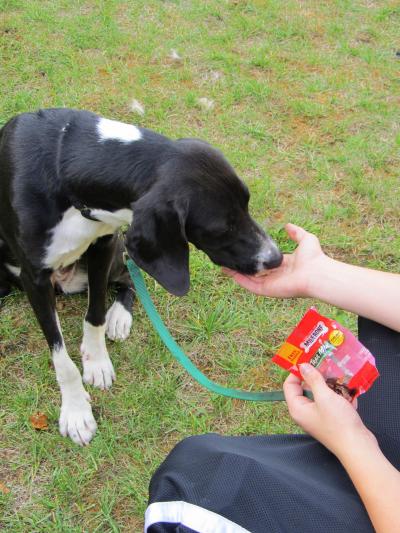
A participant at Excelsior Youth Center in Spokane, Wash., gives treats to a shelter dog from the Spokane Humane Society. A first-of-its-kind study demonstrates how dog-interaction activities improve the mood of teenagers living in residential treatment centers.  Photo courtesy of Washington State University

A participant at Excelsior Youth Center in Spokane, Wash., gives treats to a shelter dog from the Spokane Humane Society. A first-of-its-kind study demonstrates how dog-interaction activities improve the mood of teenagers living in residential treatment centers. Photo courtesy of Washington State University

On Friday afternoons, a group of approximately four dogs from the Spokane Humane Society visit the Excelsior Youth Center, where teenagers in treatment there can help brush, feed and play with the dogs.

“We found one of the most robust effects of interacting with the dogs was increased joviality,” she said. “Some of the words the boys used to describe their moods after working with the dogs were ‘excited,’ ‘energetic’ ‘and happy.'”

Ellsworth’s study is the first of its kind to demonstrate how dog-interaction activities improve mood among teenagers living in residential treatment centers.

Ellsworth’s methodology is fairly standard to research projects, involving a test group and a control group.  Once a week, during the daily recreation time at the Center, Ellsworth breaks about eight participants into two groups. One group plays pool, video games or basketball provided in the treatment center. The other group interacts with the shelter dogs for about an hour.

Before the activity period, participants identify 60 mood descriptors on a scale of one to five on what is known as the PANAS-X, a self-reporting method organizational psychologists use to scale and study emotion. After the activity, the participants fill out the same scale.

Robert Faltermeyer, executive director of the youth center, and the staff are hopeful this kind of science-based program could be established as part of treatment centers’ structured activities.

“It’s an opportunity for kids in a real chaotic life, making unhealthy choices, to focus in on a specific task with an animal,” he said. “It empowers them to make positive changes even on the simplest scale of correcting the animal’s behavior.”

Source: Washington State University media release

Helping pet owners make tough choices

When your dog becomes seriously ill, it’s your job as the owner to make decisions about quality of life.  And it’s one of the toughest decisions we face during our lives.

Researchers at Michigan State University  are developing a new tool to help people assess their pet’s quality of life, a key factor in decisions about when to order life-prolonging procedures and when an animal’s suffering means it’s time to put them to sleep.

The research team, led by veterinarian Maria Iliopoulou, created a survey to help dog owners monitor the quality of life of 29 dogs undergoing chemotherapy treatment for cancer.   The owners completed the questionnaire when they received their dog’s cancer diagnosis and answered questions about how their dog was behaving then and how they behaved six months prior to the diagnosis.

Similar questions were asked in questionnaires administered at three and six weeks into chemotherapy. Meanwhile, the veterinarians treating the dogs filled out shorter surveys based on their observations.   The research team wanted to see if owners and clinicians agreed.

The research found that there was a close match between owners and vets, particularly in questions involving play behaviour, the dog’s happiness as perceived by the owner and clinical signs of disease.  These areas of commonality create the basis for a tool that will help to facilitate client and vet communication.  If there’s agreement about what constitutes quality of life, then it is these criteria that owners and vets should use to help agree on next steps for the dog’s care.

For the study, dog owners completed a questionnaire at the time of diagnosis about how the animal was behaving then and how they typically behaved six months prior. Follow-up questionnaires filled out three and six weeks later documented changes in behavior as the dogs underwent chemo. Meanwhile, the veterinarians filled out shorter surveys based on their observations. – See more at: http://msutoday.msu.edu/news/2013/helping-pet-owners-make-tough-choices/#sthash.aUqdUd6n.dpuf
Dr Iliopoulou and her dog Rocky (photo by G L Kohuth)

Dr Iliopoulou and her dog Rocky (photo by G L Kohuth)

The research team has published their results in the Journal of the American Veterinary Medical Association.  All dogs were patients at the Michigan State University Animal Cancer Care Clinic.  The plan is to expand the work using a much larger sample size of patients and Iliopoulou hopes to develop questionnaires for dogs suffering from other diseases as well.

Source:  Michigan State University media statement

ichigan State University researchers are developing a new tool to help people assess their ailing pets’ quality of life, a key factor in decisions about when to order life-prolonging procedures and when an animal’s suffering means it’s time to let go. – See more at: http://msutoday.msu.edu/news/2013/helping-pet-owners-make-tough-choices/#sthash.aUqdUd6n.dpuf

OCD – dogs and humans are not that different

The structural abnormalities in the brains of dogs suffering from canine compulsive disorder (CCD) are similar to the abnormalities found in humans suffering from obsessive compulsive disorder (OCD) according to new research.

A collaboration between veterinarians at the Cummings School of Veterinary Medicine at Tufts University and researchers at the McLean Imaging Center at McLean Hospital, in Belmont, Massachusetts have published their findings in Progress in Neuro-Psychopharmacology & Biological Psychiatry.

The study involved 16 Doberman Pinschers, 8 with CCD and 8 without.  Dogs with CCD engage in repetitious and destructive behaviors such as flank- and blanket-sucking, tail chasing, and chewing,  whereas people with OCD tend to have repetitious behaviors that interfere with their daily life.

Here’s a video of a German Shepherd with CCD engaging in a circling behavior:

“While the study sample was small and further research is needed, the results further validate that dogs with CCD can provide insight and understanding into anxiety disorders that affect people.  Dogs exhibit the same behavioral characteristics, respond to the same medication, have a genetic basis to the disorder, and we now know have the same structural brain abnormalities as people with OCD,” said Nicholas Dodman, BVMS, DACVB, professor of clinical sciences at the Cummings School of Veterinary Medicine at Tufts University.

It should be noted that the research also provides insight into dog behavior and management.  In some cases, a dog labelled as ‘bad’ or ‘destructive’ may actually have a biological basis for their problems.

Source:  TuftsNow media release

Hypothermia after surgery involving anaesthetic

A  research team from the Universidad CEU Cardenal Herrera directed by Professor José Ignacio Redondo has published research  in the journal Veterinary Record about the prevalence of hypothermia in dogs after surgery and other diagnostic tests that require anaesthetic. 83.6% of the 1,525 dogs studied presented with the complication, whereas in humans this percentage is between 30 and 60% of cases.

This research supports what many of us have experienced with our own dogs.  For example, when Daisy had a dental cleaning earlier this year, her vet reported to me that her temperature dropped after the surgery and they had extra blankets around her to warm her.  For this and other reasons, I’m glad I use a veterinary practice that is full-service, and I’m not an owner that is focused simply on costs.  (I’ve heard of people shopping around for the lowest cost for a dental; chances are that their pet will not be monitored closely and may not even be given fluids as part of the surgery and recovery.)

The researchers analysed over 1,500 cases of anesthetized animals in the University Clinical Hospitals of the CEU Cardenal Herrera and Cordoba. The variables directly related to hypothermia in dogs registered at the end of an operation include the duration of the pre-anaesthesia and anaesthesia, the physical condition of the animal and, also, their posture during surgery (sternal and dorsal recumbencies showed lower temperatures than lateral recumbency).

Hypothermia is the most common anaesthetic complication in dogs.  The researchers recommend that temperature should be continuously monitored and vets should take preventive measures to avoid heat loss during procedures.

Source:  AlphaGalileo Foundation media statement

Researchers identify gene associated with eczema in dogs

A novel gene associated with canine atopic dermatitis has been identified by a team of researchers led by professors Kerstin Lindblad-Toh, Uppsala University and Åke Hedhammar, SLU, Sweden. The gene encodes a protein called plakophilin 2, which is crucial for the formation and proper functioning of the skin structure, suggesting an aberrant skin barrier as a potential risk factor for atopic dermatitis.

Details appear in the open-access journal PLoS Genetics.

Atopic dermatitis (or eczema) is an inflammatory, relapsing non-contagious skin disease affecting about 3-10 percent of dogs. The skin of a patient with atopic dermatitis becomes easily irritated by various allergens such as certain types of food, pollens or house mites. Such irritation causes very strong itching which leads to scratching, redness and flaky skin that becomes vulnerable to bacterial and yeast infections.

Despite many scientific efforts, little has been known about the genetics of the disease. In their study, researchers from Uppsala University, SLU and Broad Institute, compared DNA samples from a large group of German shepherd dogs affected by atopic dermatitis with DNA coming from healthy dogs to reveal the specific DNA segment associated with the disease.

“With the help of pet owners, we have managed to collect a unique set of DNA samples from sick and healthy dogs which allowed us to gain insight into atopic dermatitis genetics,” said first author Katarina Tengvall, Uppsala University.

Purebred dogs such as German shepherds have been selected for specific physical features for several generations. Selection led to an inadvertent enrichment for disease-risk genes in certain breeds. Moreover, the resulting architecture of canine DNA makes it easier to pinpoint segments that carry these disease risk-genes. This helped the researchers to reveal the genetics of atopic dermatitis. They found a region associated with the atopic dermatitis containing the gene PKP-2, which encodes Plakophilin-2, a protein involved in the formation and maintaining of the proper skin structure.

“The finding that certain variants of the PKP-2 gene may increase the risk of developing the disease opens new possibilities in understanding the disease mechanism leading to atopic dermatitis,” continues Katarina Tengvall.

These findings will not only lead to better understanding of the disease, which may lead to better treatment strategies long term. It also opens up the possibilities of development of a genetic test for the disease.

“Our study suggests that plakophilin-2 and an intact skin barrier is important to avoid atopic dermatitis”, says senior author, Kerstin Lindblad-Toh, professor at Uppsala University and Director of SciLifeLab Uppsala. “Another gene involved in the skin barrier has recently been linked to human atopic dermatitis emphasizing the similarity between canine and human atopic dermatitis” said Kerstin Lindblad-Toh.

Source:  AlphaGalileo Foundation media statement