Category Archives: research

New gene therapy for dogs with hemophilia

Researchers at the UNC School of Medicine and the Medical College of Wisconsin have found that a new kind of gene therapy led to a dramatic decline in bleeding events in dogs with naturally occurring hemophilia A.

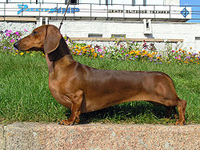
Photo courtesy American Kennel Club Canine Health Foundation, Inc

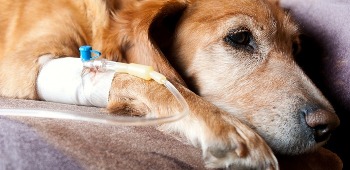
Photo courtesy American Kennel Club Canine Health Foundation, Inc

Hemophilia A affects about 50,000 people in the United States and millions more around the world.

Before the gene treatment, the animals experienced about five serious bleeding events a year. After receiving the novel gene therapy, though, they experienced substantially fewer bleeding events over three years.

Hemophiliacs lack  the coagulation factor VIII in their blood plasma.   In about 35% of cases, patients develop an antibody response to factor VIII, meaning that treatment by injection of the factor no longer works.

Using a plasmapheresis machine and a blood-enrichment technique, the research team isolated specific platelet precursor cells from three dogs that had hemophilia A. The team then engineered those platelet precursor cells to incorporate a gene therapy vector that expresses factor VIII. The researchers put those engineered platelet precursors back into the dogs. As the cells proliferated and produced new platelets, more and more were found to express factor VIII.

In the 2 1/2 years since the dogs received the gene therapy, researchers found that factor VIII was still being expressed in platelets that were coursing throughout the vascular systems of all three dogs. All three experienced much less bleeding. In the dog that expressed the most factor VIII in platelets, the bleeding was limited to just one serious event each year over the course of three years. And such bleeding events were easily treatable with current standard therapies.

The researchers have published their results in the journal Nature Communications.  You can read the article here.

While the goal of this research is to help human hemophiliac patients, I hope that the treatment is able to be offered more widely to dogs with the condition too!

Source:  UNC School of Medicine media statement

Risk factors for bone cancer in dogs

Bone cancer in dogs is affected by a variety of genetic risk factors, researchers from Uppsala University and the Broad Institute have found.  They’ve published their results in the journal Genome Biology.
Osteosarcoma, a type of bone cancer, is similar in humans and dogs – although in dogs it is more common.  In the current study, the researchers compared the genome of sick and healthy dogs from three different breeds to find inherited risk factors for the disease.

“The key is that we find many different risk factors within each breed. We already knew that Greyhounds, Rottweilers and Irish wolfhounds are at increased risk of developing bone cancer and our results explain much of the increased risk”, said Emma Ivansson, scientist at SciLifeLab and Uppsala University.

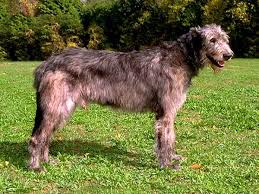
Irish Wolfhound

The study demonstrated that each breed has its own risk genes, but these genes converge in common disease mechanisms.

“Our results show that the pathways involved in bone formation and growth are important for the disease. Because of the great similarities between bone cancer in dogs and humans, we believe that our findings may contribute to an increased understanding of how bone cancer develops in humans”, said Kerstin Lindblad-Toh, professor at Uppsala University and Co-Director of the SciLifeLab and Director of Vertebrate Genome Biology at the Broad Institute.
The researchers are continuing to study the identified risk factors to understand more about how they affect tumor development and to see whether different risk factors respond to different types of treatment.
The researchers are continuing to study the identified risk factors to understand more about how they affect tumor development and to see whether different risk factors respond to different types of treatment. – See more at: http://www.uu.se/en/media/news/article/?id=3103&area=2,10,16&typ=artikel&na=&lang=en#sthash.H1aUoBA8.dpuf

Osteosarcoma, a type of bone cancer, is a rare but very aggressive form of cancer that primarily affects teenagers. Among some large-sized dog breeds the disease is much more common, but otherwise osteosarcoma in humans and dogs is very similar. In the current study, the researchers compared the genome of sick and healthy dogs from three different breeds to find inherited risk factors for the disease.

“The key is that we find many different risk factors within each breed. We already knew that greyhounds, Rottweilers and Irish wolfhounds are at increased risk of developing bone cancer and our results explain much of the increased risk”, said Emma Ivansson, scientist at SciLifeLab and Uppsala University.

The study demonstrated that each breed has its own risk genes, but these genes converge in common disease mechanisms

– See more at: http://www.uu.se/en/media/news/article/?id=3103&area=2,10,16&typ=artikel&na=&lang=en#sthash.H1aUoBA8.dpuf

Bone cancer in dogs is affected by a variety of genetic risk factors. Researchers from Uppsala University and the Broad Institute show this in a new study published in Genome Biology. – See more at: http://www.uu.se/en/media/news/article/?id=3103&area=2,10,16&typ=artikel&na=&lang=en#sthash.H1aUoBA8.dpuf

Breast cancer in dogs

A PhD project at the Norwegian School of Veterinary Science has been studying the genetics behind mammary tumours in dogs.  Breast cancer is the most common form of cancer in female dogs.

A mammary tumor in a dog (Photo by Veronica Kristiansen)

A mammary tumour in a dog (Photo by Veronica Kristiansen)

Kaja Sverdrup Borge’s PhD project has led to the identification of genetic changes associated with these types of tumour.

Borge studied known risk genes in dogs to learn more about the genes that predispose dogs to canine mammary tumours. These genes are already known to be linked to cancer in humans. Borge discovered that there was a large variation in these genes from breed to breed. Some of the variants proved to have a detrimental effect and could lead to a potential change in the risk of developing cancer.

Borge compared the incidence of these genes in different groups of English springer spaniels with and without mammary tumours. The genes were also studied in another group of dogs from breeds having either a high or low incidence of mammary tumours. The results of these analyses indicate that variants of the oestrogen receptor gene are associated with the risk of English springer spanieldeveloping mammary tumours in dogs.

Borge examined canine mammary tumours in order to identify mutations which have arisen in tumours and may therefore be involved in the development of cancer. She focused on changes in the number of gene copies where there was either a decrease or increase in gene areas in the tumours.

She found a large number of mutations and the number of aberrations increased, the more malignant the tumours turned out to be. She detected major cancer genes known to occur in humans but also identified new areas. Borge also demonstrated that linking detailed histopathological parameters from mammary tumour diagnostics to genetic mutations could help to chart specific genes that lead to the growth of tumours and to more malignant types of cancer.

Increased knowledge about the genetic changes which cause cancer is essential for the prevention, diagnosis and treatment of the disease.  Because of the similarities between carcinogenic gene mutations in both canine and human breast cancer, studying breast cancer in dogs also has benefits for the study of breast cancer in humans.

Source:  Media statement from Norwegian School of Veterinary Science

The ability for dogs and wolves to learn

Wolves can learn from observing humans and pack members where food is hidden and recognize when humans only pretend to hide food, reports a study published for the first time in the open-access journal Frontiers in Psychology.

The researchers conclude that the ability to learn from other species, including humans, is not unique to dogs but was already present in their wolf ancestors. Prehistoric humans and the ancestors of dogs could build on this ability to better coordinate their actions.  Photo by Wolf Science Center

The researchers conclude that the ability to learn from other species, including humans, is not unique to dogs but was already present in their wolf ancestors. Prehistoric humans and the ancestors of dogs could build on this ability to better coordinate their actions. Photo by Wolf Science Center

These findings imply that when our ancestors started to domesticate dogs, they could have built on a pre-existing ability of wolves to learn from others, not necessarily pack members.

A paper published recently in the journal Science suggested that humans domesticated dogs about 18 thousand years ago, possibly from a European population of grey wolves that is now extinct. But it remains unknown how much the ability of dogs to communicate with people derives from pre-existing social skills of their wolf ancestors, rather than from novel traits that arose during domestication.

In a recent study, Friederike Range and Zsófia Virányi from the Messerli Research Institute at the University of Veterinary Medicine Vienna investigated if wolves and dogs can observe a familiar “demonstrator” – a human or a specially trained dog – to learn where to look for food within a meadow. The subjects were 11 North American grey wolves and 14 mutts, all between 5 and 7 months old, born in captivity, bottle-fed, and hand-raised in packs at the Wolf Science Center of Game Park Ernstbrunn, Austria.

The wolves and dogs were two to four times more likely to find the snack after watching a human or dog demonstrator hide it, and this implies that they had learnt from the demonstration instead of only relying on their sense of smell. Moreover, they rarely looked for the food when the human demonstrator had only pretended to hide it, and this proves that they had watched very carefully.

The wolves were less likely to follow dog demonstrators to hidden food. This does not necessarily mean that they were not paying attention to dog demonstrators: on the contrary, the wolves may have been perceptive enough to notice that the demonstrator dogs did not find the food reward particularly tasty themselves, and so simply did not bother to look for it.

Source:  EurekAlert! press release

Why breed specific legislation does not protect the public from dangerous dogs

Photo courtesy of University of Lincoln (UK)

Photo courtesy of University of Lincoln (UK)

The latest research on breed specific legislation formalises a lot of the information that I already suspected or knew from other sources:  that BSL doesn’t work and is a flawed concept.    Read more below:

Research conducted by animal behaviour experts challenges the basis of breed specific legislation designed to protect the public from ‘dangerous’ dogs.

A team from the University of Lincoln, UK, concluded that rather than making people safer, current legislation could be lulling them into a false sense of security. Their findings were recently published in the journal Human Animal Interaction Bulletin published by the American Psychological Association, in a freely available paper “Acculturation – Perceptions of breed differences in behavior of the dog (Canis familiaris)”.

Dr Tracey Clarke and Professors Daniel Mills and Jonathan Cooper from Lincoln’s School of Life Sciences set out to discover the source of people’s perceptions about ‘typical behaviours’ associated with different breeds of dog.

Professor Mills said: “This work provides good scientific evidence to explain why the pursuit by governments of breed specific legislation to reduce the risk of harm to citizens is not only doomed to failure, but also giving people a false sense of security, which may actually be making the situation worse.”

The researchers applied a theory known as the ‘contact hypothesis’ – used by sociologists to understand the origin of racial stereotyping and other forms of prejudice.

They surveyed more than 160 people to examine if their contact with dogs influenced their tendency to believe populist and negative breed stereotypes.

They found significant variations in attitudes between people who owned dogs or had regular contact with them, and those who did not. More than half (54%) of respondents who identified themselves as “experienced or knowledgeable” of dogs disagreed with the statement that some breeds are more aggressive than others. Only 15% of respondents who said they had little or no experience of dogs held the same view.

Similarly, more than half of the “experienced” respondents felt there was no valid reason for breed specific legislation, whereas less than 1 in 10 of the inexperienced respondents felt the same.

The results were consistent with the prediction that not just the level but also the quality of contact with dogs are major influences on the tendency to believe populist breed stereotypes, despite scientific evidence which challenges the validity of such generalisations.

The variability within a breed is nearly always greater than the variability between breeds for behavioural traits, meaning while there may be differences on average, when it comes to assessing the likelihood that a particular individual will behave in a certain way generalisations are often unsound. The type of person attracted towards certain breeds and encouraging certain behaviours may be a much better predictor.

It was discovered that a dog’s visible characteristics informed strong attitudes, resulting in over-generalisation. Not only bull-breeds but also those with much more superficial characteristics such as being well-muscled, or even short-haired, were stigmatised more often as dangerous by those with less experience or knowledge of dogs.

Attraction to certain types on the basis of their appearance, can then lead to these being preferred for use as a weapon or status dog, creating a self-fulfilling prophecy about their behaviour through environmental rather than genetic effects.

The team suggest that further scientific research is needed to improve understanding of the origins and basis of negative breed stereotypes, and that this in turn should be used to inform future legislation.

Source:  University of Lincoln media statement

18,000 years and counting

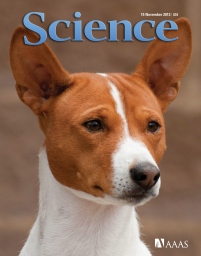
Science magazine November issueWolves likely were domesticated by European hunter–gatherers more than 18,000 years ago and gradually evolved into dogs that became household pets, say a research team based at the University of California Los Angeles.

“We found that instead of recent wolves being closest to domestic dogs, ancient European wolves were directly related to them,” said Robert Wayne, a professor of ecology and evolutionary biology in UCLA’s College of Letters and Science and senior author of the research. “Europe is where the oldest dogs are found.”

The team’s genetic analysis is published 15 November issue of the journal Science.

The researchers studied 10 ancient “wolf-like” animals and eight “dog-like” animals, mostly from Europe. These animals were all more than 1,000 years old, most were thousands of years old, and two were more than 30,000 years old.

The biologists studied the mitochondrial DNA of the animals, which is abundant in ancient remains. By comparing this ancient mitochondrial DNA with the modern mitochondrial genomes of 77 domestic dogs, 49 wolves and four coyotes, the researchers determined that the domestic dogs were genetically grouped with ancient wolves or dogs from Europe — not with wolves found anywhere else in the world or even with modern European wolves. Dogs, they concluded, derived from ancient wolves that inhabited Europe and are now extinct.

Wayne said that that the domestication of predatory wolves likely occurred among ancient hunter–gatherer groups rather than as part of humans’ development of sedentary, agricultural-based communities.

 “The wolf is the first domesticated species and the only large carnivore humans ever domesticated,” Wayne said. “This always seemed odd to me. Other wild species were domesticated in association with the development of agriculture and then needed to exist in close proximity to humans. This would be a difficult position for a large, aggressive predator. But if domestication occurred in association with hunter–gatherers, one can imagine wolves first taking advantage of the carcasses that humans left behind — a natural role for any large carnivore — and then over time moving more closely into the human niche through a co-evolutionary process.”
There is a scientific debate over when dogs were domesticated and whether it was linked with the development of agriculture fewer than 10,000 years ago, or whether it occurred much earlier. In the new Science research, Wayne and his colleagues estimate that dogs were domesticated between 18,000 and 32,000 years ago.

The research was federally funded by the National Science Foundation.

You can read more about the team’s research in this UCLA media release.

My dog wags on the right side (that’s the good side)

Whether your dog wags on the right side or the left means something – to other dogs and to observant humans…

Credit:  Siniscalchi et al.

Photo Credit: Siniscalchi et al.

Research by an Italian team has shown that dogs, like humans, have asymmetrically organized brains, with the left and right sides playing different roles.  The team has published their research in the journal Current Biology.

The research team had already found that dogs wag to the right when they feel positive emotions (upon seeing their owners, for instance) and to the left when they feel negative emotions (upon seeing an unfriendly dog, for example). That biased tail-wagging behavior reflects what is happening in the dogs’ brains. Left-brain activation produces a wag to the right, and right-brain activation produces a wag to the left.

The latest research, however, shows that the direction of tail-wagging means something to other dogs.  While monitoring their reactions, the researchers showed dogs videos of other dogs with either left- or right-asymmetric tail wagging. When dogs saw another dog wagging to the left, their heart rates picked up and they began to look anxious. When dogs saw another dog wagging to the right, they stayed perfectly relaxed.

Researcher Giorgio Vallortigara of the Center for Mind/Brain Sciences of the University of Trento says that the direction of tail-wagging a clear indication of right or left brain activation and could have many applications, such as determining state of mind during a visit to the vet.

So now that you know about this research, think about the wags on these dogs and what are they trying to say?

Pain management in dogs with bone cancer

A single injection eased severe, chronic pain caused by late-stage bone cancer in dogs, according to a study in the November issue of Anesthesiology. Dogs with bone cancer that received a neurotoxin injection had significantly more pain relief than those that got standard care without the injection.

“Dogs are part of the family and we do everything we can to relieve them of pain and discomfort when they are sick,” said Dorothy Cimino Brown, D.V.M., School of Veterinary Medicine, University of Pennsylvania, Philadelphia. “In addition to sharing emotional attachments with our dogs, humans share many of the same ailments our pets suffer when fighting cancer. By studying the positive pain relief this treatment afforded dogs, we are hopeful it may also be effective for humans.”

A radiograph of a dog's leg with a cancerous lesion. (Credit: Image courtesy of American Society of Anesthesiologists (ASA))

A radiograph of a dog’s leg with a cancerous lesion. (Credit: Image courtesy of American Society of Anesthesiologists (ASA))

The owners of 70 dogs enrolled their pets in this study. Half the dogs received an injection of a neurotoxin, called substance P-saporin (SP-sap), as well as standard care. The other half (i.e., the control group) received standard care without the neurotoxin injection. The average age of the dogs was between 8 and 9 years and their average weight was 90 pounds.  Multiple breeds participated in the study, including: Rottweilers, Labrador Retrievers, Golden Retrievers and mixed breeds.

The evolution of bone cancer pain in dogs parallels what occurs in humans, with the frequency and intensity of pain increasing over weeks and months. As the cancer advances, both canine and human patients experience life-altering pain, which greatly affects their daily activities and quality of life. The standard treatment for dogs with late-stage bone cancer can include opioids, steroids, and palliative radiation. All of these treatments can have negative side effects.

Within six weeks of beginning the study, 74 percent (26) of the dogs in the control group needed to be “unblinded” (i.e., their status in the study revealed) and their pain relief regimen adjusted compared to 24 percent of the dogs (eight) in the group that received the injection. This was a statistically significant difference.

Other study results included a 6 percent increase in pain severity scores for dogs in the control group, while the dogs in the SP-sap group had no change in pain severity score.  In addition, the dogs in the control group had an 8 percent increase in how pain interferes with their typical activities, while the SP-sap dogs had a 5 percent improvement in this pain impact score. Finally, one dog in the control group responded with improved lameness, while 6 dogs in the SP-sap group became less lame. While these secondary study results were not statistically significant because they were only assessed two weeks after injection, they are promising.

Source:  American Society of Anesthesiologists media release

Behaviour in dogs depends on the paw preference

I’ve previously written about how to test if your dog is right-pawed or left pawed.  Researchers at the University of Adelaide led by Dr Luke Schneider tested a group of 73 dogs using 50 manipulations of an object to determine their paw preference.  They then interviewed the dog owners about their dog’s behavior to see if there was a pattern.

“We found that dogs with a preference for left paws were reported by their owners to show high levels of aggression towards strangers. The left pawed dogs scored almost twice as high as ambilateral (ones with no preference) and also higher than dogs with right paws.

“There is research in the human world as well that positive and negative emotions can be located in the left and right hemispheres and it seems to go the same way in humans and other animal species, that the negative emotions are located in the right hemisphere. There are many, many overlaps between human and animal brains.”

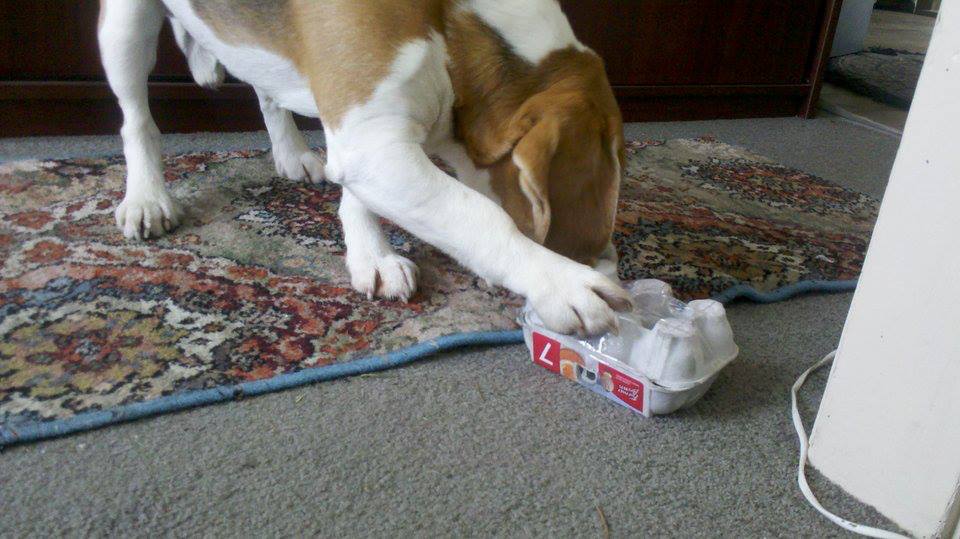
Blake the Beagle shows his preference for the right paw

Blake the Beagle shows his preference for the right paw

When testing dogs for paw preference, the research team found a roughly even split between those dogs that had a right paw preference vs those with a left paw preference.

None of the dogs in the study were noted as particularly aggressive, and so the research team wants to do more work with dogs who are noted for aggression-type responses.  A larger testing group would also help to validate results.  The research team’s study has been published in the Journal of Veterinary Behavior.

A dog’s secret life and how it can help elderly owners

Experts at Newcastle University are using movement sensors to track normal dog behaviour while the animals are active outside the home and when they are home alone.

Dog photo for research blog

The sensors show not only when the dog is on the move, but also how much he is barking, sitting, digging and other key canine behaviours.

By mapping the normal behaviour of a healthy, happy dog, Dr Cas Ladha and students Nils Hammerla and Emma Hughes were able to set a benchmark against which the animals could be remotely monitored.  This allowed for any changes in behaviour which might be an indication of illness or boredom to be quickly spotted.

Presenting their findings at the 2013 UbiComp conference in Zurich, project lead Ladha, says the next step is to use the dog’s health and behaviour as an early warning system that an elderly owner may be struggling to cope.

“A dog’s physical and emotional dependence on their owner means that their wellbeing is likely reflect that of their owner and any changes such as the dog being walked less often, perhaps not being fed regularly, or simply demonstrating ‘unhappy’ behaviour could be an early indicator for families that an older relative needs help.” says Hammerla.

The team created a hi-tech, waterproof dog collar complete with accelerometer and collected data for a wide range of dog breeds.

Hammerla adds: “This is the first system of its kind which allows us to remotely monitor a dog’s behaviour in its natural setting” –  ultimately classifying 17 activities such as barking and chewing.

“But beyond this it also presents us with a real opportunity to use man’s best friend as a discreet health barometer.  It’s already well known that pets are good for our health and this new technology means dogs are supporting their older owners to live independently in even more ways than they already do.”

Source:  Newcastle University media statement