Category Archives: research

Your dog – strategist?

Researcher Juliane Kaminski has published a study which shows that domestic dogs are much more likely to steal food when they think nobody can see them.

Many owners may think ‘so what – I already knew this’ – but Dr Kaminski’s systematic study helps to prove that dogs have the capacity to understand the human’s point of view.

Juliane Kaminski and her dog, Ambula (courtesy of University of Portland)

Juliane Kaminski and her dog, Ambula (courtesy of University of Portland)

The study found that when a human forbids a dog from taking food, dogs are four times more likely to disobey in a dark room than a lit room, suggesting that they understand humans may not be able to see them take the food.

The tests were complex and involved many variables to rule out that dogs were basing their decisions on simple associative rules, for example, that dark means food. 42 female and 42 male dogs took part in the study.

This is the first study to examine if dogs differentiate between different levels of light when they are developing strategies on whether to steal food.

The research is an incremental step in our understanding of dogs’ ability to think and understand which could, in turn, be of use to those who work with dogs, including the police, the blind and those who use gun dogs, as well as those who keep them as pets.

Dr Kaminski’s study has been published in the journal Animal Cognition.

Source:  University of Portsmouth media statement

Getting your head around dog genetics

Another public release of research this week.  This one from the Genetics Society of America about an article entitled ‘The Genetics of Canine Skull Shape Variation.’  Published in the February issue of Genetics, researchers review progress in defining genes and pathways that determine dog skull shape and development.

The researchers believe that the results are useful to humans because of the genetic expression of the features is likely to be similar process in humans as in dogs.

Skull shape is a complex trait, involving multiple genes and their interactions. Thanks to standardized canine breeding, which documents more than 400 breeds worldwide, and their distinct morphological features, researchers can disentangle traits such as skull shape, which in many breeds is a breed-defining variation.

Researchers are beginning to identify which genes cause a Bulldog or a Pug to have short pushed-in faces, or brachycephaly, and those that cause Salukis or collies to have narrow, elongated snouts, or dolichocephaly.

Source:  Genetics Society of America media release

UK research supports worming and cleaning up after your dog

Researchers at the University of Bristol’s School of Veterinary Sciences have published their research, which supports the need for ongoing worming of dogs and the need for owners to clean up their dog’s poo.

At issue is the parasitic worm, Toxocara, which are a rare cause of disease in humans, responsible for occasional cases of abdominal pain, loss of sight, and potentially asthma and epilepsy.

Using data from the University, the researchers estimated relative contributions of dogs and the other hosts of the parasites, cats and foxes.   With the help of additional information from a previous study, the researchers estimated that nearly four tonnes of dog waste are produced in Bristol each day and nearly 1,000 tonnes throughout the UK.

Given that each adult female worm can lay 12,500 eggs or more per day, this equates to around 3.7 billion eggs shed per day within the city of Bristol.

“These results are not all that surprising but they are likely to differ widely between places. We provided a method for estimating different sources of contamination with Toxocara eggs anywhere in the world.  This will hopefully help locally appropriate control measures to be put in place. The data also provides a baseline against which future changes can be measured, as we currently lack any good evidence of how effective steps such as anti-fouling legislation are in reducing egg load and human disease” says Dr Eric Morgan the lead author of the paper.

The research team’s findings have been published in the journal Veterinary Parasitology.

Source:  University of Bristol media statement

Bully sticks – a source of calories and bacteria

Researchers at the Cummings School of Veterinary Medicine at Tufts University and the University of Guelph have some news for you about bully sticks.

Photo courtesy of Tufts University

Photo courtesy of Tufts University

The research team analysed the treats for caloric density and bacterial contamination and they asked owners about their knowledge of the treats through a survey.

The sample size in the study was 26 bully sticks, purchased from different places in the United States and Canada.

The bully sticks contained between nine and 22 calories per inch, meaning that the average sized stick packed 88 calories or 9 percent of the daily caloric requirements of a 5o pound (22.7 kg) dog or 30 percent of the requirement for a 10 pound (4.5 kg) dog.

‘With obesity in pets on the rise, it is important for pet owners to factor in not only their dog’s food, but also treats and table food,’ said Lisa M Freeman, Professor of Nutrition.

The 26 treats were also tested for bacterial contamination.  One (4%) was contaminated with Clostridium difficile, one (4%) contaminated with methicillin-resistant Staphylococcus aureus (MRSA), and seven (27%) were contaminated with Escherichia coli including one sample that was resistant to treatment with tetracycline.

Although the sample size in this project was small, the researchers advise all pet owners to wash their hands after touching treats.  The risk could be higher for the very young, elderly, pregnant or immuno-compromised dog owners.  They acknowledge that research on a larger sample size is also needed.

The survey portion of the study showed that many dog owners are not aware of the ingredients in their dog’s treats, with many demonstrating ignorance of the definition of a ‘by-product.’

The results of the study have been published in the January 2013 issue of the Canadian Veterinary Journal.

Source:  Tufts Now media statement

The critical period of socialization

Doctoral research by evolutionary biologist Kathryn Lord at the University of Massachusetts Amherst suggests that different behaviors between puppies and wolves are related to their critical period of socialization, when they have their first sensory experiences.

Lord studied responses of seven wolf pups and 43 dogs to both familiar and new smells, sounds and visual stimuli, tested them weekly, and found they did develop their senses at the same time.  Whilst puppies and wolves have a critical four-week period for socialization, the difference is in the timing.

Wolf cub

Wolf and dog pups begin walking and exploring without fear when the socialization window is open and they will retain familiarity throughout their lives with those things they contact.   After the window closes, new sights, sounds and smells will elicit a fear response.

By making observations, Ms Lord confirmed that both wolf pups and dogs develop the sense of smell at age two weeks, hearing at four weeks and vision by age six weeks on average.

The difference in timing of the socialization period is stunning.   Dogs begin the socialization period at four weeks, while wolves begin at two weeks.  This, says Lord, is the reason for different paths of development.

When wolf pups start to discover their world, they are still blind and deaf at age two weeks. “No one knew this about wolves, that when they begin exploring they’re blind and deaf and rely primarily on smell at this stage, so this is very exciting,” says Lord.

Dog pups only begin to explore and walk after all three senses, smell, hearing and sight, are functioning. Overall, “It’s quite startling how different dogs and wolves are from each other at that early age, given how close they are genetically. A litter of dog puppies at two weeks are just basically little puddles, unable to get up or walk around. But wolf pups are exploring actively, walking strongly with good coordination and starting to be able to climb up little steps and hills.”

Details of this research are published in the journal Ethology.

What’s the diff, Cliff?

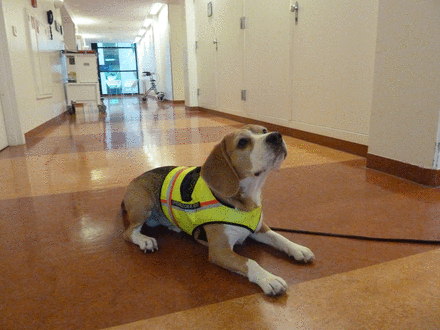
Cliff, a Beagle, is a specially trained detector dog working in two Dutch teaching hospitals.  He’s been the centre of a major study into detection of Clostridium difficile (‘C diff’ for those who are professionals in the field), an infectious bacteria that can run rampant through hospitals, rest homes and other healthcare facilities.

Detector dog on hospital ward

Symptoms range from mild diarrhoea to more severe conditions like colitis. The bacterium can be transmitted through either personal contact or the environment and the testing for the bacteria is time consuming.

The research involved 300 patients, 30 which had C diff infection.  Cliff was guided along the wards by his trainer and the trainer had no idea if the person was infected or not.  Cliff was trained to sit or lie down when C diff was detected.

The Results?  Cliff was an expert at identifying infections of C diff – with around 90% accuracy –  regardless of whether he was sniffing out stool samples or identifying infected patients in the hospital.  Cliff is only one dog, but with these results, the concept of using dogs to identify C diff infections has been proved.

This comprehensive video explains Cliff’s training and the research:

Source:  British Medical Journal

The British Medical Journal’s Shaggy Dog Story

Two Belgian researchers have published their Shaggy Dog Story in the British Medical Journal this month.

They tell of a 35-year old patient with a severe sleep disorder that made traveling on public transport a problem because she would fall asleep and miss her stop, often becoming disoriented.

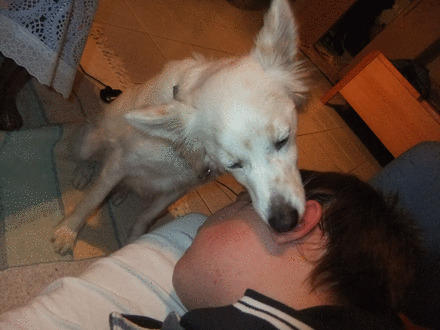
Dog waking patient

She was paired with a service dog that was trained to wake her for important noises and on public transport.   This type of success story points to even more roles for service dogs.

Wake me up, Shaggy!

What’s in your dog’s plastic toy?

A research team at Texas Tech University has studied the levels of phthalates and bisphenol A (known as BPA) in dog training batons and other plastic toys.  They presented their findings at the Society of Environmental Toxicology and Chemistry conference held in California.

The research was conducted by Kimberly Wooten, a master’s student using the project as her thesis, and Phil Smith, an associate professor of terrestrial ecotoxicology.  Smith also raises and trains Labradors.

“In the process of training a lab, you do a lot of work with these plastic bumpers. I have a lot of bumpers in my garage, and they spend a lot of time in the mouths of my retrievers. Well, lots of attention has been given to chemicals in plastics lately regarding their effects on humans. Since we all care about our dogs, and we want them to be as healthy and smart and well-behaved as possible, we decided to look into this.”

BPA are used to give elasticity to plastic and vinyl and are known endocrine disruptors that mimic estrogen or act as anti-androgens and could lead to negative health effects.  In 2012, the US Government banned the use of these chemicals in baby bottles.

Training bumpers had higher levels of BPA than toys; but weathered and aged toys released more BPA than newer ones.

The research raises a number of questions, but it is hard to compare results because so few studies have been done – particularly in the area of how much of the BPA actually enters the dog’s system.

“The interaction of pet health and environmental chemicals is understudied,” Wooten said. “What may be a safe dose for one species isn’t always a good measure for another species. But the amount of BPA and phthalates we found from the bumpers would be considered on the high end of what you might find in children’s toys.”

Source:  Texas Tech University press release

Another reason to keep your dog fit and trim

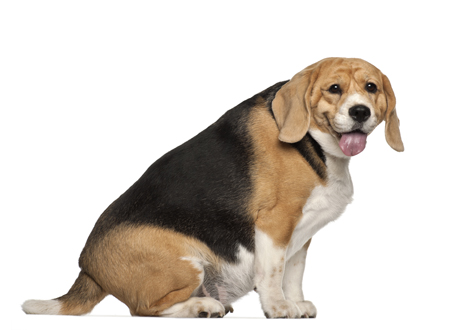
University of Liverpool researchers have found that obese dogs can experience metabolic syndrome, a condition that describes multiple health issues that occur in the body at the same time.  Obese humans suffer from the same syndrome.

The condition occurs when a number of health problems, such as increased blood glucose and increased cholesterol levels, develop together, with the potential to increase the risk of other diseases, such as cardiovascular disease and diabetes.

In a study of 35 obese dogs, 20% had metabolic syndrome.  These dogs had increased blood insulin which suggests that the pancreas is working harder than normal.  Blood adiponectin, a protein produced by fat cells that helps control sugars and fats, was also at lower levels than normal.

The metabolic abnormalities improved when the dogs successfully lost weight.

The research team admits that they have to study the impacts in more detail to understand the health implications of metabolic syndrome.

However, why wait for more studies?  If your dog is overweight we already know that their quality of life improves with weight loss.

Source: University of Liverpool media release

How your dog matches words to objects

Researchers at the University of Lincoln (UK) have published a study based on the learning patterns of a Border Collie named Gable.  They wanted to see if Gable could match words with objects based on shape, which is the learning pattern in humans of toddler age.

Credit: Sally Smith; van der Zee E, Zulch H, Mills D (2012) Word Generalization by a Dog (Canis familiaris): Is Shape Important?

Gable could identify an object by name, but over time he associated the same word with objects of similar texture or size (not shape).

The researchers concluded that where shape matters for humans, size or texture appears to be the dominating issue for a dog.

This is small study (using only one dog) but it does provide insight into the learning and development of dogs.  I’m sure there is more to come in this research field.

Source:  Word Generalization by a Dog (Canis familiaris): Is Shape Important?