“Well, you came here to stay as a foster dog last month.”
What’s foster?
“Foster means that I take care of you and teach you about being a pet, but you’re not mine.”
I’m not yours?
“No, but you did come to stay with me on a foster-to-adopt agreement.”
What’s adopt?
“Adopt is when I say that you should stay forever and become part of the family.”
I likes adopt
“Now, just checking. You want to be part of the family even though there are house rules?
Whaddya mean?
“So when I told you that you were naughty last night. Do you know why?”
Why?
“Because you were hiking your leg and peeing in the hallway”
Oh
“And peeing inside is not acceptable.”
Oh
“Unless you are sick. Are you sick?”
No, I’s not sick
“Then you have to agree to try harder about not peeing in the house.”
Okay. But you pee in the house.
“What? No I don’t.”
Yes you do. On the shiny white chair.
“Sox, that’s a toilet. I’m supposed to pee in it. That’s where people pee.”
I think the shiny white chair is scary.
“Scary? Is that why you come in every time I go to the toilet?”
Yes. I worries about you there and think you need cuddles.
“No need to worry, Sox. I can handle going to the toilet by myself. But I think we are getting off track with this conversation…Do you like it here?”
Yes, but I no likes when you call me naughty.
“I only call you naughty when you are doing something that is not allowed.”
So if I no do things that are not allowed then you no call me naughty?
“That’s right. I will call you A Good Boy.”
I is a Good Boy.
“Yes, Sox, I think you are a Good Boy. I think you should stay and be my Little Boy.”
I’s not little.
“That’s true. You’re a big Greyhound. But if I adopt you, you’ll become My Little Boy. Do you like the sound of that?”
Yup. I be your Good Little Boy.
“Okay. Then I’ll sign the adoption papers and we can begin our life together.”
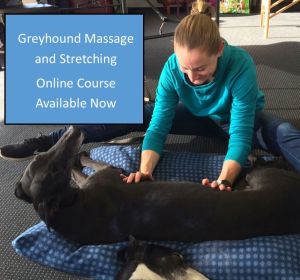
I now make the official announcement that Sox has joined The Balanced Dog as my Little Boy and companion. He is in training to be a massage demo dog, a café dog, and to like the water and waves at the beach.
I look forward to sharing our adventures together.
Kathleen Crisley, Fear-Free certified professional and specialist in dog massage, rehabilitation and nutrition/food therapy, The Balanced Dog, Christchurch, New Zealand
Veterinarians and scientists from BSM Partners, the largest pet care research and consulting firm, and the University of Missouri, published an analysis of a retrospective survey that evaluated the annual incidence of canine dilated cardiomyopathy (DCM) diagnosed by veterinary cardiologists across the United States, along with previously unknown information regarding the growth of grain-free pet food store sales.
The peer-reviewed article, which appears in Frontiers in Animal Science, includes data that did not indicate a significant increase nationally in DCM incidence over time, from 2000 to 2019, while grain-free pet food store sales grew 500 percent between 2011 and 2019. Researchers also found no significant correlation between the national DCM incidence rate in relation to the grain-free pet food sales.
Researchers received information on more than 68,000 total canine cardiology cases from veterinary cardiology referral hospitals, diagnosed between 2000 and 2019. The average incidence rate of DCM, amongst these referral cases seen in participating hospitals during the survey period, was 3.9 percent (range 2.53-5.65 percent). They also analyzed data regarding grain-free pet food store sales provided by the Nielsen Company, which showed a 500 percent increase in sales from 2011 to 2019.
“Based on the data we received from veterinary cardiologists across the United States, we did not observe a significant increase in DCM incidence rate over time, which included the recent period when grain-free pet food sales grew exponentially,” said Dr. Stephanie Clark, PhD, CVT, PAS, CFS, Dpl. ACAS of BSM Partners, an article co-author and a board-certified companion animal nutritionist. “The existing scientific literature indicates that nutritional factors can lead to the development of DCM, but we did not find a correlation in the DCM incidence rate to grain-free pet food sales.”
Dr. Stacey Leach DVM, DACVIM, an article co-author, and Chief of Cardiology and Associate Teaching Professor of Cardiology at the University of Missouri’s Veterinary Health Center, noted the following: “This work is unique because we only examined cases of canine DCM diagnosed by veterinary cardiologists and is a significant addition to our understanding of DCM.”
BSM Partners is the largest full-service pet care research, consulting and strategy-to-shelf product innovation firm. BSM Partners’ research professionals collaborate with hundreds of clients ranging from the largest companies to the smallest upstart companies to formulate, review and advise on the development of hundreds of new products each year, including grain-free and grain-inclusive dog foods, treats, and supplements.
If you have ever been close with a dog, the chances are that you have wondered what your canine companion might be thinking. As time goes on and your relationship grows — whether as a primary owner, a family member or an occasional visitor — you will probably ask yourself if the dog remembers you. Like our human friends and family, we would like to think that, even if we are not in the room, dogs still think about us.
Beagle Lies On The Floor In The House (Getty Images / Aleksandr Pobeda / EyeEm)
Scientists agree dogs are intelligent, emotional and capable of forming lasting relationships with humans. While there is robust debate about the extent to which this is true, animals like Bunny the “talking” sheepadoodle are able to communicate in such a sophisticated manner that they will even discuss their dreams.
The bad news is that, just like humans, dogs can develop degenerative nerve diseases which damage their minds. One illness in particular has a direct analogue in dogs: Alzheimer’s disease. Dogs, sadly, can develop a similar condition — and tragically, that might mean that your dog could suffer some of the same sad Alzheimer’s-like conditions, such as forgetting its close family, in its final days.
“Canine Cognitive Dysfunction [CCD] mirrors two key components of Alzheimer’s disease in humans,” Dr. Silvan Urfer of the Dog Aging Project and the University of Washington told Salon by email. It comes down to a peptide and a protein that will suddenly accumulate in your brain: Amyloid-beta 42 and hyperphosphorylated Tau (pTau). “While there are likely a few differences regarding the details of pTau pathology in particular, it is fair to say that CCD is the dog analog of Alzheimer’s Disease,” Urfer noted.
Dr. Elizabeth Head, a professor in the Department of Pathology & Laboratory Medicine at the University of California, Irvine, told Salon in writing that in addition to developing these beta-amyloid plaques — one of the hallmark features of Alzheimer disease — the dogs also suffer like humans, in that neurons die. The synapses, or connections between neurons, are lost, and these are observed in humans who as they age suffer from cognitive decline.
“From a psychological perspective dogs may show signs of disrupted sleep patterns (e.g. up pacing at night), more vocalizing, [being unable to] remember how to signal to go out and may have trouble recognizing family members,” Head explained. “This can lead to more anxiety. From a physical perspective, there may be more episodes of incontinence but oftentimes other physical problems are ruled out with the CCD diagnosis (e.g. deafness, blindness, systemic illness).”
Indeed, the similarities between CCD and human dementia are so striking that researchers believe man’s best friend could actually help him find a cure for the debilitating ailment. There is a nationwide study known as The Dog Aging Project — which was launched by Cornell University, the University of Washington and the University of Arizona and funded by the National Institute on Aging — which exists precisely because scientists are intrigued by those similarities. They believe that learning more about how to help dogs with the condition can, in the process, provide research data that helps fight human diseases related to senescence.
“What we’re trying to do is find a better understanding of the disease in dogs and translate those findings to humans,” Dr. Marta Castelhano, director of the Cornell Veterinary Biobank and one of the involved scientists, told Cornell News at the time.
Until a cure for CCD exists, the sad reality is that dogs and humans alike who experience cognitive decline will be left to manage their symptoms to the best of their ability. When speaking with Salon, Urfer stressed that he is “not providing veterinary advice on individual dogs, as there is no vet-patient-client relationship here.” People who are concerned about their dogs should consult a veterinarian. What we do know for sure, however, is that causal treatments do not exist for CCD. All we know is that there are certain physical characteristics that make dogs more or less likely to be at risk.
“We know that bigger dogs have a lower risk of developing CCD than small dogs, and there is also some evidence that intact males have a lower CCD risk than neutered males, and that existing CCD progresses faster in neutered than in intact males,” Urfer explained. “This is interesting in that it also mirrors findings from human medicine that taller people are less likely to get Alzheimer’s disease, and that men who undergo anti-androgen treatment for prostate cancer have an increased Alzheimer’s disease risk.”
If your dog is healthy now, then the best thing to do is make sure they stay healthy. That can prevent CCD from developing. It is the exact same as the approach for homo sapiens.
“The best approach is always prevention – ensure good physical health (e.g. keep up with dentals), exercise, lots of social and cognitive enrichment, and a good diet, manage co-occuring conditions (e.g. obesity) – just like for people!” Head told Salon.
For patients suffering from pain in the emergency room, just 10 minutes with a four-legged friend may help reduce pain, according to a study published Wednesday.
The results support what dog lovers everywhere have long suspected — canine affection cures all ills — as well as provides a bit of optimism for patients and health care providers frequently grappling with strapped hospital resources in the midst of the Covid-19 pandemic.
The study, published in the journal PLOS One, asked more than 200 patients in the emergency room to report their level of pain on a scale from 1 to 10 (with 10 as the highest level of pain). A control group had no intervention for their pain, while participants in the other group were given 10 minutes of time with a therapy dog, and patients rated their pain levels again, according to the study.
Those who got the visit from the dogs reported less pain.
“The results of the study are promising,” she said in an email. “Our current understanding of the effects of therapy dog visits in emergency department settings is fairly limited. So, it is particularly important to have more research in this area.”
Dell hopes that research like this study means we can stop asking if therapy dogs are helpful in a medical context and start asking how they help and how to integrate them better with health care teams.
In the hospital
The emergency room experience might actually contribute to patients’ pain.
The bright lights, long waits, anxiety and focus on immediate, acute conditions can make the feeling worse, said Erin Beckwell, a dog owner who has experienced chronic pain for much of her life.
“It’s not a place that you usually get escorted to a comfy room that’s quiet and gives us any sort of specific interventions,” she said. “It’s often suggestions of things you’ve already tried, and then they send you home after a long time of distressing and anxiety-provoking, pain-filled waiting.
You may not come out feeling like you were even really heard.”
Some people have a misperception that utilizing therapy dogs can transmit disease and risk hygiene in a hospital setting, but Dell said there are ways health care providers can utilize them in sanitary ways to make the whole system operate better.
Mike MacFadden, a nurse practitioner based in Canada, said he sees a lot of potential in incorporating therapy dogs as part of a holistic approach to pain treatment in the emergency room, and that it could help everyone involved.
“Emergency service teams can feel conflicted and experience moral distress resulting from their inability to meet their own expectations for optimal care. With people’s experience of pain being multifaceted, we know that a multifacetedapproach is most beneficial to meet the needs of patients,” McFadden said. “The presence of a therapy dog not only has the benefits of supporting the patient’s experience, but I think it also serves as a comfort to the care providers.”
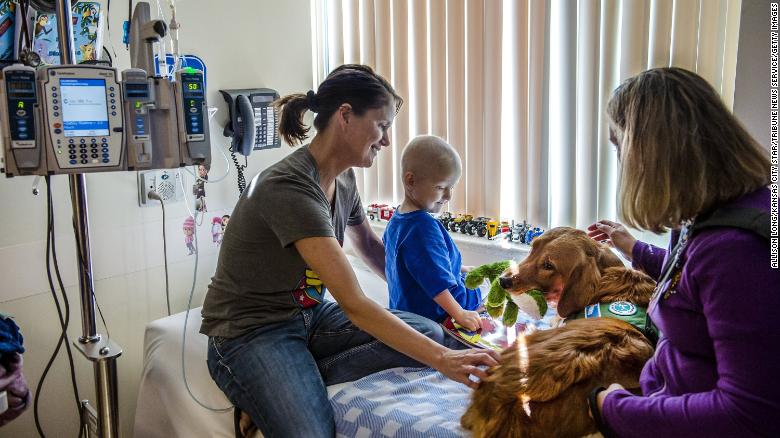
Hunter, a therapy dog, and his handler, Amanda Woelk, sit with Tyler Regier, 2, and his mother, Tina Regier, both of Overland Park, Kan., on Oct. 2, 2015, at Children’s Mercy Hospital in Kansas City, Mo. (Allison Long/Kansas City Star/TNS)
Anxiety, depression, having support or being dismissed can all have an impact on how we experience pain, she said. It makes sense that spending time with a creature that brings you joy and doesn’t invalidate your feelings can help you feel better.
“The things that you can gain from pets and some of the positive emotions that could be elicited from having the pet around you I think could have an impact on the pain experience itself,” she said.
Beckwell said she has experienced it personally with her 10-year-old cocker spaniel, Reilly, as she has experienced arthritis and autoimmune disorders.
“I feel more in control of the situation and less panicked or anxious about the severity of my pain, the duration of my pain, those sorts of things when I have that unconditional support from my dog,” Beckwell said. “She will come in, and she has learned over the years when I’m in pain she can’t sit on my lap.
“I don’t need to tell her — she knows,” Beckwell said.
Companion animals are a core part of family life in the United States, with 90 million American households having at least one pet. Many of us view pets as beloved family members who provide nonjudgmental emotional support and companionship during times of stress.
That’s not all. Research shows our pets can also strengthen our relationships and trust with other people. In addition, pets contribute positively to trust in our broader social communities.
Companion animals as social facilitators
As many of us know, animals provide an avenue for approaching another person socially, serving as a conversational starting point for connection. Pet ownership alone could be a source of shared interest and knowledge, even among people who may not have similar interests otherwise.
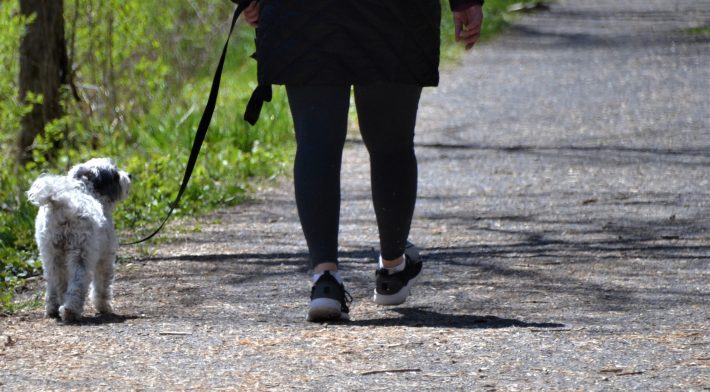
Simply walking down the street with a dog can lead to significantly more social interactions than walking without a dog. Assistance dogs can also facilitate these interactions. One study found that individuals using a wheelchair were more likely to be approached when their assistance animal was present.
The presence of an animal can also enhance perceptions of trustworthiness and responsibility, which in turn fosters positive social interactions. Researchers found that people were more likely to help a stranger with a dog than one without a dog, suggesting that the presence of an animal conferred perceptions of trust.
For children, interacting with a pet can also provide an additional opportunity to practice positive social interactions and develop empathy and compassion. Recent research indicates that living with dogs is associated with better social and emotional skills for children. In our own research at the Tufts Pets and Well-Being Lab, we also found that teenagers with high levels of attachment to their pets were likely to have higher levels of social skills and empathy toward others than those without such attachments.
Pets and social capital
Research shows that simply walking down the street with a dog can lead to significantly more social interactions than walking without a dog. Photo: Shutterstock
Pets have also been shown to foster social capital in communities. Social capital is a concept that encompasses the broader community and neighborhood networks of social relationships, and the degree to which the community has a culture of helping others. The trust inherent in these connections can lead to better health and well-being.
Interestingly, pet owners have consistently reported higher levels of social capital in their communities than people without pets, both in the United States and internationally.
In addition to social facilitation, pets can contribute to social capital by strengthening social trust within communities. Neighbors may rely on one another to assist with animal care, which builds reciprocal trust. Pet owners’ use of shared spaces, such as dog parks or green spaces, can lead to better social relationships.
In spite of it, during the COVID-19 pandemic dog owners were more likely than those without dogs to go for regular walks outdoors, providing an opportunity for community engagement during a period of extreme social isolation. The presence of an animal has even been found to increase positive social interactions in the workplace.
While evidence continues to support the idea that pets foster positive interactions between people, animals are not a universal solution for creating trust. There is still a lot we need to learn about the interrelated relationships between pets and people.
Rosie, my special needs foster dog, went to her forever home on the 18th of February. She provided me with canine companionship in the weeks following Izzy’s death and, although I was happy that we found a good match for her, I was sad to see her go.
Two months is a long time to care for a dog, and during our time together Rosie showed me that not only was she misunderstood, but that she was clever enough to have learned how to live in a hearing world despite losing her own. (Rosie also told me one day in no uncertain terms that someone had bashed her – and more than once). Despite all her hardships, Rosie likes company and she still freely gives and receives affection.
Rosie
In the weeks since she left, I have reflected a lot about our dogs. I am still grieving the loss of Izzy, who was followed across the Rainbow Bridge by her friend Ben just last week.
Izzy and Ben, in their younger days, after an off-lead run
I have witnessed foster dog Pumpkin teach Rosie about living in a multi-dog household and Pumpkin has now moved to another foster home. And I am on the search to find my next forever dog because a Doggy Mom without a dog is never a good thing.
Rosie (top left) and Pumpkin learn to co-exist. Since Rosie was here first, she claimed the best bed in the house
We are indeed lucky to have our dogs.
The law considers our dogs to be property, hence the use of the term ‘dog owner’ is common. On reflection though, whether they are a foster or a family dog, they are not property. At best, they are on loan for a life that is far shorter than ours.
“Dogs come into our lives to teach us about love; they depart to teach us about loss” – so the saying goes. In between, however, these loaner dogs teach us:
Never underestimate the power of a good nap
Drink water daily
Live in the moment
Regardless of your age, get out and play
The best things in life are free (these includes cuddles, kisses, walks and just being there for one another)
If you’re reading this, I hope you give your loaner dog a big hug and kiss and take an extra long walk today – for time gets away from us and they are gone too soon.
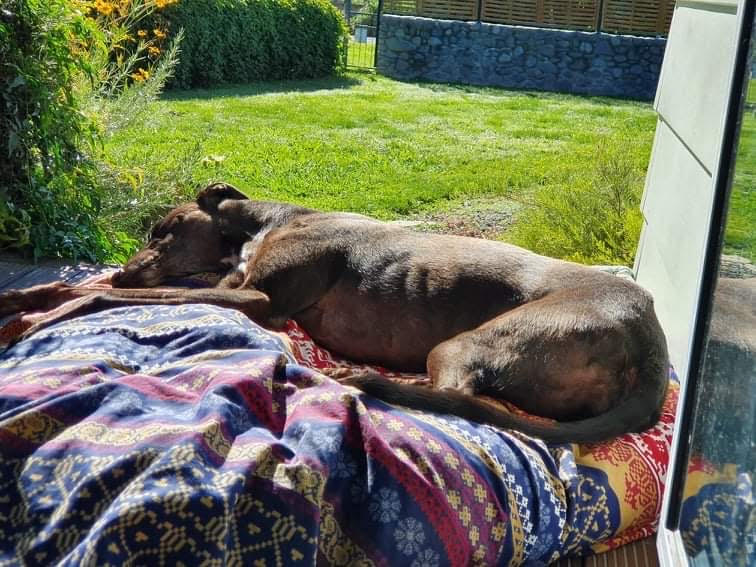
P.S. Rosie is enjoying her new forever home in Blenheim where she can run off-lead with her greyhound brother and lie in the sun every day
Kathleen Crisley, Fear-Free certified professional and specialist in dog massage, rehabilitation and nutrition/food therapy, The Balanced Dog, Christchurch, New Zealand
Agility dogs lacking core strength from routine physical exercise and those participating in activities like flyball may be more susceptible to one of the most common canine knee injuries.
That knee injury is a cranial cruciate ligament rupture, which is equivalent to an anterior cruciate ligament (ACL) tear in humans.
According to a research survey documenting activity and injury odds of more than 1,200 agility dogs, just about any physical exercise seems to lower the risk of rupturing the ligament, but some exercises seem to increase the risk. In addition, the size and shape of the dog — and thereby certain breeds — were also found to be at higher risk.
“Balance exercises, wobble boards, anything that improves the core strength of the dog seemed to lower the odds of a ligament tear,” said Deb Sellon, a Washington State University veterinarian and lead author on the study published in BMC Veterinary Research. “We found fitness matters for dogs just like it does for people, and we haven’t shown that before.”
Sellon is also the founder of the university’s Agility Dog Health Network, which was accessed in the study. By using odds ratios, which is essentially a statistical risk assessment, Sellon and Denis Marcellin-Little, a veterinary orthopedic specialist with University of California, Davis, looked for trends in 1,262 agility dogs — 260 that tore the ligament and 1,002 dogs that did not.
In addition to balance and core strengthening exercises activities like dock diving, barn hunt and scent work are associated with a decreased rate of ligament rupture, too.
While regular activity, like swimming, playing fetch or frisbee, walking or running didn’t increase the risk of injury, it didn’t lower the odds either.
Surprisingly, dogs that competed more frequently in agility events and competed at a higher level on more technically rigorous types of courses were less likely to rupture their cruciate ligaments.
The only physical activities that increased the odds of injury were short walks or runs over hilly or flat terrain on a weekly basis, and many of those injuries were in dogs early in their agility career that lacked core strength from routine physical exercise or at times, rest days.
Training or competing in the new and popular dog sport flyball was found to be the riskiest activity of all activities evaluated in the survey. Agility dogs that also engaged in the sport of flyball were nearly twice as likely to rupture the ligament as compared to other dogs. Nearly 12% of dogs reported to play flyball ruptured the ligament.
The survey confirmed some long-standing and well-accepted risk factors as well. In particular, female dogs spayed before the age of one were almost twice as likely to rupture the ligament compared to dogs that were spayed after their first birthday. Sellon said this is believed to reflect the importance of hormones in developing strong ligaments in young animals.
Trends were also identified among certain breeds.
Survey results indicated Australian shepherds and Labrador retrievers were more than twice as likely to rupture the ligament. Rottweilers and Australian cattle dogs were more than four times as likely to tear the ligament.
Marcellin-Little speculates that could have something to do with the shape of the dog, and maybe its tail.
“Larger dogs doing agility tend to be less balanced, so it is not surprising a Rottweiler or Australian Shepherd may be at a higher risk of a rupture compared to smaller breeds,” he said. “The tail could also be a factor; the tail has been proven very important for cheetahs and you can imagine it has a role to play in the overall balance of the dog.”
Marcellin-Little said there is still a great deal of research that needs to be completed, but the survey gives veterinarians a place to start.
“This research decreases uncertainty; it doesn’t bring certainty, but this one study could provoke thoughts and help us look at potential research areas to target moving forward,” he said. “That is the type of research that the Agility Dog Health Network is planning to support.”
New research finds that dogs being walked in nature reserves contribute a significant amount of nutrients to the environment through their faeces and urine, which researchers warn could negatively impact local biodiversity. The research is published in the British Ecological Society journal, Ecological Solutions and Evidence.
Sign prohibiting dogs at one of the nature reserves. Credit: Pieter De Frenne
Significant levels of fertilisation
Researchers at Ghent University have estimated that each year dog faeces and urine add an average of 11kg of nitrogen and 5kg of phosphorous per hectare to nature reserves near the Belgian city of Ghent. The researchers say that the nutrients added through this neglected form of fertilisation are substantial and could be detrimental to biodiversity and ecosystem functioning.
The estimates for the amount of nitrogen being added by this previously unrecorded source are particularly significant when compared to the total levels of nitrogen being added across most of Europe through fossil fuel emissions and agriculture, which range from 5 to 25kg of nitrogen per hectare.
Professor Pieter De Frenne of Ghent University and lead author of the research said: “We were surprised by how high nutrient inputs from dogs could be. Atmospheric nitrogen inputs from agriculture, industry and traffic rightfully receive a lot of policy attention, but dogs are entirely neglected in this respect.
The researchers call for land managers, especially in low nutrient ecosystems, to emphasise the negative fertilisation effects of dogs to visitors, encouraging them to remove their dogs’ faeces. They also call for leash use to be enforced more stringently and the establishment of more off-leash dog parks to reduce the pressure on nature reserves.
Dogs on leashes and owners removing faeces have big impacts
In the experiment, which calculated the amount of nutrients dogs were adding to the environment by recording the number of dogs present in four nature reserves, the researchers modelled different scenarios including if the dogs were on or off leashes and if owners picked up dog faeces.
When the researchers modelled a scenario where all dogs were kept on leashes (legally required in all these reserves) they found that this reduced the fertilisation rates in the largest part of the reserves but strongly increased fertilisation rates in the small areas around paths. Over a year this input was as high as 175 kg of nitrogen and 73 kg of phosphorus per hectare.
Professor De Frenne said: “In our scenario where all dogs were kept on leashes, we found that in these concentrated areas around paths, nutrient inputs of both nitrogen and phosphorus exceeded legal limits for fertilization of agricultural land. Which is quite staggering as our study concerned nature reserves!”
In a scenario where dogs were on leashes, but all owners picked up their dogs’ faeces, the researchers found that this reduced fertilisation levels by 56% for nitrogen and 97% for phosphorus. This is due to dog faeces accounting for nearly all phosphorous being deposited whereas nitrogen is deposited equally by both faeces and urine.
In models where all dogs were kept on leashes, the researchers found that this reduced fertilisation rates in most of the reserves but strongly increased fertilisation rates in the areas around paths.
Increased nutrients a problem for nature reserves
The addition of nutrients to nature reserves might sound beneficial as these lead to increased plant growth, however, this mostly occurs in a limited number of nutrient demanding species that outcompete rarer specialists, reducing biodiversity.
“In many nature reserves, the management is specifically directed towards lowering soil nutrient levels to enhance plant and animal biodiversity. This can be done through methods like mowing and hay removal.” Explains Professor De Frenne. “Our findings suggest that the currently neglected inputs of dogs in nature reserves could delay restoration goals.”
Calculating nutrient levels
To estimate the amount of nutrients dogs were adding to the environment, the researchers first calculated dog abundance per hectare, per year, by counting dogs in four nature reserves close to the city of Ghent, Belgium. These counts were performed on 487 occasions over 18 months. They then performed a literature search of nutrient concentrations in dog urine and faeces to model different scenarios.
While this method meant that researchers could accurately calculate the abundance of dogs in the nature reserves, estimations had to be made based on the average dog and average volumes of urine and mass of faeces, as well as estimates of nitrogen and phosphorus concentrations.
The researchers say that their data could be improved by recording breeds of dogs, as well as their size, weight and the number of urine and faecal deposits, for instance, by asking owners. The researchers also suggest that georeferencing dog faeces and urine locations could further help to detect fertilisation ‘hot spots’.











 DoggyMom.com