In my post Reading Labels, I shared the notification label from our bag of Purina Pro Plan Gastrointestinal dog food. The food we have relied on for over two years is changing!
The reply from Purina says: “Ensuring the safety and quality of our pet food remains our top priority. While the product is now manufactured in Thailand instead of Europe, the benefits of this diet remain unchanged. With a new manufacturing location, there will be new sourcing for raw ingredients and slight recipe variations. Please be assured the new formula continues to deliver the same efficacy and benefits. We recommend a gradual transition to the new formula to support digestive tolerance. If you have concerns, please consult your vet for tailored advice.“
Let’s compare ingredients…
ORIGINAL FORMULA
Rice, Corn, Pea protein, dried poultry protein, dried beet pulp, digest, soya protein, coconut oil, minerals, pork fat, monoglycerides, soya oil, fish oil; with nutritional additives Vit A, Vit D3, Vit E, Iron (II) sulphate monohydrate, calcium iodate anhydrous, copper (11) sulphate pentahydrate, manganese sulfphate monohydrate, zinc sulphate monohydrate, sodium selenite, antioxidants
I will follow my own advice to clients and transition to this food over a minimum of 10 days (and I’m planning longer than that). As a pet parent, however, I’m holding my breath that this new formula doesn’t upset Sox’s inflammatory bowel disease. Time will tell.
Kathleen Crisley is Fear-Free certified dog massage therapist and canine fitness trainer. She has a particular passion for working with dogs and their families to ensure injury prevention and quality of life. She specialises in working with anxious and emotionally damaged dogs. Her mobile practice, The Balanced Dog, is based in Christchurch, New Zealand
“To date, there are no specific disease modifying anti-osteoarthritic treatments. Current management of patients with osteoarthritis aims to improve patient and societal outcomes by reducing symptoms and improving function. Clinical guidelines broadly recommend the provision of effective and individualised information, combined with non-pharmacological and pharmacological interventions, and when these are insufficient, surgery.”
A new UK survey conducted on behalf of Purina has revealed what previous studies have shown, that the human-animal bond is important and that society benefits from our supportive relationship with animals.
Over two-thirds of pet owners feel a stronger bond with their pets than their family and friends.
Top ten ways the human-pet bond helps people feel better
10. Coping with Break-Ups For 32% of pet owners, the bond with their pets has been instrumental in helping them navigate the emotional turmoil of a break-up.
9. Support Through Health Conditions Approximately 42% of pet owners have found emotional support through their pets while dealing with health challenges.
8. Navigating Interpersonal Conflicts Pets serve as a source of comfort during interpersonal conflicts, helping 44% of owners cope with emotional stress.
7. Snuggling for Comfort 46% find comfort in snuggling with their pets, providing emotional warmth and support.
6. Bringing Smiles 49% reported that their pets bring joy into their lives and make them smile.
5. Alleviating Loneliness For 52% of pet owners, the presence of their pets significantly reduces feelings of loneliness, providing companionship and love.
4. Joyful Greetings A warm greeting at the door from a pet can bring joy, as experienced by 52% of pet owners.
3. Distraction from Worries Pets help their owners take their minds off things, with 54% of pet owners benefiting from this comforting distraction.
2. Uplifting Spirits When Feeling Low The companionship of pets provides comfort for 59% of owners when they are feeling low, helping to brighten their mood.
1. Support During Sadness and Life Changes 61% of pet owners asked find solace in their pets during moments of sadness or significant life changes, including after a tough day at work.
In Tennessee, college football is a religion. When I studied in Knoxville in 2023, I was told that on Fridays the staff have to clear their car parks by a certain time (no overtime on Fridays!) because all of the car parking is needed for football fans who descend with their vans, campers and gear to make a weekend of it.
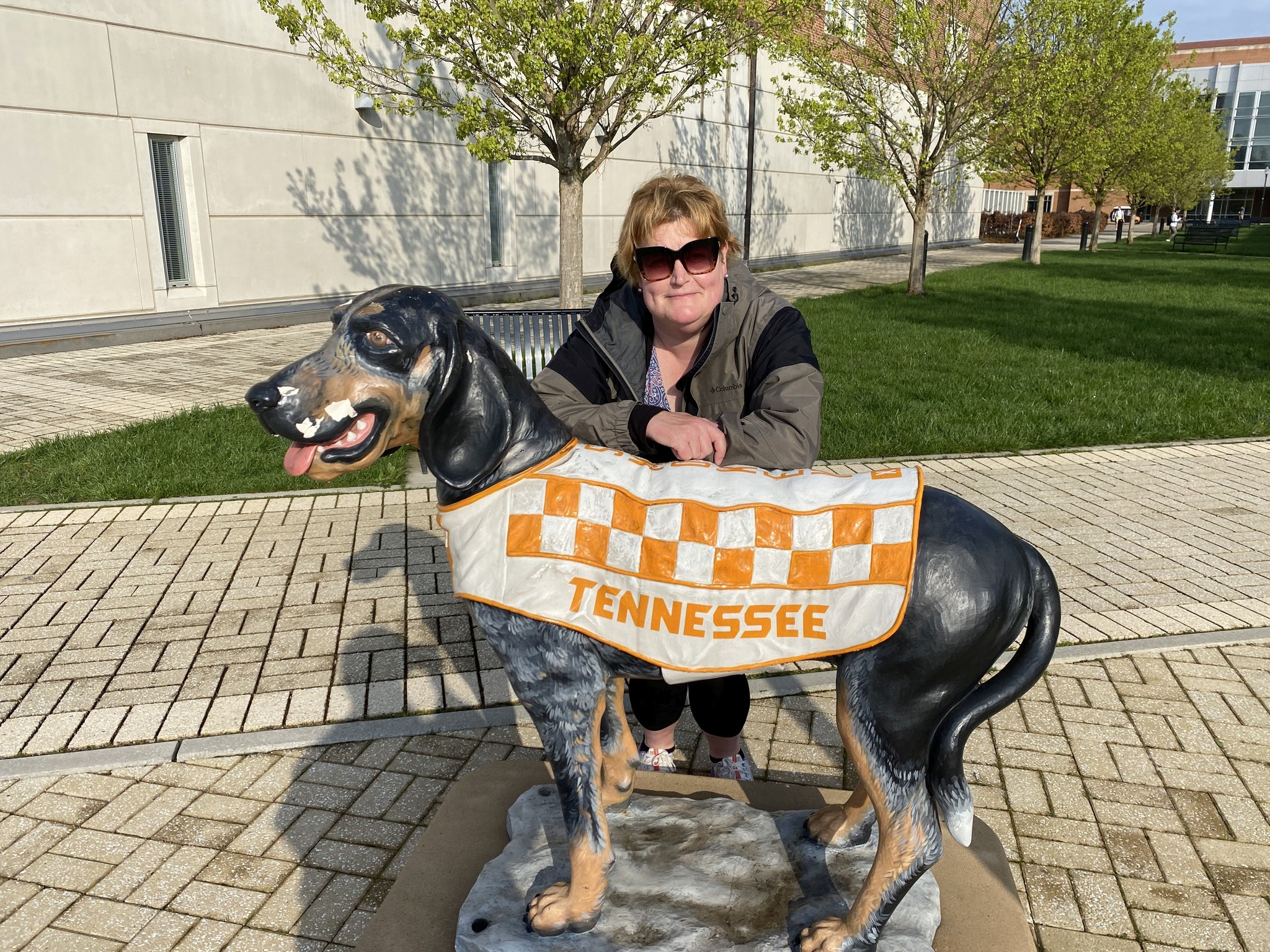
Smokey, a Bluetick Coonhound, is the team mascot and the Knoxville campus is dotted with Smokey statues:
There have been a succession of real-life Smokeys; below is a story about the woman who outfits the current mascot, Smokey X…
Kathleen Crisley is Fear-Free certified dog massage therapist and canine fitness trainer. She has a particular passion for working with dogs and their families to ensure injury prevention and quality of life. She specialises in working with anxious and emotionally damaged dogs. Her mobile practice, The Balanced Dog, is based in Christchurch, New Zealand
________________________
There’s nothing quite like sitting in the stands of Neyland Stadium on a fall Saturday as the T opens and Smokey leads the football team out to the field of battle.
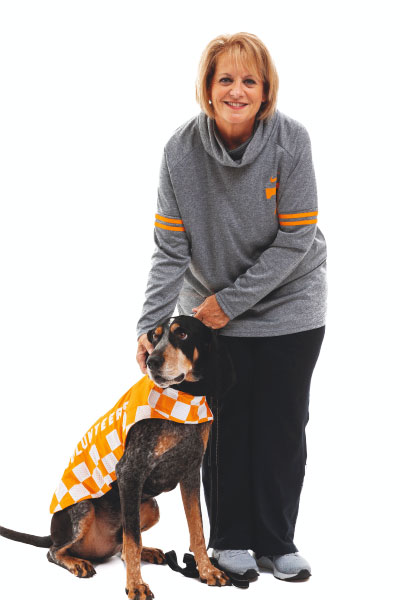
Jill Mayfield with Smokey X
For more than 70 years, Smokey has been an icon in college sports, and his game day gear, made by Tennessee Athletics’ own Jill Mayfield, is just as iconic.
Mayfield, a facility operations and support specialist for UT Athletics, has dedicated a prodigious amount of time brainstorming, stitching, and sewing for the beloved canine.
And it all began with some cheerleaders and a paint mishap.
Before Mayfield began working at UT, she had a friend whose son was on the cheer team. One game day morning, the team was painting the Rock, and without thinking they threw the paint cans in the back of their truck.
“Paint got all over the big flag they had back there for the football game that night,” Mayfield says. Knowing she was a seamstress, they called her in a panic.
The cheerleaders brought the flag to Mayfield’s house, giving her the opportunity to fashion a pattern of the Power T. Half of the team went to find white material, and the other half went to find orange, and they made a temporary flag for the night.
The Cedar Rapids, Iowa, native attributes her love for sewing to her maternal grandmother, who ran a drapery business out of her home.
“My mom would help her at the shop, and to keep me entertained they would have me pick up pins they dropped on the floor,” Mayfield recalls. “Just being around it led me to want to sew.”
In 2000, Mayfield began working for the UT ticket office and reconnected with the head of the cheer team. Shortly afterward, she was asked to try her hand at crafting the outfits worn by the costume mascot.
Though she doesn’t sew much for the costume mascot currently, Mayfield was responsible for the fan favorite Big Orange tuxedo.
It was in 2014 that she was asked if she was interested in making the live mascot’s vest—and she jumped at the opportunity.
Her first task was figuring out the timing. Smokey’s senior handler, a member of the Alpha Gamma Rho fraternity, designs the vests for each football season. Depending on how intricate the design is, the garment may take up to two days to make.
After the design is approved by the spirit program director, Mayfield will tweak it, measure Smokey, and then gather the orange and white fabric to pull the design together.
“I start at the back section first, then the side sections to finish. I’ll put them together and send a picture to the team. Once it looks good, I’ll start assembling and bring Smokey in for a final fitting.”
Mayfield is on the sidelines for each game and loves to see Smokey on duty and interacting with fans.
“I always want to make the handler’s vision come through just like he wanted it,” she says. “I’ve seen Smokey run through the T a million times, but each time feels like the first.”
As you’ve probably read in this blog before, I’m a self-confessed Science Geek. I like the details. So, it should come as no surprise that label reading is part of my routine as a dedicated Dog Mum and pet professional.
This week has provided some good food for thought – the importance of reading labels.
First up is Sox’s Vitamin B supplement, Cobalazorb. When the latest box arrived, it was immediately noticeable that the packaging had changed:
There were differences that could be alarming for us. I have been managing Sox’s inflammatory bowel disease for years now and this supplement is vital since his malfunctioning gut does not digest all the goodness from food as it should. I emailed the company, ADM Australia PTY Ltd.
I have just received a new pack of Cobalazorb for my dog, who has chronic enteropathy. This pack prominently promotes that the product has a chicken flavour and also does not state that the capsule is a vegetable capsule – only “capsule.”
I’ve compared it to the previous pack, which states a flavouring but with no specific type and a vegetable capsule.
Given his sensitivities, I wanted to check that there have been no ingredient changes to the original product and that this is a change in packaging only.
Great news! The company responded the same day with this reply:
Thanks for reaching out.
I can confirm that only the packaging has changed for Cobalazorb, everything else remains the same as before. The flavouring is still artificial chicken (no actual chicken) and the capsules are vegetarian, so OK to use in dogs and cats with allergies and sensitivities.
Please reach out should you have any further questions.
At this point, I was winning. That was until the delivery the next day of our latest 12 kg bag of Purina Pro Plan Gastrointestinal kibble, our mainstay dog food. Only this time, the bag came with a prominent label announcing “Coming Soon, New Look and Formula.”
New formula…and when you turn over that label there’s a reminder that new foods should be transitioned over 10 days.
I emailed Purina to ask what the formula changes will be, explaining that I am using this food for Sox’s chronic enteropathy (IBD). It took them 2 days to reply, “We have reached out to our wider team regarding your questions about the formula changes and we’ll get back in touch with you as soon as possible.“
This reply doesn’t fill me with great confidence and history shows that whenever pet food companies change formulations, it is usually so they can reduce the cost of ingredients while improving profit margin. Decreasing cost of production often means decreasing the quality of the ingredients. Dog food is a big business.
Time will tell if I am going to need to find another food for Sox, and how long I will wait for a definitive reply from Purina.
I encourage all my clients to read labels – you’d be surprised how often products formulations are changed – a change in packaging is often a good reason to check the label.
P.S. A big shout out of thanks to ADM for such fabulous customer service (plus for not changing the formula of a valued supplement)
Kathleen Crisley is Fear-Free certified dog massage therapist and canine fitness trainer. She has a particular passion for working with dogs and their families to ensure injury prevention and quality of life. She specialises in working with anxious and emotionally damaged dogs. Her mobile practice, The Balanced Dog, is based in Christchurch, New Zealand
This article was published on 9 May 2025 in the journal Frontiers in Veterinary Science and its rate of sharing and views shows that it is gaining a lot of interest. I am copying the article here, with attribution, to ensure that dog owners make an informed choice when the drug (known as Beransa in our local market) is recommended.
There is clinical evidence that osteoarthritis worsens at an increased rate when using the medication.
One of the authors, Dr Mike Farrell, has also published this lecture to veterinary professionals, to explain the trial process and the history of adverse effects of this class of drugs.
I’m a science geek and I like to understand clinical trial information and the defensibility of clinical trial information. I encourage my clients to be knowledgeable and to ask the right questions of their vet when all medications are prescribed for their dogs. This post, like others about this drug, is shared to inform dog owners.
Objectives: To conduct a specialist-led disproportionality analysis of musculoskeletal adverse event reports (MSAERs) in dogs treated with bedinvetmab (Librela™) compared to six comparator drugs with the same indication. Furthermore, to report the findings from a subset of dogs whose adverse event (AE) data underwent independent adjudication by an expert panel.
Study design: Case–control study and case series analysis.
Sample population: The European Medicines Agency’s EudraVigilance database (2004–2024) and 19 client-owned dogs.
Methods: An EBVS® Veterinary Specialist in Surgery individually reviewed all MSAERs to Librela™, Rimadyl®, Metacam®, Previcox®, Onsior®, Galliprant®, and Daxocox® (2004–2024). The primary null hypothesis was that Librela’s MSAER rate would not exceed that of comparator drugs by more than 50%. The secondary hypothesis was that MSAER would surge and taper following the launch of new drugs.
Results: The disproportionality analysis did not support the hypotheses. Ligament/tendon injury, polyarthritis, fracture, musculoskeletal neoplasia, and septic arthritis were reported ~9-times more frequently in Librela-treated dogs than the combined total of dogs treated with the comparator drugs. A review of 19 suspected musculoskeletal adverse events (MSAEs) by an 18-member expert panel unanimously concluded a strong suspicion of a causal association between bedinvetmab and accelerated joint destruction.
Conclusion: This study supports recent FDA analyses by demonstrating an increased reporting rate of musculoskeletal adverse events in dogs treated with Librela. Further investigation and close clinical monitoring of treated dogs are warranted.
Impact: Our findings should serve as a catalyst for large-scale investigations into bedinvetmab’s risks and pharmacovigilance.
1 Introduction
Osteoarthritis (OA) is the most prevalent chronic pain condition in companion animals, and is a significant contributor to reduced quality of life and premature death (1). Although a diverse array of therapeutic approaches are currently available, all possess limitations, including suboptimal efficacy and the potential for severe adverse reactions. Chronic pain management is challenged by the trade-off between safety and efficacy. Analgesic drugs that provide significant pain relief can carry a higher risk of adverse reactions than safer, less effective options like glucosamine-chondroitin joint supplements (2). This therapeutic dilemma is complicated by differing risk perceptions between veterinarians and caregivers. Veterinarians, due to their medical training, may be more comfortable with the risks associated with prescription analgesics, whereas caregivers may be more hesitant, sometimes declining or limiting their use even when deemed necessary by the veterinarian (3). This disconnect is underscored by a 2018 study revealing that 22% of dogs for whom analgesics were recommended by their veterinarians did not receive them (4).
Development of new therapies offering enhanced safety and efficacy can help bridge the gap between veterinary recommendations and caregiver acceptance. Bedinvetmab (Librela™), a monoclonal antibody (mAb) targeting nerve growth factor (NGF), represents a significant advancement in canine osteoarthritis (OA) pain management. Following its approval by the European Commission in November 2020, it became the first mAb authorized for this indication. The Food and Drug Administration (FDA) granted U.S. marketing authorization 2.5 years later, and the Australian Pesticides and Veterinary Medicines Authority subsequently registered the same drug as Beransa™.
While these regulatory approvals underscored worldwide confidence in veterinary mAbs, their human equivalent were associated with substantial safety concerns. Specifically, NGF modulates bone and cartilage turnover (5), and its inhibition is linked to accelerated joint degeneration in humans (6, 7). This was evidenced in 2012, when clinical trials of anti-NGF mAbs (aNGFmAbs) revealed rapidly progressive osteoarthritis (RPOA) (8), leading the FDA to impose a two-year clinical trial hold and mandate a risk evaluation and mitigation strategy (REMS) post-hold. However, even with stringent screening, low dosing, and NSAID prohibition after the REMS was implemented, RPOA risk persisted (9–11). While the exact mechanism is still under investigation, human clinical trials did not support the hypothesis that RPOA is caused by overuse of weight-bearing joints (7, 10).
Post-marketing pharmacovigilance is crucial for continuously monitoring a drug’s safety and efficacy after it enters the market, as clinical trials cannot capture the full spectrum of potential adverse reactions. It involves a combination of voluntary reporting of adverse drug reactions (ADRs) by healthcare professionals and the public, and proactive surveillance programs, including government-funded, industry-sponsored, and independent research. Their findings inform regulatory decisions, which can range from label updates and limited use restrictions to, in rare cases, market withdrawal if the risks outweigh the benefits (12).
When an animal exhibits unexpected clinical signs following drug administration, differentiating these effects from the underlying disease or a new unrelated condition can be complex. Nevertheless, prompt identification of potential causal relationships is paramount for ensuring patient safety. The thalidomide tragedy exemplifies the critical importance of rigorous pre-clinical and post-marketing drug safety surveillance. Insufficient testing and a lack of robust post-marketing surveillance systems failed to identify the teratogenic potential of thalidomide (13). This resulted in widespread use of the drug leading to severe birth defects in thousands of children, highlighting the potentially devastating consequences of delayed recognition of drug-related adverse events.
In December 2024, the FDA issued an open letter to veterinarians, alerting them to neurological and musculoskeletal safety signals identified during their post-marketing surveillance of Librela (14). The FDA’s Center for Veterinary Medicine (CVM) employed an algorithmic approach to evaluate ADRs. Their approach, incorporating disproportionality analysis, statistically assessed the frequency of reported adverse events (AEs) in dogs receiving Librela compared to those treated with other OA medications. The FDA’s analysis identified 18 distinct safety signals in dogs administered Librela, encompassing neurological events, urinary problems, and musculoskeletal disorders (14). Notably, the FDA observed a disproportionately elevated reporting rate of “lameness” in dogs receiving Librela. In response, the Center for Veterinary Medicine (CVM) advised veterinarians to proactively inform pet owners about these potential adverse reactions (14).
The CVM emphasized that their objective was to generate hypotheses, acknowledging the inherent limitations of establishing definitive causality (14). They noted that AE reporting systems are subject to various biases, including underreporting, reporting biases influenced by [social] media attention, and confounding factors such as concomitant medications. Furthermore, the CVM’s reliance on algorithmic analyses of secondary data, without the benefit of expert clinical interpretation, introduces additional diagnostic uncertainty (15). To address this limitation, we employed a two-pronged approach. Firstly, we conducted a specialist-led disproportionality analysis of musculoskeletal adverse event reports (MSAERs) to expand upon the CVM’s work. This analysis tested the null hypothesis that Librela’s MSAER rate would not exceed that of six comparator drugs with the same indication by more than 50%. Secondly, we report the findings from a subset of dogs whose AE data were subjected to independent adjudication by an expert panel and subsequently submitted to the European Medicines Agency (EMA).
2 Materials and methods
2.1 MSAER disproportionality analysis
A detailed description of the EudraVigilance database (EVD) analysis is provided in Supplementary Video 1. Briefly, accurate identification of clinically relevant musculoskeletal adverse events (MSAEs) required a thorough understanding of the pharmacovigilance system’s information flow (Figure 1), and the limitations inherent in the system. Specifically, diagnostic terms submitted by primary reporters are only published if they are listed in the Veterinary Dictionary for Drug Regulatory Activities (VeDDRA). Otherwise, the Marketing Authorization Holder (MAH; Zoetis, Louvain-la-Neuve, Belgium) selects a diagnostic term from a predefined list including clinical signs (e.g., lameness), non-specific diagnoses (e.g., arthritis), and specific diagnoses (e.g., ligament rupture) (16). At the time of analysis, VeDDRA contained 113 musculoskeletal and 313 neurological AE diagnoses (i.e., low-level terms, LLTs) (16). Many LLTs exhibit clinically relevant overlap (Table 1). For example, “limb weakness” (a musculoskeletal LLT) may indicate a neurological problem, while “collapse of leg” (a neurological LLT) might describe an orthopedic AE. With over 35,000 possible combinations of musculoskeletal and neurological LLTs, a simple algorithmic approach was not considered feasible.
To ensure consistency and account for the complex clinical judgments required for data interpretation, a single EBVS® Specialist in Surgery (Author 1) reviewed musculoskeletal adverse event reports (MSAERs) logged within the European Medicines Agency’s (EMA) EudraVigilance database (EVD) from its 2004 inception to December 31, 2024. A descriptive disproportionality analysis was used to compare the incidence of MSAERs associated with Librela to those of six other veterinary analgesics: Rimadyl®, Metacam®, Previcox®, Onsior®, Galliprant®, and Daxocox®. This analysis aimed to identify any potential temporal trends in MSAER reporting, particularly following the introduction of new medications. All adverse event reports (AERs) are filed in the EVD under trade names; therefore, trade names are used consistently throughout this manuscript.
2.2 Case series inclusion criteria
This study utilized a retrospective, case series design. Case recruitment was initiated by Author 1 following the observation of a suspected case of RPOA in a dog receiving Librela. This case was shared on a specialist veterinary forum (17). Subsequently, over an 11-month period, multiple clinicians who subscribed to the forum contacted Author 1 to share concerns regarding serious MSAEs in dogs treated with Librela. Based on these communications, an independent working group was formed comprising clinicians with firsthand experience with MSAEs (see below). The primary objective was to investigate a potential association between Librela administration and the observed pathology. Given the lack of prior records of RPOA in dogs, the working group sought advice from an expert in human neuro-osteoarthropathy (Author 2) and two EBVS® Specialists in Diagnostic Imaging with published expertise in musculoskeletal imaging (Authors 3 and 4).
Twenty-three suspected musculoskeletal adverse events (MSAEs) were independently reviewed by nine investigators with a combined 128 years of experience in referral practice (Authors 1, 5, 6, 7, 9, 11, 14, 15, 16). Clinical data from each case, including signalment, clinical signs, Librela dosing information, concurrent medications, treatment outcomes, and relevant diagnostic test results (radiographs, CT scans, synovial fluid analysis, histopathology), were evaluated. Four cases were excluded from further analysis due to incomplete data or insufficient evidence to support a causal relationship. Twelve MSAERs had already been filed in the EVD, and retrospective reports were filed for the remaining cases at this time.
2.3 Case series adjudication
The independent adjudication panel comprised 12 veterinary orthopedic surgeons, an orthopedic consultant specializing in human neuro-osteoarthropathy, two veterinary diagnostic imaging specialists, two veterinary anesthetists, and a cancer researcher with expertise in monoclonal receptor-based therapeutics. The adjudication panel demonstrated collective expertise including 157 relevant peer-reviewed publications spanning monoclonal antibodies, neuropathic arthropathy, canine osteoarthritis (OA), pathological fractures, and humeral intracondylar fissure (HIF).
Transcripts from the 2012 and 2021 Arthritis Advisory Committee (AAC) and Drug Safety and Risk Management Advisory Committee Meetings were reviewed. Our analysis focused on their joint safety review of humanized anti-nerve growth factor monoclonal antibodies (aNGFmAbs) (8–10). The following limitations in clinical trials used to define human RPOA were acknowledged:
1. Inconsistent baseline imaging: Humans enrolled in low-back pain aNGFmAb clinical trials who developed RPOA did not undergo baseline radiographic imaging of the affected joint (s) before starting treatment (8, 18).
2. Nonspecific terminology: The definition of human RPOA included joint pathology “falling well outside the natural history of OA” (8). Notably, this criterion lacked a specific definition of the “natural history of OA” and did not reference a control group with typical OA progression.
3. Inapplicability of the human definition: The specific term “RPOA” was not adopted for our case adjudication due to its reliance on measurements of large human joints using standing radiographs or MRI (11).
Nineteen dogs with suspected MSAEs following bedinvetmab treatment were independently evaluated by Authors 3 and 4. Suspected drug-related AEs were defined according to the AAC’s methodology as joint pathology “falling well outside the natural history of OA” (8). This included pathological fractures or luxations in osteoarthritic joints, and subchondral osteolysis in the absence of clinical evidence of septic or immune-mediated arthritis. Inter-rater agreement for the two diagnostic imaging specialists was tested using the Fleiss κ coefficient (19).
Diagnostic images were formatted and annotated by Authors 1 and 3. Subsequently, all 18 experts independently reviewed the annotated images, emulating standard clinical practice. The entire cohort of 19 cases was evaluated collectively by the adjudication panel to determine potential drug causality, rather than assessing each case individually, mirroring the AAC’s 2012 protocol (8). Readers can review the cases by watching Supplementary Video 2.
A three-tiered system was used to describe a potential causal relationship between bedinvetmab treatment and MSAEs. Outcomes explicitly implying a known causal link (e.g., “definitely related”) were avoided to reflect the inherent uncertainty of this assessment. Instead, the experts described their personal judgment as “very suspicious,” “suspicious,” or “insufficient evidence” of a potential causal relationship.
2.4 AER translation errors
Translation errors were identified by comparing MSAERs submitted by attending veterinarians with corresponding reports filed by the MAH. A clinically relevant discrepancy between the reports was considered a translation error.
3 Results
3.1 MSAER disproportionality analysis
A total of 4,746 MSAERs were identified between May 20, 2021 (3 months after Librela’s European release) and December 31, 2024. Following the exclusion of 457 comparator medication reports which specified co-administration of Librela, 4,289 MSAERs remained. Of these, 3,755 (87.5%) were attributed to Librela. The majority of MSAERs (3,411, 79.5%) were excluded due to confounding neurological and/or systemic/neoplastic diagnoses (Supplementary Video 1), resulting in a final cohort of 878 eligible MSAERs for analysis, with 789 (90%) attributed to Librela (Supplementary Table S1). Most primary reports to Librela (88%) were submitted by veterinarians and other healthcare professionals (Figure 1).
Ligament/tendon injury, polyarthritis, fracture, musculoskeletal neoplasia, and septic arthritis were reported ~9-times more frequently in Librela-treated dogs than the combined total of dogs treated with the comparator medications (Figure 2). Furthermore, accumulated MSAERs for Librela over 45 months exceeded those of the highest-ranking NSAID (Rimadyl) by ~20-fold and surpassed the combined accumulated MSAERs of all comparator drugs over 240 months by ~3-fold (Figure 3). These findings did not support the null hypothesis that Librela’s MSAER rate would not exceed that of comparator drugs by more than 50%. Moreover, the secondary hypothesis that MSAER would surge and taper following the launch of new drugs was not supported (Figure 3).
3.2 Specific diagnoses and outcomes for Librela’s MSAERs
The most frequent diagnostic terms selected by the MAH were “arthritis” or associated clinical signs (e.g., “lameness”, “joint pain”, “difficulty climbing stairs”), encompassing 530 cases (67%) (Figure 4). Of these, the MAH filed 442 reports (83.4%) as “not serious”. The remaining 259 ADRs included ligament injuries, limb collapse, polyarthritis, bone cancer, and fractures. Among these, the MAH filed 138 reports (52.3%) as “not serious”.
Figure 4.Severity and outcome data for MSAER associated with Librela. Unexpected findings are highlighted in red. These include a significant proportion of severe MSAER, such as ligament ruptures, luxations, fractures, limb collapse, and septic arthritis, filed as “not serious”. In addition, several dogs diagnosed with bone cancer were reported as “recovered/resolving”. The EMA defines a serious adverse event as “any adverse event which results in death, is life-threatening, results in persistent or significant disability/incapacity, or a congenital anomaly or birth defect.” However, a more intuitive and clinically relevant definition includes events causing permanent disability (44), requiring surgical intervention and/or prolonged hospitalization (12). Importantly, published AER data are subject to change, but only if translation errors are recognized and reported (see Figure 1).
The most frequently reported outcome was “unknown” (310 dogs; 39%). Of the remaining dogs, 177 (22%) experienced AEs that were reported as “recovered/resolving/normal”; 229 (29%) were filed as “ongoing”; 15 (2%) “recovered with sequelae”; and 63 dogs (8%) died or had been euthanized.
3.3 Case series adjudication outcome
Clinical and radiographic characteristics are summarized in Table 2 and Figures 5–13. Mean ± SD number of Librela doses was 12.7 ± 9.5 (range 1–30), with a dose range of 0.4–0.76 mg/kg (mean 0.62 ± 0.08 mg/kg). Referral for investigation of suspected RPOA was made at least 6 months after Librela initiation in 13/19 cases. Eleven dogs (58%) received regular concurrent NSAIDs. The most frequently affected joint was the elbow (13/19 dogs, 68%), followed by the stifle and hock (two dogs each), and hip (one dog). Seven dogs (37%) sustained pathological fractures, and two (10.5%) had joint luxations. Two dogs with clinically normal hock joints before initiating Librela therapy developed severe non-index hock joint destruction after Librela treatment for elbow OA.
Histopathological examination of bone and synovial tissue from four dogs revealed no evidence of inflammatory arthropathy, tick-borne diseases, or neoplasia. A pathologist who was invited to compare their findings to those reported in a submitted article on human RPOA (20) commented that the pathological features were similar (21).
Interobserver agreement between diagnostic imaging specialists was substantial (κ = 0.68, 95% CI 0.4–0.97). Both specialists were very suspicious of a potential causal relationship between the observed pathology and Librela treatment in 68% of dogs (13/19). Furthermore, all 18 panelists (including the two diagnostic imagers) were very suspicious of a potential causal relationship between Librela treatment and the observed pathology.
3.4 AER translation errors
Translation errors were identified in 9/19 cases (52%) (Table 2 and Supplementary Figures S1–S6). They included incorrect diagnoses (n = 5), severity (n = 5), and outcome (n = 5). Furthermore, the MAH reported two cases as “overdoses”, despite the administered dosages falling within the recommended range.
4 Discussion
This study reveals a striking disparity in musculoskeletal adverse event reports to Librela compared to six comparator drugs. Ligament/tendon injuries, polyarthritis, fractures, musculoskeletal neoplasia, and septic arthritis were reported nine times more frequently in Librela-treated dogs. Worryingly, since its European release, Librela has accumulated 20 times more reports than the highest-ranking comparator drug (Rimadyl) and three times more than all comparator drugs combined over a 20-year period. Furthermore, independent expert review of a subset of cases strongly supported a causal association between Librela and accelerated joint destruction.
Librela experienced rapid market penetration following its 2021 European release. Zoetis recently reported global distribution exceeding 21 million doses, translating to an estimated average daily distribution of over 15,000 doses (22). This initial market success has been tempered by emerging concerns regarding bedinvetmab’s safety. These concerns have been amplified by various factors, including the FDA’s safety update (14), negative press coverage (23), the European Commission’s investigation into potential anticompetitive conduct by Zoetis (24), and the emergence of online communities disseminating safety concerns. This confluence of events has fostered a climate of apprehension and confusion. Addressing these concerns requires unbiased and rigorous post-marketing pharmacovigilance to evaluate this drug’s true risk–benefit profile.
Assessing the “expectedness” of adverse drug reactions (ADRs) is fundamental to effective pharmacovigilance. In causal relationship investigations, statisticians use Bayesian principles to evaluate reaction likelihood, considering plausibility and prior knowledge (15). The FDA’s ABON (Algorithm for Bayesian Onset of symptoms) links drug exposure to adverse events AEs (15). For example, when applied to NSAIDs, ABON incorporates prior knowledge of prostaglandin inhibition, its effect on gastrointestinal (GI) mucosal integrity, and the established link between NSAIDs and GI ulceration (25). Notably, NSAIDs can cause subclinical GI damage, undetectable without endoscopy (25). When clinical signs occur, vomiting and diarrhea are common manifestations (26). However, the FDA does not use sales-figure-based prevalence estimates, because they can dramatically underrepresent true incidence (15). For example, comparing carprofen’s AERs to drug sales suggests vomiting and diarrhea occur in <1/10,000 doses, falsely implying that common side-effects are “very rare” (27).
The NSAID analogy is valuable for three reasons. First, while prostaglandins safeguard gastrointestinal integrity, NGF plays a similar pivotal role in bone and cartilage repair (5). Second, serious subclinical cartilage and bone degeneration often precede clinical signs (28). Third, recent claims of bedinvetmab’s “rare” or “very rare” AEs (29) are based on similar methodology to the carprofen analysis described above. Given NGF’s diverse roles and prior evidence of RPOA, subchondral bone fractures, and atraumatic joint luxations in humans and animals (8, 11, 30–33), bedinvetmab-associated MSAEs are an expected consequence of NGF inhibition.
Bayesian analysis, while powerful, can be susceptible to subjective biases. This is exemplified by the FDA’s role in the opioid crisis. Despite acknowledging the inherent risk of opioid addiction, the agency over-relied on a five-sentence letter, disproportionately cited as evidence of low addiction rates with oral opioid therapy (34). The FDA’s subsequent mischaracterization of addiction risk as “minimal” was heavily criticized (34). Similarly, the hypothesis that RPOA is a uniquely human problem has faced significant criticism. Multiple experts have contested this claim (32, 35, 36), citing weak supporting data (37). Notably, the joint safety claims outlined in Librela’s datasheet (38) are based on radiographic assessment of five healthy beagles who received the recommended dose (37). This study reported “mild” cartilage erosion in two dogs, despite erosion being, by definition, a severe form of cartilage pathology. Furthermore, despite being invited to provide annotated images to clarify this discrepancy (36), Zoetis declined to do so (39).
Janssen (fulranumab), Pfizer (tanezumab), and Regeneron (fasinumab) self-reported accelerated joint degeneration in their pre-marketing human aNGFmab clinical trials (8). The FDA responded quickly and decisively, voting 21–0 to recognize RPOA as a side-effect of aNGFmAbs and mandating a sophisticated risk mitigation strategy for all subsequent trials (8). The scale of the precautions undertaken by these pharmaceutical companies is exemplified by Pfizer’s tanezumab program, which involved 18,000 patients and 50,000 radiographs analyzed by 250 experts (11).
When viewed in context, bedinvetmab’s limited pre-marketing clinical trials raise serious concerns. Only 89 dogs received more than three doses (40), and crucially, no radiographic screening for accelerated joint degeneration was conducted (40, 41). Unlike Janssen, Pfizer, and Regeneron, Zoetis was unable to self-report accelerated joint destruction due to the absence of radiographic investigations. Consequently, we must rely on post-marketing surveillance to determine whether companion animals experience the adverse joint pathology observed in humans and laboratory animals treated with aNGFmAbs.
We initially intended to publish only the 19 adjudicated cases as a case series. However, we recognized the potential for case examples of severe pathology to be dismissed as outliers—isolated events swamped by the widespread positive experiences reported with bedinvetmab. Given Librela’s popularity, this perspective would be understandable. However, this response would be analogous to assessing the risk of NSAID-induced gastrointestinal harm by comparing the incidence of perforating gastric ulcers with NSAID sales figures. It should be obvious that such an approach neglects the critical fact that NSAIDs can induce subclinical harm which is undetectable without inconvenient tests such as endoscopy. Crucially, unlike the gastrointestinal mucosa, which possesses significant regenerative capacity, cartilage damage, once incurred, is largely irreversible (42). This fundamental difference underscores the gravity of MSAEs associated with aNGFmAbs.
To complement the FDA’s Bayesian analyses, which collected data from May 2023 to March 2024, we employed a descriptive evaluation to 20 years of MSAER data. This approach was deemed complementary because the ABON algorithm primarily focuses on identifying ADRs occurring shortly after medication initiation, while MSAEs often exhibit a long latency period between drug administration and AE detection. This hypothesis is supported by the observation that most reactions in the FDA’s analysis occurred within the first week post-injection, whereas most human RPOA (9, 10) and 13/19 cases in our study manifested at least 6 months after treatment initiation.
A limitation of our descriptive analysis is the inherent subjectivity associated with expert judgment. To mitigate potential bias, the adjudication panel primarily comprised veterinarians with a shared interest in advancing pain management for companion animals. Importantly, none had financial ties to veterinary pharmaceutical companies. Having mitigated bias, and recognizing the inherent subjectivity in data analysis and interpretation, we prioritized data presentation to facilitate independent judgment by readers, regardless of their level of expertise. Another acknowledged limitation of our study pertains to the FDA’s guidance that AE signal detection should primarily serve as a hypothesis-generating tool. Accordingly, our exploratory study was designed to identify potential safety signals rather than provide a comprehensive safety profile. As such, it cannot address specific questions like the impact of NSAID co-administration on MSAER risk. However, we believe these findings offer valuable insights and will stimulate further investigation.
Our study highlights an important weakness in the current pharmacovigilance system: the lack of comprehensive terminology for accurately capturing serious AEs. The absence of RPOA as a diagnostic term in VeDDRA is of particular concern, potentially leading to a substantial underestimation of MSAERs. Without a specific term, these events may be misclassified as manifestations of the underlying condition being treated (e.g., “arthritis” or “lameness”), obscuring the true incidence and severity of ADRs. To address this deficiency and enhance data quality, we formally requested the addition of the term “RPOA” to VeDDRA (16). Our proposed definition, “joint pathology falling well outside the natural history of OA,” leverages the expertise and clinical judgment of reporting veterinarians with direct access to patient data.
An FDA panelist involved in the adjudication of humanized aNGFmAbs eloquently summarised our current belief: “All parties agree that the use of aNGFmabs is effective, but they are associated with a unique, rapidly progressing form of OA…and we can only speculate as to its causes (8).” In animals, just as in humans, the goal of effective pain management is paramount. However, we must also ensure that our therapeutic interventions do not inadvertently exacerbate the underlying condition. To uphold the highest standard of care for companion animals, we hope to apply the same rigorous scrutiny to veterinary mAbs as was employed in human healthcare.
Data availability statement
The original contributions presented in the study are included in the article/Supplementary material.
The author(s) declare that no financial support was received for the research and/or publication of this article.
Conflict of interest
The authors declare that the research was conducted in the absence of any commercial or financial relationships that could be construed as a potential conflict of interest.
Generative AI statement
The authors declare that no Gen AI was used in the creation of this manuscript.
Publisher’s note
All claims expressed in this article are solely those of the authors and do not necessarily represent those of their affiliated organizations, or those of the publisher, the editors and the reviewers. Any product that may be evaluated in this article, or claim that may be made by its manufacturer, is not guaranteed or endorsed by the publisher.
SUPPLEMENTARY VIDEO 1 | Demonstration of the EudraVigilance database MSAER search strategy. The database can be accessed at: https://www.adrreports.eu/vet/en/search.html# (Accessed September 18–23, 2024 and January 1–10, 2025).
SUPPLEMENTARY VIDEO 2 | Narrated slideshow used by the independent adjudication panel.
SUPPLEMENTARY FIGURE S1 | Case 1—AER translation error. The attending specialist filed an AER specifying their suspicion of RPOA. The MAH filed a report with an incorrect diagnosis of septic arthritis.
SUPPLEMENTARY FIGURE S2 | Case 2—AER translation error. The MAH filed a report specifying “overdose” but the administered dose (0.6 mg/kg) was in the recommended range (38).
SUPPLEMENTARY FIGURE S3 | Case 4—AER translation error. A 9.3-year-old Labrador Retriever sustained a pathological elbow fracture. The attending specialist filed an AER to the VMD specifying their suspicion of RPOA. This report was shared with the MAH, who filed a report for non-serious “arthritis”, with a listed outcome of recovered/resolving.
SUPPLEMENTARY FIGURE S4 | Case 10—AER translation error. A 10-year-old GSD required hindlimb amputation to manage erosive tarsometatarsal OA. The attending specialist filed an AER to the VMD including the result of the histopathological analysis (which was consistent with RPOA). The MAH filed a report stating that the AE was recovered/resolving following “digit amputation”.
SUPPLEMENTARY FIGURE S5 | Case 11—AER translation error. The attending specialist filed an AER to the VMD specifying a diagnosis of ongoing RPOA. The MAH filed a report for non-serious arthritis which was recovered/resolving.
SUPPLEMENTARY FIGURE S6 | Case 12—AER translation error. The attending specialist filed an AER to the VMD specifying a diagnosis of severe RPOA. The MAH filed a report for a non-severe bone and joint disorder which was recovered/resolving. The MAH filed a report specifying “overdose” but the administered dose (0.7 mg/kg) was in the recommended range (38).
SUPPLEMENTARY FIGURE S7 | Case 13—AER translation error. The attending specialist filed an AER specifying their suspicion of RPOA. The MAH filed a report with an erroneous diagnosis of osteosarcoma.
SUPPLEMENTARY FIGURE S8 | Case 15—AER translation error. A 9.5-year-old English Bull Terrier developed erosive arthritis in previously normal hock joints. The MAH filed a report with a diagnosis of non-serious swollen joint which was recovered/resolving.
SUPPLEMENTARY FIGURE S9 | Case 18—AER translation error. A 6-year-old Australian Shepherd developed bilateral stifle joint luxations and fibular fractures following 8 doses of Librela. The MAH filed an AER designating this reaction as not serious.
References
1. O’Neill, DG, Brodbelt, DC, Hodge, R, Church, DB, and Meeson, RL. Epidemiology and clinical management of elbow joint disease in dogs under primary veterinary care in the UK. Canine Genet Epidemiol. (2020) 7:1. doi: 10.1186/s40575-020-0080-5
2. Barbeau-Gregoire, M, Otis, C, Cournoyer, A, Moreau, M, Lussier, B, and Troncy, E. A 2022 systematic review and meta-analysis of enriched therapeutic diets and nutraceuticals in canine and feline osteoarthritis. Int J Mol Sci. (2022) 23:10384. doi: 10.3390/ijms231810384
3. Belshaw, Z, Asher, L, and Dean, RS. The attitudes of owners and veterinary professionals in the United Kingdom to the risk of adverse events associated with using non-steroidal anti-inflammatory drugs (NSAIDs) to treat dogs with osteoarthritis. Prev Vet Med. (2016) 131:121–6. doi: 10.1016/j.prevetmed.2016.07.017
4. Anderson, KL, O’Neill, DG, Brodbelt, DC, Church, DB, Meeson, RL, Sargan, D, et al. Prevalence, duration and risk factors for appendicular osteoarthritis in a UK dog population under primary veterinary care. Sci Rep. (2018) 8:5641. doi: 10.1038/s41598-018-23940-z
5. Fiore, M, Chaldakov, GN, and Aloe, L. Nerve growth factor as a signaling molecule for nerve cells and also for the neuroendocrine-immune systems. Annu Rev Neurosci. (2009) 20:133–45. doi: 10.1515/REVNEURO.2009.20.2.133
7. Hochberg, MC, Carrino, JA, Schnitzer, TJ, Guermazi, A, Walsh, DA, White, A, et al. Long-term safety and efficacy of subcutaneous tanezumab versus nonsteroidal anti-inflammatory drugs for hip or knee osteoarthritis: a randomized trial. Arthritis Rheumatol. (2021) 73:1167–77. doi: 10.1002/art.41674
9. Joint Meeting of the Arthritis Advisory Committee (AAC) and the Drug Safety and Risk Management Advisory Committee. Meeting transcript. March 25, 2021. Available online at: https://www.fda.gov/media/150663/download (Accessed July 1, 2024).
10. Joint Meeting of the Arthritis Advisory Committee (AAC) and the Drug Safety and Risk Management Advisory Committee. Meeting transcript. March 24, 2021. Available onilne at: https://www.fda.gov/media/150662/download (Accessed July 1, 2024).
12. Gliklich, RE, Dreyer, NA, and Leavy, MB. Registries for evaluating patient outcomes: a User’s guide [internet]. 3rd ed. Rockville (MD): Agency for Healthcare Research and Quality (US) (2014).
16. EMA. Veterinary Dictionary for Drug Related Affairs (VeDDRA) list of clinical terms for reporting suspected musculoskeletal AE to veterinary medicinal products. Available online at: http://justusrandolph.net/kappa/ (Accessed October 11, 2024).
18. Dimitroulas, T, Lambe, T, Raphael, JH, Kitas, GD, and Duarte, RV. Biologic drugs as analgesics for the management of low back pain and sciatica. Pain Med. (2019) 20:1678–86. doi: 10.1093/pm/pny214
24. European Commission. European Commission opens investigation into possible anticompetitive conduct by Zoetis over novel pain medicine for dogs. Available online at: https://ec.europa.eu/commission/presscorner/detail/en/ip_24_1687 (Accessed March 30, 2024)
25. Hillier, TN, Watt, MM, Grimes, JA, Berg, AN, Heinz, JA, and Dickerson, VM. Dogs receiving cyclooxygenase-2–sparing nonsteroidal anti-inflammatory drugs and/or nonphysiologic steroids are at risk of severe gastrointestinal ulceration. J Am Vet Med Assoc. (2024) 263:1–8. doi: 10.2460/javma.24.06.0430
26. Innes, JF, Clayton, J, and Lascelles, BD. Review of the safety and efficacy of long-term NSAID use in the treatment of canine osteoarthritis. Vet Rec. (2010) 166:226–30. doi: 10.1136/vr.c97
27. Hunt, JR, Dean, RS, Davis, GN, and Murrell, JC. An analysis of the relative frequencies of reported adverse events associated with NSAID administration in dogs and cats in the United Kingdom. Vet J. (2015) 206:183–90. doi: 10.1016/j.tvjl.2015.07.025
28. Jones, GM, Pitsillides, AA, and Meeson, RL. Moving beyond the limits of detection: the past, the present, and the future of diagnostic imaging in canine osteoarthritis. Front Vet Sci. (2022) 9:789898. doi: 10.3389/fvets.2022.789898
29. Monteiro, BP, Simon, T, Knesl, O, Mandello, K, Nederveld, S, Olby, NJ, et al. Global pharmacovigilance reporting of the first monoclonal antibody for canine osteoarthritis: a case study with bedinvetmab (Librela™). Front Vet Sci. 12:1558222. doi: 10.3389/fvets.2025.1558222
30. Menges, S, Michaelis, M, and Kleinschmidt-Dörr, K. Anti-NGF treatment worsens subchondral bone and cartilage measures while improving symptoms in floor-housed rabbits with osteoarthritis. Front Physiol. (2023) 14:1201328. doi: 10.3389/fphys.2023.1201328
32. Iff, I, Hohermuth, B, Bass, D, and Bass, M. A case of potential rapidly progressing osteoarthritis (RPOA) in a dog during bedinvetmab treatment. Vet Anaesth Analg. 52:263–5. doi: 10.1016/j.vaa.2024.11.041
33. Berenbaum, F, Blanco, FJ, Guermazi, A, Miki, K, Yamabe, T, Viktrup, L, et al. Subcutaneous tanezumab for osteoarthritis of the hip or knee: efficacy and safety results from a 24-week randomised phase III study with a 24-week follow-up period. Ann Rheum Dis. (2020) 79:800–10. doi: 10.1136/annrheumdis-2019-216296
34. deShazo, R, Johnson, M, Eriator, I, and Rodenmeyer, K. Backstories on the U.S. opioid epidemic: good intentions gone bad, an industry gone rogue and watch dogs gone to sleep. Am J Med. (2018) 131:595–601. doi: 10.1016/j.amjmed.2017.12.045
35. Kronenberger, K. In dogs diagnosed with osteoarthritis, how safe and effective is long-term treatment with bedinvetmab in providing analgesia? Vet Evid. (2023) 8. doi: 10.18849/ve.v8i1.598
36. Farrell, M, Adams, R, and von Pfeil, D. Re: laboratory safety evaluation of bedinvetmab, a canine anti-nerve growth factor monoclonal antibody, in dogs. Vet J. (2024) 305:106104. doi: 10.1016/j.tvjl.2024.106104
37. Krautmann, M, Walters, R, Cole, P, Tena, J, Bergeron, LM, Messamore, J, et al. Laboratory safety evaluation of bedinvetmab, a canine anti-nerve growth factor monoclonal antibody, in dogs. Vet J. (2021) 276:105733. doi: 10.1016/j.tvjl.2021.105733
39. Werts, A, Reece, D, Simon, T, and Cole, P. Re: re: laboratory safety evaluation of bedinvetmab, a canine anti-nerve growth factor monoclonal antibody, in dogs. The Vet J. (2024) 306:106175. doi: 10.1016/j.tvjl.2024.106175
40. Corral, MJ, Moyaert, H, Fernandes, T, Escalada, M, Tena, JK, Walters, RR, et al. A prospective, randomized, blinded, placebo-controlled multisite clinical study of bedinvetmab, a canine monoclonal antibody targeting nerve growth factor, in dogs with osteoarthritis. Vet Anaesth Analg. (2021) 48:943–55. doi: 10.1016/j.vaa.2021.08.001
41. Michels, GM, Honsberger, NA, Walters, RR, Tena, JK, and Cleaver, DM. A prospective, randomized, double-blind, placebo-controlled multisite, parallel-group field study in dogs with osteoarthritis conducted in the United States of America evaluating bedinvetmab, a canine anti-nerve growth factor monoclonal antibody. Vet Anaesth Analg. (2023) 50:446–58. doi: 10.1016/j.vaa.2023.06.003
42. Heinemeier, KM, Schjerling, P, Heinemeier, J, Møller, MB, Krogsgaard, MR, Grum-Schwensen, T, et al. Radiocarbon dating reveals minimal collagen turnover in both healthy and osteoarthritic human cartilage. Sci Transl Med. (2016) 8:346ra90-346ra90. doi: 10.1126/scitranslmed.aad8335
Citation: Farrell M, Waibel FWA, Carrera I, Spattini G, Clark L, Adams RJ, Von Pfeil DJF, De Sousa RJR, Villagrà DB, Amengual-Vila M, Paviotti A, Quinn R, Harper J, Clarke SP, Jordan CJ, Hamilton M, Moores AP and Greene MI (2025) Musculoskeletal adverse events in dogs receiving bedinvetmab (Librela). Front. Vet. Sci. 12:1581490. doi: 10.3389/fvets.2025.1581490
Received: 22 February 2025; Accepted: 04 April 2025; Published: 09 May 2025.
Disclaimer:All claims expressed in this article are solely those of the authors and do not necessarily represent those of their affiliated organizations, or those of the publisher, the editors and the reviewers. Any product that may be evaluated in this article or claim that may be made by its manufacturer is not guaranteed or endorsed by the publisher.
It’s a win for Darwin’s Dogs and open access data! A new study published in the journal Science Advances has identified genomic links to the behaviours of herding breeds. The study used data entirely sourced from open-access databases.
Researchers at Korea’s Gyeongsang National University and the U.S. National Institutes of Health analyzed data exclusively from publicly available repositories, including genomic and behavioral data from the community science initiative, Darwin’s Dogs. Their findings are powerful examples of how open science—making research data freely and publicly available—can accelerate discovery by helping scientists leverage existing data in innovative ways.
Herding breeds carry genes linked to cognitive function
Herding breeds like the Australian cattle dog, Belgian Malinois, and border collie have a long history of helping humans move and manage livestock. These dogs are renowned for their precise motor control, sharp intellect, and unwavering drive. In fact, motor patterns required for effective herding—like eyeing, stalking, and chasing animals without killing them—have been so deeply ingrained in herding dogs through generations of selective breeding that even non-working lines often display these traits. But while herding behaviors have been recognized and refined for centuries, their genetic roots have remained largely unknown.
To explore the genetic foundations of herding behaviors, researchers conducted a large-scale genomic comparison across dogs from 12 herding breeds and 91 nonherding breeds. They identified hundreds of genes that have been naturally selected in herding breeds, several of which, through additional analysis, they found linked to cognitive function.
Narrowing their focus to the border collie, a breed celebrated for its intelligence, the research team identified more than eight genes strongly associated with cognition. One of the standouts was EPHB1, a gene involved in spatial memory. Several variants of EPHB1 appeared across herding breed genomes, suggesting that this gene may support the array of complex motor patterns and decision-making skills essential for herding.
Darwin’s Dogs’ database connects genomic discoveries with behavioral insights
Identifying genes associated with breeds is one thing, but understanding their function is another. This is where Darwin’s Dogs’ open-access behavioral and genomic datasets became critical to expanding the impacts of the study’s findings.
Darwin’s Dogs invites dog owners to participate in scientific research by taking behavioral surveys about their dogs and contributing DNA samples for whole genome sequencing. As part of Darwin’s Ark’s open science commitment, this data is de-identified and made available to researchers around the world, creating a unique open-access resource that allows scientists to explore connections between canine DNA and behavioral traits.
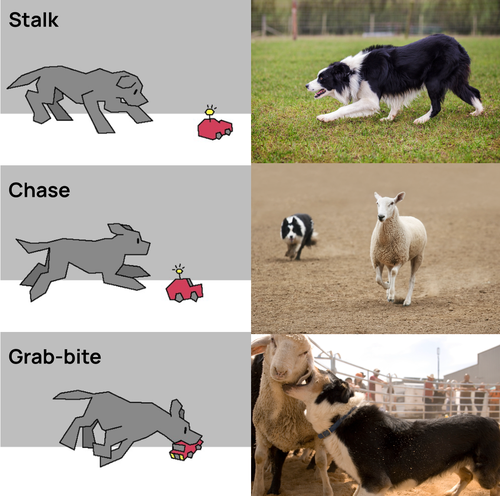
The researchers analyzed data from 2,155 dogs in the Darwin’s Dogs database to see whether dogs with the EPHB1 gene behaved differently than dogs without the gene. They found a strong link between EPHB1 and behavior: dogs with this gene were significantly more likely to show toy-oriented behaviors such as stalking, chasing, and grab-biting toys. These actions closely resemble motor patterns seen in herding behaviors.
This link held true even among dogs with mixed breed ancestry, and within border collies from working versus non-working lines, reinforcing the strong connection between EPHB1 and herding-related behaviors.
Open science opens doors to discovery
This study’s discoveries were made possible through open science. Data from open science initiatives like Darwin’s Dogs—and the thousands of community scientists who shared behavioral insights about their dogs—helped researchers connect genomic markers to observable behaviors. The scale and scope of the Darwin’s Dogs database helped the research team analyze behavioral associations to the EPHB1 gene across dogs with varied breed ancestry.
This research serves as a model for how professional researchers and community scientists can come together to accelerate scientific progress. When community scientists contribute to open repositories like Darwin’s Dogs, the possibilities for discovery are endless.
Resources
Read the paper published in Science Advances: Hankyeol Jeong et al. , Genomic evidence for behavioral adaptation of herding dogs. Sci. Adv.11,eadp4591(2025).DOI:10.1126/sciadv.adp4591
Librela, known as Beransa in New Zealand, came onto the market in 2023 in both the USA and New Zealand (it has been introduced earlier in the UK and Europe, in 2021). In late 2023, I shared this post from Dr Darryl Millis about things to consider before choosing to use it with your dog.
Librela/Beransa is an injectable treatment for canine osteoarthritis manufactured by Zoetis.
The drug works by targeting and blocking the action of nerve growth factor, NGF, with a monoclonal antibody called bedinvetmab. NGF is a protein that plays a role in the pain and inflammation associated with osteoarthritis. By binding to NGF, bedinvetmab prevents NGF from activating its receptors on nerve cells, thus blocking the pain signal.
Based on the evaluation and analysis of the reports and signs seen for Librela, the recommendation is to add a Post Approval Experience (PAE) section to the current label:
Post Approval Experience Section (2024) The following adverse events are based on post-approval adverse drug experience reporting for LIBRELA. Not all adverse events are reported to FDA/CVM. It is not always possible to reliably estimate the adverse event frequency or establish a causal relationship to product exposure using these data.
The following adverse events in dogs are categorized in order of decreasing reporting frequency by body system and in decreasing order of reporting frequency within each body system:
Neurologic: ataxia, seizures, paresis, proprioceptive deficits, paralysis General: anorexia, lethargy, recumbency Renal/Urinary: polydipsia, polyuria/pollakiuria, urinary incontinence Gastrointestinal: vomiting, diarrhea Musculoskeletal: muscle weakness, muscle tremors, lameness In some cases, death (including euthanasia) has been reported as an outcome of the adverse events listed above.
In addition, we suggest that owners be advised of the adverse reactions that may occur following administration of Librela.
In the USA, a lawsuit has been filed alleging that Zoetis acted in a negligent manner in promoting its product.
In Australia, a class action lawsuit is being prepared by pet owners who state that their veterinarians described Beransa as a safe and effective drug without known side effects.
Why am I writing this post? To educate and to inform. I’m mindful that many of the commercials for human medications these days remind consumers “All medications have risks and benefits. Talk to your doctor to see if this product is right for you.”
There are veterinarians and dog owners who are reporting good results with this medication, particularly for those dogs who are elderly and for whom other arthritis medications have not worked. If your vet has recommended Beransa, be sure they have explained the possible risks to you and that you are happy to accept those risks on behalf of your dog.
Kathleen Crisley is Fear-Free certified dog massage therapist and canine fitness trainer. She has a particular passion for working with dogs and their families to ensure injury prevention and quality of life. She specialises in working with anxious and emotionally damaged dogs. Her mobile practice, The Balanced Dog, is based in Christchurch, New Zealand












 DoggyMom.com