Tag Archives: dementia

An Unexpected Way to Lower Your Dementia Risk: Pet Ownership

What if reducing your dementia risk could be as simple as owning a dog? Several observational studies published last year suggest pet ownership could meaningfully reduce your risk among proving other emotional and physical benefits. Sixty-six percent of households in the United States own a pet, with dogs being the most popular companion. Pets can bring us joy, help alleviate stress, offer companionship, and even help us lead a more active lifestyle.

Researchers have now found an added benefit of being a pet owner — pets could stave off brain aging in humans. People who own pets are less lonely — a major risk factor for dementia. Now, scientists are interested in seeing whether people who owned cats or dogs had a lower risk of cognitive decline or dementia.

Owning a dog or cat could meaningfully reduce your risk of developing dementia, several observational studies published last year found, especially if you’re over the age of 50.

What does the science say about dementia, dogs and cats?

In 2023, Japanese researchers published a study that looked at 11,194 older adults to see whether owning dogs or cats provided a protective effect against dementia. 

Compared to those without pets, dog owners were 40 percent less likely to develop dementia over a four year period. Additionally, dog owners who were social or exercised regularly experienced an extra 20 percent decrease in dementia risk. The study didn’t find evidence that owning cats had a similar effect.

Chinese researchers published a similar study last year, also looking at the link between pet ownership and cognitive decline. The study’s participants received psychological tests to assess their memory, verbal fluency, and thinking eight years apart. The cohort was composed of 7,495 adults over the age of 50 living in the UK. 

Among individuals who were living alone, owning a cat or dog was associated with a slower rate of cognitive decline. However, older adults living with other people saw no significant benefit, which suggests that companionship from dogs or cats could offset some of the negative effects of living alone.

This field of research is still very new, and for people who have already developed Alzheimer’s or dementia, there isn’t a lot of research yet on how interactions with pets or trained therapy animals affect further cognitive decline. 

Despite the lack of concrete research on cognitive decline, many long-term care facilities have also started implementing animal-assisted therapy for their residents facilitated by certified handlers and trained dogs. Dogs can still improve their quality of life and have been shown to offer stress-reducing benefits. Spending time with a furry friend could ease agitation, aggression, depression, and even help residents cope with sundowning, emotional and behavioral issues that worsen as daytime fades.

While more research is needed to determine whether adopting pets can have a protective effect on the brains of isolated older adults, pet ownership can offer many benefits to your emotional and physical health.

Source: Being Patient – Alzheimer’s news, advice, stories & support

Dogs can get a canine form of dementia — and it is very similar to the human version

If you have ever been close with a dog, the chances are that you have wondered what your canine companion might be thinking. As time goes on and your relationship grows — whether as a primary owner, a family member or an occasional visitor — you will probably ask yourself if the dog remembers you. Like our human friends and family, we would like to think that, even if we are not in the room, dogs still think about us.

Beagle Lies On The Floor In The House (Getty Images / Aleksandr Pobeda / EyeEm)

Scientists agree dogs are intelligent, emotional and capable of forming lasting relationships with humans. While there is robust debate about the extent to which this is true, animals like Bunny the “talking” sheepadoodle are able to communicate in such a sophisticated manner that they will even discuss their dreams.

The bad news is that, just like humans, dogs can develop degenerative nerve diseases which damage their minds. One illness in particular has a direct analogue in dogs: Alzheimer’s disease. Dogs, sadly, can develop a similar condition — and tragically, that might mean that your dog could suffer some of the same sad Alzheimer’s-like conditions, such as forgetting its close family, in its final days.

“Canine Cognitive Dysfunction [CCD] mirrors two key components of Alzheimer’s disease in humans,” Dr. Silvan Urfer of the Dog Aging Project and the University of Washington told Salon by email. It comes down to a peptide and a protein that will suddenly accumulate in your brain: Amyloid-beta 42 and hyperphosphorylated Tau (pTau). “While there are likely a few differences regarding the details of pTau pathology in particular, it is fair to say that CCD is the dog analog of Alzheimer’s Disease,” Urfer noted.

Dr. Elizabeth Head, a professor in the Department of Pathology & Laboratory Medicine at the University of California, Irvine, told Salon in writing that in addition to developing these beta-amyloid plaques — one of the hallmark features of Alzheimer disease — the dogs also suffer like humans, in that neurons die. The synapses, or connections between neurons, are lost, and these are observed in humans who as they age suffer from cognitive decline.

“From a psychological perspective dogs may show signs of disrupted sleep patterns (e.g. up pacing at night), more vocalizing, [being unable to] remember how to signal to go out and may have trouble recognizing family members,” Head explained. “This can lead to more anxiety. From a physical perspective, there may be more episodes of incontinence but oftentimes other physical problems are ruled out with the CCD diagnosis (e.g. deafness, blindness, systemic illness).”

Indeed, the similarities between CCD and human dementia are so striking that researchers believe man’s best friend could actually help him find a cure for the debilitating ailment. There is a nationwide study known as The Dog Aging Project — which was launched by Cornell University, the University of Washington and the University of Arizona and funded by the National Institute on Aging — which exists precisely because scientists are intrigued by those similarities. They believe that learning more about how to help dogs with the condition can, in the process, provide research data that helps fight human diseases related to senescence.

“What we’re trying to do is find a better understanding of the disease in dogs and translate those findings to humans,” Dr. Marta Castelhano, director of the Cornell Veterinary Biobank and one of the involved scientists, told Cornell News at the time.

Until a cure for CCD exists, the sad reality is that dogs and humans alike who experience cognitive decline will be left to manage their symptoms to the best of their ability. When speaking with Salon, Urfer stressed that he is “not providing veterinary advice on individual dogs, as there is no vet-patient-client relationship here.” People who are concerned about their dogs should consult a veterinarian. What we do know for sure, however, is that causal treatments do not exist for CCD. All we know is that there are certain physical characteristics that make dogs more or less likely to be at risk.

“We know that bigger dogs have a lower risk of developing CCD than small dogs, and there is also some evidence that intact males have a lower CCD risk than neutered males, and that existing CCD progresses faster in neutered than in intact males,” Urfer explained. “This is interesting in that it also mirrors findings from human medicine that taller people are less likely to get Alzheimer’s disease, and that men who undergo anti-androgen treatment for prostate cancer have an increased Alzheimer’s disease risk.”

If your dog is healthy now, then the best thing to do is make sure they stay healthy. That can prevent CCD from developing. It is the exact same as the approach for homo sapiens.

“The best approach is always prevention – ensure good physical health (e.g. keep up with dentals), exercise, lots of social and cognitive enrichment, and a good diet, manage co-occuring conditions (e.g. obesity)  – just like for people!” Head told Salon.

Source: Salon.com

Fairy dog mother?

I have found that most ‘dog people’ I meet support various charities that show their love of dogs. I am no exception. Today, however, I stumbled across a special charity that would allow me to become a Fairy Dog Mother.

They are Fairy DogParents, a non-profit in the state of Massachusetts.  The founder’s dog, Ladybug, was the inspiration behind the initiative.  Ladybug was already a senior dog when she was adopted from a shelter and her adoptive family considered themselves lucky that they could afford Ladybug’s medications for kidney disease, dementia and other ailments.  When Ladybug had to be put to sleep, her owner asked that the vet’s office re-distribute Ladybug’s un-used medication to someone who could use it.

Ladybug, in whose memory Fairy DogParents was founded

Ladybug, in whose memory Fairy DogParents was founded

And from there, the idea grew.  There are many dogs who are surrendered to shelters because of economics.  Their families simply can’t afford their care, particularly as they age or develop special health conditions.

Fairy DogParents has a simple application process for owners in need.  They serve Massachusetts residents only but hope to expand.  As with most non-profits, they are always in need of donations of goods, money and time.  Want to be a Fairy Dog Mother?  Follow the link below:

Fairy Dog Parent

Daisy’s crystals

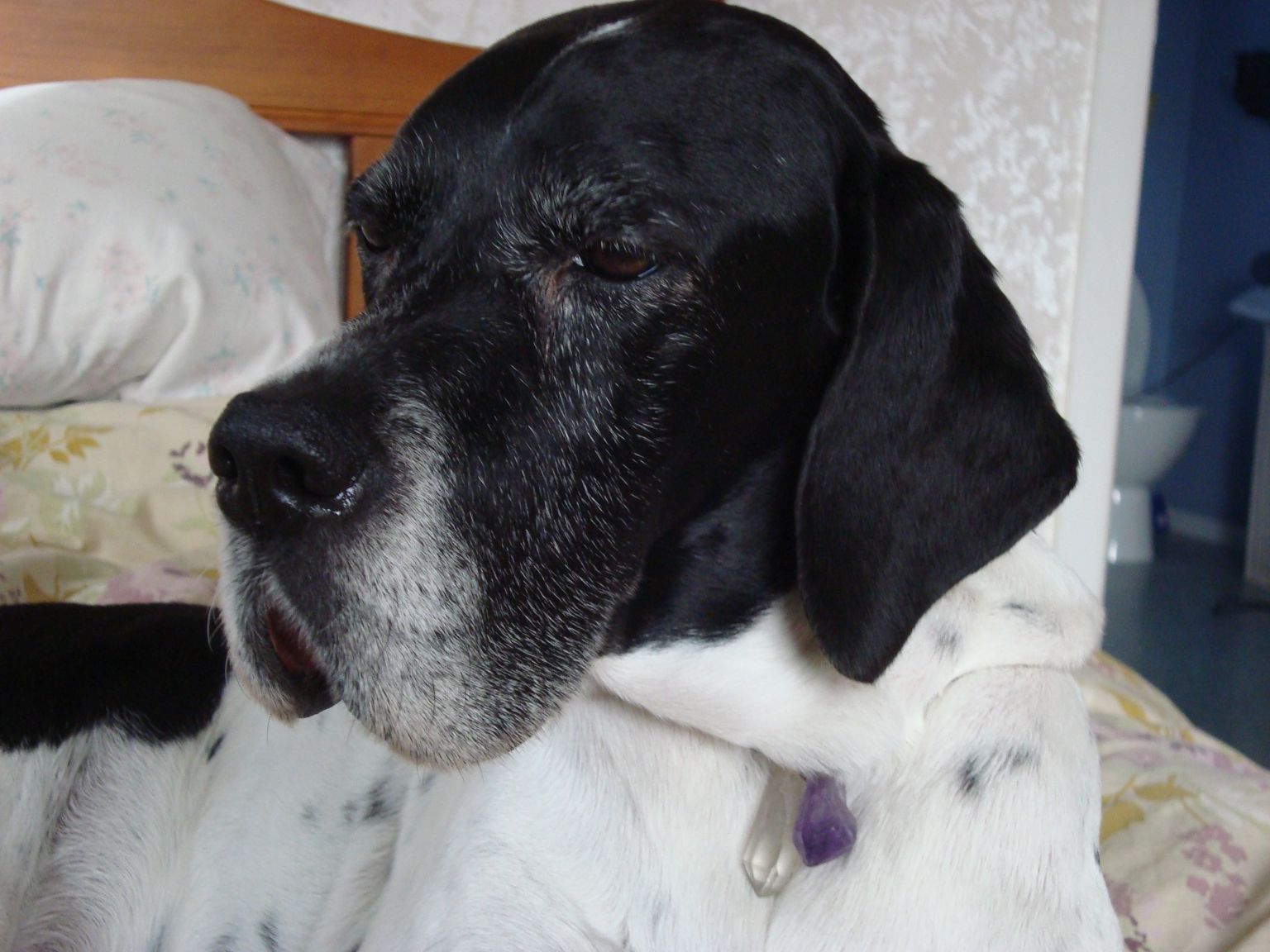
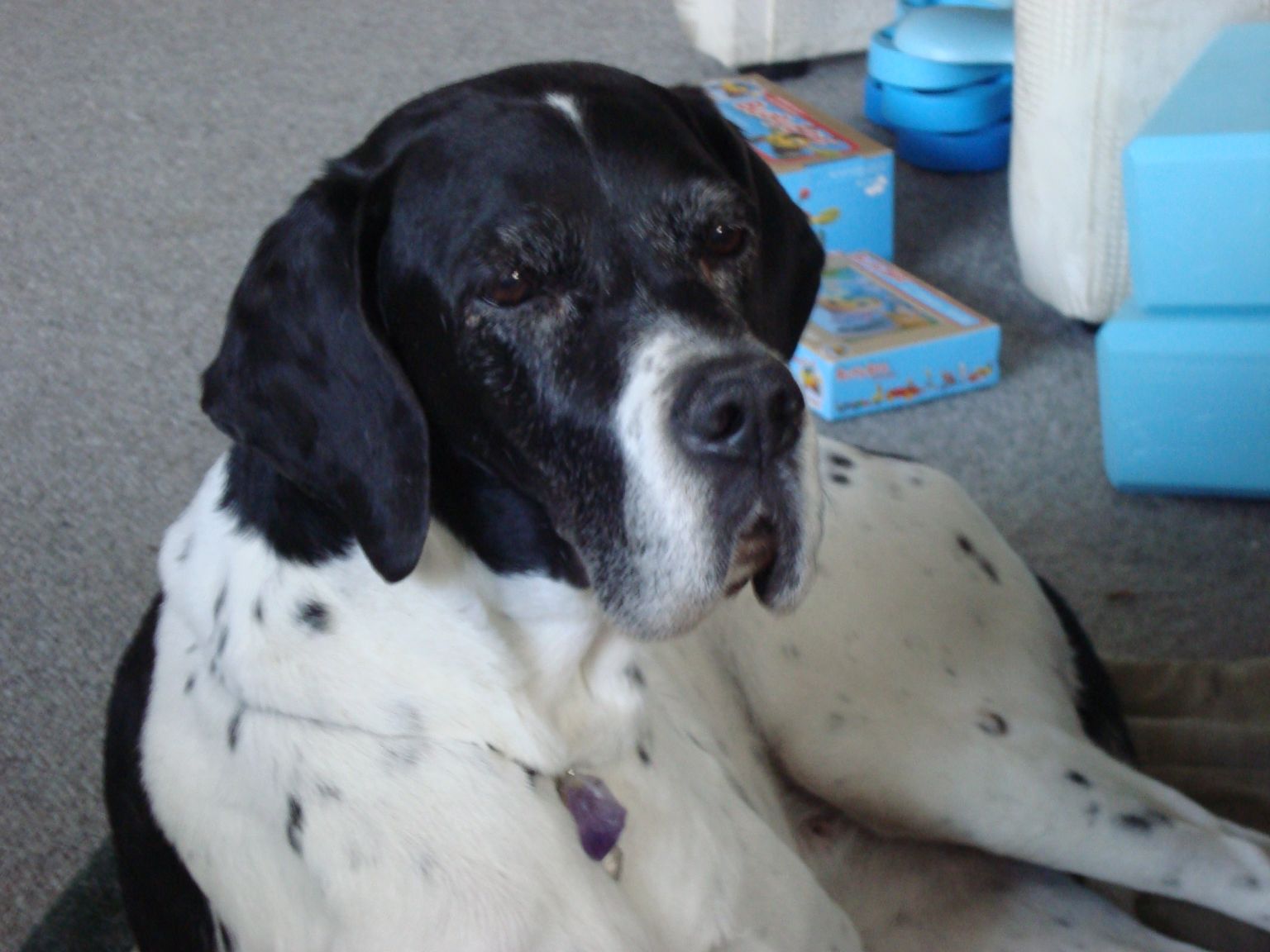
Daisy hasn’t been her usual self for the last 8 weeks or so and, in consultation with her acupuncture vet and her regular vet, we’ve decided that she is showing signs of dementia.  Things like wandering around at night unable to settle and waking me (Mum) about every two hours….and having trouble negotiating doorways.

I’ve made changes in our healthcare regime which include introducing a new supplement and changing her diet.  The good news is that I have seen some improvement over the last week and I hope it continues.

Given that time is precious and every day over age 13 is a blessing, I have also decided to try crystal healing for the first time.  My opinion is that even if it doesn’t do a thing, she looks really cute wearing her crystals around her neck!

I hope you agree.

Have you ever used crystal healing on your dog?

Daisy with crystals

Daisy is wearing an amethyst for clearing negative energy and as an all-around healer.  Her clear quartz is a master healer for all conditions and is meant to strengthen her immune system and offer protection.

Daisy is wearing an amethyst for clearing negative energy and as an all-around healer. Her clear quartz is a master healer for all conditions and is meant to strengthen her immune system and offer protection.

Daisy is very relaxed about having her crystals around her neck.

Daisy is very relaxed about having her crystals around her neck.