Tag Archives: dog breeds

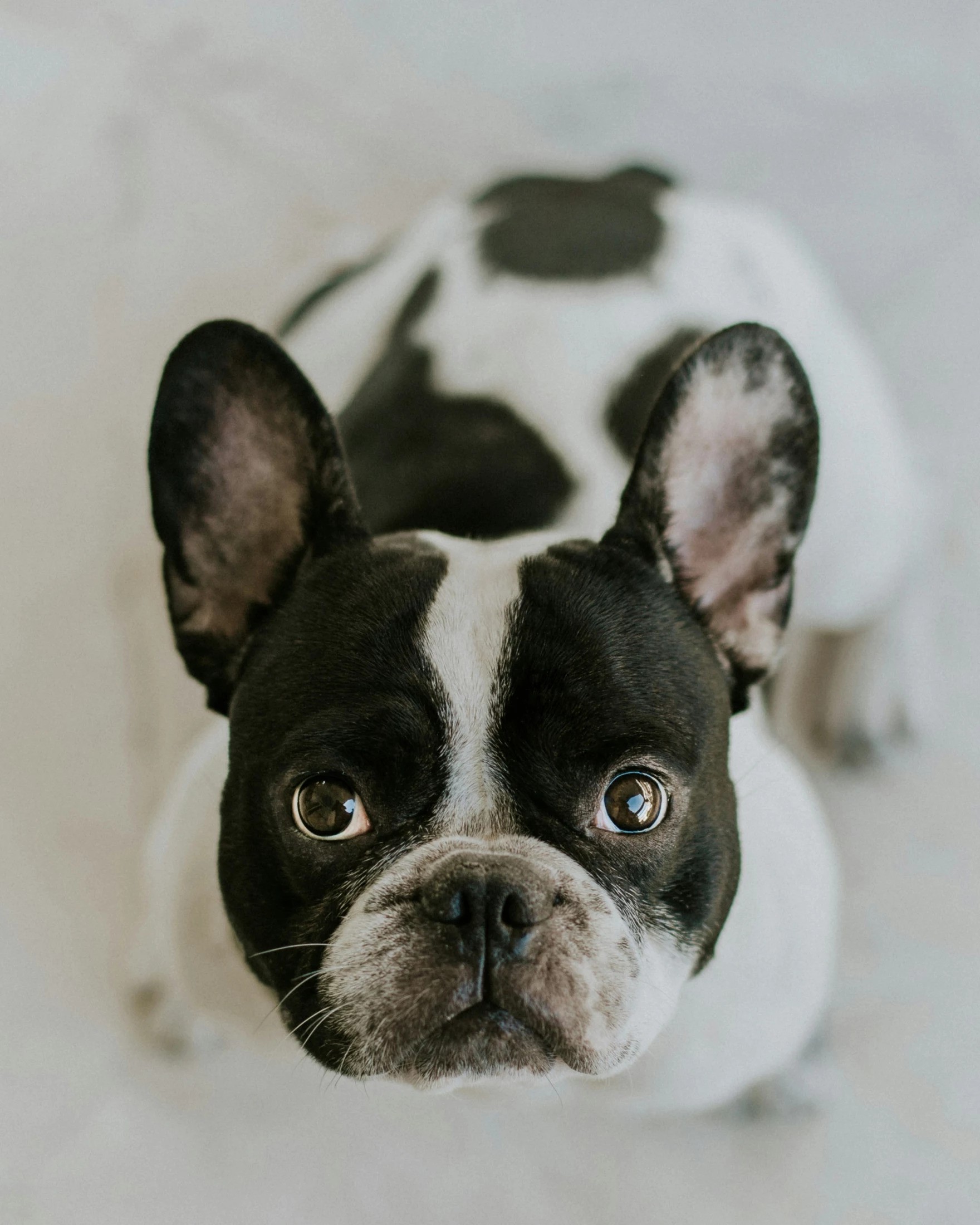
City of Ojai, CA bans breeding of French Bulldogs and other ‘Breathing-Impaired’ dogs and cats

Photo credit: Angelos Michalopoulos/Unsplash

They can suffer from wheezing and struggling to breathe – and the new Companion Animal Protection Ordinance in Ojai, means the breeding of breathing impaired cats and dogs, like French bulldogs and Persian cats is banned.

“For so many of these animals, breathing through their nose is like trying to suck in air through a tiny straw,” explained Jakob Shaw, the manager of strategic initiatives at PETA.

The animal welfare organization welcomed the new law.

“Breeders are deliberately selecting for unhealthy and harmful traits in order to breed dogs with these unnatural features like the flat, smushed faces and corkscrew tails that French bulldogs have. This ordinance prevents breeders from purposefully breeding dogs to have bodies that don’t work,” said Shaw.

“I’m thrilled that Ojai is setting a new national standard for protecting dogs and cats from being bred to suffer. Our companion animals are cherished members of our families and our communities, so I hope that this inspires other cities around the country to adopt Companion Animal Protection Ordinances of their own,” said Ojai Mayor Betsy Stix.

A recent study revealed that some of the most common Breathing Impaired canines have the shortest life expectancies of companion dog breeds. Shaw said that French bulldogs – who have been the most popular dog in the U.S. for the past two years – have an especially low life expectancy of only 4.5 years due in large part to their deformed, smushed-in faces. A number of countries—including Austria, Germany, the Netherlands, and Norway—have banned or restricted the breeding of some or all BIBs.

Ojai City Council has previously passed ordinances recognizing the bodily rights of elephants and banning the use and sale of glue traps for rodents.

Source: KCLU

The Pet Advocacy Network has released this media statement opposing the ban:

On Tuesday night, Ojai Mayor Betsy Stix and the Ojai City Council in California voted to adopt a misguided new law—the Companion Animal Protection Ordinance—making it the first city to ban the breeding of a wide range of cherished dog and cat breeds.

Concerningly, the Council ignored input from citizens who spoke out against the bill at a public hearing earlier this month and didn’t appear to consult any experts with real-life experience breeding pets. Instead, the Council took months of input from People for the Ethical Treatment of Animals (PETA), which has argued against breeding and pet ownership entirely, saying, “it would have been in the animals’ best interests if the institution of ‘pet keeping’—i.e., breeding animals to be kept and regarded as ‘pets’—never existed.”

The sweeping legislation outlines 19 different categories of “congenital anatomical features”—ranging from “excessive skin folds” to certain snout lengths—as grounds for a ban. Impacted breeds include beloved French Bulldogs, Pugs, Dachshunds, Corgis, Shar-Peis, Mastiffs, Persian cats, and more.

The Pet Advocacy Network (PAN), which advocates for the responsible pet care community at all levels of government, is speaking out against the law, characterizing it as an attempt to ban purebred dogs in general.

“This law is an outrageous overreach that insults responsible pet owners and breeders and takes away their freedom to choose their ideal cat or dog,” said Mike Bober, president and CEO of PAN. “The legislation flies in the face of veterinary science showing that these breeds lead happy, healthy lives with loving families when bred responsibly.

“Historical records show some of these species, including Shar-Peis and Tibetan Mastiffs, are ancient breeds that have existed in their current form for thousands of years,” he added. “We should celebrate these incredible animals, not outlaw them.”

About the Pet Advocacy Network

The Pet Advocacy Network connects the experience and expertise of the responsible pet care community to lawmakers and governing bodies, advocating for legislative and regulatory priorities at the local, state, federal and international levels. Since 1971, the organization has worked to promote animal well-being and responsible pet ownership, foster environmental stewardship, and ensure access to healthy pets, including small animals, cats, dogs, fish, reptiles, and birds. Pet Advocacy Network members include retailers, companion animal suppliers, manufacturers, wholesale distributors, manufacturers’ representatives, pet hobbyists, and other trade organizations. To learn more, visit www.PetAdvocacy.org.

A close up look at how our dogs drink…

The field of fluid dynamics explains how our dogs drink and why they splash and slop more than cats…

The drinking mechanism of a dog is videotaped from three different angles (A, B, and C). The curved tongue is rapidly withdrawn and a water column is formed underneath. A physical experiment is designed to understand and characterize the underlying fluid mechanics.  Photo by:  Sean Gart and Sunghwan (Sunny) Jung/Virginia Tech

The drinking mechanism of a dog is videotaped from three different angles (A, B, and C). The curved tongue is rapidly withdrawn and a water column is formed underneath. A physical experiment is designed to understand and characterize the underlying fluid mechanics. Photo by: Sean Gart and Sunghwan (Sunny) Jung/Virginia Tech

By studying the drinking habits of various dog breeds and sizes, a group of researchers at Virginia Tech and Purdue University has recently identified and modeled the fluid dynamics at play when dogs drink water.

“Three years ago, we studied how cats drink,” said Sunny Jung, an assistant professor at Virginia Tech. Jung’s research focuses include biofluid mechanics and the nonlinear interactions between soft bodies and surrounding fluids. His current project is sponsored by the National Science Foundation’s Physics of Living Systems program. “I was curious about how dogs drink, because cats and dogs are everywhere.”

As members of the order Carnivora, cats and dogs have incomplete cheeks, which allow them to open their mouths wide to deliver killing blows. But what makes pack hunting possible also makes suction drinking impossible. Unable to seal their cheeks completely, there is no way for a dog to suck up water. Conversely, humans have “complete” cheeks, and we drink by creating negative pressure, allowing us to suck water into our mouths and down our throats.

Cats, too, lack suction, and they compensate by drinking via a two-part “water entry-and-exit” process. This consists of a plunging and a pulling phase, in which a cat gently places its tongue on the water’s surface and then rapidly withdraws it, creating a column of water underneath the cat’s retracting tongue.

“When we started this project, we thought that dogs drink similarly to cats,” Jung said. “But it turns out that it’s different, because dogs smash their tongues on the water surface — they make lots of splashing — but a cat never does that.”

When dogs withdraw their tongue from water, they create a significant amount of acceleration — roughly five times that of gravity — that creates the water columns, which feed up into their mouths. To model this, Jung placed cameras under the surface of a water trough to map the total surface area of the dogs’ tongues that splashed down when drinking.

The researchers found that heavier dogs drink water with the larger wetted area of the tongue. This indicates that an allometric relationship exists between water contact area of the dog’s tongue and body weight – thus the volume of water a dog’s tongue can move increases exponentially relative to their body size.

In order to better understand how the physiology works, Jung and his colleagues could only go so far by watching dogs drink. They had to have the ability to alter the parameters and see how they affected this ability, and since they could not actually alter a dog in any way, they turned to models of the dog’s tongue and mouth. “We needed to make some kind of physical system,” Jung said.

For their model, Jung and his colleagues used glass tubes to simulate a dog’s tongue. This allowed them to mimic the acceleration and column formation during the exit process. They then measured the volume of water withdrawn. They found that the column of water pinches off and detaches from the water bath primarily due to gravity. Dogs are smart enough to close their mouth just before the water column collapses back to the bath.

Source:  Newswise media release

The impact of movies on dog breed popularity

The effect of movies featuring dogs on the popularity of dog breeds can last up to ten years and is correlated with the general success of the movies, according to new research from the University of Bristol, the City University of New York, and Western Carolina University.

The researchers used data from the American Kennel Club, which maintains the world’s largest dog registry totaling over 65 million dogs, and analysed a total of 87 movies featuring dogs. They found that the release of movies is often associated to an increase in popularity of featured breeds over periods of one, two, five, and ten years.

The influence of movies was strongest in the early twentieth century and has declined since.

Additionally, they found that these trend changes correlated significantly with the number of viewers during the movie’s opening weekend, considered as a proxy of the movie’s reach among the general public.

This suggests that viewing a movie may cause a long-lasting preference for a breed that can be expressed years later, when the time comes to buy a new dog.

The 1943 hit Lassie Come Home is associated, in the following two years, with a 40 per cent increase of Collie registrations in the American Kennel Club.

Lassie Come Home theater poster

An even more dramatic example is the 100-fold increase in Old English Sheepdog registrations following the 1959 Disney movie The Shaggy Dog.

Photo taken by Harald Urnes, Norway

Photo taken by Harald Urnes, Norway

Professor Stefano Ghirlanda, lead author of the study said: “We focused on changes in trend popularity rather than on popularity itself to avoid attributing to movies trends that were already ongoing before movie release, as up-trending breeds may have been chosen more often for movies.”

Earlier movies are associated with generally larger trend changes than later movies. This might be due to an increased competition with other media, such as television, and more recently, the internet, but also to an increased competition among movies. Movies featuring dogs were released at a rate of less than one per year until about 1940 but a rate of more than seven per year by 2005.

Dr Alberto Acerbi, a Newton Fellow in the Department of Archaeology and Anthropology at the University of Bristol and co-author of the paper said: “If people buy en masse dogs because they appear in movies the consequences can be negative for the dogs themselves. Our previous study found that the most popular breeds had the greatest number of inherited disorders.

“It’s not surprising that we tend to follow social cues and fashions, as this is a quite effective strategy in many situations. However, in particular cases the outcomes can be negative. When choosing a new pet, we may want to act differently.”

Source:  EurekAlert! media release

Gotta Golden in the Lower 48?

golden-retrievers-fighting-cancer The Morris Animal Foundation is recruiting dogs for its Golden Retriever Lifetime Study.  3,000 Goldens will be followed for life to gather insights that could help prevent and treat cancer in Goldens and all other dog breeds.  In the USA, the Foundation estimates that more than 60 percent of Golden Retrievers die from cancer.

Participants will receive periodic questionnaires about their dog to complete and also be reimbursed $75 towards annual exam costs (owners must agree to bear the remaining costs of participation).  Dogs must be purebreds, with verifiable three-generation pedigree.  Any Golden under the age of two is eligible.

More information can be found in this brochure.

If your Golden resides in the lower 48 states, this may be his/her chance to contribute to the science behind canine health and longevity.


