It’s raining and blowing a gale in Christchurch today. So I thought I’d share this little video to cheer everyone up!

It’s raining and blowing a gale in Christchurch today. So I thought I’d share this little video to cheer everyone up!

Bogey and his dumb bell. Photo courtesy of Florida State University
Dogs are adding a new twist to exercise classes at the Westminster Oaks Retirement Community in Florida. Three times each week, they accompany two doctoral students to an exercise class that is part of a study to look at whether exercising with dogs can lead to better health outcomes.
“Between each exercise, we try to leave a little bit of time so people can pet the dogs and talk to the handlers,” says Ashley Artese, a first-year doctoral student in exercise science.
Volunteers for the study at Westminster Oaks were split into two groups of seven. One exercises with dogs trained by Tallahassee Memorial Hospital’s pet therapy program. The other group exercises without them.
Walking around the room, biceps curls with light dumb bells and resistance band stretching are all a part of the routine. When the group working with dogs lift their dumb bells, dog Bogey picks up a plastic one. And when the seniors walk around the room, Lola, Stryker and Bogey walk in circles too.
“Exercise classes are not something I call fun, but with the dogs, it is fun,” said Mary Stevenson, a Westminster Oaks resident. When she heard the exercise class would involve dogs, it caught her interest.
In addition to Lola, Stryker and Bogey, there are four other dogs — Cosmo, Casey, Kayla and Zachy.
For now, all of the work is on a volunteer basis, but all of the parties involved hope it will turn into a funded research study in the future. At the end of this program, the professors and doctoral students will review the data to see how it might translate into a large-scale study.
Megaesophagus is a condition where the muscles of the esophagus fail, similar to a limp balloon that has inflated several times and lost its elasticity: When the condition is present, the esophagus doesn’t contract normally and food can’t make it down into the stomach to be digested. Food can ‘pool’ in the esophagus causing regurgitation. Worse, the undigested food can be inhaled leading to a condition called aspiration pneumonia. Megaesophagus can affect puppies and adult dogs.
Vets normally have to diagnose the condition from its range of symptoms which include:
Megaesophagus is a condition that can be managed, but it does take a dedicated and vigilant dog parent to do this.

Dogs with the condition have to eat and drink in a device called a Bailey Chair. The chair allows the dog to sit in an upright position for an extended period of time. A megaesophagus dog needs to be fed in the chair and kept upright for at least 20 minutes to allow gravity to take the food and water into the stomach.
Dogs with megaesophagus have special nutritional needs, too. Since dogs with this condition can’t drink normally, they often need water added to their meals and to receive high moisture treats that are thickened with gelatin or other ingredients.
A megaesophagus dog needs a diet that is calorie rich and nutritious but without too much fibre. Raw foods are a special risk to these dogs because of their sensitive digestive systems. There’s also a risk of bacterial contamination, particularly if even small amounts of raw food are aspirated.
Prescription medications like Carafate liquid can also help these dogs because it provides a protective coating for the esophagus.
It’s also important to think holistically for these dogs, with support with Bach flower remedies, herbs and supplements. In my practice, I work with the dogs to keep their digestive systems healthy through massage and acupressure and nutrition. The spleen, liver and stomach all need support when a dog has megaesophagus.
In older dogs with arthritis, having to sit in a Bailey Chair presents additional challenges that require holistic veterinary care.
The good news is that megaesophagus doesn’t mean a death sentence. It does mean that your special dog will need special care and attention to maintain its health throughout its lifetime.
Kathleen Crisley, specialist in dog massage, rehabilitation and nutrition, Canine Catering Ltd, Christchurch, New Zealand
Posted in dog care
Tagged acupressure, aspiration pneumonia, Bailey Chair, Carafate, Dog, dogs, massage, megaesophagus, vomiting
A research team at the University of Veterinary Medicine in Vienna (Vetmeduni Vienna) have studied the forces that guide dogs are exposed to during their work to ascertain what types of harness are most suitable.

Guide dogs walk under constant tension. A well-fitting harness is extremely important for the animals (Photo: Michael Bernkopf/Vetmeduni Vienna)
A proper harness that enables good communication between the blind person and the dog is an important factor to support the dog’s well-being, while a poorly fitting harness may result in health problems and impaired communication between dog and owner.
The team members, movement analysts and physiotherapists, examined the distribution of pressure in working guide dogs by placing pressure sensors beneath their harnesses. Eight guide dogs were filmed with a trainer while climbing steps, avoiding obstacles, turning left and right and walking straight ahead. To visualize the movements, the animals, the trainers and the harnesses were equipped with reflective markers. The positions of the markers were recorded by a total of ten cameras.
The results showed that the bottom right of the animals’ chests is particularly stressed. As Barbara Bockstahler explains, “Guide dogs walk under constant tension. They are usually on their owners’ right and in front of them.” The scientists found that the pressure on the right side of a dog’s chest may equate to up to 10 per cent of the animal’s weight. In contrast, the dog’s back experiences far less pressure. “It is important for guide dogs to exercise regularly without a harness to compensate for the lopsided pressure they experience in their work”, says Bockstahler.
Very rigid harnesses enable quick and finely tuned communication between dogs and owners but cause stress to the animals. The more stiffly the harness is anchored to the handle, the more pressure the animal experiences. The most comfortable harness relies on a hook-and-loop connection, which provides the least pressure on the dog, although for long-haired dogs a plastic clip version is favourable.
The researchers want to study guide dogs for a longer period of time to find out whether any of the harnesses are associated with long-term problems in the animals. They require partners and sponsors for this work.
The results of this study have been published in the Veterinary Journal.
Source: Vetmeduni Vienna press release
 The Morris Animal Foundation is recruiting dogs for its Golden Retriever Lifetime Study. 3,000 Goldens will be followed for life to gather insights that could help prevent and treat cancer in Goldens and all other dog breeds. In the USA, the Foundation estimates that more than 60 percent of Golden Retrievers die from cancer.
Participants will receive periodic questionnaires about their dog to complete and also be reimbursed $75 towards annual exam costs (owners must agree to bear the remaining costs of participation). Dogs must be purebreds, with verifiable three-generation pedigree. Any Golden under the age of two is eligible.
More information can be found in this brochure.
If your Golden resides in the lower 48 states, this may be his/her chance to contribute to the science behind canine health and longevity.
When you own a senior dog, it’s important to understand that they experience discomfort from arthritis, aching joints, and muscle tension.
A supportive dog bed is essential.

In Daisy’s case, she now sleeps on a total of four mattresses, one of which is memory foam and acts as the ‘boxed spring’ layer. I call this her Princess and the Pea look.
Posted in dog care
Tagged Dog, dog beds, elderly dogs, muscle tension, old dogs, pet beds, support
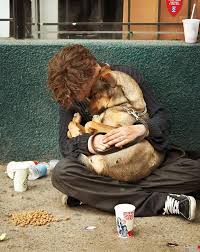
I like Pope Francis’ style. Earlier this week, he invited four homeless men to join him for Mass and breakfast at the Vatican in celebration of his 77th birthday (that’s roughly 13 in dog years).
One of the men owned a dog, who was welcomed as part of the celebrations:

If the Vatican can embrace dog-friendly accommodation, why can’t we see more dog-friendly establishments elsewhere?
Posted in dog-friendly accommodation, Dogs
Tagged birthday, Dog, homeless men, Pope Francis, Vatican
Christchurch based animal welfare charity K9 Rescue and Rehoming has paired well-muscled men with dogs available for adoption in their 2014 calendar.

Entitled Dogs and Dudes, this fundraising calendar includes photographs of New Zealand actors and other local celebrities who were willing to bare their bodies to support dog adoption.
The best way to organise a purchase is to contact Trisha through the organisation’s Facebook page. Calendars cost NZ$25
And dog owners get to enjoy a little beefcake all year long, combined with some really beautiful dog photos, too!
Posted in animal welfare
Tagged 2014, adoption, beefcake, calendar, celebrities, Christchurch, Dog, dogs, fundraising, fundraising campaigns, K9 Rescue and Rehoming, photography









 DoggyMom.com