Tag Archives: health

Prebiotic or Probiotic?

There is a growing awareness of the link between overall health and a healthy gut. If gut health is poor, your dog will not thrive. Whilst diet is the first port of call for good health, dog owners are also seeking to augment diet with the ”right” additions to food.

Prebiotics and probiotics offer support for gut health, but I find that dog owners can often confuse the two terms.

A healthy gastrointestinal tract contains an abundance of beneficial bacteria that help digest food into nutrients which the body then absorbs. These bacteria are probiotics; the most common strains are the Lactobacillis and Bifidobacterium families of bacteria. Probiotics are available in supplement form – too many brands to mention in this column!

Prebiotics are fermentable fibres that support the growth of the good bacteria. When the fibre reaches the large intestine, the bacteria are able to ferment certain types of fibre which result in short-chain fatty acids. These fatty acids support and protect the intestinal lining, help reduce inflammation and prevent the overgrowth of unwanted bacteria. Examples of prebiotics are beet pulp which is an ingredient in many commercial foods and psyllium husk.

Psyllium husk is my prebiotic of choice for managing Sox’s inflammatory bowel disease

A healthy bowel is able to absorb more nutritional value from food.

When should you consider the addition of prebiotics and probiotics? Conditions that respond well include:

  • Inflammatory bowel disease
  • Stress-related diarrhoea
  • Antibiotic-associated diarrhoea
  • Dietary intolerances

When the intestinal tract is working well, faecal odours are less and stool consistency improves. You will notice the difference when picking up after your dog – particularly if you have been managing soft stools and diarrhoea for extended periods of time.

Kathleen Crisley is Fear-Free certified dog massage therapist and canine fitness trainer. She has a particular passion for working with dogs and their families to ensure injury prevention and quality of life. She specialises in working with anxious and emotionally damaged dogs. Her mobile practice, The Balanced Dog, is based in Christchurch, New Zealand

Vitamin B12 (cobalamin) supplementation – good news for IBD dogs

Dogs with inflammatory bowel disease (technical name, chronic enteropathy) often exhibit a deficiency in Vitamin B12. The treatment for this has typically been parenteral (injections) of cobalamin. These injections are painful and I can speak from personal experience with my greyhound, Sox, that subjecting the dog to painful injections is a good way of making them fearful of vet visits. So, it is nice to see that there has been a study about whether oral supplementation can be just as effective as the injectable form. (Spoiler alert: it is)

IBD can often be a challenging condition to manage: finding foods that the dog tolerates and managing other stressors can be easier said than done. Every dog is different, so what works for one may not for another. If you are located in New Zealand, I have started a Canine IBD support group. We originally met in video calls but I have now placed the group on Facebook. This group discusses products and services that you can access in NZ; many online support groups mention products that are not available here.

Kathleen Crisley is Fear-Free certified dog massage therapist and canine fitness trainer. She has a particular passion for working with dogs and their families to ensure injury prevention and quality of life. She specialises in working with anxious and emotionally damaged dogs. Her mobile practice, The Balanced Dog, is based in Christchurch, New Zealand


The Research …

Cobalamin (ie, vitamin B12) is an important intracellular cofactor. Hypocobalaminemia can result in cellular cobalamin deficiency that leads to increased methylmalonic acid (MMA) concentrations, is identified in 19% to 38% of dogs with chronic enteropathy (CE), and warrants cobalamin supplementation.1-3 Parenteral administration of cyanocobalamin has been the main method of supplementation; however, recent studies have shown similar efficacy of oral and parenteral supplementation for achieving normal serum cobalamin and/or MMA concentrations.4-6

This prospective studya was designed to evaluate tolerance and efficacy of oral versus parenteral cyanocobalamin supplementation for normalizing serum cobalamin concentrations in client-owned hypocobalaminemic (<250 pg/mL; reference interval, 240-590 pg/mL) dogs with clinical signs of CE, including subgroups of dogs with protein-losing enteropathy, severe CE (based on canine inflammatory bowel disease activity index [CIBDAI] scores >9), or moderate to severe hypocobalaminemia (<200 pg/mL). Dogs (n = 37) at 3 referral centers were randomly assigned to receive oral (capsules every 24 hours for 12 weeks) or parenteral (SC injections weekly for 6 weeks with 1 additional injection 4 weeks later) cobalamin. Serum cobalamin and CIBDAI scores were assessed at inclusion, week 7, and week 13. Serum MMA concentration was measured at inclusion and week 13. Owners completed a questionnaire on treatment adherence, palatability (oral supplementation group only), tolerance, and satisfaction at week 13.

Nineteen dogs (11/18 in the oral treatment group and 8/19 in the parenteral treatment group) completed the study. All dogs in the oral treatment group and 7 dogs in the parenteral treatment group had normalized or increased serum cobalamin concentrations at weeks 7 and 13. No significant difference in serum cobalamin concentration between treatment groups was identified at week 13, regardless of presence of protein-losing enteropathy, severity of hypocobalaminemia, and CIBDAI score at inclusion. In addition, no significant differences in serum MMA concentrations, treatment adherence, satisfaction, or tolerance scores were identified between treatment groups at week 13.

… The Takeaways

Key pearls to put into practice:

  • Hypocobalaminemia is often identified in dogs with CE. Measuring serum cobalamin concentration is an important diagnostic step in dogs with chronic clinical signs of GI disease.
  • Oral cyanocobalamin supplementation is well tolerated and effective for normalizing serum cobalamin concentrations in most dogs with hypocobalaminemia secondary to CE—regardless of clinical disease status or severity of hypocobalaminemia (including serum cobalamin concentrations below the lower limit of the reference interval)—and can be considered as a treatment option.
  • Re-evaluation of serum cobalamin concentration is recommended 4 weeks after supplementation is completed because some dogs may not respond to oral or parenteral cobalamin.

a This study was partially funded by ADM Protexin.

Journal reference: Dor C, Nixon S, Schmitz SS, et al. Efficacy and tolerance of oral versus parenteral cyanocobalamin supplement in hypocobalaminaemic dogs with chronic enteropathy: a controlled randomised open-label trial. J Small Anim Pract. 2024;65(5):317-328. doi:10.1111/jsap.13705

Source: Clinician’s Brief

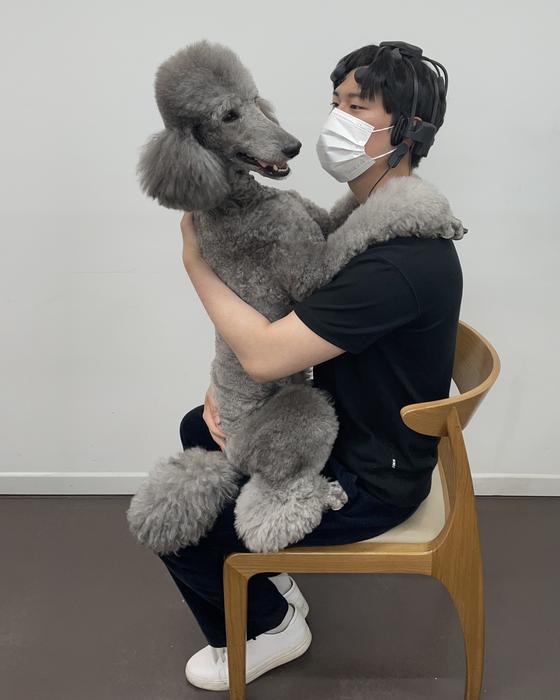
Interactions with dogs can increase brainwaves associated with stress relief and heightened concentration

Spending quality time with dogs reduces stress and increases the power of brain waves associated with relaxation and concentration, according to a study published on March 13, 2024 in the open-access journal PLOS ONE by Onyoo Yoo from Konkuk University, South Korea, and colleagues.

An animal-assisted activity (hug) performed by a participant. Photo credit
Yoo et al., 2024, PLOS ONE, CC-BY 4.0

Animal-assisted interventions, like canine therapy, are widely used in hospitals, schools, and beyond to help reduce anxiety, relieve stress, and foster feelings of trust. Studies of the potential benefits of animal interactions often take a holistic approach, comparing people’s mood or hormone levels before and after spending time with a service animal. But this approach doesn’t differentiate between types of interactions, like grooming, feeding, or playing with an animal, limiting our understanding of how each specific interaction impacts a person’s health and well-being.

To better understand how such animal-related activities affect mood, Yoo and colleagues recruited a small sample of 30 adult participants to each perform eight different activities with a well-trained dog, such as playing with a hand-held toy, giving her treats, and taking pictures with her. Participants wore electroencephalography (EEG) electrodes to record electrical activity from the brain while they interacted with the dog, and they recorded their subjective emotional state immediately following each activity.

The relative strength of alpha-band oscillations in the brain increased while participants played with and walked the dog, reflecting a state of relaxed wakefulness. When grooming, gently massaging, or playing with the dog, relative beta-band oscillation strength increased, a boost typically linked to heightened concentration. Participants also reported feeling significantly less fatigued, depressed, and stressed after all dog-related activities.

While not all participants had pets of their own, their fondness for animals likely motivated their willingness to participate in the experiment, potentially biasing the results. Nonetheless, the authors state that the unique relationships between specific activities and their physiological effects could serve as a reference for programming targeted animal-assisted interventions in the future.

The authors add: “This study provides valuable information for elucidating the therapeutic effects and underlying mechanisms of animal-assisted interventions.”

Source: Eurekalert

People in crisis do better with their pets, researchers say

Evidence shows human and pet support services should be integrated to avoid people having to relinquish their pets in a time of crisis. Keeping them often results in better health outcomes for both the owner and animal.

Sonya McDowall with her dog, Dashii. Photo credit: La Trobe University

Sonya McDowall, a Ph.D. student presenting her research at the Big Hairy People & Pets Summit and Workshops held 10–14 October on the Gold Coast, wants policy makers to understand the documented positive outcomes when human support services work with animal support services.

“It’s cost-effective for the community, and people are healthier if they can keep their animals during a time of crisis,” Sonya McDowall said.

“Social, physical and economic factors affecting human health can easily flow onto pets and companion animals.”

A 2020 survey by Domestic Violence NSW found that 42% of respondents said victim-survivors delayed leaving a perpetrator for over 12 months due to barriers to accessing support related to their animals.

A recent U.S. survey showed 91% of people had experienced some degree of financial stress in the past year related to the cost of pet care.

Statistics from relevant research:

  • In Australia, social return on investment for programs that support people experiencing a crisis to help keep their companion animal is $8.21 for each $1 invested, (Source: Emergency Animal Boarding: A Social Return on Investment)
  • Even before the cost of living and rental market crisis, a study in the United States found between 35.1% and 42.1% of participants relinquished their pet due to moving as the landlord would not allow pets. (Source: Moving as a reason for pet relinquishment: a closer look)
  • Studies have shown that between 26% and 71% of female companion animal guardians experiencing family violence reported that the offender had seriously harmed or killed the companion animal.
  • 48% of domestic violence survivors are reportedly hesitant to escape their domestic violence environment due to the fact of being concerned about what will happen to the family pet. (Source: An exploratory study of domestic violence: Perpetrators’ reports of violence against animals)
  • 18%–48% of domestic violence survivors have delayed entering a domestic violence shelter due to the presence of welfare concerns for their pet that they have had to leave behind. (Source)
  • Foodbank Australia hunger report 2022 highlighted that over half a million people in Australia are struggling with the cost of food; of this population 67% have pets. This has resulted in a challenge for pet owners of which studies have reported between 30% and 50% of participants identifying that having access to low-cost or free pet food would have prevented them from relinquishing their pet.

Source: La Trobe University

Dogs can age healthier by socializing with humans and pets, study says

Social interaction is good for human health, and a new study suggests it might be good for your dog, too.

“Where we live and who we interact with has a really strong effect on our health and well-being,” said Noah Snyder-Mackler, who is lead author of the study and an associate professor at Arizona State University’s school of life sciences and its center for evolution and medicine. “This link between our social environments and our health extends to many social animals. Animals with stronger social relationships live longer, healthier lives.”

Social companionship helps with healthy aging for dogs, a study says. (Katherine Frey/The Washington Post)

The research, published in Evolution, Medicine & Public Health, surveyed the human parents of more than 21,000 dogs and found that social companionship — with both people and other animals — had the largest influence on healthier aging among dogs. The effect was five times greater than anything else they looked at, such as family finances, household children or the pet parent’s age.

Improving dog and human health

The study is part of the Dog Aging Project, a large community-science research effort started in 2018 and funded by the National Institute on Aging and private donations. It’s led by the University of Washington and Texas A&M schools of medicine and includes more than a dozen institutions, including Arizona State University.

Its goal is to learn how genes, lifestyle and the environment influence aging and disease among dogs. Researchers also hope the insights can help human health.

“Dogs are often considered our closest animal companions and share many aspects of our daily lives,” said Brianah McCoy, an ASU doctoral student and a co-author of the paper. “By studying how the social environment affects dog health, we can gain insights that may also be relevant to human health.”

More than 45,000 dogs overall are enrolled in the aging project. A subset, about 1,000 dogs, are part of a more focused cohort from whom Snyder-Mackler and his collaborators are collecting blood and other biological samples over many years to uncover additional clues.

Having furry friends is linked to better health

The researchers used statistical tools to analyze factors in the dogs’ social environments obtained from surveys completed by dog parents. The questionnaires asked about, among other things, physical activity, environment, dog behavior, diet, medications and preventive medications, health status and owner demographics.

The scientists narrowed their analysis to five key factors — neighborhood stability, total household income, social time with children, social time with animals and owner age — that together might explain how the social environment could affect a dog’s well-being.

They found poorer health among dogs who lived in households with financial difficulties and other stressors, and better health among dogs who experienced more social companionship, such as living with other dogs.

The researchers, however, did not quantify life span, although they plan to do so in the future. “While we can’t say ‘having another dog in the house adds X years to your dog’s life,’ we were able to compare the strengths of the effect of different environmental factors on health,” Snyder-Mackler said.

The researchers cautioned that the results don’t mean that pet parents need to add more dogs to the family or rush their pets to dog parks or doggy day-care.

“We don’t know if the environmental factors we measured caused the health outcomes, so we don’t want to make any strong statements about what owners should or shouldn’t do,” Snyder-Mackler said. “The study just looked at whether you had other animal companions in the house. But it does suggest that having more furry friends is linked to better health outcomes.”

Some dogs may not benefit from social interactions

Scientists not involved in the study pointed out that not all dogs respond similarly.

“Some dogs may find social interactions stressful,” said Clara Wilson, a postdoctoral researcher in the Penn Vet Working Dog Center at the University of Pennsylvania School of Veterinary Medicine, “and it may not be in the dog’s best interests to force these interactions.”

Courtney Sexton, postdoctoral researcher at Virginia-Maryland College of Vet Med — and who contributes other research to the Dog Aging Project — said her dog would rather play with a ball than with other dogs, and it’s the pet parents’ “job to pay attention to the signals dogs give us.”

Surprising findings

Several findings were surprising, the study authors said.

  • Having children in the household had a negative impact on a dog’s health.
  • Dogs in wealthier households were diagnosed with more diseases than those in less affluent homes.
  • Dogs seemed to be healthier when they lived with older humans, and this effect was stronger in younger dogs.

Children may be detrimental to the health of dogs because of resource allocation, the researchers suggested. “It’s not that kids hurt the dogs or directly affect their health,” said Layla Brassington, a doctoral student at Vanderbilt University, who worked on the study as a master’s student at Arizona State University. “The more children or time that owners dedicate to their children likely leads to less time and effort they can dedicate to their furry children.”

The authors theorize that wealthier households have better access to medical care, and pet parents might seek veterinary services more frequently, which leads to identifying more diseases.

The ages of the dogs also affected the findings, with younger dogs seeming to be “more tuned into the age of their owner and how it impacts their well-being,” McCoy said.

Could dogs benefit from a cat companion?

The researchers did not specifically look at the effect of breeds — they did not have enough detail on individual breeds — or exercise, Snyder-Mackler said. (The Dog Aging Project recently released a study that found physical activity is associated with a better cognitive outcome in dogs.) “What we did see was that the strength of the relationship between the environment and health was similar when we looked separately at mixed-breed versus purebred dogs,” he said.

They also acknowledged one study limitation — the sample consisted of mostly high-income dog parents. A more diverse set could help “unravel the true magnitude of certain variables’ influence on canine well-being,” McCoy said. “It is possible that the effects we found in this study would be even stronger if we had a more varied and inclusive population.”

Most of the pets in the multi-animal households were dogs, and the scientists said there was insufficient data to distinguish between the effects of having additional dogs vs. other species.

“It could be that having other pets — even cats — provides health benefits through companionship,” Snyder-Mackler said.

Source: Washington Post

How Pets Contribute to Healthy Aging

Two-thirds of all pet owners say that having an animal helps them stay physically active. But for some older adults, time commitment, cost and allergies stand in the way.

A curled-up cat, a tail-wagging dog, a chirping parakeet or even a serene goldfish may help older adults cope with mental and physical health issues, according to a new poll, the National Poll on Healthy Aging (USA).

But while pets come with benefits, they can also bring concerns, and some people may even put their animals’ needs ahead of their own health, the poll finds.

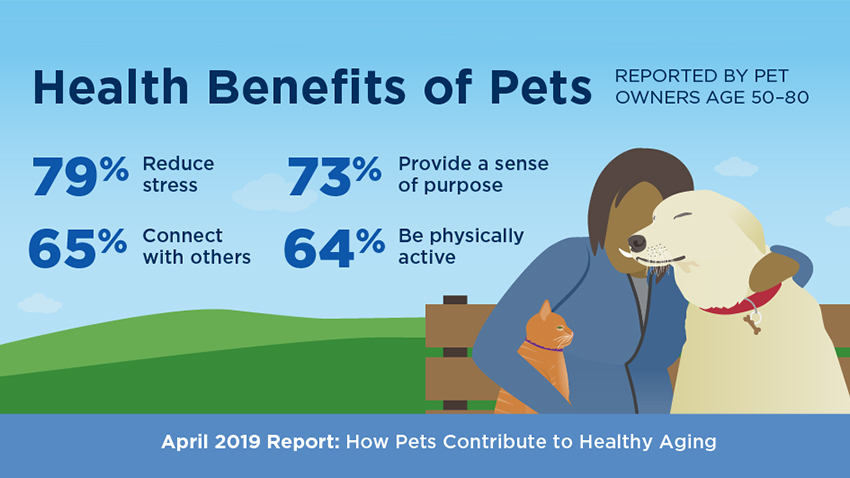
In all, 55 percent of adults ages 50 to 80 have a pet, according to the new findings — and more than half of those have multiple pets. More than three-quarters of pet owners say their animals reduce their stress, and nearly as many say pets give them a sense of purpose. But 18 percent also said having a pet or pets puts a strain on their budget.

Two-thirds of all pet owners, and 78 percent of dog owners, said their pet helps them be physically active, according to the new findings from the National Poll on Healthy Aging.

The poll is conducted by the University of Michigan Institute for Healthcare Policy & Innovation, and sponsored by AARP and Michigan Medicine, U-M’s academic medical center.

For those who reported that their health was fair or poor, pet ownership appeared to offer even more benefits. More than 70 percent of these older adults said their pet helps them cope with physical or emotional symptoms, and 46 percent said their pets help take their mind off of pain.

“We have long known that pets are a common and naturally occurring source of support,” says Cathleen Connell, Ph.D., a professor at the U-M School of Public Health who has studied the role of companion animals in older adults’ lives.

“Although the benefits of pets are significant, social connections and activities with friends and family are also key to quality of life across the life span,” she says. “Helping older adults find low-cost ways to support pet ownership while not sacrificing other important relationships and priorities is an investment in overall mental and physical health.”

Poll director Preeti Malani, M.D., a U-M Medical School professor who has training in caring for older adults, says the poll results indicate a need for physicians and other health care providers to ask older adults about the role of pets in their lives.

“More activity, through dog walking or other aspects of pet care, is almost always a good thing for older adults,” Malani says. “But the risk of falls is real for many, and 6 percent of those in our poll said they had fallen or injured themselves due to a pet.”

“At the same time, given the importance of pets to many people, the loss of a pet can deal a very real psychological blow that providers, family and friends should be attuned to,” she says.

Mich-AgingPollPet-Graphic_0

“This study highlights the many physical, psychological and social benefits that pets can have for older adults,” says Alison Bryant, Ph.D., senior vice president of research for AARP. “In recognition of these health benefits, more assisted living facilities today are allowing residents to have pets.”

Pet positives

Companionship and social connection were positive side effects of pet ownership for many poll respondents.

In fact, more than half of those who owned pets said they did so specifically to have a companion — and a slightly higher percentage said their pets sleep in bed with them. Sixty-five percent of pet owners said having a pet helps connect them to other people, too.

“Relationships with pets tend to be less complicated than those with humans, and pets are often a source of great enjoyment,” says Mary Janevic, Ph.D., MPH, an assistant research scientist at the U-M School of Public Health who helped design the poll. “They also provide older adults with a sense of being needed and loved.”

Pet problems

Other concerns about pet ownership emerged in the poll results. More than half of pet owners said that having a pet also made it difficult to travel or enjoy activities outside the home.

And 1 in 6 said that they put their pet’s needs ahead of their own health needs — a figure that was closer to 1 in 4 among those with health issues.

“Later life is often a time when people have more freedom to travel, and a long list of things they want to do with their free time, and sometimes having a pet can get in the way,” says Janevic.

“For people living on a fixed income, expenses related to health care for pets, and especially pets that have chronic health issues, can be a struggle,” she says. “Older adults can also develop health problems or disabilities that make pet care difficult.”

The non-pet-owner perspective

The 45 percent of older adults who said they don’t have pets gave many reasons for not keeping a dog, cat, fish, lizard, bird or small mammal around.

Among non-pet owners, 42 percent said they didn’t want to be tied down. Twenty percent said they didn’t have time, and 23 percent gave cost as the reason, while 16 percent said their own allergies, or those of someone in their household, kept them from getting a pet.

For those who can’t own pets due to allergies, budget constraints, housing circumstances or schedules, there’s often a need for volunteers at local animal shelters or pet-sitting for friends and family, the researchers say.

They note that health care providers and family may even want to recommend these options to older adults who have no pets and wish to have one.

The National Poll on Healthy Aging results are based on responses from a nationally representative sample of 2,051 adults ages 50 to 80 who answered a wide range of questions online. Questions were written, and data interpreted and compiled, by the IHPI team. Laptops and internet access were provided to poll respondents who did not already have them.

A full report of the findings and methodology is available at healthyagingpoll.org, along with past National Poll on Healthy Aging reports.

Health benefits of owning a dog (video version)

Throughout this blog, you’ll find articles about research involving dogs.  Some of these articles can be quite lengthy, so I was pleased when Time published this short video – all of the key points about the health benefits of owning a dog in one place.

If you’re really busy, or simply not interested in reading the full research, this video is for you!

Kathleen Crisley, specialist in dog massage, rehabilitation and nutrition/food therapy, The Balanced Dog, Christchurch, New Zealand

Pets save UK National Health Service

Pets account for millions of pounds worth of economic activity in the UK and may reduce National Health Service (NHS) costs by nearly two and a half billion pounds, according to a new report. companion-animal-economics

Drawing on multiple sources, and written by internationally respected animal welfare and business experts, Companion Animal Economics comprehensively documents the economic impact of pets in the UK – the first time such an assessment has been made for nearly 40 years. The study directly examines available evidence on the direct and indirect benefits and costs of companion animals to society, including their influence on human mental and physical health, illness prevention and well-being.

Published by CABI, Companion Animal Economics was developed by Daniel Mills, Professor of Veterinary Behavioural Medicine at the University of Lincoln UK, and Dr Sandra McCune, Human-Animal Interaction expert at Mars Petcare’s WALTHAM Centre for Pet Nutrition. Mars Petcare UK provided sponsorship towards the cost of producing the report. Other authors include Dr Sophie Hall from the University of Lincoln’s School of Life Sciences, Professor Ted Fuller and Luke Dolling from the Lincoln International Business School, and Katie Bristow-Wade of Dogs for Good.

“Vets are well aware how important companion animals are to their owners, but it is important that they appreciate the impact that they can have on the physical, mental and social health of both individuals and society more widely,” says Professor Daniel Mills. “This book should help raise awareness of this and their economic importance in times of economic uncertainty.”

First major study since 1988
“Almost half of households in the UK share their homes with animals cared for as companions – a relationship we consider to be valuable and enriching,” says Dr McCune. ‘This important report provides a modern day update on the impact of companion animals on the UK economy and society, without reducing the discussion to a simplistic cost-benefits ratio. Critically, it aims to raise awareness of the need for research to evaluate the complex routes by which pets make an economic impact on UK society.”

Relatively little information on the economic impact of pets has been published since the 1988 seminal Council for Science and Society (CSS) report on Companion Animals in Society, which inspired Companion Animal Economics. Since then, trends in pet ownership, and associated industries, have changed a great deal. The report’s methodology sought to capture this new context, including issues like pet tourism, pet obesity, and expanding veterinary services, identifying clear gaps where further high-quality data and additional research are needed.

Costs as well as benefits
When evaluating the contribution of companion animals to the UK economy, both positive and negative aspects were considered. The cost of NHS treatment for bites and strikes from dogs is estimated at £3 million per year. At the same time, the report also estimates that pet ownership in the UK may reduce use of the UK health service by up to £2.45 billion per year. This conservative conclusion is drawn through examining healthcare savings through reduced number of doctor visits.

Given the scale of the potential impact, the report concludes that research into companion animals and their economic impact on society needs further investigation and should be supported by government. While UK data were used in the report, many of the points raised relate to other industrialised nations, demonstrating the global nature of this issue.

Book details & Link:
Companion Animal Economics. The Economic Impact of Companion Animals in the UK.  S Hall, Research Fellow. University of Lincoln, UK, L Dolling, PhD student. University of Lincoln, UK, K Bristow, Dogs for Good, UK, T Fuller, Professor of Entrepreneurship and Strategic Foresight. University of Lincoln, UK, D Mills, University of Lincoln, UK

Source:  Waltham.com

Awareness of the human-animal bond and how it impacts pet care

The Human Animal Bond Research Initiative (HABRI) Foundation partnered with Cohen Research Group to conduct an online survey of 2,000 pet owners, which had a margin of error of plus or minus 2.2%.

This is the first survey of its kind to explore how pet owners’ knowledge of the health benefits of the human-animal bond impacts pet care and welfare. The survey also looked for generational differences among pet owners on this subject.

img_0743

Key findings are as follows:

There is strong awareness of the health benefits of pet ownership

  • 71% of pet owners have heard about scientific research on the human-animal bond that demonstrates pet ownership can help improve physical or mental health in people
  • 88% of pet owners were aware that pets reduce stress
  • 86% of pet owners were aware that pets reduce depression
  • 84% of pet owners were aware that pets reduce anxiety
  • 81% of pet owners were aware that pets increase our sense of well-being
  • 80% of pet owners were aware that pets help with conditions like PTSD in war veterans
  • 68% of pet owners were aware that pets support healthy aging
  • 65% of pet owners were aware that pets help with conditions like autism
  • 60% of pet owners were aware that pets improve heart health
  • 56% of pet owners were aware that pets help with conditions like Alzheimer’s disease
  • 47% of pet owners were aware that pets support child cognitive development and reading skills
  • 45% of pet owners were aware that pets support classroom learning
  • 32% of pet owners were aware that pets help prevent child allergies

The majority of pet owners have personal experience with the health benefits of pets.

  • 74% of pet owners reported mental health improvements from pet ownership
  • 75% of pet owners reported a friend’s or family member’s mental health has improved from pet ownership
  • 54% of pet owners reported physical health improvements from pet ownership
  • 55% of pet owners reported a friend’s or family member’s physical health has improved from pet ownership
  • 83% of baby boomers and 82% of greatest/silent generations reported more personal experience with mental health improvements from pets than millennials (62%) and generation X (72%)

The more pet owners learn about scientific research on the benefits of the human-animal bond, the more likely they are to take actions to improve pet health.

When educated on the scientific research on the health benefits of pets:

  • 92% of pet owners are more likely to maintain their pet’s health, including keeping up with vaccines and preventative medicine
  • 89% of pet owners are more likely to take their pet to the vet for regular check-ups
  • 88% of pet owners are more likely to provide their pets with high-quality nutrition
  • 62% of pet owners are less likely to skip visits to the veterinarian
  • 51% of pet owners (78% of millennials) are more likely to purchase pet health insurance

Knowledge of the scientific research on the benefits of the human-animal bond improves animal welfare.

When educated on the scientific research on the health benefits of pets:

  • 89% of pet owners are more likely to take better care of their pets
  • 75% of pet owners are more likely to microchip a pet to ensure it can be found if lost or stolen
  • 74% of pet owners are less likely to give up a pet for any reason

In addition:

  • 77% of pet owners believe that pets benefit from the human-animal bond as much as people
  • 80% of pet owners who were aware of the health benefits of pets reported spending most of the day or a big part of their day with their pets, compared to 71% of pet owners who were unaware

Knowledge of the scientific research on the benefits of the human-animal bond boosts pet ownership.

When educated on the scientific research on the health benefits of pets:

  • 87% of pet owners are more likely to recommend a pet to a friend or family member
  • 81% of pet owners are more likely to get another pet in the future (if the one they have now passes away)
  • 49% of pet owners (74% of millennials) are more likely to get an additional pet
  • 57% of pet owners that currently reported having multiple pets are more likely to get yet another pet

Veterinarians are trusted resources for scientific information on the human health benefits of pets and have an opportunity to further strengthen their relationships with pet owners, especially millennials.

  • Virtually all pet owners (97%) have a favorable opinion of their veterinarian
  • 66% of pet owners (77% of millennials) would have a more favorable view of their veterinarian if they discussed the health benefits of the human-animal bond with them
  • 61% of pet owners (74% of millennials) would be more likely to visit their veterinarian if they discussed the health benefits of the human-animal bond with them
  • 25% of millennials always talk to their veterinarians about the health benefits of pet ownership, more than generation X (16%), baby boomers (6%), or greatest/silent generation (4%)

Doctors can also benefit from increased communication on the human-animal bond.

  • 88% of pet owners agree doctors and specialists should recommend pets to patients for healthier living
  • 65% of pet owners would have a more favorable view of a doctor who discussed the health benefits of the human-animal bond with them
  • 59% of pet owners would be more likely to visit a doctor who discussed the health benefits of the human-animal bond with them

Pet owners believe society should be more pet friendly and should act on the scientific research that shows pets improve human health.

  • 93% of pet owners agree the government should provide service animals to veterans with PTSD
  • 69% of pet owners (83% of millennials) agree the government should help make it more affordable to own a pet
  • 84% agree health and life insurance companies should give discounts for owning a pet
  • 87% would be more likely to buy products from pet-friendly businesses
  • 58% of pet owners (74% of millennials) agree employers should consider allowing employees to bring pets to work

Pets are family

  • 98% of pet owners agree that their pet is an important part of their family
  • 95% of pet owners could not imagine giving up their pet for any reason

Source:  HABRI

Senior adults see benefits from dog ownership

The Centers for Disease Control and Prevention (USA) recommends that adults of all ages should engage in 150 or more minutes of moderate physical activity per week. Among adults 60 years of age or more, walking is the most common form of leisure-time physical activity because it is self-paced, low impact and does not require equipment.

Johnson and Dog - senior dogs

Rebecca Johnson and her team determined that older adults who also are pet owners benefit from the bonds they form with their canine companions. Photo by University of Missouri

Researchers at the University of Missouri have determined that older adults who also are pet owners benefit from the bonds they form with their canine companions. Dog walking is associated with lower body mass index, fewer doctor visits, more frequent exercise and an increase in social benefits for seniors.

“Our study explored the associations between dog ownership and pet bonding with walking behavior and health outcomes in older adults,” said Rebecca Johnson, a professor at the MU College of Veterinary Medicine, and the Millsap Professor of Gerontological Nursing in the Sinclair School of Nursing. “This study provides evidence for the association between dog walking and physical health using a large, nationally representative sample.”

The study analyzed 2012 data from the Health and Retirement study sponsored by the National Institute on Aging and the Social Security Administration. The study included data about human-animal interactions, physical activity, frequency of doctor visits and health outcomes of the participants.

“Our results showed that dog ownership and walking were related to increases in physical health among older adults,” said Johnson, who also serves as director of the Research Center for Human-Animal Interaction at MU. “These results can provide the basis for medical professionals to recommend pet ownership for older adults and can be translated into reduced health care expenditures for the aging population.”

Results from the study also indicated that people with higher degrees of pet bonding were more likely to walk their dogs and to spend more time walking their dogs each time than those who reported weaker bonds. Additionally, the study showed that pet walking offers a means to socialize with pet owners and others.

Retirement communities also could be encouraged to incorporate more pet-friendly policies such as including dog walking trails and dog exercise areas so that their residents could have access to the health benefits, Johnson said.

Source:  University of Missouri media release