Author Archives: DoggyMom.com

Sochi dogged by canine issues; Olympic athletes try to help

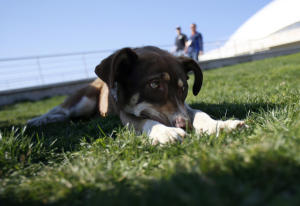
A dog rests outside of the Bolshoy Ice Dome before the USA versus Russia hockey game for the 2014 Winter Olympics in Sochi, Russia on Saturday, Feb. 15, 2014. (Nhat V. Meyer/Bay Area News Group) ( Nhat V. Meyer )

A dog rests outside of the Bolshoi Ice Dome before the USA versus Russia hockey game for the 2014 Winter Olympics in Sochi, Russia on Saturday, Feb. 15, 2014. (Nhat V. Meyer/Bay Area News Group) ( Nhat V. Meyer )

A really good article about how the presence of dogs  in Sochi is affecting some Olympic athletes and what they would like to do to help.

Read it here

Image

Wordless Wednesday, part 22

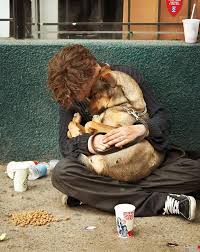
homeless man with dog

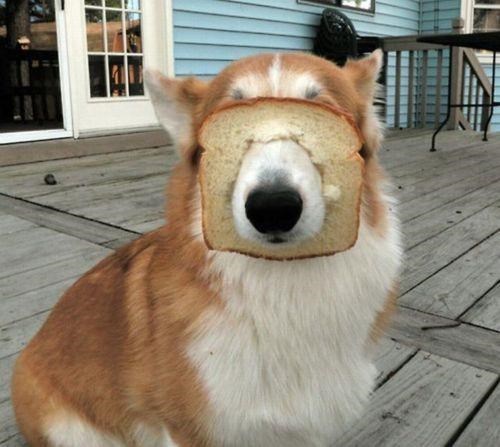
Breading a dog?

This isn’t a typo.  We’re not talking about breeding in this post – but breading.  This weird phenomenon started with cats and then people decided to do it with dogs.

Basically, it involves cutting a hole in slice of bread and then putting the bread over your dog’s muzzle – then take a silly photo and share it.

breading dog 2

Would you do this to your dog? Daisy would go crazy by trying to eat the bread.  But she also doesn’t enjoy being laughed at and so would greet ‘breading’ as she would when people try to put silly hats on her head.

Happy Monday!

breading dog 3Breading dog

Teaching wolves new tricks

The process of learning often involves mimicry or imitation.  In research published in the journal PLoS One, scientists from the Messerli Research Institute at the University of Veterinary Medicine, Vienna report on their behaviour experiments involving wolves and dogs.

The results show that wolves observe one another more closely than dogs and so are better at learning from one another. 

Photo Credit: Walter Vorbeck

Photo Credit: Walter Vorbeck

The scientists found that wolves are considerably better than dogs at opening a container, providing they have previously watched another animal do so. Their study involved 14 wolves and 15 mongrel dogs, all about six months old, hand-reared and kept in packs.

Each animal was allowed to observe one of two situations in which a trained dog opened a wooden box, either with its mouth or with its paw, to gain access to a food reward. Surprisingly, all of the wolves managed to open the box after watching a dog solve the puzzle, while only four of the dogs managed to do so. Wolves more frequently opened the box using the method they had observed, whereas the dogs appeared to choose randomly whether to use their mouth or their paw.

The researchers think that it is likely that the dog-human cooperation originated from cooperation between wolves. During the process of domestication, dogs have become able to accept humans as social partners and thus have adapted their social skills to include interactions with them, concomitantly losing the ability to learn by watching other dogs.

Source:  University of Vienna media release

Your dog may have a permanent headache

Through selective breeding, toy breeds including the Griffon Bruxellois, Cavalier King Charles Spaniels, Chihuahuas and their crosses may have to live with a permanent headache and other maladies.

A Griffon Bruxellois Photo by © Vincent / Fotolia

A Griffon Bruxellois
Photo by © Vincent / Fotolia

Research published in the journal PloS One by researchers at the University of Surrey has identified the specific effect Chiari malformation has on the shape of a dog’s skull and brain.

Researchers took brain, skull and vertebrae measurements of 155 Griffon Bruxellois and compared dogs affected by the condition, with normal Griffons. They discovered that Griffons with the disease had taller foreheads and that it had also caused the shape of the brain to change, with severely affected animals having their cerebellum pushed underneath the main part of the brain.

The taller forehead makes some toy breeds look like a doll, making them more attractive to people looking to purchase a dog.

Although it can be asymptomatic, in many dogs Chiari malformation can cause headaches, problems with walking or even paralysis.

Lead author, Dr Clare Rusbridge says: “Chiari malformation can be described as trying to fit a big foot into a small shoe. It can be very painful, causing headaches and pressure on the brain and can result in fluid filled cavities in the spinal cord. Our latest discoveries will be significant in driving this research forward and hopefully allow us to identify which genes may be associated with the condition. Our next steps will be to apply our technique to other breeds with Chiari malformation and investigate more sophisticated ways of screening, so that risk of disease can be detected more easily, at an earlier age and with a single MRI scan.”

The research team wants to work with responsible breeders to use scanning technology so they can remove the condition from the breeding population.

Source:  AlphaGalileo press release

Image

Chocolates for Valentine’s Day

Box of chocolates

Platty’s Story – A Golden Retriever’s Last Days

On the eve of Valentine’s Day, a story for dog lovers…

Image

Wordless Wednesday, part 21

Nose kiss

A dog cancer that is 11,000 years old

Scientists have sequenced the genome of the world’s oldest continuously surviving cancer, a transmissible genital cancer that affects dogs.

Credit: © Melinda Nagy / Fotolia

Credit: © Melinda Nagy / Fotolia

The cancer, which causes grotesque genital tumours in dogs around the world, first arose in a single dog that lived about 11,000 years ago. The cancer survived after the death of this dog by the transfer of its cancer cells to other dogs during mating.

Analysis of the genetic variants in the genome revealed that the dog may have resembled an Alaskan Malamute or Husky. It probably had a short, straight coat that was coloured either grey/brown or black. Its genetic sequence could not determine if this dog was a male or a female, but did indicate that it was a relatively inbred individual.

The genome has over 2 million mutations; the research team used one type of mutation, known to accumulate steadily over time, as a ‘molecular clock.’  This led to the estimate that the cancer first arose 11,000 years ago.

“The genome of this remarkable long-lived cancer has demonstrated that, given the right conditions, cancers can continue to survive for more than 10,000 years despite the accumulation of millions of mutations”, says Dr Elizabeth Murchison, first author from the Wellcome Trust Sanger Institute and the University of Cambridge.

Transmissible cancers are very rare in nature.  Apart from the dog transmissible cancer, the only other known naturally occurring transmissible cancer is an aggressive transmissible facial cancer in Tasmanian devils that is spread by biting.

Source:  Wellcome Trust media statement

Grounds for dismissal?

Royston Grimstead, owner of an Aston Martin and a Border Collie cross named Luce, came home last week to find that she had chewed the wheel arch of the £80,000 car.

photo by SWNS

photo by SWNS

Some people found this story funny, with Grimstead saying that he felt the dog acted out of spite when she heard that he wanted to re-home her.  He then reported that the had re-homed Luce without telling her new owners about the destructive chewing incident (although with the coverage this story had in worldwide media, they probably have heard by now).

In my opinion, dogs don’t act out of spite.  They do act out of boredom and Border Collies are particularly known for their high intelligence and need of a job (plus other enrichment activities).  Luce was likely bored and found the texture and shine of the fibreglass appealing.

photo by SWNS

Luce, photo by SWNS

I don’t agree with the media coverage of this story for two reasons:

  • It reinforces the myth that dogs act from spite
  • It spreads the idea that is okay to give away a dog when you don’t want to work with them on behavioural issues

What do you think?