Author Archives: DoggyMom.com

Your dog’s (brain) reward center

Professor Gregory Berns of Emory University is at it again.  He’s expanded on his earlier research using functional MRI (magnetic resonance imaging) to show the brain activity in dogs.

“Now we’ve shown that the initial study wasn’t a fluke: Canine fMRI is reliable and can be done with minimal stress to the dogs. We have laid the foundation for exploring the neural biology and cognitive processes of man’s best, and oldest, friend.”  said Professor Berns.

Tigger, a Boston Terrier, was one of the 13 study subjects

Tigger, a Boston Terrier, was one of the 13 study subjects

The task requires dogs to cooperatively enter the small enclosure of the fMRI scanner and remain completely motionless despite the noise and vibration of the machine.  Only those dogs that willingly cooperated were involved in the experiments.

The canine subjects were given harmless fMRI brain scans while they watched a human giving hand signals that the dogs had been trained to understand. One signal indicated that the dog would receive a hot dog for a treat. The other hand signal meant that the dog would not receive a hot dog.

Most of the dogs showed a response in the caudate region of the brain when seeing the hand signal for a treat.  This area of the brain has the highest concentration of dopamine receptors, which are implicated in motivation and pleasure, among other neurological processes.

“Our goal is to map out canine cognitive processes” said Berns. The research team needs to increase the number of canine subjects that can be trained to stay within the MRI machine so it can validate its research.

See my other blogs about functional MRI and Professor Gregory Berns:

Source:  Emory University media release

A thought for caregivers at Christmas

There's a special place...

As the Christmas holiday is upon us, across the world there are special people who are working in animal shelters and rescues caring for homeless dogs.  Let’s be thankful that these folks exist.  If you are considering adding a dog to your pack, please think adoption first!

This quilt hangs in Old Friends at the Best Friends Animal Sanctuary in Kanab, Utah

This quilt hangs in the kennels at Dogtown in the Best Friends Animal Sanctuary, Kanab, Utah

Dogs are people, too

In this New York Times opinion piece, Professor Gregory Berns discusses the MRI findings of brain activity in dogs, the evidence for ‘sentience’ and the reasons why dogs’ rights should go beyond consideration of animals as property.

For anyone involved in animal welfare advocacy, it is essential to have animal welfare laws that recognise dogs as sentient beings – with the ability to experience emotions like love and grief – because abuse and harm done to sentient beings carries a higher penalty in law than if an item of property is damaged.  (In many areas, dogs are considered nothing more than property.)

Jane Evelyn Atwood/Contact Press Images

Jane Evelyn Atwood/Contact Press Images

The Princess and the Pea

When you own a senior dog, it’s important to understand that they experience discomfort from arthritis, aching joints, and muscle tension.

A supportive dog bed is essential.

In Daisy's case, she now sleeps on a total of four mattresses, one of which is memory foam and acts as the 'boxed spring' layer.  I call this her Princess and the Pea look.

In Daisy’s case, she now sleeps on a total of four mattresses, one of which is memory foam and acts as the ‘boxed spring’ layer. I call this her Princess and the Pea look.

Happy birthday, Your Holiness

I like Pope Francis’ style.  Earlier this week, he invited four homeless men to join him for Mass and breakfast at the Vatican in celebration of his 77th birthday (that’s roughly 13 in dog years).

One of the men owned a dog, who was welcomed as part of the celebrations:

Pope's birthday photo

If the Vatican can embrace dog-friendly accommodation, why can’t we see more dog-friendly establishments elsewhere?

What’s cooking? It smells great!

A courier came to the door this morning to deliver several parcels.  She said, “What’s cooking – it smells great!”  And I replied, “I’m cooking a casserole for my dog in the slow cooker.”

This particular casserole is made with fresh broccoli, lamb heart, lean beef schnitzel, and fresh ginger.

This particular casserole is made with fresh broccoli, lamb heart, lean beef schnitzel, and fresh ginger.

After a brief pause, she smiled and said, “Lucky dog.”

I feed a combination of raw, homemade and commercial foods. It’s important to feed a nutritionally complete diet and so homemade diets will most likely need supplementation.

I consult with dog owners who want feeding advice and I incorporate Traditional Chinese Medicine assessment techniques for food matching.  I am not affiliated with any dog food manufacturer and so my advice is completely independent.

Need to know more?  Get in touch with me via my company website.

Kathleen Crisley, specialist in dog massage, rehabilitation and nutrition/food therapy, The Balanced Dog, Christchurch, New Zealand

Short dog syndrome

You’ve probably heard about Short Man Syndrome.  (In fact, many of us (including me) have experienced it firsthand!)

Did you know that there is growing evidence of Short Dog Syndrome?

Researchers at the University of Sydney have published their research into this topic in the online journal PLoS One.  Professor Paul McGreevy is the lead author of the study and says, “the shorter the dogs the less controllable their behaviour is for their owners.”

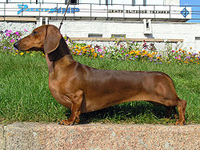
Dachshunds and other short breed dogs may be more difficult to train and control

Dachshunds and other short breed dogs may be more difficult to control

The study used owners’ reports on the behaviour of over 8,000 dogs from across 80 breeds and related them to the shape of 960 dogs of those breeds, revealing strong relationships between height, bodyweight, skull proportions (relative width and length) and behaviour.

33 out of 36 undesirable behaviours were associated with height, bodyweight and skull shape

As a breed’s average height decreased, the likelihood of behaviors such as mounting humans or objects (humping), owner-directed aggression, begging for food and attention-seeking increased.

“The only behavioral trait associated with increasing height was ‘trainability’. When average bodyweight decreased, excitability and hyperactivity increased,” said Professor McGreevy.

The researchers admit that there is an aspect here of nature vs nurture.  If aggressive and ‘bad’ behaviours were present in larger dogs, the results could be more dangerous.  Poor behaviour in small dogs is likely to be tolerated more.  Over time, breeding has resulted in the patterns observed by the research team.

Source:  University of Sydney media release

Image

Wordless Wednesday, part 15

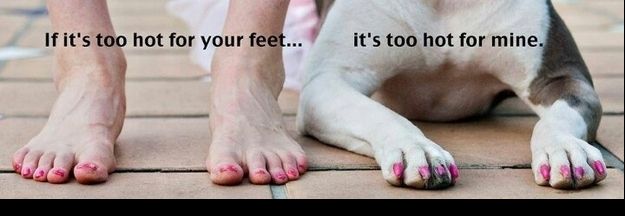
If it's too hot for your feet...

New gene therapy for dogs with hemophilia

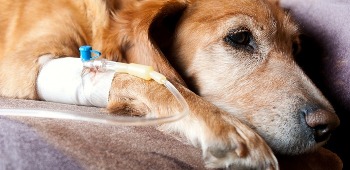
Researchers at the UNC School of Medicine and the Medical College of Wisconsin have found that a new kind of gene therapy led to a dramatic decline in bleeding events in dogs with naturally occurring hemophilia A.

Photo courtesy American Kennel Club Canine Health Foundation, Inc

Photo courtesy American Kennel Club Canine Health Foundation, Inc

Hemophilia A affects about 50,000 people in the United States and millions more around the world.

Before the gene treatment, the animals experienced about five serious bleeding events a year. After receiving the novel gene therapy, though, they experienced substantially fewer bleeding events over three years.

Hemophiliacs lack  the coagulation factor VIII in their blood plasma.   In about 35% of cases, patients develop an antibody response to factor VIII, meaning that treatment by injection of the factor no longer works.

Using a plasmapheresis machine and a blood-enrichment technique, the research team isolated specific platelet precursor cells from three dogs that had hemophilia A. The team then engineered those platelet precursor cells to incorporate a gene therapy vector that expresses factor VIII. The researchers put those engineered platelet precursors back into the dogs. As the cells proliferated and produced new platelets, more and more were found to express factor VIII.

In the 2 1/2 years since the dogs received the gene therapy, researchers found that factor VIII was still being expressed in platelets that were coursing throughout the vascular systems of all three dogs. All three experienced much less bleeding. In the dog that expressed the most factor VIII in platelets, the bleeding was limited to just one serious event each year over the course of three years. And such bleeding events were easily treatable with current standard therapies.

The researchers have published their results in the journal Nature Communications.  You can read the article here.

While the goal of this research is to help human hemophiliac patients, I hope that the treatment is able to be offered more widely to dogs with the condition too!

Source:  UNC School of Medicine media statement

The notice at dog park

Flynn's death noticeI had seen Flynn at dog park a number of times before his owners asked for me to give him a relaxation massage.  Then I received an email several weeks later informing me that he had died suddenly.

His owners felt it was important to let everyone at dog park know of his passing.

Rest in peace, Flynn!