Author Archives: DoggyMom.com

When a neighbour complains…

In my practice, I have met a few owners who have received complaints about their dog’s excessive barking.  Unlike the note seen below, most complaints in Christchurch seem to be made by people to Animal Control, which instigates a visit by an officer to your home.

your-dog-has-been-barking

It’s natural that a complaint will put you into a defensive mode, but being in that frame of mind often means you don’t handle the situation as well as you should.

Here’s my advice on how to constructively approach a barking dog complaint.

Be Considerate and Listen

Don’t get angry.

If a neighbour complains to you directly, listen to what they have to say.  Ask questions about the time of day that the dog is barking, length of time the barking lasts for, and understand the location of your section and proximity to the neighbour.

If the Animal Control Officer pays you a visit, pay attention to what they are saying and the steps they want you to take.  Don’t feel intimidated because they are a Council officer – ask questions to understand the scope of the complaint, and how much time you have to respond.

Be Empathetic

Put yourself in the position of your neighbour and show some empathy for their stress.  Particularly if you have a neighbour complain to your directly, try to build a bridge from the complaint to ways to solve the problem so both of you can remain happy.

Investigate

Ask your neighbour to keep a log book of the barking (I know that one of my clients had an Animal Control officer ask for this).  Make random visits to your home at off-hours to see if you can hear your dog barking.  To make this effective, park your car a couple of blocks away and walk to your property – your dog knows the sound of your car!

Check all of your fencing for security.  If your dog is being visually stimulated by activity over the fence, find ways to cover and reduce the gaps in your fence.

Keep Documentation – You Can Still Be Cooperative While Defending Yourself

I’ve seen situations where a neighbour is hard to satisfy and perhaps ultra-sensitive to barking.  When this has been the case, I’ve suggested that the owner take their dog to a day care centre on random dates.  When compared to their neighbour’s barking diary,  they can show that their dog was not on the property that day.  (This can be a very powerful defense in dealing with the Council.)

It may pay to seek the support of either an animal behaviourist or a dog trainer (there is a difference in scope of practice).  If you hire professional expertise, then provide receipts and a report to show along with any other evidence of what you have done to help decrease  your dog’s barking.

If you’ve reinforced your fencing to reduce your dog’s visual stimulation – take photos before/after.

dogs-at-fenc

The Animal Control section has the option of installing bark recorders, which can help you track the problem.  They can confirm (or not) the extent of the barking to validate a complaint.

The good news is that most barking complaints can be resolved, through management of your dog’s environment, focusing on the problem, and being constructive.

Kathleen Crisley, specialist in dog massage, rehabilitation and nutrition/food therapy, The Balanced Dog, Christchurch, New Zealand
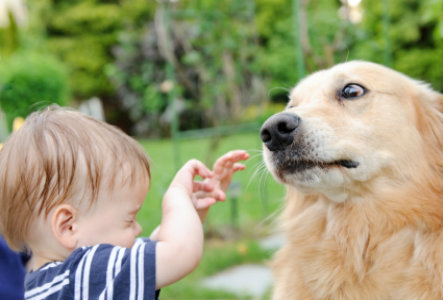
Children are unaware of the risks of approaching frightened dogs

Children understand the risks of approaching an angry dog but they are unaware that they should show the same caution around frightened dogs says a study presented to the British Psychological Society’s Developmental Psychology Section’s annual conference this week.

kid-scared-pet_s36fbl

Lead researcher Dr Sarah Rose of Staffordshire University said: “UK statistics show that young children are at the highest risk of being bitten by a dog with nearly 1200 admissions to hospital for under 10’s during 2013-2014. This study explored whether the explanation is that they are unable to accurately recognise a dog’s emotions when approaching one.”

Dr Rose and Grace Alridge (also of Staffordshire University) asked two groups of children aged 4 to 5 (57) and 6 to 7 years old (61) to watch 15 videos and look at 15 images showing real life behaviour of dogs.  Video clips were all between 6 and 11 seconds long and the only auditory information was the dog barking. The images and videos used had been watched by two veterinary nurses and two laypeople who had agreed on the emotion the dog was showing.

Both groups were asked questions relating to their intention to approach the dog (Would you play with this dog?) and what emotion they thought the dog was experiencing (How happy/angry/frightened do you think this dog is feeling?).

Analysis of the results showed that the children recognised happy, angry and frightened dogs in videos and images at above the level of chance. Furthermore, they recognised angry dogs more accurately than happy or frightened dogs.

However, although the children were less likely to approach an angry dog there was no difference in their inclination to approach a happy or frightened dog.

Dr Rose said: “Young children are relatively good at accurately identifying the emotion that a dog is displaying. However, children’s understanding of safety around dogs is lacking as they only demonstrated caution about approaching angry dogs. They appeared to be unaware that there might be problems approaching frightened dogs. This finding should help inform dog bite prevention campaigns.” 

Source:  The British Psychological Society media release

Kathleen Crisley, specialist in dog massage, rehabilitation and nutrition/food therapy, The Balanced Dog, Christchurch, New Zealand

Diggy the dog – a BSL success story

Imagine falling in love with a dog at a shelter, bringing him home, and then because he’s a Facebook success having authorities deem him unacceptable because of his breed.

That’s what happened to Diggy and his adoptive owner, Dan Tillery from Waterford Township in Michigan.

detroit-dog-rescue-photo

Diggy was labelled a pit bull and Dan was charged with a code violation for owning a banned breed.

But Diggy wasn’t a pit bull and Dan had veterinarians willing to testify to his breed.  In the intervening time, bills were introduced so local communities couldn’t introduce BSL ordinances and 100,000 people signed petitions on Diggy’s behalf.

The court dropped the charges once the signed affidavits of the veterinarians were entered into evidence.

Breed specific legislation doesn’t work.  And in Diggy’s case, he was identified solely based on appearance – which is fraught with difficulties since so many dogs can appear to be one breed but are, in fact, a mixed breed or a different breed altogether.

I’m just glad that Diggy and Dan are allowed to remain a family.

Kathleen Crisley, specialist in dog massage, rehabilitation and nutrition/food therapy, The Balanced Dog, Christchurch, New Zealand

Source:  Boston.com

Choosing dog chews

Celebrated veterinarian Dr Marty Becker has a good rule of thumb when it comes to choosing chews for your dog:  whack your knee with it and, if it hurts, then the chew is too hard.

knee

So a pig’s ear is okay.pigs-ear

But a deer antler isn’t. deer-antler

Beef tendons – okay. beef-tendon

knuckle-bone Knuckle bones – not so much.

And add to the rule, never – EVER, rawhide.  These treats often come from dubious sources with a risk of poisoning on top of the very real risk associated with intestinal blockages and choking.

rawhide

Many of these recommendations contradict long-standing traditions in terms of dog chews.  Knuckle bones and rawhide were regularly given to my dogs when I was growing up.

We now have a greater body of evidence about dental health care in our dogs.  Fractured and rotting teeth often result from chewing on items that are excessively hard and unforgiving.

With all treats, it pays to read the label for country of origin labeling and ensure you are buying from a trustworthy source.

Kathleen Crisley, specialist in dog massage, rehabilitation and nutrition/food therapy, The Balanced Dog, Christchurch, New Zealand


Southwest Airlines teams up with Canine Companions

Southwest Airlines has committed its support to Canine Companions for Independence by allowing volunteer puppy raisers and their puppies to travel at no additional charge (a savings of $95 per puppy per trip).

The company has instituted this benefit as a standard policy after a very successful six-month trial.  The puppy raisers were professional and the puppies were well-behaved.

The puppies gain valuable experience with commercial flying even before they are fully trained and graduate.  So the Airline is supporting the Canine Companions’ training program with practical skills.

Founded in 1975, CCI is a non-profit organization that enhances the lives of people with disabilities by providing highly-trained assistance dogs and ongoing support to ensure quality partnerships. CCI is the largest non-profit provider of assistance dogs, and is recognized worldwide for the excellence of its dogs, and the quality and longevity of the matches it makes between dogs and people. CCI trains four types of assistance dogs: Service dogs, Hearing dogs, Skilled Companion dogs, and Facility dogs—all of which provide specialized assistance to those in need.

Well done to Southwest Airlines!

Puppy raisers pre-board each aircraft at the same time that passengers with disabilities are given the opportunity to board.  The dogs must have a valid vaccination record and CCI identification must also be produced.

canine-companions-for-independence

Source:  The Companion, Northeast Region, Summer 2016

Kathleen Crisley, specialist in dog massage, rehabilitation and nutrition/food therapy, The Balanced Dog, Christchurch, New Zealand

Cars and dogs threaten koalas in Australia

koala

Dogs could be banned from some south-east Queensland suburbs in a bid to protect at-risk koalas

Koalas in Queensland are under threat and the primary reasons are cars and dogs associated with urban development.  As the demand for residential development continues, the number of cars and dogs introduced into koala habitat increases.

According to the Queensland Department of Environment and Heritage Protection, approximately 110 koalas are attacked and killed by dogs each year.

Unlike in New Zealand, where the problem is free-roaming domestic cats attacking birds, most attacks on koalas occur in the dog’s backyard when the koala roams into their territory, particularly after dark when koalas are most active.  That’s a major reason why researchers are suggesting that an outright ban on dog ownership in some areas may be required.

koala-mother-and-baby

Of particular concern is an area known as The Koala Coast which is located 20 km south-east of Brisbane and covers an area of 375 km2 around Redland City, some of Logan City and the south-east section of Brisbane itself.  It is regarded nationally as one of the most significant koala populations because of its size and genetic structure.

There’s a definite risk that koalas may face extinction.  While I love dogs, I also love koalas and Australia would lose out on biodiversity as well as a national icon which generates many tourist dollars.

Under a directive from Environment Minister Steven Miles, a panel of koala experts – University of Queensland’s Associate Professor Jonathan Rhodes, Central Queensland’s Dr Alistair Melzer and Dreamworld’s Al Mucci – have convened to recommend last-ditch efforts to stop koala extinction.

Of their efforts, Dr Melzer has said, “The reality is this is crunch time for the koalas of the Koala Coast at least. The measures that have put in place to date – although extremely well-meant – just haven’t worked. So a radical re-thinking is needed and that is what the minister has initiated.”

The panel has also noted that there will be winners and losers from initiatives to save the koala and that may very well be dogs and dog ownership in these areas.  A sobering thought I’m sure for our Australian neighbours.

Source:  Sydney Morning Herald

Kathleen Crisley, specialist in dog massage, rehabilitation and nutrition/food therapy, The Balanced Dog, Christchurch, New Zealand

Praise or food?

Given the choice, many dogs prefer praise from their owners over food, suggests a new study published in the journal Social, Cognitive and Affective Neuroscience. The study is one of the first to combine brain-imaging data with behavioral experiments to explore canine reward preferences.

“We are trying to understand the basis of the dog-human bond and whether it’s mainly about food, or about the relationship itself,” says Gregory Berns, a neuroscientist at Emory University and lead author of the research. “Out of the 13 dogs that completed the study, we found that most of them either preferred praise from their owners over food, or they appeared to like both equally. Only two of the dogs were real chowhounds, showing a strong preference for the food.”

food-or-praise

Praise Pooch: Most of the dogs in the experiments preferred praise over food, or liked them both equally. Kady, a Labrador-golden retriever mix, was the top dog when it came to the strength of her preference for praise.

Dogs were at the center of the most famous experiments of classical conditioning, conducted by Ivan Pavlov in the early 1900s. Pavlov showed that if dogs are trained to associate a particular stimulus with food, the animals salivate in the mere presence of the stimulus, in anticipation of the food.

“One theory about dogs is that they are primarily Pavlovian machines: They just want food and their owners are simply the means to get it,” Berns says. “Another, more current, view of their behavior is that dogs value human contact in and of itself.”

Berns heads up the Dog Project in Emory’s Department of Psychology, which is researching evolutionary questions surrounding man’s best, and oldest friend. The project was the first to train dogs to voluntarily enter a functional magnetic resonance imaging (fMRI) scanner and remain motionless during scanning, without restraint or sedation. In previous research, the Dog Project identified the ventral caudate region of the canine brain as a reward center. It also showed how that region of a dog’s brain responds more strongly to the scents of familiar humans than to the scents of other humans, or even to those of familiar dogs.

chowhound

Chowhound: Ozzie, a shorthaired terrier mix, was the only dog in the experiments that chose food over his owner’s praise 100 percent of the time. “Ozzie was a bit of an outlier,” Berns says, “but Ozzie’s owner understands him and still loves him.”

For the current experiment, the researchers began by training the dogs to associate three different objects with different outcomes. A pink toy truck signaled a food reward; a blue toy knight signaled verbal praise from the owner; and a hairbrush signaled no reward, to serve as a control.
The dogs then were tested on the three objects while in an fMRI machine. Each dog underwent 32 trials for each of the three objects as their neural activity was recorded.

All of the dogs showed a stronger neural activation for the reward stimuli compared to the stimulus that signaled no reward, and their responses covered a broad range. Four of the dogs showed a particularly strong activation for the stimulus that signaled praise from their owners. Nine of the dogs showed similar neural activation for both the praise stimulus and the food stimulus. And two of the dogs consistently showed more activation when shown the stimulus for food.

The dogs then underwent a behavioral experiment. Each dog was familiarized with a room that contained a simple Y-shaped maze constructed from baby gates: One path of the maze led to a bowl of food and the other path to the dog’s owner. The owners sat with their backs toward their dogs. The dog was then repeatedly released into the room and allowed to choose one of the paths. If they came to the owner, the owner praised them.

“We found that the caudate response of each dog in the first experiment correlated with their choices in the second experiment,” Berns says. “Dogs are individuals and their neurological profiles fit the behavioral choices they make. Most of the dogs alternated between food and owner, but the dogs with the strongest neural response to praise chose to go to their owners 80 to 90 percent of the time. It shows the importance of social reward and praise to dogs. It may be analogous to how we humans feel when someone praises us.”

The experiments lay the groundwork for asking more complicated questions about the canine experience of the world. The Berns’ lab is currently exploring the ability of dogs to process and understand human language.

“Dogs are hypersocial with humans,” Berns says, “and their integration into human ecology makes dogs a unique model for studying cross-species social bonding.”

Source:  Emory University media release

Greyt Vinny and his beds

As Izzy is a greyhound, I like the description of all the beds and their construction. Most dogs will benefit from a comfy bed, particularly as they get older.

COAZY Old Crafter's avatarone ear up! , ... and other stuff!

Greyhounds are boney dogs. They have very little fat or padding. Therefore they need a soft spot to lay. None of the greyhounds that have shared my life would be caught dead laying on a bare floor of wood or tile. There must be at least a rug between them and the hard floor. However, just a rug is rather insulting to a greyhound.

Our Vinny has multiple beds, just count them, . . .
I let our first greyhound sleep on the bed with me at night. This is not a mistake I made the second time. When greys take their share of the bed, they most always stretch out their full length and spread their legs across the bed. There is no curling up in a cute ball for a greyhound, no sirree. Even in a king size bed you are likely to find yourself on the very…

View original post 301 more words

Awareness of the human-animal bond and how it impacts pet care

The Human Animal Bond Research Initiative (HABRI) Foundation partnered with Cohen Research Group to conduct an online survey of 2,000 pet owners, which had a margin of error of plus or minus 2.2%.

This is the first survey of its kind to explore how pet owners’ knowledge of the health benefits of the human-animal bond impacts pet care and welfare. The survey also looked for generational differences among pet owners on this subject.

img_0743

Key findings are as follows:

There is strong awareness of the health benefits of pet ownership

  • 71% of pet owners have heard about scientific research on the human-animal bond that demonstrates pet ownership can help improve physical or mental health in people
  • 88% of pet owners were aware that pets reduce stress
  • 86% of pet owners were aware that pets reduce depression
  • 84% of pet owners were aware that pets reduce anxiety
  • 81% of pet owners were aware that pets increase our sense of well-being
  • 80% of pet owners were aware that pets help with conditions like PTSD in war veterans
  • 68% of pet owners were aware that pets support healthy aging
  • 65% of pet owners were aware that pets help with conditions like autism
  • 60% of pet owners were aware that pets improve heart health
  • 56% of pet owners were aware that pets help with conditions like Alzheimer’s disease
  • 47% of pet owners were aware that pets support child cognitive development and reading skills
  • 45% of pet owners were aware that pets support classroom learning
  • 32% of pet owners were aware that pets help prevent child allergies

The majority of pet owners have personal experience with the health benefits of pets.

  • 74% of pet owners reported mental health improvements from pet ownership
  • 75% of pet owners reported a friend’s or family member’s mental health has improved from pet ownership
  • 54% of pet owners reported physical health improvements from pet ownership
  • 55% of pet owners reported a friend’s or family member’s physical health has improved from pet ownership
  • 83% of baby boomers and 82% of greatest/silent generations reported more personal experience with mental health improvements from pets than millennials (62%) and generation X (72%)

The more pet owners learn about scientific research on the benefits of the human-animal bond, the more likely they are to take actions to improve pet health.

When educated on the scientific research on the health benefits of pets:

  • 92% of pet owners are more likely to maintain their pet’s health, including keeping up with vaccines and preventative medicine
  • 89% of pet owners are more likely to take their pet to the vet for regular check-ups
  • 88% of pet owners are more likely to provide their pets with high-quality nutrition
  • 62% of pet owners are less likely to skip visits to the veterinarian
  • 51% of pet owners (78% of millennials) are more likely to purchase pet health insurance

Knowledge of the scientific research on the benefits of the human-animal bond improves animal welfare.

When educated on the scientific research on the health benefits of pets:

  • 89% of pet owners are more likely to take better care of their pets
  • 75% of pet owners are more likely to microchip a pet to ensure it can be found if lost or stolen
  • 74% of pet owners are less likely to give up a pet for any reason

In addition:

  • 77% of pet owners believe that pets benefit from the human-animal bond as much as people
  • 80% of pet owners who were aware of the health benefits of pets reported spending most of the day or a big part of their day with their pets, compared to 71% of pet owners who were unaware

Knowledge of the scientific research on the benefits of the human-animal bond boosts pet ownership.

When educated on the scientific research on the health benefits of pets:

  • 87% of pet owners are more likely to recommend a pet to a friend or family member
  • 81% of pet owners are more likely to get another pet in the future (if the one they have now passes away)
  • 49% of pet owners (74% of millennials) are more likely to get an additional pet
  • 57% of pet owners that currently reported having multiple pets are more likely to get yet another pet

Veterinarians are trusted resources for scientific information on the human health benefits of pets and have an opportunity to further strengthen their relationships with pet owners, especially millennials.

  • Virtually all pet owners (97%) have a favorable opinion of their veterinarian
  • 66% of pet owners (77% of millennials) would have a more favorable view of their veterinarian if they discussed the health benefits of the human-animal bond with them
  • 61% of pet owners (74% of millennials) would be more likely to visit their veterinarian if they discussed the health benefits of the human-animal bond with them
  • 25% of millennials always talk to their veterinarians about the health benefits of pet ownership, more than generation X (16%), baby boomers (6%), or greatest/silent generation (4%)

Doctors can also benefit from increased communication on the human-animal bond.

  • 88% of pet owners agree doctors and specialists should recommend pets to patients for healthier living
  • 65% of pet owners would have a more favorable view of a doctor who discussed the health benefits of the human-animal bond with them
  • 59% of pet owners would be more likely to visit a doctor who discussed the health benefits of the human-animal bond with them

Pet owners believe society should be more pet friendly and should act on the scientific research that shows pets improve human health.

  • 93% of pet owners agree the government should provide service animals to veterans with PTSD
  • 69% of pet owners (83% of millennials) agree the government should help make it more affordable to own a pet
  • 84% agree health and life insurance companies should give discounts for owning a pet
  • 87% would be more likely to buy products from pet-friendly businesses
  • 58% of pet owners (74% of millennials) agree employers should consider allowing employees to bring pets to work

Pets are family

  • 98% of pet owners agree that their pet is an important part of their family
  • 95% of pet owners could not imagine giving up their pet for any reason

Source:  HABRI

2 entertaining dog commercials

These two commercials, for Doritos and Amazon Prime, do a great job in using dogs to sell their products.  They certainly got my attention!

Kathleen Crisley, specialist in dog massage, rehabilitation and nutrition/food therapy, The Balanced Dog, Christchurch, New Zealand