Category Archives: dog breeds

Is that dog a pit bull?

A recently published Open Access article “Is That Dog a Pit Bull? A Cross-Country Comparison of Perceptions of Shelter Workers Regarding Breed Identification” asserts that shelter workers operating in areas restricted by breed-specific legislation (BSL) are more likely to consciously mislabel a dog’s breed if they felt it were to increase the dog’s chances of being adopted and/or avoid being euthanized.

The study, published in Journal of Applied Animal Welfare Science, compares the breed identification process between workers in the United States and the United Kingdom, noting that often the process relies on the individual worker’s intuition and prior experiences with other dogs. A survey with photos of the same twenty dogs were sent to shelters in the US and UK. American shelter workers were more likely to consider a dog a pit bull than their counterparts in the UK.

These are the photos that the research subjects were shown:

Pit bull identification photos

The pit bull terrier is banned or restricted by BSL in parts of the United States and throughout the United Kingdom. Shelters in both countries are often tasked with accepting unwanted animals and finding new homes for them; many of these animals are pit bulls or other bull breeds. BSL restrictions may include a total breed ban, or some lesser rules such as (but not limited to): higher licensing fees, registering the dog as dangerous with local governments, liability insurance coverage, mandatory sterilization, muzzling on public property, placement of warning signage on private property, and standardized caging requirements.

Shelter workers in areas affected by BSL know that a dog’s identification can influence micro-level trends such as adoption rates, but also macro-level trends such as breed perception nationally and even globally. The study highlights the fact that there exists a lack of consensus on what exactly a pit bull is, and calls to question the validity of determining breeds based on visual assessment.

Source:  Taylor & Francis media release

The impact of movies on dog breed popularity

The effect of movies featuring dogs on the popularity of dog breeds can last up to ten years and is correlated with the general success of the movies, according to new research from the University of Bristol, the City University of New York, and Western Carolina University.

The researchers used data from the American Kennel Club, which maintains the world’s largest dog registry totaling over 65 million dogs, and analysed a total of 87 movies featuring dogs. They found that the release of movies is often associated to an increase in popularity of featured breeds over periods of one, two, five, and ten years.

The influence of movies was strongest in the early twentieth century and has declined since.

Additionally, they found that these trend changes correlated significantly with the number of viewers during the movie’s opening weekend, considered as a proxy of the movie’s reach among the general public.

This suggests that viewing a movie may cause a long-lasting preference for a breed that can be expressed years later, when the time comes to buy a new dog.

The 1943 hit Lassie Come Home is associated, in the following two years, with a 40 per cent increase of Collie registrations in the American Kennel Club.

Lassie Come Home theater poster

An even more dramatic example is the 100-fold increase in Old English Sheepdog registrations following the 1959 Disney movie The Shaggy Dog.

Photo taken by Harald Urnes, Norway

Photo taken by Harald Urnes, Norway

Professor Stefano Ghirlanda, lead author of the study said: “We focused on changes in trend popularity rather than on popularity itself to avoid attributing to movies trends that were already ongoing before movie release, as up-trending breeds may have been chosen more often for movies.”

Earlier movies are associated with generally larger trend changes than later movies. This might be due to an increased competition with other media, such as television, and more recently, the internet, but also to an increased competition among movies. Movies featuring dogs were released at a rate of less than one per year until about 1940 but a rate of more than seven per year by 2005.

Dr Alberto Acerbi, a Newton Fellow in the Department of Archaeology and Anthropology at the University of Bristol and co-author of the paper said: “If people buy en masse dogs because they appear in movies the consequences can be negative for the dogs themselves. Our previous study found that the most popular breeds had the greatest number of inherited disorders.

“It’s not surprising that we tend to follow social cues and fashions, as this is a quite effective strategy in many situations. However, in particular cases the outcomes can be negative. When choosing a new pet, we may want to act differently.”

Source:  EurekAlert! media release

Image

Wordless Wednesday, part 46

Noble

Blog Hop

Powered by Linky Tools

Click here to enter your link and view this Linky Tools list…

Skull shape and its implication for animal welfare

Syringomyelia (SM) is a painful condition in dogs that is more common in toy breeds like the Chihuahua and the Cavalier King Charles Spaniel. It involves the formation of fluid-filled cavities, known as syrinxes, in the spinal cord.  In these toy breeds, SM is usually secondary to a specific malformation of the skull called Chiari-like Malformation, CM for short.

Cavalier King Charles Spaniel

New research conducted at the University of Bristol’s School of Veterinary Sciences has identified two significant risk factors associated with these painful neurological conditions.

Identifying a head shape in dogs that is associated with these diseases would allow for selection away from these conditions and could be used to further breeding guidelines. Dogs were measured in several countries using a standardised “bony landmark” measuring system and photo analysis by trained researchers.

The researchers found two significant risk factors associated with CM/SM in the skull shape of the Cavalier King Charles Spaniel.  These were the extent of the broadness of the top of skull relative to its length, also known as brachycephaly, and the distribution of doming of the skull. The study suggests that brachycephaly, with resulting doming towards the front of the head, is associated with both conditions.

Thomas Mitchell, who was the undergraduate involved in the study, says “The study also provides guidance to breed clubs, breeders and judges that have a responsibility to avoid obvious conditions or exaggerations which would be harmful in any way to the health, welfare or soundness of the breed.  It will also provide vets with verified advice to provide to breeders outside the show ring and to occasional hobbyists.”

This research has been published online in the journal Canine Genetics and Epidemiology.

Source:  University of Bristol media release

Please also see my earlier post on Your dog may have a permanent headache, which discusses the Chiari malformation and earlier research on the Griffon Bruxellois.

Kathleen Crisley, specialist in dog massage, rehabilitation and nutrition/food therapy, Canine Catering Ltd, Christchurch, New Zealand

The world’s smallest dog

Miracle Minny


This one really is for the record books – how small do you think a dog can get?

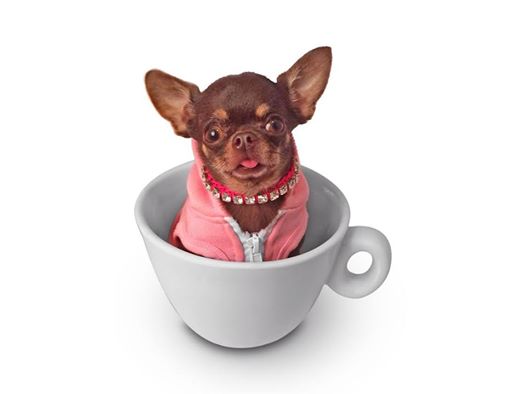
The world’s smallest dog, according to the Guinness Book of World Records, is Miracle Milly.  She’s a Chihuahua who lives in Puerto Rico.

She is only 3.8 inches tall (see photo above for scale).

Since she is a Public Figure, Milly has her own Facebook page and, like many small dogs, her owner likes to dress her up for photos.

Miracle Milly in teacup

Robin Williams leaves behind family and pug, Leonard

As the world learns more about the tragic loss of actor and comedian Robin Williams to suicide, this journalist from the Dog Channel has written about Williams and his Pug, Leonard.

I am sure that Leonard is mourning the loss of his doggy dad and owner today.

Rest easy, Mr Williams.

Robin Williams Leaves Behind Family and Pug, Leonard

More evidence against breed specific legislation

UK legislation that targets ‘dangerous dogs’ has not been shown to reduce dog bites and policies should be based on evidence and risk assessment, suggests a new article.

Rachel Orritt, a PhD student of psychology at the University of Lincoln says that dog bites present a “public health risk of unknown magnitude but no scientific evidence upon which to base a reliable UK estimate has been obtained in the past two decades.”

She also says that discussion by medical professionals about the impact of dog-human interactions “sometimes ignores the health benefits concomitant with dog ownership” with one writer in The British Medical Journal suggesting that “the only way to stop dog bites will be to ban dogs.”

Orritt says there are several studies that show owning a dog is associated with increased physical activity, better self esteem and fewer annual visits to the doctor. She adds that “eradicating dogs would have negative consequences for human health.”

She argues that the British news media “confound the matter further through inaccurate representation of the risk posed by dogs.”

Inaccurate reporting of dog bites, coupled with public pressure “have contributed to the drafting of legislation,” she writes. The Dangerous Dog Act 1991 has been amended in an effort to improve this legislation “but has been shown to be ineffective at reducing dog bite incidence.”

Orritt says that to reduce dog bite incidence, “academics and medical and veterinary practitioners need to cooperate to develop effective, scientifically sound risk management strategies. These should be evidence based and should not depend on politically driven initiatives such as the current legislation.”

Risk assessment for human violence has proved to be accurate and reliable and Orritt says this “might be a practical preventative measure to reduce injury from dog bite” along with medical and veterinary professionals “familiarising themselves with evidence based resources.”

She says that attention must also be given to the psychological health of patients after trauma.

Orritt believes that research is needed to improve care and an “estimate of dog bite incidence” but until this is done, “the scale of the problem is entirely unknown.”

She concludes that evidence based measures to inform ongoing risk management, such as developing effective risk assessments, “should result in the reduction in dog bite injuries that punitive legislation has not achieved.”

Source:    EurekAlert! media statement

Journal Reference

R. Orritt. Dog ownership has unknown risks but known health benefits: we need evidence based policy. BMJ, 2014; 349 (jul17 7): g4081 DOI: 10.1136/bmj.g4081

Comet’s Tale – book review

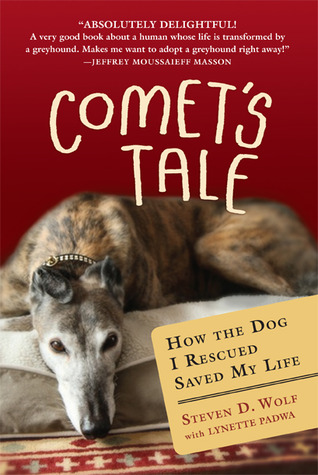
Comet's TaleThis book will make you want to go out and adopt a Greyhound!  Mr Wolf tells the story of Comet, a Greyhound who comes into his life as his health and well-being are seriously under threat.

The author never had any experience with Greyhounds until he is drawn to a charitable group promoting Greyhound adoption at his local supermarket.

A Greyhound who suffered abuse at the track, Comet is withdrawn around most people but decides that Mr Wolf (affectionately called “Wolfie” by his wife) is for her.  She literally sits down next to him and lets him know – take me home.

As Steven’s health deteriorates, he lives on pain killers and can barely walk or do simple household tasks.  This is when he decides that Comet has all of the qualities of a service dog and only needs training.  He looks for trainers to assist him and all scoff at the suggestion that a Greyhound could be a service dog.  So, he trains her himself.

I particularly liked the stories of Comet as she learns to pull Steven’s wheelchair through the airport.  Aided by the photo on the cover of the book (the only photo in this book, which perhaps is its only shortcoming), you can understand when Steven describes Comet’s doe eyes and the looks she would give him to communicate her very articulate thoughts!

I recommend this book for summer reading (if you are currently in the Northern Hemisphere) or curl up with it in front of the fire for winter entertainment (if you are in the Southern Hemisphere).

Happy reading!

Kathleen Crisley, specialist in dog massage, rehabilitation and nutrition/food therapy, Canine Catering Ltd, Christchurch, New Zealand


Domestication Syndrome

More than 140 years ago, Charles Darwin noticed something peculiar about domesticated mammals. Compared to their wild ancestors, domestic species are more tame, and they also tend to display a suite of other characteristic features, including floppier ears, patches of white fur, and more juvenile faces with smaller jaws. Since Darwin’s observations, the explanation for this pattern has proved elusive, but now, in a Perspectives article published in the journal GENETICS, a new hypothesis has been proposed that could explain why breeding for tameness causes changes in such diverse traits.

Photo courtesy of Lucky Dog Animal Rescue

Helios, an approximately 3-year-old cattle dog/greyhound mix with Lucky Dog Animal Rescue. Photo courtesy Lucky Dog Animal Rescue

The underlying link between these features could be the group of embryonic stem cells called the neural crest, suggests the research team.

“Because Darwin made his observations just as the science of genetics was beginning, the domestication syndrome is one of the oldest problems in the field. So it was tremendously exciting when we realized that the neural crest hypothesis neatly ties together this hodge-podge of traits,” says Adam Wilkins, from the Humboldt University of Berlin – one of the study’s authors.

Neural crest cells are formed near the developing spinal cord of early vertebrate embryos. As the embryo matures, the cells migrate to different parts of the body and give rise to many tissue types. These tissues include pigment cells and parts of the skull, jaws, teeth, and ears—as well as the adrenal glands, which are the center of the “fight-or-flight” response. Neural crest cells also indirectly affect brain development.

In the hypothesis proposed by Wilkins and co-authors Richard Wrangham of Harvard University and Tecumseh Fitch of the University of Vienna, domesticated mammals may show impaired development or migration of neural crest cells compared to their wild ancestors.

“When humans bred these animals for tameness, they may have inadvertently selected those with mild neural crest deficits, resulting in smaller or slow-maturing adrenal glands,” Wilkins says. “So, these animals were less fearful.”

The authors also suggest that the reduced forebrain size of most domestic mammals could be an indirect effect of neural crest changes, because a chemical signal sent by these cells is critical for proper brain development.

The hypothesis will require testing, which will be able to be done once genetic mapping of domesticated species like the dog, fox and rat are completed.

Full journal article details:  The “Domestication Syndrome” in Mammals: A Unified Explanation Based on Neural Crest Cell Behavior and Genetics
Adam S. Wilkins, Richard W. Wrangham, and W. Tecumseh Fitch. GENETICS July 2014, 197:795-808, doi: 10.1534/genetics.114.165423
http://www.genetics.org/content/197/3/795.full

Source:  Genetics Society of America media release


Urine may be the saviour of wild dog populations

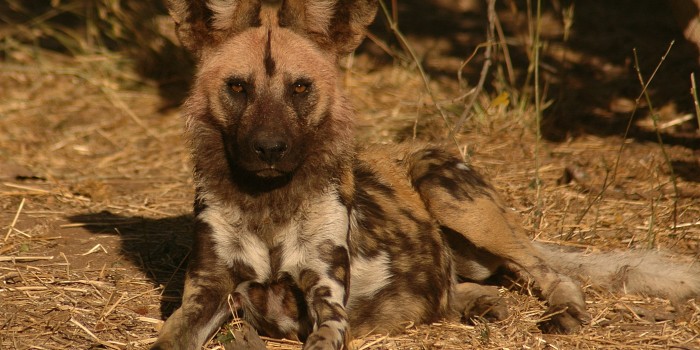
Africa’s endangered wild dogs are very clever:  no traditional fence can keep them out.  A doctoral researcher at the Norwegian University of Science and Technology (NTNU), Craig R. Jackson, has explored ways to save the species.

Photo by Craig R. Jackson

Photo by Craig R. Jackson

African wild dogs are a distinct species that cannot inter-breed with other dogs.   The populations of these dogs were in good shape until a few decades ago. In the middle of the last century, there were 500,000 of them in 39 countries. But the species is in decline across nearly its entire range south of the Sahara. Today there are somewhere between 3000 and 5500 left, in fewer than 25 countries. That’s roughly one per cent remaining – and that’s the best case scenario.

Wild dog packs are loath to intrude into the territories of other packs. These territories are defined by urine scent trails. So the researchers and their colleagues collected sand that had been sprayed with urine by wild dogs and moved it near to other packs to keep them inside a certain area – with success.

The use of the scent markings helps to keep wild dogs out of areas where they think there are other dog packs.  But, collection of the urine needed for the scent trails is a problem.  So the next step is re-creating the urine artificially.

The conclusion of the thesis:  urine may be the best bet for saving the African wild dog population; that urine may have to be artificially produced.

Source:  NTNU media release