Category Archives: dog care

Choosing the right day care

Over the last couple of months, I have taught a number of massage workshops for dog owners.  I ask each participant about their dog’s daily routines as part of the pre-workshop questionnaire.  I was pleased to hear about the steps most had taken to provide their dog with daytime stimulation and care.

My customers tend to consider their dogs as family and they put their dog’s needs very high on their importance list.  They also know their dogs very well – in terms of likes, dislikes and temperament and so they chose day care arrangements based on their dog first.

Animal Medical Center in Tuscaloosa AL

Here are our collective tips about choosing a doggy day care:

  • Layout and facilities

Commercial operators should allow inspection at any time of the day.

Does the facility smell and look clean?  What are the noise levels?

Does the facility have adequate outdoor exercise yards and indoor areas where dogs can rest in peace and quiet?  Are there comfy beds that are regularly washed for dogs to rest on?

Does the facility use natural cleaning products? (ask to see the labels of what they use!)

  • Who works there

Caregivers at a doggy day care are no different to caregivers at a child’s day care facility.  You should be able to meet with them, have a chat, and understand their qualifications and experience.  Get a commitment to staffing ratios.

By far the best successes of my customers are with facilities staffed by people their dog already knows – and that can include family members (more on this below).

  • Are special needs catered for?

If your dog has a special diet, is the facility able to deal with it?  How do they keep treats and foods separated for their different clients?

If dogs are elderly or recovering from an injury, will the day care be able to isolate the dog for rest periods?

  • Temperament testing and ‘admittance criteria’

With the rise of commercial day care businesses has also come standards that some facilities adhere to.  Quite often, this means that dogs are temperament tested and if they don’t pass, they are not allowed in.

Don’t despair, however, this may mean that the facility’s operations aren’t for your dog as much as the reverse.  It’s not a criticism of your dog.

It’s possible for dogs to become overstimulated or over-tired in facilities that rely on group-play operations.  These facilities tend to be the most profitable for their operators because they can have one handler supervise a larger number of animals throughout the day- and so the temperament tests are geared to assessing dogs that will cope in the group environment.

But is that right for your dog? – there are a range of operators out there and so biggest is always best.

So here’s where asking around, networking and being creative become important.

  • Small, niche and family arrangements

Here’s what I found the most interesting amongst my customers.  Their arrangements for day care relied more on retired family members (usually parents) and smaller operators offering in-home care for a few dogs.  Day care operators with individual kennels for dogs and supervised play time were also favoured.

Why?

Well, in the case of family, they loved the dog and were prepared to offer day care for free or  in exchange for help around the home.

Smaller operators offered in-home care arrangements similar to the family home and there was a high level of trust in terms of the care and attention given to the dog (although often these arrangements are more informal – so understand what contractual arrangement you are entering into and what recourse you have against the operator if something isn’t right).

In smaller care situations, there were reduced chances of dog fights or aggression since only a few dogs were involved.

And in the case of operators with kennel-type arrangements, the staff tended to smaller groups at play sessions and so a higher level of supervision and personality matching could be achieved than through ‘temperament testing.’  Dogs were also allowed to rest for periods of the day in private (as they would be if left at home).

Since I incorporate enrichment techniques in my own practice, I think day care has its place for some dogs.  Most dogs don’t require full-time care throughout the week, particularly if they are exercised daily with enrichment and bonding time at home.

Kathleen Crisley, specialist in dog massage, rehabilitation and nutrition/food therapy, The Balanced Dog, Christchurch, New Zealand

Why aren’t some dogs walked regularly? (The Lassie Effect)

A new study from the University of Liverpool in collaboration with The University of Western Australia has examined why some people feel motivated to walk their dogs regularly and others don’t.

There are more than 8 million dogs in households across the UK. Unfortunately not all of them are taken for regular walks.

dog-walking

Photo: K Crisley, The Balanced Dog

The study, led by Dr Carri Westgarth from the University’s Institute of Infection and Global Health, examined the demographic and behavioural factors that contribute towards owners reporting having a strong sense of encouragement and motivation to walk provided by their dogs, which the team call ‘the Lassie effect’.

Encouragement and motivation

As part of the study data was collected from 629 dog owners participating in the RESIDE study, a 10-year study of 1813 residents in Perth, Western Australia.

The results of two survey outcomes, ‘Dog encouragement to walk’ (how often dog encouraged me to go walking in last month) and ‘Dog motivation to walk’ (Having a dog makes me walk more), were analysed to identify both positive and negative factors associated with them.

Dog and owner factors

Explaining her findings Dr Westgarth said: “There are both dog and owner factors that are associated with an owner’s sense of encouragement and motivation to walk the dog, which in turn has been found to be associated with increased dog walking behaviour.

“We now know that owners feel more motivated to walk larger dogs, and if they believe that walking keeps the dog healthy. A strong relationship or attachment to the dog and reporting feeling that their dog enjoys walks is also motivating to owners.

“They are less motivated to take their dog out if they perceive that it is too old or sick, or if other family members usually walk the dog instead. These factors may be targeted in future interventions to increase and maintain physical activity levels of both people and pets.”

Source:  University of Liverpool news release

Choosing dog chews

Celebrated veterinarian Dr Marty Becker has a good rule of thumb when it comes to choosing chews for your dog:  whack your knee with it and, if it hurts, then the chew is too hard.

knee

So a pig’s ear is okay.pigs-ear

But a deer antler isn’t. deer-antler

Beef tendons – okay. beef-tendon

knuckle-bone Knuckle bones – not so much.

And add to the rule, never – EVER, rawhide.  These treats often come from dubious sources with a risk of poisoning on top of the very real risk associated with intestinal blockages and choking.

rawhide

Many of these recommendations contradict long-standing traditions in terms of dog chews.  Knuckle bones and rawhide were regularly given to my dogs when I was growing up.

We now have a greater body of evidence about dental health care in our dogs.  Fractured and rotting teeth often result from chewing on items that are excessively hard and unforgiving.

With all treats, it pays to read the label for country of origin labeling and ensure you are buying from a trustworthy source.

Kathleen Crisley, specialist in dog massage, rehabilitation and nutrition/food therapy, The Balanced Dog, Christchurch, New Zealand


Awareness of the human-animal bond and how it impacts pet care

The Human Animal Bond Research Initiative (HABRI) Foundation partnered with Cohen Research Group to conduct an online survey of 2,000 pet owners, which had a margin of error of plus or minus 2.2%.

This is the first survey of its kind to explore how pet owners’ knowledge of the health benefits of the human-animal bond impacts pet care and welfare. The survey also looked for generational differences among pet owners on this subject.

img_0743

Key findings are as follows:

There is strong awareness of the health benefits of pet ownership

  • 71% of pet owners have heard about scientific research on the human-animal bond that demonstrates pet ownership can help improve physical or mental health in people
  • 88% of pet owners were aware that pets reduce stress
  • 86% of pet owners were aware that pets reduce depression
  • 84% of pet owners were aware that pets reduce anxiety
  • 81% of pet owners were aware that pets increase our sense of well-being
  • 80% of pet owners were aware that pets help with conditions like PTSD in war veterans
  • 68% of pet owners were aware that pets support healthy aging
  • 65% of pet owners were aware that pets help with conditions like autism
  • 60% of pet owners were aware that pets improve heart health
  • 56% of pet owners were aware that pets help with conditions like Alzheimer’s disease
  • 47% of pet owners were aware that pets support child cognitive development and reading skills
  • 45% of pet owners were aware that pets support classroom learning
  • 32% of pet owners were aware that pets help prevent child allergies

The majority of pet owners have personal experience with the health benefits of pets.

  • 74% of pet owners reported mental health improvements from pet ownership
  • 75% of pet owners reported a friend’s or family member’s mental health has improved from pet ownership
  • 54% of pet owners reported physical health improvements from pet ownership
  • 55% of pet owners reported a friend’s or family member’s physical health has improved from pet ownership
  • 83% of baby boomers and 82% of greatest/silent generations reported more personal experience with mental health improvements from pets than millennials (62%) and generation X (72%)

The more pet owners learn about scientific research on the benefits of the human-animal bond, the more likely they are to take actions to improve pet health.

When educated on the scientific research on the health benefits of pets:

  • 92% of pet owners are more likely to maintain their pet’s health, including keeping up with vaccines and preventative medicine
  • 89% of pet owners are more likely to take their pet to the vet for regular check-ups
  • 88% of pet owners are more likely to provide their pets with high-quality nutrition
  • 62% of pet owners are less likely to skip visits to the veterinarian
  • 51% of pet owners (78% of millennials) are more likely to purchase pet health insurance

Knowledge of the scientific research on the benefits of the human-animal bond improves animal welfare.

When educated on the scientific research on the health benefits of pets:

  • 89% of pet owners are more likely to take better care of their pets
  • 75% of pet owners are more likely to microchip a pet to ensure it can be found if lost or stolen
  • 74% of pet owners are less likely to give up a pet for any reason

In addition:

  • 77% of pet owners believe that pets benefit from the human-animal bond as much as people
  • 80% of pet owners who were aware of the health benefits of pets reported spending most of the day or a big part of their day with their pets, compared to 71% of pet owners who were unaware

Knowledge of the scientific research on the benefits of the human-animal bond boosts pet ownership.

When educated on the scientific research on the health benefits of pets:

  • 87% of pet owners are more likely to recommend a pet to a friend or family member
  • 81% of pet owners are more likely to get another pet in the future (if the one they have now passes away)
  • 49% of pet owners (74% of millennials) are more likely to get an additional pet
  • 57% of pet owners that currently reported having multiple pets are more likely to get yet another pet

Veterinarians are trusted resources for scientific information on the human health benefits of pets and have an opportunity to further strengthen their relationships with pet owners, especially millennials.

  • Virtually all pet owners (97%) have a favorable opinion of their veterinarian
  • 66% of pet owners (77% of millennials) would have a more favorable view of their veterinarian if they discussed the health benefits of the human-animal bond with them
  • 61% of pet owners (74% of millennials) would be more likely to visit their veterinarian if they discussed the health benefits of the human-animal bond with them
  • 25% of millennials always talk to their veterinarians about the health benefits of pet ownership, more than generation X (16%), baby boomers (6%), or greatest/silent generation (4%)

Doctors can also benefit from increased communication on the human-animal bond.

  • 88% of pet owners agree doctors and specialists should recommend pets to patients for healthier living
  • 65% of pet owners would have a more favorable view of a doctor who discussed the health benefits of the human-animal bond with them
  • 59% of pet owners would be more likely to visit a doctor who discussed the health benefits of the human-animal bond with them

Pet owners believe society should be more pet friendly and should act on the scientific research that shows pets improve human health.

  • 93% of pet owners agree the government should provide service animals to veterans with PTSD
  • 69% of pet owners (83% of millennials) agree the government should help make it more affordable to own a pet
  • 84% agree health and life insurance companies should give discounts for owning a pet
  • 87% would be more likely to buy products from pet-friendly businesses
  • 58% of pet owners (74% of millennials) agree employers should consider allowing employees to bring pets to work

Pets are family

  • 98% of pet owners agree that their pet is an important part of their family
  • 95% of pet owners could not imagine giving up their pet for any reason

Source:  HABRI

Saving the whole family

As the Northern Hemisphere enters its hurricane season, it’s a useful time to review your plans for disaster preparedness regardless of your location in the world.

In New Zealand, as our seismic activity continues to make the news, it’s important to be ready regardless of season.  Things like refreshing your stored water supply, for example.  And if you don’t have a bottled water supply, get one!  This includes storing enough water for 3 days for you and your animals.

The American Veterinary Medical Association (AVMA) distributed this video last year.  It outlines the things you need as a pet parent and not just things for dogs.  I have clients on lifestyle blocks with horses, for example.  Although I don’t know much about horse care, I can certainly understand the need to have harnesses and a trailer ready for evacuation.

The video mentions how to make a temporary dog tag out of a luggage tag. This may work for larger dogs, but is impractical for small breed dogs.

What I prefer is to have an old dog registration tag in my emergency kit.    It’s been covered with a blank label and I have a pen in the kit.

If we had to evacuate to a temporary location, I will write our contact details on this temporary tag.

I’m also a supporter of micro chipping, which is compulsory for dogs in New Zealand.

Kathleen Crisley, specialist in dog massage, rehabilitation and nutrition/food therapy, The Balanced Dog, Christchurch, New Zealand

Is my dog in pain?

One of the questions I get asked fairly often by clients is ‘how do I know if my dog is in pain?’

The month of September is Animal Pain Awareness Month.  The International Veterinary Academy of Pain Management has created this one-page poster to help pet owners.

The only thing I would add is that once you have a veterinary diagnosis of your pet’s condition, then it is useful to seek out complementary therapies like massage and laser that can help with pain management.

Kathleen Crisley, specialist in dog massage, rehabilitation and nutrition/food therapy, The Balanced Dog, Christchurch, New Zealand

IVAPM-Pet-Pain-Awareness-Month-Poster-2016

Source:  International Veterinary Academy of Pain Management

Lawn burn and your dog – there are no guarantees

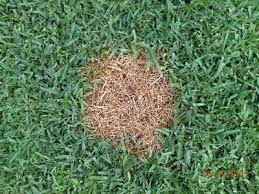
There are a lot of myths and home ‘cures’ for avoiding lawn burn when you have a dog in your life.  One of the more recent myths shared with me was ‘I was told that once I switched him to raw food, that he wouldn’t burn the lawn.’

Burnt grass

Hmmmm…

There’s something at work here called basic chemistry.  When a dog digests protein, a by-product is nitrogen that is excreted in the urine.  Because the nitrogen content is so high, it’s like putting too much nitrogen fertilizer on the lawn.  It burns.  Plain and simple.

Some owners report that by ensuring digestible proteins (hence, I believe the link here to a recommendation for a raw diet), the degree and frequency of lawn burn is diminished.  However, I’ve never met a dog parent yet who has successfully managed a balance between a nutritious diet and lawn burn simply by balancing protein content.

It’s more likely that owners are encouraging their dog to drink more through adding fluids to their food, effectively diluting the concentration of urine.  Others add dilute broths to the drinking water to encourage the dog to drink more. Here again, the result is diluted urine.

It’s fact that female dogs tend to empty their bladder more fully with each urination whereas male dogs tend to mark and spread their urine more.  So owners of female dogs can anticipate lawn burn as a fact of life.

And of course, the larger the dog – the more urine.  No brainer there, either.

If you are really stressed about having burnt out lawn patches, here are some practical management techniques that have nothing to do with your dog’s diet:

  • teach your dog to urinate in designated parts of your yard
  • make sure you don’t over-fertilize your lawn – if your starting point is already lots of nitrogen, then your dog’s urine just tips the balance
  • ask at your local garden centre about types of grass that are more nitrogen tolerant; re-seed with these varieties

Since my practice is all about balance, it does concern me that owners are prepared to dose their dog with substances reporting to help with lawn burn.  Your dog eats protein.  Nitrogen excretion in the urine is natural.  Why upset that balance?

Kathleen Crisley, specialist in dog massage, rehabilitation and nutrition/food therapy, The Balanced Dog, Christchurch, New Zealand

Companion Animals in New Zealand 2016

The 2011 study into companion animals in this country has been updated and the 2016 report is now available from the NZ Companion Animal Council.  Download it here.


Companion Animals in New Zealand 2016

There are lots of facts, figures and data quoted in the report.

Things I noticed in my first reading include:

  • 13% of dog owners prepare homemade food specifically for their animals (yes!)
  • The vast majority of people who have companion animals view them as members of the family.  As such, many trends seen in human wellness and wellbeing are mirrored in pet care.
  • The gender and age profiles of the veterinary profession are changing.  Younger veterinarians are more likely to be female than male.
  • Visits to the vet represent one of the most significant areas of expenditure for households with companion animals (that’s probably not a surprise to most of you).
  • Expenditure on pet insurance has increased by 133% from 2011.

If you are interested in the care of your animals, then this report is well worth downloading.  See how you stack up in terms of the statistics and trends.

Kathleen Crisley, specialist in dog massage, rehabilitation and nutrition/food therapy, The Balanced Dog, Christchurch, New Zealand

Fighting Fractures

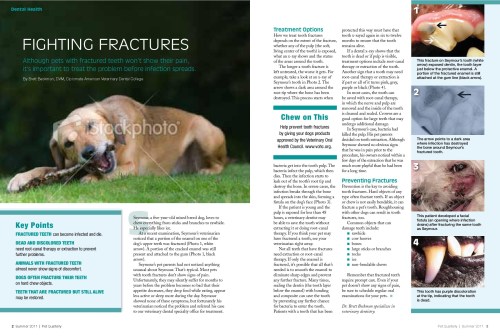
Sometimes, I come across resources on the internet that just have to be shared.  Here’s one of them.  It’s a fact sheet by Dr Brett Beckman, a veterinary dentist, about fractured teeth, how to prevent them, and the treatments available.

Fighting Fractures

You can download a .pdf of this fact sheet from www.dentalvets.co.uk

Recommended reading for all dog parents…

Kathleen Crisley, specialist in dog massage, rehabilitation and nutrition/food therapy, The Balanced Dog, Christchurch, New Zealand

Foreign bodies

I’ve heard some people describe their dog as “A Guts” – but this list takes it to a whole new level.  Pet insurer Petplan has published a list of all the foreign bodies taken from pets insured by them.  (It’s a pretty impressive list)

Dog ate scisscorsDog ate cellphone

  • Acorns
  • Balloons
  • Batteries
  • Blanket
  • Carpeting
  • Chicken bones
  • Christmas ornaments
  • Clam shells
  • Copper wire
  • Corn cobs
  • Diapers
  • Dimes
  • Fish hook and sinker
  • Football
  • Fruit pits
  • Gloves
  • Grass
  • Hair ties
  • Hairbrush
  • Insulation
  • Leash
  • Metal skewers
  • Most of a loveseat
  • Sewing needles
  • Oven mitt
  • Pacifiers
  • Part of a book
  • Plastic hanger
  • Razor blades
  • Rocks
  • Rubber bands
  • Part of a rubber mat
  • Shoes
  • Socks
  • Staples
  • Sticks
  • String
  • Tea lights
  • Tennis balls
  • Toothpicks
  • TV remove
  • Underwear
  • Wedding rings
  • Wooden checkers

If you don’t have pet insurance and your dog is A Guts, then this list may change your mind about getting some.

Kathleen Crisley, specialist in dog massage, rehabilitation and nutrition/food therapy, The Balanced Dog, Christchurch, New Zealand