Category Archives: dog care

The 3 Teddies

Sox has three special teddies. They are (from left to right):

  1. Cuddle Teddy
  2. Play Teddy
  3. Chewing Teddy

Cuddle Teddy is special. I found him in a giveaway box at a local op shop shortly after adopting Sox. Sox had plenty of toys, but all were hand-me-downs from previous dogs. I felt he needed his own teddy. Since then, Sox will gently mouth Cuddle Teddy and sleeps with him on the couch. He has never shown any inclination to tear or rip Cuddle Teddy and, when Cuddle Teddy gets grey from all the saliva and mouthing, I will give him a wash. This upsets Sox very much and he will throw Cuddle Teddy around in the hope of getting him to smell better.

Chewing Teddy, as the name suggests, is the teddy that is the target of Sox’s hunting skills. Chewing Teddy has been re-stuffed and gutted many times. Always a favourite, although he looks worse for wear.

Which brings me to Play Teddy. As Chewing Teddy was getting very worn, I decided it might be time to head to the op shop for a new toy. Play Teddy’s nose was ripped off immediately but, unlike Chewing Teddy, Play Teddy is largely staying in one piece. He gets played with most nights after dinner.

What makes Sox choose one toy over another? Why is Cuddle Teddy so precious? I have pondered these questions for some time.

Remembering that dogs have the sentience of a two-year old child, I think Cuddle Teddy came at a particularly important time in Sox’s life as a pet. A toy that did not smell of previous dogs and which he could make his own.

I read once that ‘familiarity brings security.’ When a nervous child starts school, for example, they may take a favoured toy with them for security. My working theory is that Cuddle Teddy is Sox’s version of a security blanket. (Although I will keep washing teddy when he is ‘ripe’ as he looks much better on the sofa without his fur sticking together and with a dingy grey colour.)

What’s the future for Chewing Teddy and Play Teddy? Who knows? That is for Sox to decide. The degree of control that we give our dogs is something called agency – and sentient creatures deserve the opportunity to have choice.

Sox continues to mature as a pet since being adopted in March 2022; but judging by the last 2+ years, Cuddle Teddy seems almost certain to go the distance.

Kathleen Crisley, Fear-Free certified professional and specialist in dog massage, rehabilitation and canine fitness,  The Balanced Dog, Christchurch, New Zealand.

Novel, targeted canine cancer therapy receives US patent

Photo: Maria Sbytova/Adobe Stock

FidoCure, the flagship brand of the One Health Company, has been granted a patent for a novel targeted therapy and biomarker for canine cancer by the US Patent and Trademark Office (USPTO). The patent covers a new approach to treatment, using mutation profiling to better manage bladder cancer in dogs.1

The now-patented approach, driven by artificial intelligence (AI), considers real-world evidence from veterinary clinical data and uses it to determine the ideal methodology for therapeutic treatment. Early data reports suggest the new approach may be more efficacious compared to conventional treatment methods.1

“This patent acknowledges the uniqueness of our approach, which has consistently demonstrated that it can transform outcomes for pet dogs with cancer while improving the quality of life for the patients,” Christina Lopes, cofounder and CEO of the One Health Company and FidoCure, said in a news release.1 “Receiving a patent is an important milestone in our mission to increase access to lifesaving treatments for pet dogs with cancer.”

Each year, 6 million dogs in the US are affected by cancer, and many of them by bladder cancer.1 Transitional cell carcinoma (TCC) is the tumor that affects the bladder, and Atlantic Veterinary Internal Medicine and Oncology (AVIMO) approximates that TCC is diagnosed in 80,000 dogs each year.2 Biologically speaking, canine cancer is relatively similar to human cancer, but, according to FidoCure, treatment and care for canine cancer is about 20 years behind humans.1

“Bladder cancer [treatment] in dogs is an unmet need,” Gerald Post, DVM, MEM, CACVIM, chief medical officer of One Health, said in a news release.1 “Traditional chemotherapy and radiation therapy are often ineffective, cause toxic side effects, and are expensive.”

The patent, No. 12036281-B2, protects FidoCure’s technology for 20 years following its priority date.1 Lopes, alongside her FidoCure cofounder Benjamin Lewis and other key team members, are named as inventors on the patent. The company currently has an additional 8 pending patents, covering novel therapeutics and biomarkers, and will be seeking approval from the FDA for their products in the near future, according to the release.1

FidoCure came together with the goal to improve outcomes for canine cancer patients. More specifically, the founders wanted to put an end to blanket chemotherapy and radiation treatments, regardless of cancer type, citing the use of target therapies in human oncology. They’ve since partnered with a board of medical and veterinary advisors with multidisciplinary knowledge, spanning the fields of human and canine oncology.3

Among the company’s achievements is the FidoCure Next Generation Sequencing Test, through which the results allow care providers to better customize treatment options using targeted therapies. In early 2022, FidoCure partnered with IDEXX, a company focused on global pet healthcare innovation, to provide access to the test to its’ veterinary clients throughout the US and Canada.4

References

  1. FidoCure Receives Patent for AI-Driven Drug Development, Accelerating a Novel Portfolio of Precision Therapeutic for Cancer. News release. FidoCure. August 13, 2024. Accessed August 15, 2024. https://www.businesswire.com/news/home/20240813574729/en/FidoCure-Receives-Patent-for-AI-Driven-Drug-Development-Accelerating-a-Novel-Portfolio-of-Precision-Therapeutic-for-Cancer
  2. Understanding Bladder Cancer in Dogs. American Veterinary Internal Medicine and Oncology. Accessed August 15, 2024. https://avim.us/bladder-cancer-in-dogs/
  3. FidoCure. AI Driven Precision Medicine Platform for Canine Cancer. One Health Company. Accessed August 15, 2024. https://fidocure.com/
  4. One Health Company partners with IDEXX to enhance canine cancer care. dvm360. January 20, 2022. Accessed August 23, 2024. https://www.dvm360.com/view/one-health-company-partners-with-idexx-to-enhance-canine-cancer-care

Source: MJH Life Sciences, DVM 360

Mutual Rescue™ surviving cancer

When Meridel adopted Sadie, little did she know that they both would both have cancer in common.

The latest Mutual Rescue video tells their story. Cancer is a devastating diagnosis to receive, be it for a human or animal. I particularly like that Meridel talks about the love hormone – oxytocin – in this piece. There’s documented evidence about how the stroking of a dog results in release of this hormone in both the owner and the dog.

You can’t get more mutual than that!

Mutual Rescue™ is a trademarked initiative of the Humane Society Silicon Valley.  Aimed at changing the way people think of animal welfare and adoption, each year the Society asks for submissions from people to share their story about a special connection they have made with an animal.

Kathleen Crisley, Fear-Free certified professional and specialist in dog massage, rehabilitation and canine fitness,  The Balanced Dog, Christchurch, New Zealand.

Doing what they love

When his girlfriend Misty came to stay, I took Sox and Misty to Christchurch’s red zone for off-lead time.

In this video, the dogs run and play. Greyhounds love to run. In this video, both dogs are free to stop, change direction, dodge and weave as they see fit, and stop when they are ready. This greatly reduces the risk of injury and supports enrichment. It allows them to make choices, something that behaviourists call ‘agency.’

The definition of “to run” is “to move along, faster than walking.” The dogs choose to do this and for how often.

The definition of “to race” is “a competition between runners, horses, vehicles, etc. to see which is the fastest in covering a set course.”

Most dogs love to have a run and play, such as I explain in my post There’s a technical term for almost anything – the zoomie. To truly love to race, a sentient being, be it human or animal, must be able to opt into competition of their own free will, accept the risks associated with the race, and take pleasure in it.

Kathleen Crisley, Fear-Free certified professional and specialist in dog massage, rehabilitation and canine fitness,  The Balanced Dog, Christchurch, New Zealand.

A screwy Sunday evening

The dogs of my life have brought me great joy, endless love, and moments of intense heartache.

Our dogs can also be the source of great surprise, which was the case yesterday evening when Sox decided to eat a couple of screws.

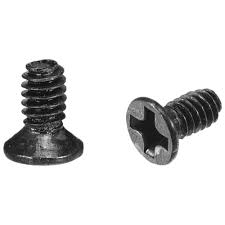
Screws. You heard right. Small, about 1 cm, screws that I had removed from a massage table that I was repairing. They looked a little like this:

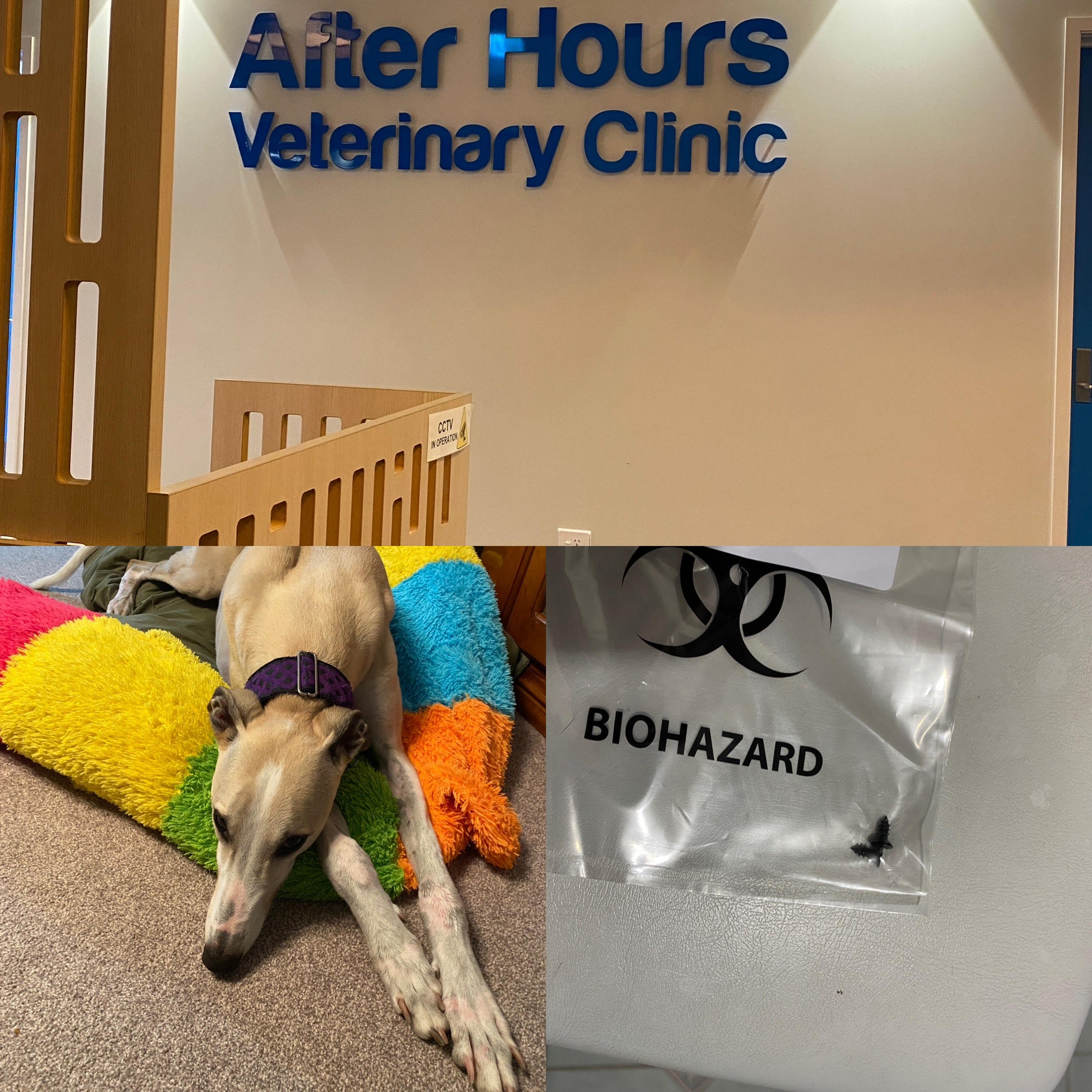
Sox has never shown any interest in eating inedible things. In fact, with his inflammatory bowel disease, it is often more of a struggle to get him to eat consistently. But last night Sox was super hungry. He finally finished his breakfast in the very late afternoon and wanted more food, so I fed him his dinner and filled up his snacking dish. A short time later as I was cooking my dinner, I heard a crunching sound like he was eating biscuits. I looked up just in time to a screw lapped up off the floor, briefly chewed, and swallowed.

Oh my God. I counted the screws, two were missing. Time to turn off the stove and get to the After Hours Vet. Luckily, he had just eaten a lot of food and so there was a buffer in his system because the best way to get the screws out of his body was for them to go out the way they came in. After dosing Sox with an emetic, the vet staff watched as he threw everything up (turkey, kibble, pumpkin, rolled oats and two screws). The screws were cleaned up and brought out to me in the waiting room in a biohazard bag – in perfect, reusable, condition.

I was able to take Sox home; he had a rough night because he was still nauseous and wanted outside to eat grass. Of course, we had the inevitable flare of his IBD.

This incident is a good reminder and lesson:

  • Accidents happen, even to pet professionals
  • Our dogs are full of surprises
  • Thank heavens for accessible, after-hours, veterinary care
  • Keep small items out of reach of your dog; they are a little like babies and toddlers and explore with their mouths
  • Always have money in a savings account or available balance on a credit card because payment is expected at the time the services are rendered
  • Pet insurance buffers the blow of unexpected healthcare costs; Sox’s visit came to just under $400 (I’ll pay a $175 excess). I filed my claim first thing this morning.

I have a subdued Sox today. I’d love to say he was ashamed at his behaviour, but of course we know that dogs live in the moment and rarely make a connection between cause and effect. It’s my job to be extra diligent to avoid any future cases of ‘ingestion of a foreign body.’

Kathleen Crisley, Fear-Free certified professional and specialist in dog massage, rehabilitation and canine fitness,  The Balanced Dog, Christchurch, New Zealand

New research highlights aging dog health care needs

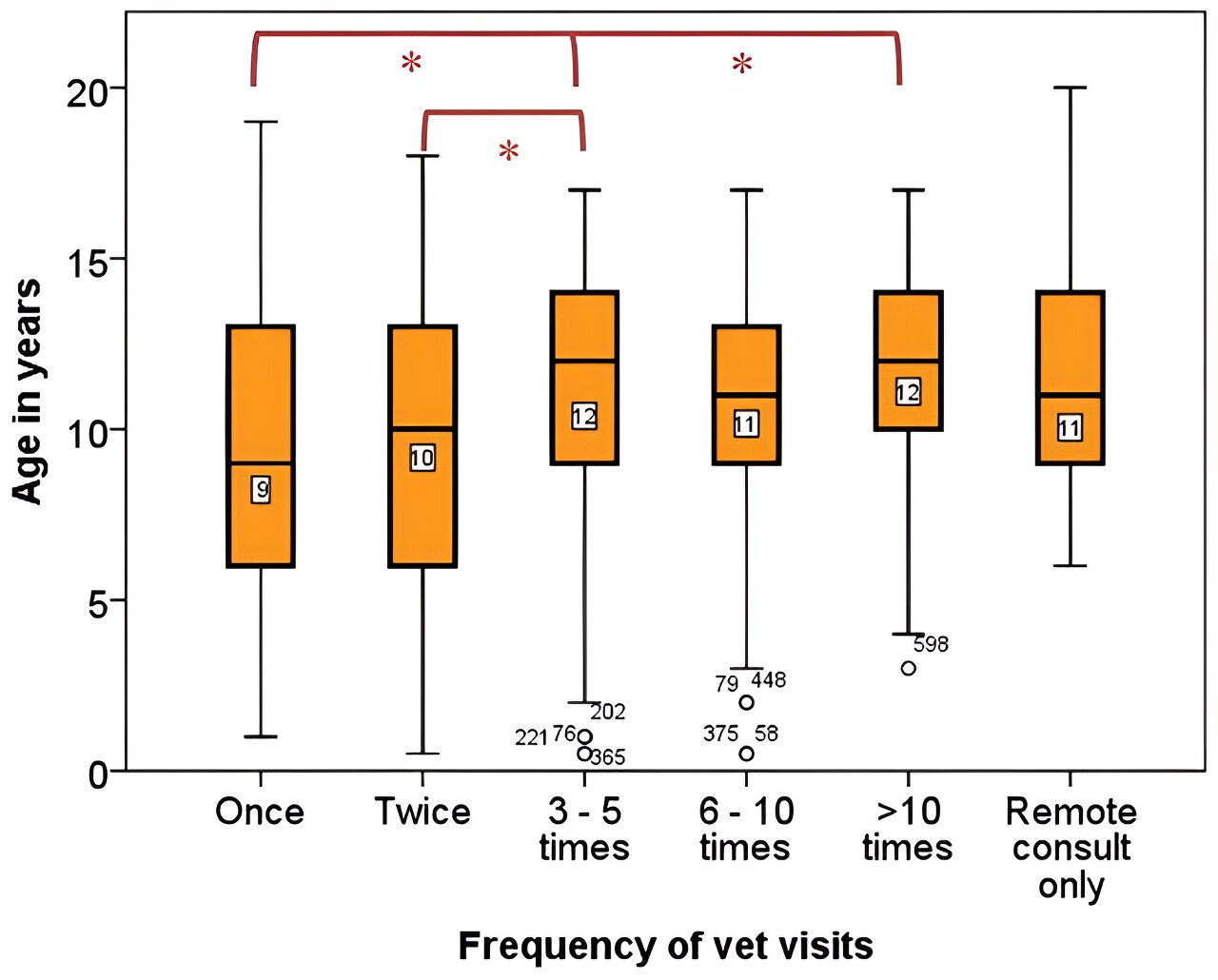
Box plot displaying the frequency of times owners brought their dog physically to the veterinary surgeon in the past 12 months and age in years of the dogs. Number of dogs = 503. The frequency of vet visits was categorized into five groups: once, twice, 3–5 times, 6–10 times, >10 times, and remote consult only. The median age in years of the dogs in each frequency category was compared using a Kruskal Wallis test, df = 5, N = 503, p = 0.001. Categories that differed significantly are denoted with *p < 0.050; significance values have been adjusted by the Bonferroni correction for multiple tests. Credit: Frontiers in Veterinary Science (2024). DOI: 10.3389/fvets.2024.1358480

New research from the University of Liverpool shows that dog owners think many important changes in their older pets are “just old age,” when actually they are signs of serious health problems.

The researchers surveyed more than 600 dog owners and more than 300 veterinary professionals across the UK. Dog owners were asked if they had noticed any of a list of 48 different clinical signs in their older dogs and how urgently they thought they should seek veterinary advice when they noticed them.

The research team identified that dog owners regularly attributed potentially serious changes in older dogs to normal aging, and thus may not take them to see a vet.

How often should an aging dog see a vet?

The majority of owners believed a “healthy” senior dog (seven years plus) should go to the vet once a year, whereas veterinary professionals most commonly advised every six months.

A minority (14%) of owners would take the dog only “if they got sick,” but almost all (98%) of veterinary professionals would not advise this strategy. Sixteen percent of owners of dogs of all ages had not had any contact with their veterinary practice in the previous year.

To vaccinate or not to vaccinate?

Health checks often occur during vaccination appointments, and 92% of veterinary professionals believed that senior dogs should receive yearly vaccinations; however, 28% of owners’ dogs of all ages had not been vaccinated in the previous year. In fact, a third of these owners did not believe that older dogs need vaccinations.

Urgency to seek care

Dog owners who stated that their dog had experienced a clinical sign typically reported less urgency to seek veterinary care than owners whose dog had never experienced it and responded to a hypothetical question asking what they would do if they noticed this sign in their dog.

The majority of veterinary professionals (85–100%) thought that it was moderately to extremely important for owners of senior dogs to seek veterinary advice for all 15 of the most common clinical signs. The three most common clinical signs reported by owners in their older dogs were slowing down on walks (57%), dental tartar (53%), and being stiff on rising (50%).

However, fewer than 70% of owners would seek veterinary care for their dog within a week for dental issues (bad breath and tartar) or musculoskeletal issues (problems with stairs/jumping, slowing down on walks, and stiff on rising).

Dog owners attribute clinical signs to ‘just old age’

Veterinary professionals reported that they believed owners commonly associated sleeping all the time, slowing down on walks, being stiff on rising, and the presence of dental tartar with old age rather than potential illness. Owners’ opinions were broadly in line with veterinary professionals’ perceptions of them. For example, 78% of owners believed slowing down on walks was a normal part of the aging process and would not take their dog to the vet for and, and 77% for sleeping all the time.

Study co-author Professor Carri Westgarth said, “Perceptions of dog owners and veterinary professionals can influence the preventive health care and treatment provided to dogs, especially at the senior life stage, when chronic diseases become more common. The differences in opinion highlighted by our survey suggest that new educational initiatives and more effective communication are required.”

Findings from this study have been used to support the design of a new resource that can facilitate communication between owners and veterinary professionals. A checklist of common missed clinical signs for use pre-veterinary appointments would be supported by both owners and veterinary professionals surveyed in the current study.

The BSAVA PetSavers Aging Canine Toolkit (ACT) leaflet and poster are currently in use in first-opinion practice, and feedback is being collected to measure the toolkit’s impact on owners, veterinary professionals, and senior dogs.

Dr. Sarah Williams from BSAVA PetSavers said, “Screening tools and toolkits have the potential to increase owner understanding and engagement with veterinary care, and through repeated application over time and implementation of necessary interventions, improve patient welfare and health span.”

The work is published in the journal Frontiers in Veterinary Science.

Source: Phys.org

New bill proposes streamlining regulation of pet food

Note from DoggyMom: The manufacture and marketing of pet food has to be one of the most confusion and contentious issues for pet owners to understand. Streamlining and efficiency are hard to argue against. But, AAFCO (Association of American Food Control Officials) has raised concerns that state programs actually assist the FDA by reviewing pet labels and marketing claims.

Who is right? The FDA would likely need significant more resources to carry out the pet food regulation tasks and streamlining does not necessarily mean the most effective regulation system for the end user. Will the proposed system be a rubber stamp for pet food manufacturers?

Time will tell as this legislation moves through Congress.


Source: ©RRODRICKBEILER – STOCK.ADOBE.COM

The Pet Food Uniform Regulatory Reform Act of 2024 (PURR Act) proposes to modernize and streamline how pet food and treats are regulated. The bipartisan legislation, H.R. 7380, introduced on Feb. 15, proposes to give the US Food and Drug Administration (FDA) regulatory authority over the labeling and ingredient review process for dog and cat food and treats. The current system allows individual states to regulate ingredient and label approval.

Representatives Jake LaTurner (R-Kan.), Henry Cuellar (D-Texas), Sharice Davids (D-Kan.), Josh Harder (D-Calif.) and Steve Womack (R-Ark.) co-sponsored the bill.

“Pet food makers produce nearly 10 million tons of food annually and are crucial to American agriculture. Costly and outdated regulations have made it difficult for pet food manufacturers nationwide to invest in research and development for new and improved products,” LaTurner said. “I am proud to introduce the bipartisan PURR Act to eliminate red tape and allow pet food makers to deliver the best nutritional outcomes for our dogs and cats.”

Womack added, “Pet food manufacturers deal with a confusing, costly and conflicting dual regulatory system that hasn’t been updated in nearly 100 years. The PURR Act would streamline the outdated system by granting sole authority to the FDA to regulate the labeling and marketing of pet food while eliminating the state-by-state regulatory patchwork.”

The bill proposes centralized federal regulatory oversight by the FDA to replace the current, inconsistent state-by-state interpretations of ingredient and pet food label approvals. The legislation calls for new ingredient review and approval timelines for the FDA, which would be overseen by the US Congress.

“The PURR Act includes necessary reforms to streamline and update pet food regulations in the United States,” Cuellar said. “I am pleased to cosponsor this bipartisan bill that will encourage innovation among pet food manufacturers while protecting the health and wellbeing of our pets.”

As an advocate for the pet food industry, the Pet Food Institute (PFI) has long lobbied for a more modernized approach to pet food regulation. PFI issued its support for the proposed legislation.

“Dog and cat owners not only want to ensure the same high-quality and safe pet foods they trust to nourish their beloved dogs and cats but expect the products to reflect the latest in nutritional science and ingredient innovation,” said Dana Brooks, president and chief executive officer of PFI. “To continue delivering on that commitment, we are supporting federal legislation that would replace the current inefficient patchwork approach between states and the federal government with consistent national standards that are predictable, clearly defined, and encourage innovation and speed to market.” 

Under the new system, label and ingredient approvals would be assigned to the FDA, while state departments of agriculture and other state agencies would still oversee quality inspections and product registrations. The result would be a system for pet food regulation that more closely mirrors that of human food.

“Pet owners agree on the need for an uninterrupted supply of safe, high-quality and innovative pet products, and now is the time for pet food regulations to be streamlined to better meet the needs of pets and pet owners in the 21st century and beyond,” Brooks said.

Source: Petfoodprocessing.net

Bone broth vs stock vs broth

Over the last few weeks, our weather in Christchurch has turned noticeably autumnal. Last week, we even had one morning when it was 3 degrees C.

Whenever the weather turns cooler, I think our interest in cooking and baking increases. A warm kitchen is inviting and cosy on colder days.

I find that some people are using the term ‘bone broth’ interchangeably with the terms ‘stock’ or ‘broth’ and there are key differences. Your dog might find all three tasty additions to their diet, but the health support is very different.

Bone broth (my favourite) is made by simmering bones for a long period of time with the addition of an acid such as apple cider vinegar which helps to leach out the minerals from the bones. Bone broth contains nutrients, collagen and gelatin which are supporting to the gut and helpful for anti-inflammatory support with additions like turmeric.

Stock is also prepared by simmering bones, but you add vegetables and spices and cook for less time. We use stock as a base for sauces, stews and soups – and stock does add flavour to the water bowl or food bowl which can make it helpful for dogs who need to be encouraged to drink or eat. (With obvious consideration of not adding foods that are harmful to dogs – like onions.)

Broth is made by simmering meat and vegetables for a short time which can be eaten strained or with the meat and vegetable ingredients. Humans eat broth when they are unwell because it encourages hydration and is gentle on the stomach. Broths can also be used as a flavour base.

Be mindful of what you are cooking for your dog. I heartily endorse cooking for dogs and adding fresh ingredients to the diet.

Kathleen Crisley, Fear-Free certified professional and specialist in dog massage, rehabilitation and canine fitness,  The Balanced Dog, Christchurch, New Zealand

Oxidation of commercial pet foods

Over the world, dog owners are finding ways to cut costs in the face of high inflation.

Many who feed commercial foods (commonly referred to as kibble), will look to buying the largest size bag of food possible because typically the price per pound/kg is best when you buy a large bag.

When using kibble, you need to understand the process of oxidation. Oxidation happens as soon as you open the bag and expose the food to air and that process continues until your dog eats the food.

Oxidation happens to human food, too, by the way.

Oxidation degrades the nutrients in the food and chemically changes the fats in a process known as “going rancid.”

It’s tempting to want to empty the bag into a more convenient container and often this container will be plastic. The problem is that most containers that can hold a large bag of dog food are not food-grade plastic.

Food-grade plastics are designed to come into contact with food, to have a strong seal, and to avoid leaching of chemicals into food. Food grade plastics don’t have dyes or other additives and they often are not made from 100% recycled plastic because there is no guarantee on the quality of materials in the supply chain.

Bags for commercial dog food are produced to help protect against oxidation; it’s actually better to seal the bag as soon as you take out what you need and to keep the bag in a cool, dry and dark place rather than emptying it into another container. If a container is needed, I prefer metal to plastic because it won’t leach nasties into the food and can be washed and dried at high temperature in the dishwasher. I only transfer enough food to last between 5 and 7 days.

Regular washing of containers to remove residual fats and crumbs is essential and something that dog owners are notoriously bad at doing. It’s just too easy to refill a container without washing it.

I’m old enough to remember when dog food companies produced larger metal tins for dog food as part of their brand promotions; I still own one from Iams/Eukanuba that is over 20 years old and that’s the container I use for temporary food storage. It fits in the dishwasher and I’m confident that it is being cleaned and sterilised in the dishwasher.

Sadly, even the pet food companies have jumped on the plastic bandwagon in more recent years and now only produce plastic containers when/if they have a promotion. I’m not sure if these containers are food grade plastic, either.

There are many opinions about how much food you should buy at any given time. A good rule of thumb is 4-6 week’s worth. Of course, if your dog is small, then a 20 kg bag of food is going to last way longer than this – so that’s a good indication that the large bag is not right for you.

Sox easily goes through his 12 kg bag of gastrointestinal food in less than six weeks; so I’m comfortable with my decision to buy the bag.

In summary, when feeding kibble:

  • buy only 4-6 week’s worth at a time
  • keep the bag sealed after every use
  • store the bag in a cool, dry and dark place
  • if a container is convenient for you, transfer only a few days worth of food into the container, preferably metal
  • if you can’t find metal ensure you are using a food-grade plastic container
  • thoroughly wash and dry your container each time you empty it

Kathleen Crisley, Fear-Free certified professional and specialist in dog massage, rehabilitation and canine fitness,  The Balanced Dog, Christchurch, New Zealand

Probiotics help overweight dogs shed weight

Scientists have made significant strides in addressing a common yet concerning issue: overweight pets. This research unveils the potential of specific probiotics to combat obesity in dogs.

Leading the charge is Dr. Younghoon Kim, a distinguished professor at Seoul National University’s Department of Agricultural Biotechnology.

Understanding pet obesity

Dr. Kim’s team, with a focus on metabolic diseases in companion animals, embarked on a mission to identify probiotics that could offer a safe, long-term treatment for dog obesity.

“The initial challenge involved selecting specific metabolic diseases for examination, leading us to focus on the prevalent issue of ‘obesity in pets,’” Dr. Kim explained.

The global trend of pet obesity is alarming, with about 50% of the pet population across various age groups being affected, particularly older pets.

Many of these pets are already receiving treatments, including dietary interventions. Dr. Kim and his team set out with a clear objective: to find probiotics that could effectively reduce body fat percentage in pets.

Tackling dog obesity with probiotics

Dr. Kim’s vision goes beyond just addressing specific health issues. He advocates for a broader recognition of the therapeutic potential of probiotics across a spectrum of diseases affecting companion animals.

“By promoting this awareness, my aspiration is to catalyze increased attention, funding and collaborative efforts in the scientific community to explore the expansive landscape of probiotic applications in pet health,” Dr. Kim stated.

To pinpoint the right probiotic candidates, the research delved into the variations in intestinal microbiota between younger and older dogs.

This investigation highlighted a decline in certain beneficial bacteria, such as lactic acid bacteria, Bifidobacterium species, and Enterococcus species in older dogs.

These findings guided the researchers in selecting specific strains for their experiment.

Two probiotics helped dogs lose weight

The study then progressed to its experimental phase, where two selected strains, Enterococcus faecium IDCC 2102 and Bifidobacterium lactis IDCC 4301, were administered to a group of beagles on a high-fat diet.

The results were striking. “The strains we carefully selected demonstrated remarkable success in reducing the body fat percentage in dogs,” said Kim.

These probiotics effectively reduced body weight, cut down subcutaneous fat, and boosted energy metabolism even on a high-calorie diet, shifting the body’s focus from fat storage to fat consumption.

“What set these strains apart was their ability to not only limit dietary intake or enhance excretion to reduce body weight but, more importantly, activate energy metabolism. Even when exposed to a high-calorie diet, we observed a decrease in body weight, alleviation of subcutaneous fat accumulation and an increase in energy metabolism. This confirmed a shift in the body’s metabolic orientation toward fat consumption, rather than fat accumulation,” Kim explained.

Significantly, this study also highlighted the strains’ impact on systemic inflammation and hormone metabolism.

Long-term benefits of probiotics for dogs

The dogs that received these probiotics showed reduced inflammation and improved metabolic activities, like insulin production.

The strains also increased beneficial commensal bacteria, enhancing the body’s defense mechanisms and immunity.

Dr. Kim emphasized the lasting impact of these changes, indicating sustained benefits for pets incorporating these probiotics into their health regimen. This enduring effect is pivotal in managing long-term health in pets.

With the rise in pet ownership, there’s a growing interest in health functional foods for pets, especially probiotics.

However, research in this area, particularly tailored probiotics for companion animals, lags far behind human studies.

“While types of probiotics suitable for human consumption or commercial livestock have been identified and established, the absence of standardized guidelines for companion animals is a glaring gap,” said Dr. Kim.

“Our study aimed to address this deficiency by striving to broaden the spectrum of probiotics applicable to pets across various environments.”

Promising future of pet probiotics

In summary, this important study led by Dr. Younghoon Kim marks a significant milestone in the fight against pet obesity, unveiling the remarkable potential of specific probiotics to combat this widespread issue.

By meticulously selecting and testing strains, the research team demonstrated their effectiveness in reducing body fat and enhancing metabolism in dogs, while highlighting the long-term health benefits these probiotics offer.

This research paves the way for more tailored health solutions in pet care, encouraging further exploration and development in this vital field.

It stands as a beacon of hope for pet owners worldwide, offering a new, sustainable approach to managing the health and well-being of their beloved companions.

The full study was published in the journal Microbiology Spectrum.

More about probiotics

In the realm of health and wellness, probiotics have emerged as unsung heroes, revolutionizing our understanding of gut health and beyond.

As discussed above, these live microorganisms, often referred to as “good” or “friendly” bacteria, play a critical role in maintaining a balanced intestinal microbiome, which is crucial for overall health.

Balancing the gut

Probiotics primarily work by enhancing the gut flora, which is a complex community of microorganisms living in our digestive tracts.

This boost in beneficial bacteria aids in various digestive processes and fortifies the body’s defense mechanisms against harmful pathogens.

Regular consumption of probiotics has been linked to improved digestion, enhanced immune function, and even a reduction in the risk of certain chronic diseases.

Treating digestive disorders

One of the most significant benefits of probiotics is their ability to treat and prevent gastrointestinal issues, such as irritable bowel syndrome (IBS), inflammatory bowel disease (IBD), and antibiotic-related diarrhea.

By restoring the balance of good bacteria in the gut, which can be disrupted by factors like antibiotics or poor diet, probiotics alleviate these digestive disorders.

Furthermore, emerging research suggests that probiotics may have a broader impact on our health than previously thought.

Studies indicate potential benefits in areas such as mental health, where probiotics are believed to play a role in mood regulation and reducing symptoms of depression and anxiety.

This connection, often referred to as the gut-brain axis, opens new avenues for mental health treatments.

Benefits of probiotics on humans and dogs

Probiotics also show promise in enhancing heart health by lowering LDL (bad) cholesterol levels and blood pressure.

This cardioprotective effect is another feather in the cap of these microscopic powerhouses.

Incorporating probiotics into one’s diet is relatively straightforward. They are found naturally in fermented foods such as yogurt, sauerkraut, kefir, and kimchi.

For those who prefer supplements, a wide range of probiotic capsules and powders are available on the market.

In summary, probiotics are a key component of a holistic approach to health, both for humans and dogs alike. Their wide-ranging benefits, from improving gut health to potentially boosting mental well-being, make them a valuable ally in our quest for a healthier life.

As research continues to uncover their myriad benefits, probiotics are set to play an even more prominent role in our daily health regimen.

Source: Earth.com