Category Archives: dog care

Cranberries and urinary tract infections

Many holistic veterinarians are now recommending the use of cranberries in the long-term treatment of pets who are susceptible to urinary tract infections, or UTI.

Diabetic dogs, in particular, seem to develop UTI more regularly than the normal dog population.  Spayed females are also more susceptible to infections.

Cranberries

When a dog has a UTI, they often struggle to eliminate urine or, when they do pee, not much comes out.  Sometimes blood is seen in the urine, the urine may smell stronger, or it has a dark colour.  If your dog has a UTI, then seeing your veterinarian for antibiotics is essential.  A urinary tract infection left untreated means your dog is uncomfortable and in pain and if the infection travels to the kidneys, then your dog is in serious trouble.

Cranberries can assist when your dog is being treated for a UTI because cranberries help to acidify the urine which helps to prevent bacteria growth.

But what about prevention?  This is where the cranberries come into their own.  Not only does the cranberry acidify the urine, but studies show that they have the ability to prevent bacteria from sticking to the walls of the bladder and urinary tract and so they minimise the chance of an infection recurring.

Some owners treat their dog with cranberry powder because the juice is tart and unpalatable.  Owners must be careful because lots of cranberry juices are full of sugar (that’s a warning for humans as well as pets).

I’m working on a wheat-free cranberry biscuit recipe now that will feature as the January/February special.  I’ve just perfected my recipe and the latest batch is looking great – with the added benefit of no artificial colours!

Dog peeing

In order to prevent recurring urinary tract infections, it’s also really important to ensure your dog has lots of fresh, clean water to drink and has lots of opportunities to go outside and pee.  For diabetic dogs, care must be given to their daily diet to manage their blood sugars (another reason to watch the sugar content of any cranberry supplements).

DOGTV for the home alone dog

I wish we lived in San Diego, California where DOGTV is currently aired on cable television. There are plans for rolling it out to other cable providers but who knows if it will ever make it to New Zealand?

Since I use relaxation music in my massage practice, I know that dogs respond to certain cadences of music and it makes sense that they are visually stimulated by certain movements and shapes, too.

DOGTV offers special content for a dog’s sense of vision and hearing and aims to support a confident, happy dog, who’s less likely to develop stress, separation anxiety or other related problems.  It seems a must for the home-alone dog, particularly the younger dogs who have energy to spare when you are not able to be home with them.

DOGTV has been recognised by the Humane Society of the United States (HSUS).

If you are not in San Diego, you can subscribe to a streaming online service with prices that start at US$9.99 per month.  Make sure you understand the impact of this on any data caps you have with your internet provider.

Here’s a sample of DOGTV.  Bring your dog over to the screen to watch!

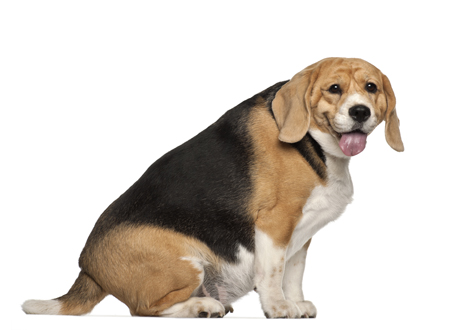
Watching your dog’s waistline

Body condition score

Take a look at the chart above.  It shows you how to spot ideal body condition on a dog.  Earlier this week, I was speaking with someone and she commented that she felt Daisy was too thin.  In fact, Daisy had just been to the veterinarian for her health check and was declared to be in ideal condition with an excellent body score.

The problem is that the person speaking with me owns several obese and overweight dogs.  She knows her dogs must lose weight, but she has become so accustomed to seeing an overweight dog that a dog in good condition looks too thin to her.

I work with dogs who need to lose weight by recommending exercise programmes combined with making the dog comfortable through massage, acupressure and laser therapies.  Dogs don’t get fat overnight; their weight loss programmes take a bit of time too.

Over these holidays, please don’t overfeed your dog.  And take the time to review the body conditions listed above.  If your dog isn’t in ideal condition, what do you need to do to get them there?

When your dog has the runs…

A client rang me this week to say that her dog had a major case of runny poos – the runs – or diarrhea to be exact.  She said her dog was her normal happy self but was going to the toilet regularly with fairly dramatic consequences – would I keep our massage appointment?

My answer was ‘no’ – not advisable – not because I was concerned that I’d have poo all over my massage table but because this dog’s body was telling us something.  Diarrhea is a symptom and not a disorder in itself and the dog’s body was working double-time to rid itself of an irritant.  Her system had enough to handle and a massage would only add to her metabolic load as lactic acid was released by the massage.  She didn’t need that.

My advice was to withhold food for 12 to 24 hours and to keep up the fluids.  Some people add low salt chicken or vegetable stock to the dog’s water bowl to encourage them to drink and keep hydrated, for example.  When food was again on the menu, I suggested replacing half the normal volume of food with cooked pumpkin to add fibre to the diet that the dog could easily tolerate and to keep this up for a few days until the stools returned to a normal consistency.

Other home remedies include a diet of boiled chicken with white rice, for example.

Typically, diarrhea is the result of a digestive indiscretion but it can be the result of poisoning from household or garden chemicals, a symptom of parasites such as hookworm, or a food allergy.  Some worming treatments can also stimulate a bought of diarrhea.

If a dog has additional symptoms such as lethargy, weakness, abdominal pain, blood in the diarrhea, vomiting and fever  then you need to see your veterinarian as soon as possible.   In this case, the dog seemed happy in herself and so that was a sign that she was probably not in danger.

A trip to the vet is a good idea if the diarrhea lasts for more than five days or so.

Diarrhea isn’t any fun for the dog owner or the dog.  Keeping an eye on symptoms is critically important to ensure you do the right thing when your dog has the runs…

What’s in your dog’s plastic toy?

A research team at Texas Tech University has studied the levels of phthalates and bisphenol A (known as BPA) in dog training batons and other plastic toys.  They presented their findings at the Society of Environmental Toxicology and Chemistry conference held in California.

The research was conducted by Kimberly Wooten, a master’s student using the project as her thesis, and Phil Smith, an associate professor of terrestrial ecotoxicology.  Smith also raises and trains Labradors.

“In the process of training a lab, you do a lot of work with these plastic bumpers. I have a lot of bumpers in my garage, and they spend a lot of time in the mouths of my retrievers. Well, lots of attention has been given to chemicals in plastics lately regarding their effects on humans. Since we all care about our dogs, and we want them to be as healthy and smart and well-behaved as possible, we decided to look into this.”

BPA are used to give elasticity to plastic and vinyl and are known endocrine disruptors that mimic estrogen or act as anti-androgens and could lead to negative health effects.  In 2012, the US Government banned the use of these chemicals in baby bottles.

Training bumpers had higher levels of BPA than toys; but weathered and aged toys released more BPA than newer ones.

The research raises a number of questions, but it is hard to compare results because so few studies have been done – particularly in the area of how much of the BPA actually enters the dog’s system.

“The interaction of pet health and environmental chemicals is understudied,” Wooten said. “What may be a safe dose for one species isn’t always a good measure for another species. But the amount of BPA and phthalates we found from the bumpers would be considered on the high end of what you might find in children’s toys.”

Source:  Texas Tech University press release

Your dog is not a garbage can

This is a garbage can...

This is a garbage can…

...and this is a dog.

…and this is a dog

Please understand the difference this Christmas!

Veterinarians around the world see a surge in cases of pancreatitis each year during the Christmas holiday season.  That’s because our homes are filled with rich, fatty foods that are as tempting to dogs as they are to us.  A single high-fat meal is enough to trigger the problem – and so the well-meaning family members who empty their plate in your dog’s bowl rather than the garbage are often at fault.

Low protein, high fat diets have been known to cause pancreatitis and it is a life-treatening condition. Symptoms of pancreatitis are acute vomiting, abdominal pain, diarrhea, lethargy, loss of appetite, and in some cases, fever. The dog may have a tucked-up belly and assume a prayer position. The abdominal pain is caused by the release of digestive enzymes into the pancreas and surrounding tissue.

More severe cases of pancreatitis can develop rapidly and a dog can go into shock – a trip to the emergency veterinary center is essential.

Vets will treat your dog with fluids, antibiotics and pain relief and will withdraw all foods for a number of days to rest the pancreas.   Assuming your dog survives,  its pancreas may be permanently damaged.  In these cases, your dog may develop diabetes mellitus if the islet cells have been destroyed or may develop exocrine pancreatic insufficiency if the acinar cells have been destroyed.

Dogs who have experienced one pancreatitis episode are susceptible to having future attacks that can be anywhere from mild to severe.

The lesson?  Your dog is not a garbage can.  Treats should be served in moderation and carefully monitored by one member of the family to ensure the dog isn’t over-fed.  Avoiding table scraps is always a good idea.

Another reason to keep your dog fit and trim

University of Liverpool researchers have found that obese dogs can experience metabolic syndrome, a condition that describes multiple health issues that occur in the body at the same time.  Obese humans suffer from the same syndrome.

The condition occurs when a number of health problems, such as increased blood glucose and increased cholesterol levels, develop together, with the potential to increase the risk of other diseases, such as cardiovascular disease and diabetes.

In a study of 35 obese dogs, 20% had metabolic syndrome.  These dogs had increased blood insulin which suggests that the pancreas is working harder than normal.  Blood adiponectin, a protein produced by fat cells that helps control sugars and fats, was also at lower levels than normal.

The metabolic abnormalities improved when the dogs successfully lost weight.

The research team admits that they have to study the impacts in more detail to understand the health implications of metabolic syndrome.

However, why wait for more studies?  If your dog is overweight we already know that their quality of life improves with weight loss.

Source: University of Liverpool media release

Kissing your dog and the link to gum disease

My mother was never happy when our dog got too close and  managed to lick her on the mouth.   In the Snoopy cartoons, you might remember when Lucy would run around yelling ‘Get the iodine, get the hot water.  I’ve been kissed by a dog.’ 

It turns out that there is need for caution when considering the mouth-to-mouth contact with your dog.

Researchers from Japan have tracked a microbe that is very common in dogs but rare in humans.   In dog owners, 16% of them had the microbe and it appears that they share close contact with their dogs – including kissing.

The researchers also found ten human strains of periodontitis-related bacteria in the dogs’ mouths.  And they found that low levels of contact were enough to transmit mouth bacteria either way.

In considering the research, Dr Paul Maza, of the College of Veterinary Medicine at Cornell University, told America’s Fox News:  ‘Many of the different types of bacteria in dogs and cats are the same type of bacteria as in humans. If owners practice oral hygiene on their pets, such as  brushing their teeth, a pet’s mouth can actually be even cleaner than a human mouth.’

Read the full story in the Daily Mail.

The scoop on poop

I took a course once about personal effectiveness and one of the mantras in it was ‘A place for everything and everything in its place.’   The same holds true when cleaning up after our dogs.

Back in July, I posted my column about the public relations nightmare of unscooped poop.   This column is about the disposal methods that are and are not acceptable for your dog’s poo.

The nasty things in dog poop

A dog’s poop can transmit bacteria like salmonella (and some studies show that there is an increased risk of this when the dog is fed a raw diet).  Parasites like tapeworm, hookworm and roundworms can also live in the feces and exist in the soil for a long time.  Other diseases like distemper or parvovirus can be transmitted through exposure to feces from an infected dog.

Don’t compost or bury

Therefore, adding dog poop to your household compost is not recommended.   The temperature in the compost heap is unlikely to reach a high enough temperature and you can end up transmitting the bugs to you and your family by handling the compost or adding it to the vegetable garden.  Yuck!

Simply burying the poop doesn’t help either.  You are basically allowing any of the bacteria and other nasties to live in the soil environment.

Local authorities with kerbside recycling programmes also ask that you don’t add dog poop to your ‘green’ (garden waste/organics) bin.  This is a public health issue since most materials from organic collections are composted and then re-distributed back to communities as compost for landscaping and gardens.

Don’t place it in the storm sewer

Some owners think it is okay to place poo in the gutter or storm sewer.  It isn’t.  Stormwater drains are directed to open water systems in the natural environment.  The poo will get washed into local streams and rivers and it is just another way of potentially contaminating the environment.

The better options

  • One of the popular methods of cleaning up after your dog is to scoop it up in a plastic bag and dump it in the rubbish.  The advantages with this method are that plastic bags are often freely available and it is a way of recycling the bag for another use.  This method prevents water pollution and can help control the spread of the nasty bugs.  However, plastic doesn’t decompose easily and many owners don’t want to add to the landfill problems in their area.
  • This leads us to biodegradable bags like Flush Puppy bags.  These bags can be safely disposed of in the rubbish or you can flush them down the toilet as long as you are connected to a public sewer system.  For homes on private septic systems, this isn’t recommended because this is an increased load that can overwhelm your disposal system.
  • If bags are not your thing, you can carry a shovel or other type of pooper scooper and wrap the poop in newspaper.  Disposal in the rubbish is okay and both the newspaper and poop will degrade.
  • If you really want to get fancy, you can buy your own composter for dog poop.  One brand is the Doggy Dooley.  This bin is dug into the ground and then special enzymes are added to help break down the waste.

The Doggy Dooley pet waste composter

  • Special bins for worm composting may also work on dog poop.  It is best to contact local services in your area about the types of worms available and the types of bins available for this.

Please put poop in its proper place by disposing of your dog’s poo appropriately.

Dogs and Breast Cancer Awareness Month

October is Breast Cancer Awareness Month.  Now more than ever, there are products for you and your dog so you can support the cause and show your love of dogs at the same time.

Here are some examples:

Hyper Pet Fetch For A Cause™ Tennis Balls are available from Pet 360

The Hyper Pet Fetch For A Cause™ Hyper Flippy Flopper Flying Disk is also available from Pet 360

Dog-themed key chains with the pink ribbon motif are available from FunnyFur.com

A range of doggy t-shirts including this one are available from Zazzle.com

Breast Cancer flip-flops (or jandals in the southern hemisphere) are available through Cafe Press