Category Archives: dog care

Understanding homeopathic remedies

In my last blog post, I explained how I was going to start treating Daisy with homeopathic fragaria and calc renalis to support good dental health.

So now I’d like to remind everyone how homepathic remedies are made.

This diagram outlines the process, but doesn’t fully explain how the remedies are made.  (I was sent this diagram a long time ago and I’m not sure of the original source for it).

Homeopathic dilutions diagram

Step 1:  Make a mother tincture

The first step is to create a mother tincture out of the plant source.   The plant material is cut up and crushed and left to soak in an alcohol and water solution in a dark place for some time.  The period of soaking is long enough to draw the properties of the plant into solution.   When the maker of the remedy understands that the mixture is ready, they will strain off any residual plant material.  This is the mother tincture.

Step 2:  Potentization

One drop of the mother tincture is put into a vial and then nine drops of a solution of alcohol and water and shaken vigorously.  This results in a 1X potency.  With one drop of the 1X potency and nine drops of the diluting solution and another good shake and you have 2X potency.

For the potency of 1C, this process is done 100 times.  (C is the Roman numeral for 100).

In most cases, homeopathics start with a 6C potency.  Other common potencies are 12C, 30C and 200C.  I’m most familiar with the 30C potency which is often the starting point (it’s what I’ll be using).  However, when there’s an acute condition that requires a bit more energy, I use 200C.

It’s also important to understand how your homeopathic remedy is made.  My homeopathic vet prefers that the remedies are made by hand by an experienced homeopathic pharmacist.  Major commercial brands like Weleda, on the other hand, use a manufacturing process for potentizing.

Homeopathy is a really interesting discipline and just one of the complementary therapies available to help your dog attain and maintain optimal health.

Managing dental health

Yesterday, Daisy had a dental cleaning at our vet’s.  She didn’t really have dog breath but her annual examination revealed that her teeth weren’t in the best condition.   She didn’t need any extractions, but she had gingivitis in her rear teeth and, as it turns out, signs of receding gums.

Daisy is a senior girl and we absolutely can’t risk having another procedure where she requires anesthesia.

I have really tried to support her mouth health through 2-3 times per week brushing with dog toothpaste and the feeding of dental chews.  She doesn’t tolerate raw bones well – which routinely either over-stimulate her bowels or cause constipation.  (When she shared a kennel with her father once a week at daycare, it was great because she could chew on his cast-offs without these problems.)

Daisy is also rather picky and so she won’t chew on chew toys like the twisted rope chews (I think she believes it’s beneath her).  If food/taste isn’t involved in the chew, she’s just not interested.

So, what’s next for our regime?

Well, the first thing is making brushing of her teeth a daily event.  I’m motivated to do this because I know the consequences of not doing it and luckily, Daisy is used to it.

But I want to do more and preferably in as natural a way as possible.

I’m also going to try homeopathics.  The two that come recommended are fragaria and calc renalis because these  keep tartar soft and more able to be removed through chewing and brushing.  The standard 30C concentrations are what we are going to start with by adding it to her water bowl.

I’ve also read that boiled oxtail is a good chew.  So I’m off to find oxtail at the supermarket/butcher.  I’m also hopeful of finding other chews that Daisy will tolerate – I’m going to source a deer antler chew shortly.

Remember, that dental health is essential.  I’ve previously written about this subject in Dog breath is no laughing matter.

Please feel free to share what you do to keep your dog’s teeth in top condition either through this blog or my Facebook page.  (Yes, I know about the raw diet – but Daisy hasn’t tolerated even a managed transition to raw feeding in the past.   I’m not against feeding raw, I just know from my practice that not all dogs are suited to the raw diet for a range of reasons).

Cranberries and urinary tract infections

Many holistic veterinarians are now recommending the use of cranberries in the long-term treatment of pets who are susceptible to urinary tract infections, or UTI.

Diabetic dogs, in particular, seem to develop UTI more regularly than the normal dog population.  Spayed females are also more susceptible to infections.

Cranberries

When a dog has a UTI, they often struggle to eliminate urine or, when they do pee, not much comes out.  Sometimes blood is seen in the urine, the urine may smell stronger, or it has a dark colour.  If your dog has a UTI, then seeing your veterinarian for antibiotics is essential.  A urinary tract infection left untreated means your dog is uncomfortable and in pain and if the infection travels to the kidneys, then your dog is in serious trouble.

Cranberries can assist when your dog is being treated for a UTI because cranberries help to acidify the urine which helps to prevent bacteria growth.

But what about prevention?  This is where the cranberries come into their own.  Not only does the cranberry acidify the urine, but studies show that they have the ability to prevent bacteria from sticking to the walls of the bladder and urinary tract and so they minimise the chance of an infection recurring.

Some owners treat their dog with cranberry powder because the juice is tart and unpalatable.  Owners must be careful because lots of cranberry juices are full of sugar (that’s a warning for humans as well as pets).

I’m working on a wheat-free cranberry biscuit recipe now that will feature as the January/February special.  I’ve just perfected my recipe and the latest batch is looking great – with the added benefit of no artificial colours!

Dog peeing

In order to prevent recurring urinary tract infections, it’s also really important to ensure your dog has lots of fresh, clean water to drink and has lots of opportunities to go outside and pee.  For diabetic dogs, care must be given to their daily diet to manage their blood sugars (another reason to watch the sugar content of any cranberry supplements).

DOGTV for the home alone dog

I wish we lived in San Diego, California where DOGTV is currently aired on cable television. There are plans for rolling it out to other cable providers but who knows if it will ever make it to New Zealand?

Since I use relaxation music in my massage practice, I know that dogs respond to certain cadences of music and it makes sense that they are visually stimulated by certain movements and shapes, too.

DOGTV offers special content for a dog’s sense of vision and hearing and aims to support a confident, happy dog, who’s less likely to develop stress, separation anxiety or other related problems.  It seems a must for the home-alone dog, particularly the younger dogs who have energy to spare when you are not able to be home with them.

DOGTV has been recognised by the Humane Society of the United States (HSUS).

If you are not in San Diego, you can subscribe to a streaming online service with prices that start at US$9.99 per month.  Make sure you understand the impact of this on any data caps you have with your internet provider.

Here’s a sample of DOGTV.  Bring your dog over to the screen to watch!

Watching your dog’s waistline

Body condition score

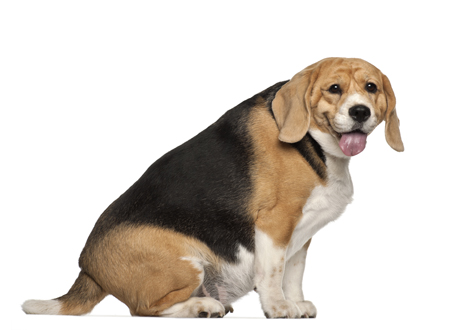
Take a look at the chart above.  It shows you how to spot ideal body condition on a dog.  Earlier this week, I was speaking with someone and she commented that she felt Daisy was too thin.  In fact, Daisy had just been to the veterinarian for her health check and was declared to be in ideal condition with an excellent body score.

The problem is that the person speaking with me owns several obese and overweight dogs.  She knows her dogs must lose weight, but she has become so accustomed to seeing an overweight dog that a dog in good condition looks too thin to her.

I work with dogs who need to lose weight by recommending exercise programmes combined with making the dog comfortable through massage, acupressure and laser therapies.  Dogs don’t get fat overnight; their weight loss programmes take a bit of time too.

Over these holidays, please don’t overfeed your dog.  And take the time to review the body conditions listed above.  If your dog isn’t in ideal condition, what do you need to do to get them there?

When your dog has the runs…

A client rang me this week to say that her dog had a major case of runny poos – the runs – or diarrhea to be exact.  She said her dog was her normal happy self but was going to the toilet regularly with fairly dramatic consequences – would I keep our massage appointment?

My answer was ‘no’ – not advisable – not because I was concerned that I’d have poo all over my massage table but because this dog’s body was telling us something.  Diarrhea is a symptom and not a disorder in itself and the dog’s body was working double-time to rid itself of an irritant.  Her system had enough to handle and a massage would only add to her metabolic load as lactic acid was released by the massage.  She didn’t need that.

My advice was to withhold food for 12 to 24 hours and to keep up the fluids.  Some people add low salt chicken or vegetable stock to the dog’s water bowl to encourage them to drink and keep hydrated, for example.  When food was again on the menu, I suggested replacing half the normal volume of food with cooked pumpkin to add fibre to the diet that the dog could easily tolerate and to keep this up for a few days until the stools returned to a normal consistency.

Other home remedies include a diet of boiled chicken with white rice, for example.

Typically, diarrhea is the result of a digestive indiscretion but it can be the result of poisoning from household or garden chemicals, a symptom of parasites such as hookworm, or a food allergy.  Some worming treatments can also stimulate a bought of diarrhea.

If a dog has additional symptoms such as lethargy, weakness, abdominal pain, blood in the diarrhea, vomiting and fever  then you need to see your veterinarian as soon as possible.   In this case, the dog seemed happy in herself and so that was a sign that she was probably not in danger.

A trip to the vet is a good idea if the diarrhea lasts for more than five days or so.

Diarrhea isn’t any fun for the dog owner or the dog.  Keeping an eye on symptoms is critically important to ensure you do the right thing when your dog has the runs…

What’s in your dog’s plastic toy?

A research team at Texas Tech University has studied the levels of phthalates and bisphenol A (known as BPA) in dog training batons and other plastic toys.  They presented their findings at the Society of Environmental Toxicology and Chemistry conference held in California.

The research was conducted by Kimberly Wooten, a master’s student using the project as her thesis, and Phil Smith, an associate professor of terrestrial ecotoxicology.  Smith also raises and trains Labradors.

“In the process of training a lab, you do a lot of work with these plastic bumpers. I have a lot of bumpers in my garage, and they spend a lot of time in the mouths of my retrievers. Well, lots of attention has been given to chemicals in plastics lately regarding their effects on humans. Since we all care about our dogs, and we want them to be as healthy and smart and well-behaved as possible, we decided to look into this.”

BPA are used to give elasticity to plastic and vinyl and are known endocrine disruptors that mimic estrogen or act as anti-androgens and could lead to negative health effects.  In 2012, the US Government banned the use of these chemicals in baby bottles.

Training bumpers had higher levels of BPA than toys; but weathered and aged toys released more BPA than newer ones.

The research raises a number of questions, but it is hard to compare results because so few studies have been done – particularly in the area of how much of the BPA actually enters the dog’s system.

“The interaction of pet health and environmental chemicals is understudied,” Wooten said. “What may be a safe dose for one species isn’t always a good measure for another species. But the amount of BPA and phthalates we found from the bumpers would be considered on the high end of what you might find in children’s toys.”

Source:  Texas Tech University press release

Your dog is not a garbage can

This is a garbage can...

This is a garbage can…

...and this is a dog.

…and this is a dog

Please understand the difference this Christmas!

Veterinarians around the world see a surge in cases of pancreatitis each year during the Christmas holiday season.  That’s because our homes are filled with rich, fatty foods that are as tempting to dogs as they are to us.  A single high-fat meal is enough to trigger the problem – and so the well-meaning family members who empty their plate in your dog’s bowl rather than the garbage are often at fault.

Low protein, high fat diets have been known to cause pancreatitis and it is a life-treatening condition. Symptoms of pancreatitis are acute vomiting, abdominal pain, diarrhea, lethargy, loss of appetite, and in some cases, fever. The dog may have a tucked-up belly and assume a prayer position. The abdominal pain is caused by the release of digestive enzymes into the pancreas and surrounding tissue.

More severe cases of pancreatitis can develop rapidly and a dog can go into shock – a trip to the emergency veterinary center is essential.

Vets will treat your dog with fluids, antibiotics and pain relief and will withdraw all foods for a number of days to rest the pancreas.   Assuming your dog survives,  its pancreas may be permanently damaged.  In these cases, your dog may develop diabetes mellitus if the islet cells have been destroyed or may develop exocrine pancreatic insufficiency if the acinar cells have been destroyed.

Dogs who have experienced one pancreatitis episode are susceptible to having future attacks that can be anywhere from mild to severe.

The lesson?  Your dog is not a garbage can.  Treats should be served in moderation and carefully monitored by one member of the family to ensure the dog isn’t over-fed.  Avoiding table scraps is always a good idea.

Another reason to keep your dog fit and trim

University of Liverpool researchers have found that obese dogs can experience metabolic syndrome, a condition that describes multiple health issues that occur in the body at the same time.  Obese humans suffer from the same syndrome.

The condition occurs when a number of health problems, such as increased blood glucose and increased cholesterol levels, develop together, with the potential to increase the risk of other diseases, such as cardiovascular disease and diabetes.

In a study of 35 obese dogs, 20% had metabolic syndrome.  These dogs had increased blood insulin which suggests that the pancreas is working harder than normal.  Blood adiponectin, a protein produced by fat cells that helps control sugars and fats, was also at lower levels than normal.

The metabolic abnormalities improved when the dogs successfully lost weight.

The research team admits that they have to study the impacts in more detail to understand the health implications of metabolic syndrome.

However, why wait for more studies?  If your dog is overweight we already know that their quality of life improves with weight loss.

Source: University of Liverpool media release

Kissing your dog and the link to gum disease

My mother was never happy when our dog got too close and  managed to lick her on the mouth.   In the Snoopy cartoons, you might remember when Lucy would run around yelling ‘Get the iodine, get the hot water.  I’ve been kissed by a dog.’ 

It turns out that there is need for caution when considering the mouth-to-mouth contact with your dog.

Researchers from Japan have tracked a microbe that is very common in dogs but rare in humans.   In dog owners, 16% of them had the microbe and it appears that they share close contact with their dogs – including kissing.

The researchers also found ten human strains of periodontitis-related bacteria in the dogs’ mouths.  And they found that low levels of contact were enough to transmit mouth bacteria either way.

In considering the research, Dr Paul Maza, of the College of Veterinary Medicine at Cornell University, told America’s Fox News:  ‘Many of the different types of bacteria in dogs and cats are the same type of bacteria as in humans. If owners practice oral hygiene on their pets, such as  brushing their teeth, a pet’s mouth can actually be even cleaner than a human mouth.’

Read the full story in the Daily Mail.