Category Archives: Dogs

Amtrak required to accept small pets

 Rep. Jeff Denham, R-Calif., gives some attention to Lily, his 15-pound French bulldog, Feb. 15 in his office on Capitol Hill in Washington. Lily once was rejected by Amtrak, but the House passed a measure Wednesday that would let her ride with her owner.  Photo by J. Scott Applewhite/AP

Rep. Jeff Denham, R-Calif., gives some attention to Lily, his 15-pound French bulldog, Feb. 15 in his office on Capitol Hill in Washington. Lily once was rejected by Amtrak, but the House passed a measure Wednesday that would let her ride with her owner. Photo by
J. Scott Applewhite/AP

The Passenger Rail Reform and Investment Act passed last week by a vote of 316-101 (132 Republicans joined 184 Democrats in voting for the bill; 101 Republicans voted against).  The Act holds funding for Amtrak, the USA’s national rail network, at current levels.

But, the big news for dog lovers is that the rail line  will designate at least one car per train, where feasible, for pets, so that passengers “may transport a domesticated cat or dog in the same manner as carry-on baggage.”

Representative Jeff Denham, a Republican from California, supported the bill because he likes to travel with Lily, his French Bulldog.  Lily can ride on airplanes with Denham but has been unable to do so on train trips.

In 2014, Amtrak initiated a trial project into pet-friendly travel.  That trial was only in the Chicago area – now Amtrak must accept pets on a much wider basis.

Kathleen Crisley, specialist in dog massage, rehabilitation and nutrition/food therapy, Canine Catering Ltd, Christchurch, New Zealand




Happy faces/sad faces

This is the experimental set-up used to test whether dogs can discriminate emotional expressions of human faces.  Photo by Anjuli Barber, Messerli Research Institute

This is the experimental set-up used to test whether dogs can discriminate emotional expressions of human faces. Photo by Anjuli Barber, Messerli Research Institute

Dogs can tell the difference between happy and angry human faces, according to a research published recently in the journal Cell Biology.

The discovery represents the first solid evidence that an animal other than humans can discriminate between emotional expressions in another species, the researchers say.

Previous attempts had been made to test whether dogs could discriminate between human emotional expressions, but none of them had been completely convincing. In the new study, the researchers trained dogs to discriminate between images of the same person making either a happy or an angry face. In every case, the dogs were shown only the upper or the lower half of the face. After training on 15 picture pairs, the dogs’ discriminatory abilities were tested in four types of trials, including (1) the same half of the faces as in the training but of novel faces, (2) the other half of the faces used in training, (3) the other half of novel faces, and (4) the left half of the faces used in training.

The dogs were able to select the angry or happy face more often than would be expected by random chance in every case, the study found. The findings show that not only could the dogs learn to identify facial expressions, but they were also able to transfer what they learned in training to new cues.

“Our study demonstrates that dogs can distinguish angry and happy expressions in humans, they can tell that these two expressions have different meanings, and they can do this not only for people they know well, but even for faces they have never seen before,” says Ludwig Huber, senior author and head of the group at the University of Veterinary Medicine Vienna’s Messerli Research Institute.

This research adds to the body of knowledge about the human-animal bond.  The researchers believe it is likely that the dogs associate a smile with a positive meaning and an angry expression with a negative one.

Source:  EurekAlert! media release


A day in the life of a therapy dog

I love it when we hear about dogs who are able to use their instincts, talents and charm for good.  There is a growing body of knowledge about how the company of dogs can assist with human therapies.

In this video, the pet therapy program at HCA Virginia’s Chippenham and Johnston-Willis hospitals is featured.  Meet Fraser, a Black Labrador/Golden Retriever mix.  Fraser’s canine colleague, Schaffer, doesn’t feature in this video.  But, as full-time employees of HCA Virginia, the dogs receive benefits which include supplies and paid veterinary care.

Kathleen Crisley, specialist in dog massage, rehabilitation and nutrition/food therapy, Canine Catering Ltd, Christchurch, New Zealand

Diary of a Dog-Walker – book review

Diary of a dog walker

Edward Stourton, a journalist in UK radio, television and print, writes about his thoughts when out walking his dog, Kudu, and shares stories of their adventures together.

The book was based on a series of articles that Stourton wrote in The Daily Telegraph newspaper – all based on his dog walks.  Already a celebrated journalist who had appeared regularly on The Today Show, Kudu came into his life when he was taking a step back from high profile assignments.

This book has some observations that are thoroughly enjoyable, particularly for the dog person. For example:

Kudu’s response to one of those growling broad-shouldered types that sometimes swagger up with evil intent on the common is to stand very still with a wagging tail.  Everything offers friendship, but there is something of substance about the way he holds himself.  He never barks – but very, very occasionally, and only if the back-end sniffing turns nasty, he can do a decent throat-gurgle.

The book is very English in its humor and so won’t appeal to everyone.  I liked it – but I didn’t love it.  I’m glad I read it, but it isn’t a ‘keeper’ in terms of my doggy book collection.

Kathleen Crisley, specialist in dog massage, rehabilitation and nutrition/food therapy, Canine Catering Ltd, Christchurch, New Zealand
Doggy quote of the month for March

“It is the same with dogs as with children, if one wants them to be loved, they must be well brought up.”

– Madame Charles Boeswilwald, 19th century French author

Hear bark or C-Barq?

I’ve just signed Izzy up so we can complete a C-Barq questionnaire for her.

I know what you are thinking:  you don’t ‘see’ barks, you hear them.  Well actually, C-Barq stands for ‘Canine Behavioral Assessment and Research Questionnaire’ and it’s another example of citizen – or participatory – science.

Created by Dr. James Serpell who is a behaviorist at the Center for the Interaction of Animals and Society (CIAS) in Pennsylvania, the questionnaire is designed to provide dog owners and professionals with standardized evaluations of temperament and behavior.    The Center is based within the School of Veterinary Medicine at the University of Pennsylvania.

Penn University medicine

Tested extensively for reliability and validity on large samples of dogs of many breeds,  the current version consists of 101 questions describing the different ways in which dogs typically respond to common events, situations, and stimuli in their environment. It should take about 15 minutes to complete (I haven’t done this yet).

Please pay attention, however, to the sign-in page where questions are asked about your dog’s breed, background, and behavior.  This helps in coding the answers for analysis.

So far, over 80,000 dogs have been included in the study. Dr Serpell says, “There is no other breed or species of animal with such a wide variety of appearance and behavior.”

Between 10 percent and 15 percent of dogs can show very high levels of aggression, Serpell says, while 20 or 30 percent show no aggression.

Pit bulls and Akitas, popular breeds for fighting and guard dog duty, show serious aggression toward other dogs. But the title for most aggressive overall actually goes to tiny dachshunds, which display heightened aggression toward dogs, strangers and even their owners.

Source:  Science Friday on pri.org

Kathleen Crisley, specialist in dog massage, rehabilitation and nutrition/food therapy, Canine Catering Ltd, Christchurch, New Zealand

Home’s Best Friend – airing at the Oscars

More on tomorrow’s Oscar awards…

…look out for the new commercial by Coldwell Banker Real Estate.  Entitled “Home’s Best Friend,” the commercial is part of a new project partnership –  Homes for Dogs – with website Adopt-A-Pet.com to find 20,000 animals new homes in 2015.

Of course this commercial is designed to garner customers for Coldwell Banker.  But animals will also benefit…and that’s fine by me!

See also how pets will benefit from this year’s awards at And the Oscar goes to…

Kathleen Crisley, specialist in dog massage, rehabilitation and nutrition/food therapy, Canine Catering Ltd, Christchurch, New Zealand


Best Mate – book review

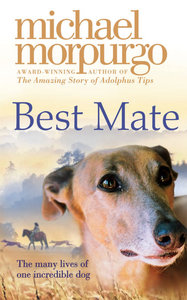
Best Mate

Best Mate is a book for young readers, approximately 10 years of age.   I picked up my copy at an outdoor market for just $3 (the book was originally published in 2007).  Since I am now the proud owner of a re-homed racing greyhound, it was the greyhound on the cover that caught my eye.

It was, of course, an easy read.  But I can highly recommend this book which tells the story of a greyhound pup rescued by a small boy, Patrick, on his way to school.  Named ‘Best Mate’, the pup was discarded in a river canal in a sack with his litter mates.

And so begins a story of a dog and a child’s insight into animal cruelty.  Best Mate loves Patrick and Patrick loves him.  The two are separated when Best Mate is stolen for  racing.  There he meets a young girl named Becky who names him Brighteyes and he makes a friend with another racing greyhound.

But that is not the end of his story, or the cruelty that the book portrays.  Be prepared to support the young reader in your home:  Best Mate’s friend is killed when he can no longer win races.

Best Mate will ultimately be re-homed yet again before the end of the book, and this time he ends up with the name Paddywack.

There are a few chapters in this book written from Best Mate’s perspective.  The only thing that would strengthen the book is to hear more from Best Mate himself.

This book should be on your child’s reading list.  It is a good introduction into animal welfare issues and a good first insight into the greyhound racing industry.

My reading of this book is all the more timely since news has hit the media this week about ‘live baiting’ in Australian greyhound racing…the book doesn’t portray live baiting, but I felt a connection to the story nonetheless because of the headlines.

Kathleen Crisley, specialist in dog massage, rehabilitation and nutrition/food therapy, Canine Catering Ltd, Christchurch, New Zealand

Canine research goes to the Ivy League

Yale University’s Canine Cognition Center has recruited hundreds of dogs for a study into how the dog’s mind works.

In a puppet show-like performance, dogs watch a rat puppet help a hedgehog up a hill.  In another scene, the rat knocks over the hedgehog.  And the researchers want to know what the dogs think about that…

“Similar studies have been done with human infants, and what you find is that human infants — they don’t like the guy who was mean. And so we’re doing the same thing with dogs to try to see — do dogs morally evaluate as humans do?” Professor of Psychology Laurie Santos said.  Santos is the Director of the Center.

So far, the results show that the dogs are wary of the rat.

In another test, the dog sits and watches as their human sits and reads a book. The human puts the book on the floor behind them and, soon after, the book is taken by someone who comes into the room.

“What we’re really trying to see is whether or not dogs know when they’ve missed some information. Can they realize that, first of all, and when they do realize it, are they motivated to help?” Santos said.

Consistently, the dogs not only realize something is wrong, but they also seem to be trying to alert their companions.  Owners regularly give feedback that they believe their dog is observant and knows what they are thinking.  This research seems to back up those (amateur and probably biased) observations.

So far, Yale researchers have tested 300 dogs and found that the dog mind is much more complex than they originally thought.  There’s more work to be done and thousands of dogs on their waiting list…

Source:  CBS News

And the Oscar goes to…

On 22 February 2015, Hollywood celebrities will gather for the 87th annual Academy Awards.   Only a few talented individuals will walk away with the top prize.

But, like last year, those who do not win  in the top 5 Oscar categories (Best Director, Best Actress, Best Actor, Best Supporting Actress and Best Supporting Actor) will still be given a gift – a donation of 10,000 meals to the animal rescue of their choice.  The donation is made possible by Ellen DeGeneres and her dog food company, Halo, Purely for Pets in partnership with Freekibble.com.

Oscars meal donation

The donations are part of a PR campaign called Everyone Wins at the Oscars® which is organized by a Los Angeles marketing firm specializing in product placement.  (The Academy Awards has no affiliation with these gifts – called ‘swag bags.’).

The bag contains many high-end gifts, a value of US$125,000!

Source:  News.com.au

