Category Archives: Dogs

Teddy’s journey: Teddy on wheels

Teddy has had another good week; he’s still getting used to being an amputee, however.

Jill and his acupuncture vet, Susanne, both noticed that Teddy was hopping on his right hind leg – balancing mostly on the stronger left side.  By the time I saw Teddy on Friday, Teddy was already improving thanks to acupuncture and an osteopathic adjustment.  I spent most of his massage session working on tension in his upper thoracic spine, and giving his hind legs a good stretch.

Because Teddy still needs to be confined, without the opportunity to engage in lots of vigorous off-lead exercise, Jill has found some novel ways of getting Teddy around the house and their lifestyle block.

She started with his crate and a flat deck trolley (a dolly to those in North America)…

Teddy's crate

and added Teddy for a trip around the house…

Teddy the Beagle on wheels2

…and then she purchased him a pram on Trade Me (New Zealand’s equivalent of eBay) and can take him around the paddocks with the other Beagles.

Teddy the Beagle in pram

The pram has an added benefit, too.  Teddy has to balance in it because of how it rides on springs.  This is helping him build strength in his core – essential to achieve our goals for rehabilitation.

Tell me what you think of Teddy’s wheels!

Kathleen Crisley, specialist in dog massage, rehabilitation and nutrition/food therapy, Canine Catering Ltd, Christchurch, New Zealand

The impact of movies on dog breed popularity

The effect of movies featuring dogs on the popularity of dog breeds can last up to ten years and is correlated with the general success of the movies, according to new research from the University of Bristol, the City University of New York, and Western Carolina University.

The researchers used data from the American Kennel Club, which maintains the world’s largest dog registry totaling over 65 million dogs, and analysed a total of 87 movies featuring dogs. They found that the release of movies is often associated to an increase in popularity of featured breeds over periods of one, two, five, and ten years.

The influence of movies was strongest in the early twentieth century and has declined since.

Additionally, they found that these trend changes correlated significantly with the number of viewers during the movie’s opening weekend, considered as a proxy of the movie’s reach among the general public.

This suggests that viewing a movie may cause a long-lasting preference for a breed that can be expressed years later, when the time comes to buy a new dog.

The 1943 hit Lassie Come Home is associated, in the following two years, with a 40 per cent increase of Collie registrations in the American Kennel Club.

Lassie Come Home theater poster

An even more dramatic example is the 100-fold increase in Old English Sheepdog registrations following the 1959 Disney movie The Shaggy Dog.

Photo taken by Harald Urnes, Norway

Photo taken by Harald Urnes, Norway

Professor Stefano Ghirlanda, lead author of the study said: “We focused on changes in trend popularity rather than on popularity itself to avoid attributing to movies trends that were already ongoing before movie release, as up-trending breeds may have been chosen more often for movies.”

Earlier movies are associated with generally larger trend changes than later movies. This might be due to an increased competition with other media, such as television, and more recently, the internet, but also to an increased competition among movies. Movies featuring dogs were released at a rate of less than one per year until about 1940 but a rate of more than seven per year by 2005.

Dr Alberto Acerbi, a Newton Fellow in the Department of Archaeology and Anthropology at the University of Bristol and co-author of the paper said: “If people buy en masse dogs because they appear in movies the consequences can be negative for the dogs themselves. Our previous study found that the most popular breeds had the greatest number of inherited disorders.

“It’s not surprising that we tend to follow social cues and fashions, as this is a quite effective strategy in many situations. However, in particular cases the outcomes can be negative. When choosing a new pet, we may want to act differently.”

Source:  EurekAlert! media release

Facial recognition software for dogs

A new app, Finding Rover, aims to reunite owners with their lost dogs and to support the work of animal shelters.

Simply register (for free), upload a photo of your dog, and go.    When someone finds your dog, they send in a photo of the dog’s face to be scanned and matched through the database.

Of course, micro-chipping  is also a good way to identify your dog in the event it gets lost.  Micro-chipping is now mandatory in New Zealand.

Kathleen Crisley, specialist in dog massage, rehabilitation and nutrition/food therapy, Canine Catering Ltd, Christchurch, New Zealand

What Dog Sled Teams Can Teach Us About Leadership

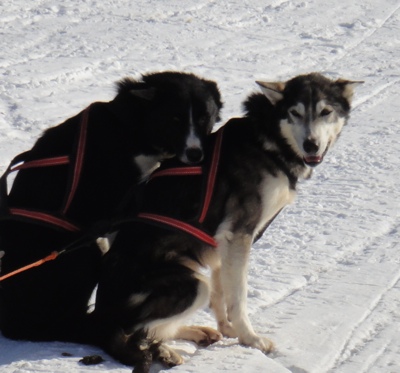
Sled dogs

Dr Ivan Misner, founder of BNI, an international business networking organization, wrote this really interesting piece on leadership.  For where you work now, ask yourself – who are the leaders?

SuccessNet Online – What Dog Sled Teams Can Teach Us About Leadership

Kathleen Crisley, specialist in dog massage, rehabilitation and nutrition/food therapy, Canine Catering Ltd, Christchurch, New Zealand

Wordless Wednesday, part 48

Photo courtesy of Karen Eckstein Han

Photo courtesy of Karen Eckstein Han

Blog Hop

Beware of riding escalators with your dog!

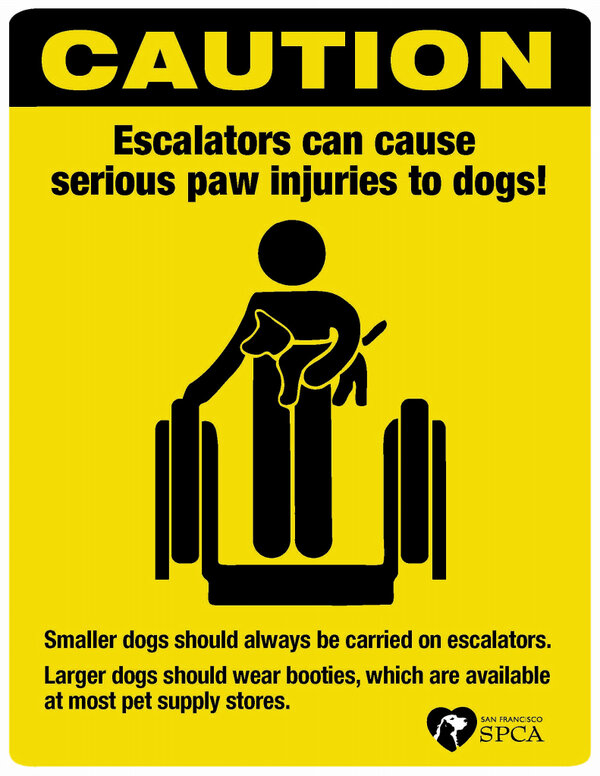
The San Francisco SPCA has issued a warning for all dog owners:  exercise caution when taking your dog with you on an escalator.

EscalatorThe SPCA’s two hospitals regularly receive emergency visits by dogs injured on escalators.  The majority of cases are small breed dogs who are riding on escalators at BART stations (the rapid transit/commuter services in the San Francisco area) or at shopping malls.

However, any size dog can be injured on an escalator.

Injuries are usually to the paws, often requiring toes to be amputated.

Prevention is easy:

  • Use stairs or elevators (lifts) as opposed to escalators
  • Fit your dog with protective booties
  • Carry your dog when using an escalator

Teddy’s journey: what the fracture looked like

They say a picture is worth a thousand words and so before next week and another update on Teddy’s progress, here is what Teddy’s elbow fracture looked like.

Compare the x-ray of the right, broken leg with that of the left.  It was a dramatic break.

Left elbow xrayRight elbow xray


We are not looking back, however.  Teddy has had a good week and we are looking forward to even more as we get him comfortable and happy in his new life as a tripod.

Kathleen Crisley, specialist in dog massage, rehabilitation and nutrition/food therapy, Canine Catering Ltd, Christchurch, New Zealand

Using GPS to understand sheep herding

Border collie for herding column

Dr Andrew King of Swansea University has used GPS technology to understand how sheepdogs do their jobs so well.

He  fitted a flock of sheep and a sheepdog with backpacks containing extremely accurate GPS devices designed by colleagues at the Royal Veterinary College, London.  Daniel Strömbom of Uppsala University and colleagues then used data from these devices, together with computer simulations, to develop a mathematical shepherding model.

The team found that sheepdogs likely use just two simple rules: to collect the sheep when they’re dispersed and drive them forward when they’re aggregated. In the model, a single shepherd could herd a flock of more than 100 individuals using these two simple rules.

Andrew King explained,  “If you watch sheepdogs rounding up sheep, the dog weaves back and forth behind the flock in exactly the way that we see in the model. We had to think about what the dog could see to develop our model. It basically sees white, fluffy things in front of it. If the dog sees gaps between the sheep, or the gaps are getting bigger, the dog needs to bring them together.”

Daniel Strömbom said, “At every time step in the model, the dog decides if the herd is cohesive enough or not. If not cohesive, it will make it cohesive, but if it’s already cohesive the dog will push the herd towards the target.”

King believes that the research team’s model will have many applications for tasks like crowd control, herding of livestock, and keeping animals away from sensitive areas.  The algorithm developed could be used to program robots for these tasks.

Source:  Natural Environment Research Council media release

Electronic training collars are a welfare risk

Animal behaviour specialists at the University of Lincoln (UK) have published a study that supports the use of positive reward-based training methods over the use of electronic shock collars.

Shock collar

The immediate effects of training pet dogs with an electronic collar cause behavioural signs of distress, particularly when used at high settings.

The study involved 63 pet dogs referred for poor recall and related problems, including livestock worrying, which are the main reasons for collar use in the UK. The dogs were split into three groups – one using e-collars and two as control groups.

The trainers in the study were industry approved and fully familiar with the guidelines for use of e-collars which are published by collar manufacturers.

Trainers used lower settings with a pre-warning function and behavioural responses were less marked than during a preliminary study (the results of which have since been discounted because the trainers did not follow collar protocols). Despite this, dogs trained with e-collars showed behavioural changes that were consistent with a negative response. These included showing more signs of tension, more yawning and less time engaged in environmental interaction than the control dogs.

Following training most owners reported improvements in their dog’s problem behaviour. Owners of dogs trained using e-collars were, however, less confident of applying the training approach demonstrated.

These findings indicate that there is no consistent benefit to be gained from e-collar training, but greater welfare concerns compared with positive reward-based training.

Lead author Jonathan Cooper, Professor of Animal Behaviour and Welfare at the University of Lincoln’s School of Life Sciences, said: “e-collar training did not result in a substantially superior response to training in comparison to similarly experienced trainers who do not use e-collars to improve recall and control chasing behaviour.

Accordingly, it seems that the routine use of e-collars even in accordance with best practice, as suggested by collar manufacturers, presents a risk to the well-being of pet dogs. The scale of this risk would be expected to be increased when practice falls outside of this ideal.”

The peer-reviewed journal article for this research is:

Jonathan J Cooper, Nina Cracknell, Jessica Hardiman, Hannah Wright, Daniel Mills ‘The welfare consequences and efficacy of training pet dogs with remote electronic training collars in comparison to reward based training’ PLOSone http://dx.plos.org/10.1371/journal.pone.0102722

Source:  University of Lincoln media statement

Moxie, the 9/11 search dog

Moxie was a 3-year old urban search and rescue dog when she and her handler were called to the World Trade Center in September 2001.  Now, she’s a a retired senior dog who is still playing at the park.

Moxie with her owner Mark Aliberti in Coughlin Park, Winthrop, Massachusetts (photo by Kathleen McNerney/WBUR)

Moxie with her owner Mark Aliberti in Coughlin Park, Winthrop, Massachusetts (photo by Kathleen McNerney/WBUR)

Her handler, Mark Aliberti, recalls their experience at the World Trade Center site in this WBUR radio news story:

Source:  http://www.wbur.org/2011/09/07/sept-11-search-dogs