Category Archives: Dogs

Happy birthday, Your Holiness

I like Pope Francis’ style.  Earlier this week, he invited four homeless men to join him for Mass and breakfast at the Vatican in celebration of his 77th birthday (that’s roughly 13 in dog years).

One of the men owned a dog, who was welcomed as part of the celebrations:

Pope's birthday photo

If the Vatican can embrace dog-friendly accommodation, why can’t we see more dog-friendly establishments elsewhere?

What’s cooking? It smells great!

A courier came to the door this morning to deliver several parcels.  She said, “What’s cooking – it smells great!”  And I replied, “I’m cooking a casserole for my dog in the slow cooker.”

This particular casserole is made with fresh broccoli, lamb heart, lean beef schnitzel, and fresh ginger.

This particular casserole is made with fresh broccoli, lamb heart, lean beef schnitzel, and fresh ginger.

After a brief pause, she smiled and said, “Lucky dog.”

I feed a combination of raw, homemade and commercial foods. It’s important to feed a nutritionally complete diet and so homemade diets will most likely need supplementation.

I consult with dog owners who want feeding advice and I incorporate Traditional Chinese Medicine assessment techniques for food matching.  I am not affiliated with any dog food manufacturer and so my advice is completely independent.

Need to know more?  Get in touch with me via my company website.

Kathleen Crisley, specialist in dog massage, rehabilitation and nutrition/food therapy, The Balanced Dog, Christchurch, New Zealand

Short dog syndrome

You’ve probably heard about Short Man Syndrome.  (In fact, many of us (including me) have experienced it firsthand!)

Did you know that there is growing evidence of Short Dog Syndrome?

Researchers at the University of Sydney have published their research into this topic in the online journal PLoS One.  Professor Paul McGreevy is the lead author of the study and says, “the shorter the dogs the less controllable their behaviour is for their owners.”
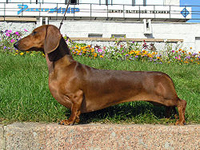
Dachshunds and other short breed dogs may be more difficult to train and control

Dachshunds and other short breed dogs may be more difficult to control

The study used owners’ reports on the behaviour of over 8,000 dogs from across 80 breeds and related them to the shape of 960 dogs of those breeds, revealing strong relationships between height, bodyweight, skull proportions (relative width and length) and behaviour.

33 out of 36 undesirable behaviours were associated with height, bodyweight and skull shape

As a breed’s average height decreased, the likelihood of behaviors such as mounting humans or objects (humping), owner-directed aggression, begging for food and attention-seeking increased.

“The only behavioral trait associated with increasing height was ‘trainability’. When average bodyweight decreased, excitability and hyperactivity increased,” said Professor McGreevy.

The researchers admit that there is an aspect here of nature vs nurture.  If aggressive and ‘bad’ behaviours were present in larger dogs, the results could be more dangerous.  Poor behaviour in small dogs is likely to be tolerated more.  Over time, breeding has resulted in the patterns observed by the research team.

Source:  University of Sydney media release

Image

Wordless Wednesday, part 15

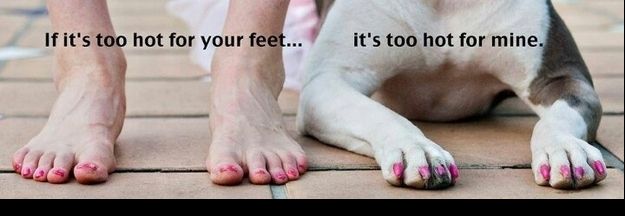
If it's too hot for your feet...

New gene therapy for dogs with hemophilia

Researchers at the UNC School of Medicine and the Medical College of Wisconsin have found that a new kind of gene therapy led to a dramatic decline in bleeding events in dogs with naturally occurring hemophilia A.

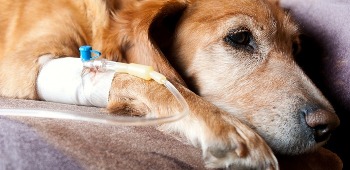
Photo courtesy American Kennel Club Canine Health Foundation, Inc

Photo courtesy American Kennel Club Canine Health Foundation, Inc

Hemophilia A affects about 50,000 people in the United States and millions more around the world.

Before the gene treatment, the animals experienced about five serious bleeding events a year. After receiving the novel gene therapy, though, they experienced substantially fewer bleeding events over three years.

Hemophiliacs lack  the coagulation factor VIII in their blood plasma.   In about 35% of cases, patients develop an antibody response to factor VIII, meaning that treatment by injection of the factor no longer works.

Using a plasmapheresis machine and a blood-enrichment technique, the research team isolated specific platelet precursor cells from three dogs that had hemophilia A. The team then engineered those platelet precursor cells to incorporate a gene therapy vector that expresses factor VIII. The researchers put those engineered platelet precursors back into the dogs. As the cells proliferated and produced new platelets, more and more were found to express factor VIII.

In the 2 1/2 years since the dogs received the gene therapy, researchers found that factor VIII was still being expressed in platelets that were coursing throughout the vascular systems of all three dogs. All three experienced much less bleeding. In the dog that expressed the most factor VIII in platelets, the bleeding was limited to just one serious event each year over the course of three years. And such bleeding events were easily treatable with current standard therapies.

The researchers have published their results in the journal Nature Communications.  You can read the article here.

While the goal of this research is to help human hemophiliac patients, I hope that the treatment is able to be offered more widely to dogs with the condition too!

Source:  UNC School of Medicine media statement

The notice at dog park

Flynn's death noticeI had seen Flynn at dog park a number of times before his owners asked for me to give him a relaxation massage.  Then I received an email several weeks later informing me that he had died suddenly.

His owners felt it was important to let everyone at dog park know of his passing.

Rest in peace, Flynn!

Risk factors for bone cancer in dogs

Bone cancer in dogs is affected by a variety of genetic risk factors, researchers from Uppsala University and the Broad Institute have found.  They’ve published their results in the journal Genome Biology.
Osteosarcoma, a type of bone cancer, is similar in humans and dogs – although in dogs it is more common.  In the current study, the researchers compared the genome of sick and healthy dogs from three different breeds to find inherited risk factors for the disease.

“The key is that we find many different risk factors within each breed. We already knew that Greyhounds, Rottweilers and Irish wolfhounds are at increased risk of developing bone cancer and our results explain much of the increased risk”, said Emma Ivansson, scientist at SciLifeLab and Uppsala University.

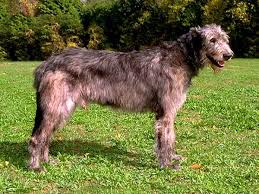
Irish Wolfhound

The study demonstrated that each breed has its own risk genes, but these genes converge in common disease mechanisms.

“Our results show that the pathways involved in bone formation and growth are important for the disease. Because of the great similarities between bone cancer in dogs and humans, we believe that our findings may contribute to an increased understanding of how bone cancer develops in humans”, said Kerstin Lindblad-Toh, professor at Uppsala University and Co-Director of the SciLifeLab and Director of Vertebrate Genome Biology at the Broad Institute.
The researchers are continuing to study the identified risk factors to understand more about how they affect tumor development and to see whether different risk factors respond to different types of treatment.
The researchers are continuing to study the identified risk factors to understand more about how they affect tumor development and to see whether different risk factors respond to different types of treatment. – See more at: http://www.uu.se/en/media/news/article/?id=3103&area=2,10,16&typ=artikel&na=&lang=en#sthash.H1aUoBA8.dpuf

Osteosarcoma, a type of bone cancer, is a rare but very aggressive form of cancer that primarily affects teenagers. Among some large-sized dog breeds the disease is much more common, but otherwise osteosarcoma in humans and dogs is very similar. In the current study, the researchers compared the genome of sick and healthy dogs from three different breeds to find inherited risk factors for the disease.

“The key is that we find many different risk factors within each breed. We already knew that greyhounds, Rottweilers and Irish wolfhounds are at increased risk of developing bone cancer and our results explain much of the increased risk”, said Emma Ivansson, scientist at SciLifeLab and Uppsala University.

The study demonstrated that each breed has its own risk genes, but these genes converge in common disease mechanisms

– See more at: http://www.uu.se/en/media/news/article/?id=3103&area=2,10,16&typ=artikel&na=&lang=en#sthash.H1aUoBA8.dpuf

Bone cancer in dogs is affected by a variety of genetic risk factors. Researchers from Uppsala University and the Broad Institute show this in a new study published in Genome Biology. – See more at: http://www.uu.se/en/media/news/article/?id=3103&area=2,10,16&typ=artikel&na=&lang=en#sthash.H1aUoBA8.dpuf

Beefcake (not beef bones) to benefit dogs

Christchurch based animal welfare charity K9 Rescue and Rehoming has paired well-muscled men with dogs available for adoption in their 2014 calendar.

K9 Rescue and Rehoming calendar

Entitled Dogs and Dudes, this fundraising calendar includes photographs of New Zealand actors and other local celebrities who were willing to bare their bodies to support dog adoption.

The best way to organise a purchase is to contact Trisha through the organisation’s Facebook page.  Calendars cost NZ$25

And dog owners get to enjoy a little beefcake all year long, combined with some really beautiful dog photos, too!

Breast cancer in dogs

A PhD project at the Norwegian School of Veterinary Science has been studying the genetics behind mammary tumours in dogs.  Breast cancer is the most common form of cancer in female dogs.

A mammary tumor in a dog (Photo by Veronica Kristiansen)

A mammary tumour in a dog (Photo by Veronica Kristiansen)

Kaja Sverdrup Borge’s PhD project has led to the identification of genetic changes associated with these types of tumour.

Borge studied known risk genes in dogs to learn more about the genes that predispose dogs to canine mammary tumours. These genes are already known to be linked to cancer in humans. Borge discovered that there was a large variation in these genes from breed to breed. Some of the variants proved to have a detrimental effect and could lead to a potential change in the risk of developing cancer.

Borge compared the incidence of these genes in different groups of English springer spaniels with and without mammary tumours. The genes were also studied in another group of dogs from breeds having either a high or low incidence of mammary tumours. The results of these analyses indicate that variants of the oestrogen receptor gene are associated with the risk of English springer spanieldeveloping mammary tumours in dogs.

Borge examined canine mammary tumours in order to identify mutations which have arisen in tumours and may therefore be involved in the development of cancer. She focused on changes in the number of gene copies where there was either a decrease or increase in gene areas in the tumours.

She found a large number of mutations and the number of aberrations increased, the more malignant the tumours turned out to be. She detected major cancer genes known to occur in humans but also identified new areas. Borge also demonstrated that linking detailed histopathological parameters from mammary tumour diagnostics to genetic mutations could help to chart specific genes that lead to the growth of tumours and to more malignant types of cancer.

Increased knowledge about the genetic changes which cause cancer is essential for the prevention, diagnosis and treatment of the disease.  Because of the similarities between carcinogenic gene mutations in both canine and human breast cancer, studying breast cancer in dogs also has benefits for the study of breast cancer in humans.

Source:  Media statement from Norwegian School of Veterinary Science

Image

Wordless Wednesday, part 14

Stretching dog