Category Archives: Dogs

The ability for dogs and wolves to learn

Wolves can learn from observing humans and pack members where food is hidden and recognize when humans only pretend to hide food, reports a study published for the first time in the open-access journal Frontiers in Psychology.

The researchers conclude that the ability to learn from other species, including humans, is not unique to dogs but was already present in their wolf ancestors. Prehistoric humans and the ancestors of dogs could build on this ability to better coordinate their actions.  Photo by Wolf Science Center

The researchers conclude that the ability to learn from other species, including humans, is not unique to dogs but was already present in their wolf ancestors. Prehistoric humans and the ancestors of dogs could build on this ability to better coordinate their actions. Photo by Wolf Science Center

These findings imply that when our ancestors started to domesticate dogs, they could have built on a pre-existing ability of wolves to learn from others, not necessarily pack members.

A paper published recently in the journal Science suggested that humans domesticated dogs about 18 thousand years ago, possibly from a European population of grey wolves that is now extinct. But it remains unknown how much the ability of dogs to communicate with people derives from pre-existing social skills of their wolf ancestors, rather than from novel traits that arose during domestication.

In a recent study, Friederike Range and Zsófia Virányi from the Messerli Research Institute at the University of Veterinary Medicine Vienna investigated if wolves and dogs can observe a familiar “demonstrator” – a human or a specially trained dog – to learn where to look for food within a meadow. The subjects were 11 North American grey wolves and 14 mutts, all between 5 and 7 months old, born in captivity, bottle-fed, and hand-raised in packs at the Wolf Science Center of Game Park Ernstbrunn, Austria.

The wolves and dogs were two to four times more likely to find the snack after watching a human or dog demonstrator hide it, and this implies that they had learnt from the demonstration instead of only relying on their sense of smell. Moreover, they rarely looked for the food when the human demonstrator had only pretended to hide it, and this proves that they had watched very carefully.

The wolves were less likely to follow dog demonstrators to hidden food. This does not necessarily mean that they were not paying attention to dog demonstrators: on the contrary, the wolves may have been perceptive enough to notice that the demonstrator dogs did not find the food reward particularly tasty themselves, and so simply did not bother to look for it.

Source:  EurekAlert! press release

Why breed specific legislation does not protect the public from dangerous dogs

Photo courtesy of University of Lincoln (UK)

Photo courtesy of University of Lincoln (UK)

The latest research on breed specific legislation formalises a lot of the information that I already suspected or knew from other sources:  that BSL doesn’t work and is a flawed concept.    Read more below:

Research conducted by animal behaviour experts challenges the basis of breed specific legislation designed to protect the public from ‘dangerous’ dogs.

A team from the University of Lincoln, UK, concluded that rather than making people safer, current legislation could be lulling them into a false sense of security. Their findings were recently published in the journal Human Animal Interaction Bulletin published by the American Psychological Association, in a freely available paper “Acculturation – Perceptions of breed differences in behavior of the dog (Canis familiaris)”.

Dr Tracey Clarke and Professors Daniel Mills and Jonathan Cooper from Lincoln’s School of Life Sciences set out to discover the source of people’s perceptions about ‘typical behaviours’ associated with different breeds of dog.

Professor Mills said: “This work provides good scientific evidence to explain why the pursuit by governments of breed specific legislation to reduce the risk of harm to citizens is not only doomed to failure, but also giving people a false sense of security, which may actually be making the situation worse.”

The researchers applied a theory known as the ‘contact hypothesis’ – used by sociologists to understand the origin of racial stereotyping and other forms of prejudice.

They surveyed more than 160 people to examine if their contact with dogs influenced their tendency to believe populist and negative breed stereotypes.

They found significant variations in attitudes between people who owned dogs or had regular contact with them, and those who did not. More than half (54%) of respondents who identified themselves as “experienced or knowledgeable” of dogs disagreed with the statement that some breeds are more aggressive than others. Only 15% of respondents who said they had little or no experience of dogs held the same view.

Similarly, more than half of the “experienced” respondents felt there was no valid reason for breed specific legislation, whereas less than 1 in 10 of the inexperienced respondents felt the same.

The results were consistent with the prediction that not just the level but also the quality of contact with dogs are major influences on the tendency to believe populist breed stereotypes, despite scientific evidence which challenges the validity of such generalisations.

The variability within a breed is nearly always greater than the variability between breeds for behavioural traits, meaning while there may be differences on average, when it comes to assessing the likelihood that a particular individual will behave in a certain way generalisations are often unsound. The type of person attracted towards certain breeds and encouraging certain behaviours may be a much better predictor.

It was discovered that a dog’s visible characteristics informed strong attitudes, resulting in over-generalisation. Not only bull-breeds but also those with much more superficial characteristics such as being well-muscled, or even short-haired, were stigmatised more often as dangerous by those with less experience or knowledge of dogs.

Attraction to certain types on the basis of their appearance, can then lead to these being preferred for use as a weapon or status dog, creating a self-fulfilling prophecy about their behaviour through environmental rather than genetic effects.

The team suggest that further scientific research is needed to improve understanding of the origins and basis of negative breed stereotypes, and that this in turn should be used to inform future legislation.

Source:  University of Lincoln media statement

7 Steps to a Happier Pet

This holiday season, the Humane Society of the United States would like to share its 7 steps to a happier pet:

  1. Make sure your pet wears an identification tag
  2. Make sure you enroll your new puppy in behavioural training classes to prevent problems
  3. Animal behavioural problems can be health-related.  Make sure your pet has a complete medical exam by a veterinarian at least once a year
  4. Prepare for disasters and make sure you have a plan for your pet in the event of a hurricane, tornado, fire, flood or earthquake
  5. Plan for your pet’s future in case something happens to you
  6. Learn how to prevent dog bites and how to prevent your dog from biting; visit the Humane Society’s website.
  7. Have a heart, be smart, and make sure your pet is spayed or neutered.
Image

Wordless Wednesday, part 13

Counter surfing dog

Rin Tin Tin: The Life and the Legend

rin tin tin book cover

I have just finished reading Rin Tin Tin:  The Life and the Legend by Susan Orlean.  Having previously blogged about the Dogs on the Hollywood Walk of Fame, I was intrigued when this book made the New York Times bestseller list.

If you like biography, you will like this book.  It has been expertly researched by Orlean who spent weeks reviewing the archived personal files of Lee Duncan, the owner and trainer of the original Rin Tin Tin.  Duncan fought in France during WWI and found the young ‘Rinty’ in an abandoned kennels.  He was able to secret Rin Tin Tin away on a ship returning servicemen to the United States along with his sister, who unfortunately died shortly after arriving in the USA.

Duncan bonded with the dog like no other individual (human or otherwise) in his life and found the dog exceptionally bright (although cranky with other humans).  In the 1920s, he was certain that Rinty was movie material.  Orlean does a superb job describing old Hollywood – before sound was even introduced to films and Duncan’s efforts to make his dog a film star.

Rin Tin Tin’s popularity is the main reason why German Shepherd dogs became a popular breed in the United States.

During this period in American history, dog training was not even recognised as a discipline.  In large part thanks to Rin Tin Tin’s popularity, the benefits of dog training were introduced to the American public.  Orlean again does a superb job in explaining how trained dogs were exhibited to Americans as entertainment, eventually spawning an entire industry.

It is very entertaining to read about Rin Tin Tin’s early success and the challenges posed by the introduction of sound to the movies.  Duncan, perhaps in denial, didn’t make provisions for a successor to Rin Tin Tin and – as was inevitable – the original Rinty died.  Rinty’s son was not up to scratch for acting duties and there was a time before a suitable successor was trained.

From there, the story becomes one of how Rin Tin Tin became a legend and an industry.   Other dogs, including subsequent descendents, take on the role of Rin Tin Tin and he is even transformed to a television star in the Adventures of Rin Tin Tin.  At this point, there are spin-off benefits of merchandising.

So many people invested emotional energy (as well as lots of money) in keeping Rin Tin Tin in front of the American public, well into the 1970s.  By the 1980s, however, American tastes had changed.

This book is well written and with a good pace throughout.  I recommend it  particularly if you have a German Shepherd in your life, or someone who is a German Shepherd fan, this book would make an excellent Christmas gift.

Doggy quote of the month for December

“If you want the best seat in the house, move the dog”

– Unknown

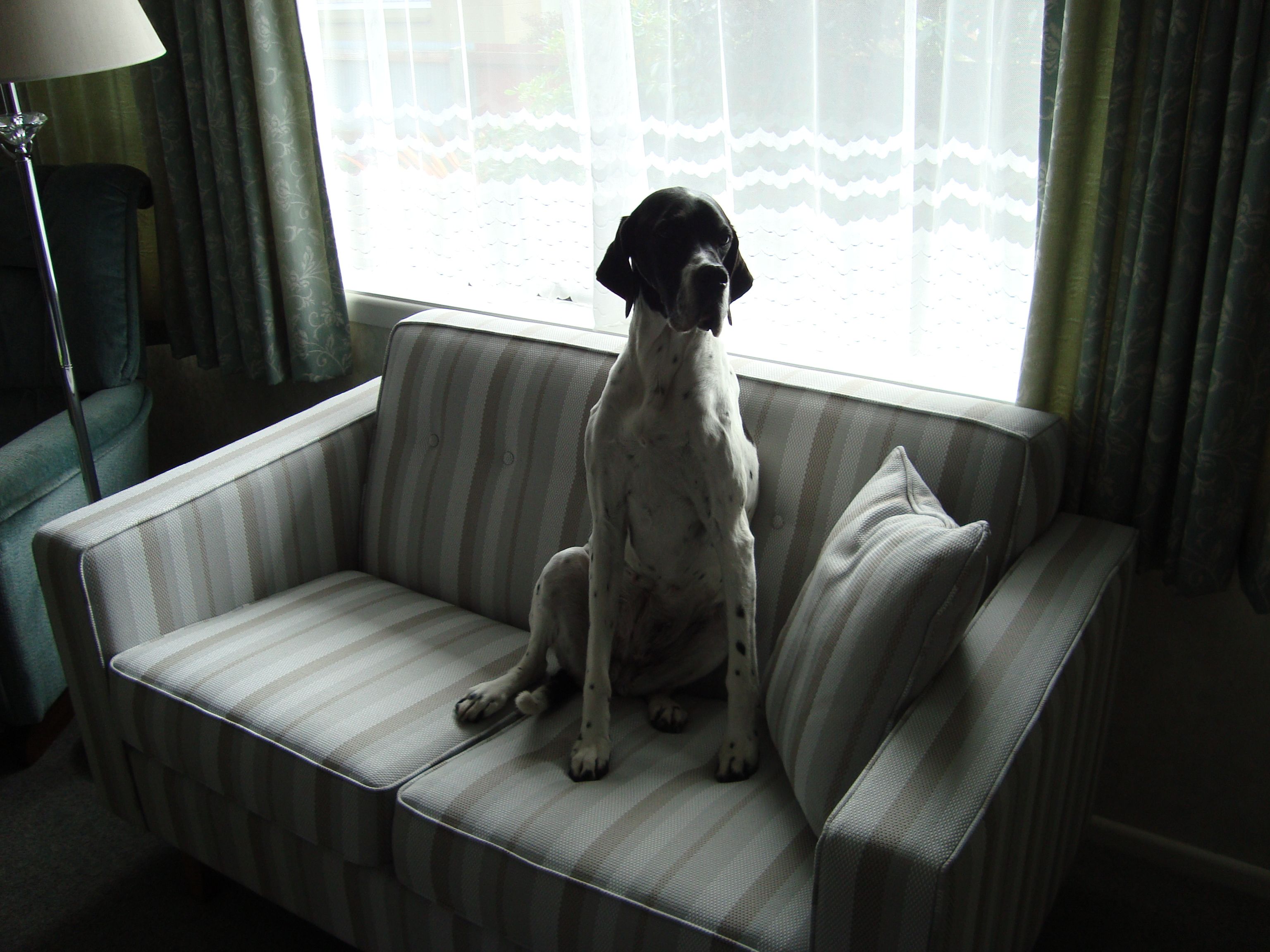
New settee

Is Your Veterinarian Being Honest With You? | Video – ABC News

One of the things I try to do through this blog and my column in NZ Dog World magazine is to educate dog owners.  This item, from ABC News in the United States, gives you some food for thought.

The key messages are:

1) Be an educated dog owner about health care

2) Ask knowledgeable questions about recommended procedures (including vaccinations)

3) Understand that some practices market procedures (up-selling) to increase sales

And the subtle one for me is really to develop a working relationship with your vet.  I believe that most vets are ethical and are willing to have an intelligent conversation with you.  But, it’s up to you to be the steward of your dog’s care.  You are the one who says ‘yes’ or ‘no’ to all treatments given to your dog.

Is Your Veterinarian Being Honest With You? | Video – ABC News.

Happy anniversary…

My promise to you

Daisy and I are celebrating our 10th anniversary together this weekend.  This photo seemed appropriate!

Image

Wordless Wednesday, part 12

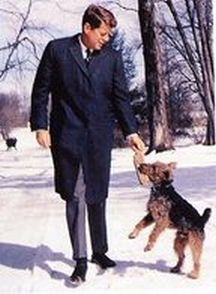
JFK with dog

This is my last will and testament…

If you love your dog, you should consider what would happen if you died.  Who would care for them?  One way of dealing with this issue is to have a pet trust.

To establish a pet trust you need to:

  • Nominate a trustee
  • Designate a caregiver (it would be best to consult this person in advance and make sure they are happy with the responsibility)
  • Set aside a nominated amount of funding for the trust
  • Clearly state what standard of care your dog should receive
  • Establish the trust’s duration (a certain length of time, likely to cover the rest of your dog’s natural life)
  • Designate a beneficiary who will receive any remaining funds once your dog passes
  • Name your dog(s) to be covered by the trust

Here are some more notable bequests to dogs:

Leona Helmsley (The Queen of Mean) set up a pet trust for her Maltese, Trouble.  It was a whopping $12 million.  After the will was contested, the dog’s trust was reduced by $10 million.

Leona Helmsley with her dog, Trouble

Leona Helmsley with her dog, Trouble

In 2010, socialite Gail Posner left a home and a $3 million trust fund to her three dogs.   These dogs were very pampered and were said to have been given weekly spa appointments, traveling to those appointments in a gold Cadillac. Conchita, a Chihuahua, April Maria, a Maltese, and Lucia, a Yorkshire Terrier were the beneficiaries.

Before both of these ladies made their bequests, there was German Countess Carlotta Liebenstein.  She left approximately £43 million to her pet dog Gunther III when she died in 1991.  Gunther III and his son, Gunther IV,  enjoyed the services of a personal maid, chauffeur and a pool.

In 2004, after 10 years of contention, the bank that served as executor for tobacco heiress Doris Duke’s estate agreed to compensate the caretakers of her dogs.  Although Duke had made provision for them in her will, the will was contested for a number of reasons.  The settlement involved over $100,000 to pay two of Duke’s former servants who were responsible for feeding, medicating and cleaning up after the dogs.  Two of the dogs died over the 10 years of fighting.  Only Robert, an old shepherd cross remained.

Kathleen Crisley, specialist in dog massage, rehabilitation and nutrition/food therapy, The Balanced Dog, Christchurch, New Zealand