Category Archives: Dogs

Chandi

Chandi book cover

I have just finished reading Chandi:  The Rescue Dog Who Stole a Nation’s Heart by Tina Humphrey.  Chandi is the story of Humphrey’s rescue dog who she trained for Heelwork to Music.  Published in 2012, the book opens when Humphrey meets her first dog, Pepper, in 1994.  Chandi is adopted from a shelter in 1998 and, for a time, Humphrey trains and competes with both dogs in Heelwork to Music and Freestyle competitions.

Tina, who teaches piano and violin, has a natural ear for music and is able to choreograph routines for her dogs that emphasize the stories behind the music.

Chandi is a love story.  It is about the bond that Tina shares with both of her dogs and the devotion she has for both of them.  She is an advocate for a raw diet and natural health care (no wonder I was attracted to the book),  in part inspired by her mother who fought cancer for many years using natural therapies.  (Part of the book tells the story of how Tina suffers the loss of both of her parents, at separate times, with her dogs there as emotional support).

We also share in Tina’s heartache when, in 2007, she and Chandi suffer the loss of Pepper.  Anyone who has had to say goodbye to their beloved dog understands Tina’s pain when it is time for Pepper to be put to sleep.

Chandi and Tina win many competitions in their years together including several trophies at Crufts.  In 2010, after almost 12 years of competing and sharing their lives, they audition for Britain’s Got Talent and go all the way to the finals, ultimately finishing in fourth place.  By then, they are celebrities and enjoy a nationwide tour of the show’s finalists plus other interviews and promotions.  And that’s where the book finishes…on a high note.

On 26 April 2013, Chandi died at the age of 14 years 10 months.  She developed a condition that was thought to be pyometra.  However, during surgery to remove her uterus and spleen, it was discovered that Chandi’s body had many other tumours that could not be removed.   Tina made the heart-breaking decision that it was time for Chandi to go and was there when she was put to sleep on the surgical table.

Today, Tina is training a new puppy named Grace and is blogging about her experiences with her new canine companion.    You can follow them on Facebook.

 And through the wonders of YouTube, here are Tina and Chandi’s performances on Britain’s Got Talent:

Auditions

Semi-Finals

Finals

Kathleen Crisley, specialist in dog massage, rehabilitation and nutrition/food therapy, The Balanced Dog, Christchurch, New Zealand
Using dog hair for diagnosis

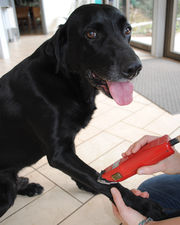
Dog hair is used to diagnose hyperadrenocorticism (Photo: Ouschan/Vetmeduni Vienna)

Dog hair is used to diagnose hyperadrenocorticism (Photo: Ouschan/Vetmeduni Vienna)

Many dogs suffer from hyperadrenocorticism, more commonly known as Cushing’s Disease.   The disease is characterised by excessive amounts of hormones known as glucocorticoids that are produced by the adrenal glands.  The disease is more common in older dogs.  Most cases result from a tumour in the pituitary gland but some are caused by tumours in the adrenal glands.

The symptoms of a dog with Cushing’s Disease often ‘creep up’ on the owner and vet.  Common symptoms include excessive drinking (and urination) and overeating, leading to a pot-bellied appearance, as well as with loss of hair.  Since all of these symptoms can stem from a number of disorders, it is difficult to be certain.  The methods traditionally used to diagnose the disease are complicated and costly and usually give information about the hormone concentrations at the time a sample is taken.  Since most dogs are stressed by veterinary examinations, their hormone levels will peak  because of the stress – making it difficult to rely on the analytical results.

Researcher Claudia Ouschan and colleagues at the University of Veterinary Medicine, Vienna decided to look for a way to monitor the long-term levels of glucocorticoids in dog hair that would also offer a diagnostic option that was less stressful to the dogs.   She compared the levels of cortisol, corticosterone and cortisone in the hair of twelve dogs with hyperadrenocorticism and ten healthy dogs.  The results were striking:  all three hormones were found at far higher levels in the hair of dogs with Cushing’s Disease than in the control group, with the increase in cortisol particularly pronounced.

She concludes, ‘we think it (our findings) have real promise for use as a rapid and non-invasive method to diagnose hyperadrenocorticism.’

Her research has been published in the journal Veterinary Dermatology.

Source:  University of Veterinary Medicine, Vienna media statement

Joint supplements

I get a lot of questions about supplements from dog owners whose dogs are aging and entering ‘the senior years.’

Three of the main supplements for joint support are glucosamine, chondroitin and hyaluronic acid.

Hyaluronic acid, or hyaluronan, is a major component in synovial fluid and has been found to increase the viscosity of the fluid.  In older dogs, the synovial fluid becomes thinner and less able to support the joints.  Originally given in injectable form, increasingly hyaluronic acid is found in oral supplements.

Glucosamine is naturally produced in the body and is a constituent of synovial fluid and cartilage, both of which help to support and stabilise the joints. Glucosamine is made of a sugar and an amino acid and is involved with the body’s production of joint lubricants and shock absorption necessary to maintain healthy cartilage and joint function.

Glucosamine sulfate is also one of the building blocks of articular cartilage and it aids in the rebuilding of damaged cartilage.  Glucosamine sulfate is also involved in the formation of nails, skin, eyes, tendons, bone and ligaments.

Glucosamine supplementation enhances the body’s ability to manufacture collagen and proteoglycans, which are essential for rebuilding joints and supporting synovial fluid.  Glucosamine in the sulfate form seems to be absorbed best by the body.

Chondroitin, or more appropriately chondroitin sulphate, is usually found in supplements containing glucosamine.  Chondroitin sulfate may actually help the body to repair damaged cartilage and help restore joint integrity. It may also protect existing cartilage from premature breakdown as well as keep cartilage tissue hydrated and assist in cushioning impact stress.

If considering giving your dog a joint supplement, it pays to discuss dosage with your veterinarian or complementary health professional.  Some dog food brands are adding glucosamine and chondroitin to foods and so supplementation dosage has to be considered in light of this.

Kathleen Crisley, specialist in dog massage, rehabilitation and nutrition/food therapy, The Balanced Dog, Christchurch, New Zealand

Your dog understands ‘Just Do It’

New research helps to confirm the cognitive abilities of our dogs.

Claudia Fugazza and Adám Miklósi, from Eötvös Loránd University in Hungary have shown that dogs can learn, retain and replay actions taught by humans after a short delay.   Because the dogs were able to undertake the actions after a delay (during which they were purposely distracted), the research proves that dogs have an ability to ‘encode’ and ‘recall.’

photo courtesy of Springer Select

photo courtesy of Springer Select

The study involved eight adult pet dogs who were trained by their owners with the ‘Do as I do’ method and then made to wait for short intervals (5-30 seconds) before they were allowed to copy the observed human action, for example walk around a bucket or ring a bell.

The researchers observed whether the dogs were able to imitate human actions after delays ranging from 40 seconds to 10 minutes, during which time the dogs were distracted by being encouraged to take part in other activities. The researchers were looking for evidence of the dogs’ ability to encode and recall the demonstrated action after an interval.

The tests show that dogs are able to reproduce familiar actions and novel actions after different delays ̶ familiar actions after intervals as long as ten minutes; novel tasks after a delay of one minute. This ability was seen in different conditions, even if they were distracted by different activities during the interval.

Because dogs were able to reproduce the novel actions after a delay and without earlier practice, the researchers believe that dogs have a specific type of long-term memory capability – called ‘declarative memory.’    These are memories involving facts or knowledge which can be consciously recalled.

This study is published in the journal Animal Cognition.

Source:  Springer Select media statement

First dementia dogs start work

The first ever “dementia dogs” who are specially trained to help people with early-stage dementia have started work in Scotland.

You can watch the story of Oscar, a Golden Retriever and Kaspa, the Labrador in this BBC News item:

Lymphomas in humans and dogs have similarities

A team of scientists from the University of North Carolina School of Medicine, North Carolina State University’s College of Veterinary Medicine and Duke University have conducted one of the first studies to directly compare canine and human B-cell lymphoma by examining molecular similarities and differences between the two species.

B-cell lymphomas are very common in both humans and dogs.

“Pet dogs get cancer the same way humans do: at similar rates, and for unknown reasons.  Like humans, dogs’ tumors are spontaneously occurring, rather than genetically created as they are in mice, so canine tumors may more accurately mimic the situation in human cancer patients. Dogs are good models to study, because it will also be possible to study shared risk factors, in the environment, for example, that might predispose both humans and dogs to get lymphoma. Our knowledge helps dogs and humans with lymphoma.” says Kristy Richards, MD, PhD, and co-author of the research which has been published in the journal Cancer Research.

“Veterinarians treating dogs for lymphoma can offer clinical trials to their owners. Clinical trials in dogs are similar to those done in humans, with safety protections in place to minimize harm.”

Molecular analyses of canine and human tumors were completed at NCSU and at UNC Lineberger. The team used gene expression profiling and found that canine B-cell lymphoma expression profiles were similar in many ways to human B-cell lymphoma, thus paving the way for future studies, including therapeutic clinical trials in dogs and humans.

Source:  UNC School of Medicine media statement

Help! Needham needs a dog park

Needham, Massachusetts doesn’t have a dedicated facility where dogs can run and exercise off-leash.  For a town that is home to approximately 3,000 registered dogs, it’s a real shame.

Dog park image

Thankfully, a group of dedicated owners led by Mike Verdun and Bill Paulson are hoping to change that.  They and a group of about 10 other passionate dog owners have located a suitable site, the Nike Site, next to Ridge Hill Reservation. The group is now fundraising to establish the park.

Needham Dog Park map

$25,000 is needed to establish the facility; the bulk of the money is needed for the fencing, combined with signage and a wood chip base.  Double gates will ensure that dogs are kept safe as they enter and exit the park.

‘We’ve talked to other communities in Massachusetts that already have dog park facilities,’ says Bill.  ‘We’re confident in our design.’

So far, the group has raised $3,500 – so there’s still a long way to go.  If you and your dog benefit from off-leash exercise in your community, maybe you can consider making a small donation to help the dogs of Needham be rewarded with their own dog park.

The Needham Dog Park donation form has all of the instructions you need.  And you can follow progress via the Needham Dog Lovers Facebook page.

San Diego’s Dog Loo

In 2008, the US Government passed legislation requiring service animals that are flying to have indoor and outdoor relief facilities.  For most airports, this law has been interpreted as a requirement to have a relief area somewhere on site but not necessarily in major traffic areas.

San Diego’s Airport (Terminal 2 to be exact) has gone a step further to cater for the flying canine.  They have installed a really posh doggy toilet past the security checkpoints.

OLYMPUS DIGITAL CAMERA

The toilet features a fire hydrant, artificial grass and a hand washing basin for the owners.

Just a sign of the times – progress is made every day to ensure that dogs and their owners have appropriate facilities.  (Pet relief areas have become a true godsend to air travelers who are traveling with their dog.)  Appropriate facilities reduce the risk of conflicts between dog owners and those who are not doggy people.

Well done San Diego Airport!

Interested in this subject?  Read my earlier blogs on:

Awaiting the royal baby…

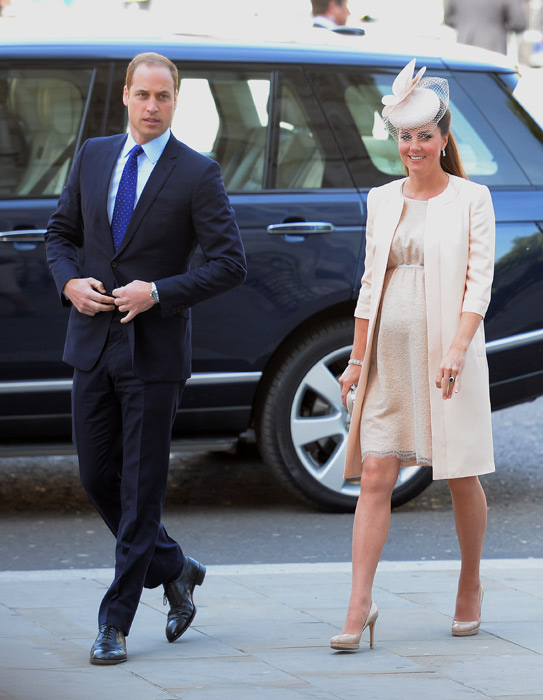
William and KateAs the world awaits the arrival of William and Kate’s baby (which by all accounts is due in days), I’m wondering if there’s anything in this happy event that can help animal welfare.

What if shelters around the world named puppies born on the new Prince or Princess’s birthday after the royal baby?  That way, adoptive owners will be adopting their own royal baby and can take part in the historic event.

Puppy

Let’s hope that all of the puppies born that day are healthy and able to thrive in loving homes!

Image

A thought for Monday

Dogs and family