Category Archives: Dogs

Daisy’s birthday adventures

Today we woke up and went to the largest dog park in Christchurch, The Groynes.  Although the sun was coming up, it was also showering and we saw a lovely rainbow settle over the park:

Rainbow over dog park

Daisy loves being off-lead and able to exhibit her natural dog instincts.  She looks up to keep tabs on me often, but enjoys foraging around:

Foraging

And tonight Daisy enjoyed a slice of her birthday cake for dessert.  This cake is salmon and rice, with a lowfat cream cheese frosting, doggy choc drops and homemade chicken & parsley doggy treats:

Birthday cake

Happy Birthday, Daisy.  I love you!

Daisy’s birthday breakfast

Please, Mum.  Can I have these for breakfast?

Please, Mum. Can I have these for breakfast?

Daisy had a tin of sardines (packed in spring water) for breakfast along with some fresh apple chunks.  A nice combination (if you are a dog) that is high in fibre, protein and Omega III.

We won’t make a steady diet of this for breakfast (although there are always sardines in the pantry for a special treat at our house), but it is not every day that a girl turns 13.

Daisy’s birthday weekend

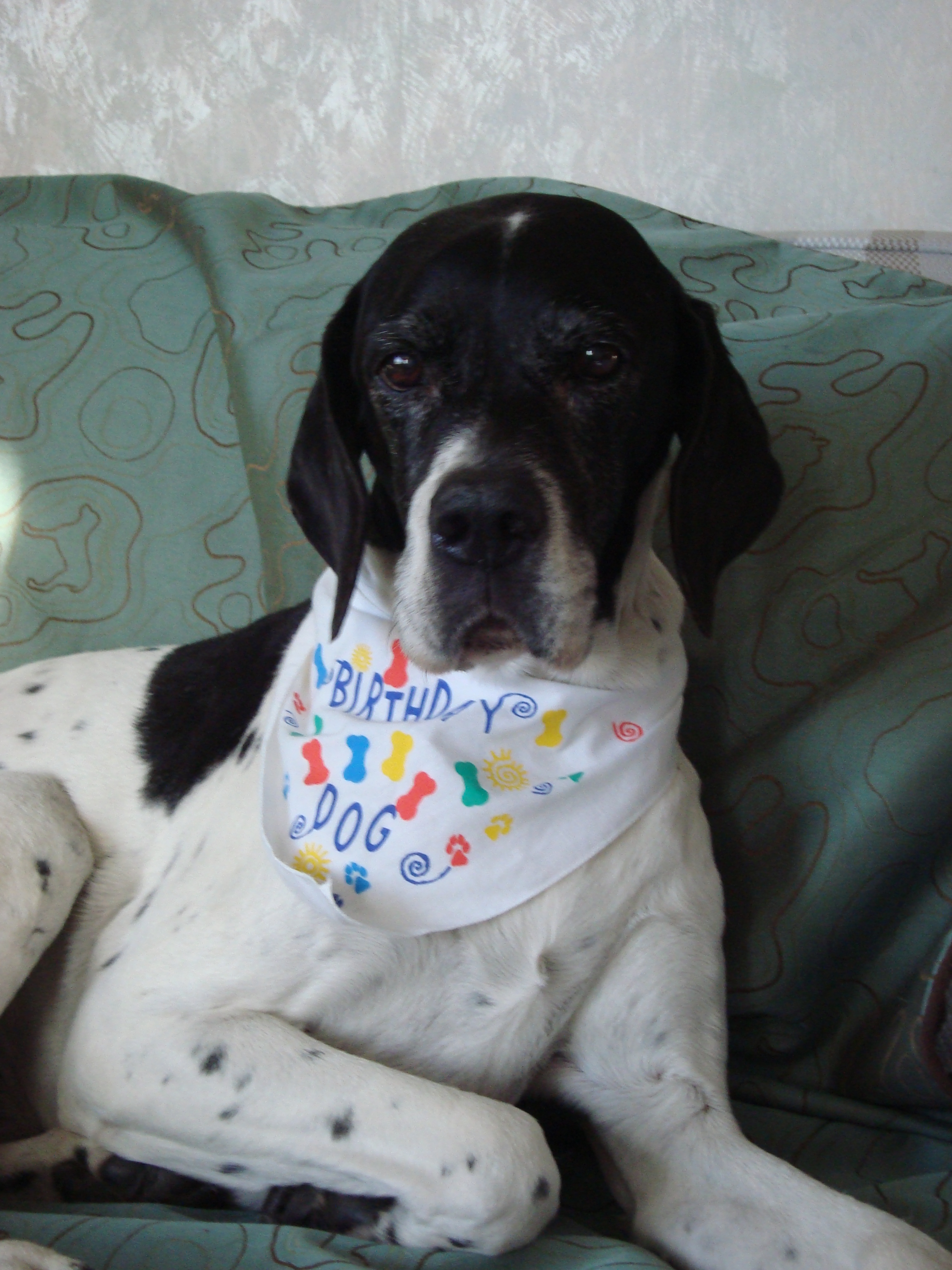
Daisy birthday portrait

This is it.  Daisy’s 13th birthday weekend.   The day started out the sad news that one of Daisy’s extended family, Icy, passed away yesterday at the age of 15 1/2.  It makes me realise that Daisy is definitely a senior dog and every day past 13 is a blessing.

We started this afternoon off with a visit to dog park on what is a warmer than usual winter’s day.  Daisy is proudly wearing her Birthday Dog scarf and is ready for action.

Tonight she had doggy meatloaf (a combination of kibble, beef, carrots, brown rice, beef broth and lots of love) for her dinner.

How do you celebrate your dog’s birthday?

Dog-tired?

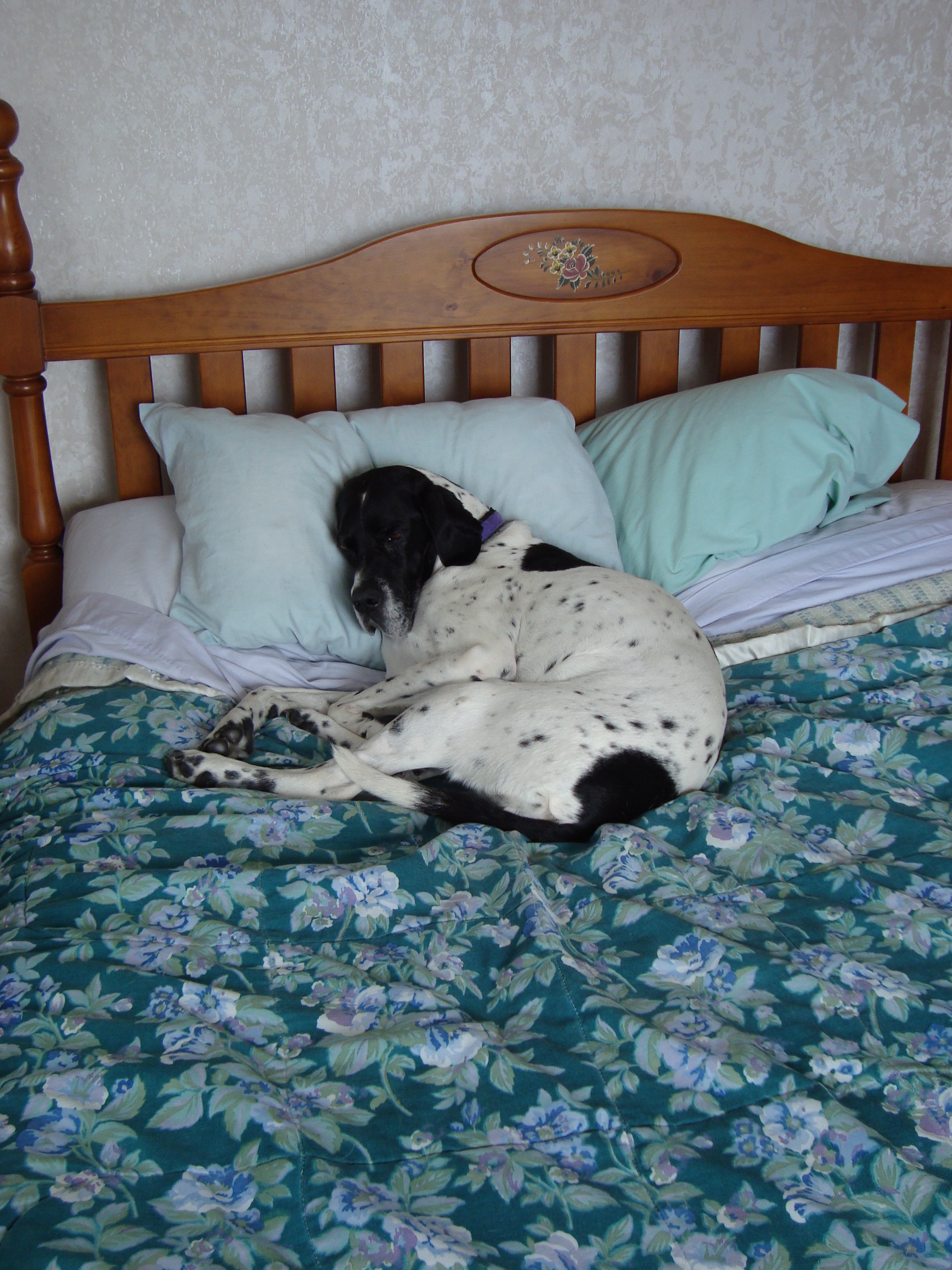
Daisy bed photo

It’s been a long week  (for both of us) and so I started to wonder – where does the term ‘dog-tired’ come from?

Dog-tired is an old English phrase meaning physically tired to the point of exhaustion.   It comes from the tale of Alfred the Great who would send his two sons out with his large group of hunting dogs to chase the dogs down.  The sons (named Athelbrod and Edwin) competed to see who would catch the most dogs and the winner was allowed to sit at Alfred the Great’s right side during dinner.

These chases would leave them ‘dog-tired’.

And since we are both dog-tired tonight…we are heading to bed.

4th of July anxiety

My heart goes out to all of the dogs in the USA who have to suffer through 4th of July celebrations and their associated fireworks.

For many dogs, fireworks are no fun…

4th of July anxietyIf your dog is anxious (or worse) because of fireworks, here are some of the things you can do to help them through:

  • Thundershirts and anxiety wraps.  These shirts work on the basics of acupressure and  they help to stimulate acupressure points that induce a calming effect.
  • DAP  = Dog Appeasing Pheromone A pheromone is a natural chemical that animals, especially mammals, secrete.  D.A.P. is the pheromone that bitches secrete when they have puppies and are lactating.  Within 3-5 days of giving birth, the bitch secretes this pheromone and it has a calming effect on her puppies.  Scientists have isolated the chemical structure of the pheromone and re-created it. I recommend spraying it in your house and around the dog’s bedding in the later afternoon – before sunset.
  • Sedatives – for a dog that is truly overwhelmed by fireworks, prescribed sedatives from your vet are a short-term solution
  • Diversion and management – this consists of things like isolating your dog in your basement or garage (inside the car, with the radio on) to divert their attention.  By removing them to an environment where they can hear the fireworks less readily, you are removing them from the stressor – and hence, the stress response that follows.
  • Remove your dog to a quieter location, perhaps a holiday home in the country or a friend’s place out of town.  If they can’t hear the fireworks, they can’t get stressed.
  • Massage – get your massage therapist to recommend massage strokes and acupressure points that you can stimulate to encourage your dog to relax.

Long term solution:  Please lobby your local communities to ban the use of private fireworks and to limit fireworks to licensed public displays.  That way, people can enjoy fireworks but also limit our dogs’ exposure to this stressful event.

Doggy quote of the month for July

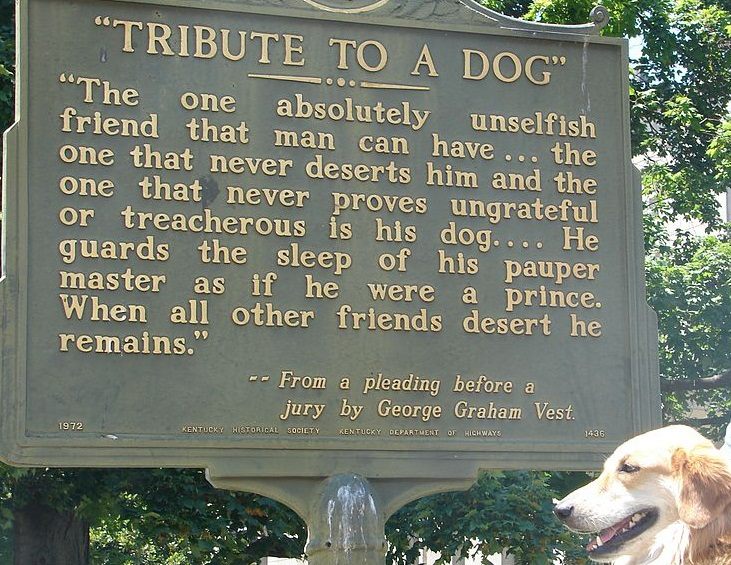
Tribute to a dog

George Graham Vest was a  politician and lawyer in the United States.  This quotation comes from his closing arguments in a 1869 trial where he was seeking damages for his client, whose dog Old Drum had been killed by another man.

Dentistry without anesthesia?

I had a phone call yesterday from an older gentleman who wanted to know if I cleaned dogs’ teeth without anesthetic.  (I do not)  I told him that I do sell dog toothbrushes and toothpaste and he wasn’t aware that these things existed!  And then he said that he would never be able to brush his dog’s teeth because he wouldn’t cooperate.

This made me wonder why he thought a dental procedure without sedating his dog was going to be effective.  But I try to be positive when engaging with new clientele; it seems that he was after a procedure that would cost him less money – not necessarily what was appropriate (or comfortable) for his dog.

I explained that I thought he would be better served by having a proper dental cleaning which is a veterinary procedure and then focusing on prevention.  This would include things like teeth-brushing by getting his dog accustomed to the taste of the paste, then gradually introducing the brush with praise and treats (positive reinforcement) throughout.

He thanked me for my advice.

I’ve done a little homework about this practice, because I have concerns whether an animal could truly be treated thoroughly without sedation.  I’ve just been to the dentist myself for a cleaning this week and it isn’t always a comfortable procedure!  Imagine a dog being restrained for it…

The American Veterinary Dental College refers to Anesthesia-Free Dentistry as Non-Professional Dental Scaling (NPDS) and cautions owners against the procedure for the following reasons:

1. Dental tartar is firmly adhered to the surface of the teeth. Scaling to remove tartar is accomplished using ultrasonic and sonic power scalers, plus hand instruments that must have a sharp working edge to be used effectively. Even slight head movement by the patient could result in injury to the oral tissues of the patient, and the operator may be bitten when the patient reacts.
2. Professional dental scaling includes scaling the surfaces of the teeth both above and below the gingival margin (gum line), followed by dental polishing. The most critical part of a dental scaling procedure is scaling the tooth surfaces that are within the gingival pocket (the subgingival space between the gum and the root), where periodontal disease is active. Because the patient cooperates, dental scaling of human teeth performed by a professional trained in the procedures can be completed successfully without anesthesia. However, access to the subgingival area of every tooth is impossible in an unanesthetized canine or feline patient. Removal of dental tartar on the visible surfaces of the teeth has little effect on a pet’s health, and provides a false sense of accomplishment. The effect is purely cosmetic.

3. Inhalation anesthesia using a cuffed endotracheal tube provides three important advantages… the cooperation of the patient with a procedure it does not understand, elimination of pain resulting from examination and treatment of affected dental tissues during the procedure, and protection of the airway and lungs from accidental aspiration.

4. A complete oral examination, which is an important part of a professional dental scaling procedure, is not possible in an unanesthetized patient. The surfaces of the teeth facing the tongue cannot be examined, and areas of disease and discomfort are likely to be missed.

In my blog on Managing Dental Health, I explain the things I do for Daisy to keep her teeth in good condition.  I recommend professional veterinary care to ensure your dog’s oral health, followed by a preventative regime that minimizes the need for future cleanings and anesthesia.

A new dog massage service?

Thought for Friday…

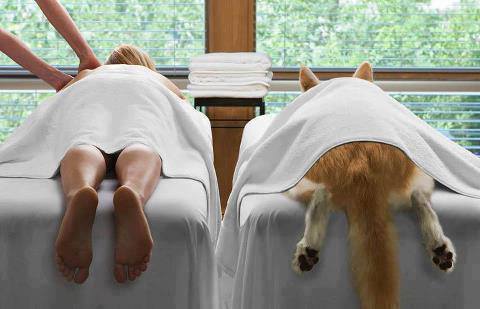
Should I start offering couples massage?

A new way to look at dog massage

Blessed bonds between dogs and humans

This is going to come as no surprise to many of you – but research has confirmed that the owner-dog bond is similar to that of parent-child.Paw in handScientists at the University of Veterinary Medicine in Vienna (known as Vetmeduni Vienna) have studied the phenomenon known as the ‘secure base effect’ between dogs and their owners.

Human infants use their caregivers as a secure base when it comes to interacting with the environment and the researchers wanted to know if dogs found the same security with their owners.

The research team, led by Lisa Horn, examined the dogs’ reactions under three different conditions: “absent owner”, “silent owner” and “encouraging owner”. The dogs could earn a food reward by manipulating interactive dog toys.

The dogs were much less keen on working for food when their caregivers were not there than when they were. Whether an owner additionally encouraged the dog during the task or remained silent, had little influence on the dog’s level of motivation.

In a follow-up experiment, the research team replaced the owner with an unfamiliar person. The scientists observed that dogs hardly interacted with the strangers and were not much more interested in trying to get the food reward than when the stranger was not there. The dogs were much more motivated only when their owner was present. The researchers concluded that the owner’s presence is important for the animal to behave in a confident manner.

Horn said, “One of the things that really surprised us is  that adult dogs behave towards their caregivers like human children do.”

Am I surprised? Not really.  (This blog ain’t named Doggy Mom for nothing!)

You can read the journal article “The Importance of the Secure Base Effect for Domestic Dogs – Evidence from a Manipulative Problem-Solving Task” online here.

Proud to be Daisy's doggy mom

Proud to be Daisy’s mom

Visual identification of breed – one reason why BSL doesn’t work

I’m ‘on the record’ that I don’t support breed specific legislation (BSL) and I consider it one of New Zealand’s great shames that it has adopted such laws  (just one of the issues I raised when I submitted to the review of the Animal Welfare Act).

Breed specific legislation doesn’t work because, in part, these laws rely on visual identification of breeds.  If a dog is identified as one of the banned or dangerous breeds, it can (literally) be ‘all over, Rover.’

There’s scientific research that shows why visual identification is a fatal flaw in BSL.  Some of this research has been conducted by Dr Victoria Lea Voith who is based at the Western University of Health Sciences, College of Veterinary Medicine.

In 2009, Voith and her colleagues published results of a study comparing visual identification of dog breed with DNA results.   They showed that there was a very low accuracy rate when visual identifications were verified with DNA.  The research team concluded:

  • There is little correlation between dog adoption agencies’ identification of probable breed composition with the identification of breeds by DNA analysis
  • Further evaluation of the reliability and validity of visual dog breed identification is warranted
  • Justification of current public and private policies pertaining to breed specific regulations should be reviewed

This year (2013), Voith and her colleagues published another paper entitled “Comparison of Visual and DNA Breed Identification of Dogs and Inter-Observer Reliability”   Since their previous paper was based on the identification of breed by a single person, the research team wanted to see if the success rate of breed identification improved when multiple people were involved.  The research team presented one-minute video clips of the same 20 dogs to over 900 people who were engaged in dog-related professions or services.

For 14 of the dogs, fewer than 50% of the respondents visually identified breeds of dogs that matched DNA identification. For only 7 of the dogs was there agreement among more than 50% of the respondents regarding the most predominant breed of a mixed breed.  In 3 of those 7 cases, the visual identification did not match the DNA analysis.

This time, the research team concluded:

This study reveals large disparities between visual and DNA breed identification as well as differences among peoples’ visual identifications of dogs. These discrepancies raise questions concerning the accuracy of databases which supply demographic data on dog breeds for publications such as public health reports, articles on canine behavior, and the rationale for public and private restrictions pertaining to dog breeds.

Dr Voith explains her research in this YouTube video:

If you still want to know more about this issue, you can visit the Breed Identification page of the National Canine Research Council.  On this page, you can download color posters that further explain the problems associated with visual identification of breeds.