Category Archives: Dogs

Give your dog a hug from us

I love dog people.  I mean – true dog people.  And for that reason, I love doing business with companies that are managed by dog people.

Take D-Fa, for example.  We’re having a very hot summer here in Christchurch and Daisy really needs her cool collar.  Unfortunately, the ice pack insert has lost some of its fluid and is no longer working as well.  I contacted D-Fa and they said they’d send me a replacement pack for only $5.00.

Well, the pack has arrived (Daisy is very happy).  And I’m happy because I got good service from them but also a nice note:

Hope this finds you well.  Sorry you didn’t have these for the screamingly hot day in Christchurch yesterday, but here they are now (hope it doesn’t start to snow as a result).

Thanks and let us know if there is anything else we can do for you.

Cheers and give your dog a hug from us.

I’ve previously endorsed Cool Collars and recommend them to my clients, particularly those that own elderly dogs.  I’m also a fan of their Float Doggy flotation vests.

Thanks D-Fa…from a satisfied dog person (customer)

Beer for dogs?

I seem to be developing a theme of late…it started with my posts about dogs in the world of wine.  Closer to home, those who have joined Canine Catering on Facebook know that we are having a bit of a argument in the local media about  dogs being allowed in outdoor cafes and bars.  Yes – believe it or not – that’s the state of play here when it comes to dog-friendly establishments – so many just haven’t tapped the market for the dog owner.

And now…this post is about beer for dogs.  Dawg Grog.  It’s made in Bend Oregon by a beer lover named Daniel Keeton who is also passionate about his pooch, Lola Jane.  Since Daniel works in a brew house named the Boneyard Brewery, he wanted Lola Jane to be able to share in his work.

Dawg Grog is a brew using the Boneyard Brewery’s malted barley water, glucosamine and organic vegetable broth.  It can be served as a treat or over food.  It’s available in all 50 US states.  A six-pack is $36.
I’m really impressed by the ingredients used in this product and it’s encouraging to see dog owners continuing to find ways of caring for their dogs and involving them in their everyday work.

Here’s a good YouTube video about Daniel’s invention:

Understanding homeopathic remedies

In my last blog post, I explained how I was going to start treating Daisy with homeopathic fragaria and calc renalis to support good dental health.

So now I’d like to remind everyone how homepathic remedies are made.

This diagram outlines the process, but doesn’t fully explain how the remedies are made.  (I was sent this diagram a long time ago and I’m not sure of the original source for it).

Homeopathic dilutions diagram

Step 1:  Make a mother tincture

The first step is to create a mother tincture out of the plant source.   The plant material is cut up and crushed and left to soak in an alcohol and water solution in a dark place for some time.  The period of soaking is long enough to draw the properties of the plant into solution.   When the maker of the remedy understands that the mixture is ready, they will strain off any residual plant material.  This is the mother tincture.

Step 2:  Potentization

One drop of the mother tincture is put into a vial and then nine drops of a solution of alcohol and water and shaken vigorously.  This results in a 1X potency.  With one drop of the 1X potency and nine drops of the diluting solution and another good shake and you have 2X potency.

For the potency of 1C, this process is done 100 times.  (C is the Roman numeral for 100).

In most cases, homeopathics start with a 6C potency.  Other common potencies are 12C, 30C and 200C.  I’m most familiar with the 30C potency which is often the starting point (it’s what I’ll be using).  However, when there’s an acute condition that requires a bit more energy, I use 200C.

It’s also important to understand how your homeopathic remedy is made.  My homeopathic vet prefers that the remedies are made by hand by an experienced homeopathic pharmacist.  Major commercial brands like Weleda, on the other hand, use a manufacturing process for potentizing.

Homeopathy is a really interesting discipline and just one of the complementary therapies available to help your dog attain and maintain optimal health.

Managing dental health

Yesterday, Daisy had a dental cleaning at our vet’s.  She didn’t really have dog breath but her annual examination revealed that her teeth weren’t in the best condition.   She didn’t need any extractions, but she had gingivitis in her rear teeth and, as it turns out, signs of receding gums.

Daisy is a senior girl and we absolutely can’t risk having another procedure where she requires anesthesia.

I have really tried to support her mouth health through 2-3 times per week brushing with dog toothpaste and the feeding of dental chews.  She doesn’t tolerate raw bones well – which routinely either over-stimulate her bowels or cause constipation.  (When she shared a kennel with her father once a week at daycare, it was great because she could chew on his cast-offs without these problems.)

Daisy is also rather picky and so she won’t chew on chew toys like the twisted rope chews (I think she believes it’s beneath her).  If food/taste isn’t involved in the chew, she’s just not interested.

So, what’s next for our regime?

Well, the first thing is making brushing of her teeth a daily event.  I’m motivated to do this because I know the consequences of not doing it and luckily, Daisy is used to it.

But I want to do more and preferably in as natural a way as possible.

I’m also going to try homeopathics.  The two that come recommended are fragaria and calc renalis because these  keep tartar soft and more able to be removed through chewing and brushing.  The standard 30C concentrations are what we are going to start with by adding it to her water bowl.

I’ve also read that boiled oxtail is a good chew.  So I’m off to find oxtail at the supermarket/butcher.  I’m also hopeful of finding other chews that Daisy will tolerate – I’m going to source a deer antler chew shortly.

Remember, that dental health is essential.  I’ve previously written about this subject in Dog breath is no laughing matter.

Please feel free to share what you do to keep your dog’s teeth in top condition either through this blog or my Facebook page.  (Yes, I know about the raw diet – but Daisy hasn’t tolerated even a managed transition to raw feeding in the past.   I’m not against feeding raw, I just know from my practice that not all dogs are suited to the raw diet for a range of reasons).

Pets’ Letters to God – recommended read

Pets' Letters to God

This little gift book is an ‘oldie but a goodie.’  Published in 1999 for Hallmark Cards, you can easily find this small, hardcover book in good condition in used book shops (a favourite haunt of most of my family and some friends) and of course online through used book sellers.

I think this book is particularly appropriate at this time of year, as the glow of the Christmas holiday period fades into the past fairly quickly and we return to work, with all of the stresses of commitments and demands on our time.

This book will give you heart! 

It looks at the major questions that our pets want have to ask God (in English, so we can understand)

Here are just a few of my favourite doggy letters:

Dear God,

Must I bark, or can you hear my thoughts?  – Flo-jo

—————————–

Dear God,

When I get to Heaven, can I play Frisbee with my halo? – Nicky

——————————

Dear God,

Is it true that in purgatory there are 10 million cashmere sofas with porcupines sleeping on them? – Shannon

The story behind Blind Dog Wines

Since my last blog post, I’ve received a lovely email from Kelly at Écluse Wines.  She thought my readers should know the story behind the wine and wanted to make sure everyone could see a picture of their wine label.

Blind dog, Toby, with a bottle of Blind Dog Wine

Blind dog, Toby, with a bottle of Blind Dog Wine

The Saga began in 1996 when our 30 acre vineyard on the Westside of the Paso Robles appellation was planted.  Our property caretaker, Duane Robinson, lived on the property with Bingo, his longtime, faithful companion who, due to glaucoma, was blind.  They were simpatico companions as Bingo would bark to alert Duane, who was very hard of hearing and Duane would be Bingo’s eyes.  In 1998 Bingo had aged.  We searched for a true assist dog for Duane and found Dogs for the Deaf in Oregon.

They are a terrific organization that rescues dogs and trains them as assist dogs.  After passing the application process, Duane was matched with Toby.  She was a great help to Duane as his hearing assist dog and a wonderful addition to the vineyard.  As Toby aged we discovered she was a diabetic.  In the summer of 2008 Toby lost her sight – a true irony to have two blind dogs on the property and especially for Toby, since she was an assist dog.  But as with Bingo, nothing deters Toby from enjoying life amongst the vines!

We were inspired by these two special vineyard dogs and our Blind Dog Midnight Run Cuvee is a tribute to them.  Their happy wagging tails exuded their love of life and a determined spirit showing everyone that they would not be deterred by their handicap.

In their honor, a percentage of our proceeds will be donated to Dogs for the Deaf in Central Point, Oregon.

Vino Fido – the world of wine and dogs

Dogs feature in a range of wines and vineyards across the world.  As we are starting off a new year, I’m toasting the innovative ways wine makers have chosen to feature dogs.

I’ve been interested in wine labels portraying dogs since 2007, when I launched Canine Catering.  The launch was combined with a birthday party for Daisy and I bought some red wine from the local supermarket called ‘Dog Box Red.’  It had a cute picture of a dog on the label and was very appropriate to the occasion.  It was also a good bottle of wine.  Sadly,  I’ve never seen this wine again in the shops.  It was probably one of those short runs of wine we get here that are remainders from export shipments.  In fact, I can’t even find the wine on the internet – so it was probably a one-off.

Anyway, at the party we had a friend who asked for bottle of the wine to add to her ‘dog wine’ collection.  Since then, I’ve managed to buy her several other brands of wine to add to it.  I still get looks when I walk into wine shops and ask ‘Do you have any wines with dogs on the label?’ 

Since New Zealand is known for its wine exports, I’ll start here and then look abroad for wines with dogs.

First, there’s Huntaway Reserve.  This wine launched in 1996 and features varieties from the Marlborough, Gisborne and Hawkes Bay regions.

Huntaway is produced by the Lion Nathan Group

Huntaway is produced by the Lion Nathan Group

Hunters Wines from Marlborough feature a crest that has the image of a dog on the label.  According to the company website, the crest is that of the Hunter clan of Scotland, however some visitors to the vineyard associated the logo with Commodore, a St Bernard and then a Clumber Spaniel named Paddy who were owned by the Hunter family.  Here’s a photo of the Hunter crest:

Hunters logo

Then, there is the Dog Point Vineyard in Marlborough.  There’s no dog on the label but the website tells the story behind the name – that Dog Point is an area named by the pioneer shepherds in the area because of the dogs who became lost or wandered off there:

The name Dog Point dates back to the earliest European settlement of Marlborough and the introduction of sheep to the district.  These were the days where, due to a lack of fences, boundary riders used boundary keeping dogs to protect the local flocks of sheep.

Shepherds’ dogs sometimes became lost or wandered off, eventually breeding to form a marauding pack that attacked the same flocks they were meant to be protecting.

Eventually settlers were forced to cull the dogs and the area was named Dog Point.

These dogs lived on the tussock and scrub covered southern hills of Dog Point Vineyards.  This landscape was, and still is, characterised by the iconic New Zealand native plant the  Ti Kouka ‘cabbage’ tree which is also an established feature of the Dog Point property.

In Central Otago, there is the wine produced by Roger Donaldson called Sleeping Dogs.  Mr Donaldson directed a movie with this title and named his wine after it.  He produces Chardonnay, Pinot Noir, Pinot Gris  and  Sauvignon Blanc under this brand.
The Sleeping Dogs label

The Sleeping Dogs label

__________________________________________________________

Okay, leaving New Zealand, there’s Longue-Dog produced in Languedoc in the South of France.  This is a wine I’ve been able to buy here and add to my friend’s collection.  It features a Dachshund on the label.
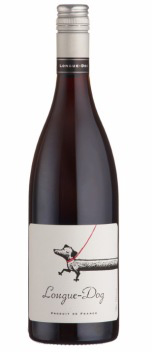
A bottle of Longue-Dog Syrah

A bottle of Longue-Dog Syrah

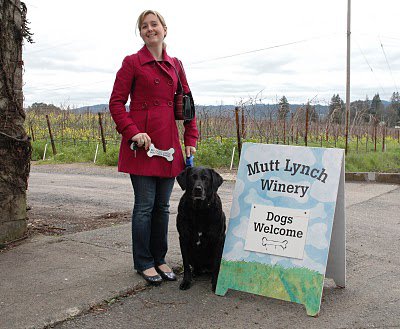
Let’s head to Healdsburg, California to the Mutt Lynch Winery next.  I’d really like to go there because the tasting room is dog-friendly!
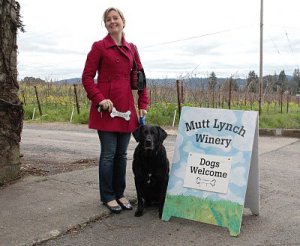
Dogs are welcome at the Mutt Lynch Winery

Dogs are welcome at the Mutt Lynch Winery

The vineyard donates a portion of proceeds from every bottle of wine they sell to local animal shelters and rescue groups.  This vineyard produces a wide range of wines all with a unique doggy label.  Here’s just a few:

Mutt Lynch wines

I can understand why Mutt Lynch’s website says Welcome to a wonderful world where wine and “all things dog” collide into something truly special.

Okay, next on my list is Cru Vin Dogs. This company is based in Colorado and is another socially-responsible business.  It also produces wines with a unique dog on every label.   Each label features an original, limited -edition illustration by artist Jay P. Snellgrove, who is one of the partners in the business  According to the company,  each label honors a real dog that has a special story-a reminder of how empty this world would be without the unconditional love and devotion of “man’s best friend.”

Here’s an example of some of Cru Vin’s wines:
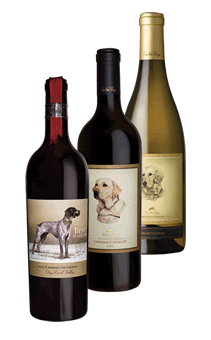
Cru Vin wines

Our next stop is Washington State, the home of Sleeping Dog Wines.  Because the owner always had a dog companion on his life’s journey, he decided to pay tribute to them by featuring a sleeping dog on the label (unfortunately, I couldn’t source a photo of it to show you).

In Paso Robles California is Écluse, a small family owned vineyard.  One part of their range is Blind Dog Wines, where proceeds are donated to Dogs for the Deaf. This vineyard is home to two blind dogs and they have produced this range of wines to commemorate their role in establishing and maintaining the vineyard.  I would have loved to share a photo of their wines, but one wasn’t available.

In the Willamette Valley of Salem, Oregon, Dog Gone Wine is also selling wine that benefits a dog organisation in their area.  (I wish their website would tell us which ones they support!)  But I like the names of their wines.  There’s Poodle Pinot, Basset Hound Blackberry Wine, Pug Bear Wine, and Pomeranian Pomegranate Wine.   All have really adorable labels:
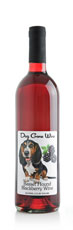
This is Basset Hound Blackberry Wine by Dog Gone Wine.

This is Basset Hound Blackberry Wine by Dog Gone Wine.

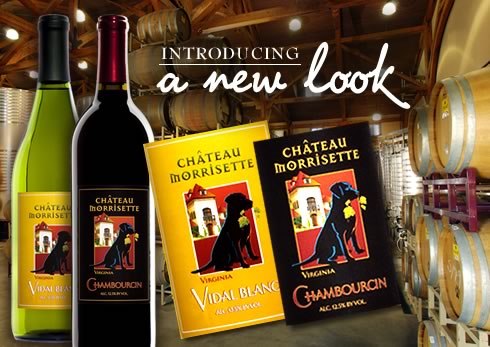
We’re going to the East Coast of the USA next to Floyd, Virginia which is home of Chateau Morrisette. Their wines also feature dogs on the label but I wish their website would tell us the connection!
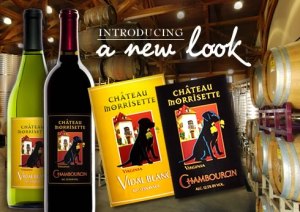
Chateau Morrisette wines

Chateau Morrisette wines

So when you are next in your local wine shop, look for dog labelled wine and let me know if there are others out there to try.  And remember:  wine is for humans not for dogs!

Doggy quote of the month for January

‘Compassion for animals is intimately connected with goodness of character; and it may be confidently asserted that he who is cruel to animals cannot be a good man.’

– Arthur Schopenhauer, philosopher

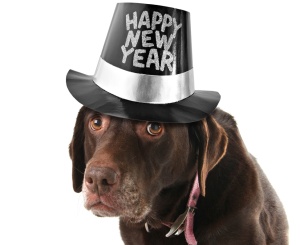
…and Happy New Year to all my readers and customers.

New Year Dog

Petplan USA

I wish I could work at Petplan USA, the pet insurance company based in Philadelphia, Pennsylvania.  Why?  They’re pet-friendly!  That’s 24/7 pet-friendly not once-a-year-we-allow-pets-to-come-to-work-friendly.

This progressive workplace allows pet parents to bring their animals to work, creating an environment that is productive and happy.  A clear majority of workers surveyed by American Pet Products Manufacturers Association felt that having pets in the workplace leads to a more creative environment, lessened absenteeism and improved the relationship between managers and employees.

Workers who are allowed to bring their pets to work are more likely to work longer hours because they aren’t worried about getting home to their animals.  (And let’s face it – America has a culture of working some really long hours – many New Zealand employers are heading in this direction).

Why go pet-friendly?  ‘Encouraging our employees to bring their pets to work helps to foster a uniquely creative work environment,’ says Natasha Ashton, Co-Founder of Petplan. ‘Happy employees are productive employees and this ‘perk’ certainly has given us a distinct advantage in attracting new talent.  So many prospective employees place a real premium on being able to bring their pets to work as it provides more quality time with their beloved companions and reduces care costs such as dog walkers or pet sitters. Most importantly though, we have found that sharing our office with our pets serves to reaffirm our strong commitment to the good health of pets – both our own and our policyholders’ pets.’

Solid policy is needed if a workplace is deciding to go pet-friendly.  Petplan’s Pets at Work pledge includes the following points:

Healthy Paws. All pets must be current on their vaccinations and receive monthly flea and tick treatment.

Manners Please. Pets must be socialized and well-behaved. Aggressive behavior towards people or other pets will not be tolerated and any pet exhibiting such behavior will be asked to leave.

Port a Potty. Dogs must be housebroken and cats should use the litter tray in the mail room. In the event of an accident any damage is the responsibility of the pet parent. If a permanent stain results then said pet parent will be responsible for the cost of hiring professional cleaners to remove the stain. Three accidents and you’re out.

Off Limits. Other people’s food, the front conference room and any communal building areas outside of the Petplan offices are off limits to all four legged workers. If you need to walk your dog please always make sure that they are leashed and that you use the back door to the building and clean up any mess.

Going Solo. Pets are to be supervised at all times. If you know that you are going to be absent from the office for a period longer than 30 minutes then do not bring your pet in on that day.

Chow Hounds. Pets are not to be fed in the offices (that includes pet food and pet treats as well as human food). A water bowl is always readily available in the kitchen.

Puppy Love. Because not all pets get along with each other, as a consideration to fellow team members please send an email out to Internal Workforce the day before bringing your pet(s) into the office, if your pet(s)are selective in who they consider their friend(s).

In the Doghouse. Destructive behavior will not be tolerated. If a pet willfully causes any damage to property within Petplan then they will be asked to leave the office and their owner will be liable for any costs associated with repairs.

Following the above rules will ensure that coming into Petplan every day really is a dog’s life, whether you are a dog, a cat, or even a human.

Cranberries and urinary tract infections

Many holistic veterinarians are now recommending the use of cranberries in the long-term treatment of pets who are susceptible to urinary tract infections, or UTI.

Diabetic dogs, in particular, seem to develop UTI more regularly than the normal dog population.  Spayed females are also more susceptible to infections.

Cranberries

When a dog has a UTI, they often struggle to eliminate urine or, when they do pee, not much comes out.  Sometimes blood is seen in the urine, the urine may smell stronger, or it has a dark colour.  If your dog has a UTI, then seeing your veterinarian for antibiotics is essential.  A urinary tract infection left untreated means your dog is uncomfortable and in pain and if the infection travels to the kidneys, then your dog is in serious trouble.

Cranberries can assist when your dog is being treated for a UTI because cranberries help to acidify the urine which helps to prevent bacteria growth.

But what about prevention?  This is where the cranberries come into their own.  Not only does the cranberry acidify the urine, but studies show that they have the ability to prevent bacteria from sticking to the walls of the bladder and urinary tract and so they minimise the chance of an infection recurring.

Some owners treat their dog with cranberry powder because the juice is tart and unpalatable.  Owners must be careful because lots of cranberry juices are full of sugar (that’s a warning for humans as well as pets).

I’m working on a wheat-free cranberry biscuit recipe now that will feature as the January/February special.  I’ve just perfected my recipe and the latest batch is looking great – with the added benefit of no artificial colours!

Dog peeing

In order to prevent recurring urinary tract infections, it’s also really important to ensure your dog has lots of fresh, clean water to drink and has lots of opportunities to go outside and pee.  For diabetic dogs, care must be given to their daily diet to manage their blood sugars (another reason to watch the sugar content of any cranberry supplements).