Category Archives: research

New Study Dispels Myth That Purebred Dogs Are More Prone To Health Problems

It’s a common belief that purebred dogs are more prone to disease than mixed-breed dogs, but a new study led by researchers at the Texas A&M School of Veterinary Medicine and Biomedical Sciences (VMBS) has busted this myth. 

A study by researchers at Texas A&M University and the Dog Aging Project has found that purebred and mixed-breed dogs are mostly equal when it comes to overall frequency of health condition diagnoses. Jacob Svetz/Texas A&M University Division of Marketing and Communications

The study, published in the journal Frontiers In Veterinary Science, found that while certain dog breeds are prone to specific diseases, purebred and mixed-breed dogs are mostly equal when it comes to overall frequency of health condition diagnoses.

“There are several well-known diseases that frequently occur in specific dog breeds,” said Dr. Kate Creevy, chief veterinary officer of the Dog Aging Project and a professor in the VMBS’ Department of Small Animal Clinical Sciences. “This has helped perpetuate the misconception that all purebred dogs are more prone to disease, but that is not the case.”

The study — which surveyed the owners of more than 27,000 companion dogs — also found that some of the most common diagnoses, like ear infections or osteoarthritis, occur in both purebreds and mixed-breed dogs. 

Breaking Down The Data

According to the study, 25 breeds make up about 60% of the purebred dog population within the Dog Aging Project. In order of popularity, those breeds are: 

  • Labrador retriever
  • Golden retriever
  • German shepherd
  • Poodle
  • Australian shepherd
  • Dachshund
  • Border collie
  • Chihuahua
  • Beagle
  • Pembroke Welsh corgi
  • Boxer
  • Shi Tzu
  • Miniature schnauzer
  • Pug
  • Havanese
  • Cavalier King Charles spaniel
  • Yorkshire terrier
  • Great Dane
  • Greyhound
  • Boston terrier
  • Siberian husky
  • Shetland sheepdog
  • English springer spaniel
  • Australian cattle dog
  • Doberman pinscher

Within these 25 breeds, a total of 53 unique medical conditions make up the top owner-reported medical conditions. 

“The medical conditions reported by owners of purebred dogs varied considerably,” Creevy said. “However, some conditions appeared frequently in the top 10 reported health conditions by breed.”

Across the 25 most popular breeds, those 10 conditions were:

  • Dental calculus (hardened plaque)
  • Dog bites
  • Extracted teeth
  • Giardia (a parasite)
  • Osteoarthritis
  • Seasonal allergies
  • Ear infection
  • Heart murmur
  • Fractured teeth
  • Cataracts

For mixed-breed dogs, the most common reported conditions were highly similar, with cataracts and heart murmur being replaced by torn/broken toenail and chocolate toxicity.

Some conditions, like dental calculus and osteoarthritis, appeared with roughly the same frequency in both purebred and mixed-breed dogs. Other conditions were more common in one than the other; extracted teeth and dog bites were more common in purebreds, versus ear infections in mixed-breed dogs.

“Out of the 53 medical conditions that owners reported, 26 did not differ significantly between mixed-breed and purebred dogs,” Creevy said.

Implications For Dog Owners

Ultimately, one of the most important findings from the study is that dog breed is only one aspect of pet health to consider when creating a pet’s care plan or researching what kind of dog to adopt.

“People should consider many factors when choosing a dog, including environment, lifestyle, social interactions and physical activity that will be available to the dog,” Creevy said. “Planning for both preventive veterinary care and medical care as the dog ages is also prudent. Dog owners should also talk with their primary care veterinarians about the kinds of medical problems to which their new dog might be particularly prone based on breed, size, sex, etc.”

As the study also showed, some of the most common reasons owners take their dogs to the vet have little or nothing to do with breed.

“Dental disease, allergies and osteoarthritis are among the most common conditions for all dogs,” Creevy said. “Owners should work with their primary care veterinarians on a plan to manage dental health. Regular exercise and maintaining lean body weight may help delay, prevent or lessen the impact of osteoarthritis.”

Expanding Dog Health Understanding

Though the study is already one of the largest cross-sectional studies of canine health, researchers at the Dog Aging Project are far from done examining its findings.

“We were surprised by the number of owners who reported that their dogs had experienced a bite from another dog,” Creevy said. “More investigation is needed to determine what this means and what particular factors might put an individual dog at risk.”

The DAP is a collaborative, community scientist-driven data-gathering research project that enrolls companion dogs from all backgrounds to study the effects of aging and gain a better understanding of what contributes to a long and healthy life for a dog. 

The DAP continues to accept dogs of all breeds into the project. To date, more than 50,000 dogs have been enrolled.

Many of their research projects have led to translational studies that inform not only dog health, but also human health. To enroll your dog, or learn more, visit dogagingproject.org.
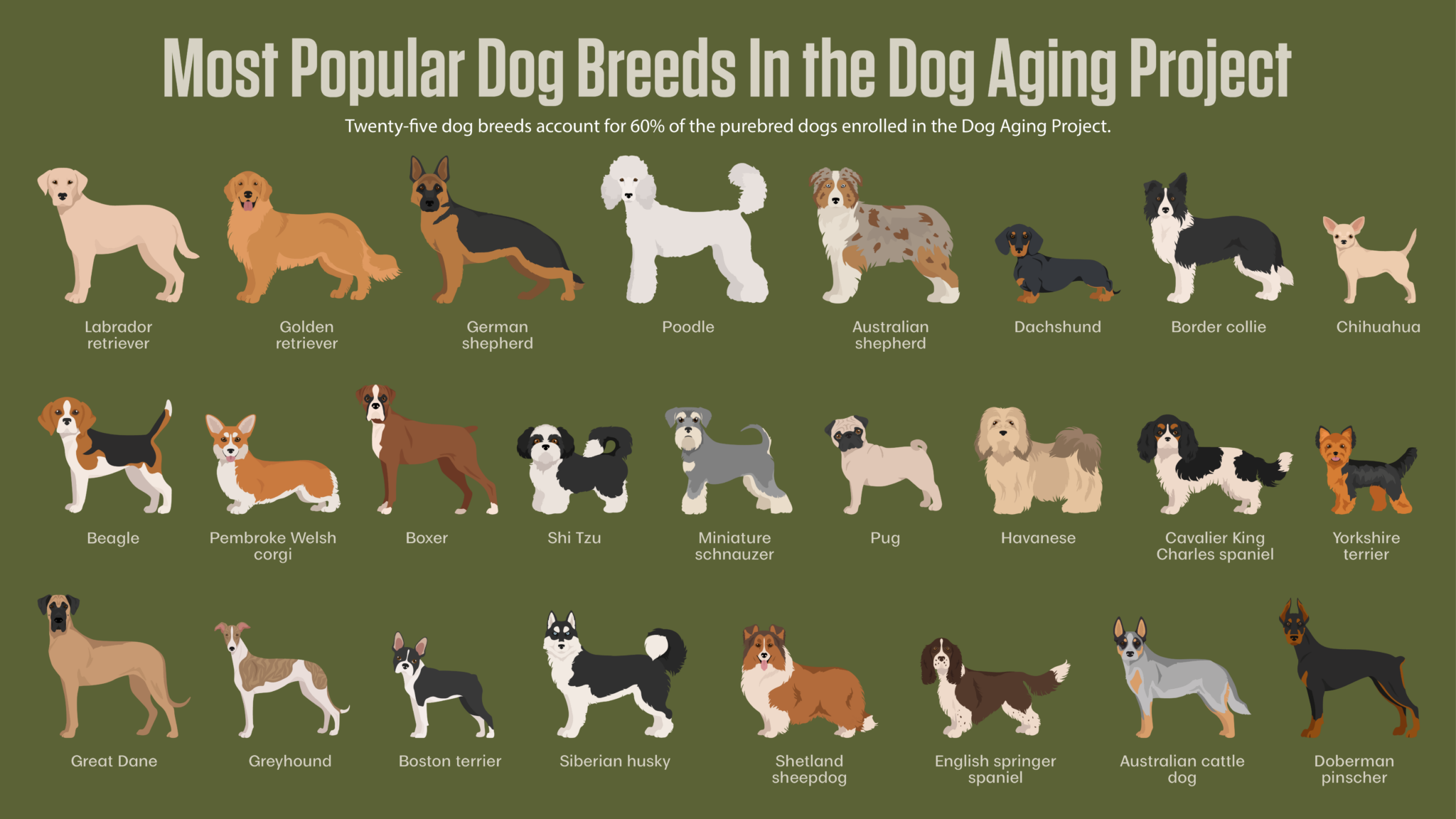
Twenty-five dog breeds account for 60% of the purebred dogs enrolled in the Dog Aging Project. Aubree Herrold/School of Veterinary Medicine and Biomedical Sciences

Source: Texas A&M University

New research highlights aging dog health care needs

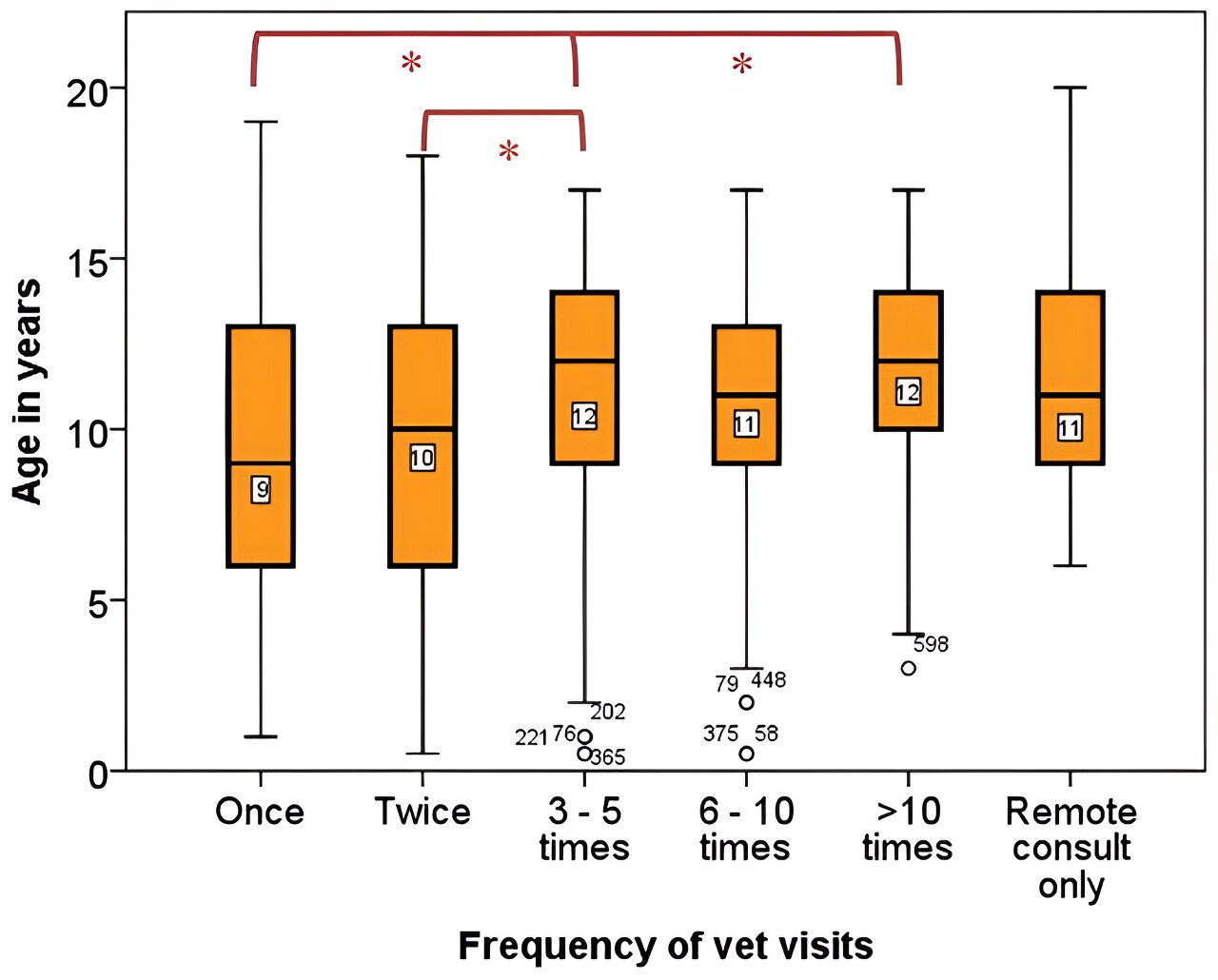
Box plot displaying the frequency of times owners brought their dog physically to the veterinary surgeon in the past 12 months and age in years of the dogs. Number of dogs = 503. The frequency of vet visits was categorized into five groups: once, twice, 3–5 times, 6–10 times, >10 times, and remote consult only. The median age in years of the dogs in each frequency category was compared using a Kruskal Wallis test, df = 5, N = 503, p = 0.001. Categories that differed significantly are denoted with *p < 0.050; significance values have been adjusted by the Bonferroni correction for multiple tests. Credit: Frontiers in Veterinary Science (2024). DOI: 10.3389/fvets.2024.1358480

New research from the University of Liverpool shows that dog owners think many important changes in their older pets are “just old age,” when actually they are signs of serious health problems.

The researchers surveyed more than 600 dog owners and more than 300 veterinary professionals across the UK. Dog owners were asked if they had noticed any of a list of 48 different clinical signs in their older dogs and how urgently they thought they should seek veterinary advice when they noticed them.

The research team identified that dog owners regularly attributed potentially serious changes in older dogs to normal aging, and thus may not take them to see a vet.

How often should an aging dog see a vet?

The majority of owners believed a “healthy” senior dog (seven years plus) should go to the vet once a year, whereas veterinary professionals most commonly advised every six months.

A minority (14%) of owners would take the dog only “if they got sick,” but almost all (98%) of veterinary professionals would not advise this strategy. Sixteen percent of owners of dogs of all ages had not had any contact with their veterinary practice in the previous year.

To vaccinate or not to vaccinate?

Health checks often occur during vaccination appointments, and 92% of veterinary professionals believed that senior dogs should receive yearly vaccinations; however, 28% of owners’ dogs of all ages had not been vaccinated in the previous year. In fact, a third of these owners did not believe that older dogs need vaccinations.

Urgency to seek care

Dog owners who stated that their dog had experienced a clinical sign typically reported less urgency to seek veterinary care than owners whose dog had never experienced it and responded to a hypothetical question asking what they would do if they noticed this sign in their dog.

The majority of veterinary professionals (85–100%) thought that it was moderately to extremely important for owners of senior dogs to seek veterinary advice for all 15 of the most common clinical signs. The three most common clinical signs reported by owners in their older dogs were slowing down on walks (57%), dental tartar (53%), and being stiff on rising (50%).

However, fewer than 70% of owners would seek veterinary care for their dog within a week for dental issues (bad breath and tartar) or musculoskeletal issues (problems with stairs/jumping, slowing down on walks, and stiff on rising).

Dog owners attribute clinical signs to ‘just old age’

Veterinary professionals reported that they believed owners commonly associated sleeping all the time, slowing down on walks, being stiff on rising, and the presence of dental tartar with old age rather than potential illness. Owners’ opinions were broadly in line with veterinary professionals’ perceptions of them. For example, 78% of owners believed slowing down on walks was a normal part of the aging process and would not take their dog to the vet for and, and 77% for sleeping all the time.

Study co-author Professor Carri Westgarth said, “Perceptions of dog owners and veterinary professionals can influence the preventive health care and treatment provided to dogs, especially at the senior life stage, when chronic diseases become more common. The differences in opinion highlighted by our survey suggest that new educational initiatives and more effective communication are required.”

Findings from this study have been used to support the design of a new resource that can facilitate communication between owners and veterinary professionals. A checklist of common missed clinical signs for use pre-veterinary appointments would be supported by both owners and veterinary professionals surveyed in the current study.

The BSAVA PetSavers Aging Canine Toolkit (ACT) leaflet and poster are currently in use in first-opinion practice, and feedback is being collected to measure the toolkit’s impact on owners, veterinary professionals, and senior dogs.

Dr. Sarah Williams from BSAVA PetSavers said, “Screening tools and toolkits have the potential to increase owner understanding and engagement with veterinary care, and through repeated application over time and implementation of necessary interventions, improve patient welfare and health span.”

The work is published in the journal Frontiers in Veterinary Science.

Source: Phys.org

Interactions with dogs can increase brainwaves associated with stress relief and heightened concentration

Spending quality time with dogs reduces stress and increases the power of brain waves associated with relaxation and concentration, according to a study published on March 13, 2024 in the open-access journal PLOS ONE by Onyoo Yoo from Konkuk University, South Korea, and colleagues.

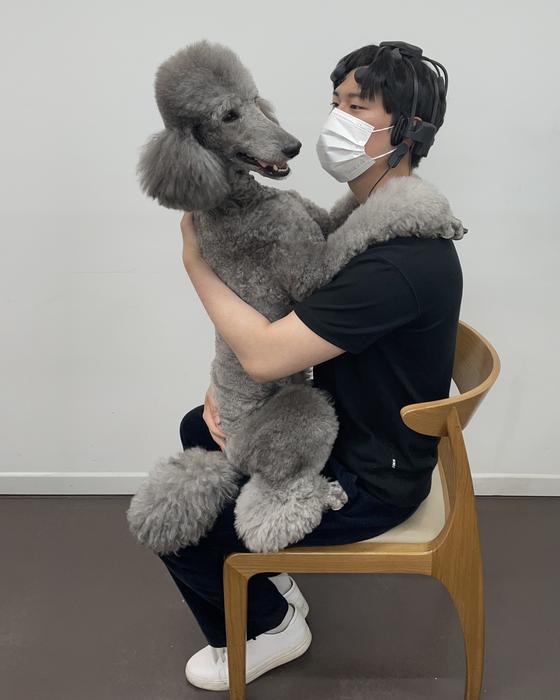
An animal-assisted activity (hug) performed by a participant. Photo credit
Yoo et al., 2024, PLOS ONE, CC-BY 4.0

Animal-assisted interventions, like canine therapy, are widely used in hospitals, schools, and beyond to help reduce anxiety, relieve stress, and foster feelings of trust. Studies of the potential benefits of animal interactions often take a holistic approach, comparing people’s mood or hormone levels before and after spending time with a service animal. But this approach doesn’t differentiate between types of interactions, like grooming, feeding, or playing with an animal, limiting our understanding of how each specific interaction impacts a person’s health and well-being.

To better understand how such animal-related activities affect mood, Yoo and colleagues recruited a small sample of 30 adult participants to each perform eight different activities with a well-trained dog, such as playing with a hand-held toy, giving her treats, and taking pictures with her. Participants wore electroencephalography (EEG) electrodes to record electrical activity from the brain while they interacted with the dog, and they recorded their subjective emotional state immediately following each activity.

The relative strength of alpha-band oscillations in the brain increased while participants played with and walked the dog, reflecting a state of relaxed wakefulness. When grooming, gently massaging, or playing with the dog, relative beta-band oscillation strength increased, a boost typically linked to heightened concentration. Participants also reported feeling significantly less fatigued, depressed, and stressed after all dog-related activities.

While not all participants had pets of their own, their fondness for animals likely motivated their willingness to participate in the experiment, potentially biasing the results. Nonetheless, the authors state that the unique relationships between specific activities and their physiological effects could serve as a reference for programming targeted animal-assisted interventions in the future.

The authors add: “This study provides valuable information for elucidating the therapeutic effects and underlying mechanisms of animal-assisted interventions.”

Source: Eurekalert

Probiotics help overweight dogs shed weight

Scientists have made significant strides in addressing a common yet concerning issue: overweight pets. This research unveils the potential of specific probiotics to combat obesity in dogs.

Leading the charge is Dr. Younghoon Kim, a distinguished professor at Seoul National University’s Department of Agricultural Biotechnology.

Understanding pet obesity

Dr. Kim’s team, with a focus on metabolic diseases in companion animals, embarked on a mission to identify probiotics that could offer a safe, long-term treatment for dog obesity.

“The initial challenge involved selecting specific metabolic diseases for examination, leading us to focus on the prevalent issue of ‘obesity in pets,’” Dr. Kim explained.

The global trend of pet obesity is alarming, with about 50% of the pet population across various age groups being affected, particularly older pets.

Many of these pets are already receiving treatments, including dietary interventions. Dr. Kim and his team set out with a clear objective: to find probiotics that could effectively reduce body fat percentage in pets.

Tackling dog obesity with probiotics

Dr. Kim’s vision goes beyond just addressing specific health issues. He advocates for a broader recognition of the therapeutic potential of probiotics across a spectrum of diseases affecting companion animals.

“By promoting this awareness, my aspiration is to catalyze increased attention, funding and collaborative efforts in the scientific community to explore the expansive landscape of probiotic applications in pet health,” Dr. Kim stated.

To pinpoint the right probiotic candidates, the research delved into the variations in intestinal microbiota between younger and older dogs.

This investigation highlighted a decline in certain beneficial bacteria, such as lactic acid bacteria, Bifidobacterium species, and Enterococcus species in older dogs.

These findings guided the researchers in selecting specific strains for their experiment.

Two probiotics helped dogs lose weight

The study then progressed to its experimental phase, where two selected strains, Enterococcus faecium IDCC 2102 and Bifidobacterium lactis IDCC 4301, were administered to a group of beagles on a high-fat diet.

The results were striking. “The strains we carefully selected demonstrated remarkable success in reducing the body fat percentage in dogs,” said Kim.

These probiotics effectively reduced body weight, cut down subcutaneous fat, and boosted energy metabolism even on a high-calorie diet, shifting the body’s focus from fat storage to fat consumption.

“What set these strains apart was their ability to not only limit dietary intake or enhance excretion to reduce body weight but, more importantly, activate energy metabolism. Even when exposed to a high-calorie diet, we observed a decrease in body weight, alleviation of subcutaneous fat accumulation and an increase in energy metabolism. This confirmed a shift in the body’s metabolic orientation toward fat consumption, rather than fat accumulation,” Kim explained.

Significantly, this study also highlighted the strains’ impact on systemic inflammation and hormone metabolism.

Long-term benefits of probiotics for dogs

The dogs that received these probiotics showed reduced inflammation and improved metabolic activities, like insulin production.

The strains also increased beneficial commensal bacteria, enhancing the body’s defense mechanisms and immunity.

Dr. Kim emphasized the lasting impact of these changes, indicating sustained benefits for pets incorporating these probiotics into their health regimen. This enduring effect is pivotal in managing long-term health in pets.

With the rise in pet ownership, there’s a growing interest in health functional foods for pets, especially probiotics.

However, research in this area, particularly tailored probiotics for companion animals, lags far behind human studies.

“While types of probiotics suitable for human consumption or commercial livestock have been identified and established, the absence of standardized guidelines for companion animals is a glaring gap,” said Dr. Kim.

“Our study aimed to address this deficiency by striving to broaden the spectrum of probiotics applicable to pets across various environments.”

Promising future of pet probiotics

In summary, this important study led by Dr. Younghoon Kim marks a significant milestone in the fight against pet obesity, unveiling the remarkable potential of specific probiotics to combat this widespread issue.

By meticulously selecting and testing strains, the research team demonstrated their effectiveness in reducing body fat and enhancing metabolism in dogs, while highlighting the long-term health benefits these probiotics offer.

This research paves the way for more tailored health solutions in pet care, encouraging further exploration and development in this vital field.

It stands as a beacon of hope for pet owners worldwide, offering a new, sustainable approach to managing the health and well-being of their beloved companions.

The full study was published in the journal Microbiology Spectrum.

More about probiotics

In the realm of health and wellness, probiotics have emerged as unsung heroes, revolutionizing our understanding of gut health and beyond.

As discussed above, these live microorganisms, often referred to as “good” or “friendly” bacteria, play a critical role in maintaining a balanced intestinal microbiome, which is crucial for overall health.

Balancing the gut

Probiotics primarily work by enhancing the gut flora, which is a complex community of microorganisms living in our digestive tracts.

This boost in beneficial bacteria aids in various digestive processes and fortifies the body’s defense mechanisms against harmful pathogens.

Regular consumption of probiotics has been linked to improved digestion, enhanced immune function, and even a reduction in the risk of certain chronic diseases.

Treating digestive disorders

One of the most significant benefits of probiotics is their ability to treat and prevent gastrointestinal issues, such as irritable bowel syndrome (IBS), inflammatory bowel disease (IBD), and antibiotic-related diarrhea.

By restoring the balance of good bacteria in the gut, which can be disrupted by factors like antibiotics or poor diet, probiotics alleviate these digestive disorders.

Furthermore, emerging research suggests that probiotics may have a broader impact on our health than previously thought.

Studies indicate potential benefits in areas such as mental health, where probiotics are believed to play a role in mood regulation and reducing symptoms of depression and anxiety.

This connection, often referred to as the gut-brain axis, opens new avenues for mental health treatments.

Benefits of probiotics on humans and dogs

Probiotics also show promise in enhancing heart health by lowering LDL (bad) cholesterol levels and blood pressure.

This cardioprotective effect is another feather in the cap of these microscopic powerhouses.

Incorporating probiotics into one’s diet is relatively straightforward. They are found naturally in fermented foods such as yogurt, sauerkraut, kefir, and kimchi.

For those who prefer supplements, a wide range of probiotic capsules and powders are available on the market.

In summary, probiotics are a key component of a holistic approach to health, both for humans and dogs alike. Their wide-ranging benefits, from improving gut health to potentially boosting mental well-being, make them a valuable ally in our quest for a healthier life.

As research continues to uncover their myriad benefits, probiotics are set to play an even more prominent role in our daily health regimen.

Source: Earth.com

Some mysteries remain about why dogs wag their tails

When it comes to tail wagging among dogs, some questions still hound researchers.

We know that domesticated dogs (Canis familiaris) use their tails to communicate — with other dogs as well as humans — and even what various types of wags mean, researchers note in a new review of the scientific literature. But we don’t know why dogs seem to wag more than other canines or even how much of it is under their control, ethologist Silvia Leonetti and colleagues report January 17 in Biology Letters.

“Among all possible animal behavior that humans experience in everyday life, domestic dog tail wagging is one of the most common,” says Leonetti, who is now at the University of Turin in Italy. “But a lot of dog behavior remains a scientific enigma.”

So Leonetti and her colleagues pored through previous studies to figure out what elements of tail wagging are understood and which remain mysterious. They also hypothesized about the behavior’s origins: Perhaps tail wagging placates some human need for rhythm, the researchers suggest, or maybe the behavior is a genetic tagalong, a trait tied to others that humans bred into domesticated dogs.

“People think wagging tail equals happy dog. But it’s actually a lot more complicated than that,” says Emily Bray, an expert in canine cognition at the University of Arizona in Tucson who was not involved with the work. Understanding why dogs wag their tails is important partly from an animal welfare perspective, she says, as it could help dog owners read their pups’ cues better.

One main thing that researchers know about tail wagging is that it’s used predominantly for communication instead of locomotion, like a whale, or swatting away bugs, like a horse. Wagging also means different things depending on how the tail is wagged, such as its height or side-to-side movement.

For example, when the tail wags more to the right, the researchers say, it typically means the dog is interested in a stimulus or wants to approach something. But when it wags more to the left, it signals uncertainty or wanting to withdraw. When wagged low and near the legs, it’s a sign of submission or insecurity. Dogs can interpret and react differently to these varied wags (SN: 11/1/13).

But for such a ubiquitous behavior, questions abound. One gap is how much tail wagging is under dogs’ conscious control, the team reports. Several studies have also observed that dogs wag their tails more than other canines, particularly compared with their closest relative, the wolf (C. lupus) — but scientists don’t yet know why.

One idea is the domesticated rhythmic wagging hypothesis, Leonetti and colleagues suggest. Scientists know that humans’ brains respond positively to rhythm, and because tail wagging is a rhythmic behavior, the authors suggest it could be that humans consciously or unconsciously preferred dogs that wag more.

Or the domestication syndrome hypothesis could be at work. It’s an existing theory that unintended, genetically linked traits can pop up when specific traits are bred for through domestication. Perhaps, the researchers propose, the canine characteristics that humans found desirable to breed for — such as temperament — might be genetically linked to tail wagging. 

Evolutionary biologist Tom Reimchen isn’t so sure about either hypothesis. He’s skeptical that domestic dogs do wag their tails more than other canines. More research is needed to compare tail wagging between nondomestic canine species and the epigenetic influences behind  canids’ tail wagging, says Reimchen, of the University of Victoria in British Columbia.

Leonetti, who did the work while at the Max Planck Institute for Psycholinguistics in Nijmegen, Netherlands, says a multidisciplinary approach would be helpful in future tail wagging research, for example combining neurology, cognition and physiology. Because the domestication process was also an evolutionary process — one humans were involved in — studying dog behavior and their wags could reveal something about us too, she says (SN: 9/7/22). 

It “can shed light not only on our understanding of dog behavior, but also we’ll then understand something about human psychology.”

Source: Science News

Knowing what dogs like to watch could help veterinarians assess their vision

Ever wonder what kind of TV shows your dog might choose if they could work the remote control? New research from the University of Wisconsin–Madison’s School of Veterinary Medicine provides some answers, but the study was more interested in solving a longstanding problem in veterinary medicine than turning canine companions into couch potatoes.

According to Freya Mowat, veterinary ophthalmologist and professor in the School of Veterinary Medicine’s department of surgical sciences, researchers wanted to determine factors, including age and vision, that influence a dog’s interest in interacting with video content. Ultimately, the goal of the study, which launched two years ago (in 2022), was to support development of more sensitive ways to assess canine vision — something that has been sorely lacking in veterinary medicine.

“The method we currently use to assess vision in dogs is a very low bar. In humans, it would be equivalent to saying yes or no if a person was blind,” says Mowat. “We need more sensitive ways to assess vision in dogs, using a dog eye chart equivalent. We speculate that videos have the potential for sustaining a dog’s attention long enough to assess visual function, but we didn’t know what type of content is most engaging and appealing to dogs.”

Published recently in the journal Applied Animal Behaviour Sciencethe study found that dogs are most engaged when watching videos that feature other animals. Content featuring other dogs was the most popular. But if a National Geographic documentary about canine evolution seems too highbrow for your four-legged friend, Scooby Doo might be a perfectly acceptable option as well.

To better understand the type of content dogs might be most attracted to on screen, Mowat created a web-based questionnaire for dog owners around the globe to report the TV-watching habits of their canine companions.

Participants responded to questions about the types of screens in their homes, how their dogs interacted with screens, the kinds of content their dogs interacted with the most, as well as information about their dog’s age, sex, breed and where they live. They also provided descriptions of their dogs’ behavior when watching videos. Most commonly, dog owners described their pets’ behavior as active — including running, jumping, tracking action on screen and vocalizing — compared with passive behaviors like lying down or sitting. Dog owners also had the option to show their dog(s) four short videos featuring subjects of possible interest, including a panther, a dog, a bird and traffic moving along a road. They were then asked to rate their dog’s interest in each video and how closely the dog tracked the moving objects on the screen.

Mowat received 1,600 responses from dog owners across the world, including from the United States, Canada, the United Kingdom, the European Union and Australasia. Of those respondents, 1,246 ultimately completed the study. The following are some of the most interesting highlights:

  • Age and vision were related to how much a dog interacted with a screen.
  • Sporting and herding dog breeds appear to watch all content more than other breeds.
  • Video content featuring animals was the most popular, with other dogs being by far the most engaging subjects to watch.
  • Humans do not appear to be very appealing for dogs to watch, ranking ninth out of 17 predetermined categories.
  • Cartoons were engaging for more than 10% of dogs.
  • Movement on screens was a strong motivator for screen attention.

Mowat says she plans to build on the results of this study. Future research will focus on the development and optimization of video-based methods that can assess changes in visual attention as dogs age as well as answer questions that could help our four-legged friends age as gracefully as possible.

“We know that poor vision negatively impacts quality of life in older people, but the effect of aging and vision changes in dogs is largely unknown because we can’t accurately assess it,” she says. “Like people, dogs are living longer, and we want to make sure we support a healthier life for them as well.”

Another goal for Mowat is to compare how a dogs’ vision ages compared with the human or humans they share a home with.

“Dogs have a much shorter lifespan than their owner, of course, and if there are emerging environmental or lifestyle factors that influence visual aging, it might well show up in our dogs decades before it shows up in us,” she explains. “Our dogs could be our sentinels — the canine in the proverbial coal mine.”

This study was supported in part by an NIH career development grant to Mowat (K08EY028628), a Companion Animal Fund Grant from the UW–Madison School of Veterinary Medicine, a grant from Research to Prevent Blindness, Inc. to the UW–Madison Department of Ophthalmology and Visual Sciences and a core grant for Vision Research from the NIH to UW–Madison (P30 EY016665).

Source: Scienceblog.com

Cat and dog owners experience slower cognitive decline

Cat and dog owners tend to experience slower cognitive decline than those who don’t have pets, according to the latest research released by the University of Maryland.

The study, published in the journal Scientific Reports in September, examined the data of 637 participants aged between 51 and 101 years old.

Of the participants, 185 were pet owners, with 11% owning cats and 13% owning dogs.

The research showed that over the span of a decade, those who had the pets experienced “less decline in cognitive function as they aged, after considering both their pre-existing health and age.”

This included memory function, language function and psychomotor speed.

“Cat owners experienced less deterioration in memory and language function. Dog walking also was associated with slower deterioration in cognitive function,” the authors of the study added.

Owning dogs can also lead to an increase in physical activity through their need to be taken out for daily exercise, which is known to be beneficial for health, they added.

Previous studies have shown that interacting with pets can also provide other benefits, including lowering the risk of heart disease and regulating blood pressure.

The researched said they hoped that policy makers would use their findings to “support inclusion of pets in care plans, designing housing and neighbourhoods for seniors that are friendly for dog walking, and developing programs to support pet ownership.”

Source: ITV News

A Life-Extension Drug for Big Dogs Is Getting Closer to Reality

The FDA has yet to approve any drugs for life extension. But biotech company Loyal is now a step closer to bringing one to market—for dogs.

Photograph: MartinFredy/Getty Images

There’s a well-established inverse relationship between a dog’s size and its expected lifespan. Bernese mountain dogs and Great Danes live just six to eight years, for example, while corgis can live up to 15 years and Chihuahuas up to two decades.

San Francisco biotech company Loyal wants to close that gap, and is developing an experimental drug to extend the lifespan and improve the quality of life of large and giant dog breeds. Today, the company announced that based on early data, the US Food and Drug Administration has determined that Loyal’s drug has a “reasonable expectation of effectiveness.” The company hasn’t yet shown that its drug actually extends lifespan, but the FDA decision signals the agency’s confidence in Loyal’s approach, and the drug will soon be tested in a bigger trial.

“Big dog owners want more time with their dogs,” says Loyal CEO Celine Halioua. “It’s really heartbreaking to people that they don’t live that long.” She argues that the wide variety in dog sizes isn’t natural, but a result of selective breeding by humans to create dogs with certain physical traits or that can perform specific tasks. On average, mixed-breed dogs live longer than their purebred counterparts.

So far, the FDA has not approved any drugs to expand the lifespan of animals—or humans, for that matter. “This is completely novel,” says Linda Rhodes, former CEO of pet biotech company Aratana Therapeutics and a consultant for Loyal. It’s difficult to study life-extension drugs in people, she says, because humans live relatively longer lives than other species. But starting with dogs—and the breeds with the shortest lives—could yield important clues. “The implication for other species, including humans, is pretty profound,” she says.

Loyal’s experimental drug is an injection designed to be given every three to six months by a veterinarian. The drug is meant to lower levels of a hormone called IGF-1, which is involved in growth and metabolism and has been linked to dog size. Large dogs have a genetic variant that leads to high levels of IGF-1 and small dogs have a different variant that results in lower levels.

Inhibiting this hormone has been shown to increase lifespan in worms, flies, and rodents. In humans, both very high and very low levels increase mortality risk, while a midrange is associated with the lowest mortality.

In early studies, Loyal dosed 130 research dogs with its investigational drug. Halioua says the company has shown that it can reduce IGF-1 levels in large dogs to those seen in medium-size dogs. Two dogs had loose stools for a day or two after receiving the injection, but beyond that, Halioua says, no major side effects have been observed.

To determine the drug’s effect on lifespan, the company is planning a bigger study that will start in 2024 or 2025, and enroll about 1,000 large and giant breed companion dogs that are at least 7 years old. Each will receive either the experimental drug or a placebo.

Halioua says the company aims to have its drug on the market by 2026. But first, Loyal still has to prove to the FDA—which regulates both human and veterinary medicines—that the injection is safe and that the drug can be reliably manufactured. At that point, the FDA can grant conditional approval, a temporary authorization that lasts five years and allows the drug to be sold by prescription. During that time, Loyal will collect effectiveness data and apply for full approval.

Loyal is also working on two other drugs: a pill version for large and giant dog breeds, and a pill for older dogs of all breeds.

Danika Bannasch, a veterinary geneticist at the University of California, Davis, who specializes in canine genetics, says that IGF-1 is only one factor thought to be associated with dog size and longevity. “As for targeting it, I think it’s a bit premature. We know that smaller breed dogs live longer than larger breed dogs, but we don’t know how much of that is due to the influence of IGF-1,” she says.

In a study published last month, Bannasch and her colleagues identified another possible driver of dog longevity, a gene called ERBB4. Studying more than 300 golden retrievers, they compared the DNA from blood samples of dogs that were still alive at 14 years of age to those that died before age 12. They found that dogs with certain variants of the gene survived longer—on average, 13.5 years compared to 11.6 years. Bannasch cautions that the work was conducted in only one breed and that it’s not known whether these variants are associated with longer life in other types of dogs.

The ERBB4 gene is the canine version of HER4, a human gene closely related to HER2, which is associated with cancer. Studying the canine gene could have implications for human health. Researchers are also testing new cancer treatments in dogs with the hope that these therapies could help people.

Giving an experimental drug to healthy dogs is different from treating sick dogs. Bannasch says Loyal’s drug will need to clear a high safety bar for owners to be comfortable giving it to their pets. She also thinks a drug would need to show more than a few months of life extension before people would want to buy it for their dogs. “As a pet owner, I think anything over a year would be great. I suspect people would be really interested in that,” she says.

Linda Rhodes says that humans owe it to dogs to make up for the genetic misfortunes they’ve inherited due to hundreds of years of breeding. “We’ve bred dogs to have problems because we want them to look or act a certain way,” she says. “It’s our responsibility to figure out how we can help.”

Source: Wired.com

People in crisis do better with their pets, researchers say

Evidence shows human and pet support services should be integrated to avoid people having to relinquish their pets in a time of crisis. Keeping them often results in better health outcomes for both the owner and animal.

Sonya McDowall with her dog, Dashii. Photo credit: La Trobe University

Sonya McDowall, a Ph.D. student presenting her research at the Big Hairy People & Pets Summit and Workshops held 10–14 October on the Gold Coast, wants policy makers to understand the documented positive outcomes when human support services work with animal support services.

“It’s cost-effective for the community, and people are healthier if they can keep their animals during a time of crisis,” Sonya McDowall said.

“Social, physical and economic factors affecting human health can easily flow onto pets and companion animals.”

A 2020 survey by Domestic Violence NSW found that 42% of respondents said victim-survivors delayed leaving a perpetrator for over 12 months due to barriers to accessing support related to their animals.

A recent U.S. survey showed 91% of people had experienced some degree of financial stress in the past year related to the cost of pet care.

Statistics from relevant research:

  • In Australia, social return on investment for programs that support people experiencing a crisis to help keep their companion animal is $8.21 for each $1 invested, (Source: Emergency Animal Boarding: A Social Return on Investment)
  • Even before the cost of living and rental market crisis, a study in the United States found between 35.1% and 42.1% of participants relinquished their pet due to moving as the landlord would not allow pets. (Source: Moving as a reason for pet relinquishment: a closer look)
  • Studies have shown that between 26% and 71% of female companion animal guardians experiencing family violence reported that the offender had seriously harmed or killed the companion animal.
  • 48% of domestic violence survivors are reportedly hesitant to escape their domestic violence environment due to the fact of being concerned about what will happen to the family pet. (Source: An exploratory study of domestic violence: Perpetrators’ reports of violence against animals)
  • 18%–48% of domestic violence survivors have delayed entering a domestic violence shelter due to the presence of welfare concerns for their pet that they have had to leave behind. (Source)
  • Foodbank Australia hunger report 2022 highlighted that over half a million people in Australia are struggling with the cost of food; of this population 67% have pets. This has resulted in a challenge for pet owners of which studies have reported between 30% and 50% of participants identifying that having access to low-cost or free pet food would have prevented them from relinquishing their pet.

Source: La Trobe University

Dogs can age healthier by socializing with humans and pets, study says

Social interaction is good for human health, and a new study suggests it might be good for your dog, too.

“Where we live and who we interact with has a really strong effect on our health and well-being,” said Noah Snyder-Mackler, who is lead author of the study and an associate professor at Arizona State University’s school of life sciences and its center for evolution and medicine. “This link between our social environments and our health extends to many social animals. Animals with stronger social relationships live longer, healthier lives.”

Social companionship helps with healthy aging for dogs, a study says. (Katherine Frey/The Washington Post)

The research, published in Evolution, Medicine & Public Health, surveyed the human parents of more than 21,000 dogs and found that social companionship — with both people and other animals — had the largest influence on healthier aging among dogs. The effect was five times greater than anything else they looked at, such as family finances, household children or the pet parent’s age.

Improving dog and human health

The study is part of the Dog Aging Project, a large community-science research effort started in 2018 and funded by the National Institute on Aging and private donations. It’s led by the University of Washington and Texas A&M schools of medicine and includes more than a dozen institutions, including Arizona State University.

Its goal is to learn how genes, lifestyle and the environment influence aging and disease among dogs. Researchers also hope the insights can help human health.

“Dogs are often considered our closest animal companions and share many aspects of our daily lives,” said Brianah McCoy, an ASU doctoral student and a co-author of the paper. “By studying how the social environment affects dog health, we can gain insights that may also be relevant to human health.”

More than 45,000 dogs overall are enrolled in the aging project. A subset, about 1,000 dogs, are part of a more focused cohort from whom Snyder-Mackler and his collaborators are collecting blood and other biological samples over many years to uncover additional clues.

Having furry friends is linked to better health

The researchers used statistical tools to analyze factors in the dogs’ social environments obtained from surveys completed by dog parents. The questionnaires asked about, among other things, physical activity, environment, dog behavior, diet, medications and preventive medications, health status and owner demographics.

The scientists narrowed their analysis to five key factors — neighborhood stability, total household income, social time with children, social time with animals and owner age — that together might explain how the social environment could affect a dog’s well-being.

They found poorer health among dogs who lived in households with financial difficulties and other stressors, and better health among dogs who experienced more social companionship, such as living with other dogs.

The researchers, however, did not quantify life span, although they plan to do so in the future. “While we can’t say ‘having another dog in the house adds X years to your dog’s life,’ we were able to compare the strengths of the effect of different environmental factors on health,” Snyder-Mackler said.

The researchers cautioned that the results don’t mean that pet parents need to add more dogs to the family or rush their pets to dog parks or doggy day-care.

“We don’t know if the environmental factors we measured caused the health outcomes, so we don’t want to make any strong statements about what owners should or shouldn’t do,” Snyder-Mackler said. “The study just looked at whether you had other animal companions in the house. But it does suggest that having more furry friends is linked to better health outcomes.”

Some dogs may not benefit from social interactions

Scientists not involved in the study pointed out that not all dogs respond similarly.

“Some dogs may find social interactions stressful,” said Clara Wilson, a postdoctoral researcher in the Penn Vet Working Dog Center at the University of Pennsylvania School of Veterinary Medicine, “and it may not be in the dog’s best interests to force these interactions.”

Courtney Sexton, postdoctoral researcher at Virginia-Maryland College of Vet Med — and who contributes other research to the Dog Aging Project — said her dog would rather play with a ball than with other dogs, and it’s the pet parents’ “job to pay attention to the signals dogs give us.”

Surprising findings

Several findings were surprising, the study authors said.

  • Having children in the household had a negative impact on a dog’s health.
  • Dogs in wealthier households were diagnosed with more diseases than those in less affluent homes.
  • Dogs seemed to be healthier when they lived with older humans, and this effect was stronger in younger dogs.

Children may be detrimental to the health of dogs because of resource allocation, the researchers suggested. “It’s not that kids hurt the dogs or directly affect their health,” said Layla Brassington, a doctoral student at Vanderbilt University, who worked on the study as a master’s student at Arizona State University. “The more children or time that owners dedicate to their children likely leads to less time and effort they can dedicate to their furry children.”

The authors theorize that wealthier households have better access to medical care, and pet parents might seek veterinary services more frequently, which leads to identifying more diseases.

The ages of the dogs also affected the findings, with younger dogs seeming to be “more tuned into the age of their owner and how it impacts their well-being,” McCoy said.

Could dogs benefit from a cat companion?

The researchers did not specifically look at the effect of breeds — they did not have enough detail on individual breeds — or exercise, Snyder-Mackler said. (The Dog Aging Project recently released a study that found physical activity is associated with a better cognitive outcome in dogs.) “What we did see was that the strength of the relationship between the environment and health was similar when we looked separately at mixed-breed versus purebred dogs,” he said.

They also acknowledged one study limitation — the sample consisted of mostly high-income dog parents. A more diverse set could help “unravel the true magnitude of certain variables’ influence on canine well-being,” McCoy said. “It is possible that the effects we found in this study would be even stronger if we had a more varied and inclusive population.”

Most of the pets in the multi-animal households were dogs, and the scientists said there was insufficient data to distinguish between the effects of having additional dogs vs. other species.

“It could be that having other pets — even cats — provides health benefits through companionship,” Snyder-Mackler said.

Source: Washington Post