Category Archives: research

Making cadaver dogs more efficient

A PhD student at the University of Huddersfield (UK) is conducting research to make cadaver and victim recovery (VR) dogs more efficient in their work.

These special dogs are probably not as well known as other working and assistance dogs, because the work they are associated with isn’t pleasant.  They are used to recover dead bodies (victims of suicide or murder), plus to find body parts and fluids that can help police track down the perpetrators of crime.  VR dogs were used to identify body parts from victims of the 7/7 bombings in London, for example.

Kip, a victim recovery dog from the South Yorkshire Police department, has been helping in the research (photo courtesy of University of Huddersfield)

Kip, a victim recovery dog from the South Yorkshire Police Department, has been helping in the research (photo courtesy of University of Huddersfield)

In her experiments using Kip, researcher Lorna Irish set out a sequence of vials containing different odours that she had prepared in the lab.  These chemicals are known to be produced from the body decomposition process.  Alongside these test chemicals were “positive controls” associated with human cadavers, such as human bone – from archaeological sources – and pork at various stages of decomposition.  Pork meat is used for training such dogs due to the ethical and legal problems associated with obtaining human material.  It is thought to be the closest analogue for human flesh for decomposition studies.  There were also “negative controls” – smelly chemicals not associated with decomposition, such as clove oil.

Kip correctly identified the odours derived from decomposition and was not distracted by the “negative control” smells.  It was a successful demonstration. In the field, VR dogs can sometimes be distracted by “false positives”, such as dead animals, or even mushrooms, explained Lorna.  If she can arrive at a greater understanding of the chemistry of odours from human cadavers, then VR dogs can be extra efficient.

“If you train a dog with a chemical that is specific to human decomposition, you can enhance its ability.  It is not about changing the way the dogs do it, but improving it,” she added.

Irish is approximately half-way through the research for her degree; she is traveling widely across the UK to observe dog training methods.

Source: University of Huddersfield media statement


Treating canine cancer with nanotechnology

An 11-year-old Labradoodle named Grayton  is the first patient at the Virginia-Maryland College of Veterinary Medicine in a new clinical trial that is testing the use of gold nanoparticles and a targeted laser treatment for solid tumors in dogs and cats.

Grayton is suffering from a return of nasal adenocarcinoma, a cancer of the nasal passages that typically has a short life expectancy.  (Grayton’s tumor was originally treated with high dose radiation which extended his life by three years.)

Dr. Shawna Klahn, assistant professor of oncology in the Department of Small Animal Clinical Sciences, performs a checkup on Grayton four weeks after his experimental cancer treatment involving gold nanoparticles and a targeted laser therapy. (photo courtesy of Virginia Tech News)

Dr. Shawna Klahn, assistant professor of oncology in the Department of Small Animal Clinical Sciences, performs a checkup on Grayton four weeks after his experimental cancer treatment involving gold nanoparticles and a targeted laser therapy. (photo courtesy of Virginia Tech News)

“This (nanotechnology) treatment involves two phases,” Dr. Nick Dervisis, assistant professor of oncology in the Department of Small Animal Clinical Sciences, said. “First, we infuse the patient with the gold nanoparticles. Although the nanoparticles distribute throughout the body, they tend to concentrate around blood vessels associated with tumors. Within 36 hours, they have cleared the bloodstream except for tumors. The gold nanoparticles are small enough to circulate freely in the bloodstream and become temporarily captured within the incomplete blood vessel walls common in solid tumors. Then, we use a non-ablative laser on the patient.”

Dervisis explained that a non-ablative laser is not strong enough to harm the skin or normal tissue, but “it does cause the remaining nanoparticles to absorb the laser energy and convert it into heat so that they damage the tumor cells.”

Like all clinical trials, the study involves many unknowns, including the treatment’s usefulness and effectiveness. One month after the AuroLase treatment, the nosebleeds that initially brought Grayton back to the Veterinary Teaching Hospital had stopped and Grayton has no other side effects.

Grayton’s owners report that he recently enjoyed the family’s summer vacation at the beach.

Grayton may be the first companion animal in the study at the veterinary college, but he certainly won’t be the last. Dervisis is continuing to enroll patients in the study and is seeking dogs and cats of a certain size with solid tumors who have not recently received radiation therapy or chemotherapy. For more information about the trial and eligibility requirements, owners should visit the Veterinary Clinical Research Office website.

Source:  Media release, Virginia Tech News

Jealousy in dogs is real

Dogs can act jealous (is this really news to most dog owners?).  Well, researchers have taken steps to scientifically prove that jealousy exists.  They undertook this research because researchers studying emotion have argued for years whether jealousy requires complex cognition or that jealousy is a social construct not linked to physiology and psychology the way emotions like fear and anger are…

Emotion researcher Christine Harris, professor of psychology at UC San Diego, with Samwise, one of three border collies to inspire the study on dog jealousy. Photo by Steve Harris.

Emotion researcher Christine Harris, professor of psychology at UC San Diego, with Samwise, one of three border collies to inspire the study on dog jealousy. Photo by Steve Harris.

The research, published in the journal PLoS ONE, by University of California San Diego psychology professor Christine Harris and former honors student Caroline Prouvost is the first experimental test of jealous behaviors in dogs.

The findings support the view that there may be a more basic form of jealousy, which evolved to protect social bonds from interlopers.

Harris and Prouvost show that dogs exhibit more jealous behaviors, like snapping and pushing at their owner or the rival, when the owner showed affection to what appeared to be another dog (actually a stuffed dog that barked, whined and wagged its tail). Dogs exhibited these behaviors more than if the same affection was showered on a novel object and much more than when the owner’s attention was simply diverted by reading a book.

“Our study suggests not only that dogs do engage in what appear to be jealous behaviors but also that they were seeking to break up the connection between the owner and a seeming rival,” Harris said. “We can’t really speak to the dogs’ subjective experiences, of course, but it looks as though they were motivated to protect an important social relationship.”

Since there had been no prior experiments on dog jealousy, the researchers adapted a test used with 6-month-old human infants. They worked with 36 dogs in their own homes and videotaped the owners ignoring them in favor of a stuffed, animated dog or a jack-o-lantern pail. In both these conditions, the owners were instructed to treat the objects as though they were real dogs – petting them, talking to them sweetly, etc. In the third scenario, the owners were asked to read aloud a pop-up book that played melodies. Two independent raters then coded the videos for a variety of aggressive, disruptive and attention-seeking behaviors.

Dogs were about twice as likely to push or touch the owner when the owner was interacting with the faux dog (78 percent) as when the owner was attending to the pail (42 percent). Even fewer (22 percent) did this in the book condition. About 30 percent of the dogs also tried to get between their owner and the stuffed animal. And while 25 percent snapped at the “other dog,” only one did so at the pail and book.

The “other dog” – the stuffed, animated pooch used in the experiment. Photo by Caroline Prouvost.

The “other dog” – the stuffed, animated pooch used in the experiment. Photo by Caroline Prouvost.

Did the dogs believe the stuffed animal was a real rival? Harris and Prouvost write that their aggression suggests they did. They also cite as additional evidence that 86 percent of the dogs sniffed the toy dog’s rear end during the experiment or post-experiment phase.

“Many people have assumed that jealousy is a social construction of human beings – or that it’s an emotion specifically tied to sexual and romantic relationships,” Harris said. “Our results challenge these ideas, showing that animals besides ourselves display strong distress whenever a rival usurps a loved one’s affection.”

Source:  UCSD media release

More evidence against breed specific legislation

UK legislation that targets ‘dangerous dogs’ has not been shown to reduce dog bites and policies should be based on evidence and risk assessment, suggests a new article.

Rachel Orritt, a PhD student of psychology at the University of Lincoln says that dog bites present a “public health risk of unknown magnitude but no scientific evidence upon which to base a reliable UK estimate has been obtained in the past two decades.”

She also says that discussion by medical professionals about the impact of dog-human interactions “sometimes ignores the health benefits concomitant with dog ownership” with one writer in The British Medical Journal suggesting that “the only way to stop dog bites will be to ban dogs.”

Orritt says there are several studies that show owning a dog is associated with increased physical activity, better self esteem and fewer annual visits to the doctor. She adds that “eradicating dogs would have negative consequences for human health.”

She argues that the British news media “confound the matter further through inaccurate representation of the risk posed by dogs.”

Inaccurate reporting of dog bites, coupled with public pressure “have contributed to the drafting of legislation,” she writes. The Dangerous Dog Act 1991 has been amended in an effort to improve this legislation “but has been shown to be ineffective at reducing dog bite incidence.”

Orritt says that to reduce dog bite incidence, “academics and medical and veterinary practitioners need to cooperate to develop effective, scientifically sound risk management strategies. These should be evidence based and should not depend on politically driven initiatives such as the current legislation.”

Risk assessment for human violence has proved to be accurate and reliable and Orritt says this “might be a practical preventative measure to reduce injury from dog bite” along with medical and veterinary professionals “familiarising themselves with evidence based resources.”

She says that attention must also be given to the psychological health of patients after trauma.

Orritt believes that research is needed to improve care and an “estimate of dog bite incidence” but until this is done, “the scale of the problem is entirely unknown.”

She concludes that evidence based measures to inform ongoing risk management, such as developing effective risk assessments, “should result in the reduction in dog bite injuries that punitive legislation has not achieved.”

Source:    EurekAlert! media statement

Journal Reference

R. Orritt. Dog ownership has unknown risks but known health benefits: we need evidence based policy. BMJ, 2014; 349 (jul17 7): g4081 DOI: 10.1136/bmj.g4081

Female dogs are better navigators

New data from Dognition shows that female dogs tend to be more flexible navigators than males. This is the opposite of trends in humans, and gives us important insight into how dogs see the world.

Map reading dog

In the navigation game, part of the monthly Dognition subscription, owners hid food inside two bowls, and taught their dog that the treat was always on one side, for example always on the left. Then the owner brought their dog around to the opposite side and recorded which bowl their dog chose.

Brain

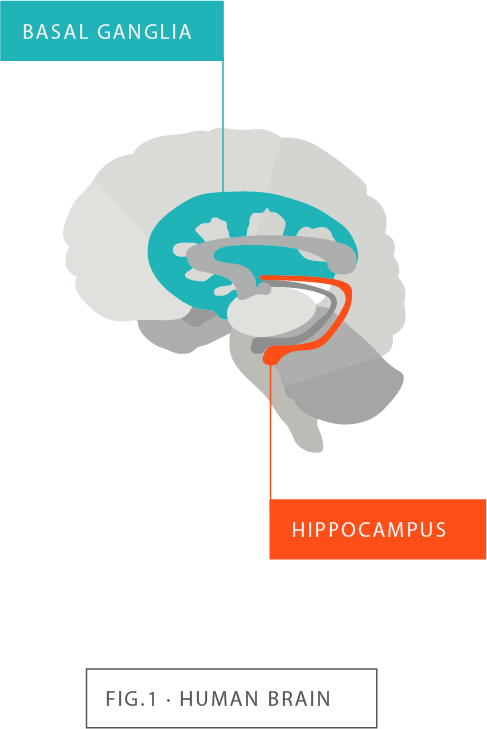
Female dogs were more likely to use an allocentric, or a landmark based strategy. They used objects in the room to figure out which bowl to choose. For instance, in the beginning, perhaps the bowl with the treats was near a door, or a lamp. When the females were brought around to the opposite side, they still looked for those landmarks, which means no matter which way they were oriented, they would always go back to the bowl they learned was ‘correct’ in the beginning.

In people, this is called forming a mental map, or using a ‘bird’s eye’ view. Using allocentric navigation means the dogs were mostly relying on their hippocampus, a part of the brain that mediates spatial awareness and memory. This strategy is particularly effective in large and unfamiliar environments, and is the more flexible of the two strategies. Not surprisingly, humans who rely on environmental navigation are good at reading maps.

Male dogs were more likely to be egocentric navigators. They learned the association by thinking ‘the treat is on my right’. When owners brought the dogs around to the opposite side, these dogs chose the bowl on their right, which was the opposite bowl that they had chosen before. By using this strategy, the dogs were mostly relying on their basal ganglia, a part of the brain that mediates motor skills.

Before there were maps or navigational instruments, Pacific islanders used egocentric navigation for long sea voyages. They used the position of the stars in relation to themselves, (e.g. to get to this island, the Milky Way should be on my right). People who rely on egocentric navigation tend to make good cinematographers – they have a special talent for allowing others to see the world as they do.

The results are exactly the opposite as in humans, where men are usually allocentric navigators and women are egocentric navigators. Perhaps male dogs just need to get better at asking for directions.

Source:  Dognition news

Chemical communication (bottom smelling)

This is a new video produced by the American Chemical Society.  It explains why dogs sniff bottoms and what information they can detect from the smells.


Domestication Syndrome

More than 140 years ago, Charles Darwin noticed something peculiar about domesticated mammals. Compared to their wild ancestors, domestic species are more tame, and they also tend to display a suite of other characteristic features, including floppier ears, patches of white fur, and more juvenile faces with smaller jaws. Since Darwin’s observations, the explanation for this pattern has proved elusive, but now, in a Perspectives article published in the journal GENETICS, a new hypothesis has been proposed that could explain why breeding for tameness causes changes in such diverse traits.

Photo courtesy of Lucky Dog Animal Rescue

Helios, an approximately 3-year-old cattle dog/greyhound mix with Lucky Dog Animal Rescue. Photo courtesy Lucky Dog Animal Rescue

The underlying link between these features could be the group of embryonic stem cells called the neural crest, suggests the research team.

“Because Darwin made his observations just as the science of genetics was beginning, the domestication syndrome is one of the oldest problems in the field. So it was tremendously exciting when we realized that the neural crest hypothesis neatly ties together this hodge-podge of traits,” says Adam Wilkins, from the Humboldt University of Berlin – one of the study’s authors.

Neural crest cells are formed near the developing spinal cord of early vertebrate embryos. As the embryo matures, the cells migrate to different parts of the body and give rise to many tissue types. These tissues include pigment cells and parts of the skull, jaws, teeth, and ears—as well as the adrenal glands, which are the center of the “fight-or-flight” response. Neural crest cells also indirectly affect brain development.

In the hypothesis proposed by Wilkins and co-authors Richard Wrangham of Harvard University and Tecumseh Fitch of the University of Vienna, domesticated mammals may show impaired development or migration of neural crest cells compared to their wild ancestors.

“When humans bred these animals for tameness, they may have inadvertently selected those with mild neural crest deficits, resulting in smaller or slow-maturing adrenal glands,” Wilkins says. “So, these animals were less fearful.”

The authors also suggest that the reduced forebrain size of most domestic mammals could be an indirect effect of neural crest changes, because a chemical signal sent by these cells is critical for proper brain development.

The hypothesis will require testing, which will be able to be done once genetic mapping of domesticated species like the dog, fox and rat are completed.

Full journal article details:  The “Domestication Syndrome” in Mammals: A Unified Explanation Based on Neural Crest Cell Behavior and Genetics
Adam S. Wilkins, Richard W. Wrangham, and W. Tecumseh Fitch. GENETICS July 2014, 197:795-808, doi: 10.1534/genetics.114.165423
http://www.genetics.org/content/197/3/795.full

Source:  Genetics Society of America media release


Immunotherapy hope

There is a form of cancer treatment called immunotherapy, where antibodies inhibit tumor growth.  Until now, such therapy wasn’t available for dogs.  A research team at Messerli Research Institute of the Vetmeduni Vienna, the Medical University of Vienna and the University of Vienna have now developed antibodies to treat cancer in dogs.

The newly developed antibody brings hope for dogs. (Photo by:  Michael Bernkopf / Vetmeduni Vienna)

The newly developed antibody brings hope for dogs. (Photo by: Michael Bernkopf / Vetmeduni Vienna)

Since cancer cells bear very specific antigens on the surface, the corresponding antibodies bind to these molecules and inhibit tumor growth.  A destructive signal sent by the antibody to the inside of the cancer cell initiates its death. In a second mechanism, the immune system of the patient also destroys the “marked” tumor in a more efficient way.

Josef Singer and Judith Fazekas, both lead authors of the study, discovered that a receptor frequently found on human tumor cells (epidermal growth factor receptor or EGFR) is nearly 100 percent identical with the EGF receptor in dogs. In human medicine EGFR is frequently used as the target of cancer immunotherapy because many cancer cells bear this receptor on their surface. The so-called anti-EGFR antibody binds to cancer cells and thus triggers the destruction of the cells. “Due to the high similarity of the receptor in humans and dogs, this type of therapy should work well in dogs too,” the scientists say. The binding site of the antibody to EGFR in man and dogs differs only in respect of four amino acids.

The head of the study, Professor Erika Jensen-Jarolim, explains as follows: “We expect dogs to tolerate these anti-cancer antibodies well. This will be investigated in clinical studies in the future and is expected to greatly improve the treatment as well as the diagnosis of cancer in dogs.”

The newly developed antibody provides an additional benefit for dogs. As in human medicine, antibodies can be coupled with signal molecules. When the antibody binds to a cancer cell in the organism, the coupled antibody – in this case a radioactive isotope – can be rendered visible and is thus able to show where tumors and even metastases are located. When the selected isotope also contributes to the decay of cancer cells, the approach is known as “theranostics” (therapy and diagnostics).

In veterinary medicine, immunotherapy will be employed for the treatment of mammary ridge cancer (milk line cancer) in dogs. It may also be used as part of a combination therapy.

The team have published their study results in the journal Molecular Cancer Therapeutics.

Source: Vetmeduni Vienna media release

Kennels may not be something to dread

New research suggests that dogs who spend a short time in boarding kennels may not find it unduly stressful and – quite the opposite – could find the change of scenery exciting.

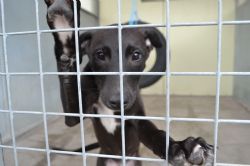
Photo courtesy of Jerry Green Dog Rescue

Photo courtesy of Jerry Green Dog Rescue

The research team, which included academics from the University of Lincoln, UK, University of Birmingham, Queen’s University Belfast and The Royal Veterinary College, measured a range of stress parameters in 29 privately-owned dogs – both at home and in one of three private boarding kennel establishments in Northern Ireland.

This study aimed to test the validity of a range of physiological, physical and behavioural welfare indicators and to establish baseline values reflecting good dog welfare.

Physical measurements included skin dryness, nose temperature, core body temperature and amount of food eaten. Behavioural measurements included spontaneous behaviours such as lip licking, paw lifting, yawning, shaking and restlessness. Physiological measures included stress hormones (corticosteroids) and epinephrine (adrenaline).

The study revealed that dogs have higher levels of arousal, colder noses and were generally more active in kennels than when they were at home.

Based on existing research it was assumed that dogs would show higher levels of stress in the kennel compared to the home environment.

The most widely used physiological indicator of canine welfare is urinary cortisol (hormone secreted following activation of one of the major stress response systems) and creatinine (chemical waste product created by the liver) ratios (C/Cr), which is considered a valid measure of acute and chronic stress in dogs. However, the reliability of this has been questioned.

The study revealed that C/Cr was significantly higher in the kennel compared to the home environment but cortisol levels have also been found to increase after exercise and excitement, and appear to provide an indication of arousal without specifying the emotional reason of that arousal.

Dr Lisa Collins, from the School of Life Sciences, University of Lincoln, UK, said: “Many owners find leaving their dog at a boarding kennels a stressful experience.  However, this study suggests that although dogs appeared to have a higher level of overall arousal or excitement in kennels compared with their state at home, this arousal is not necessarily due to dogs experiencing kennels as negatively stressful. The emotional reasons for the behavioural and physiological responses of the dogs were ambiguous and no definitive evidence was found to suggest that dogs were negatively stressed by kennelling.”

“Our findings did strongly suggest that C/Cr, epinephrine and nose temperature are robust measures of psychological arousal in dogs. Nonetheless, these measures can be easily misinterpreted and do not provide unequivocal indicators of psychological stress. Findings appear to suggest that the dogs in this study did not perceive admission to boarding kennels as an aversive stressor and perhaps, instead, perceived kennelling as an exciting change of scene, at least in the short-term.”

The team recommends further investigation to determine the validity of measurements tested as indicators of acute and chronic stress in domestic dogs.

Their study has been published in the journal Physiology & Behavior.

Source:  University of Lincoln media release

Treating enlarged prostate (BPH) in dogs

Benign prostatic hyperplasia, or BPH, is the medical term for an enlarged prostate.   The condition affects older, entire dogs and humans.

The most common clinical sign of BPH in dogs is bloody fluid dripping from the penis not associated with urination. In severe cases it can obstruct the colon and result in constipation.

A new method to treat dogs with BPH is pulsed electromagnetic field therapy (PEMF).  PEMF is a noninvasive method that generates both an electrical and magnetic field and is used in orthopedics, neurology, and urology.  Because PEMF has been reported to have an anti-inflammatory effect with increased healing and blood circulation, a research team decided to apply the technology to improve blood flow to the prostate and reduce the size of the gland.

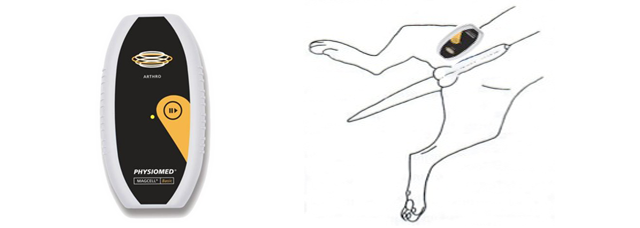
The study used a Magcell® Vetri device from Physiomed Elektromedizin AG, Germany.

The study used a Magcell® Vetri device from Physiomed Elektromedizin AG, Germany

The research study involved 20 dogs with BPH. They received treatment with PEMF for 5 minutes, twice a day for three weeks. The device was simply held over the skin where the prostate is located.

The results were pretty amazing.   After 3 weeks, the average reduction of the prostate was 57%.   There was no interference with semen quality, testosterone levels or libido.   There was also a progressive reduction in resistance of blood flow in the dorsal branch of the prostatic artery, as seen with Doppler scanning.

Source:  Raffaella Leoci, Giulio Aiudi, Fabio Silvestre, Elaine Lissner, Giovanni Michele Lacalandra (2014). “Effect of pulsed electromagnetic field therapy on prostate volume and vascularity in the treatment of benign prostatic hyperplasia: A pilot study in a canine model.” The Prostate. June 9, 2014. (Available online)