Category Archives: research

Does your dog disturb your sleep?

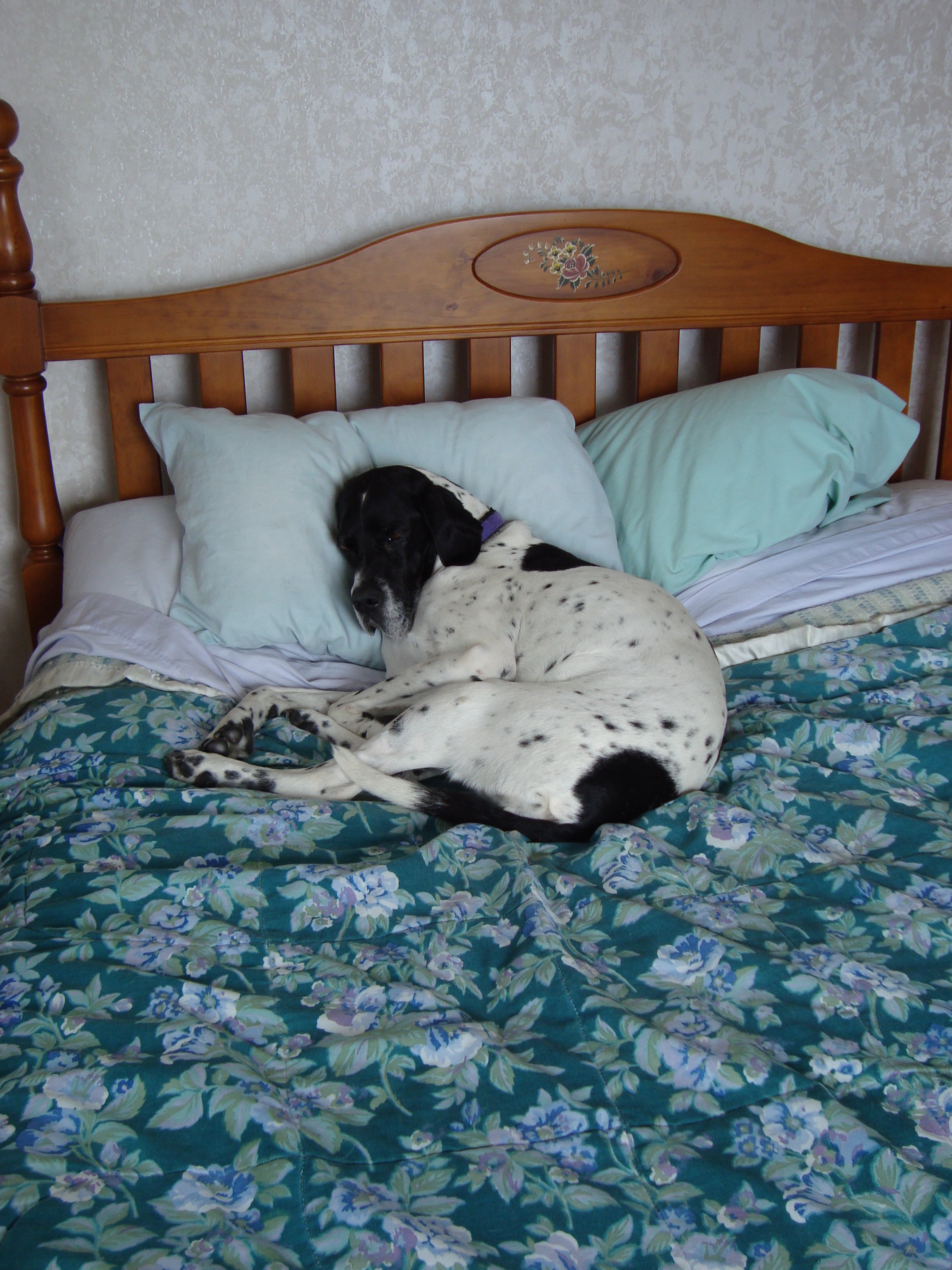
Daisy bed photo

While countless pet owners peacefully sleep with a warm pet nearby, a new Mayo Clinic study, presented this week at the 29th Annual Meeting of the Associated Professional Sleep Societies, finds an increase in the number of people experiencing sleep disturbances because of their pets.

A previous Mayo Clinic study published in 2002 reported that of patients who visited the clinic’s sleep center and owned pets, only one percent reported any inconvenience from their pets at night. The new study shows a larger number of patients — 10 percent in 2013 — reported annoyance that their pets sometimes disturbed their sleep.

“The study determined that while the majority of patients did not view their pets intolerably disturbing their sleep, a higher percentage of patients experienced irritation — this may be related to the larger number of households with multiple pets,” says Lois Krahn, M.D., Mayo Clinic psychiatrist and author of the study. “When people have these kinds of sleep problems, sleep specialists should ask about companion animals and help patients think about ways to optimize their sleep.”

Between August and December 2013, 110 consecutive patients at the Mayo Clinic Center for Sleep Medicine in Arizona provided information about pets at night as part of a comprehensive sleep questionnaire. Questions covered the type and number of pets, where the animals slept, any notable behaviors and whether the patient was disturbed. The survey showed that 46 percent of the patients had pets and 42 percent of those had more than one pet. The most popular pets were dogs, cats and birds.

The disturbances by pets that patients reported included snoring, whimpering, wandering, the need to “go outside” and medical needs.

Source:  Newswise press release

A vaccine for canine osteosarcoma?

Osteosarcoma is a highly aggressive bone tumor that affects at least 10,000 dogs annually in the United States, alone.

Photo by osteosarcomaindogs.org

Photo by osteosarcomaindogs.org

It is estimated that 90-95 percent of canine osteosarcoma subjects have microscopic metastatic disease (spread of cancer cells to other parts of the body at the time of diagnosis). Standard of care includes removal of the primary tumor—usually by amputation—followed by chemotherapy. Systemic chemotherapy given after amputation delays the development of metastatic disease; however, despite treatment, most dogs die of the disease within one year of diagnosis.

A new option may be available in the future if Dr. Nicola Mason’s research at the University of Pennsylvania School of Veterinary Medicine produces satisfactory results. Mason, an assistant professor of medicine and a Board-certified ACVIM Diplomate in Small Animal Internal Medicine, is evaluating the first vaccine for canine osteosarcoma.

The approach harnesses the power of the dog’s immune system, “training” it to seek out and destroy cancer cells that remain after amputation and chemotherapy.

Over a century ago, an orthopedic surgeon named William Coley recognized that human sarcoma patients with concurrent bacterial infections that caused high fevers had improved overall survival times compared to those sarcoma patients without infection. This led him to develop a therapeutic concoction of live bacteria that he injected into patients with bone sarcomas. He documented improved survival and in some cases, complete remission in individuals with the aggressive disease by using this early form of “immune therapy.”

Mason’s team is employing similar immune therapeutic strategy to treat dogs with osteosarcoma that have undergone the standard of care treatment (amputation and chemotherapy) to prevent metastatic disease. “The concept is that administration of the Listeria-based (genetically modified bacteria) vaccine will activate the patient’s immune system and educate it to recognize cells that express the target molecule,” says Mason.

Dogs are given the live bacterial vaccine intravenously, Mason explains, and it induces a mild transient fever on the day of vaccination. The dogs are usually treated as outpatients and return home the same day. “We have found highly encouraging results when the vaccine is given to patients that have no evidence of metastatic disease at the time of the study enrollment, which is three weeks after the last chemotherapy is administered. Four out of the first five dogs vaccinated are alive at least two years after their initial diagnosis, which is more than twice their expected survival duration. The vaccine has not yet shown any serious short- or long-term side effects, either.”

Mason says the results have led researchers to evaluate whether this vaccine may be able to directly target and kill the bone tumor itself, perhaps eliminating the need for amputation in the future.

Source:  American College of Veterinary Internal Medicine media release

A new use for Border Collies

Researchers from Central Michigan University presented their research at the annual meeting of the American Society for Microbiology this week.

They’ve found that Border Collies are effective at reducing seagull congregation on recreational beaches, resulting in lower E. coli abundance in the sand

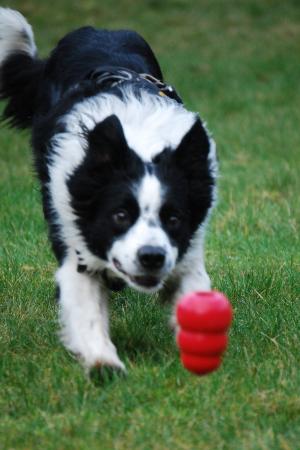
A Border Collie on beach patrol, photo by Elizabeth Alm

A Border Collie on beach patrol, photo by Elizabeth Alm

Gull droppings may be one source of the indicator bacterium Escherichia coli to beach water, which can lead to swim advisories and beach closings. In addition, gull droppings may contain bacteria with the potential to cause human disease, according to Elizabeth Alm, one of the researchers on the study.

At the beginning of the summer, 200-meter sections of beach were arbitrarily assigned to be dog-treated beaches or control beaches. Half way through the summer, the beach sections were swapped, so that dogs were moved to the control beaches and the dog-treated beaches were then left to be untreated controls.

During the summers of 2012 and 2013, researchers recorded the number of gulls at each beach section. Once each week samples of beach water and beach sand were collected and the numbers of E. coli in the samples counted. In early summer, samples from beaches where dogs had excluded gulls had significantly lower E. coli counts compared to control beaches.

“Border collies are intelligent dogs that love to work and could be used by beach managers as part of a comprehensive management strategy to reduce bacterial contamination at public beaches,” said Alm.

Source:  American Society for Microbiology media release


Albino Dobermans

Michigan State University researchers have identified a genetic mutation in Doberman pinschers that causes albinism in the breed, a discovery that has eluded veterinarians and breeders worldwide up until now.

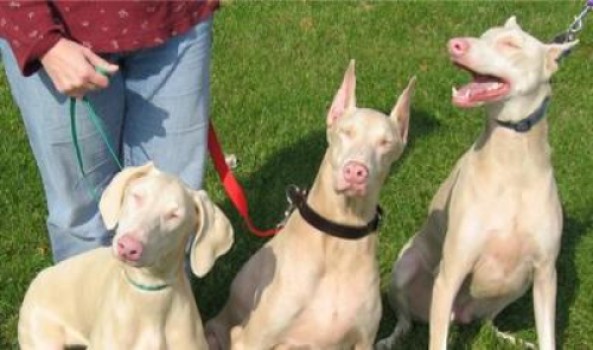
Michigan State University photo

Michigan State University photo

Paige Winkler, a doctoral student at the College of Veterinary Medicine, says that the researchers found a gene mutation that results in a missing protein responsible for the pigmentation of cells.

Albino Dobermans possess a pink nose, white or very light colored coats, and pale irises in the eyes.  These characteristics are similar to human albinos who have light skin, eye discoloration and often experience visual problems.

Like human albinos, the albino Dobermans are sensitive to light and have an increased risk of skin tumors.

Winkler says that this discovery will help Doberman breeders in the future where breeding lines carrying the defective gene can be identified.

Source:  Michigan State University media statement

Behavioural problems in pet store dogs

Dogs purchased from pet stores are more likely to have a range of behavior problems than those purchased from small, non-commercial breeders, says a study by researchers at the Best Friends Animal Society and the University of Pennsylvania School of Veterinary Medicine.

The study was published in the Journal of the American Veterinary Medical Association.

The study involved 413 dogs purchased from pet stores.  Psychological and behavioral characteristics of these dogs were compared to the same characteristics in 5,657 dogs obtained from small-scale, private breeders.  (Most puppies sold in pet stores in the USA are sourced from large-scale, puppy mill type commercial breeders).

Results show that dogs obtained as puppies from pet stores showed significantly more aggression toward human family members, unfamiliar people and other dogs. Dogs purchased from pet stores were almost twice as likely to exhibit aggression directed toward unfamiliar dogs than dogs purchased from small non-commercial breeders.

The pet store dogs also a displayed greater fear of other dogs and typical events in pet dogs’ lives, had more behavior problems when left alone at home, and experienced more problems with house-soiling.  These behaviors in young adult dogs are reasons typically cited by people who surrender their pets to animal shelters.

“The results were so one-sided that in the wide range of behavior problems we included in our analysis, pet store dogs failed in every single case to even obtain one more favorable score than the comparison group of dogs” says Dr Frank McMillan of Best Friends Animal Society.

The research team acknowledges that the exact causes of the behavioral problems observed are not known; until these causes are understood, they recommend avoiding purchasing puppies from pet stores.

Source:  BusinessWire media release

See my related post about the ASPCA’s No Pet Store Puppies initiative


Dogs benefit children with autism

A University of Missouri researcher has studied dog ownership decisions in families of children with autism and found that parents report a range of benefits of dog ownership including companionship, stress relief and opportunities for their children to learn responsibility.

Photo credit: Noël Zia Lee, Wikimedia Commons

Photo credit: Noël Zia Lee, Wikimedia Commons

‘Children with autism spectrum disorders often struggle with interacting with others, which can make it difficult for them to form friendships,’ said Gretchen Carlisle, the study’s author. ‘Children with autism may especially benefit from interacting with dogs, which can provide unconditional, nonjudgmental love and companionship to the children.’

Carlisle interviewed 70 parents of children with autism.  Nearly two-thirds of the parents in the study owned dogs, and of those parents, 94 percent reported their children with autism were bonded to their dogs. Even in families without dogs, 70 percent of parents said their children with autism liked dogs.

‘Bringing a dog into any family is a big step, but for families of children with autism, getting a dog should be a decision that’s taken very seriously.  If a child with autism is sensitive to loud noises, choosing a dog that is likely to bark will not provide the best match for the child and the family. If the child has touch sensitivities, perhaps a dog with a softer coat, such as a poodle, would be better than a dog with a wiry or rough coat, such as a terrier.’

The study, “Pet Dog Ownership Decisions for Parents of Children With Autism Spectrum Disorder,” was published in the Journal of Pediatric Nursing earlier this year.

Source:  University of Missouri media release

For more about the benefits of dogs for people with autism, read my post Dogs are a ‘social lubricant’ in helping people with autism

Cleft palate in dogs

UC Davis School of Veterinary Medicine researchers have identified the genetic mutation responsible for a form of cleft palate in the dog breed Nova Scotia Duck Tolling Retrievers.

Photo by Danika Bannasch/UC Davis

Photo by Danika Bannasch/UC Davis

They hope that the discovery, which provides the first dog model for the craniofacial defect, will lead to a better understanding of cleft palate in humans. Although cleft palate is one of the most common birth defects in children, affecting approximately one in 1,500 live human births in the United States, it is not completely understood.

By conducting a genome-wide study of this breed with a naturally occurring cleft palate, researchers identified a mutation responsible for the development of cleft palate. Dogs with this mutation also have a shortened lower jaw, similar to humans who have Pierre Robin Sequence. The disorder, a subset of cleft palate, affects one in 8,500 live human births and is characterized by a cleft palate, shortened lower jaw and displacement of the tongue base.

Cleft palate condition occurs when there is a failure in the formation of the secondary palate, which makes up all of the soft palate and the majority of the hard palate.

The team have published their study in the journal PLOS Genetics.

Source:  UC Davis media release

Attentiveness in dogs

Photo by Angela Gaigg

Photo by Angela Gaigg

Researchers at the Messerli Research Institute at the Vetmeduni in Vienna have researched dogs’ attentiveness and how it changes over their lives – and the patterns shown are similar to humans!  The results have been published in the journal Frontiers in Psychology.

Dogs are individual personalities, possess awareness, and are particularly known for their trainability. To learn successfully, they must display a sufficient quantity of attention and concentration.

The study’s lead author, Lisa Wallis, and her colleagues investigated 145 Border Collies aged 6 months to 14 years in the Clever Dog Lab at the Vetmeduni Vienna and determined, for the first time, how attentiveness changes in the entire course of a dog’s life using a cross-sectional study design.

To determine how rapidly dogs of various age groups pay attention to objects or humans, the scientists performed two tests. In the first situation the dogs were confronted with a child’s toy suspended suddenly from the ceiling. The scientists measured how rapidly each dog reacted to this occurrence and how quickly the dogs became accustomed to it. Initially all dogs reacted with similar speed to the stimulus, but older dogs lost interest in the toy more rapidly than younger ones did.

In the second test situation, a person known to the dog entered the room and pretended to paint the wall. All dogs reacted by watching the person and the paint roller in the person’s hands for a longer duration than the toy hanging from the ceiling.

The dogs generally tended to react by watching the person with the object for longer than an object on its own. The team found that older dogs – like older human beings – demonstrated a certain calmness. They were less affected by new items in the environment and thus showed less interest than younger dogs.

In a further test the scientists investigated so-called selective attention. The dogs participated in an alternating attention task, where they had to perform two tasks consecutively. First, they needed  to find a food reward thrown onto the floor by the experimenter, then after eating the food, the experimenter waited for the dog to establish eye contact with her.  These tasks were repeated for a further twenty trials. The establishment of eye contact was marked by a clicking sound produced by a  “clicker” and small pieces of hot dog were used as a reward. The time spans to find the food and look up into the face were measured. With respect to both time spans, middle-aged dogs (3 to 6 years) reacted most rapidly.

“Under these test conditions, sensorimotor abilities were highest among dogs of middle age. Younger dogs fared more poorly probably because of their general lack of experience. Motor abilities in dogs as in humans deteriorate with age. Humans between the age of 20 and 39 years experience a similar peak in sensorimotor abilities,” says Wallis.   

Dogs also go through a difficult phase during adolescence (1-2 years) which affects their ability to pay attention. This phase of hormonal change may be compared to puberty in Man. Therefore, young dogs occasionally reacted with some delay to the clicker test. However, Wallis found that adolescent dogs improved their performance more rapidly than other age groups after several repetitions of the clicker test. In other words, the learning curve was found to be steepest in puberty. “Thus, dogs in puberty have great potential for learning and therefore trainability” says Wallis.

Source: Vetmeduni media release

The 5 types of dog walker

A new study in the International Journal of Environment and Waste Management discusses the environmental, health and safety issues of dog walking and, in particular, scooping the poop.

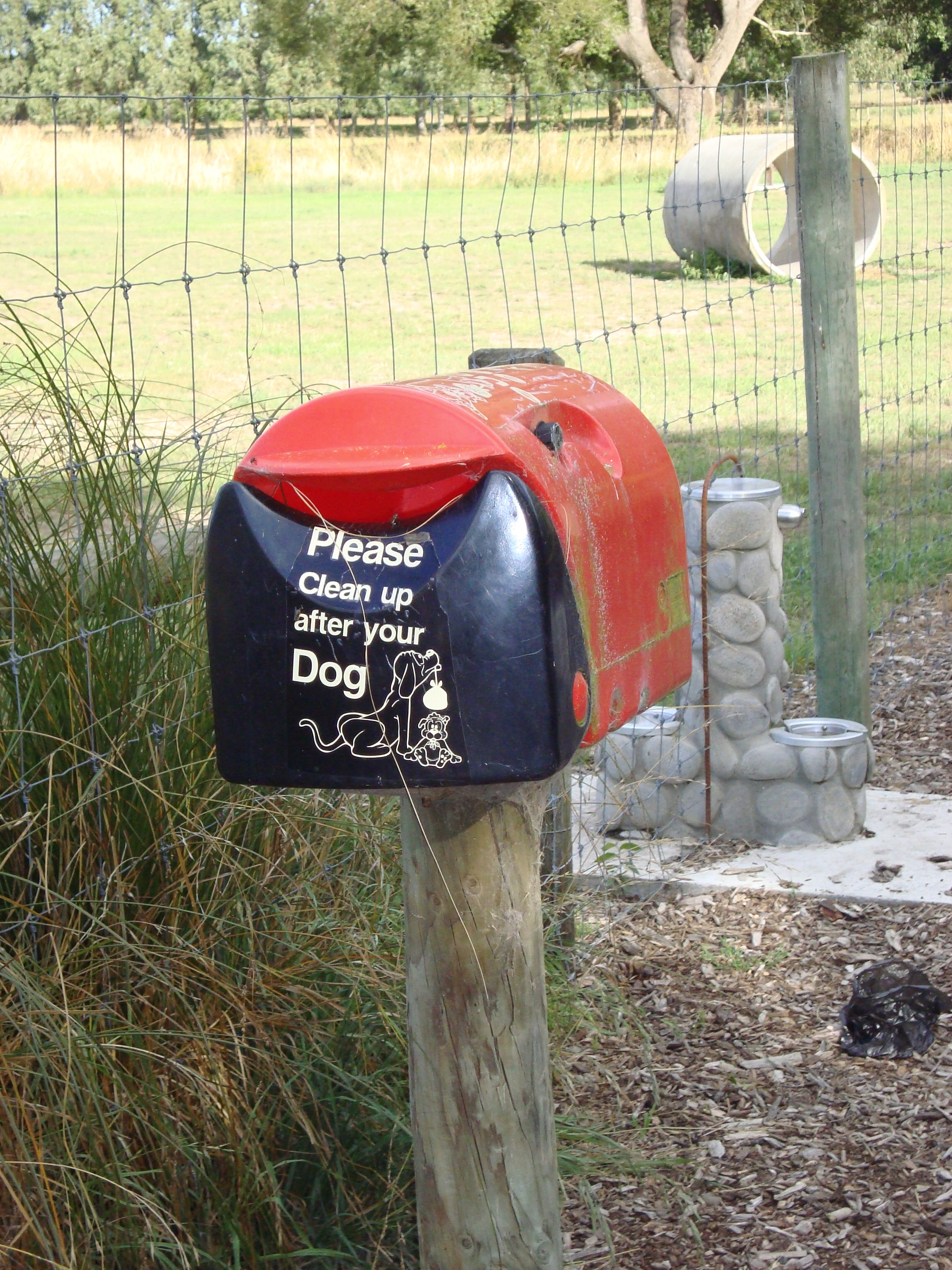
Please Clean UpChristopher Lowe of the University of Central Lancashire in Preston (UK) and colleagues hoped to determine what factors influence dog walker behaviour and how those who do not do the right thing might be persuaded to take charge of their dog mess.

The team suggests that there are five types of dog walker from the most to the least socially and environmentally responsible:

  • Proud to pick up – happy to be seen carrying dog waste, will pick up in all locations and take it home if no bins are available
  • It is the right thing to do – will pick up in public places but will seek to dispose of the waste as soon as it is practical; often embarrassed to be seen carrying bagged waste
  • I have done my job – if there is no bin available will leave the bagged waste to be dealt with by someone else
  • Only if I have to – will only pick up in the presence of other people – likely to discard when no one is looking
  • Disengaged – will not pick up in any situation even if they are aware of the environmental consequences of their actions

Dog faeces are not only as unpleasant as any animal waste, they can also carry parasitic diseases that have health impacts on people and animals that come into contact with them. For instance, they might transmit toxocariasis, via the larvae (immature worms) of the dog roundworm (Toxocara canis), which can cause blindness, asthma and neurological problems in those affected. Dog faeces from animals that eat raw meat and bones are also suspected of causing neosporosis in cattle. The researchers also point out that the presence of dog faeces in country parks, walks and other recreational areas can deter visitors and so have a local economic impact in those areas.

The team’s final thoughts:  The issue of getting dog walkers to do the right thing is both complex and emotive….more research is needed.

Source:  AlphaGalileo media statement

Scent of my human

The functional MRI research team led by Gregory Berns have done it again.  In research published in the journal Behavioural Processes, they show that an area of the canine brain associated with reward responds more strongly to the scents of familiar humans than it does to the scents of other humans, or even to those of familiar dogs.

Kady, a lab involved in the study, shown training for the experiment in a mock-up fMRI scanner.  Photo by Helen Berns

Kady, a lab involved in the study, shown training for the experiment in a mock-up fMRI scanner. Photo by Helen Berns

“In our experiment, the scent donors were not physically present. That means the canine brain responses were being triggered by something distant in space and time. It shows that dogs’ brains have these mental representations of us that persist when we’re not there.”

When humans smell the perfume or cologne of someone they love, they may have an immediate, emotional reaction that’s not necessarily cognitive, Berns notes. “Our experiment may be showing the same process in dogs. But since dogs are so much more olfactory than humans, their responses would likely be even more powerful than the ones we might have.”

The experiment involved 12 dogs of various breeds. The animals had all undergone training to hold perfectly still while undergoing an fMRI scan. As they were being scanned, the subjects were presented with five different scents that had been collected on sterile gauze pads that morning and sealed in Mylar envelopes. The scent samples came from the subject itself, a dog the subject had never met, a dog that lived in the subject’s household, a human the dog had never met, and a human that lived in the subject’s household.

The familiar human scent samples were taken from someone else from the house other than the handlers during the experiment, so that none of the scent donors were physically present.

The dog scents were swabbed from the rear/genital area and the human scents were taken from armpits.

The results showed that all five scents elicited a similar response in parts of the dogs’ brains involved in detecting smells, the olfactory bulb and peduncle. The caudate responses, however, were significantly stronger for the scents of familiar humans, followed by that of familiar dogs.

“The stronger caudate activation suggested that not only did the dogs discriminate the familiar human scent from the others, they had a positive association with it,” Berns says. “While we might expect that dogs should be highly tuned to the smell of other dogs, it seems that the ‘reward response’ is reserved for their humans. Whether this is based on food, play, innate genetic predisposition or something else remains an area for future investigation.”

An interesting twist: The dogs in the experiment that had received training as service/therapy dogs showed greater caudate activation for the scent of a familiar human compared with the other dogs. It is unclear whether this difference was due to genetics or had simply been fostered through the service/therapy training.

“We plan to do further research to determine whether we can use brain-imaging techniques to better identify dogs that are optimal to serve as companion animals for the disabled,” Berns says.

The training of service dogs is time-consuming and expensive, he says, and only about one-third of the animals that begin the process successfully complete it. Meanwhile, the waiting list for service dogs is long, and includes many wounded veterans.

“In addition to serving as companion animals for wounded veterans, dogs play many important roles in military operations,” Berns says. “By understanding how dogs’ brains work, we hope to find better methods to select and train them for these roles.”

Source:  Emory University media release

Read my other blogs about functional MRI research: