Category Archives: research

New canine lab seeks four-legged research participants

A new lab at UBC’s Vancouver campus is looking for research participants—and not just anyone will do. The criteria? Must be furry and four-legged. Enjoy belly rubs and yummy treats? That’s a bonus, too.

The new Human-Animal Interaction Lab at UBC has officially opened and will soon be inviting pet dogs and their owners to engage in canine cognition research. Researchers are hoping to discover new knowledge that will improve animal shelter practices and companion animal welfare in shelters and homes with pets. They will also conduct studies on animal-assisted interventions using trained therapy dogs to benefit the wellbeing of dogs working in assistance roles, as well as refining methods of using therapy dogs in educational settings for the benefit of both the child and dog.

“The goal is to uncover knowledge about why dogs do the things they do and how do we determine the individual differences of specific dogs,” says Dr. Alexandra (Sasha) Protopopova, the lab’s director and an assistant professor in UBC’s Animal Welfare Program in the faculty of land and food systems.

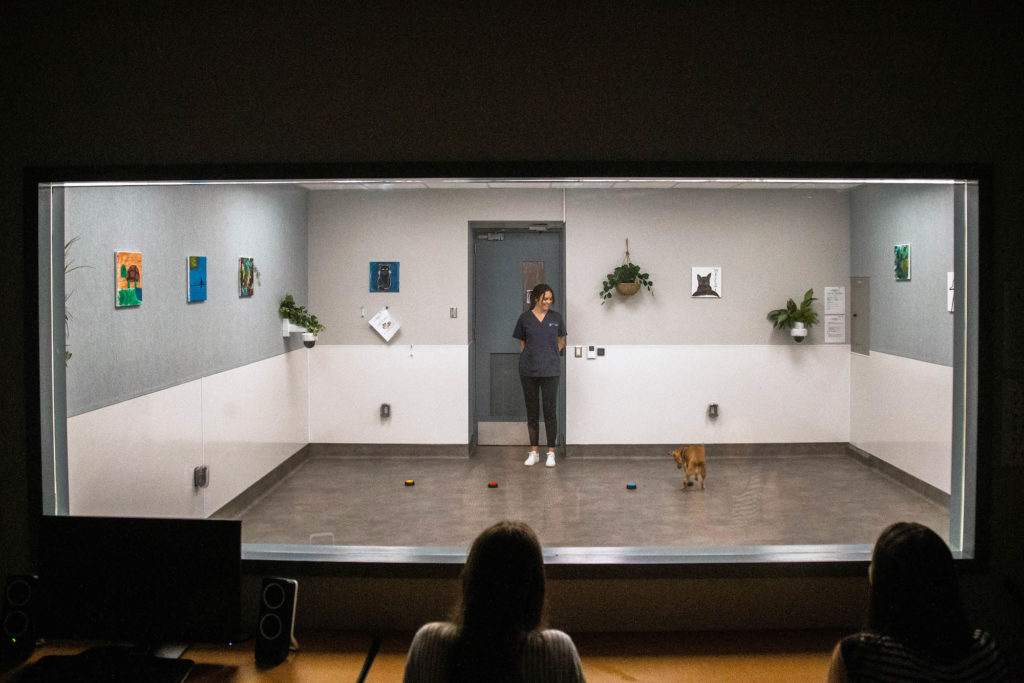
The lab, which was renovated thanks to federal and provincial funding via the Canada Foundation for Innovation and the BC Knowledge Development Fund, has recently undergone inspections by UBC veterinarians to ensure it is safe for pups and their humans. The room is outfitted with specialized flooring for easy cleaning, high-tech 360-degree cameras, and a two-way mirror with an observation room next door where researchers can observe the dogs without being noticed.

Although the room is a laboratory, the researchers have worked to make it feel warm and inviting with the careful placement of silly artwork, faux plants (to disguise the cameras), and dog toys, so that the animals and their companions feel safe and comforted.

“The comfort of the animal is a priority,” says Dr. Protopopova, who also holds the NSERC/BC SPCA Industrial Research Chair in Animal Welfare. “Our work is completely non-invasive, and we take that very seriously. All research is made to benefit the welfare of animals and the dogs that come in.”

Research aims to investigate dog cognition and therapy dog programs

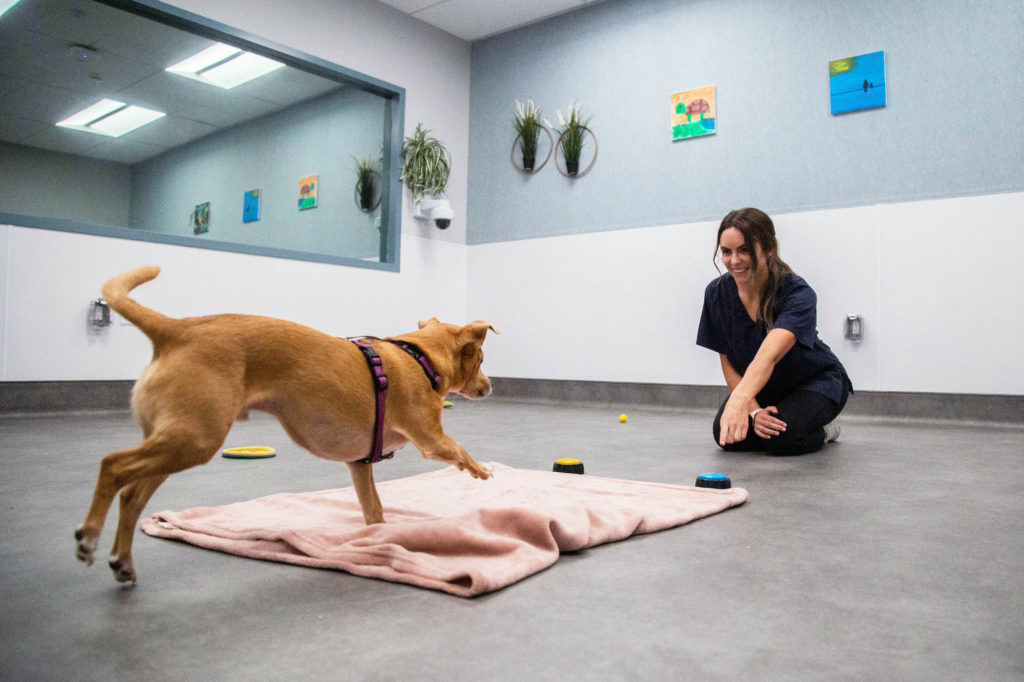
UBC PhD student Bailey Eagan and her dog Rupert demonstrate the new Human-Animal Interaction Lab at UBC. Credit: Lexis Ly/UBC

UBC PhD student Bailey Eagan and her dog Rupert demonstrate the new Human-Animal Interaction Lab at UBC. Credit: Lexis Ly/UBC

While there will be a variety of different studies underway in the lab, the overarching goal of the research is to understand individual differences in dog cognition, both in terms of breed differences and individual differences in dogs, says Dr. Protopopova.

“We take a behavioural angle to our research and look for differences between dogs on a small-scale level,” she explains. “For example, we will be looking at how dogs interact with the world and what kinds of differences we might observe in fundamental aspects of their learning, like speed of knowledge acquisition and how quickly or slowly the dog might engage with a new item.”

An example of a simple cognitive experiment that the lab could run involves the “touch” command, where the pup is taught to touch its nose to the palm of the owner’s hand. The researchers might then change the rules by having the dog learn to touch both palms of the owner’s hand. They would then monitor to determine how long it takes the dog to both learn the task and adapt to the new rules.

The lab will also serve a teaching purpose to help students understand how dogs learn, see the world, and navigate their environment. Ultimately, the research will also help inform behaviour rehabilitation practices for dogs and cats and help improve resources and knowledge for animal shelters to support the behavioural needs of the animals in their care.

From the moment a dog arrives at the lab for their appointment, Dr. Protopopova says they are continuously assessed to determine their willingness to take part. After consent is obtained from the dog owner, the dog must also demonstrate their active willingness to participate throughout the research process.

“It’s important for us to ask the dogs if they would like to participate in the same way we would invite children to participate in studies,” she says. “While we have consent forms for the owner, we also have assent procedures for the dog as well, just like we would have for children. The dogs are always given the opportunity to engage and re-engage in the experiment. If the dog does not want to go forward, or if we observe any stress signs, we let the owner know and immediately stop the experiment.”

Regardless of whether they finish, all pups earn a certificate for participating—complete with a photo of them wearing a doggie graduation cap and sash, if they wish.

“We like to think of it as earning their Ph-Dog,” says Dr. Protopopova with a laugh.

For more information on how to apply, please click here.

Source: University of British Columbia

Using Artificial Intelligence to Predict Life-Threatening Bacterial Disease in Dogs

Leptospirosis, a disease that dogs can get from drinking water contaminated with Leptospira bacteria, can cause kidney failure, liver disease and severe bleeding into the lungs. Early detection of the disease is crucial and may mean the difference between life and death.

Veterinarians and researchers at the University of California, Davis, School of Veterinary Medicine have discovered a technique to predict leptospirosis in dogs through the use of artificial intelligence. After many months of testing various models, the team has developed one that outperformed traditional testing methods and provided accurate early detection of the disease. The groundbreaking discovery was published in Journal of Veterinary Diagnostic Investigation.

“Traditional testing for Leptospira lacks sensitivity early in the disease process,” said lead author Krystle Reagan, a board-certified internal medicine specialist and assistant professor focusing on infectious diseases. “Detection also can take more than two weeks because of the need to demonstrate a rise in the level of antibodies in a blood sample. Our AI model eliminates those two roadblocks to a swift and accurate diagnosis.”

The research involved historical data of patients at the UC Davis Veterinary Medical Teaching Hospital that had been tested for leptospirosis. Routinely collected blood work from these 413 dogs was used to train an AI prediction model. Over the next year, the hospital treated an additional 53 dogs with suspected leptospirosis. The model correctly identified all nine dogs that were positive for leptospirosis (100% sensitivity). The model also correctly identified approximately 90% of the 44 dogs that were ultimately leptospirosis negative.

The goal for the model is for it to become an online resource for veterinarians to enter patient data and receive a timely prediction.

“AI-based, clinical decision making is going to be the future for many aspects of veterinary medicine,” said School of Veterinary Medicine Dean Mark Stetter. “I am thrilled to see UC Davis veterinarians and scientists leading that charge. We are committed to putting resources behind AI ventures and look forward to partnering with researchers, philanthropists, and industry to advance this science.”  

Detection model may help people

Leptospirosis is a life-threatening zoonotic disease, meaning it can transfer from animals to humans. As the disease is also difficult to diagnose in people, Reagan hopes the technology behind this groundbreaking detection model has translational ability into human medicine.

“My hope is this technology will be able to recognize cases of leptospirosis in near real time, giving clinicians and owners important information about the disease process and prognosis,” said Reagan. “As we move forward, we hope to apply AI methods to improve our ability to quickly diagnose other types of infections.”

Reagan is a founding member of the school’s Artificial Intelligence in Veterinary Medicine Interest Group comprising veterinarians promoting the use of AI in the profession. This research was done in collaboration with members of UC Davis’ Center for Data Science and Artificial Intelligence Research, led by professor of mathematics Thomas Strohmer. He and his students were involved in the algorithm building. The center strives to bring together world-renowned experts from many fields of study with top data science and AI researchers to advance data science foundations, methods, and applications.

Reagan’s group is actively pursuing AI for prediction of outcome for other types of infections, including a prediction model for antimicrobial resistant infections, which is a growing problem in veterinary and human medicine. Previously, the group developed an AI algorithm to predict Addison’s disease with an accuracy rate greater than 99%.

Other authors include Shaofeng Deng, Junda Sheng, Jamie Sebastian, Zhe Wang, Sara N. Huebner, Louise A. Wenke, Sarah R. Michalak and Jane E. Sykes. Funding support comes from the National Science Foundation.

Source: UC Davis

Study finds new links between dogs’ smell and vision

Cornell researchers have provided the first documentation that dogs’ sense of smell is integrated with their vision and other unique parts of the brain, shedding new light on how dogs experience and navigate the world.

Cornell researchers have provided the first documentation that dogs’ sense of smell is integrated with their vision and other unique parts of the brain. Photo credit: Michael Carroll/CVM

“We’ve never seen this connection between the nose and the occipital lobe, functionally the visual cortex in dogs, in any species,” said Pip Johnson, assistant professor in the Department of Clinical Sciences in the College of Veterinary Medicine and senior author of “Extensive Connections of the Canine Olfactory Pathway Revealed by Tractography and Dissection,” published July 11 in the Journal of Neuroscience.

“It makes a ton of sense in dogs,” she said. “When we walk into a room, we primarily use our vision to work out where the door is, who’s in the room, where the table is. Whereas in dogs, this study shows that olfaction is really integrated with vision in terms of how they learn about their environment and orient themselves in it.”

Erica Andrews, a former analyst in Johnson’s lab, is the paper’s first author and currently works in canine aging research.

Johnson and her team performed MRI scans on 23 healthy dogs and used diffusion tensor imaging, an advanced neuroimaging technique, to locate the dog brain’s white matter pathways, the information highways of the brain. They found connections between the olfactory bulb and the limbic system and piriform lobe, where the brain processes memory and emotion, which are similar to those in humans, as well as never-documented connections to the spinal cord and the occipital lobe that are not found in humans.

“It was really consistent,” Johnson said. “And size-wise, these tracts were really dramatic compared to what is described in the human olfactory system, more like what you’d see in our visual systems.”

Tractography, a 3D-modeling process, allowed Johnson and her team to map and virtually dissect the white matter tracts. The findings in the digital images were later confirmed by a co-author and white matter expert at Johns Hopkins University.

Johnson said the research corroborates her clinical experiences with blind dogs, who function remarkably well. “They can still play fetch and navigate their surroundings much better than humans with the same condition,” Johnson said. “Knowing there’s that information freeway going between those two areas could be hugely comforting to owners of dogs with incurable eye diseases.”

Identifying new connections in the brain also opens up new lines of questioning. “To see this variation in the brain allows us to see what’s possible in the mammalian brain and to wonder – maybe we have a vestigial connection between those two areas from when we were more ape-like and scent-oriented, or maybe other species have significant variations that we haven’t explored,” Johnson said.

Johnson plans to examine the olfactory system’s structure in the brains of cats and horses, which aligns with the broader goals of her research program – to leverage the most advanced imaging techniques, used commonly in human clinical research, to better understand animal brain physiology and disease.

Source: Cornell University Chronicle

More dogs in the neighborhood often means less crime

If you want to find a safe neighborhood to live in, choose one where the residents trust each other – and have a lot of dogs to walk.

More people walking their dogs means less crime in high-trust neighborhoods. Photo: Getty Photos

In a study conducted in Columbus, researchers found that neighborhoods with more dogs had lower rates of homicide, robbery and, to a lesser extent, aggravated assaults compared to areas with fewer dogs, at least when residents also had high levels of trust in each other.

The results suggest that people walking their dogs puts more “eyes on the street,” which can discourage crime, said Nicolo Pinchak, lead author of the study and a doctoral student in sociology at The Ohio State University.

“People walking their dogs are essentially patrolling their neighborhoods,” Pinchak said. “They see when things are not right, and when there are suspect outsiders in the area. It can be a crime deterrent.”

The study was published recently in the journal Social Forces.

Sociologists have long theorized that a combination of mutual trust and local surveillance among residents of a neighborhood can deter criminals, said study co-author Christopher Browning, a professor of sociology at Ohio State.

But there hasn’t been a good measure of how residents provide surveillance of neighborhood streets.  “We thought that dog walking probably captures that pretty well, which is one reason why we decided to do this study,” Browning said.

For the study, researchers looked at crime statistics from 2014 to 2016 for 595 census block groups – the equivalent of neighborhoods – in the Columbus area.

They obtained survey data from a marketing firm that asked Columbus residents in 2013 if they had a dog in their household.

Finally, they used data from the Adolescent Health and Development in Context study (which Browning runs) to measure trust in individual neighborhoods. As part of that study, residents were asked to rate how much they agreed that “people on the streets can be trusted” in their neighborhoods.

Research has shown that trust among neighbors is an important part of deterring crime, because it suggests residents will help each other when facing a threat and have a sense of “collective efficacy” that they can have a positive impact on their area, Pinchak said.

Results of this study showed, as expected, that neighborhoods with high levels of trust had lower levels of homicide, robbery and aggravated assaults when compared to neighborhoods with low levels of trust.

But among high-trust neighborhoods, those with high concentrations of dogs showed an additional drop in crime compared to those with low concentrations of dogs.

Among the high-trust neighborhoods, neighborhoods high in dog concentration had about two-thirds the robbery rates of those low in dog concentration and about half the homicide rates, the study found.

It really has to do with the dog walking, Pinchak said.

“Trust doesn’t help neighborhoods as much if you don’t have people out there on the streets noticing what is going on. That’s what dog walking does,” Pinchak said.  And that’s why dogs have a crime-fighting advantage over cats and other pets that don’t need walking.

“When people are out walking their dogs, they have conversations, they pet each other’s dogs.  Sometimes they know the dog’s name and not even the owners.  They learn what’s going on and can spot potential problems.”

Results showed that the trust and dog-walking combination helped reduce street crimes: those crimes like homicides and robberies that tend to occur in public locations, including streets and sidewalks.

The study found that more dogs in a neighborhood was also related to fewer property crimes, like burglaries, irrespective of how much residents trust each other, Pinchak said.

That’s because barking and visible dogs can keep criminals away from buildings where the dogs are found – and neighborhood trust and surveillance is not needed as a factor, as it is in street crimes.

The protective effect of dogs and trust was found even when a wide range of other factors related to crime was taken into account, including the proportion of young males in the neighborhood, residential instability and socioeconomic status.

Overall, the results suggest that it is beneficial to have a lot of trust in your neighbors to prevent crime – particularly if you add a lot of dogs and dog walkers.

“There has already been a lot of research that shows dogs are good for the health and well-being of their human companions,” Pinchak said.

“Our study adds another reason why dogs are good for us.”

Pinchak and Browning are members of Ohio State’s Institute for Population Research, which supported the study.

Other co-authors of the study were Bethany Boettner of Ohio State, and Catherine Calder and Jake Tarrence of the University of Texas at Austin.

Source: Ohio State News

Text Message Reminders Show Promise in Encouraging Kids to Play with the Family Dog

stock-harbi.jpg
Photo by Shutterstock

The Human Animal Bond Research Institute (HABRI) revealed results of a new publication led by researchers at the Telethon Kids Institute and The University of Western Australia (UWA), which found a simple health intervention using text messaging may encourage children to spend more time being physically active with their family dog.

“This study shows that a simple text message reminder to play or walk with the family dog can result in increased physical activity for children and their caregivers,” said Steven Feldman, president of HABRI. “HABRI looks forward to raising awareness of the results of this publication which outline new and simple ways to encourage families to spend more quality time playing with and walking their dogs.”

The randomized controlled trial was published in the journal BMC Pediatrics.

 “We found texting parents to remind them of how easy and important it is to be active with the family dog is a low-cost intervention with the potential to boost public health, which can be easily implemented across entire communities,” said Telethon Kids and UWA associate professor Hayley Christian, principal investigator on the study. “Interventions, policies and community programs should capitalize on the high level of dog ownership and incorporate dog walking or play into physical activity campaigns.”

Dr. Christian and colleagues led the Play Spaces and Environments for Children’s Physical Activity’ (PLAYCE) PAWS mHealth intervention, a randomized controlled trial conducted in Perth, Western Australia. Families of children between the ages of 5 and 10 with a family dog were placed into three experiment groups: one group of parents received regular text reminders about family play with the dog, one group received text reminders while also receiving a dog pedometer to further engage them with the dog, and the third group carried on as usual. This study was the first of its kind to utilize a mobile-based dog-facilitated strategy to increase children’s physical activity. 

At baseline, approximately 60 percent of families walked their dogs more than once a week, and this increased to more than 75 percent at the 3-month follow-up. No differences were observed in dog walking or dog play at 1-month. The text-message only group were 2.6 times more likely to increase their frequency of total dog-facilitated activity at 3-months, compared to the usual care group. The combined intervention group were twice as likely to increase their frequency of total dog-facilitated physical activity compared with the usual care group at 3-months.

Similar findings were reported by a HABRI-funded study conducted by Richards et al., which found that significant increases in family dog walking in the intervention group only occurred at 6 months and were also sustained at 12 months. The positive associations with total dog-facilitated physical activity lost significance after adjusting for socio-demographic factors. Most parents found the intervention strategies acceptable, with 81 percent satisfied with the text-messaging program, and 83 percent satisfied with using the dog pedometer. Parents indicated that the text messages were good motivators to engage in more play with the dog.

Source: Pet Products News

A glimpse into the dog’s mind: A new study reveals how dogs think of their toys

Many dog lovers want to know what goes on in their furry friends’ minds. Now scientists are finally getting closer to the answer. In a new study just published in the journal of Animal Cognition, researchers from the Family Dog Project (Eötvös Loránd University University, Budapest) found out that dogs have a “multi-modal mental image” of their familiar objects. This means that, when thinking about an object, dogs imagine the object’s different sensory features. For instance, the way it looks or the way its smells.

The group of scientists assumed that the senses dogs use to identify objects, such as their toys, reflect the way the objects are represented in their minds. “If we can understand which senses dogs use while searching for a toy, this may reveal how they think about it” explains Shany Dror, one of the leading researchers of this study. “When dogs use olfaction or sight while searching for a toy, this indicates that they know how that toy smells or looks like”.

In previous studies, the researchers discovered that only a few uniquely gifted dogs can learn the names of objects. “These Gifted Word Learner dogs give us a glimpse into their minds, and we can discover what they think about when we ask them – Where is your Teddy Bear? –“ explains Dr. Andrea Sommese, the second leading researcher.

In the first experiment, they trained 3 Gifted Word Learner dogs and 10 typical family dogs (i.e., dogs that do not know the name of toys), to fetch a toy associated with a reward. During the training, dogs received treats and were praised for choosing this toy over a few distractor toys.

A picture of Gaia, one of the Gifted dogs (from Brazil) searching for her toy in the light (on the left) and in the dark (on the right)

The researchers then observed how the dogs searched for the targeted toy, always placed among 4 others, both when the lights were on and off. All dogs successfully selected the trained toys, both in the light and in the dark. However, it took them longer to find the toys in the dark. Only the Gifted Word Learner dogs participated in the second experiment. Here, the researchers aimed to find out what these dogs think about when they hear the name of their toys. “Revealing the senses used by the dogs to search for the named toys gave us the possibility to infer what these dogs imagine when they hear, for example, Teddy Bear explains Dr. Claudia Fugazza, co-author of the study.

The Gifted dogs were successful in selecting the toys named by their owners in the light and the dark. This reveals that, when they hear the name of a toy, they recall this object’s different sensory features and they can use this “multisensory mental image” to identify it, also in the dark. “Dogs have a good sense of smell, but we found that dogs preferred to rely on vision and used their noses only a few times, and almost only when the lights were off” clarifies Prof. Adam Miklósi, head of the Department of Ethology at ELTE University and co-author of the study. “Dogs sniffed more often and for longer in the dark. They spent 90% more time sniffing when the lights were off, but this was still only 20% of the searching time”.

To conclude, the dogs’ success in finding the toys and the different senses used while searching in the light and the dark reveals that, when dogs play with a toy, even just briefly, they pay attention to its different features and register the information using multiple senses.

Source: Eötvös Loránd University (ELTE)

Dogs inhale new immunotherapy to fight lung cancer

A protein that the body naturally produces could become an important new immunotherapy drug in the cache of cancer-fighting tools available to oncologists. UC Davis cancer researchers for both companion dogs and humans joined scientists from other institutions to study a new approach that triggers the body’s defense mechanisms, its T-cells and natural killer (NK) cells, to respond and destroy cancer. 

Oncologist Robert Canter said an inhaled immunotherapy for dogs with cancer shows promise for human cancer patients.

Surgical oncologist Robert J. Canter with UC Davis Comprehensive Cancer Center and canine oncologist Robert B. Rebhun with the UC Davis School of Veterinary Medicine are corresponding authors for a study just published in the Journal for ImmunoTherapy of Cancer.

In the first-of-its-kind Phase 1 clinical trial, 21 pet dogs of various breeds that had metastatic lung disease resulting from osteosarcoma or melanoma were treated with protein interleukin-15 (IL-15). Although previously recognized for immunotherapy properties, IL-15 has undergone few human clinical trials because of toxicity risks associated with concentrated doses. 

“No one previously had administered IL-15 as an inhaled treatment in dogs to deliver it directly to the site of the cancer. We came up with that idea as a means of reducing exposure to the rest of the body, in order to improve the benefit-risk ratio, to improve the immune stimulating effects, and to reduce toxicity,” Canter explained. “In this study, we used interleukin-15 to reinvigorate the immune system to make it recognize the cancer cells that had evaded the immune system and eliminate them.” 

The research shows that amplified concentrations of IL-15 can stimulate immune system defenses against some types of cancers in dogs. IL-15 is one of several types of cytokines—substances that have signaling and regulating functions in immune system activity.

“As part of our comparative oncology research, we are strong advocates of clinical trials in companion dogs, especially for immunotherapy, as a way to speed bench-to-bedside translation,” said Canter, who is chief of the UC Davis Division of Surgical Oncology and co-director of the comparative oncology training program at UC Davis. “The cancers that afflict dogs, including sarcomas, brain tumors, lymphoma and melanoma, are incredibly similar to cancers that humans develop.” 

UC Davis received a $2 million National Cancer Institute grant to fund the comparative oncology training program to support the next generation of oncology researchers collaborating on curing cancer in both humans and dogs. For instance, osteosarcoma and melanoma that develop elsewhere in the body commonly spread to the lung, in dogs as well as humans. 

Methodology

In the study, conducted between October 2018 and December 2020, the dogs inhaled a mist containing IL-15 twice daily. Doses were increased over time, to help determine not only effectiveness, but also tolerable levels and the ceilings above which toxicity would result. Dogs exhibited significant responses within 14 days after they began inhaling the IL-15 mist. 

Tumors shrank dramatically in two dogs in the study, including one that went into complete remission for more than a year. Cancer that had been growing rapidly in five other dogs stabilized for several months. “Our overall response rate, the clinical benefit rate, was close to 40%,” Canter said. 

For that and other reasons, additional studies are needed, noted Rebhun, a professor in the UC Davis School of Veterinary Medicine’s Department of Surgical and Radiological Sciences. 

“The inhaled IL-15 responses that we’ve seen in dogs are better than prior human studies, but clinical benefit is seen in less than half of the dogs. Using IL-15 in people has led to potentially favorable immune responses but has not yielded good tumor responses. This indicates that combining IL-15 with other immunotherapies may result in additive or synergistic responses,” said Rebhun, who holds the Maxine Adler Endowed Chair in Oncology and is the associate director of the cancer program in the Center for Companion Animal Health

Key findings

In his view, the study yielded two significant findings: the therapy was well tolerated, and even a short two-week course of inhaled IL-15 could lead to sustained suppression of advanced and diffuse metastatic cancer. Both he and Canter noted that in eventual clinical application, IL-15 likely would be used not as a standalone therapy, but as a reinforcement in combination with other treatments. 

“All of the canine patients in this study had advanced metastatic cancer, and the majority already had received prior chemotherapy, radiation therapy and, in some cases, immunotherapy. Studies are ongoing now to see whether we can predict which patients might respond to this therapy based on properties of the tumor or the patient’s immune status,” Rebhun said. 

“This may help us identify patients that might respond to this therapy, as well as help us understand how to potentially combine other immunotherapies to improve response rates. We are grateful to the extremely dedicated clients who sought any and all possible care for their pets, elected to enroll them in this study, and even delivered the inhaled IL-15 to their dogs at home—in hopes that it could benefit their dog, other dogs, or possibly even people with advanced metastatic cancer,” Rebhun said. 

Other authors of the study included UC Davis researchers Daniel York, Sylvia M. Cruz and Sean J. Judge, along with Colorado State University scientists Rachel V. Brady and Jenna H. Burton, and Louisiana State University researcher Sita S. Withers. 

As part of the grant for the study, the National Institutes of Health supplied the recombinant IL-15, which it expressed from source materials. The study was supported in part by National Institutes of Health and the National Cancer Institute.

Source: UC Davis

Scent dogs detect coronavirus reliably from skin swabs

Scent dog Silja at the Helsinki-Vantaa airport. (Image: Egil Björkman)

A recent study by the University of Helsinki and Helsinki University Hospital confirmed that scent detection dogs can be taught to identify individuals with a coronavirus infection from skin swabs. In the experimental set-up the accuracy of the dogs in identifying the samples was 92 percent.

The rapid and accurate identification and isolation of patients with coronavirus infection is an important part of global pandemic management. The current diagnosis of coronavirus infection is based on a PCR test that accurately and sensitively identifies coronavirus from other pathogens. However, PCR tests are ill-suited for screening large masses of people because of, among other things, their slow results and high cost.

Researchers from the Faculties of Veterinary Medicine and Medicine at the University of Helsinki and from Helsinki University Hospital jointly designed a triple-blind, randomized, controlled study set-up to test the accuracy of trained scent detection dogs where none of the trio – dog, dog handler or researcher – knew which of the sniffed skin swab samples were positive and which negative. The study also analysed factors potentially interfering with the ability of the dogs to recognize a positive sample.

The three-faceted study has now been published in the journal BMJ Global Health. The study provides valuable information on the use of scent dogs in pandemic control.

Correct identification in over 90 percent of samples; only small differences in accuracy between dogs

In the first phase of the study, the dogs were taught to discriminate the skin swab samples of coronavirus patients from those of volunteers who tested negative. After a training period of several weeks, the dogs moved from the training centre to Helsinki-Vantaa Airport for the next stages of the study.

In the second phase of the study, four trained dogs completed a validation test to prove their discriminatory ability. During the experiment, each dog was presented with a series of 420 samples over a period of seven days. As several parallel samples had been collected from each sample donor, each dog received an identical set of 114 coronavirus patient samples and 306 control samples for sniffing. The coronavirus status of all sample donors had been confirmed by PCR. During each testing day, the dog sniffed 20 sample tracks with three samples each, with the tracks presented in random order.

The dogs recognized the samples correctly 92 percent of the time. While their sensitivity to detect a positive coronavirus sample was 92 percent, their specificity was 91 percent. Only small differences in accuracy were observed between the four dogs. The coronavirus infection being caused by virus variants was the single largest factor contributing to erroneous identification by the dogs.

The study confirms previous reports suggesting that scent dogs can identify individuals with a coronavirus infection.

“Our study set-up was of a high scientific standard. The sample sizes were sufficiently large, and all dogs sniffed an identical set of samples, allowing comparison of their performances. The dogs also had to successfully indicate sample sets containing only negative samples – an important trait when screening individuals. Another significant advantage was that samples were collected from outpatients instead of hospital patients. In addition, the testing was performed under real-life conditions rather than in a laboratory”, says the leader of the DogRisk research group and docent of clinical research in companion animals Anna Hielm-Björkman from the University of Helsinki.

“I was particularly impressed by the fact that dogs performed worse with samples we had collected from patients suffering from a disease caused by a coronavirus variant. The explanation is simple: the dogs had originally been trained with the initial wild-type virus, and thus they did not always identify the variant samples as positive. This reveals their incredible ability of discrimination”, says Anu Kantele, Professor of Infectious Diseases and Chief Physician at the University of Helsinki and Helsinki University Hospital.

Major help from scent dogs at airports and ports

The third phase of the study was conducted by screening passengers and staff at Helsinki-Vantaa Airport in a real-life situation. The scent dogs correctly identified 98.7 percent of the negative samples. The low number of coronavirus-positive samples in real-life testing prevented a proper assessment of the dogs’ performance with positive samples. However, based on positive ‘work motivation samples’ regularly given to the dogs during this part of the study, the performance on the correctly identified positive samples also was evaluated at 98.7 percent. Work motivation samples are naive samples pre-collected from PCR positive patients, but not previously sniffed by dogs. They are provided to the dogs at regular intervals to maintain their interest in the target odour in situations and environments where the proportion of positive samples is otherwise very low.

“Scent dogs can provide an invaluable tool for limiting viral spread during a pandemic, serving for example at air- and seaports. Such a reliable, cheap approach to rapidly screen a vast number of samples or to identify passing virus carriers from a large crowd is of value particularly when the testing capacity with traditional approaches is insufficient”, says Anu Kantele.

“Our research group will continue to study how scent dogs can best help our society. We hope that this newly published study will help to allocate funds for the development of this new ‘tool’. There are many other diseases where research could benefit from the excellent sense of smell that these dogs possess”, says Hielm-Björkman.

The study was conducted with the support of the Finnish Cultural Foundation, Svenska Kulturfonden i Finland, Academy of Finland, Jane and Aatos Erkko Foundation, Finnish Medical Association, Veterinary Hospital Chain Evidensia, Nose Academy, Finavia, Vantaa city and deputy mayor Timo Aronkytö. The research group of Anna Hielm-Björkman has also been supported by private donations through the coronadog fundraising campaign, organized jointly by the Finnish Kennel Club and the University of Helsinki. The dogs were initially trained at the NGO Wise Nose trainings center.

Original article: Kantele A, Paajanen J, Turunen S, Pakkanen S, Mattress A, Itkonen L, Heiskanen E, Lappalainen M, Desquilbet L, Vapalahti O, Hielm-Björkman A. Scent dogs in detection of COVID-19 – triple-blinded randomized trial and operational real -life screening in airport setting . BMJ – Global Health, 2022; 0: e008024. Doi : 10.1136/bmjgh-2021-008024

Source: University of Helsinki

Growing up with a dog might protect against Crohn’s disease

A recent study suggests that having a pet dog or a larger family in early life may protect against Crohn’s disease, a type of inflammatory bowel disease.

Researchers observed that individuals who owned a dog as a child were less likely in later life to have increased gut permeability, which is an early indicator of Crohn’s disease.

These results may help understand how environmental factors, such as having a pet dog, may influence the risk of Crohn’s disease.

Having a dog as a pet in childhood may be protective against Crohn’s disease, a study suggests. Catherine Falls Commercial/Getty Image

Owning a dog or growing up in a large family during childhood could reduce the risk of Crohn’s disease later in life, according to a study presented at the Digestive Disease Week conference in San Diego.

The study also reports that owning a dog and having a larger family size were associated with changes in gut microbiome composition or gut permeability, paving the way to understand how these factors could influence the risk of Crohn’s disease.

The study’s co-author Dr. Williams Turpin, a research associate at Mount Sinai Hospital, told Medical News Today, “[ these results] imply that environmental factors are associated with risk of developing Crohn’s disease, and thus offer novel modifiable targets for studies aiming to reduce the risk of developing Crohn’s disease.”

Source: Medical News Today

Quantifying Cognitive Decline in Dogs Could Help Humans With Alzheimer’s Disease

Researchers have found that a suite of complementary tests can quantify changes in dogs suspected of suffering from cognitive decline. The approach could not only aid owners in managing their elderly canine’s care, but could also serve as a model for evaluating cognitive decline progression in – and treatments for – humans with Alzheimer’s disease.

Photo by Ken Reid on Unsplash

Canine cognitive dysfunction syndrome (CCDS) is similar to Alzheimer’s disease in humans in that cognitive decline is associated with the development of amyloid plaques as well as cortical atrophy, a progressive degeneration of brain tissue. CCDS is also challenging to diagnose. Traditionally, CCDS is diagnosed based on ruling out any obvious physical conditions and an owner’s answers to a questionnaire.

“One problem with the current approach is that questionnaires only capture a constellation of home behaviors,” says Natasha Olby, the Dr. Kady M. Gjessing and Rahna M. Davidson Distinguished Chair in Gerontology at North Carolina State University and co-senior author of a paper describing the work. “There can be other reasons for what an owner may perceive as cognitive decline – anything from an undiagnosed infection to a brain tumor.”

Olby and co-senior author Margaret Gruen, assistant professor of behavioral medicine at NC State, wanted to determine whether cognitive function could be accurately quantified in dogs.

“Our goal was to bring together multiple tools in order to get a more complete picture of how CCDS presents in dogs,” Gruen says.

To that end, the researchers recruited 39 dogs from 15 breeds. All of them were in the senior and geriatric age range, but in good health overall. A dog is considered “senior” if it is in the last 25% of its expected life span based on breed and size, and geriatric beyond that.

The dogs underwent physical and orthopedic exams, as well as lab work that included a blood test that is a marker of neuronal death. Their owners filled out two commonly used diagnostic questionnaires, and then the dogs participated in a series of cognitive tests designed to assess executive function, memory and attention.

“The approach we took isn’t necessarily designed to be diagnostic; instead, we want to use these tools to be able to identify dogs at an early stage and be able to follow them as the disease progresses, quantifying the changes,” Olby says.

The team found that cognitive and blood test results correlated well with the questionnaire scores, suggesting that a multi-dimensional approach can be used to quantify cognitive decline in aging dogs.

“Being able to diagnose and quantify CCDS in a way that is clinically safe and relevant is a good first step toward being able to work with dogs as a model for Alzheimer’s disease in humans,” Olby says. “Many of the current models of Alzheimers disease – in rodents, for example – are good for understanding physiological changes, but not for testing treatments.”

“Dogs live in our homes and develop naturally occurring disease just like we do,” Gruen says. “These findings show promise for both dogs and humans in terms of improving our understanding of disease progression as well as for potentially testing treatments.”

The work appears in the Journal of Alzheimer’s Disease. NC State postdoctoral fellows Gilad Fefer and Wojciech K. Panek are co-first authors of the work.

Source: NC State News