Category Archives: special dogs and awards

Dogs are a ‘social lubricant’ in helping people with autism

Research published in the open access journal PLoS ONE indicates that the presence of an animal can significantly increase positive social behaviors in children with autism spectrum disorders (ASD).

Autistic boy with dog

Previous studies have shown that people are more likely to receive overtures of friendship from strangers when walking a dog than when walking alone. The authors suggest that this ‘social lubricant’ effect of animals on human social interactions can be particularly important for individuals with socio-emotional disabilities.

In this study, the authors compared how 5-13 year old children with ASD interacted with adults and typically-developing peers in the presence of two guinea pigs compared to toys.  When the guinea pigs were present, the children were more likely to talk and look other people in the eye plus they smiled and laughed more often.

These results indicate that animal-assisted therapy programmes may be useful in helping children with ASD integrate into classrooms and other social environments.

Source:  Science Daily

Christchurch’s dog hero

Headline news in New Zealand today – Dog Saves Christchurch Woman From Sex Attacker.  And this little beauty has only been in the family for two months!

copyright Fairfax NZ

copyright Fairfax NZ

Comforting those left behind in Connecticut

Dogs have a connection to many human events.  In the case of the tragedy in Newtown, Connecticut, dogs have helped to provide comfort to the residents left traumatised by the mass shooting there last week.

Comfort dogs, typically Golden Retrievers, have been sent to the area to work with the children and adults to help them through their grief and loss.

The unconditional love and support given by dogs to humans is well documented, with physiological effects such as a lowering of blood pressure proving the impact that petting a dog can have.

Given what has happened in Newtown, any comfort that can be directed to this community will be welcomed.

Hearing Dogs NZ

Imagine being on duty 24/7 at your job and enjoying it.  Well – if you were – chances are you would be one of the 50 registered hearing dogs currently working in New Zealand.

Hearing dogs are the ‘other’ assistance dogs, less well known than their guide dog for the blind counterparts, but no less important to the lives of their human recipients.

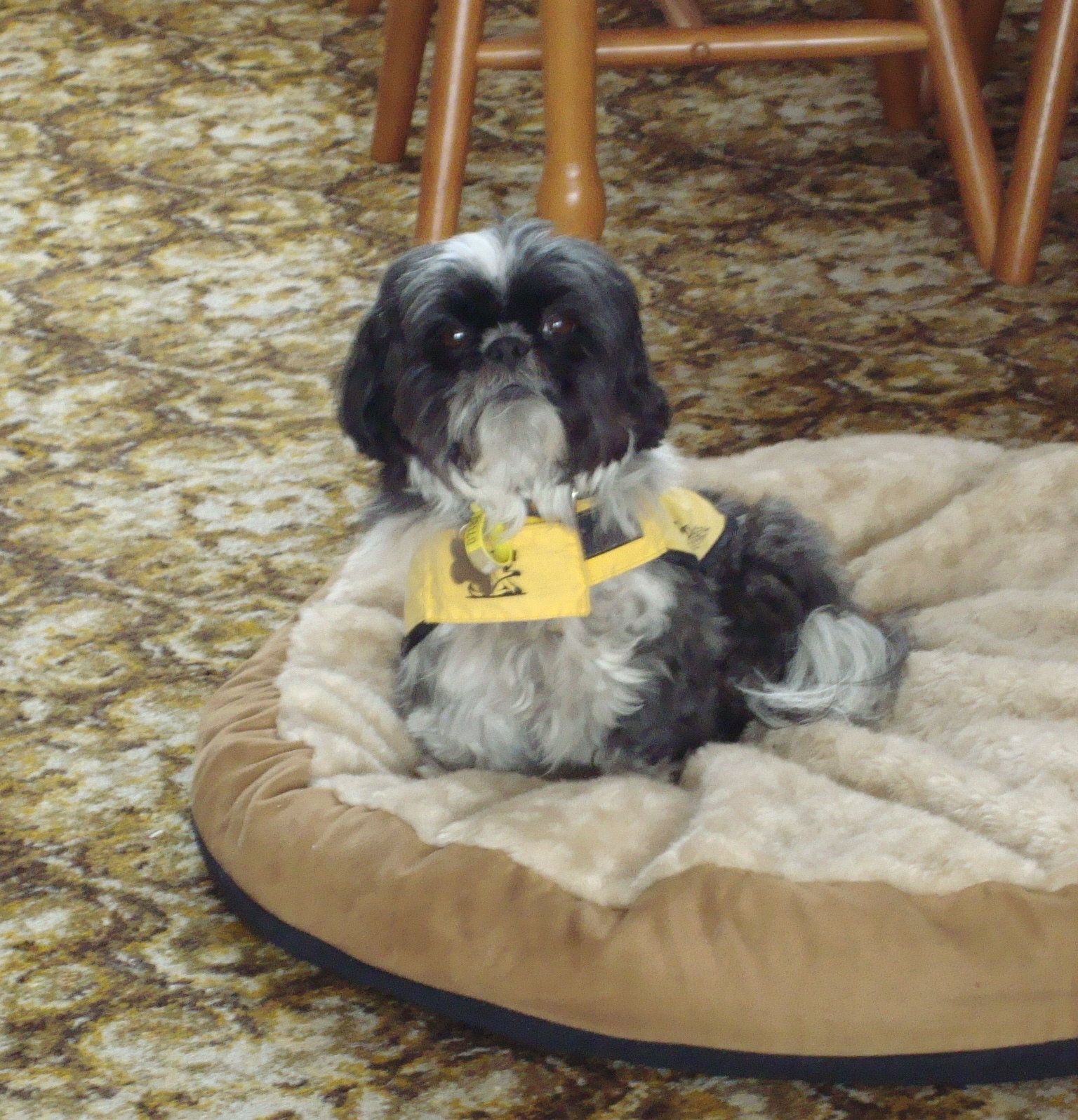
These dogs are trained to alert their deaf or severely hearing impaired owner to important sounds such as the door bell, kitchen timer, fire alarm, baby monitor, or telephone.  A hearing dog wears a distinctive yellow coat.
Tyra in her yellow Hearing Dogs coat

Tyra in her yellow Hearing Dogs coat

Hearing Dogs is an incorporated charitable trust established in 1998 that provides training for these special dogs at its National Training Centre in New Plymouth.  At any given time, there will be six dogs in training at the facility.  These dogs go to socialisers on the weekends as part of their initial training.  If you are in the New Plymouth area, this is one way of supporting the organisation.

A hearing dog may be any shape or size and most breeds are acceptable.  Training typically starts between the age of one year to 18 months.  Clare McLaughlin, General Manager, says “We look for excellent health followed by an even temperament.  The dog needs to be calm and confident and not react to sudden movements or sounds.  A well socialised dog is an advantage and one that is motivated by food makes it easier because our training is reward based.”

Another quality is willingness to learn.  Any breeder who has a dog with these qualities may want to consider offering the dog to Hearing Dogs for training.

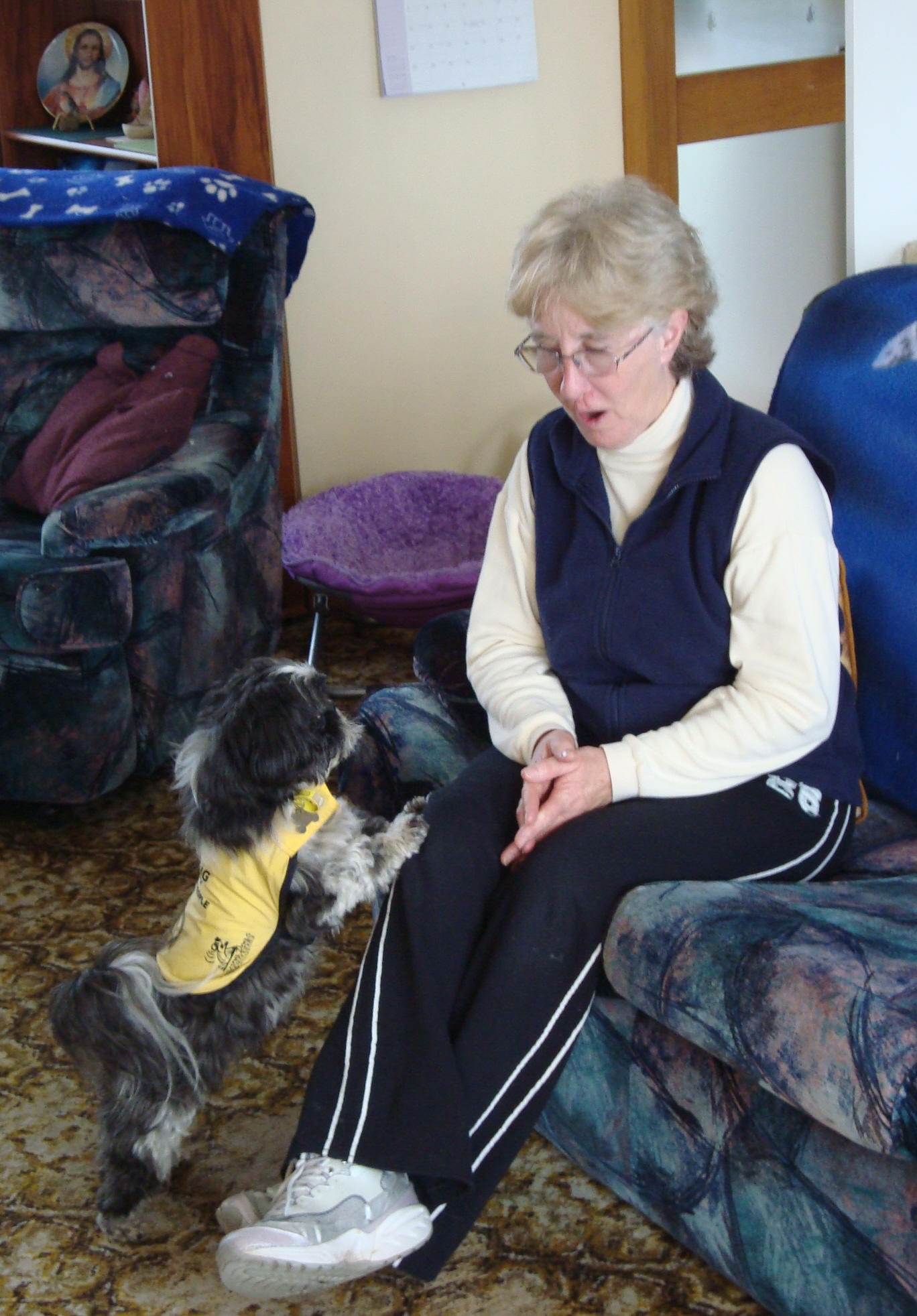
Caroline Boyce can testify to the value that a hearing dog brings to its recipient.  Caroline grew up in a hearing world, without support, and in her own words “I always felt that I wasn’t normal because there was so much going on around me.”  Despite this, she managed to travel overseas for work experience, find a loving husband, raise two children, and work.  Eight years ago she summoned the courage to go to a talk about Hearing Dogs and then put her name down to receive one.  Tyra, her second dog, has been with her for four years. Tyra demonstrated her skills for me by alerting Caroline when the kitchen timer sounded.
Tyra alerts Caroline to the timer on the kitchen oven

Tyra alerts Caroline to the timer on the kitchen oven

Hearing Dogs doesn’t have the wide corporate support or profile of some other charities, but there are many ways to help.   Dr Terryne Loney of Pet Doctors Harewood (Christchurch) has pledged two free examinations per year for all hearing dogs in Christchurch, saying “I think hearing dogs are vital for safety, wellbeing and assistance to hearing impaired people.  Hearing dogs do not get high levels of support and recognition so we wanted to help.”

 To learn more about Hearing Dogs, visit their website.

The driving dogs of New Zealand

I’m so proud of the SPCA Auckland  (where I used to volunteer, when I lived up that way) for its imaginative holiday promotion for rescue dogs.

The SPCA teamed up with expert dog trainers to train three SPCA rescue dogs to drive a car – a Mini to be exact.

Driving Dog

Monty, Porter and Ginny went through extensive training before being put behind the wheel of the Mini.  Last night, on national television, Monty drove himself around a go-cart track.  Porter took on the dubious task of having the reporter accompany him on his drive – and I think he suffered the nerves for it because he took a turn rather widely.

This video covers the dog’s training and moment of glory:

Monty, Porter and Ginny prove that rescue dogs are intelligent and trainable.  If considering adopting a dog this Christmas, make sure you visit your local SPCA and rescue organisations.

You can read more about New Zealand’s driving dogs at www.drivingdogs.co.nz (which brings you to their Facebook page).

Driving Dogs 2

Bo inspects the 2012 White House holiday decorations

The world’s tallest dog

His name is Zeus and he’s a three-year old Great Dane.    Living in Michigan, Zeus is 44 inches (1.1 m)  tall and 155 pounds (70 kg).  He’s a very big dog but he’s fit and trim for his size which is great to see since we are seeing more cases of obesity in dogs.

Here’s a brief video of Zeus at home:

A special kind of service dog

Bet you didn’t know that a Great Dane can be a service dog!

These special needs dogs are ‘walker dogs’ – dogs to assist those people who have impairments to their mobility and balance.  These people can be Parkinson’s or MS patients and, more recently, it has been servicemen and women who have returned home with inner ear and brain injury.

The Service Dog Project exists to train dogs for the mobility impaired.

The Project has donated over 45 Great Danes to people with severe balance or mobility problems. They are located in Ipswich, Massachusetts on a 12-acre property.  Founder Carlene White was inspired to start the project because her father had Parkinson’s and she had a friend with MS.

Said Carlene in a recent Boston Globe article, ‘You can’t really balance with a walker or a cane, because you go over backwards.  You don’t go over backwards if you’ve got a 150-pound dog on handles.’

This YouTube video describe the Service Dog Project in more detail.

Pets for Patriots

Pets for Patriots is a charitable organisation working to place adult dogs and cats from shelters with veterans from the U.S. military.  It is now well-documented that many U.S. veterans  return from overseas only to suffer the ongoing effects of post-traumatic stress disorder.  Animals help these personnel connect to civilian life and offer them the unique bond of non-judgmental support and love.

There are many dogs and cats up for adoption in U.S. shelters – and any shelter, rescue organisation or SPCA can join the programme.  The most important motivation is the commitment to find homes for hard-to-adopt animals.

Here’s a video of one Pets for Patriots success story, the first Pets for Patriots adoption in the State of Hawaii.

The Dickin medal – awarded posthumously

Theo, a Springer Spaniel, was awarded the PDSA Dickin Medal posthumously this week.

The award is likened to the Victoria Cross – for animals.  It recognises the recipient’s dedication to saving human life during military conflict.  The medal was established by the PDSA’s founder, Maria Dickin, in 1943.

Theo was partnered in Afghanistan by Lance Corporal Liam Tasker.  Tasker, 26, was shot by insurgents on March 1, 2011 while on patrol in the Helmand Province with Theo.  Theo died of a seizure shortly afterwards.

The award was accepted by Sergeant Matthew Jones and his dog Grace, both served with Lance Corporal Tasker and Theo.

The Telegraph has done a good job of covering this story and you can watch the video interview with Sergeant Jones and Tasker’s mother here.