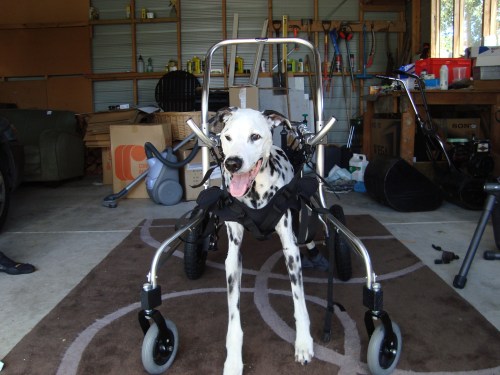
A chicken-flavored electrolyte drink could help sniffer dogs stay hydrated

The first comparison of three common hydration methods for sniffer dogs shows that while all are effective, dogs drink more and are more hydrated when given a chicken-flavored electrolyte drink compared to plain water or when injected with electrolytes under the skin. The study, published in open-access journal Frontiers in Veterinary Science, also shows that the dogs did not suffer from a buildup of electrolytes from the drink, suggesting that electrolyte drinks are a safe hydration alternative for sniffer dogs, who are at risk of heat stroke in hot weather.

Working dogs, such as search and rescue dogs or police dogs, are crucial assistants when authorities respond to disasters or check for contraband at border crossings. These dogs often work in challenging environments, and can sometimes exert themselves to the point of exhaustion and heat stroke. In fact, hot weather can be dangerous for working dogs, as dogs don’t sweat much and rely on panting to cool themselves, meaning they can overheat easily.

detection dog

The risk of heat stroke increases with dehydration, so one effective way to help working dogs stay safe is to keep them hydrated. However, there are different ways to do this. “People use different techniques to hydrate working dogs,” says Cynthia Otto of the University of Pennsylvania, who was involved in the study. “Dog handlers disagree about the most effective method, and since there was no data on the safety or effectiveness of each technique, we wanted to provide some clarity.”

The classic hydration technique is to provide free access to plain drinking water. A second technique involves delivering water and electrolytes through a needle under the skin, which is known as subcutaneous hydration. Drinks containing electrolytes, such as sodium and potassium, are a third option, but these are controversial. Such drinks make sense as a rehydration aid for humans, as we lose electrolytes when we sweat. However dogs sweat very little, leading critics to say that the drinks could cause an unhealthy buildup of electrolytes in dogs.

The research team investigated these three common hydration strategies in a group of Border Patrol sniffer dogs who inspect vehicles at the Texas border, during the hot summer months. The team took a variety of measurements for each dog, including their hydration levels, fluid intake and work performance.

Happily, all three hydration strategies appear to be effective, and the dogs showed similar behavior, body temperature, and work performance regardless of the way they were hydrated. “In this controlled setting, all the hydration techniques were safe and effective,” says Otto.

However, dogs receiving a chicken-flavored electrolyte drink drank significantly more fluid and had greater hydration levels. Interestingly, these dogs did not suffer from a buildup of sodium, a component of electrolyte drinks that could have negative effects in the body in large quantities. The dogs who drank electrolytes excreted the sodium in their urine, meaning their blood levels remained normal. Overall, the dogs handled the electrolytes well, suggesting they are a safe and effective hydration method.

These results surprised the researchers, as a previous study had reported that dogs who were offered a non-flavored electrolyte drink, drank very little of it. The chicken flavoring may have been key, making the dogs think they were having a tasty treat, but the team will need to investigate this further.

“If a dog is reluctant to drink, then a highly palatable flavored electrolyte solution may give them a boost,” says Otto. “However, these are healthy dogs in a controlled environment, and we don’t know if all electrolyte or flavoring approaches are created equal, so we will need to do further work.”

Journal reference:  Cynthia M. Otto, Elizabeth Hare, Jess L. Nord, Shannon M. Palermo, Kathleen M. Kelsey, Tracy A. Darling, Kasey Schmidt, Destiny Coleman. Evaluation of Three Hydration Strategies in Detection Dogs Working in a Hot Environment. Frontiers in Veterinary Science, 2017; 4 DOI: 10.3389/fvets.2017.00174

Seeing is believing

As the saying goes, “seeing is believing” and I have found that this holds true when educating people about the value of dog massage and complementary therapies.  My profession is not well known (yet) and so it’s important to me to help spread the word in a positive and enjoyable way.

Yesterday, I had a massage tent at the ASB Summer Starter, an annual fun run and walk where dogs are encouraged to participate.  This was my first year supporting the event (I tried last year but no one responded to my enquiry – so that’s progress!).

When people see how their dog responds to massage, even at a busy outdoor event like this one, it helps to open their eyes about complementary therapies.  Fit dogs can still have trigger points and knots, just like humans.  There was even a tripod on my table yesterday – healthy and happy – but a body that will need support going forward as the dog ages.

And I hate to think that people take exclusively the physio approach to their dog’s health – that is waiting until they are hurting or injured before seeking treatment. (Physiotherapy NZ’s definition of physio is ‘to help restore movement and function to anyone affected by an injury, disability or health condition’).

So yesterday was about showing people a taste of what massage and other therapies can do for their healthy dog.

Seeing is Believing.

Kathleen Crisley, specialist in dog massage, rehabilitation and nutrition/food therapy, The Balanced Dog, Christchurch, New Zealand

Hand-me-down

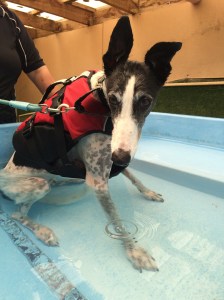
Today I took Izzy swimming.  For only her third time, I think she did very well:

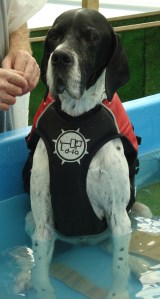
Looking at Izzy’s flotation vest, the Float Doggy made by D-Fa, you’d think I bought it for her, but in fact it’s a hand-me-down – and a testament to the quality of the item.

The D-Fa vest was purchased by a client for Ollie, who within the span of days became a quadriplegic in 2010.  Swimming was part of his long-term care program (I won’t say rehab, since he never re-gained the use of his legs and on autopsy it was found that he had a brain tumor).

Ollie in chair.jpg

When Ollie died in September 2011, Ollie’s owner passed his life vest onto me for Daisy.  By then, Daisy was also swimming at the Dog Swim Spa on a fortnightly basis.

Daisy-in-her-D-Fa

Daisy wearing her Float Doggy flotation vest

Daisy passed away in July 2014 and so that vest saw a lot of use from September 2011 to July 2014.

And it came out of storage this year to support Izzy.

I wash out the vest after each use with liquid laundry detergent and cold water; chlorine from the pool can damage fibers of most garments.

Otherwise, that’s all I’ve done to maintain it.

I’d say that’s pretty well made!

Izzy in her D-Fa

Izzy wearing the same Float Doggy, 22 November 2017

Kathleen Crisley, specialist in dog massage, rehabilitation and nutrition/food therapy, The Balanced Dog, Christchurch, New Zealand

Dog ownership linked to lower mortality

A team of Swedish scientists have used national registries of more than 3.4 million Swedes aged 40 to 80 to study the association between dog ownership and cardiovascular health. Their study shows that dog owners had a lower risk of death due to cardiovascular disease or to other causes during the 12-year follow-up.

A total of more than 3.4 million individuals without any prior cardiovascular disease in 2001 were included in the researchers’ study linking together seven different national data sources, including two dog ownership registers. The results are being published for the first time in Scientific Reports. The goal was to determine whether dog owners had a different risk of cardiovascular disease and death than non-dog owners.

An elderly couple

An elderly couple walks their dalmatian dog. Credit: © Myroslava / Fotolia

“A very interesting finding in our study was that dog ownership was especially prominent as a protective factor in persons living alone, which is a group reported previously to be at higher risk of cardiovascular disease and death than those living in a multi-person household. Perhaps a dog may stand in as an important family member in the single households. The results showed that single dog owners had a 33% reduction in risk of death and 11% reduction in risk of myocardial infarction during follow-up compared to single non-owners. Another interesting finding was that owners to dogs from breed groups originally bred for hunting were most protected,” says Mwenya Mubanga, lead junior author of the study and PhD student at the Department of Medical Sciences and the Science for Life Laboratory, Uppsala University.

In Sweden, every person carries a unique personal identity number. Every visit to a hospital is recorded in national databases, accessible to researchers after de-identification of data. Even dog ownership registration has been mandatory in Sweden since 2001. These scientists studied whether being registered as a dog-owner was associated with later diagnosis of cardiovascular disease or death from any cause.

“These kind of epidemiological studies look for associations in large populations but do not provide answers on whether and how dogs could protect from cardiovascular disease. We know that dog owners in general have a higher level of physical activity, which could be one explanation to the observed results. Other explanations include an increased well-being and social contacts or effects of the dog on the bacterial microbiome in the owner,” says Tove Fall, senior author of the study and Associate Professor in Epidemiology at the Department of Medical Sciences and the Science for Life Laboratory, Uppsala University.

“There might also be differences between owners and non-owners already before buying a dog, which could have influenced our results, such as those people choosing to get a dog tending to be more active and of better health. Thanks to the population-based design, our results are generalisable to the Swedish population, and probably also to other European populations with similar culture regarding dog ownership,” says Tove Fall.

The study was conducted by researchers at Uppsala University, Karolinska Institutet, Stanford University and the Swedish University of Agricultural Sciences.

Source:  Uppsala University media release


Before you install these devices, consider your dog

Earlier this week, I was working with one of my in-home massage clients.  I have a sensitive nose, with a keen sense of smell. In fact, years ago I had my nose ‘calibrated’ by the Lincoln University odour lab and they told me that I was in the top 10% of people in terms of picking up scents in the air.

Of course, this is nothing in comparison to dogs.  Depending on which source you believe, dogs have a sense of smell that is at least 10,000 times more powerful than our own; and possibly as high as 100,000 times.

And during this visit, I was picking up on an odour that was slightly chemical and slightly peppery.

I also noticed that the elderly dog I was massaging had a runny nose which is unusual for him.

And then I spotted one of these automatic inspect spray dispensers on the wall (which the owner confirmed was new):

insect dispenser

We had a bit of a chat about the unit and she agreed that she would either remove it or locate it somewhere outside the living area where her dog spends a lot of time.

Before you introduce anything with a scent into your home, you need to consider your dog’s keen sense of smell.

I’m also wary of the automatic air fresheners that look like this for the same reason:

air freshener

These devices introduce chemical substances into your home and I’ve seen many dogs who are sensitive to the smells.

Beyond that, the environmentalist in me is also concerned about the health of everyone in the household.  Is it a good idea to be inhaling these chemicals and also having them settle on your furnishings, clothing and other surfaces?

My advice is to think twice about installing these items in your home and to consider the impact on your dog.

Kathleen Crisley, specialist in dog massage, rehabilitation and nutrition/food therapy, The Balanced Dog, Christchurch, New Zealand

How the opioid crisis is affecting dogs

The USA is the midst of an opioid crisis – large numbers of people are misusing and becoming addicted to opioids, which can include heroin, prescription pain medications and fentanyl (a synthetic).  The Centers for Disease Control and Prevention estimate that an average of 91 Americans die each day due to opioid overdose.

Veterinarians treating companion animals have to be aware of the symptoms of opioid overdose because, unfortunately, there are cases of accidental ingestion.  Sometimes the pet owners are unwilling to admit that their pet may have eaten opioid drugs, which of course is admission that they may be an addict themselves.

Drugs are, of course, big business and it’s up to law enforcement to help catch dealers who are making and selling the drugs.  Police dogs and detection dogs are part of that fight and they are often exposed to opioids in the course of detection work.

This video is for veterinarians and dog handlers to understand how to catch the signs of an opioid overdose in a dog and the treatment with reversal drugs like Narcan which are needed to save them.

and this is some of the news coverage about police dog handlers carrying reversal kits along with other first aid supplies.

Kathleen Crisley, specialist in dog massage, rehabilitation and nutrition/food therapy, The Balanced Dog, Christchurch, New Zealand

Inspirations

Last month, I shared images of the inspiration cards that were given to me when I was working and studying at Best Friends Animal Sanctuary in Utah.

Tonight I share an inspiration of a different kind.

Elesha, who was mum to Kenny who passed away in April 2016, contacted me because she had found these photos on her Instagram page.    She thought I’d like them (I do!).


Kathleen & KennyLooking at these photos, I realise how much time has passed since I worked with Kenny.  My practice has been re-branded from Canine Catering to The Balanced Dog.  I have new shirts with a new logo and even our dog treat labels have changed.  Progress.
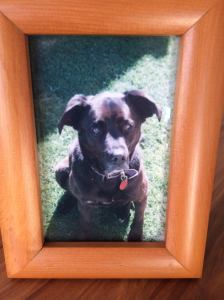
But the inspiration is knowing that the work I did with Kenny is still appreciated, and that Elesha stays in touch.

Kenny was a great dog and I’m lucky to have worked with him and his family.

Inspirational!

Kathleen Crisley, specialist in dog massage, rehabilitation and nutrition/food therapy, The Balanced Dog, Christchurch, New Zealand

Ebony’s story

Ebony's photo

This is Ebony; she was a Chocolate Labrador cross – a deep dark chocolate in colour (not milk chocolate like many Labs).  She was my best friend from 1998, when I adopted her via Dogwatch which facilitated a private adoption, to October 2003, when she suddenly succumbed to cancer of the liver and pancreas.

Ebony was highly reactive to sounds and, particularly, fireworks.  So I think of her a lot around Guy Fawkes celebrations each year.

Each year, I’d go to the vet for a prescription for sedatives and then for many nights around the official celebration, I would have to try to dose her before any fireworks started.  This was easier said than done.  As many of us know, people sometimes set off fireworks even before darkness has fallen.  The label recommended intake within 1 hour before any stimulus…

Most of the time, sedatives weren’t enough.  Copious amounts of Rescue Remedy in her water bowl and sprayed around the house didn’t seem to help much, either.  Ebony would run and pace the house, hyperventilating and salivating.  It was heartbreaking to watch.  Sometimes, I would turn the radio on in the car, which was parked in the garage, and I’d put her in the back seat (as usual) with me in the front pretending that any minute we would be going out for a ride.  But in reality, I was just trying to get as many layers of sound-proofing between us and the fireworks that I could.

Ebony wasn’t fooled, although sometimes our car trips to nowhere did help alleviate some of the sounds.

The bottom line was that when Ebony was over-threshold with fear, there wasn’t much that could be done until the fireworks stopped.

One year, we were woken from a sound sleep when someone decided to light off fireworks.  It was late by our standards, past 10 pm when most families and working people would not be up lighting fireworks on a work night.

Ebony was immediately over-threshold, barking and pacing.  And then she lost control of her bowels in our bed.  She was doubly stressed by this, and I had to strip the bed and put everything in the washing machine and re-make the bed with fresh linens.

Another year, Ebony barked so badly that she suffered a rectal prolapse.  She had literally barked herself inside/out; part of her rectum had come out of the anus.   It was incredibly upsetting for the both of us and I knew she was in pain and discomfort, too.  The vet was able to lubricate the tissue and help replace it back inside and I had to feed a low-irritant food to her for a week to ensure that we gave the area a chance to rest.

I clearly remember after this incident how much noise her digestive system made – gurgling – for days.  Looking back, I’m sure that the stress and digestive upsets she endured because of fireworks had something to do with her succumbing to liver and pancreatic cancer – before she even reached aged 10.

So you might wonder why I’m so passionate about the banning of the private sale of fireworks and now you know.  They hurt my dog many times over and when you hurt my dog, I’m unlikely to forget.

Kathleen Crisley, specialist in dog massage, rehabilitation and nutrition/food therapy, The Balanced Dog, Christchurch, New Zealand

Here we go again…a day of sadness

fireworks sign

Today, 2 November 2017, is the day when fireworks legally go on sale in the name of celebrating Guy Fawkes night aka Bonfire Night (5 November each year).

I’m sad because I know that many dogs, including those of my clients and friends, will be in for a stretch of nights filled with fear and anxiety.

Their human owners will be doing everything they can to manage.  Some will have gone to the veterinarian for sedative drugs which they will need to give before the booming starts, others will be playing music, changing routines to ensure nighttime dog walks are finished before the sun sets, wrapping their dogs in Thundershirts, spraying essential oils to help calm…the list goes on…

And like being in a war, you never know when the next barrage will happen.  It’s not just on Guy Fawkes Night.  It could be tonight, tomorrow.  It could be next week.  It may even be in a month or two for the people who stockpile their fireworks for random use.

Where I grew up, the sale of fireworks was illegal.  Only public displays – properly licensed and advertised in advance – were allowed.   It was more manageable and humane.

I fail to see the reason why the sale of these items is still legal in New Zealand and I haven’t seen a political party (or coalition) yet that is prepared to take a stand on this issue.

I have other arguments against fireworks, including the fact that the waste left over just adds to our landfills and that many fireworks users disrespect our parks by leaving their fireworks packaging and other rubbish overflowing from rubbish bins or, worse, strewn across the park for someone else to pick up.

Today I’m sad because, for the animals, the war is about to begin again.

Kathleen Crisley, specialist in dog massage, rehabilitation and nutrition/food therapy, The Balanced Dog, Christchurch, New Zealand

Image

Doggy quote of the month for November

Every dog must have his day